
As per case facts, the respondent, a student in JNU's five-year integrated M.A. program in Russian Language, failed to take sessional tests in core courses during his first two semesters ...
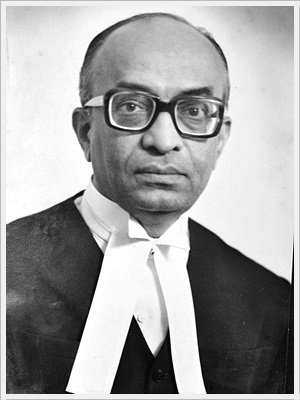
No Acts & Articles mentioned in this case
http://JUDIS.NIC.IN SUPREME COURT OF INDIA Page 1 of 7
PETITIONER:
JAWAHARLAL NEHRU UNIVERSITY
Vs.
RESPONDENT:
B. S. NARWAL
DATE OF JUDGMENT04/09/1980
BENCH:
REDDY, O. CHINNAPPA (J)
BENCH:
REDDY, O. CHINNAPPA (J)
KRISHNAIYER, V.R.
CITATION:
1980 AIR 1666 1981 SCR (1) 618
1980 SCC (4) 480
ACT:
University-Student-Unsatisfactory performance in
studies-Name removed from University rolls-Opportunity to
show cause whether to be given-Doctrine of audi alteram
partem-Applicability of.
HEADNOTE:
The appellant University offered integrated 5 years
programme of study leading to the award of M.A. degree in
several disciplines and languages. The programme was spread
over ten semesters in 5 academic years. The courses in the
discipline in which a student was formally registered were
known as the 'core-courses' while the other courses for
which also the student had to prescribe were known as 'tool
courses' and 'optional courses'.
The respondent was a student of the five year
integrated programme of study in the Master of Arts degree
in Russian Language at the appellant University. In the
first two semesters, he failed to take the sessional test in
any of the 'core courses' in Russian and consequently he was
not allowed to sit for the end semester examinations. He,
however, appeared for the examinations in the 'tool courses'
and the 'optional courses' in the first two semesters. In
the third semester the respondent requested permission of
the University to repeat the courses of the first semester
so as to enable him to pass them. The University permitted
him to do so but he failed in all the five courses in which
he was permitted to do so.
Dissatisfied with his performance the Centre of Russian
Studies recommended to the Board of Studies that the
respondent's name be struck off the rolls and his name was
accordingly removed from the rolls.
The High Court, allowed the respondent's writ petition
on the ground that: (1) no opportunity to show cause was
given to him before his name was struck off the rolls, and
(2) that the University did not apply its mind to the
question whether the respondent's performance was
unsatisfactory.
In the appeal to this Court on the question: whether
the respondent was entitled to an opportunity of being
heard, before removing him from the rolls of the University.
Allowing the appeal:
http://JUDIS.NIC.IN SUPREME COURT OF INDIA Page 2 of 7
^
HELD: 1. In the absence of allegations of bias or mala
fides, the declaration by an academic body that a student's
academic performance is unsatisfactory is not liable to be
questioned in a Court on the ground that the student was not
given an opportunity of being heard. [623 E-F]
This is not a case of expulsion pursuant to a claim by
the authorities of a University to discipline the student at
their discretion and the right of the
619
student to freedom and justice. The case is merely one of
assessment of the academic performance of a student which
the prescribed authorities of the University are best
qualified and the Courts are least qualified to judge. [623
A-B]
Herring v. Templemen & Ors. 1973 (3) All E. R. 569 &
584; Regina v. Aston University Senata 1969 (2) All E.R. 964
referred to.
JUDGMENT:
CIVIL APPELLATE JURISDICTION: Civil Appeal No. 3115 of
1979.
Appeal by Special Leave from the Judgment and Order,
dated 6-8-1979 of the Delhi High Court in Civil Writ No. 395
of 1979.
K. K. Venugopal, H. K. Puri and S. C. Dhanda for the
Appellant.
A. K. Gupta for the Respondent.
The Judgment of the Court was delivered by
CHINNAPPA REDDY, J. The Jawharlal Nehru University,
considered to be one of the prestigious academic
institutions of the country, is the appellant in this appeal
by special leave of this Court under Article 136 of the
Constitution. Named after the great liberal, humanist and
democrat of the century, the University was established by
Act of Parliament to "embody a unique synthesis of
Humanities, the Sciences and Technology" and to "endeavour
to promote the study of principles for which Jawaharlal
Nehru worked during his lifetime, namely, national
integration, social justice, secularism, democratic way of
life, international understanding and scientific approach to
the problems of society".
'The Court' is the supreme authority of the University
and it has the power to review the acts of the Executive
Council and the Academic Council. The Vice Chancellor is the
Principal Executive and Academic Officer of the University.
The Executive Council is the executive body of the
University, in charge of the general management and
administration of the University while the Academic Council
is the academic body of the University, responsible for the
maintenance of standards of instruction, education and
examination within the University. The Executive Council is
empowered to make 'Statutes' in the manner prescribed by the
Jawaharlal Nehru University Act and to make 'Ordinances' in
the manner prescribed by the Statutes.
Ordinances have been duly made and Ordinance 13 deals
with the award of M.A., B.A., (Honours) and B.A. (Pass)
degrees. The University offers Integrated Five-Year
Programmes of studies leading to the award of M.A. Degree in
several Disciplines and Languages. Russian is one of the
languages in which such a programme of studies is offered.
The programme is spread over ten semesters,
620
http://JUDIS.NIC.IN SUPREME COURT OF INDIA Page 3 of 7
in five academic years. In the first two semesters, courses
described as 'C' level courses are given, in the next four
semesters 'B' level courses are given and in the last four
semesters 'A' level courses are given. Each 'C' level course
carries two credits, each 'B' level course three credits and
each 'A' level course four credits. Paragraph 7.3 of
Ordinance 13 prescribes a minimum of 144 credits in the case
of Social Sciences and 176 credits in the case of languages
for the Master of Arts Degree, out of which there have to be
a minimum of 20 credits from 'C' level courses, 60 from 'B'
level courses and 64 from 'A' level courses in the case of
Social Sciences and a minimum of 28 from 'C' level courses,
84 from 'B' level courses and 64 from 'A' level courses, in
the case of languages. It is further prescribed that a
minimum of 50% of credits but not more than 75% should be in
the discipline in which the student is formally registered
for the Master's degree. It may be mentioned here that the
courses in the discipline in which the student is formally
registered are known as the 'core courses' while the other
courses for which also the student has to prescribe are
known as 'Tool courses' and 'optional courses'. Paragraph
7.5 prescribes that the courses on the basis of which a
student earns his 'C' level credits shall be atleast from
four disciplines. Paragraph 7.6 provides that a student
shall be required to earn atleast a minimum of ten credits
from courses in Tools, Techniques and Methodology. Paragraph
8 of Ordinance 13 prescribes the method of evaluation.
Sessional work is to carry the same weight as the semester
examination. In each course a student is graded on a ten
point scale and the final grade point is obtained by
applying the formula
Fg = #n Cigi/#n Ci
Where F is the final grade point of the student C is the
credit of the ith course, G is the grade point secured by
the student in the ith course and n is the total number of
courses for which the student has prescribed. A student who
fails in a course is required to repeat the course or clear
another course in lieu of the course in which he has failed.
Paragraph 9 of the Ordinance prescribes the minimum standard
of grade point requirements. Every student is required to
maintain a minimum cumulative grade point average of 2.0
during the first two semesters. At the end of the sixth
semester the cumulative grade point average has to be 4.0 if
he is to further continue in the programme of study. If he
is to be awarded the Master of Arts degree he must have a
minimum cumulative grade point average of 4.0. Paragraph 11
of the
621
Ordinance is important for the purposes of this case and it
may be extracted here. As it stood at the relevant time, it
was as follows:
"The Board of the School, on the recommendation of
the Centre, may remove the name of a student from the
course on the basis of unsatisfactory academic
performance".
The respondent B. S. Narwal was admitted, in 1974, to
the five year integrated programme of study leading to
Master of Arts Degree in Russian Language at the Centre of
Russian Studies in the Jawaharlal Nehru University. As he
was seeking a degree in Russian Language, the 'core courses'
had necessarily to be those concerned with Russian language,
literature and translation. In the first two semesters, he
failed to take the sessional tests in any of the 'core
courses' in Russian and consequently he was not allowed to
sit for the end semester examinations. He thus failed to
http://JUDIS.NIC.IN SUPREME COURT OF INDIA Page 4 of 7
clear any of the 'core courses' in the first two semesters.
He, however, appeared for the examinations in the 'tool' and
the 'optional courses' in the first two semesters and
prescribed for five credits in two courses, in the first
semester and eight credits in three courses, in the second
semester. In the third semester the respondent requested
permission of the University to repeat the courses of the
first semester so as to enable him to pass them. As a
special case, he was permitted to do so, but he failed in
all the five courses in respect of which he sought and
obtained permission to so repeat. The respondent, however,
passed (securing B+) in an optional course for which he
prescribed in the third semester. At the end of the third
semester the net result was that he had not cleared a single
'core course'.
The Centre of Russian Studies was dissatisfied with the
performance of the respondent and some other students and at
a meeting held on January 20, 1976, the Centre decided to
recommend to the Board of Studies, School of Languages, that
seven students including the respondent should be struck off
the rolls of the University for unsatisfactory performance.
The recommendation of the Centre of Russian Studies was
accepted by the authorities of the University and by an
office order, dated January 31, 1976, the respondent and
others were removed from the rolls of the University for
unsatisfactory performance as recommended by the Centre.
The respondent appeared to accept the decision of the
University and kept quiet for a period of two years and six
months, but in August, 1978, he filed a Writ Petition in the
Delhi High Court challenging the order removing him from the
rolls of the University
622
on the ground that the order had been made in violation of
the principles of natural justice. The Writ Petition was
opposed by the University but when the Writ Petition came
for hearing on November 24, 1978, on a query by the Court
whether it was feasible to readmit the respondent, the
University agreed to reconsider the question
sympathetically. Thereupon, the Writ Petition was dismissed.
Pursuant to the assurance given before the High Court the
Centre of Russian Studies considered the question once again
and found itself unable to admit the respondent in the
middle of the academic year. The respondent was, however,
informed that his case could be considered in the monsoon
semester commencing from July 1979, that is, at the
beginning of the academic year. The respondent was advised
to send a fresh application for admission.
The respondent being dissatisfied with the attitude of
the University filed a fresh Writ Petition in the High
Court, once again, challenging the order removing him from
the rolls of the University. The High Court by their
judgment, dated August 6, 1979 allowed the Writ Petition
firstly on the ground that the respondent was given no
opportunity to show cause before action was taken against
him and secondly on the ground that the University did not
apply its mind to the question whether the petitioner's
performance was unsatisfactory. The High Court quashed the
order removing the respondent from the rolls of the
University and gave the following directions to the
University:
"(1) That the petitioner B. S. Narwal should be
admitted in the 7th semester which is the monsoon
semester of 1979;
(2) that the petitioner should be permitted to
complete the ten semesters by the end of the academic
http://JUDIS.NIC.IN SUPREME COURT OF INDIA Page 5 of 7
year 1981 so as to qualify him to get his M.A. Degree;
(3) that the petitioner should be permitted to
secure the required 180 credits by the end of the
academic year 1981 and to make up the deficiency in the
credits he has secured so far by taking up the contact
hours, sessional tests and semester examination of the
appropriate semester before the completion of his 10th
semester;
(4) that the University shall permit the
petitioner to join the appropriate groups for taking up
the required courses and make proper arrangements of
sessional tests and semester examinations at reasonable
intervals so as not to crowd too many academic
requirements at one time".
The first question for our consideration is whether the
respondent was entitled to an opportunity of being heard
before action
623
was taken removing him from the rolls of the University.
What should be mentioned right at the outset is that this is
not a case of expulsion of a student pursuant to a claim, by
the authorities of a University to discipline the student at
their discretion and the right of the student to freedom and
justice. The case is merely one of assessment of the
academic performance of a student which the prescribed
authorities of the University are best qualified and the
Courts perhaps, are least qualified to judge. Nor can there
be any question of any opportunity to be heard being given.
One does not hear of a claim to be heard when a candidate
fails to qualify at an aptitude or intelligence test,
written or oral. When duly qualified and competent academic
authorities examine and assess the work of a student over a
period of time and declare his work to be unsatisfactory we
are unable to see how any question of a right to be heard
can arise. The duty of an academic body in such a case is
'to form an unbiased assessment of the student's standard of
work based on the entirety of his record and potential(1).
That is their function. The very nature of the function of
academic adjudication (if the use of the word adjudication
is permissible in the context) appears to us to negative any
right to an opportunity to be heard. If the assessment by
the academic body permitted the consideration of 'non-
academic' circumstances also, a right to be heard may be
implied. But if the assessment is confined to academic
performance, a right to be heard may not be so implied. Of
course, if there are allegations of bias or malafides
different considerations might prevail, but in the absense
of allegations of bias or malafides we do not think that the
declaration by an academic body that a student's academic
performance is unsatisfactory, is liable to be questioned in
a Court on the ground that the student was not given an
opportunity of being heard. Large and expanding, perhaps
rightly, as the field of natural justice and fail dealing
is, necessary and wholesome as 'hearing' an affected partly
even by academic bodies is, there are limits to attempt at
unnatural extensions of the doctrine of 'audi alteram
partem'. Without granting absolutism to academic authorities
even in academic matters, we think this case hardly calls
for judicial intervention.
The learned Counsel for the respondent relied on Regine
v. Aston University Senate(2) to contend that the examining
body of the University was bound to give an opportunity to a
student before requiring him to withdraw from the University
consequent on his
624
http://JUDIS.NIC.IN SUPREME COURT OF INDIA Page 6 of 7
failure in the examination. Admittedly, in that case, the
examiners took into consideration a "wide range of
extraneous factors some of which their very nature, for
example, personal and family problems might only have been
known to the students themselves". Therefore. Donaldson J.,
observed that in common fairness the students should have
been given an opportunity. Even so, Lord Parker C. J., did
not appear to be convinced about the correctness of
Donaldson J's view and in Herring v. Templeman & Ors.
(supra), the Court of Appeal expressed the view that
Donaldson J's opinion required reconsideration on some
suitable future occasion.
From the earlier narration of facts it would be seen
that the respondent had not cleared any of the core courses
in the first three semesters. If a candidate for the M.A.
degree in a certain discipline fails to clear any single
core course in that discipline in the first three semesters,
surely, no one can complain that the academic body which has
declared the academic performance of the candidate as
unsatisfactory has acted arbitrarily in so declaring. The
complaint of the respondent, however, was that he was unable
to clear the 'core courses' in the first two semesters
because the University authorities failed to provide
teachers to take classes and this was a factor which the
authorities of the University had failed to consider and the
authorities must, therefore, be held not to have applied
their minds. It appears that in the very first semester the
respondent joined the University late and missed several
classes. The result was that while the rest of the students
had made sufficient progress in Russian language the
respondent who had yet to learn the alphabet could not
straightaway join the rest of the students attending the
core courses. The therefore, had to attend other classes in
Russian language where Russian language was taught not as a
'core subject' but as a 'tool or optional subject'.
According, to the respondent there was none to teach Russian
language to his group between October 6. 1974 and December
6, 1974. Again, in the second semester, though there were
Russian classes from 10th February to 30th March, 1975,
there were no arrangements to teach Russian language to his
group after 30th March. The High Court appeared to attach
great importance to the failure of the University to
expressly deny the respondent's allegation that there were
no teaching facilities between October 6 and December 6.
1974 and again between 10th February and 30th March, 1975.
True the University did not in express terms deny the
allegations. But the University did mention the following
facts in their counter affidavit. In paragraph 5 it was said
625
"He joined the first semester on 22nd of August
1974 although it started from 9th August 1974. So much
so he was to be grouped together with students who had
offered Russian as a non-core subject and for whom the
Russian classes happened to be starting from 1st
September. Again, from 8th October 1975 to 20th
December 1975, he was not regular in attendance. How
could the respondent University afford a special
curriculum for the sake of a particular student who
does not avail of the regular course of teaching
provided by the University to a class of students? It
was no fault of the University if the petitioner could
not attend the classes when they were conducted, and
the petitioner should be blamed for his irregular
attendance".
Again in paragraph 9 it was said:
http://JUDIS.NIC.IN SUPREME COURT OF INDIA Page 7 of 7
"In reply to paragraph 9, I say that the
petitioner did not join the course on 9th August 1974
when the classes for Russian as a core subject
commenced. When the Petitioner came on 22nd August 1974
to join the course, the students who had offered
Russian as a core subject and started their classes on
9th August, had made substantial progress. The
Petitioner, being a beginner in Russian language, could
not be accommodated in any of those groups. He had,
therefore, to be grouped together with students who had
offered Russian classes happened to be starting from
September 1."
These statements show that the University did run the
necessary classes for the 'core courses' but the Respondent
was unable to take advantage of them on account of his
insufficient knowledge of Russian, for which reason he had
to attend classes for 'optional' courses instead of classes
for core courses. The University naturally could not run a
special programme for an individual student. These
statements went unnoticed by the High Court. We are,
therefore, of the view that the finding of the High Court
that the authorities of the University were oblivious of the
circumstance that the University itself had failed to
provide teaching facilities in Russian and therefore, must
be considered not to have applied their minds is without
factual foundation.
We have, therefore, no option but to allow the appeal
and dismiss the Writ Petition filed by the Respondent. We
may add that we would not, in any case, have confirmed the
directions given by the High Court, as they appear to
involve a virtual re-writing of that ordinances of the
University. While allowing the appeal,
626
we leave it to the University, to consider if the career of
the respondent cannot be salvaged by admitting him into some
appropriate semester in accordance with the ordinances, if
he chooses to submit an application for admission. There
will be no order regarding costs.
Civil Miscellaneous Petition No. 1926 of 1980 is
dismissed.
N.V.K. Appeal allowed
627
In the landmark case of Jawaharlal Nehru University v. B. S. Narwal, the Supreme Court of India delivered a pivotal judgment on the Doctrine of Audi Alteram Partem in the context of Academic Performance Assessment. This case, a cornerstone of educational law and prominently featured on CaseOn, clarifies the boundaries of judicial review in academic matters, affirming the autonomy of educational institutions in evaluating student performance.
B. S. Narwal, the respondent, was a student enrolled in the five-year integrated Master of Arts program in Russian at Jawaharlal Nehru University (JNU). The program's structure included 'core courses' (discipline-specific), 'tool courses,' and 'optional courses.' In his first two semesters, Mr. Narwal failed to appear for the sessional tests in any of his core Russian language courses and was consequently barred from the end-of-semester examinations for those subjects.
In the third semester, the University permitted him to repeat the first-semester courses, but he failed again in all five. Having not cleared a single 'core course' in three semesters, the Centre of Russian Studies recommended his removal from the university rolls due to "unsatisfactory academic performance." This recommendation was accepted, and his name was struck off.
Aggrieved, Mr. Narwal approached the Delhi High Court, which ruled in his favor. The High Court found that the University had violated the principles of natural justice by not giving him an opportunity to show cause. It also concluded that the University had not applied its mind to the matter and ordered his reinstatement with detailed instructions for completing his degree.
The University appealed the High Court's decision, bringing the matter before the Supreme Court. The case was analyzed using the following framework:
The central legal question was whether a student is entitled to an opportunity to be heard (as per the doctrine of *audi alteram partem*) before their name is removed from the university rolls on the grounds of unsatisfactory academic performance.
The case hinges on the principles of natural justice, particularly *audi alteram partem*, which dictates that no person should be condemned unheard. However, the application of this rule is not absolute. The Court examined whether an academic evaluation by a qualified body constitutes a quasi-judicial action requiring a formal hearing, or if it falls into a category where such a requirement is implicitly excluded.
The Supreme Court overturned the High Court's decision, drawing a critical distinction between disciplinary proceedings and academic assessments.
The Supreme Court allowed the University's appeal, setting aside the High Court's order. It held that in matters of pure academic assessment, where no bias is alleged, an educational institution is not required to provide a student with a formal opportunity to be heard before removing them for unsatisfactory performance. The Court deferred to the expertise and autonomy of the academic institution.
The Supreme Court concluded that the declaration of a student's academic performance as 'unsatisfactory' by a competent academic body is not subject to judicial review on the ground that the student was not heard. It distinguished this from disciplinary matters and upheld the principle that universities are best equipped to make academic judgments. The appeal from JNU was allowed, and the student's writ petition was dismissed.
Disclaimer: This article is for informational purposes only and does not constitute legal advice. Readers are advised to consult with a legal professional for specific guidance on their individual cases.

Legal Notes
Add a Note....