
No Acts & Articles mentioned in this case
1
Reserved
A.F.R.
CRIMINAL APPEAL NO. 2967 OF 1986
Jit Singh and another Appellants
Vs.
State of U.P. …................. Respondent
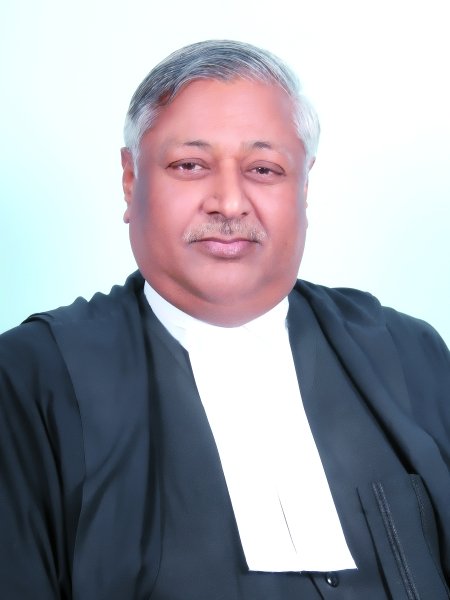
Hon'ble Sheo Kumar Singh, J.
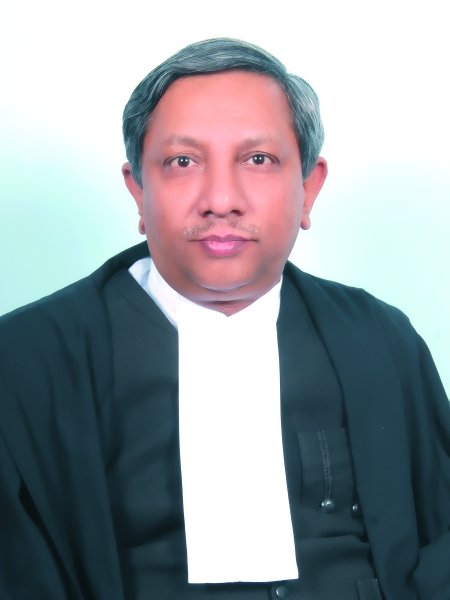
Hon'ble Vinod Prasad, J.
(Delivered by Hon'ble Vinod Prasad, J.)
Appellants Jit Singh (A-1) son of Sukua Gaud and Dayali (A-2)
son of Hem Raj, both r/o village Bagharu, P.S. Duddhi, District
Mirzapur, are aggrieved by the impugned judgment and order dated
21.10.1986 passed by Sessions Judge, Mirzapur recorded in S.T. No.
225 of 1985, State of U.P. Vs. Jit Singh and another, convicting both
the appellants under section 302/34 I.P.C. and sentencing them to
serve life imprisonment therefor and therefore have filed this
appeal.
Unfolded prosecution allegations, as are discernible from the
oral FIR Ext. Ka-1 and testified during the trial by the prosecution
fact witnesses, informant Ram Ratan P.W.2, Dasrath P.W.2 and
Bansidhar P.W.3, are that motivated by a lost court case with Dev
Swaroop (deceased /father of informant RamRatan) that both the
appellants, on 21.8.1985 at 9 A.M. assaulted Dev Swaroop
(deceased) near the field of Ram Baran with spade and club(lathi)
and caused him injuries, mostly on his upper and lower limbs. Dev
Swaroop (injured/deceased) squatted on the ground sustaining
inflicted injuries but even then he was belaboured by club. Injured
shrieks attracted informant Ram Ratan P.W.1, Dasrath P.W.2,
Bansidhar P.W.3 and other co-villagers at the assault scene, who
had witnessed the belaboring of Dev Swaroop. Intervention by the
witnesses and their attempt to apprehend the miscreants, forced
both the appellants to leave the incident spot intimidating and
threatening the witnesses. In an injured condition, Dev Swaroop,
Neutral Citation No. - 2014:AHC:14177-DB
2
when was being carried to the hospital, midway, near Duddhi
market, lost the battle of his life and died.
RamRatan, informant/PW1, son of the deceased, immediately
rushed to the police station Duddhi at a distance of 7 KMs, along
with corpse of the deceased, where he orally dictated FIR to HM
Shyam Bihari Singh P.W. 6, who slated it by registering the crime at
11.45 A.M. and preparing chik FIR Ext. Ka-1 and GD entry Ext. Ka-3.
Special report regarding the crime was dispatched the same day at
12.45 P.M. through constables Lallan Rai and Lallan Bharti vide
Rapat No. 17 Ext. Ka-4.
SSI Shivdhari Singh, PW7, in whose presence the crime was
registered set afoot the investigation, copied the chik FIR and GD
entry and dispatched SI Jagdish Singh and constables Ram Babu
and Dharam Nath Singh to apprehend the murderers. PW7 himself
performed inquest on the dead body and inked relevant papers like
inquest memo, chalan lash, photolash, letters to RI and to CMO etc.
which all documents are Exts. Ka-5 to Ka-8. Sealing the dead body
in a cloth piece the same was dispatched to the mortuary through
constables Chandra Bhushan Tiwari and Ram Lochan Chauhan for
postmortem examination along with the prepared papers. Near the
corpse of the deceased an iron kadua (a jug with a spout) was also
recovered, which was sealed and recovery memo Ext. Ka-9 thereof
was prepared. Thereafter informant and inquest witnesses were
interrogated and their statements were recorded. Subsequent
thereto, I.O. came to the incident spot in village Bagharu where he
recorded the statements of witnesses Dasrath and Bansidhar and
others. Spot inspection was conducted and site plan along with
notings was prepared, which is Ext. Ka-10. Blood stained and plain
earth were collected from the spot and recovery memo Ext. Ka-11
thereto was prepared and thereafter witnesses Ram Gyan was
interrogated. Returning to the police station at 8.30 A.M. the
following day, I.O./PW7 deposited recovered blood stained and
plain earth vide GD Ext. Ka-12. Autopsy report was copied by the
I.O., who thereafter penned down statements of constables Ram
3
Lochan Chauhan P.W. 4 and Chandra Bhushan Tiwari and also
forwarded a report to send blood stained earth and the clothes for
chemical examination to the serologist. On 30.8.1985, both the
accused Jit Singh and Dayali were arrested from down town
Mirzapur and were booked in penitentiary at 7.05 P.M. vide Rapat
No. 27 Ext. Ka-13. Concluding investigation on 31.8.1985, I.O.
charge sheeted both the accused vide Ext. Ka-14.
Dr. P.N. Singh P.W. 5 had performed autopsy on the cadaver of
the deceased on 21.8.1985 at 1.20 P.M. Deceased was 85 years of
age having a thin physic, rigor mortis and postmortem lividity were
in the process of setting in. Following nineteen ante mortem injuries
on the cadaver of the deceased were detected by the doctor:-
“1. Contusion 2cm x 1cm over the left side chest.
2. Contusion on 1.5cm x 1cm on right side forehead.
3. Incised wound 5cm x 2cm x 2.5cm on the back of left
forearm.
4. Incised wound 3cm x 2cm skin deep on the right fore
arm.
5. Incised wound 7cm x 5cm over the outer side of right
forearm. Both the bones of this fore arm were found
fractured.
6. Incised wound 3-1/2cm x 1-1/2cm skin deep over the
back side of right forearm.
7. Lacerated wound 2cm x 1cm skin deep on the back of
right forearm.
8. Lacerated wound 1.5cm x 1cm skin deep on the back of
right hand.
9. Incised wound 2-1/2cm x 1cm bone deep on the middle
and proximal phalanx.
10. Contusion 8cm x 2cm on the outer surface of right
thigh.
11. Contusion 11cm x 2cm on the back of right thigh.
12. Contusion 6.54cm x 2.5cm on the right side buttock.
13. Incised wound 9cm x 2.5cm x 3cm on the medial
surface of right leg.
14. Incised wound 6cm x 1.54cm skin deep on the medial
aspect of right leg just below injury no. 13.
15. Lacerated wound 6cm x 4cm bone deep on the back
side of left forearm. The bone under this injury was
fractured.
16. Incised wound 10cm x 6cm muscle deep on the back of
medial aspect of right forearm.
17. Lacerated wound 6cm x 4cm bone deep on the right
fore arm just at the left wrist joint. Both the bones
4
underneath were fractured.
18. Lacerated wound 2cm x 1cm skin deep over the left
side of abdomen.
19. Incised wound 9cm x 3cm muscle deep on the outer
aspect of the left leg 5cm below knee joint.”
On internal examination, no abnormality was detected in any
of the internal organs but fractures of Rt. Ulna, Rt.lower middle
phalanx and shaft of humorous and wrist was detected in injuries
numbers 5,9,15, &17. Small and large intestines were empty. In the
estimation of the doctor, deceased had died due to shock and
hemorrhage produced by sustained injuries.
Submission of charge sheet resulted in registration of criminal
case against both the accused appellants before the committal court
of C.J.M., Mirzapur, on 23.9.1985 as Case No. 1790 of 1985, State
Vs. Jit Singh and another, under section 302 I.P.C., which case, in
due course, was committed to the Sessions Court for trial, were on
8.10.1985, it was registered as S.T. No. 225 of 1985, State Vs. Jit
Singh and another, in the court of Sessions Judge, Mirzapur.
Learned trial Judge charged both the accused with offence u/s
302 I.P.C. on 2.11.1985 and since both of them abjured that charge
and denied their guilt that to establish the same and prove their
complicity in the crime that the learned trial Judge resorted to
Sessions Trial procedure to prosecute both the accused appellants.
During the trial, prosecution placed reliance on testimonies of
in all seven witnesses including those of informant Ram Ratan P.W.
1, Dasrath P.W. 2 and Bansidhar P.W. 3 as fact witnesses. Constable
Ram Lochan Chauhan P.W.4, Dr. P.N. Singh P.W. 5, Head Constable
Shyam Bihari Singh P.W. 6 and SSI Shivdhari Singh/I.O. P.W. 7 were
the formal witnesses.
In their examinations by the court u/s 313 Cr.P.C., both the
accused abjured all the incriminating prosecution evidences
occurring against them in the testimonies of the witnesses and
pleaded a common defence of false implication with additional plea
that the deceased was murdered some times in the night as he had
5
lots of other enemies and since the murderers could not be
identified, therefore, because of already concluded court
proceedings that the appellants have been nailed in by the
informant and other witnesses in the present crime, albeit they both
had nothing to do with it.
Recapitulating the final outcome of the trial, since learned
Sessions Judge found the guilt of the accused established beyond all
shadow of reasonable doubt, that he convicted the appellants under
section 302/34 I.P.C. and sentenced them to life imprisonment vide
impugned judgment and order, and consequently challenging said
decision that this appeal has arisen.
In the backdrop of aforesaid factual matrix, when this appeal,
after being pending in the dockets of this Court for nearly about
twenty seven(27) years came up for hearing, nobody appeared to
argue the appeal for the appellants although the names of Sri B.B.
Paul and Sri P.N. Tripathi advocates were printed in the cause list.
Since appeal could not have been kept pending into the racks of
criminal section for an unlimited period therefore, for its final
disposal, we applied the law laid down by the Apex Court in Bani
Singh and others Vs. State of U.P.: AIR 1996 Supreme
Court 2639 and appointed Sri Brijesh Sahai, learned advocate as
an amicus curiae to assist the court in disposal of this appeal, as in
our opinion, he has a good experience of arguing criminal appeals
and would have rendered valuable assistance to us. We therefore
have heard him for the appellants in support of the appeal and Sri
Sangam Lal Kesharwani, learned AGA in opposition.
Assailing the impugned judgment learned amicus curiae
harangued numerous contentions viz: none of the fact witnesses
were present at the spot during the incident nor had witnessed the
crime, which in fact had occurred in the darkness when deceased
was all alone and therefore all the fact witnesses have deposed a
mendacious tutored story without any element of truth in it. No
motive ever existed for the appellants to annihilate the deceased,
6
investigation into the crime is inept and dishonest and I.O./PW7 had
deliberately tried to implicate the appellants as perpetrators of the
crime. Witnesses are unworthy of credence and even the learned
trial judge has doubted presence of P.W.1 and P.W.3 during the
incident and for this contention Sri Sahai has brought to our notice
internal page 24 of the impugned judgment. Next, it was argued
that the oral dying declaration of the deceased made to his son
informant PW1 is opaque, afterthought and unbelievable and
therefore, cannot be relied upon to sustain appellant’s conviction.
Dasrath P.W.2 is the cousin of the first informant and is a chance
and interested witness and his testimony being unreliable and
unconvincing, on vetting and summating of it, is liable to be
discarded. Site plan does not show presence of any of the witness
ostensibly for the reason that none of them were present during
happening of the incident and because of this reason no
independent witness has supported the prosecution case and lend
credence to it. On the testimonies of only interested and partisan
witnesses conviction of the appellants should not be affirmed
strenuously urged learned amicus curie. Unnatural conduct of
related witnesses of remaining silent spectators to the assault made
on the deceased being very surreal and weird does not satiate
inquisitiveness of judicial scrutiny of their being present at the spot.
Elaborating the submission it was contended that had ten witnesses
being present at the time of the incident, there was no difficulty for
them to apprehend the culprits armed only with two agricultural
implements, a spade and a club, and they would not have allowed
them to escape scot free without hindrance. Concluding his
submissions lastly it was submitted by learned amicus curie that
looking to the autopsy report and the testimony of the doctor, part
of the body selected to inflict injuries, nature of injuries and
surrounding circumstances guilt of the appellants do not cross
boundary of section 304 (II) I.P.C. and therefore conviction u/s
302/34 I.P.C. cannot be sustained. Prosecution had failed to get it
elicited from the doctor that any of the injury was sufficient in
7
ordinary course of nature to cause death of the deceased and hence
crime committed by the appellants should be mollified and they
should be convicted only u/s 304 (II) I.P.C. to culpable homicide not
amounting to murder, if the appellants are not conferred with clear
benefit of doubt and awarded clean acquittal, and since they have
already served more than seven years behind the bars from
30.8.1985 to 7.9.1992 that they should be let off by sentencing
them to the period of imprisonment already under gone by them.
For the last limb of argument Sri Sahai incisively and repeatedly
pointed out at the injuries, the body parts on which it were inflicted,
absence of any internal damage and also to the fact that intention
of the accused can be safely gathered from the injuries caused
most of which were simple in nature and were on non-vital parts of
the body on both the limbs. Sri Sahai further submitted that even
doctor was not sure about the fatality of any injury sustained by the
deceased and in a situation like this, it was urged, that the safest
course to be adopted should be that knowledge to cause death can
only be imputed to the accused appellants and not the intention to
commit murder and therefore, crime of the accused will not fall
outside the purview of culpable homicide not amounting to murder.
Transversely Sri Sangam Lal Kesharwani, learned AGA
submitted that the accused had fail to fathom out any favourable
evidence from all the fact witnesses and the oral dying declaration
of the deceased made to his son immediately after the incident
remained unchallenged and therefore, guilt of the appellant’s is
established within all canons of judicial discipline. Accused have
failed to dislodge the prosecution story and testimonies of fact
witnesses and therefore, their participation in the crime is
indubitable and is a foregone conclusion. Causing nineteen(19)
injuries, most of which were on the limbs without any internal
damage, does not necessarily take out the case of the appellants
out of the purview of 302 I.P.C. and it should be presumed that they
have committed murder of the deceased. Learned AGA, therefore,
submitted that the appeal sans merit and be dismissed in its entirety
8
with affirmation of impugned judgment and order.
We have gone through the entire record including oral and
documentary evidences and have critically examined the
submissions raised by both the sides.
Pondering over various contentions on merits of the appeal,
we find that on an overall assessment of testimonies of fact
witnesses it cannot be said that witnesses are untrustworthy and
unreliable. Although from the depositions of the informant/PW1 it is
conspicuous that he had not witnessed the assault at all and was
informed about the same by PW2 but nonetheless soon after the
incident he had inquired from his father who had narrated him the
names of the two appellants as inflicters of his injuries. It is very
significant to note that this statement by the injured/deceased by
virtue of his demise has to be treated as his oral dying declaration
but for the reasons best known to the defence it has not challenged
it’s authenticity. On all material and major part of prosecution
version all the fact witnesses informant P.W.1, Dasrath P.W.2 and
P.W.3 Bansidhar have supported the prosecution case in its entirety
without spelling out any otherwise evidence, which may cast a
doubt on the genuineness of the prosecution version. Incipient and
inchoate oral testimonies regarding genesis of the incident may
have a vital consideration on the offence committed by the
appellants but on the assessment of presence of the witnesses and
involvement of the appellants in the crime it does not diminish
efficacy of statements of all the fact witnesses that only appellants
had participated in the incident. PW1 besides confirming FIR
allegations as aforesaid has deposed further regarding civil litigation
between the deceased and A-2 in which appellant accused A-2 had
remained unsuccessful and it was decreed favouring the deceased.
The nature of the dispute was that Dayali wanted to purchase a
piece of land to which the deceased had denied. Although PW1 had
failed to narrate details about the litigation but he was emphatic and
sure that murder was motivated because of that reason. When
questioned P.W.1 has asserted that had that not being the motive,
9
the murder would not have been committed. It was further stated
by PW1 that the civil litigation was decreed in the year 75-76 and in
between decree and murder brawl had taken place between the
deceased and appellant Dayali (A-2) because deceased had refused
to sign on the documents three months after he became decree
holder. Besides said litigation there was no other dispute with the
appellants nor even with Jit Singh A-1. Both PW2 & 3 have not been
tested on civil litigation and therefore we find that appellants could
have motive to do away with the deceased and it cannot be said
that incident had occurred without any motive and resultently we
repel learned amicus curie's submissions on the score that
appellants could not have any motive to commit murder.
Besides motive informant PW1 has also divulged relationships
between both the appellants as A-2 being father-in-law of A-1 as
wife of A-1 Smt. Suman D/O Ram Prasad r/o Baghadu was the
relative of A-2.Concerning actual incident it becomes apparent from
the testimonies of the informant/PW1 that in fact he has not seen
the actual assault and was informed about it by PW2 but even then
it is also apparent that soon after the incident when informant asked
from his injured father as to how he had sustained injuries, he was
informed by the injured that it were the appellants who had caused
injuries to him. As already mentioned herein above such a disclosure
by the deceased to his son immediately after the incident
concerning his death has to be treated as his oral dying declaration
u/s 32 of the Evidence Act and it is very significant to note that
defence had not made any effort to dislodge such an important
piece of evidence by challenging it’s veracity. Under section 32
Evidence Act it is both relevant and admissible. Informant has not
been probed regarding other aspects of lodging of FIR and
transporting of the deceased to the hospital on a cot and most of
his other cross examination remains concentrated on insignificant
and peripheral trivial aspects and therefore do not require any
detailed discussion and hence we eschew from referring them.
However it has been stated by PW1 that at the time of the incident
10
he was grazing his buffaloes in the fallow land(Nala) near the hillock
along with DashrathPW2 and Banshidhar PW3 since 6 A.M. and the
incident had occurred near the field of Ram Gyani where the
deceased had met both the appellants armed with their respective
weapons at 8 A.M. on the incident date. Informant had emphatically
denied the defence case that he was stating a spurious version and
no such incident alleged by him ever occurred or he has witnessed
any such incident.
Now adverting to the depositions of Dashrath/PW2 he too was
grazing his cattle alongwith informant and PW3 in the vicinity of the
place of the incident. He further evidenced that since Kadua could
not be repaired by the iron-smith therefore deceased was returning
with both the Kaduas unrepaired and when Dev Swaroop
(deceased) had reached near the agricultural field of Ram Gyani
that both the accused appellants, out of whom Jit Singh A-1 armed
with a spade and Dayali A-2 armed with a club had started
assaulting him who could not withstand the assault and squatted on
the ground and thereafter also was assaulted with club by A-2. On
hearing the shrieks of the injured that he had rushed to the spot
and after accused had left the incident scene that informant P.W.1
had inquired from his father as to how he had sustained injuries, to
which injured father had replied that the two appellants were his
assaulters and when injured was being carried to the hospital on a
cot that he died midway. PW2 was searchingly cross-examined at
length by the accused but most of his cross-examinations are
directed on topography about the place of the incident. Insignificant
omissions and contradictions have been put to this witness, which
do not bely the main substratum of the prosecution allegations.
Thus P.W.2 had supported P.W.1 on all the material aspects of the
incident and defence had miserably failed to get elicited from him
any damaging statement on the basis of which it can be said that he
was not present at the spot. On being questioned by the Court
P.W.2 had clearly deposed that he had gone to graze the cattle at
the same spot where he used to take the livestock everyday for
11
grazing because at that spot new grasses come up. He also
cemented the presence of P.W.1 and P.W.3. and had further testified
that the deceased had left the house at dawn at 4 A.M. for getting
the Kadua repaired and at the time of incident they were grazing
their cattle with PW1 & 3. Dasrath P.W.2 further confirmed the
statement of the informant regarding the oral dying declaration
made by the deceased when he was questioned by the informant.
PW2 has also deposed that when he along with PW1 had arrived
near the injured he was speaking. Nothing material contrary to the
prosecution story has come out in his evidence. P.W.2 has also
denied the same suggestion emphatically and clearly as was put to
the informant regarding his not witnessing the incident.
P.W.3 further added truthfulness and credence to both the
earlier witnesses concerning the disclosure made by the deceased to
PW1 and regarding other facts and from vetting of his testimonies
also we have not been able to fathom out any statement which can
dent the core issues in the present appeal. He had also seen the
accused running from the spot but has also rebuffed defence
suggestion that due to the relationship with the deceased of being
grandfather and grandson that he was deposing falsely. However
one thing which is apparent from his evidence is that he has also
not seen the genesis of the incident.
Dr. P.W. 5 has clearly stated that the deceased could have
sustained injuries by spade and lathi and, therefore, analyzing
broader aspects we are of the considered opinion that participation
of both the appellants into the crime is proved beyond any shadow
of reasonable doubt and therefore, conviction of the appellants
through the impugned judgment cannot be taken to be unmerited
and non- sustainable. Prosecution story seems to be credible also
for the reason that there was total absence of any viable reason for
the close relatives to spare real assailants and implicate innocent
persons. It is day light incident with prompt FIR and consistent
medical evidence. Insignificant contradictions inconsistencies and
12
omissions, which all do not touch the root of the allegations,
occurring in witnesses deposition do not discredit prosecution
charge and of the appellants being the actual perpetrators of the
crime nor it demolishes prosecution story, and it appears, that
because of this reason that the accused had failed to lead any
defence evidence supporting their version. Conviction of the
appellants consequently are hereby affirmed.
This now takes us to the second limb of the argument
regarding the offence disclosed against both the appellants. On this
aspect, we find considerable force in the submissions of learned
amicus curie. As discussed herein above none of the fact witnesses
had seen how the incident started as they have not disclosed its
genesis. Incident as is discernible from the evidence seems to have
occurred all of a sudden without having any causa causans or
immediate cause nor it seems to be premeditated. Autopsy report
Ext. Ka-2, indicates most of the injuries, except two sustained by
the deceased, to be on his upper and forehands. Except the
fracture of phalanx, right elbow and wrist joint, no other grievous
injury was detected by the doctor on the cadaver of the deceased.
There was no internal damage as well underneath all these injuries
except as stated above. No assault was made on the deceased on
his vital parts, torso, bony cage or on the head by spade and lathi
so as to impute intention to cause death to both the appellants.
Moreover none of the injuries in ordinary course of the nature was
sufficient to cause death and appellants had never intended to
cause it. All the injuries except three, underneath of which fractures
have been found, were simple in nature. The weapons of assault
wielded by both the appellant accused for the purposes of causing
injuries, were dependent upon the force applied by the accused and
parts of the body selected by them. In cases where such type of
weapons are used which are dependent upon the force applied
while inflicting injuries, common intention of the accused can very
well be gathered from the natures of actually inflicted injuries, part
of the body selected to inflict them with other surrounding
13
circumstances. If both the appellants had shared the same common
intention to commit murder of the deceased, they would have
inflicted more serious and grievous injuries on the vital parts of the
deceased than what they have actually caused. Number of injuries
is not always the safest and surest determinative criterion to judge
intention of the accused which has to be gathered from taking into
considerations all the attending relevant and germane facts and
circumstances peculiar to an incident. Further, causing number of
injuries taking abundant caution not to damage any vital part nor
inflicting them on vital parts of the body with no injury to the
internal and vital organs is a significant guide to cogitate and
fathom out the real intention of the assailants which has to be
anything but be not an intention to commit murder. Looking to
Section 300 I.P.C. we find that both the accused had no intention to
cause death of the deceased as their acts do not fall in any of the
categories mentioned for disclosing an offence of murder. They also
had no intention to cause such bodily injury as in all probability
would have resulted in deceased death nor they possessed any
intention to cause such an injury which definitely would have caused
death. Regard being had to all the above materials with attending
facts that incident occurred all of a sudden without any
premeditation and weapons of assault were ordinary agricultural
implements that we are in grave doubt as to whether both the
appellants had the requisite intention to cause death of the
deceased although it can be safely inferred that by chastising the
deceased, they did possess requisite knowledge that their assault
may result into his death and, therefore, crime of the appellants do
not travel beyond the purview of section 304 part II I.P.C. In our
such an opinion we also draw support from the statement of the
doctor, who, when questioned as to which injury of the deceased
was fatal, deposed in no uncertain terms that he had not found any
such injury. Although, the doctor had noted cause of death as shock
and hemorrhage due to sustained injuries but after scanning the
autopsy report searchingly and minutely we have not been able to
14
find out sine qua non requisite intention to cause death as none of
the injury singularly was sufficient in ordinary course of nature to
cause death with no internal damage underneath any injury except
three fractures on the upper limb noted as above. Thus only
chastising the victim severely having a knowledge that it may result
into his death can only be imputed to both the appellants.
We further note, as stated, the incident occurred all of sudden
at the spur of moment. From the testimony of P.W. 1 from pages 21
to 24, it does not transpire that he had witnessed the incident. He
was informed about belaboring of the deceased by P.W. 2, who in
his statement also do not spell out that he had seen the real genesis
of the incident. He had only mentioned that when he had reached at
the spot then he had seen that the deceased already lying in an
injured condition and the accused were beating him. This is so
apparent from internal pages 5 to 8 of the testimony of P.W.2. In
view of above fact, so far as genesis of the incident is concerned, it
is somewhat shrouded in mystery. Taking abandoned caution of the
entire fact scenario, we have concluded that the guilt of the
appellants will not be one under section 302 IPC but will be only
under section 304 Part (II) IPC. In support of our view, we rely
upon some of decisions of the Apex Court in Bhoopat Singh Vs.
J.B. Katariya: (2009) 17 SCC 242. Wherein it has been held by
the apex court as under:-
“10. In Para 3 Dr. Shukla stated, “in our opinion, the death of the
deceased may have been caused due to ante-mortem injuries,
bleeding and shock”. In Para 6, Dr. Shukla opined that the injuries
on the body of the deceased could be caused by lathi and that ante-
mortem injuries were ordinarily sufficient to cause death. In view of
this, it is not safe to rely on the testimony of PW 8 for recording a
firm conclusion that injuries inflicted by the appellant were sufficient
to cause death in the ordinary course of nature and the High Court
15
cannot be said to have erred in altering the appellant’s conviction
from Section 302 to Section 304 Part II IPC.”
In Babu Lal versus State of Madhya Pradesh:1993 Cr.L.J.
2667 it has been laid down by the apex court as under:-
“5.Now coming to the nature of the offence, according to the
eye-witnesses the three accused came together armed with sharp-
edged weapons and inflicted injuries which resulted in the fracture
of the skull bones. The fracture of the tibia, fracture of the
metacarpal bone and some other injuries were also caused.
However, if their intention was to cause death, they should have
inflicted some more injuries on any vital part of the body but they
have given one blow only with the blunt side of the axe and the
deceased died only six days later. Therefore, in these circumstances,
it cannot be said that they had a common intention for causing the
death. But they must be attributed that by inflicting such injuries
they were likely to cause the death of the deceased, in which case
the offence will amount only to culpable homicide and not murder.”
In another decision State of Rajasthan versus Jora Ram:AIR
2005 SC 2440 it has been held by the apex court as under:-
“The case of the prosecution was that the respondent who was
armed with a knife had caused injuries on the person of the
deceased. The High Court found that the medical evidence on
record did not make out a case of murder. The medical evidence on
record discloses that the injuries found on the person of the
deceased were simple injuries and none of them was described as
grievous. There is no evidence to prove that the injuries inflicted on
the deceased were sufficient in the ordinary course of nature to
cause death. There was a bruise on the front of the neck of the
deceased and the medical evidence disclosed that there was
bleeding of the trachea as a result of that injury, and the bleeding
resulted in clotting of the blood in the trachea leading to Asphyxia.
This injury was not attributed to the respondent, and there was
nothing to establish that the injury which ultimately resulted in the
16
death of the deceased was intended by any one. In these
circumstances, the High Court held that the offence under Section
302, IPC was not made out and that the offence made out was one
punishable under Section 304, Part II, I.P.C.”
In Ranjha and another v ersus State of Punjab:AIR 1996
SC 2741= 1996 CR.L.J. 3991 it has been held by the apex court
as under:-
“10. The next question, which is required to be considered, is
whether by causing the death of Khanu the appellants committed
the offence of murder, as held by the High Court, or culpable
homicide not amounting to murder.From the injuries found on the
person of Khanu, as detailed earlier, we get that except one
abraded contusion on the back of the lower part of the chest (injury
No. 3), beneath which three ribs were found fractured, all other
injuries were simple and most of them were inflicted on non-vital
parts of the body. If really the three accused persons intended to
cause death of the deceased it was likely that they would have
caused much more grievous injuries on vital parts of the body more
so when they were armed with deadly weapons. Considering this
aspect of the matter and the nature of the injuries sustained by
Khanu, we feel that the offence committed by the two appellants in
causing the death of Khanu comes under S. 304 (part II), IPC. We,
therefore, set aside the conviction and sentence of the appellants
under S. 302/34, IPC; and instead thereof convict them under S.
304 (Part II)/34, IPC and sentence each of them to suffer rigorous
imprisonment for seven years.”
On injuries in somewhat similar facts apex court in the decision of
Karia Versus State of Karnataka : JT 2002 (6) SC 582 has
held as under :-
“ 3. It is the case of the prosecution that the appellant
attacked the deceased in his village which was witnessed
by PW 1, his daughter-in-law. Taking into consideration the
case of the prosecution, it is evident that if the appellant
had intended to cause the death of the deceased then he
should have attacked the victim at the vital part of his body.
On perusing the injuries which are only on the hands and
17
legs of the deceased and there being no injuries on the
vital part of the body and the evidence of the doctor who
conducted the post-mortem, who has stated that none of
the injuries individually was sufficient to cause the death,
we are of the opinion that the appellant did not intend to
cause the death of the deceased.
4. In the said circumstances having considered the material
on record and having heard the parties, we are of the
opinion that the conviction of the appellant under Section
302 is not sustainable and the same should be one under
Section 304 part II of the IPC. Accordingly, we partly allow
the appeal and convert the sentence to ten years rigorous
imprisonment under Section 304 part II of IPC. If the
appellant has served the said sentence he shall be released
forthwith. While deciding the period of sentence the
authorities will take into consideration the remission of
sentence which the appellant is entitled to in law.”
From our above discussion the precipitated residue which
emerges is that conviction of the appellants for the charge of
murder u/s 302 I.P.C. is unsustainable and they both are liable to be
convicted u/s 304 (II)/34I.P.C. as their guilt do not travel beyond
the scope of that offence and, therefore, we alter their conviction
from 302 I.P.C. to one u/s 304 (II)/34 I.P.C.
This now lead us to the question of sentence. As already
noted, appellants have already served seven years of imprisonment.
They have caused injuries to the deceased who was an
octogenarian because of an earlier concluded civil litigation which
was assolzied against them and they had remained judgment
debtor. The deceased had lost his life same day and, therefore, in
the fitness of things, but looking to the intervening period lapsed as
of now and there being no other offence reported against the
appellants and hostile atmosphere must have been palliated by now
that in our opinion 8 years R.I. with fine of Rs.25,000/- to each of
the appellants and in default of payment of fine to serve one year
additional R.I. will meet the ends of justice.
Wrapping up the discussions appeal succeeds in part.
Conviction of the appellants under section 302 IPC is altered to
304(II) I.P.C. and their sentence from life imprisonment is modified
to 8 years R.I. with Rs. 25,000/- fine on each of the appellants and
18
in default of payment of fine to serve 1 year R.I. additional
imprisonment. If the fine is deposited by both the appellants, half of
the total amount of the same shall be given as compensation to the
family members of the deceased.
Appeal is finally allowed in part as above.
Let a copy of this judgment be certified to the learned trial
Judge for it's intimation and further action.
Dt.29.1.2014
Rk/Arvind/Tamang/-
19
Hon'ble Sheo Kumar Singh, J.
Hon'ble Vinod Prasad, J.
Sri Brijesh Sahai, advocate was appointed as Amicus Curiae by
us to assist the Court in disposal of the appeal under the direction
passed by the Apex Court. Sri Sahai has rendered valuable
assistance for which he is directed to be paid Rs. 8,000/- as his fees
by the office of this Court.
Dt.29.1.2014
Rk/Arvind/Tamang/-

 Login with google
Legal Notes
Add a Note....