

No Acts & Articles mentioned in this case
1
Reserved on 24.3.2022
Delivered on 30.5.2022
AFR
Court No. - 46
Case :- CRIMINAL APPEAL No. - 1703 of 1989
Appellant :- Jiut And Another
Respondent :- State
Counsel for Appellant :- Siddhartha Shukla,Dinesh Kumar
Pandey,Ronak Chaturvedi (Ac)
Counsel for Respondent :- D.G.A.,A.G.A.
Hon'ble Mrs. Sunita Agarwal,J.
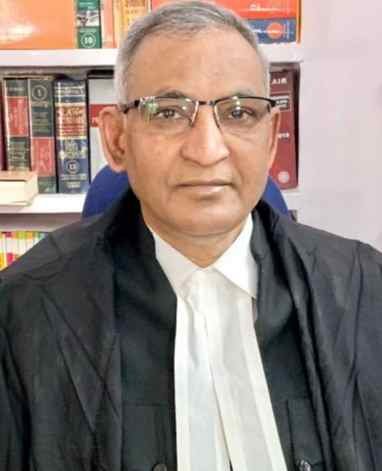
Hon'ble Vikas Kunvar Srivastav,J.
(Delivered by Justice Sunita Agarwal)
1.Heard Sri Raunak Chaturvedi, learned Amicus Curiae for the
appellant Brij Kishor and Sri Rupak Chaubey, learned AGA for the State-
respondent.
2.The present appeal is directed against the judgment and order dated
4
th
August, 1989 passed by the Ist Additional District & Sessions Judge,
Gorakhpur in Sessions Trial No. 189 of 1987 whereby two appellants
herein namely Jiut and Brij Kishor were convicted for the offence
punishable under Section 302 readwith Section 34 IPC and sentenced for
life imprisonment and a fine of Rs. 1000/- each.
3.At the outset, we may note that the appellant no. 1 Jiut had died
during the pendency of the present appeal and the appeal has been abated
on his behalf by the order dated 16.7.2019.
Sole surviving appellant is appellant no. 2 namely Brij Kishor who
is lodged in the District Jail, Gorakhpur since 21.8.2019 in execution of
the non-bailable warrant, as is evident from the report dated 31.8.2019
submitted by the Chief Judicial Magistrate, Gorakhpur.
We are, therefore, considering this appeal only on behalf of the
appellant no. 2 Brij Kishor.
4.The prosecution story began with an information given by the
village Chaukidar namely Nihor on 30.3.1986 at about 7:05 AM at the
2
Police Station Maharajganj, District Gorakhpur about death of one
Pitamber, the deceased herein, resident of village Parsameer, P.S.
Maharajganj, District Gorakhpur. The said information provided by the
Village Chaukidar was entered in the GD Rapat No. 5 at about 7:05 AM
as proved by PW-8, as Exhibit Ka-9. PW-8 further proved that he was
posted on the fateful day as Head Moharrir, Police Station Maharajganj
and on the receipt of the postmortem report in the police station, case
under Section 302 IPC was lodged on 1.4.1986 and entered in the GD as
Rapat No. 27 dated 1.4.1986 at 20:45 Hours. The original GD was
brought in the Court and the carbon copy thereof was proved as Exhibit
Ka-10. The inquest of the dead body was conducted on 30.3.1986,
commenced at about 10:30 AM and ended at 12:00 Noon. As per the
statement in the inquest, deceased Pitamber was a patient of Tuberculosis
(T.B.); the body was found inside the room in the house of Pitamber; no
visible injury was seen on the dead body. Black colour blood was oozing
out of the mouth and spread on both sides towards the ears of the
deceased. The inquest report was proved by PW-7, the Sub-Inspector
posted in the Police Station Maharajganj, being in his handwriting and
signature as Exhibit Ka-8. In cross, PW-7 stated that the village Pradhan
Ram Preet Singh was a witness of the inquest which is evident from the
report itself.
5.At this juncture, we may also note the statement of PW-8, in cross,
wherein he stated that the village Chaukidar Nihor while giving
information of the death of Pitamber stated that village Pradhan had
suspicion about the reason of the death.
6.The other documentary evidence on record are the Supurdiginama
of torch seized from the witness PW-1 Ram Preet. The memo of recovery
dated 2.4.1986 was proved by PW-6, the Investigating Officer as Exhibit
Ka-2, being in his handwriting and signature. Another memo of recovery
dated 2.4.1986 is about the recovery of blood soaked vest of Mitthu son of
Pitamber which had been proved as Exhibit Ka-3, being in the
3
handwriting and signature of PW-6. The postmortem report proved in the
handwriting and signature of Doctor C.P. Singh (PW-9) is Exhibit Ka-11.
The ante-mortem injuries found on the person of the deceased Pitamber
are as under:-
“1) Faint brown colour patch on right side of laryngical
prominance 1.75 cm x 1.5 cm.
2) Faint brown colour patch coupled with irregular margin on
left side of laryingical prominance measuring 5cm x 2.5 cm.
On internal examination of the body, brain and its membranes were
found congested. Blood was found in subcutaneous walls and muscles of
neck on front side. Pleura was adharent to the chest wall. The hyoid bone
and thyroid cartilage were found fractured. The trachea was filled with
frothy blood. The lungs were congested. Heart was empty and the buccal
cavity was full of frothy blood. Digested food was found in the stomach.
Intestines and bladder were empty. Spleen and kidneys were congested. In
the opinion of the doctor, the death had occurred about 18 hours before
the postmortem examination was conducted and the cause of death was
asphyxia due to throttling. It was opined by the doctor that the death could
occur in the night of 29/30.3.1986.
7.The Investigating Officer had entered in the witness-box as PW-6
and proved the reports prepared by him. In the cross examination, he
stated that the vest of Mitthu son of the deceased was sent for forensic
examination but report was not received till submission of the charge
sheet. He also proved that the charge sheet was submitted by him after
completion of the investigation as Exhibit Ka-4.
The formal witnesses, thus, proved the reports prepared by them
during the course of investigation and medical examination.
8.Challenging the conviction by the trial court, it is argued by the
learned counsel for the appellant that the star witness of the prosecution is
the child witness (PW-5) who had been discredited by the trial court.
PW-2 one witness of last seen had been declared hostile and he did not
4
support the case of the prosecution at all. The remaining witnesses PW-1
and PW-4 had been relied by the trial court to convict the appellant. The
findings returned by the trial court that the witness of last seen (PW-1)
told the Gram Pradhan who entered in the witness-box as PW-4 about
witnessing the accused persons coming out from the house of the
deceased and that fact by itself was sufficient to record conviction, is
based on conjectures and surmises. The evidence of PW-4 is a hearsay
evidence, the only evidence of last seen on the testimony of PW-1 was not
sufficient to hold the appellants guilty of commission of the crime. In any
case, the prosecution has failed to form a complete chain of
circumstances, each one to be proved beyond reasonable doubt, so as to
bring home the guilt of the accused persons namely the appellant herein.
In any case, burden of proving its case beyond all reasonable doubt lies on
the prosecution and the onus to offer explanation upon the appellant
would shift only in case, the prosecution has been able to prove the guilt
of the accused/appellant herein beyond reasonable doubt. The trial court
has erred in shifting onus upon the accused persons namely the appellant
herein to offer explanation as to why they were present in the house of the
deceased on the fateful night, when the prosecution has not been able to
prove the presence of PW-1 at the place wherefrom he allegedly seen the
accused persons, beyond reasonable doubt.
Reliance is placed on the decision of the Apex Court in Suresh
and another vs. State of Haryana
1
to assert that PW-1 being a
chance witness, his testimony requires a very cautious and close scrutiny.
The behaviour of PW-1 subsequent to the incident as he remained out of
scene for a period of more than two days and had entered only at the
instance of Gram Pradhan (PW-4) raise suspicion on his presence. The
contention is that if two views are possible on the evidence adduced in the
case, one pointing to the guilt of the accused and the other to his
innocence, the view which is favourable to the accused should be
1(2018) 18 SCC 654
5
adopted. Reference has been made to the decision of the Apex Court in
Harbeer Singh vs. Sheeshpal and others
2
.
9.Further on the question of motive, it is submitted that the motive
assigned by the prosecution for commission of the crime is too weak.
Mere pendency of a civil suit in the civil court between the deceased and
the accused persons cannot be said to be a motive strong enough for
committing such a ghastly crime. At worst, it raises strong suspicion
against the accused. The suspicion, however, so strong cannot take the
place of proof and cannot be the basis of conviction. Reference has been
made to the decision of the Apex Court in Bhagwan Singh and others
vs. State of M.P.
3
.
It is then argued that the Investigating Officer did not collect
incriminating material from the spot of the incident so as to prove the
presence of the child witness in the house at the time of the occurrence. It
was a blind murder of the deceased and the accused persons namely the
appellant herein had been implicated only on the suspicion raised by the
villagers because of the pendency of the civil suit between the deceased
and the accused persons.
The role of the Gram Pradhan in the entire sequence of events is
more of an investigator and prosecutor rather than a truthful independent
witness.
10.Learned AGA, in rebuttal, argued that the evidence of last seen and
the motive brought by the prosecution are clinching. The dead body was
found in the house. The incident was of night. The fracture of hyoid bone
found in the medical evidence is clearly suggestive of the homicidal
death. The presence of the accused person namely the appellant herein, at
the scene of the crime clearly established the guilt of the appellants. There
is no suggestion of enmity of the Gram Pradhan. The hostile witness was
contradicted with his statement under Section 161 Cr.P.C., wherein he
2(2016) 16 SCC 418
3(2003) 3 SCC 21
6
also proved the presence of accused persons near the scene of the crime.
Delay in recording Section 161 Cr.P.C. statement of the prosecution
witnesses would not be fatal to the prosecution case. In the instant case,
the factum of homicidal death came into knowledge only after the
postmortem was conducted as there was no sign of injury nor any weapon
was used as per the postmortem report. The GD was converted on
1.4.2006 and the case under Section 302 IPC was lodged though the
accused remained unknown. The delay, if any, in recording statement of
the prosecution witnesses stood explained with the GD entry dated
1.4.2006. The motive stated by the prosecution is admitted to the accused
persons and in absence of any dispute about the same, it is a reason of
strong suspicion which can be brought in the category of motive to
commit the crime. The chain of circumstances has been completed by the
prosecution with the relevant circumstance of last seen and motive which
are clinching in the incident. The evidence brought by the prosecution
cannot be discarded on any suggestion given by the defence.
It is argued on behalf of the prosecution that the lacuna shown in
the prosecution evidence is not such which would create a reasonable
doubt in the minds of the Court. As the cogent evidence of prosecution
witnesses cannot be discarded only on the doubt raised by the Court,
inasmuch as, the doubt has to be a reasonable doubt which must not be
based on any hypothesis.
To prove the factum of murder of deceased Pitamber, the
prosecution had produced five witnesses of fact.
11.PW-3 Ram Nihor is the Village Chaukidar who proved the factum
of giving information of the death of deceased Pitamber in the Police
Station Maharajganj. In cross, PW-3 stated that he went to the police
station alongwith the Gram Pradhan and Ram Preet Dhobi (PW-1) did not
accompany him.
12.PW-2, the prosecution witness of last seen had turned hostile and
7
did not support the case of the prosecution at all. In the examination-in-
chief, PW-2 stated that he was sleeping in his house at around 11:00 PM
and upon asking as to who went to his house, he replied that no one came.
He then stated that he did not know anything and kept mum when he was
asked further to explain as to what had happened at around 11:00 PM.
PW-2 then stated that he did not see the accused persons coming out of
the house of the Pitamber on the fateful night and that Ram Preet Dhobi
(PW-1) did not go to his house to call him.
In cross, PW-2 was confronted with his statement under Section
161 Cr.P.C., contents of which he denied and stated as to how it was
written that he had seen the accused persons coming out of the house of
Pitamber was not known to him. The suggestion that he was won over by
the accused persons was categorically denied by PW-2. From the
testimony of PW-2, it is evident that he did not support the case of the
prosecution at all. No part of his statement can be read in favour of the
prosecution.
13.Now we are left with three witnesses amongst whom PW-1 is the
witness of last seen, PW-4 is the village Gram Pradhan who is the witness
of inquest. PW-5 is the son of the deceased who is a child witness aged
about 7 years on the date of the incident (10 years on the date of
deposition). This witness was the star witness of the prosecution. On
appreciation of his testimony, however, the trial court rejected him as
being the witness of the crime and recorded that the possibility of PW-5
Mitthu not being present at the time of the occurrence cannot be ruled out.
14.Testing the testimony of PW-5, we may further note that apart from
his presence being doubtful on the spot, as noted by the trial court, the
possibility of this witness being tutored also cannot be ruled out. As
rightly noted by the trial court, PW-5, the child witness, in the cross-
examination, stated that he narrated the entire incident to the Investigating
Officer on the very next morning of the death of his father when the
officer came to the village in the presence of Ram Preet Dhobi (PW-1),
8
Ram Preet Singh Pradhan (PW-4) and Bechu (PW-2). As per the
statement of PW-5, he intimated the Investigating Officer that two
accused persons namely the appellants herein were present in the room of
his house on the fateful night. On the contrary, no such statement was
recorded by the Investigating Officer and when crossed, Investigating
Officer PW-6 categorically stated that no such statement was made to
him.
PW-5, the child witness further stated in his examination-in-chief
that he was threatened by the accused persons/the appellants herein that
he should not tell anything to anyone otherwise he would be killed. This
part of the statement was not found in the previous statement of PW-1
(Section 161 Cr.P.C. statement) as is evident from the cross-examination
of PW-5 and the Investigating Officer (PW-6). PW-5 then stated that when
he woke up, he lit up the lamp, to bring in the source of light to prove that
he saw the accused-appellants. In cross, this witness (PW-5) stated that he
had shown the Dibbi and the matchbox, which was lit up by him but it
was not seized by the Investigating Officer. The Investigating Officer
(PW-6), to the contrary, had categorically denied that no such Dibbi or
matchbox was found by him at the place of the incident, i.e. the room
wherein the incident had occurred.
Further statement of the child witness is very important to consider
wherein he stated that after the accused persons went away, he called his
father who did not speak and then he went to the village. Upon this
statement of PW-5 in his examination-in-chief, when he was asked by the
Court repeatedly as to what did he do after coming out, PW-5 remained
silent and lastly replied to the Court that villagers were collected. In cross,
the child witness stated that after the accused persons went away, Ram
Preet Singh Pradhan (PW-4) reached at the spot and no one else had
reached. He (PW-5) then told that he informed Ram Preet Singh Pradhan
that the accused-appellants namely Brij Kishor and Jiut were inside the
room and that apart from Ram Preet Singh Pradhan he did not talk to
9
anyone on the fateful night and that in the next morning, he was sent by
the Pradhan to the Police Station. The statement of PW-5, the child
witness about coming out of his house after the accused had left, at about
11:00 PM on his own, is unbelievable, firstly, that being a child of seven
years coming out of the house in the odd hours was not normal and
further that his version of coming out of his house is lacking in material
details and secondly, his version that Ram Preet Singh Pradhan (PW-4)
came in the night is in contradiction with the statement of PW-4 who
stated that he came to know through Ram Preet Dhobi (PW-1) in the next
morning/afternoon that the accused persons namely Jiut and Brij Kishor
were witnesses by him while they were coming out of the house of
deceased Pitamber at about 10:30 PM. On confrontation about his
statement under Section 161 Cr.P.C., PW-4 admitted that in his statement
he had mentioned the names of accused persons, having been last seen by
PW-1 Ram Preet Dhobi coming out of the house of deceased Pitamber.
The statement of Gram Pradhan was recorded at the time when inquest
was prepared, i.e. in the morning of 30.3.1986. On confrontation on this
aspect, the Investigating Officer (PW-6) stated that he could not record the
statement of the child witness (PW-5) before 3.4.1986 as the child was
scared and was not in a position to make a statement.
15.From the above noted facts, it is evident that the Investigating
Officer was not intimated by anyone on the next day about the presence of
the accused persons/appellants in the house of deceased Pitamber having
been seen by PW-5. The statement of PW-6, the Investigating Officer that
the child witness (PW-5) was not in a position to make a statement prior
to 3.4.1986 is in complete contradiction to the testimony of the child,
wherein he stated that he gave the details of the incident on 30.3.1986, i.e.
the date of report of the death in the presence of the witnesses namely
Ram Preet Dhobi (PW-1) and Ram Preet Singh Pradhan (PW-4) and
Bechu (PW-2). The trial court had rightly concluded that the
inconsistencies in the statement of the child witness (PW-5) could have
10
been ignored giving him advantage of being a child, had his statement
been plain and simple but the statement of this witness is full of material
improvement on vital points of the case.
As noted above, PW-5 could not explain as to what did he do after
coming out of the house when the accused persons left and his father did
not speak on his calling. The source of light, allegedly created by PW-5
could not be proved by the prosecution. The statement of the child witness
(PW-5) that the entire village was collected and then that the Gram
Pradhan only had reached in the night and the entire incident was narrated
to him, could not be proved by the prosecution, inasmuch as, the Gram
Pradhan (as PW-4) stated that he raised suspicion about involvement of
the appellants only on the information passed on to him by the witnesses
of last seen namely PW-1 and PW-2.
It was also rightly noted by the trial court that the recovery of blood
soaked vest was made by the Investigating Officer on 2.4.1986, i.e. after a
period of two days from the date of recovery of the body in the house
though the blood soaked vest, according to the version of the child
witness (PW-5), was given to the Investigating Officer on the very next
morning, i.e. on 30.3.1986. As per the Investigating Officer, the vest of
the child witness was given to him by one Haribhajan and the recovery
memo Exhibit Ka-3 does not contain signature or thumb impression of the
child to prove that it was given by him to the Investigating Officer.
Further from the testimony of the child witness, we may note that he
stated that he was sleeping with his father over a 'Kathri' covering
themselves with a 'Rajai' (quilt). The Investigating Officer, on the other
hand, stated that he did not find any 'Rajai' (quilt) at the place of the
incident and only one ‘Kathri’ was found. We may also note that a
suggestion was given to the Investigating Officer that the child witness
was not present in the village on 1.4.1986 and 2.4.1986 and that he was
called from the house of his maternal aunt which was denied by him (PW-
6).
11
It may be noted from the statement of the child witness that he
stated that his maternal aunt was living in another village and he and his
father (the deceased) went to the village of his aunt and came only 2-4
days prior to the incident. PW-5 though denied that he was in the house of
his aunt on the date of the incident but admitted that his maternal aunt was
alive on the date when he made deposition in the Court. PW-4, the village
Gram Pradhan had admitted that after death of the deceased, the civil case
for cancellation of the sale deed instituted by the deceased was being
pursued by him by getting himself appointed as the guardian of the child
Mitthu, i.e. PW-5, the son of the deceased. Giving explanation for this
conduct, PW-4 stated that since the child had no one as such he was
pursuing the case, which fact is found incorrect from the testimony of
PW-5 recorded after the statement of the Gram Pradhan. PW-5, the child
witness further admitted that he was living with Ram Preet Singh Pradhan
(PW-4) and came to depose in the Court alongwith the Gram Pradhan
Ram Preet Singh though stated that he was not tutored by PW-4, about
what was to be stated in the Court.
Lastly, it may be noted that PW-5 admitted that he was not
attending any school and on a question he wrongly answered that there
are ten months in one year.
16.For the aforesaid, on a careful evaluation of the testimony of PW-5,
it can be concluded that the presence of this witness in the room of the
house wherein dead body was found, on the fateful night i.e.
29/30.3.1986, is highly doubtful. It is hazardous to rely on the testimony
of the child witness as it was not available immediately after the
occurrence and the possibility of coaching and tutoring this witness (PW-
5) by the Gram Pradhan namely PW-4 with whom he was residing also is
highly probable.
17.The trial judge has recorded the demeanour of the child. The child
was vacillating in the course of his deposition. From a child of seven
years of age, absolute consistency in deposition cannot be expected but if
12
it appears that there was possibility of his being tutored, the Court should
be careful in relying on his evidence.
18.Agreeing with the findings of the trial court, on the doubt raised
about the credibility of child witness (PW-5) we may further note that it is
settled that while assessing evidence of the child witness, the Court must
carefully observe his/her demeanor to eliminate likelihood of tutoring. As
a rule of prudence, it is desirable to see corroboration of evidence of a
child witness from other reliable witness on record. The Court can rely
upon the testimony of a child witness, if the same is credible, truthful and
is corroborated by other evidence brought on record.
In a recent decision of the Apex Court in Digamber Vaishnav
and another vs. State of Chhattisgarh
4
, while noticing the
principles of appreciation of the testimony of a child witness, it was noted
by the Apex Court that Section 118 of the Evidence Act governs
competence of the persons to testify which also includes a child witness.
Evidence of the child witness and its credibility could depend upon the
facts and circumstances of each case. There is no rule of practice that in
every case the evidence of a child witness has to be corroborated by other
evidence before a conviction can be allowed to stand but as a prudence,
the Court always finds it desirable to seek corroboration to such evidence
from other reliable evidence placed on record. Only precaution which the
court has to bear in mind while assessing the evidence of a child witness
is that the witness must be a reliable one. It was noted that the evidence of
a child witness must be evaluated carefully as the child may be swayed by
what others tell him and he is an easy prey to tutoring. The requirement of
adequate corroboration of the testimony of a child witness before placing
reliance upon the same is more a rule of practical wisdom than law.
[Reference Paragraphs 22 and 23]
In his legendary style, Justice Y. V. Chandrachud as he then was
stated in Suresh vs. State of U.P.
5
as follows:-
4(2019) 4 SCC 544
5(1981) 2 SCC 569
13
“(11)......xxxxxxxxxxxxxxxxxx....... Children, in the first place,
mix up what they see with what they like to imagine to have seen and
besides, a little tutoring is inevitable in their case in order to lend
coherence and consistency to their disjointed thoughts which tend to
stray. The extreme sentence cannot seek its main support from evidence
of this kind which, even if true, is not safe enough to act upon for putting
out a life.”
19.We may further note that the child witness PW-5 did not claim
himself to be an eye-witness of the incident, as according to him, he had
only seen the accused persons/appellants inside the room on the fateful
night where the dead body was found and as per his version he was
threatened by the accused persons not to speak to anyone and they went
away.
20.As noted above, we do not find corroboration of the testimony of
child witness from any other evidence on record. Rather for the
inconsistencies/embellishments in his statement and the possibility of the
child witness (PW-5) being a tutored witness, we are afraid to rely on his
testimony as a witness of last seen of the accused persons/appellants at the
place of the incident on the fateful night. The crux is that PW-5, the child
witness could not be found to be trustworthy and his testimony cannot be
read in favour of the prosecution.
21.Now we are left with two witnesses namely PW-1 & PW-4. PW-1
claim himself to be the witness of last seen of the accused
persons/appellants coming out from the house of the deceased on the
fateful night.
22.We may note that the trial court had heavily relied upon the
testimony of this witness (PW-1) of last seen and, in fact, solely relied on
his statement to conclude that it was sufficient to connect the accused
persons with the crime and that as no explanation was offered by the
accused persons in respect of their presence in the house of the deceased
14
they be held guilty. The trial court has further noted that the motive to
commit the crime because of a civil litigation pending between the
accused-appellants with the deceased was proved by the prosecution and
the accused-appellants had no business to be at the residence of the
deceased at the odd hours. No explanation had been given by the accused
in respect of their presence in the house of the deceased and the
circumstance that the deceased was found dead in the morning and his
death was proved to be homicidal, the chain of circumstance put forth by
the prosecution was complete and fully established the guilt of the
accused leading to no other conclusion.
We are afraid to agree with the aforesaid findings returned by the
trial court for the reasons noted herein below.
23.Before testing the testimony of PW-1 and PW-4, independently one
by one, we may record that this is a case of circumstantial evidence and
there is no eye-witness account. It was the duty of the prosecution to
prove all the circumstances to form a complete chain unerringly pointing
towards the guilt of the accused-appellants leaving all reasonable
hypothesis of a third person entering into the scene of the crime. As has
been held by the Apex Court in Sharad Birdhichand Sarda vs. State
of Maharashtra
6
, the circumstances from which conclusion of guilt is to
be drawn should be fully established, “must” and “should” and not “may
be” established.
The five golden principles constituting of the proof of the case
based on circumstances, laid down by the Apex Court in the said case are
noted as under:-
“152. A close analysis of this decision would show that the
following conditions must be fulfilled before a case against an accused
can be said to be fully established:
6AIR 1984 SC 1622
15
(1) the circumstances from which the conclusion of guilt is to
be drawn should be fully established.
It may be noted here that this Court indicated that the
circumstances concerned 'must or should' and not 'may be' established.
There is not only a grammatical but a legal distinction between 'may be
proved' and 'must be or should be proved' as was held by this Court in
Shivaji Sahabrao Bobade & Anr. v. State of Maharashtra, (1973) 2 SCC
793, where the following observations were made:
"Certainly, it is a primary principle that the accused must be
and not merely may be guilty before a court can convict and the mental
distance between 'may be' and 'must be' is long and divides vague
conjectures from sure conclusions."
(2) the facts so established should be consistent only with the
hypothesis of the guilt of the accused, that is to say. they should not be
explainable on any other hypothesis except that the accused is guilty,
(3) the circumstances should be of a conclusive nature and
tendency.
(4) they should exclude every possible hypothesis except the
one to be proved, and
(5) there must be a chain of evidence so complete as not to
leave any reasonable ground for the conclusion consistent with the
innocence of the accused and must show that in all human probability
the act must have been done by the accused.
153. These five golden principles, if we may say so, constitute
the panchsheel of the proof of a case based on circumstantial evidence.”
It is, thus, settled that each and every circumstance brought in the
chain of circumstance by the prosecution should be fully established
beyond all reasonable doubt.
It was noted in Harbeer Singh (supra) that:-
“11. It is a cardinal principle of criminal jurisprudence that the
guilt of the accused must be proved beyond all reasonable doubt. The
burden of proving its case beyond all reasonable doubt lies on the
prosecution and it never shifts. Another golden thread which runs through
the web of the administration of justice in criminal cases is that if two
16
views are possible on the evidence adduced in the case, one pointing to
the guilt of the accused and the other to his innocence, the view which is
favourable to the accused should be adopted. [Vide Kali Ram Vs. State of
Himachal Pradesh, (1973) 2 SCC 808; State of Rajasthan Vs. Raja Ram,
(2003) 8 SCC 180; Chandrappa & Ors. vs. State of Karnataka, (2007) 4
SCC 415; Upendra Pradhan Vs. State of Orissa, (2015) 11 SCC 124 and
Golbar Hussain & Ors. Vs. State of Assam and Anr., (2015) 11 SCC
242].”
As regards, the evidence of last seen or theory of last seen, it is
stated by the Apex Court in Nizam and another vs. State of
Rajasthan
7
that the “last seen alive” or the “last seen theory”,
undoubtedly is an important link in the chain of circumstance that would
point towards the guilt of the accused with some certainty. The logic is
that the “last seen theory” holds the courts to shift the burden of proof to
the accused and the accused to offer a reasonable explanation as to the
cause of death of the deceased. It is, however, noted therein that the
settled principle of the law is that it is not prudent to base the conviction
solely on “last seen theory”. The evidence of last seen, i.e. “last seen
theory” should be applied taking into consideration the case of the
prosecution in its entirety and keeping in mind the circumstances that
precede and follow the point of being so last seen.
As noted in State of Rajasthan vs. Kashi Ram
8
, the last seen
theory is based on Section 106 of the Evidence Act which cast an
obligation on the accused to offer a reasonable explanation in discharge of
the burden placed on him. If the accused fails to adduce any explanation
or offers a false explanation, the Court can consider it as an additional link
in the chain of circumstances proved against the accused, so as to
complete the chain. However, Section 106 does not shift the burden of
proof in a criminal trial, which is always upon the prosecution. [Reference
Paragraph '23']
7(2016) 1 SCC 550
8(2006) 12 SCC 254
17
24.Meaning thereby, it is the duty of the prosecution to prove the
evidence of last seen beyond all reasonable doubt by the testimony of a
witness who is truthful, consistent and free from embellishments.
25.In light of the above legal principle, when we examine the balance
evidence of the prosecution namely PW-1 and PW-3, we find that as per
the statement of PW-1, he had seen the accused persons namely the
appellant herein Brij Kishor alongwith the co-accused coming out of the
house of deceased Pitamber on the fateful night at about 10:30 PM.
According to the version of PW-1, he had seen the accused persons on
lighting the torch, which he was carrying while standing in front of the
house of Bechu (PW-2). Upon seeing the accused persons, he confronted
them by asking as to what were they doing at the said place at that odd
hours. The accused replied that a litigation relating to an agricultural field
was going on and they went to the house of deceased Pitamber to settle
the same by compromise. After saying that the accused persons went to
their way. On the next day, he came to know that Pitamber was killed.
As per the testimony of PW-1, when the police came at the spot, he
was not present there and was in his brick kiln. He was also not present
when the body was sent for the postmortem. He came to know in the brick
kiln from a villager that the body was taken for the postmortem at about
10:00 AM. His brick kiln was at a distance of two furlong from the house
of deceased Pitamber. PW-1, however, stated that the same day when
body was taken away, in the evening, he told the Gram Pradhan that he
had seen the accused persons coming out of the house of the deceased in
the night and prior to telling the said fact to the Gram Pradhan, it was not
disclosed to anyone. When confronted, PW-1 stated that on the third day
of the incident, when Gram Pradhan passed on this information to the
police, he was called in the village by the Investigating Officer and his
statement was then recorded in the presence of the Gram Pradhan. PW-1
further stated that when he was interrogated by the Investigating Officer,
18
Bechu (PW-2) was not present.
26.We may further note from the testimony of PW-4, the village Gram
Prahdan Ram Preet Singh that as per his version, the fact of last seen was
intimated to him by PW-1 Ram Preet Dhobi on the next day of the
incident though in cross, PW-4 could not fix the time when the said fact
was disclosed by PW-1. He however, stated that the inquest was
conducted at about 9:30 AM and the Investigating Officer recorded his
statement at the time when the inquest was written and that the time of the
same was 9:30 AM. He was then confronted that whether he told the
Investigating Officer about PW-1 having seen the accused persons coming
out of the house of the deceased, he stated that since that was written in
his statement by the Investigating Officer, he would have told him but was
not sure about the time when that statement was made.
27.To ascertain as to when the statement of PW-4, the Gram Pradhan
was recorded by the Investigating Officer, who was also a witness of the
inquest, we have gone through the Case Diary.
28.A perusal thereof indicates that the Case Diary, Parcha No. 1 started
from 1.4.1986 when the case under Section 302 IPC was registered. We
may also note, at this juncture, that as per the statement of PW-8, the
Head Moharrir; GD entry No. 27 of registration of the case was made on
1.4.1986 at about 20:45 Hours (10:45 PM). From a perusal of the Case
Diary, it is evident that the Parcha No. 1 of the Case Diary commenced at
about 20:45 Hours on 1.4.1986 and the inquest and the postmortem were
copied therein. The statement of the Gram Pradhan as a Panch witness
was recorded in the Case Diary, Parcha No. 2 on 2.4.1986 which began
from 7:00 AM.
29.From a reading of the statement of the Gram Pradhan under Section
161 Cr.P.C., we may note that pressing his suspicion about the cause of
the death of deceased, PW-4, Ram Preet Singh Pradhan stated that on
19
getting information of the death of Pitamber at about 10:45 PM on
29.3.1986, he also went to the spot and saw that blood was coming out
from the mouth of the deceased and it was flowing at the place where his
son was sleeping. The vest of the son of the deceased was soaked with
blood but the child could not say anything because of the fear and was
only crying. The village Chaukidar Nihor and Ram Kishan Dhobi as also
one Haribhajan were sent to the police station to give the intimation. The
accused Jiut and his family members were creating rumor that Pitamber
died on his own death due to TB and were creating a scene so that no
information could be given to the police but when the Investigating
Officer came, the inquest was done and the body was sent for
postmortem. The accused persons also tried to get the postmortem report
in their favour but when they failed, they absconded. PW-4 then stated
that he started making enquiry on his own and then Ram Preet Dhobi told
him that by chance he had seen the accused persons coming out of the
house of the deceased in the torch light and also asked them the reason for
going there.
30.As per the statement of PW-4 in the examination-in-chief, the fact
of last seen of the accused persons coming out from the house of the
deceased was told by PW-1 Ram Preet Dhobi on the next day of the
incident, i.e. on 30.3.1986. From the version of PW-4, he had intimated
the Investigating Officer about the fact of last seen transpired by PW-1,
the witness of last seen, who also came to know on 30.3.1986 that the
deceased was killed, as per his own version in his examination-in-chief.
31.From the statements of PW-1 and PW-4, it seems that they got
suspicious about the death of Pitamber on the very next morning when his
dead body was found, i.e. on 30.3.1986 but confirmation of homicidal
death could be made only after the postmortem report was received,
which was conducted at about 2:00 PM on 30.3.1986. It is established
from the record that PW-4 Ram Preet Singh Pradhan was a witness of
20
inquest, but it is not explained by the prosecution as to why the
Investigating Officer took the whole next day, i.e. 1.4.1986 in registering
a case under Section 302 IPC and recording statements of material
witnesses which was recorded on the next day, i.e. 2.4.1986. It is evident
from the record that the accused persons were in the village on the next
day of the incident.
32.It is evident from the record that the Gram Pradhan, i.e. Ram Preet
Singh had been instrumental in solving the entire case by introducing the
presence of child witness, PW-5, in the house, which was found doubtful,
both by the trial court and also by us and further with the introduction of
Ram Preet Dhobi (PW-1) as a witness of last seen. The Gram Pradhan
PW-4 during the continuation of the trial was also contesting the civil
litigation of cancellation of the sale deed as a guardian of the minor son of
the deceased. The statement of Gram Pradhan that since there was no one
in the family of the deceased so he was contesting the civil case, is found
false from the statement of the child witness that his maternal aunt was
alive at the time of deposition and 2-4 days prior to the incident, he and
his father (deceased) came back from the house of his maternal aunt.
What interest the Gram Pradhan had in getting the accused persons
convicted can be inferred from the circumstances of the present case,
wherefrom it is evident that he was taking active interest in getting
cancellation of the sale deed of a land which was purchased by the
accused persons namely Jiut and Brij Kishor, by getting himself as the
sole guardian of a young child who was introduced in the witness-box as a
witness of seeing the accused inside his house in the odd hours.
33.As to the conduct of PW-1, the witness of last seen, he stated that
he came to know in the next morning that Pitamber was killed but he told
the Gram Pradhan for the first time about the fact of seeing the accused
persons coming out of the house of the deceased and that his statement
was recorded by the Investigating Officer on the third day at the instance
21
of the Gram Pradhan in his presence. From this part of the testimony of
PW-1, it is evident that the statement of PW-1 was recorded by the
Investigating Officer at the instance of the Gram Pradhan. The version of
PW-1 that when his statement was recorded, the other witness of last seen
namely Bechu (PW-2) who had turned hostile was not present, is found
false from a perusal of the Case Diary which records that the statements
of Ram Preet Singh Pradhan (PW-4), Bechu PW-2 and Ram Preet Dhobi
namely PW-1 were recorded on the same day, i.e. 2.4.1986 at the place of
the incident, when the investigation was commenced by the Investigating
Officer at about 7:00 AM. As per the sequence in the Case Diary, after
recording statement of the first informant Ram Nihor Chaukidar, the
statements of Panch witnesses were recorded and the Investigating Officer
had then recorded the statements of witnesses of last seen namely Bechu
(PW-2), Ram Preet Dhobi (PW-1).
34.Having analysed the statements of PW-1 and PW-4 conjointly, we
may further note that the testimony of PW-4, the Gram Pradhan is a
hearsay evidence, he did not project himself as the witness of any of the
incriminating circumstance brought against the accused persons by the
prosecution except that a case for cancellation of the sale deed was
instituted by deceased Pitamber against the accused persons. We may also
note from the cross-examination of PW-4 that he stated on his own that
deceased Pitamber had no money to contest the case and he was begging
for the money from the villagers and he (PW-4 Pradhan) also helped him
financially.
35.Another witness of last seen Bechu had turned hostile and did not
support the prosecution at all.
36.The motive of commission of crime, i.e. civil dispute instituted by
the deceased against the accused persons though stated but cannot be said
to be so strong so as to commit the murder, inasmuch as, from the version
22
of PW-4, it transpires that deceased Pitamber had no money to contest the
suit. Moreover, the suit was for cancellation of the sale deed executed in
favour of the accused persons. It had not been established nor brought by
the prosecution that the accused persons did not get possession of the
purchased property and, thus, had immediate motive to commit the crime.
It has also not come in the evidence nor can it be inferred from the
circumstances brought forth by the prosecution that the suit had matured
to the stage that the accused persons had an apprehension that they would
loose the purchased land. Rather as per the version of PW-4, the Gram
Pradhan, he was contesting the suit even after three years of the
occurrence, when the deposition of the witnesses was recorded in the trial
court. Thus, the prosecution though stated the motive for commission of
the crime but had not established it by bringing forth such circumstance
which would be strong enough to be the immediate cause of commission
of the offence. Mere pendency of a civil suit between the deceased and the
accused persons cannot be said to be a strong motive so as to treat it as a
circumstance fully established for commission of the crime. Mere
narration of motive in a case of circumstantial evidence without bringing
anything further to prove the same cannot be taken as a circumstance to
establish the case of the prosecution. [Reference Bhagwan Singh and
others vs. State of M.P.
9
Para 32]
37.It is settled that in a case of circumstantial evidence, motive may be
considered as a circumstance, which is relevant factor for the purpose of
assessing evidence, in such cases where there is an unambiguous evidence
to prove the guilt of the accused. It is true that the motive is primarily
known to the accused himself and it may not be possible for the
prosecution to explain what actually prompted or excited the accused to
commit a particular crime but in a case like the present one where the
only motive narrated is the pendency of a civil litigation where the
accused persons were on beneficial side, in absence of unambiguous
9(2003) 3 SCC 21
23
evidence, it cannot be treated to be a circumstance which is such as to
create a high degree of probability that the offence was committed by the
accused persons.
38.As noted above, PW-1 cannot be found to be an independent
witness but seems to be a witness prompted by the Gram Pradhan (PW-4)
who was behind the entire prosecution story. The statement of PW-1 being
the witness of last seen is, thus, not found to be credible. Even otherwise,
PW-1 could not establish the reason for his presence at the house of
Bechu (PW-2) wherefrom he had allegedly seen the accused persons
coming out from the house of the deceased Pitamber. On confrontation of
this witness, he admitted that Bechu was not present in the Brick Kiln on
the next day when the dead body was found. The conduct of this witness
in not coming forward to intimate the Investigating Officer about having
seen the accused persons on the very next day when he got the
information that the deceased was killed also shakes the credibility of this
witness. The explanation offered by him that he was present in his brick
kiln and for the fear that he would be abused by the police he did not go
to the house of the deceased even on getting information that the police
had reached there, is found to be an effort of the prosecution to fill up the
lacuna. Also the presence of PW-1 at the place wherefrom he had seen the
accused coming out from the house of the deceased was not natural. He
could only be kept in the category of a chance witness whose testimony is
to be evaluated with caution and circumspection before resting the
conviction on the same.
39.We find it profitable to note the observations in Para '23' in
Harbeer Singh (supra).
“23. The defining attributes of a “chance witness” were
explained by Mahajan, J., in the case of Puran Vs. The State of Punjab,
AIR 1953 SC 459. It was held that such witnesses have the habit of
appearing suddenly on the scene when something is happening and then
24
disappearing after noticing the occurrence about which they are called
later on to give evidence.”
The observations in Para '47' in Suresh and another vs. State
of Haryana
10
are also relevant to be noted hereunder:-
“47. …............xxxxx..............Nonetheless, the evidence of a
chance witness requires a very cautious and close scrutiny. A chance
witness must adequately explain his presence at the place of
occurrence. [refer to Satbir v. Surat Singh, (1997) 4 SCC 192;
Harjinder Singh v. State of Punjab, (2004) 11 SCC 253]. Deposition
of a chance witness whose presence at the place of incident remains
doubtful should be discarded [refer Shankarlal v. State of
Rajasthan, (2004) 10 SCC 632]. The behavior of the chance witness,
subsequent to the incident may also be taken into consideration
particularly as to whether he has informed anyone else in the village
about the incident. [refer Thangaiya v. State of Tamil Nadu, (2005) 9
SCC 650]. ”
40.The prosecution has, thus, failed to establish beyond reasonable
doubt and the presence of PW-1 near the place of the incident on the
fateful night so as to establish that PW-1 was the witness of last seen of
the accused coming out of the house of the deceased while he was
standing outside the house of Bechu.
41.In the totality and facts and circumstances of the present case, we
find that the prosecution has not been able to bring the circumstances of
implication of the accused-appellant in such a manner so as to establish
their guilt in the commission of crime beyond reasonable doubt.
42.We may also record that the role of Investigating Officer in the
whole investigation process is also questionable.
43.Record shows that even after the postmortem conducted on
30.3.1986 at about 2:00 PM, the Investigating Officer whosoever was
10(2018) 18 SCC 654
25
Incharge, did not proceed with the investigation for more than 24 hours
and the case was registered under Section 302 only on 1.4.1986 in the
night at about 20:45 hours when the Investigating Officer only extracted
the inquest and the postmortem in the Case Diary. The entire investigation
was proceeded only on 2.4.1986 when the Investigating Officer went on
the spot, recoveries were then made, the site plan was prepared. As per the
statement of the Investigating Officer, he inspected the site of the incident
after recording the statements of the witnesses. As stated in the
examination-in-chief, PW-6 prepared the site plan after recording
statements of Bechu, Nihor, Mitthu, Ram Preet Singh Pradhan, Ram Preet
Dhobi. The site plan is dated 2.4.1986.
As per the statement of the Investigating Officer, he prepared the
site plan at the instance of child witness Mitthu, which fact is further
evident from the narration in the site plan wherein it is stated that the
place “A” was shown by child witness Mitthu as the place where
deceased was killed by throttling and from the said place itself, blood
stained and plain earth were collected previously.
44.No recovery memo of the blood stained and plain earth was brought
on record by the prosecution in consonance with the version of the
Investigating Officer recorded in the site plan at Item No. 'A' of the index.
The statement of the child witness, however, was recorded on 3.4.1986, a
day after recording the statements of all other witnesses and completion of
papers pertaining to the investigation. As per the first version of the child
witness recorded in the site plan by the Investigating Officer prepared on
2.4.1986, he showed the place where the accused persons had killed the
deceased by throttling his neck. The explanation offered by the
Investigating Officer for delay in recording the statement of the child
witness that the child was shaken by the incident and was not in a position
to make a statement belied from the own version of the Investigating
Officer recorded in the site plan as noted above.
26
45.Further the Investigating Officer, in cross, admitted that a 'Kathri'
made of pieces of cloth was found from the place of the incident which
was on a 'Puwal' but no recovery memo of the said 'Kathri' was prepared.
The blood soaked vest of the child witness was not recovered on the first
day of the investigation, i.e. 30.3.1986 and it was not handed over by the
child witness PW-5 as against his testimony. The said vest was handed
over on 2.4.1986 by one Haribhajan as noted in the recovery memo
Exhibit Ka-3 and the statement of the Investigating Officer PW-6. As per
the statement of the Investigating Officer, the said vest was sent to FSL
for chemical examination but the results of the said examination was not
brought by the prosecution before the trial court. The prosecution has,
thus, failed to prove the recovery of blood soaked vest from the spot of
the incident as is narrated in the recovery memo Exhibit Ka-3 which
admittedly does not contain the signatures or thumb impression of the
child witness Mitthu.
46.As per the statement of the Investigating Officer, the investigation
was initially conducted by SI Narendra Pratap Singh (PW-7) who had
completed the inquest proceedings. The investigation was handed over to
PW-6 after the receipt of the postmortem report. It could not be explained
by the prosecution as to when the postmortem was conducted on
30.3.1986 at about 2:00 PM and report was received, at what time the
investigation was handed over to PW-6. PW-6, the Investigating Officer
who started the investigation on 1.4.1986 at about 20:45 Hours did not
explain this gap.
Further from the statement of the previous Investigating Officer
namely S.I. Narendra Pratap Singh (PW-7), it is evident that after
reaching the spot on 30.3.1986, he only conducted the inquest and sent the
body for the postmortem. It is not known as to who collected the blood
stained and plain earth from the spot of the incident and why it was not
produced in the evidence. PW-7 admittedly did not record the statement
27
of anyone on the spot and only noted in the evidence that people present
on the spot including the inquest witnesses raise apprehension about the
cause of death.
47.It was a case of circumstantial evidence, the responsibility of the
Investigating Officer to investigate the murder was more onerous,
inasmuch as, he would be the first person to enter into the scene of crime
and collect all incriminating circumstances/material so as to solve the
crime so as to bring the culprits before the Court. In the instant case, it is
evident from the record that the Investigating Officer (PW-6) who
commenced investigation after two days of the incident instead of doing
investigation on his own, was guided by PW-4 Ram Preet Singh Pradhan
whose statement was recorded on the first day of the commencement of
the Investigation, i.e. 2.4.1986. The entire investigation, as is clear from
the record, proceeded in the manner in which it was prompted by Ram
Preet Singh Pradhan namely PW-4. The investigation in this case, as is
evident, was guided only in one direction just as to implicate the accused
persons namely Jiut and Brij Kishor being the culprits since the beginning
on the suspicion raised by the Gram Pradhan and was not independent at
all. A vitiated investigation would ultimately prove to be a precursor of
miscarriage of criminal justice. In such a case the Court would simply try
to decipher the truth only on the basis of guess or conjectures as the whole
truth would not come before it.
48.The suspicion raised by the Gram Pradhan because of the pendency
of the civil litigation between the accused persons and the deceased had
been the reason for the implication in the instant case. Though the needle
of suspicion was pointed at the accused-appellants but the legal evidence
in the shape of definite circumstances pointing unerringly towards the
guilt of the accused-appellants could not be brought forth by the
prosecution.
28
It is well settled that the suspicion cannot take the place of proof
and even if the circumstances on record is a pointer to a strong suspicion,
it in itself is not sufficient to lead to the conclusion that the guilt of the
accused stands established beyond reasonable doubt. [Reference Ganpat
Singh vs. State of Madhya Pradesh
11
Paragraph '13']
49.In the entirety of the facts and circumstances of the instant case, we
are afraid to agree with the conclusion drawn by the trial court that the
chain of circumstance is complete and fully establishes the guilt of the
accused persons leading to no other conclusion and that the accused had
failed to furnish any explanation in respect of their presence in the house
of the deceased. The reason being that the presence of the accused persons
in the house of the deceased could not be established once the trial court
itself had rejected the evidence of PW-5, the child witness.
50.As regards the testimony of PW-1 and PW-4, the trial court has
committed an error in reading both the testimonies together and not
evaluating the statement of PW-1, the witness of last seen, independently.
The finding recorded by the trial court that PW-4 Gram Pradhan had
confirmed that the fact of last seen was told by PW-1 to him on the day
following the incident and that it was not believable that PW-1 was under
possible pressure or influence of Ram Preet Singh Pradhan so as to falsely
implicate the accused persons in the case of murder, is not based on
proper appreciation of the evidence on record rather more out of the own
imagination or belief of the trial court. The said finding is based on
conjectures and surmises for the fact that the trial court did not evaluate
the statement of PW-1 independently so as to analyse as to whether he
(PW-1) had established his presence at the place wherefrom he allegedly
had last seen the accused persons or whether his presence at the said place
was natural. The conduct of PW-1 Ram Preet Dhobi in not coming
forward to make a statement before the Investigating Officer (PW-7) who
11(2017) 16 SCC 353
29
conducted inquest on the very first day and making a statement only at the
instance of the Gram Pradhan after two days of the receiving of the dead
body has also been completely ignored by the trial court. The trial court
has wrongly treated the Gram Pradhan (PW-4) as a wholly reliable
witness and conveniently ignored that he was also an interested witness,
who was taking undue interest in the civil litigation initiated by the
deceased against the accused persons, apart from being the creator of the
entire prosecution story, since the beginning on his own suspicion. He
(PW-4) cannot be treated to be an independent and reliable witness so as
to base the conviction on his testimony.
51.In the totality of the facts and circumstances of the present case, we
find that because of the irresponsible attitude of the Investigating Officers
(PW-6 and PW-7), the lopsided investigation made by PW-6 has resulted
in causing serious prejudice to both the prosecution as also the defence.
The omission on the part of the Investigating Officer (PW-6) has result in
miscarriage of justice as it left the Court only to guess-work rather than
helping it to decipher the truth.
52.We also find it profitable to note the observations of the Apex court
in The State of Punjab vs. Jagir Singh, Baljit Singh and
Karam Singh
12
wherein while laying down the mode of appreciation of
evidence and the general principles regarding presumption of innocence,
it was observed by the Apex court that a criminal trial is not like a fairy
tale wherein one in free to give flight to one's imagination and phantasy. It
concerns itself with the question as to whether the accused arraigned at
the trial is guilty of the crime with which he is charged. In arriving at the
conclusion about the guilt of the accused charged with the commission of
a crime, the Court has to judge the evidence by the yardstick of
probabilities, its intrinsic worth and the animus of witnesses.
Reference has been made to the decision of the Apex Court in Kali
12(1974) 3 SCC 277
30
Ram vs. State of Himachal Pradesh
13
. Relevant paragraph '25' is
quoted hereunder:-
“25. Another golden thread which runs through the web of the
administration of justice in criminal cases is that if two views are
possible on the evidence adduced in the case, one pointing to the guilt
of the accused and the other to his innocence, the view which is
favorable to the accused should be adopted. This principle has a special
relevance in cases where the guilt of the accused is sought to be
established by circumstantial evidence. Rule has accordingly been laid
down that unless the evidence adduced in the case is consistent only
with, the hypothesis of the guilt of the accused and is inconsistent with
that of his innocence, the court should refrain from recording a finding
of guilt of the accused. It is also an accepted rule that in case the
court entertains reasonable doubt regarding the guilt of the accused, the
accused must have the benefit of doubt. Of course, the doubt regarding
the guilt of the accused should be reasonable; it is not the doubt of a
mind which is either-so vacillating that it is incapable of reaching a
firm conclusion or so timid that it is hesitant and afraid to take things
to their natural consequences. The rule regarding the benefit of
doubt also does not warrant acquittal of the accused by resort to
surmises, conjectures or fanciful considerations. As mentioned by this
Court in the case or Slate of Punjab v. Jagir Singh, (Crl. A. No. 7 of
1972 d/ August 6, 1973) a criminal trial is not liked a fairy tale
wherein one is free to give flight to one' In arriving at the conclusion
about the guilt of the imagination and phantasy. accused charged
with the evidence by the yardstick of witnesses. Every case own
facts. Although the. to the accused the courts commission of a crime,
the court has to judge the of probabilities, its intrinsic worth and the
animu, in the final analysis would have to depend upon it benefit of
every reasonable doubt should be given should not at the same time
reject evidence which is ex facie trustworthy or grounds which are
fanciful or in the nature of conjectures.”
We may further note the observations in Latesh alias Dadu
Baburao Karlekar vs. State of Maharashtra
14
noted in Para '54' of
13(1973) 2 SCC 808
14(2018) 3 SCC 66
31
the report in Suresh and another vs. State of Haryana (supra):-
“54. …...xxxxxxxxxxxxxx...........In Latesh v. State of Maharashtra,
(2018) 3 SCC 66 , this court had observed that:
“46.... When you consider the facts, you have a reasonable doubt as to
whether the matter is proved or whether it is not a reasonable doubt in this
sense. The reasonableness of a doubt must be a practical one and not on an
abstract theoretical hypothesis. Reasonableness is a virtue that forms as a
mean between excessive caution and excessive indifference to a doubt.”
53.On a careful appreciation of the evidence on record, with the degree
of caution and circumspection required in the facts of the instant case, we
reach at an irresistible conclusion that the prosecution has failed to
establish the guilt of the accused-appellant namely Brij Kishor herein,
beyond all reasonable doubt. The benefit of doubt obviously has to go to
the accused-appellant Brij Kishor.
The judgment and order dated 4
th
August, 1989 passed by the
Ist Additional District & Sessions Judge, Gorakhpur in Sessions Trial No.
189 of 1987 is, therefore, liable to be set aside and the appeal deserve to
be allowed.
We, therefore, allow this appeal while setting aside the judgment
of the trial court.
The accused-appellant Brij Kishor is in jail. He shall be released
from the jail forthwith, if he is not wanted in relation to any other crime.
The office is directed to send back the lower court record along
with a certified copy of this judgment for information and necessary
compliance.
The compliance report be furnished to this Court through the
Registrar General, High Court, Allahabad.
Before parting with this judgment, we record our appreciation to Sri
32
Raunak Chaturvedi learned Amicus Curiae who rendered valuable
assistance to the Court. The Court quantifies Rs. 15,000/- (Rupees Fifteen
Thousand only) to be paid to Sri Raunak Chaturvedi, learned Advocate as
fee for his precious time provided in preparation and hearing of this
Criminal Appeal. The said amount shall be paid to him by the Registry of
the Court within the shortest possible time.
(Vikas Kunvar Srivastav,J.) (Sunita Agarwal,J.)
Order Date :- 30.5.2022/Brijesh

 Login with google
Legal Notes
Add a Note....