
As per case facts, the plaintiff sought a declaration that defendant No.1 was not his legally wedded wife, denying a customary marriage and challenging a document produced by the defendant. ...
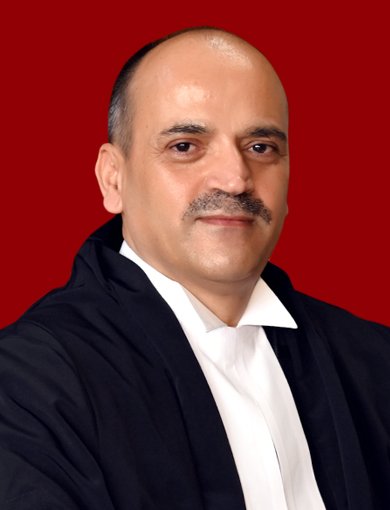
No Acts & Articles mentioned in this case
2026:HHC:11129
IN THE HIGH COURT OF HIMACHAL PRADESH, SHIMLA
RSA No. 173 of 2008
Reserved on: 07.03.2026
Date of Decision: 09.04.2026
Kailash Chand ...Appellant.
Versus
Deepa Devi & Ors. ...Respondents.
Coram
Hon’ble Mr Justice Rakesh Kainthla, Judge.
Whether approved for reporting?
1
Yes
For the Appellant : Mr Raman Jamalta, Advocate.
For the Respondents: Mr Vivek Singh Thakur, Advocate.
Rakesh Kainthla, Judge
The present appeal is directed against the judgment
and decree dated 29.12.2007 passed by the learned Additional
District Judge, Fast Track, Kullu (learned Appellate Court) vide
which the judgment and decree dated 19.07.2007 passed by the
learned Civil Judge, Sr. Division, Kullu (learned Trial Court) were
upheld. (Parties shall hereinafter be referred to in the same manner
as they were arrayed before the learned Trial Court for convenience.
1
Whether reporters of Local Papers may be allowed to see the judgment? Yes.
2
2026:HHC:11129
2. Briefly stated, the facts giving rise to the present
appeal are that the plaintiff filed a civil suit before the learned
Trial Court for seeking a declaration that defendant No.1. has no
right to proclaim herself to be the legally wedded wife of the
plaintiff, no marriage as per custom was solemnized between
plaintiff and defendant No.1, and the document produced by the
defendant is forged and fictitious, which is not binding upon the
plaintiff. A consequential relief of permanent prohibitory
injunction for restraining the defendants from visiting the
house of the plaintiff and defendant No.1 from proclaiming
herself as plaintiff’s wife was also sought. It was asserted that
the defendants used to visit the house of Nimo Devi, who had an
inimical relationship with the plaintiff. The defendants asked
the plaintiff and his parents to solemnise a marriage between
the plaintiff and defendant No. 1. The plaintiff did not accept this
proposal. The defendant No.1 started proclaiming herself as the
wife of the plaintiff. She also produced a document showing that
a marriage was solemnised between the plaintiff and her. These
claims are false. Hence, the suit was filed to seek the relief
mentioned above.
3
2026:HHC:11129
3. The suit was opposed by filing a written statement
taking preliminary objections regarding lack of maintainability,
the suit having not been properly valued for Court fees, and the
plaintiff having concealed the material facts from the Court. The
contents of the plaint were denied on the merits. It was asserted
that the parties are governed by the local agricultural customs of
District Kullu. Defendant No.1 and the plaintiff solemnised a love
marriage. The plaintiff’s parents subsequently performed a
marriage between the plaintiff and defendant No.1 on
04.05.2005 as per the local custom. They put a Thipu (Dupatta)
on the head of defendant No.1 before their deity and organised a
feast for the villagers and their relatives. Defendant No.1 started
residing with the plaintiff in his house as his wife. The plaintiff
maltreated defendant No.1 and turned her out of her
matrimonial home in January 2006. She made a complaint to the
police. The plaintiff compromised the matter with defendant
No.1 in the presence of Pradhan, Gram Panchayat Katrain and
undertook to keep defendant No.1 in his house. Defendant No.2
never visited the house of Nimo Devi or the plaintiff. Therefore,
it was prayed that the suit be dismissed.
4
2026:HHC:11129
4. A replication denying the contents of the written
statement and affirming those of the plaint was filed.
5. The learned Trial Court framed the following issues
on 03.08.2006: -
1. Whether the plaintiff is entitled to the declaration as
prayed for? OPP.
2. Whether the plaintiff is entitled to the relief of a
permanent prohibitory injunction, as prayed for? OPP.
3. Whether the suit of the plaintiff is not maintainable in the
present form? OPD.
4. Whether the plaintiff has concealed the material facts
from the Court, if so, its effect? OPD.
5. Whether the suit has not been properly valued for the
purposes of court fees and jurisdiction?OPD
6. Whether the defendants are entitled to special costs
under Section 35-A CPC? OPD
7. Relief.
6. The parties were called upon to produce the evidence,
and the plaintiff examined himself (PW1) and Jagan Nath (PW2).
Defendant No.1 examined herself (DW1), Nathu Ram (DW2),
Badri Parkash (DW3) and Subhash Chand (DW4).
7. The learned Trial Court held that the defendants had
failed to prove that the marriage was solemnised as per the
custom of the area. However, the plaintiff and defendant no. 1
resided together, which would make it probable that they were
5
2026:HHC:11129
married to each other. The document produced on record also
corroborated the version of defendant No.1. The suit was
maintainable and properly valued for Court fees and jurisdiction.
Hence, the learned Trial Court answered issue Nos. 1 to 6 in
negative and dismissed the suit filed by the plaintiff.
8. Being aggrieved by the judgment and decree passed
by the learned Trial Court, the plaintiff filed an appeal, which
was decided by the learned Additional District Judge, Fast Track
Court, Kullu (Learned Appellate Court). Learned Appellate Court
held that, as per the question No.16 of tribal custom, a marriage
could be solemnised by giving meals to the marriage party and
the execution of the agreement. The evidence proved that meals
were provided to the marriage party, and Ganesh Pooja was
performed. Therefore, the marriage was solemnised as per the
custom. This version was also duly corroborated by the
undertaking (Ext.DW3/A) executed by the plaintiff admitting the
relationship between the parties. Cohabitation between a man
and a woman openly leads to an inference of a valid marriage,
and the burden was upon the person denying the marriage to
rebut this presumption. The plaintiff had failed to rebut the
presumption, and his suit was rightly dismissed by the learned
6
2026:HHC:11129
Trial Court. Hence, the appeal preferred by the plaintiff was
dismissed.
9. Being aggrieved by the judgments and decrees passed
by the learned Courts below, the plaintiff has filed the present
appeal, which was admitted on the following substantial
questions of law on 24.06.2009:-
1.Whether the Courts below erred in holding that there
had been a marriage according to customary law
without proving the same, as the customary law is
not only to be pleaded but is required to be proved
like any other matter?
2.Whether the learned Courts below erred in placing
reliance on Ext.DW3/A, considering the same as
agreement of marriage, especially when the appellant
had denied his signature on the same?
3.Whether the alleged compromise Ext.DW3/A could be
treated as an agreement when it is not signed by both
the parties to the agreement?
4.Whether the learned Courts below misread,
misappreciated both oral and documentary evidence
on record and the findings are based on mere
conjectures and surmises?
10. I have heard Mr Raman Jamalta, learned counsel for
the appellant/plaintiff and Mr Vivek Singh Thakur, learned
counsel for the respondents/defendants.
7
2026:HHC:11129
11. Mr Raman Jamalta, learned counsel for the
appellant/plaintiff, submitted that the learned Courts below
erred in holding that the marriage was solemnised according to
the customary law. There was no proof of the customary law,
and the requirements provided in answer to Question No.16, as
noticed by the learned Appellate Court, were not fulfilled. The
marriage could not have been solemnised by executing the
document. The presumption regarding the marriage can only be
drawn by long co-habitation and cohabitation for a few months
was not sufficient to raise the presumption. Therefore, he
prayed that the present appeal be allowed and the judgments
and decrees passed by the learned Courts below be set aside. He
relied upon the judgments in S.P.S. Balasubramanyam vs.
Suruttayan @ Andali Padayachi and others (1994) 1 SCC 460,
Ranganath Parmeshwar Panditrao Mali and another vs. Ekna
Gajanan Kulkarni and another (1996) 7 SCC 681 and Madan
Mohan Singh and others vs. Rajni Kant and another (2010) 9 SCC
209 in support of his submission.
12. Mr Vivek Singh Thakur, learned counsel for the
respondents/defendants, submitted that the learned Courts
below have consistently recorded findings of fact regarding the
8
2026:HHC:11129
solemnization of the marriage. This finding is supported by the
material on record and the document executed by the plaintiff.
There is no perversity in the findings recorded by learned Courts
below, and this Court should not interfere with a pure finding of
fact while deciding a regular second appeal. Hence, he prayed
that the present appeal be dismissed.
13. I have given considerable thought to the submissions
made at the bar and have gone through the records carefully.
Substantial Questions of Law No.1:-
14. The defendants pleaded in para 3 of the written
statement that the marriage between plaintiff and defendant
No.1 was solemnised as per the custom of District Kullu known
as Riwaj-e-Aam. The parents of the plaintiff performed the
marriage and put a Thipu (Dupatta) on the head of defendant
No.1 before their deity, and in this way completed the marriage
of plaintiff and defendant No.1. Thereafter, plaintiff and his
parents gave a feast to the villagers and their relatives in their
house. It was laid down by this Court in Lachhmi vs Bali Ram
1997 (2) Shim. LC 145 that the custom has to be proved by citing
instances. It was observed:
9
2026:HHC:11129
“11. It is well settled that custom is a fact which must be
pleaded and proved by authoritative pronouncements or
by instances in which it has been followed or by some
other evidence. It cannot be established by dialectics.
12. It is equally well settled that a custom to be legally
binding must be ancient, certain and invariable, and the
onus lies heavily upon a party setting up a special family
custom at variance with the general custom and personal
law of the parties, and it must be proved by clear and
cogent evidence.”
15. It was laid down by this Court in Sardar Mohammad v
Hosyara and others ILR 1988 HP 226, that a custom has to be
specifically pleaded and proved. It was observed:
“8. Now, it is settled law that a custom, to have the force
of law, must be ancient, certain, reasonable, continual,
peaceable, consistent, legal, moral and not opposed to
public policy. So far as custom as a rule of law applicable
to a particular or defined locality, that is, local custom, is
concerned, it must be shown also that it is compulsory in
the sense that it is a customary right vested in the
inhabitants of a particular locality and that it is not
optional to every person to follow it or not. It is also well
established that in the matter of custom, a party has to
plead in specific terms as to what is the custom that he is
relying on, and he must prove the custom pleaded by him.
He cannot be permitted to prove a custom not pleaded by
him. The reason for this rule is obvious. Anybody who
puts forward a custom must prove by satisfactory
evidence the existence of the custom pleaded, its
continuity and the consistency with which it was
observed. A party against whom a custom is pleaded must
have notice as to what case he has to meet. The opposite
party, apart from rebutting the evidence adduced by the
plaintiff, may be able to prove that the custom in question
was not invariably followed. He cannot get ready with
10
2026:HHC:11129
that evidence without knowing the nature of the custom
relied upon by the plaintiff (see: Kochan Kani Kunjuraman
Kani etc. v. Mathevan Kani Sankaran Kani and others, etc.,
AIR 1971 SC 1398)
16. This position was reiterated in Shakuntala & Ors. Vs.
Surinder Chand & Ors. AIR 2006 HP 108: 2006 SCC OnLine HP 8 ,
wherein it was observed:-
“19. In order to prove custom, it is necessary for the party
who alleges custom to prove it to be ancient, certain,
reasonable and having been followed constantly without
deviation. The custom has to be construed strictly. The
custom, as pointed out in Ramalakshmi Ammal v.
Sivanatha Perumal, (1872) 14 Moo Ind App 570, Siromani
and another v. Hemkumar and others, AIR 1968 SC 1299,
Harihar Prasad Singh and others v. Balmiki Prasad Singh
and others, AIR 1975 SC 733, must be proved by the party
who alleges such custom by clear and unambiguous
evidence as it is only by such evidence that Courts can be
assured of its existence and the fact that it possesses the
condition of antiquity and certainty on which alone their
legal title to recognition depends. It is a settled position of
law that wherever the evidence shows the custom alleged
was not allowed, uniformly, the custom cannot be said to
be proved. Mulla, in his Principles of Hindu Law,
observed:
"A custom derives its force from the fact that it has,
from long usage, obtained the force of law."
Mulla further observed :
"All that is necessary to prove is that the usage has
been acted upon in practice for such a long period
and with such invariability as to show that it has, by
common consent, been submitted to as the
established governing rule of a particular locality."
11
2026:HHC:11129
17. This position was reiterated in Laxmibai v.
Bhagwantbuva, (2013) 4 SCC 97: 2013 SCC OnLine SC 101, wherein
it was observed at page 105:
“12. Custom is an established practice at variance with
the general law. A custom varying general law may be a
general, local, tribal or family custom. A general custom
includes a custom common to any considerable class of
persons. A custom which is applicable to a locality, tribe,
sect or a family is called a special custom. Custom is a
rule, which, in a particular family, a particular class,
community, or in a particular district, has, owing to
prolonged use, obtained the force of law. Custom has the
effect of modifying general personal law, but it does not
override statutory law, unless the custom is expressly
saved by it. Such custom must be ancient, uniform,
certain, continuous and compulsory. No custom is valid if
it is illegal, immoral, unreasonable or opposed to public
policy. He who relies upon custom varying general law
must plead and prove it. Custom must be established by
clear and unambiguous evidence.
13. In Surajmani Stella Kujur v. Durga Charan Hansdah
[(2001) 3 SCC 13: 2001 SCC (Cri) 1305: AIR 2001 SC 938], this
Court held that custom, being in derogation of a general
rule, is required to be construed strictly. A party relying
upon a custom is obliged to establish it by way of clear
and unambiguous evidence. (Vide Salekh Chand v. Satya
Gupta [(2008) 13 SCC 119] .)
14. A custom must be proved to be ancient, certain and
reasonable. The evidence adduced on behalf of the party
concerned must prove the alleged custom and the proof
must not be unsatisfactory and conflicting. A custom
cannot be extended by analogy or logical process, and it
also cannot be established by a priori method. Nothing
that the courts can take judicial notice of needs to be
proved. When a custom has been judicially recognised by
12
2026:HHC:11129
the court, it passes into the law of the land and proof of it
becomes unnecessary under Section 57(1) of the Evidence
Act, 1872. Material customs must be proved properly and
satisfactorily, until the time that such a custom has, by
way of frequent proof in the court, become so notorious
that the courts take judicial notice of it. (See also Effuah
Amissah v. Effuah Krabah [(1936) 44 LW 73: AIR 1936 PC
147], T. Saraswathi Ammal v. Jagadambal [(1953) 1 SCC 362:
AIR 1953 SC 201], Ujagar Singh v. Jeo [AIR 1959 SC 1041] and
Siromani v. Hemkumar [AIR 1968 SC 1299] .)
15. In Ramalakshmi Ammal v. Sivanantha Perumal
Sethurayar [(1871-72) 14 MIA 570] it was held : (MIA pp.
585-86)
It is essential that special usage, which modifies the
ordinary law of succession, is ancient and invariable;
and it is further essential that such special usage is
established to be so, by way of clear and unambiguous
evidence. It is only by means of such evidence that
courts can be assured of their existence, and it is also
essential that they possess the conditions of antiquity
and certainty on the basis of which alone their legal
title to recognition depends.
16. In Salekh Chand [(2008) 13 SCC 119], this Court held as
under : (SCC pp. 130-131, paras 23 & 26-27)
“23. Where the proof of a custom rests upon a limited
number of instances of a comparatively recent date, the
court may hold the custom proved so as to bind the
parties to the suit and those claiming through and
under them….
***
26. … All that is necessary to prove is that the usage has
been acted upon in practice for such a long [Ed. : The word
“long” is emphasised in original as well.] period and with
such invariability as to show that it has, by common
consent, been submitted to as the established governing
rule of a particular locality.
13
2026:HHC:11129
27. A custom may be proved by general evidence as to
its existence by members of the tribe or family who
would naturally be cognizant of its existence, and its
exercise without controversy….” (emphasis supplied)
17. In Bhimashya v. Janabi [(2006) 13 SCC 627] this Court
held : (SCC pp. 635-36, paras 25 & 28-29)
“25. A custom is a particular rule which has existed
either actually or presumptively from time
immemorial, and has obtained the force of law in a
particular locality, although contrary to or not
consistent with the general common law of the realm.
… it must be certain in respect of its nature generally
as well as in respect of the locality where it is alleged to
obtain and the persons whom it is alleged to affect.
***
28. Custom is authoritative, it stands in the place of
law, and regulates the conduct of men in the most
important concerns of life; fashion is arbitrary and
capricious, it decides in matters of trifling import;
manners are rational, they are the expressions of
moral feelings. Customs have more force in a simple
state of society.
29. Both practice and custom are general or particular
but the former is absolute, the latter relative; a
practice may be adopted by a number of persons
without reference to each other; but a custom is always
followed either by imitation or prescription; the
practice of gaming has always been followed by the
vicious part of society, but it is to be hoped for the
honour of man that it will never become a custom.”
(See also Ramkanya Bai v. Jagdish [(2011) 7 SCC 452 : (2011)
3 SCC (Civ) 736: AIR 2011 SC 3258] .)
18. In the present case, the defendants failed to plead
and prove any instances of custom. Defendant No.1 Deepa Devi
stated in para 4 of her proof affidavit (Ext.DA) that the parties
14
2026:HHC:11129
were governed by the local agriculture custom of District Kullu.
They follow a local custom known as Riwaj-e-Aam in case of
marriages and death. The marriage between plaintiff and
defendant No.1 was solemnised as per the local custom, and the
parents of the plaintiff put a Thipu (Dupatta) on her head before
their deity and completed the marriage by organising a feast.
She has not cited any instance when any such marriage was held
and recognised by the society. Her witness, Nathu Ram, has also
not deposed that any such custom is prevalent in the area.
Learned Trial Court noticed that the burden was upon the
defendants to prove that customary marriage was prevalent in
the society, and no evidence was led to this effect. Learned
Appellate Court noticed question No. 16 of the tribal custom of
Kullu as under:
17. It may be relevant here to Question 16 of Tribal
Custom (Riwaj-e-Aam) of Kullu Sub Division, which
reads as follows:-
“Question 16. Ceremonies of marriage- with what
ceremonies at a marriage celebrated and what
ceremonies at a marriage celebrated and what
ceremonies make the marriage binding? Is it
customary to execute a writing to that effect?
Ans. (i) All the tribes reply that marriages in the
whole of the Sub-Division, excluding Waziri Lahaul
and Spiti, are performed by giving meals to the
marriage party. In very few cases amongst high-
classed Brahims, Khatris and Rajputs, Vedic rites
15
2026:HHC:11129
are preformed but generally it is only completed
with Ganesh Puja. Amongst poorer people, it is only
performed by the execution of a deed. Agreement
deeds are usually executed in Tehsil Kullu, whereas
in Sub-Tehsil Seraj, Rupi and Lahaul, this custom
exists, but rarely.”
19. Learned Appellate Court held that Manikaran was
part of Rupi. No agreement was tendered in evidence, nor was
the same stated to have been executed. Testimony of Deepa Devi
revealed that Ganesh Pooja was performed. Therefore, the
marriage between the plaintiff and defendant No.1 was
solemnised as per the local custom known as Riwaj-e-Aam.
20. The findings recorded by the learned Appellate Court
cannot be sustained. Defendant No.1 never pleaded that the
Ganesh Pooja was performed. Her case was that the marriage
was solemnised by putting a Thipu (Dupatta) on her head before
the deity. The answer to question No.16 does not recognise any
such custom. She stated in her cross-examination that Ganesh
Pooja was solemnized, but this was never pleaded or deposed by
her in her examination-in-chief. Further, she specifically stated
that there was no Brahman at the time of Ganesh Pooja, which
makes her statement regarding the performance of Ganesh Pooja
highly doubtful. It was not suggested to the plaintiff in his cross-
examination that Ganesh Pooja was solemnised at the time of
16
2026:HHC:11129
marriage between the plaintiff and defendant No.1. It was only
suggested to him that the parents of the plaintiff had put a Thipu
(Dupatta) on the head of defendant No.1 and accepted her as the
plaintiff’s wife. Thus, the findings recorded by the learned First
Appellate Court that the marriage was solemnised as per the
custom are contrary to the pleading and proof.
21. The learned Courts below proceeded on the basis that
plaintiff and defendant No.1 had resided together as husband
and wife, which suggested a valid marriage. Defendant No.1
stated that the love marriage was solemnised on 04.05.2005,
and she was turned out of her home in January 2006. Thus, as
per defendant No.1, she had resided in the house of the plaintiff
only for about 7-8 months. It was laid down by the Hon’ble
Supreme Court in Chowdamma v. Venkatappa, 2025 SCC OnLine
SC 1814, that a presumption arises regarding the legality of the
marriage between a man and a woman when they have lived
together for long years as husband and wife. It was observed:
“PRESUMPTION OF MARRIAGE
34. At this juncture, it becomes imperative to address
the question as to whether the relationship between the
deceased Dasabovi and the plaintiffs' mother can be
presumed to be a valid marital union, in the absence of
formal documentary proof.
17
2026:HHC:11129
35. It would be beneficial to refer to Badri Prasad v.
Dy. Director of Consolidation (1978) 3 SCC 527, wherein this
Court held as follows:
“…. A strong presumption arises in favour of
wedlock where the partners have lived together for a
long spell as husband and wife. Although the
presumption is rebuttable, a heavy burden lies on him
who seeks to deprive the relationship of legal origin.
The law leans in favour of legitimacy and frowns upon
bastardy. …”
36. Similarly, in Andrahennedige Dinohamy v.
Wijetunge Liyanapatabendige Balahamy 1927 SCC OnLine
PC 51, wherein the Privy Council observed that:
“….where a man and woman are proved to have
lived together as man and wife, the law will presume,
unless the contrary be clearly proved, that they were
living together in consequence of a valid marriage and
not in a state of concubinage”.
37. In Mohabbat Ali Khan (Plaintiff) v. Mahomed
Ibrahim Khan (Defendants) 1929 SCC OnLine PC 21, the
Privy Council observed that:
“… The law presumes in favour of marriage and
against concubinage when a man and a woman have
cohabited continuously for a number of years. …”
38. The foregoing authorities indicate that the legal
position enunciates a presumption in favour of a
marriage where a man and woman have engaged in
prolonged and continuous cohabitation. Such a
presumption, though rebuttable in nature, can only be
displaced by unimpeachable evidence. Any circumstance
that weakens this presumption ought not to be ignored by
the Court. The burden lies heavily on the party seeking to
question the cohabitation and to deprive the relationship
of legal sanctity.”
18
2026:HHC:11129
22. A similar view was taken in S.P.S. Balasubramanyam
(supra), Ranganath Parmeshwar Panditrao Mali (supra) and
Madan Mohan Singh (supra).
23. In the present case, the cohabitation between
plaintiff and defendant No.1, as per the case of defendant No.1,
was not long, which would justify the drawing of the
presumption.
24. In any case, there is no evidence of cohabitation
between the plaintiff and defendant No. 1. Plaintiff Kailash
Chand denied in his cross-examination that he and defendant
No.1 resided together as husband and wife. Jagan Nath (PW2)
also denied in his cross-examination that defendant No.1
resided as the plaintiff’s wife in his house. He specifically stated
that he had never seen defendant No.1 in the plaintiff’s house.
Nathu Ram (DW2) stated in his cross-examination that plaintiff
and defendant No.1 resided as husband and wife for about one
year, which is contrary to the admitted case of defendant No. 1
that she and the plaintiff had resided together for about 7-8
months. Thus, the evidence on record was insufficient to show a
long cohabitation between the plaintiff and defendant No.1, and
19
2026:HHC:11129
the presumption could not have been drawn regarding the
marriage.
25. Therefore, the learned Court below erred in holding
that plaintiff and defendant No.1 were bound by the customary
law and the marriage between them was solemnised as per the
customary law. Hence, this substantial question of law is
answered accordingly.
Substantial Question of Law No.2:-
26. Nathu Ram (DW2) stated in his proof affidavit
(Ext.DB) that Deepa’s parents and some other person came as
there was some dispute between the plaintiff and defendant
No.1. The plaintiff’s parents called him (Nath Ram) for a
compromise. A compromise was effected between the parties.
Deepa stayed in the house of Kailash Chand as his wife and the
parents of Deepa and other persons left. He admitted in his
cross-examination that Khushi Ram, the uncle of the plaintiff,
had contested the election against him. He admitted that he had
not conducted any written proceedings regarding the dispute.
The cross-examination of this witness shows that the
relationship between him and the plaintiff’s uncle was strained.
20
2026:HHC:11129
His statement that plaintiff and defendant No.1 were residing
together as husband and wife for more than one year shows that
he has improved upon the case of defendant No.1. Therefore, his
testimony could not have been accepted.
27. Badri Prakash (DW3) stated that an agreement dated
08.01.2006 was written at the instance of plaintiff Kailash
Chand, which was read over and explained to him, and he signed
the agreement in the presence of Satish Chand (Pradhan) and
Subhash Chand (witness). Subhash Chand (DW4) stated that the
agreement was written in the shop of Badri Prakash between 11
and 12. Significantly, it was Sunday on 08.01.2006, and there is
no explanation as to why the shop of Badri Prakash should be
open on a Sunday, and he should be carrying out the business of
stamp vending on a Sunday, which is a notified holiday.
28. The document (Ex. DW3/A) mentions that defendant
No.1 had left her matrimonial home once/twice, and the matter
was reported to Police Post PatliKuhal and Pradhan Gram
Panchayat Katrain. Therefore, the agreement was being
executed to ensure that defendant No.1 would be treated
21
2026:HHC:11129
properly, and in case of maltreatment, defendant No.1 would
have a right to approach Pradhan, Gram Panchayat or the Police.
29. There is no material on record to corroborate the
contents of the document (Ext.DW3/A). Defendant No.1 did not
state in her affidavit that she had left her matrimonial home
once or twice due to some misunderstanding. She claimed that a
complaint of beating was lodged with the police in January,
2006. However, the agreement (Ext.DW3/A) mentions that the
complaint was made regarding leaving the matrimonial home.
Hence, the learned Courts below were not justified in relying
upon the undertaking to conclude the marriage.
30. In any case, it was rightly submitted on behalf of the
plaintiff/appellant that the marriage can be solemnised as per
the custom and not by the acknowledgement. Therefore, even if
the plaintiff had admitted that defendant No.1 is his wife, it
would not be sufficient to prove that the plaintiff and defendant
No.1 were legally married, especially when the custom pleaded
has not been proved. Hence, this substantial question of law is
answered accordingly.
22
2026:HHC:11129
Substantial Question of Law No.3:-
31. Document (Ext.DW3/A) was an undertaking made by
the plaintiff and not an agreement executed between the parties.
An undertaking can amount to an admission, and there is
nothing in law that requires that the undertaking should be
signed by both parties. Therefore, this substantial question of
law is answered accordingly.
Substantial Question of Law No.4:-
32. Learned Trial Court held that the custom was not
proved but relied upon the presumption of marriage, which was
not attracted to the present case because of the absence of proof
of long cohabitation. Learned Appellate Court held that the
custom was proved, but the custom held to be proved by the
learned Appellate Court was never pleaded. Therefore, both the
learned Courts below misappreciated the evidence on record,
and the findings recorded by them are not sustainable. Hence,
the substantial question of law is answered accordingly.
Final Order:
33. In view of the above, the present appeal is allowed
and judgment and decree passed by learned Additional District
23
2026:HHC:11129
Judge (Fast Track) Kullu, dated 29.12.2007 in Civil Appeal No.
35/2007 and the judgment and decree of the learned Civil Judge
(Senior Division) Kullu in Civil Suit No. 55 of 2006, decided on
19.07.2007 are ordered to be set aside and the suit of the plaintiff
is ordered to be decreed for declaration that defendant no. 1 is
not the legally wedded wife of the plaintiff and for permanent
prohibitoy injunction for restraining defendant no. 1 from
proclaiming herself to be the wife of the plaintiff and the
defendants from entering the plaintiffs house.
34. Hence, the present appeal stands disposed of and so
are the pending miscellaneous application(s), if any.
35. Records of the learned Courts below be returned
forthwith.
(Rakesh Kainthla)
Judge
9
th
April, 2026
(Nikita)

Legal Notes
Add a Note....