
Based on the aforesaid judgment dated 15.3.1990, which the State Government accepted, a clarificatory Government Order dated 4.12.1991, was issued. Under the Government Order dated 4.12.1991,even for employees who had ...

No Acts & Articles mentioned in this case
Page 1 “ REPORTABLE”
IN THE SUPREME COURT OF INDIA
CIVIL APPELLATE JURISDICTION
CIVIL APPEAL NOS.8848-8849 OF 2012
Kallakkurichi Taluk Retired Official Association,
Tamilnadu, etc. …. Appellants
Versus
State of Tamilnadu …. Respondent
WITH
CIVIL APPEAL NO.8850-8852 OF 2012
Tiruneveli Corporation city Pensioners Federation …. Appellant
Versus
State of Tamilnadu & Ors. …. Respondents
WITH
CIVIL APPEAL NO.8853-8855 OF 2012
Madurai Corp. Retired Teachers Welfare Association …. Appellant
Versus
State of Tamilnadu & Ors. …. Respondents
WITH
CIVIL APPEAL NO.8856 OF 2012
Tamilnadu Retired Officers Assn. & Its Affiliate, etc. …. Appellant
Versus
State of Tamil Nadu …. Respondent
1
Page 2 WITH
CIVIL APPEAL NO.8857 OF 2012
N. Subramaniam & Ors. …. Appellants
Versus
State of Tamilnadu & Ors. …. Respondents
WITH
CIVIL APPEAL NO.8858 OF 2012
Chennai District Retired Officials Assn. …. Appellant
Versus
State of Tamilnadu & Anr. …. Respondents
WITH
CIVIL APPEAL NO.8859 OF 2012
Tamilnadu Retired Govt. Employees Assn. …. Appellant
Versus
State of Tamilnadu & Anr. …. Respondents
WITH
CIVIL APPEAL NO.8860 OF 2012
Navaneethakrishnan & Ors. …. Appellants
Versus
State of Tamilnadu & Ors. …. Respondents
WITH
2
Page 3 CIVIL APPEAL NO.8861-8863 OF 2012
M.M.C. Pensioners Welfare Association & Ors. …. Appellants
Versus
State of Tamilnadu & Ors. …. Respondents
WITH
CIVIL APPEAL NO.8864 OF 2012
G. Lakshmikanthan & Ors. …. Appellants
Versus
State of Tamilnadu & Anr. …. Respondents
WITH
CIVIL APPEAL NO.8865 OF 2012
L.N. Ranganathan & Ors. …. Appellants
Versus
State of Tamilnadu & Ors. …. Respondents
WITH
CIVIL APPEAL NO.8866 OF 2012
P.V. Thirumal & Ors. …. Appellants
Versus
State of Tamilnadu & Anr. …. Respondents
WITH
3
Page 4 CIVIL APPEAL NO.8868 OF 2012
K.N. Alavandar & Ors. …. Appellants
Versus
State of Tamilnadu & Anr. …. Respondents
WITH
CIVIL APPEAL NO.8869 OF 2012
Retired Officials Association …. Appellants
Versus
State of Tamilnadu …. Respondent
WITH
CIVIL APPEAL NO.8871 OF 2012
S. Jeevi Kanagammal & Ors. …. Appellants
Versus
State of Tamilnadu & Anr. …. Respondents
WITH
CIVIL APPEAL NO.8872 OF 2012
V. Thirunavukkarasu & Ors. …. Appellants
Versus
State of Tamilnadu & Anr. …. Respondents
WITH
4
Page 5 CIVIL APPEAL NO.8873-8874 OF 2012
Tamilnadu Retired School-College Tech. Assn. …. Appellants
Versus
State of Tamilnadu & Ors. …. Respondents
WITH
CIVIL APPEAL NO.8875 OF 2012
Ramanathanpuram District All Pensioners & Senior
Citizens Welfare Assn. …. Appellant
Versus
Government of Tamilnadu …. Respondent
WITH
CIVIL APPEAL NO.8876 OF 2012
S. Shan Mugam & Ors. …. Appellants
Versus
State of Tamilnadu & Anr. …. Respondents
WITH
CIVIL APPEAL NO.8877-8878 OF 2012
S. Shanmugum & Ors. …. Appellants
Versus
State of Tamilnadu & Ors. …. Respondents
WITH
5
Page 6 CIVIL APPEAL NO.8879 OF 2012
R. Thanumoorthy & Ors. …. Appellants
Versus
State of Tamilnadu & Anr. …. Respondents
WITH
CIVIL APPEAL NO.8880 OF 2012
K. Parthasarathy & Ors. …. Appellants
Versus
State of Tamilnadu & Ors. …. Respondents
WITH
CIVIL APPEAL NO.8881 OF 2012
A. Sethu & Ors. …. Appellants
Versus
State of Tamilnadu …. Respondent
WITH
CIVIL APPEAL NO.8882 OF 2012
A. Shanmugathai & Ors. …. Appellants
Versus
State of Tamilnadu & Ors. …. Respondents
WITH
CIVIL APPEAL NO.8883 OF 2012
6
Page 7 R. Kandasamy & Ors. …. Appellants
Versus
State of Tamilnadu & Anr. …. Respondents
WITH
CIVIL APPEAL NO.8870 OF 2012
P. Chellappan & Ors. …. Appellants
Versus
State of Tamilnadu & Anr. …. Respondents
J U D G M E N T
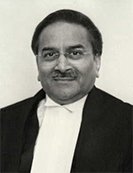
JAGDISH SINGH KHEHAR, J .
1. The Government of Tamil Nadu has been issuing executive
order from time to time to determine the composition of allowances
to be added to pay for quantifying wages for calculating pension.
It is the case of the appellants, that the State Government followed
a consistent practice of treating ‘dearness allowance’ as ‘dearness
pay’ for the computation of pension and other retiral benefits.
Illustratively, we are informed, that by a Government Order dated
11.3.1970 the State Government included ‘dearness allowance’ at the
rate then prevalent, as a component of wages for calculating average
emoluments for determining pension, for those who retired on or
after 26.2.1970. The instant Government Order dated 11.3.1970 was
applicable to employees who retired between 26.2.1970 and 1.10.1970.
7
Page 8 2. One R. Narasimachar who had retired on 21.11.1969 was not
extended the benefit of ‘dearness allowance’ drawn by him at the
time of his retirement, while computing his pension. This denial
was because the Government order dated 11.3.1970, extended the
benefit referred to above only to such employees who had/would
retire on or after 26.2.1970. Dissatisfied with the aforesaid
denial, he filed Writ Petition no.1815 of 1986 contending, that his
pension should have been calculated by taking into consideration
‘dearness allowance’ which was being drawn by him at the time of his
retirement, as ‘dearness pay’. A learned Single Judge of the High
Court of Judicature at Madras (hereinafter referred to as, the High
Court) allowed the aforesaid writ petition on 15.3.1990 by holding,
that the State Government was not right in restricting the
applicability of the Government Order dated 11.3.1970 only to
employees who retired between 26.2.1970 and 1.10.1970. The learned
Single Judge directed, that ‘dearness allowance’ which the appellant
was drawing, at the time of his retirement, be treated as ‘dearness
pay’ for calculating his pension. On 26.2.1991, the writ appeal
filed by the State Government against the order dated 15.3.1990
(passed by the learned Single Judge allowing Writ Petition no.1815
of 1986), was dismissed.
3. Based on the aforesaid judgment dated 15.3.1990, which the
State Government accepted, a clarificatory Government Order dated
4.12.1991, was issued. Under the Government Order dated 4.12.1991,
8
Page 9 even for employees who had retired prior to 1.12.1966, ‘dearness
allowance’ actually drawn by them, at the time of their
retirement,would be taken as ‘dearness pay’ for purposes of
calculating pension. For employees retiring between 1.12.1966 and
25.2.1970, ‘dearness allowance’ upto the level obtaining in
December, 1966 would be taken into consideration as ‘dearness pay’
for determining pension (and gratuity). It is therefore submitted,
that ‘dearness allowance’ became a component of pension, for all
employees who had retired upto 25.2.1970.
4. In order to place the sequence of facts in the correct
perspective, it was further brought to our notice that the
Government order dated 11.3.1970 was clarified by a subsequent
letter dated 4.12.1991. As per the aforesaid order and letter,
Government servants retiring from service on or after 26.2.1970, and
upto 1.10.1970, ‘dearness allowance’ up to the level obtaining in
December, 1966, was to be reckoned as ‘dearness pay’ for purposes of
pension (and gratuity). Thereupon, through a subsequent Government
order dated 4.12.1991, directions were issued for extending the
benefit contemplated by the Government order dated 11.3.1970 and the
Government’s letter dated 4.2.1991, even to those who had retired
prior to 26.2.1970.
5. A Government order dated 4.12.1991 was then brought to our
notice. It provided, that notional revised pension payable from
1.6.1988 would be encashable only with effect from 1.12.1991. It
9
Page 10 also provided, that those Government servants who had retired prior
to 26.2.1970 but had died before 1.12.1991, would be ineligible for
the benefits contemplated for retirees prior to 26.2.1970. However,
if the concerned Government employee had died after 1.12.1991, the
benefits contemplated for retirees prior to 26.2.1970 would be
released to the legal heirs of such retirees. It is, therefore
apparent, that for the benefits of the aforesaid Government order,
the retirees under reference would be deprived of the actual
monetary benefit payable to him, from the date of his or her
retirement, till 30.11.1991 (as arrears of pension under the
aforesaid Government orders were payable only with effect from
1.12.1991).
6. The aforesaid R. Narasimachar again assailed the Government
order dated 4.12.1991, by contesting the determination of the State
Government, in denying to him, the benefit of arrears from the date
of his retirement (on 21.11.1969) till 30.11.1991, by filing Writ
Petition no. 4038 of 1992 before the High Court. The aforesaid Writ
Petition was allowed by the High Court. The High Court held, that
monetary benefits could not be denied for the period preceding
1.12.1991. In other words, retirees before 1.12.1991 were held
entitled to arrears from the date of their retirement till
30.11.1991. The cut off date (1.12.1991) for extending the benefit
of arrears was accordingly set aside.
7. The judgment rendered by the High Court in Writ Petition no.
10
Page 11 4038 of 1992 on 15.6.1993, quashing the action of the State
Government in limiting payment of arrears, only with effect from
1.12.1991, was accepted by the State Government. The judgment of
the High Court was given effect to, by a Government order dated
26.7.1993, whereby, the earlier Government order dated 4.12.1991 was
modified. Under the Government order dated 26.7.1993, pensioners
were held eligible for arrears of pension from the date of their
actual retirement. The aforesaid benefit of arrears was also
extended to legal heirs of such pensioners, who had died in the
meantime.
8. Based on the factual position narrated in the foregoing
paragraphs, it clearly emerges, that ‘dearness allowance’ was taken
as ‘dearness pay’ for employees retiring from government service, at
all times, without any interruption, for the computation of retiral
benefits including pension. The aforesaid narration also reveals,
that the component of ‘dearness allowance’ to be treated as
‘dearness pay’ for being taken into consideration for calculating
pension, was determined by the State Government, through Government
orders issued from time to time. The narration recorded hereinabove
pertains to employees whose date of retirement preceded 1.10.1970.
9. The factual position being recorded hereinafter relates to
the period after 1.10.1970.
10. On 6.2.1974, a Dearness Allowance Committee was constituted,
to inter alia make recommendations, of allowances which should be
11
Page 12 treated as a component of wages, for calculating pension of
retired/retiring employees. On 7.7.1974, the Dearness Allowance
Committee inter alia recommended, that ‘dearness allowance’ be
treated as ‘dearness pay’ in full, for computing retiral benefits
including pension. Accepting the recommendations of the Dearness
Allowance Committee, the Finance Department, issued a Government
Order dated 6.2.1975 directing, that ‘dearness allowance’ actually
being drawn by employees retiring on or after 1.2.1975 be treated as
‘dearness pay’ for calculating average pay ( by taking not
consideration 10 months wages, prior to the date of retirement),
for calculating pension, (gratuity and travelling allowance). It
would be relevant to mention, that at the aforesaid juncture,
employees drawing pay upto Rs.299/-, were entitled to Rs.55/- as
‘dearness allowance’; and those drawing pay at Rs.300/- and above,
were entitled to Rs.70/- as ‘dearness allowance’. Accordingly, by
the Government Order dated 6.2.1975, the State Government,
determined the component of ‘dearness allowance’ (Rs.55/- or
Rs.70/-, as the case may be) to be taken into consideration, for
calculating pension. The intention of the instant Government Order
was, that employees retiring on or after 1.2.1975, should derive
full benefit of, the merger of the then existing ‘dearness
allowance’ into wages, as ‘dearness pay’ for computing pension. The
Government order dated 6.2.1975 permitted employees retiring on or
after 1.2.1975, an addition of ‘dearness allowance’ actually being
12
Page 13 drawn by them, (during the period of ten months, prior to the date
of their retirement), by treating the same as ‘dearness pay’, for
calculating average wages. The said average wage, would lead to the
computation of pension actually payable.
11. K. Venkataraman filed Writ Petition no. 8237 of 1995 before
the High Court with a prayer that ‘dearness allowance’ drawn by him
for a period of ten months prior to the date of his retirement (on
30.6.1974) be treated as ‘dearness pay’ for calculating his pension.
The benefit sought, had been denied because he had retired on
30.6.1974, whereas, the benefit of the Government order dated
6.2.1975 was extended only to such employees who had retired after
1.2.1975. The aforesaid Writ Petition came to be transferred to the
Tamil Nadu Administrative Tribunal (hereinafter referred to as, the
Administrative Tribunal). Before the Administrative Tribunal, the
Writ Petition was renumbered as T.A. 845 of 1991. The
Administrative Tribunal, by its order dated 1.4.1993, held that K.
Venkataraman was entitled to the benefits extended to other
pensioners, irrespective of the fact that he had retired (on
30.6.1974 i.e., prior to the cut off date (1.2.1975).
12. The State Government, accepted the decision of the
Administrative Tribunal in K. Venkataraman’s case (in T.A. no. 845
of 1991 decided on 1.4.1993), and implemented the same. For the
aforesaid purpose, the Finance (Pension) Department issued a
Government order dated 23.9.1993. Accordingly, K. Venkataraman’s
13
Page 14 pension was recalculated by treating ‘dearness allowance’ actually
drawn by him, during the ten months preceding the date of his
retirement, as ‘dearness pay’. It therefore emerges, that the manner
of computing pension for retired and retiring employees were
equated, in so far as the component of ‘dearness allowance’ is
concerned.
13. We were told, that when one or the other Government order
introduced a distinction in pensionary benefits, for computing
pension, the same was equated through judicial intervention. Such
judicial interventions were then adopted by the State Government,
from time to time. This aspect of the matter, factual as well as
legal, was not disputed by the learned counsel representing the
respondents. This position continued till the adoption of the
recommendations of the Fourth Tamil Nadu Pay Commission Report,
details whereof, shall be narrated soon hereafter.
14. On 1.1.1979, the Tamil Nadu Pension Rules, 1978 (hereinafter
referred to as “the Pension Rules”) came to be enforced. After the
promulgation of the Pension Rules, pension of retiring government
employees had to be determined in consonance with the said Rules.
It is not in dispute, that pension to Government employees is now
regulated under the Pension Rules. Under the Pension Rules, pension
is calculated on the basis of an employee’s emoluments/wages,
immediately before his retirement. For this, reference may be made
to Rule 30 of the Pension Rules, which is being extracted
14
Page 15 hereunder:-
“30. Emoluments—In the rules, unless the context otherwise
requires,--
(1) Emoluments means and include:-
(i) Pay, other than special pay granted in view
of his personal qualifications, which has been
sanctioned for a post held by him substantively
or in an officiating capacity (including
temporary capacity under emergency provisions)
or to which he is entitled by reason of his
position in a cadre:
(ii) special pay, dearness pay and
personal pay; and
(iii) any other remuneration which may be specially
claused as emoluments by the Government.”
(emphasis is ours)
The emoluments/wages to be taken into consideration for computing
pension is dependent on the allowances which are added to pay. The
composition and component of the said allowances is determined by
the State Government from time to time through Government orders. A
perusal of Rule 30 of the Pension Rules reveals, that ‘dearness pay’
is a component of the wages to be taken into consideration for
computing pension. And ‘dearness pay’ is a component of ‘dearness
allowance; which on a declaration by the State Government approves
(through a Government order) for being taken into consideration for
calculating pension.
15. In 1986, the Fourth Tamil Nadu Pay Commission gave its
report. The Pay Commission recommended, that ‘dearness allowance’,
prevalent at the end of three years (after the Pay Commission’s
15
Page 16 recommendations), should be treated as ‘dearness pay’, in order to
ensure a reasonable pension level. The Finance (Pension) Department
having considered the recommendations made by the Pay Commission,
issued a Government Order dated 30.4.1986, providing that ‘dearness
allowance’ and ‘additional dearness allowance’ sanctioned upto
30.9.1987 would be treated as ‘dearness pay’ for calculating
pension, in respect of those who retired (or died) on or after
1.10.1987. The concession of adding ‘dearness pay’ was extended to
the period of 10 months for calculating average emoluments, for
those who retired before or after 31.7.1987. But employees retiring
on or after 1.10.1987 were entitled to add ‘dearness allowance’
sanctioned upto 1.10.1987 to their wages, for quantifying pension
(family pension and death-cum-retirement gratuity). It is therefore
apparent, that even after the acceptance of the recommendations of
the Fourth Pay Commission report, ‘dearness allowance’ remained a
component of wages. As such, ‘dearness allowance’ continued to be
taken into consideration for computing pension of retiring
government employees.
16. The Fifth Tamil Nadu Pay Commission submitted its report in
1989. The instant Pay Commission recommended, the following formula
for calculating pension:
Basic Pay Per Month Rate of Pension Per Month
i)Not exceeding Rs.1,500 30 percent of basic pay
subject to a minimum of
Rs.375 p.m.
ii)Exceeding Rs.1,500 but not 20 per cent of basic pay
16
Page 17 exceeding Rs.3,000/- subject to a minimum of
Rs.450 p.m.
iii
)
Exceeding Rs.3,000/- 15 per cent of basic pay
subject to a minimum of
Rs.600 and a maximum of
Rs.1,250 p.m.
The Fifth Pay Commission also recommended different percentages of
increase in pension for existing pensioners, who had retired prior
to 1.6.1988. By a Government Order dated 9.8.1989 the Finance
Department while accepting the recommendations of the Fifth Tamil
Nadu Pay Commission fixed a slab system, for adding ‘dearness
allowance’ as ‘dearness pay’ for calculating pension. This decision
of the State Government was to be implemented for employees retiring
on or after 1.6.1988.
17. Original Application no. 1919 of 1991 was filed by
Ambasamudaram, Taluk Pensioner Associations before the
Administrative Tribunal. Likewise, a large number of other Original
Applications (including OA no. 4952 of 1992, O.A. no. 2227 of 1992,
O.A. no. 4265 of 1992, O.A. no. 4953 of 1992, OA no.2645 of 1994 and
OA no.2646 of 1994) were filed before the Administrative Tribunal.
Through the aforesaid original applications, the
petitioners/applicants assailed the Government Order dated 30.4.1986
(issued in furtherance of the recommendations made by the Fourth
Tamil Nadu Pay Commission), as well as, the Government Order dated
9.8.1989 (issued in furtherance of the recommendations made by the
Fifty Tamil Nadu Pay Commission). All the aforesaid original
17
Page 18 applications were disposed of by the Administrative Tribunal vide a
common order dated 6.5.1996. The operative part of the order passed
by the Administrative Tribunal while disposing of the aforementioned
original applications is being extracted hereunder:
“OA 1919/91
We set aside the G.O.Ms. No.810 (Finance and Pay Commission)
Department dated 9.8.89 in so far as it affects the applicant’s
association and direct the respondent to extend the benefits of
60% increase in the pre-revised pension plus the Dearness
Allowance at 608 points available to those who retired prior to
1.6.60 to those pensioners and family pensioners of cases of
retirements or death occurring after 1.6.60.
OA 2227/92
We quash the G.O.Ms. No.371, Finance dated 30.4.1986 and
G.O.Ms.No.911, finance dated 4.12.1991 in so far as they have
restricted their applicability to the pensioners and family who
retired prior to 1.10.1987 listed in Appendix 1 and 2 and those
who retired during the period from 1.10.1987 to 31.5.1988 as
listed in Appendix from the services of Government, local
bodies and aided educational institutions and direct the
respondent to count the DA and ADA as dearness pay for all ten
months preceding retirement for computing average emoluments to
fix their pensionary benefits including pension and value of
commutation and also direct the respondent to pay the arrears
of pension, gratuity and value of commutation of pension on
such refixation computed from the date of retirement or death
as the case may be to the pensioners and family pensioners.
OA 4265/92
We quash the G.O.Ms.No.115, Finance dated 6.2.1975 and
G.O.Ms.No.911 Finance dated 4.12.1991 in respect of the
applicant as far as it relates to classification of pensioners
and direct the respondent to extend the benefits of the
impugned G.Os. to the affected pensioners and family pensioners
and pay the arrears of pension and gratuity and the family
pension computed on refixation of their original pension or
family pension from the date of their retirement or the date of
death of the Government servant as the case may be.
OA 4953/92
We quash G.O.Ms.No.371, Finance dated 30.4.1986 and
18
Page 19 G.O.Ms.No.911 Finance dated 4.112.91 in respect of the
applicant as far as they have restricted their applicability to
the pensioners and family pensioners’ who retired or died as
the case may be prior to 1.10.87 and after 1.4.78 and direct
the respondent to allow the pensioners who retired during the
period from 1.10.87 to 31.5.1988 to count the DA and ADA as
dearness pay for all the 10 months preceding retirement for
computing average emoluments and extend the benefits of the
impugned GOS to them, and pay them the arrears of pension,
gratuity and value of commutation on such refixation computed
on and from the date of retirement or death as the case may be
to the affected pensioners and family pensioners.
OA No.2645/94
We direct the respondents to extend the benefit of
G.O.Ms.No.679, Finance (Pension) Department, dated 23.9.93 to
the applicant also and revise his pension with effect from
1.11.1974 taking into account the Dearness Allowance drawn by
him from 9.1.1974 to 31.10.1974 and pay him the arrears due to
him consequent on the revision from 1.11.1974.
OA No.2646/94
We quash the letter No.88079/Pension/93-I, Finance
Department, dated 1.10.1993 and direct the respondent to extend
the benefit granted in G.O.Ms.No.115, Finance dated 6.2.75 to
those who retired during the period from 1.10.70 to 1.2.75 and
pay them ar4rears of pension and DCRG from the dates of their
retirement.
The applications are allowed. Taking into consideration the
fact that most of the applicants would have died or most of
them would have reached the age of more than 70, we direct the
respondent to refix their pension and pay the arrears within
two months from the date of receipt of this order or a copy
thereof.”
18. The factual narration recorded hereinabove refers to the
Government orders issued from to time, directing the component of
‘dearness allowance’, which was to be taken into consideration as
‘dearness pay’ for computation of pension; the outcome of the
challenges raised to the aforesaid Government orders; and the
eventual implementation thereof in the context of the implementation
19
Page 20 of the component of ‘dearness pay’ to be taken into consideration
for calculating pension. Even though the exhaustive details of the
same have been narrated above, it is necessary to record a summary
thereof, so as to have a bird’s eye view of the manner in which
‘dearness pay’ has been extended to retired Government employees
from time to time. Accordingly, the aforesaid summary is being
paraphrased below:-
(i)Government order dated 11.3.1970 included ‘dearness
allowance’ as a component of wages for calculating pension
for only such employees who retired between 26.2.1970 and
1.10.1970. By judicial intervention, the aforesaid
Government order extending the benefit of treating
‘dearness allowance’ as ‘dearness pay’, was held to be
applicable even to employees who had retired prior to
26.2.1970. The State Government accepted the aforesaid
legal position and extended the same benefit of ‘dearness
allowance’ by treating the same as ‘dearness pay’ to all
pensioners equally.
(ii)Government order dated 6.2.1975 was issued to give
effect to the recommendations made by the Dearness
Allowance Committee to the effect, that ‘dearness
allowance’ sanctioned with effect from 1.4.1974 (Rs.55/-
for employees drawing pay upto Rs.599/-, and Rs.70/- for
employees drawing pay upto Rs.600/- and above) would be
20
Page 21 treated as ‘dearness pay’ for employees retiring on or
after 1.2.1975 ( by ‘adding dearness allowance actually
drawn by them during the ten months preceding their
retirement. By judicial intervention, it was held that
the aforesaid benefit would also extend to such employees
who had retired during the period between 2.10.1970 and
31.1.1975, and that, ‘dearness allowance’ sanctioned from
time to time and actually drawn by the retiring employee
would be treated as ‘dearness pay’ in case of those who
retired during the period between 2.10.1970 and 31.1.1975
(for calculation of pension).
(iii)Government order dated 30.4.1986, while accepting the
recommendation made by the Fourth Tamil Nadu Pay
Commission, provided for certain pensionary benefits to
employees who had retired between 1.10.1987 and 31.5.1988,
by allowing them to count ‘dearness allowance’ and
‘additional dearness allowance’ as ‘dearness pay’. The
concession of ‘dearness pay’ was extended for the entire
ten months for calculating average emoluments in case of
those who retired after 31.7.1987. By judicial
intervention, it was held that the concession of adding
‘dearness allowance’ as ‘dearness pay’ would extend even
to employees who had retired (or died) prior to 1.10.1987.
It was also held, that pensioners who had retired during
21
Page 22 the period between 1.10.1987 and 31.5.1988 would be
entitled to count ‘dearness allowance’ and ‘additional
dearness allowance’ as ‘dearness pay’ (for all the ten
months preceding their retirement) for computing average
wages for calculating pension. The State Government
accepted the aforesaid legal position and extended the
aforesaid benefits equally to all pensioners.
(iv) Government order dated 9.8.1989, while accepting the
recommendations made by the Fifty Tamil Nadu Pay
Commission, introduced a slab system, for adding ‘dearness
allowance’ as ‘dearness pay’ into the component of wages
for calculating pension. A distinction was made between
employees retiring before and after 1.6.1988. By judicial
intervention, the benefit of treating ‘dearness allowance’
as ‘dearness pay’ was extended to employees irrespective
of the date of their retirement.
(v)Government order dated 4.12.1991 provided, that
arrears of pension based on recalculation of pension, by
taking into consideration the component of ‘dearness
allowance’ as ‘dearness pay’, would be released to
pensioners with effect from 1.12.1991, even in cases where
the concerned pensioner had retired with effect from a
date preceding 1.12.1991. By judicial intervention,
arrears of pension, based on recalculation of pension,
22
Page 23 were ordered to be released to retired employees, by
taking into consideration the component of ‘dearness
allowance’ as ‘dearness pay’ equally for all employees.
The State Government accepted the aforesaid legal position
and extended the said benefit to pensioners who had
retired prior to 1.12.1991.
19. The aforesaid factual/legal position is a historical
narration of the inclusion of ‘dearness allowance’ as ‘dearness pay’
from time to time for computation of pension. What emerges from
this narration is, that all pensioners (past, present and future)
were equally granted the benefit of ‘dearness allowance’ as
‘dearness pay’ for calculating pension. Whenever a class of
pensioners was discriminated against, for computation of pension,
on the basis of dearness allowance/ pay judicial intervention
restored the equation. The equation was then given effect to by the
State Government from time to time. Clearly, judicial intervention
repeatedly erased the classifications created between pensioners, on
the basis of ‘dearness pay’.
20. The present controversy yet again presents a dispute, inter
se, between the State Government and retired employees in respect of
the component of ‘dearness allowance’ liable to be treated as
‘dearness pay’, for computing pension payable to retired Government
employees. Even though the instant controversy also arises out of
Government order dated 9.8.1989, the same remained unsettled in the
23
Page 24 earlier rounds of litigation (emerging out of the same Government
order dated 9.8.1989), presumably because none of the retired
employees fell within the classes of pensioners included in the
present litigation. The employees herein are those who retired on
or after 1.6.1988. By the impugned Government order dated 9.8.1989,
pensionary benefits of an employee retired/retiring on or after
1.6.1988 were required to be computed by adding ‘dearness allowance’
to ‘dearness pay’ at a fixed percentage. By virtue of the aforesaid
determination, employees retiring on or after 1.6.1988 would be at a
disadvantage, as against the employees who had retired prior
thereto.
21. The afore-stated challenge to the impugned Government order
dated 9.8.1989 was raised before the Administrative Tribunal through
an Original Application (O.A. no. 5771 of 2001) by an Association of
retired Government employees. The aforesaid Original Application
came to be transferred to the High Court, wherein it was renumbered
as Writ Petition (T) no. 32045 of 2005. A learned Single Judge of
the High Court allowed the aforesaid Writ Petition on 20.4.2006.
The learned Single Judge held, that the State Government, in not
extending benefits to members of the appellant Association, had
discriminated against them. The impugned Government order dated
9.8.1989, to the extent that it did not confer the same benefits
(based on the component of ‘dearness allowance’ treated as ‘dearness
pay’), for employees who retired on or after 1.6.1988, was held as
24
Page 25 unsustainable. Writ Petition (T) no. 32045 of 2005 was accordingly
allowed.
22. Dissatisfied with the order dated 20.4.2006 passed by the
learned Single Judge, allowing Writ Petition (T) no. 32045 of 2005,
the State Government preferred a Writ Appeal before a Division Bench
of the High Court. The aforesaid Writ Appeal, alongwith writ
petitions filed before the High Court on the same subject, were
taken up for collective adjudication. By an order dated 17.12.2007,
Writ Appeal no. 1002 of 2006 was allowed. The order dated
20.4.2006, passed by the learned Single Judge (allowing the claim of
the employees who had retired on or after 1.6.1988), was set aside.
All writ petitions filed by retired employees on the same subject
matter which were taken up for disposal alongwith the Writ Appeal
referred to above, were simultaneously dismissed. Through the
instant Civil Appeals, different employees’ associations, as also
employees (singularly and collectively), have assailed the order
passed on 17.12.2007 by the Division Bench of the High Court,
allowing Writ Appeal no. 1002 of 2006 (and connected appeals); and
dismissing the writ petitions preferred by employees (and employees’
associations) taken up for collective disposal, alongwith the
aforesaid Writ Appeal (no. 1002 of 2006).
23. During the course of hearing, learned counsel representing
the appellants, first and foremost, vehemently contended, on the
basis of the legal and the factual position noticed above, that the
25
Page 26 benefit of ‘dearness allowance’ as ‘dearness pay’ has always equally
been extended to all the pensioners, irrespective of the date of
their retirement. It was further contended, that as and when there
was discrimination on the above subject, the same was suitably
remedied by the State Government, by amending/modifying the earlier
Government orders. It was submitted, that a similar discrimination
emanating out of the same Government order dated 9.8.1989,
pertaining to a set of employees differently classified, was
corrected through judicial intervention (details already noticed
above). During the aforesaid course of repeated adjudication, on
the subject under consideration, the matter once came up to this
Court, when Special Leave Petition (Civil) no. 23643 of 1996, filed
before this Court by the State Government, was dismissed. Even a
review petition filed before this Court, by the State Government
thereafter, admittedly met the same fate. It was accordingly
submitted, that the same principle which was made applicable to
different sections of pensioners, under the same Government order
dated 9.8.1989, should be extended to the instant class of retired
Government employees i.e., those who retired on or after 1.6.1988.
24. Besides the aforesaid legal premise, for assailing the
impugned Government order dated 9.8.1989, learned counsel
representing the appellants, invited our pointed attention to a
compilation enclosed by the Retired Officers’ Association (in Civil
Appeal no. 8856 of 2012). The said compilation was relied upon to
26
Page 27 demonstrate to us, the extent of discrimination caused to the
appellants (who retired on or after 1.6.1988). For this reason
various hypothetical situations were illustratively placed before
us, for our consideration. In each such hypothetical illustration,
the appellants took into consideration the same number of years of
service rendered, against the same post, wherein the pensioner had
also retired at the same component of last pay drawn. Therefrom, it
was sought to be established, that employees who had retired on or
after 1.6.1988 would be at a substantial disadvantage.
Illustratively, for the adjudication of the present controversy, a
hypothetical situation relating to an employee holding the post of
Deputy Collector is being placed below:
‘ A’
Cadre taken : Deputy
Collector
Date of retirement : 30.04.1988
Net qualifying service : 33 years
Scale of Pay : 1340-75—1715—90—2435
Pay last drawn : Rs. 2435/-
Average Emoluments : Rs. 2435/-
Original Pension fixed : Rs. 1218/-
Pension revised as per
G.O. 449 : Rs. 1448/-
Revision as per G.O. 810
As on 01.06.1988 : Rs. 1622/-
Pension as per G.O. 271 : 1622/-
Add: 50% increase : 811/-
-------------
Total Pension 2433/- (With effect
from 1.6.1988)
(Pension as on 1.1.1966) : 2433/-
Add: 111% : 2701/-
27
Page 28 Interim Relief-I 50/-
Interim Relief –II : 244/-
40% Hike : 974/-
------------------------
Total Pension : 6402/- (With effect from
1.1.1996)
xxx xxx xxx
xxx
‘ B’
Cadre taken : Deputy
Collector
Date of retirement : 30.06.1988
Net qualifying service : 33 years
Scale of Pay : 2200-75—2800—100—4000
Average Emoluments : Rs. 2515/- +
Add: 13% as per G.O. 810 : Rs. 327/-
: Rs.2842/-
Pension 50% : Rs.1421/-
As on 1.1.96:
Pension : Rs.1421/-
Add 148% : 2104/-
Interim relief-I : 50/-
Interim relief-II : 143/-
40% Hike : 569/-
-------------
Total Pension Rs.4287/- (With effect
from 1.1.1996)
xxx xxx xxx
xxx
‘ C’
Cadre taken : Deputy
Collector
Date of retirement : 30.06.1993
Net qualifying service : 33 years
10 months average
emoluments : Rs.2725/-
28
Page 29 Add: 13% increase : Rs. 355/-
: Rs.3080/-
Pension fixed at 50% : Rs.1540/-
Revised pension as on
1.1.1996 : Rs.1540/-
Add Dearness Allowance
148% : 2280/-
Interim relief-I : 50/-
Interim relief-II : 154/-
40% Hike : 616/-
-------------
Total Pension Rs.4640/- (With effect
from 1.1.1996)
After narrating the computations made in the illustrations referred
to above, it was submitted that it clearly emerged, that a person
who had retired as a Deputy Collector on 30.4.1988 (before 1.6.1988)
would get pension of Rs.6,402/-; while a Deputy Collector, who
retired on 30.6.1988, would get Rs.4,287/-; and a Deputy Collector
who retired on 30.6.1993, would get Rs.4,640/- as pension, all of
them having the same 33 years of qualifying service, as well as, a
similar last pay prior to their retirement. What is important is,
that the figures referred to above were accepted in the response
sought by the High Court from the Accountant General, Tamil Nadu.
In the response from the Accountant General, Tamil Nadu, the only
mistake found was the amount of pension depicted as Rs.6,402/- for a
Deputy Collector (who retired prior to 1.6.1988). According to the
Accountant General, Tamil Nadu, on a correct analysis, the said
figure would be Rs.6,808/-. It is therefore apparent, that in
29
Page 30 identical circumstances, a Deputy Collector retiring prior to
1.6.1988 would draw pension at the monthly rate of Rs.6,808/-,
whereas, a Deputy Collector retiring thereafter on 30.6.1988, would
get a monthly pension of Rs.4,287/-. This would show that a person
who retired from the same cadre before the crucial date i.e.,
1.6.1988, would get about Rs.2,500/- per month more than the one who
had retired from the same cadre after the said date. The aforesaid
illustration has been highlighted by us, in order to determine the
correctness of the following inferences drawn by the Division Bench
of the High Court, while passing the impugned order dated
17.12.2007:-
“Learned counsel for the parties circulated their respective
calculations showing working sheet of pension as admissible to
a class of employees, who retired prior to 1
st
June, 1988 in the
unrevised scales of pay and those similarly situated and
retired after 1
st
June, 1988 in the revised scales of pay.
Charts are varying. While in the chart submitted by the State
Government it has been shown that those who retired after 1
st
June, 1988 will be getting a little bit higher than those who
retired prior to 1
st
June, 1988, the calculation submitted by
individual parties shows that those who retired just prior to
1
st
June, 1988 may get a little higher emoluments than those who
retired after 1
st
June, 1988 . It is for the said reason, we
also sought for opinion from the Accountant General, Tamil
Nadu, who has submitted its calculation chart, as circulated
between the parties and quoted hereunder:-
“As per instructions of the Hon’ble High Court of Madras
in W.P. 11634 of 2002, the working sheets submitted by
both the Government and the petitioners in WA 1002 of 2006
have been scrutinized and the following observations are
made:-
A. Government Working Sheet:
Details of the case As it As it
30
Page 31 is should
be
Designation: Tahsildar
Date of Retirement: 31.5.1988
Scale of Pay: Rs.1160-50-1460-70-
1950
Pay Rs.1880
Rs.1387Rs.1573
Designation: Tahsildar
Date of Retirement: after 1.6.1988
Scale of Pay: Rs.2000-60-2300-75-
3200
Pay Rs.2300
Rs.1534Rs.1534
1/579 revision is applied in this case, then the revised
pension from 1.6.88 works out to Rs.2000 + 18% D.A.
B. Petitioner Working Sheet: Out of nine illustrations,
five cases are found to be correct and in four cases,
the correct calculations are given below:-
Details of the
case
As it is As it
should be
Designation:
Deputy Collector
(‘A’)
Date of
Retirement:
30.4.1988
Scale of Pay:
Rs.1340-75-1715-
90-2435
Pay Rs.2435
Rs.2433
(from
1.6.88)
Rs.6402
(from
1.1.96)
Rs.2589
(from 1.6.88)
Rs.6808
(from 1.1.96)
Designation:
Block Development
Officer (‘A’)
Date of
Retirement:
31.1.1988
Scale of Pay:
Rs.1045-45-1450-
65-1675
Pay Rs.1515
Rs.849
(from
1.2.88)
Rs.1427
(from
1.6.88)
Rs.4303
(from
1.1.96)
Rs.947
(from 1.2.88)
Rs.1592
(from 1.6.88)
Rs.4796
(from 1.1.96)
Designation:
Secondary Grade
Teacher (‘A’)
(Sel. Grade)
Rs.472
(from
1.1.88)
Rs.815
Rs.513
(from 1.1.88)
Rs.890
(from 1.6.88)
31
Page 32 Date of
Retirement:
31.12.1987
Scale of Pay: Rs.
Pay Rs.820
(from
1.6.88)
Rs.2480
(from
1.1.96)
Rs.2790
(from 1.1.96)
Designation:
Tahsildar
Date of
Retirement:
31.3.1990
Scale of Pay:
Rs.1160-50-1460-
70-1950
Pay Rs.2180 from
1.1.90
Rs.1232
(from
1.4.90)
Rs.3723
(from
1.1.96)
Rs.1209
(from 1.4.90)
Rs.3654
(from 1.1.96)
It is certified that subject to the observations made
supra the illustrative calculations are in order.
Branch Officer/Pension 30”
From the aforesaid chart it appears that those who retired
prior to 1
st
June, 1988 or after 30
th
June, 1988 from similar
post, they will get almost similar quantum of pension.
(emphasis is ours)
25. Learned counsel for the appellants pointed out, that the
determination by the High Court to the effect, that employees who
had retired prior to 1.6.1988 from a similar post, would “…get a
little higher…” pensionary emoluments, than those who retired
afterwards, was clearly preposterous. Learned counsel for the
appellants, while referring to the illustration narrated above, also
invited our attention to the affidavit dated 15.12.2011 (filed by
the first respondent in Civil Appeal no.8856 of 2012), wherein the
position canvassed at the behest of the appellants was considered.
According to the acknowledged position, the first respondent (in the
affidavit dated 15.12.2011), on proper calculations asserted, that
32
Page 33 in identical circumstances, a Deputy Collector retiring prior to
1.6.1988 would draw pension at a monthly rate of Rs.6,808/-,
whereas, a Deputy Collector retiring after 30.6.1988 would get a
monthly pension of Rs.4,287/-. This would show, that merely on
account of the accident of retiring before or after 1.6.1988, one of
the pensioners would draw pension at the rate of about Rs.2,500/-
per month more than the other. We are satisfied, that the
illustration referred to hereinabove, clearly negates the conclusion
drawn by the Division Bench of the High Court in the impugned order
dated 17.12.2007, to the effect, that retirees prior to 1.6.1988
from a similar post would “…get a little higher” pensionary
emoluments.
26. We have given our thoughtful consideration to the
controversy in hand. First and foremost, it needs to be understood
that the quantum of discrimination, is irrelevant to a challenge
based on a plea of arbitrariness, under Article 14 of the
Constitution of India. Article 14 of the Constitution of India
ensures to all, equality before the law and equal protection of the
laws. The question is of arbitrariness and discrimination. These
rights flow to an individual under Articles 14 and 16 of the
Constitution of India. The extent of benefit or loss in such a
determination is irrelevant and inconsequential. The extent to which
a benefit or loss actually affects the person concerned, cannot ever
be a valid justification for a court in either granting or denying
33
Page 34 the claim raised on these counts. The rejection of the claim of the
appellants by the High Court, merely on account of the belief that
the carry home pension for employees who would retire after
1.6.1988, would be trivially lower than those retiring prior
thereto, amounts to bagging the issue pressed before the High Court.
The solitary instance referred to above, which is not a matter of
dispute even at the hands of the first respondent, clearly
demonstrates, that in a given situation, an employee retiring on or
after 1.6.1988 could suffer a substantial loss, in comparison to an
employee retiring before 1.6.1988. We are, therefore satisfied,
that the High Court clearly erred while determining the issue
projected before it.
27. At this juncture it is also necessary to examine the concept
of valid classification. A valid classification is truly a valid
discrimination. Article 16 of the Constitution of India permits a
valid classification (see, State of Kerala vs. N.M. Thomas (1976) 2
SCC 310). A valid classification is based on a just objective. The
result to be achieved by the just objective presupposes, the choice
of some for differential consideration/treatment, over others. A
classification to be valid must necessarily satisfy two tests.
Firstly, the distinguishing rationale has to be based on a just
objective. And secondly, the choice of differentiating one set of
persons from another, must have a reasonable nexus to the objective
sought to be achieved. Legalistically, the test for a valid
34
Page 35 classification may be summarized as, a distinction based on a
classification founded on an intelligible differentia, which has a
rational relationship with the object sought to be achieved.
Whenever a cut off date (as in the present controversy) is fixed to
categorise one set of pensioners for favourable consideration over
others, the twin test for valid classification (or valid
discrimination) must necessarily be satisfied. In the context of
the instant appeals, it is necessary to understand the overall
objective of treating “dearness allowance” (or a part of it) as
“dearness pay”. There can be no doubt, that ‘dearness allowance’ is
extended to employees to balance the effects of ongoing inflation,
so as to ensure that inflation does not interfere with the enjoyment
of life, to which an employee is accustomed. Likewise, the
objective of ‘dearness pay’ is to balance the effects of ongoing
inflation, so that a pensioner can adequately sustain the means of
livelihood to which he is accustomed . Having understood the reason
why the Government extends the benefit of ‘dearness allowance’ and
‘dearness pay’, to its employees and pensioners respectively, we
would venture to search for answers to the twin tests which must be
satisfied, for making a valid classification (or a valid
discrimination), in the present fact situation.
28. In the present context, it needs to be kept in mind, that
‘dearness allowance’ is paid to Government employees keeping in mind
the All India Consumer Price Index. Inflation in the market place
35
Page 36 is sought to be balanced by paying ‘dearness allowance’ to
Government employees. When a State Government chooses to treat
‘dearness allowance’ as ‘dearness pay’, the objective remains the
same i.e., inflation in the market place is sought to be balanced
for retired employees by giving them the benefit of ‘dearness pay’.
Since the component of inflation similarly affects all employees,
and all pensioners (irrespective of the date of their entry into
service or retirement), it is not per se possible to accept
different levels of ‘dearness pay’ to remedy the malady of
inflation. Just like the date of entry into service (for serving
employees) would be wholly irrelevant to determine the ‘dearness
allowance’ to be extended to serving employees, because the same has
no relevance to the object sought to be achieved. Likewise, the
date of retirement (for pensioners) would be wholly irrelevant to
determine the ‘dearness pay’ to be extended to retired employees.
Truthfully, it may be difficult to imagine a valid basis of
classification for remedying the malaise of inflation. In the
absence of any objective, projected in this case, the question of
examining the reasonableness to the object sought to be achieved,
simply does not arise. Our straying into this expressed realm of
imagination, was occasioned by the fact, that the pleadings filed on
behalf of the State Government, do not reveal any reason for the
classification, which is subject matter of challenge in the instant
appeal. The only position adopted in the pleadings filed before
36
Page 37 this Court for introducing a cut off date for differential
treatment, is expressed in paragraph 4 of the counter affidavit,
filed by the State of Tamil Nadu, which is being extracted
herewith:.-
“With reference to the averments made in the Grounds of the
Special Leave Petition, I submit that the fifth Pay Commission
has revised pay and pension with effect from 1.6.1988. As per
the recommendation of the above Pay Commission, the Government
had issued orders for the revision of pension and Family
Pension with effect from 1.6.1988 in G.O.Ms. No. 810. Finance
(PC) Department, dated 9.8.1989. It is submitted that the
fourth Tamil Nadu Pay Commission has recommended that at the
end of the period of three years, the Dearness Allowance
sanctioned upto that period could be treated as Dearness Pay.
The Fourth Pay Commission revision was given with effect from
1.10.1984. Based on the above recommendation, the Government
has issued orders in G.O.Ms. No.371, Finance, dated 30.4.1986,
read with Government letter No.124414/Pension/86-1, dt.
11.2.1987, that the Dearness Allowance sanctioned upto
30.9.1987 shall be treated as Dearness Pay for the purpose of
pensionary benefit in the case of the Govt. Servant retiring
on or after 1.10.1987. The orders issued in G.O.Ms. 371,
Finance dated 30.4.1985 as amended in Government letter
No.70707-A/Pension /86-1, dated 8.7. 1986 read as follows:-
“The Fourth Tamil Nadu Pay Commission have among other
things recommended that at the end of a period of three
years the Dearness Allowance sanctioned upto the period
could be treated as Dearness Pay in order to ensure a
reasonable pension level. The Government accept the
recommendation of the Commission and direct that in the
case of Government servant, who will be retiring on or
after 1.10.1987, the Dearness Allowance sanctioned upto
1.10.1987 shall be reckoned as Dearness Pay for purpose
of pension in the case of death of a Government servant
occurring on or after 1.10.1987 while in service the
Dearness Allowance sanctioned upto 1.10.1987 shall be
treated as Dearness Pay for the purpose of computing
Family Pension.”
It is therefore, evident, that the State Government has not
disclosed any object which is desired to achieve by the cut off
37
Page 38 date. Most importantly, the financial constraints of the State
Government, were not described as the basis/reason for the
classification made in the imputgned Government order dated
9.8.1989.
29. The issue in hand needs to examine from another perspective
as well. It must be clearly understood, that no employee has a
right to draw ‘dearness allowance’ as ‘dearness pay’ till such time
as the State Government decides to treat ‘dearness allowance’ as
‘dearness pay’. And therefore, the State Government has the right
to choose whether or not ‘dearness allowance’ should be treated as
‘dearness pay’. As such, it is open to the State Government not to
treat any part of ‘dearness allowance’ as ‘dearness pay’. In case of
financial constraints, this would be the most appropriate course to
be adopted. Likewise, the State Government has the right to choose
how much of ‘dearness allowance’ should be treated as ‘dearness
pay’. As such, it is open to the State Government to treat a
fraction, or even the whole of ‘dearness allowance’ as ‘dearness
pay’. Based on Rule 30 of the Pension Rules, it is clear that the
component of ‘dearness pay’ would be added to emoluments of an
employee for calculating pension. In a situation where the State
Government has chosen, that a particular component of ‘dearness
allowance’ would be treated as ‘dearness pay’, it cannot
discriminate between one set of pensioners and another, while
calculating the pension payable to them (for the reasons expressed
38
Page 39 in the preceding paragraph). Of course, a valid classification may
justify such an action. In this case, the State Government has not
come out with any justification/basis for the classification whereby
one set of pensioners has been distinguished from others for
differential treatment.
30. The instant controversy should not be misunderstood as a
determination of the total carry home pension of an employee. All
the Government orders referred to above, deal with the quantum of
‘dearness allowance’ to be treated as ‘dearness pay’ for the
calculation of pension. ‘Dearness pay’ is one of the many
components, which go into the eventual determination of pension.
Therefore, the focus in the adjudication of the present controversy
must be on ‘dearness pay’, rather than on the eventual carry home
pension. The relevance and purpose of treating ‘dearness allowance’
as ‘dearness pay’, has been brought out in the foregoing paragraphs.
Therefore, clearly, the object sought to be achieved by adding
‘dearness pay’ to the wage of a retiree, while determining pension
payable to him, is to remedy the adverse effects of inflation. The
aforesaid object has to be necessarily kept in mind, while examining
the present controversy. Any classification without reference to
the object sought to be achieved, would be arbitrary and violative
of the protection afforded under Article 14 of the Constitution of
India, it would also be discriminatory and violative of the
protection afforded under Article 16 of the Constitution of India.
39
Page 40 31. Having given our thoughtful consideration to the controversy
in hand, it is not possible for us to find a valid justification for
the State Government to have classified pensioners similarly
situated as the appellants herein (who had retired after 1.6.1988),
from those who had retired prior thereto. Inflation, in case of all
such pensioners, whether retired prior to 1.6.1988 or thereafter,
would have had the same effect on all of them. The purpose of
adding the component of ‘dearness pay’ to wages for calculating
pension is to offset the effect of inflation. In our considered
view, therefore, the instant classification made by the State
Government in the impugned Government order dated 9.8.1989 placing
employees who had retired after 1.6.1988 at a disadvantage, vis-à-
vis the employees who retired prior thereto, by allowing them a
lower component of ‘dearness pay’, is clearly arbitrary and
discriminatory, and as such, is liable to be set aside, as violative
of Articles 14 and 16 of the Constitution of India.
32. It is also imperative for us to take into consideration, a
few judgments rendered by this Court, which were brought to our
notice by the learned counsel representing the State Government.
Reliance was placed on three judgments to substantiate the
submissions advanced on behalf of the respondents.
(i) First of all, reliance was placed on the decision rendered by
this Court in Union of India Vs. P.N. Menon,. (1994) 4 SCC 68. Facts
in the first cited judgment reveal, that a recommendation was made
40
Page 41 by the Third Pay Commission to the State Government, suggesting
review of the existing wage position, based on unprecedented
inflation. The State Government was asked (by the Third Pay
Commission) to take a decision on whether the dearness allowance
scheme should be extended further; or in the alternative pay-scales
themselves should be revised. This suggestion of the Third Pay
Commission was based on the fact, that the price level index had
arisen above the 12 monthly average to 272. Having considered the
matter, the State Government decided to extend the dearness
allowance scheme. It simultaneously issued an Office Memorandum,
(hereinafter referred to as ‘O.M.’) whereby, a portion of ‘dearness
allowance’ was to be treated as pay for computation of retiral
benefits. The benefit of the aforesaid O.M. was extended only to
those employees who had/would retire on or after 30.9.1977. The
aforesaid O.M, also contemplated, that persons who had/would
retire on or after 30.9.1977 but not later than 30.04.1979 would be
allowed to exercise an option, to choose one out of the two
alternatives. They could either seek the benefit of death-cum-
retirement gratuity by excluding the element of ‘dearness
allowance’, alternatively, they could seek the same, by including
the element of ‘dearness allowance’. The issue which came up for
adjudication before this Court was, whether the aforesaid O.M. was
sustainable in law, as it did not extend equal benefits to all
retirees, irrespective of the dates of their retirement. All the
41
Page 42 respondents had retired before 30.9.1997. While determining the
aforesaid issue, this Court took into consideration inter alia the
fact that the decision to merge a part of ‘dearness allowance’ with
pay, was taken with reference to the price index level. This
decision was taken on the recommendations of the Third Pay
Commission. In the aforesaid view of the matter, and specially
because, an option was given to employees who had retired between
30.09.1977 and 30.04.1979, to get their pension and (death-cum-
retirement gratuity) calculated, by including or excluding the
element on dearness pay, this Court ruled, that the State Government
had adopted measures ensuring similar benefits to all. And that,
there was no intention to create a class within a class. This Court
felt that the classification, had a reasonable nexus with the price
level index at 272, on 30.09.1977. This according to this Court
was just and valid. The factual position, that needs to be
highlighted, in so far as the first cited judgment i.e. in P.N.
Menon’s case (supra) is that, the respondent employees had never
been in receipt of dearness pay, when they retired from service,
and therefore, the O.M. in question could not have been applied to
them. This is how this Court examined the matter in the cited case.
This Court also noticed, that prior to the O.M. in question, the
pension scheme was contributory, and only with effect from
22.9.1977, the pension scheme was made non contributory. Since the
respondent employees in the first cited case, were not in service at
42
Page 43 the time of introducing the same, they were held not eligible for
the said benefit.
(ii) Next, learned counsel relied upon the judgment in State of
Rajasthan Vs. Amrit Lal Gandhi, (1997) 2 SCC 342. The facts, in
the second cited judgment were, that originally teachers of the
Jodhpur University were governed by contributory provident fund
rules. There was no pension scheme applicable to them. In 1983, a
committee constituted by the University Grants Commission,
recommended the introduction of pension-cum- gratuity for university
and college teachers. Thereupon, the Senate and Syndicate of the
Jodhpur University resolved to introduce a pension scheme for
university teachers. The resolution of the Syndicate and Senate also
provided, that options would be sought from existing teachers, so as
to enable them, to choose whether they should be governed by the
contributory provident fund rules, or would like to accept the
benefits under the pension scheme. As the recommendation of the
Syndicate and the Senate, of the Jodhpur University had financial
implications, approval of the State Government was imperative. On
examining the recommendations, the State Government decided to
introduce the pension scheme with effect from 1.1.1990. Based
thereon, the Syndicate and the Senate passed a concurring resolution
expressing, that the pension scheme would become operational with
effect from 1.1.1990. Based thereon, those teachers who were in the
service of the Jodhpur University on or after 1.1.1990, were
43
Page 44 required to submit their options. The question which arose for
consideration in the second cited judgment was, whether employees
who had retired before 1.1.1990, had a similar right to claim
pension, as was being extended to employees, who had/would retire on
or after 1.1.1990. The High Court partly accepted the plea of the
retirees by holding, that the pension scheme should be extended to
employees who had retired on or after 1.1.1986. This Court did not
approve the decision rendered by the High Court. This Court noticed,
that the approval of the resolutions of the Syndicate and Senate of
the Jodhpur University had been accorded by the State Government
after the State Legislature had passed the University Pension Rules,
and the General Provident Fund Rules. This Court also noticed, that
the State Government in its affidavit had taken an express stand,
that the introduction of the pension scheme was economically viable
only with effect from 1.1.1990. In other words, the State
Government could bear the financial burden of the pension scheme,
only if it was introduced with effect from 1.1.1990. Based on the
aforesaid position adopted by the State Government, this Court
concluded, that the determination of the State Government in
introducing the pension scheme for employees, who had retired with
effect from 1.1.1990 had not been fixed arbitrarily or without any
valid reason/basis. This Court accordingly, set aside the judgment
rendered by the High Court.
(iii) Finally, learned counsel placed reliance on the judgment
44
Page 45 rendered by this Court in State of Punjab Vs. Amar Nath Goel,
(2005)6 SCC 754. In the third cited case, employees both of the
Central Government, as also, of the State Governments of Punjab and
Himachal Pradesh, who had retired prior to 1.4.1995 sought death
cum-retirement gratuity, up to the increased limit of Rs. 2.5 lakhs.
The claim raised by the employees was rejected in some cases,
whereas in some other cases the Central Administrative Tribunal and
the High Court took the view, that the benefit of increased
quantum of death-cum-retirement gratuity, should be extended to
employees, who had retired between 1.7.1993 and 31.3.1995 as well.
Having examined the aforesaid controversy, this Court arrived at the
conclusion, that the decision of the Central Government and State
Governments to limit the benefit only to employees, who had retired
( or died) on or after 1.4.1995, was based on a concrete
determination of financial implications, as such, it was held that
the cut off date (1.4.1995) was neither arbitrary nor irrational,
as alleged. Consequently, the plea advanced at the hands of the
employees assailing the cut off date as arbitrary, and by alleging
that it was not based on any rational criteria, was rejected.
33. We have considered the submissions urged at the hands of the
learned counsel for the respondent, based on the judgments cited at
the bar. In our view, none of the judgments relied upon is relevant
to the present controversy.
(i) In so far as P.N. Menon’s case (supra) is concerned, having
45
Page 46 examined the controversy. this Court arrived at the conclusion, that
the State Government adopted measures which would ensure, similar
benefits to all. This court also expressed the view, that there was
no intention of the State Government, to create any class within a
class. The price level index at 272 on 30.9.1977 was the determining
factor for the State Government’s decision. It was accordingly
concluded, that there was a valid and reasonable nexus to the object
sought to be achieved. But most importantly this Court felt, that
the decision of the State Government in not extending benefits to
the respondents was based on the fact, that they were not in receipt
of the any ‘dearness pay’ at the time of their retirement. Moreover,
since the family pension scheme was contributory when the
respondents had retired, the respondents could not justifiably seek
the benefits, which were available only to the retirees after the
pension scheme was made non contributory. There is, therefore no
co-relation of the first cited judgment with the controversy in
hand.
(ii) In Amrit Lal Gandhi’s case (supra) pension was introduced
for the first time for university teachers based on resolutions
passed by the Syndicate and the Senate of the Jodhpur University.
The same were approved by the State Government with effect from
1.1.1990. The instant controversy is, therefore, not between one set
of pensioners alleging discriminatory treatment, as against another
set of pensioners. There were no pensioners, to begin with.
46
Page 47 Retirees were entitled to provident fund under the existing
Provident Fund Scheme. The question of discrimination of one set of
pensioners from another set of pensioners, therefore, did not arise
in the second cited judgment. Financial viability was, as such, a
relevant issue. The State Government adopted the stance, that the
introduction of the pension scheme was financially viable only if
the scheme was introduced with effect from 1.1.1990. The cut off
date clearly disclosed a classification founded on an intelligible
differentia, which had a rational relationship with the object
sought to be achieved. There is therefore, in our view, no
correlation of the second cited judgment with the controversy in
hand.
(iii) In so far as the third cited judgment is concerned, this
Court in Amrit Lal Gandhi’s case (supra) examined an issue where,
the increased death-cum-retirement gratuity could only be claimed by
employees, who had retired after the cut off date (1.4.1995).
Death-cum-retirement gratuity is a one time benefit, whereas,
pension enures to retired employees for the entire length of their
lives. Pension is therefore a continuing benefit. Death-cum-
retirement gratuity, is a one time benefit, disbursed in accordance
with to the rules prevalent at the time (of retirement). Herein
also, the issue under consideration was not different measures for
computing, a continuing retiral benefit, based on any cut off date.
We are therefore of the view, that the instant judgment is also not
47
Page 48 relevant for the adjudication of the controversy in hand.
In view of the above, we are satisfied, that none of judgments
relied upon by the learned counsel for the respondents, have any
bearing to controversy in hand.
34. The instant appeals are accordingly allowed. The impugned
order dated 17.12.2007 passed by the High Court is hereby set aside.
The impugned Government Order dated 9.8.1989, to the extent that it
extends to employees who retire on or after 1.6.1988, a lower
component of ‘dearness pay’, as against those who had retired prior
to 1.6.1988, is set aside, being violative of Articles 14 and 16 of
the Constitution of India.
....................J.
(D.K. Jain)
...................J.
(Jagdish Singh Khehar)
New Delhi;
January 17, 2013.
48

 Login with google
Legal Notes
Add a Note....