
As per case facts, the petitioner, initially a Staff Nurse and later a Public Health Nurse (PHN), was penalized for alleged unauthorized absence from duty and faced a charge-sheet regarding ...
No Acts & Articles mentioned in this case
HIGH COURT OF PUNJAB AND HARYANA AT CHANDIGARH
****
CWP-35196-2019 (O&M)
Reserved on 12.09.2025
Pronounced on 30.10.2025
****
Kamlesh ... Petitioner
VS.
State of Haryana & Ors. ... Respondents
****
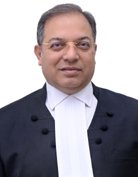
CORAM: HON’BLE MR.JUSTICE SANDEEP MOUDGIL
****
Present: Mr. KL Arora, Advocate for the petitioner
Mr. Ravi Dutt Sharma, DAG Haryana
Mr. Harneet Oberoi, Advocate (through VC) and
Ms. Anmol Preet Kaur, Advocate for respondent No.5
****
Sandeep Moudgil, J.
(1). The jurisdiction of this Court has been invoked under Article 226
of the Constitution of India for issuing a writ of certiorari for quashing the
impugned order dated 03.02.2017 (Annexure P8) and 20.09.2017 (Annexure P-
8/1) vide which penalty of stoppage of two increments with cumulative effect
has been imposed. A further direction is sought to the respondents to release
all the retiral benefits including revised pension and 2
nd
ACP which became
due in the year 2015 along with interest @ 18% p.a. on the delayed payments
of retiral benefits in compliance to the Full Bench decision of this Court
rendered in A.S. Randhawa Vs. State of Punjab and others, 1997(3) SCT 468
.
She has further prayed for directing the respondents to decide or drop the
charge sheet dated 07.12.2018 (Annexure P21) as pension papers have been
issued on 03.10.2019/31.10.2019 (Annexure P27 and P28, respectively) but
monetary benefits only remain to be released.
CWP-35196-2019 - 2 -
(2). The petitioner had joined the Health Department as Staff Nurse on
ad hoc basis on 07.07.1983 and thereafter she applied for the post of Staff
Nurse on regular basis with the Subordinate Services Selection Board Haryana
under General category. She stood selected and as such appointment letter
dated 09.07.1986 was issued to her. The petitioner applied for the post of PHN
with the SSSB, Haryana through proper channel under SC category and there
also, she was selected and she joined as PHN under SC category on
22.11.1995. Although a charge-sheet dated 07.12.2018 (Annexure 21) was
issued to the petitioner, alleging that she had procured an incorrect SC
certificate from the SDO, Charkhi Dadri on 25.11.1985 on the strength of
which she secured regular appointment, despite actually belonging to the Arora
caste this charge-sheet remains pending.
(3). The petitioner applied for casual leaves on 12.12.2009,
14.12.2009 to 16.12.2009 which was verbally denied by the Senior Medical
Officer, Civil Hospital Mandikhera and vide letter dated 07.01.2010, the
petitioner was directed to rejoin her duty. The petitioner did not join and sought
extension of her leave via telegram. Repeated directives from both the Senior
Medical Officer and Civil Surgeon were issued directing the petitioner to join
her duty followed by a charge-sheeted dated 20.08.2010 under Rule 7 of the
Haryana Civil Services (Punishment & Appeal) Rules, 1987. She submitted her
reply on 17.09.2010, which was found unsatisfactory. A departmental enquiry
headed by Dr. Kamal Mehra, Dy. Civil Surgeon, Mewat, was conducted and as
per the enquiry report dated 06.07.2016, it was acknowledged that the
petitioner remained absent from duty and owing to her serious medical
conditions, she was hospitalised from 19.08.2009 to 21.08.2009 at Paras
CWP-35196-2019 - 3 -
Hospital, Gurgaon, and thereafter received outpatient treatment from Singal
Nursing Home & Trauma Centre, Hodal (Palwal) between 12.12.2009 and
21.07.2011 though she never claimed medical reimbursement for the alleged
treatments.
(4). Notwithstanding that, the competent authority passed an order on
09.11.2016/03.02.2017 (Annexure P8), imposing the penalty of stoppage of
two increments with cumulative effect and treating her period of absence as
leave of kind due and vide order dated 19/20.09.2017 (Annexure P8/1), 2
increments were stopped from 01.07.2017 and 01.07.2018. Hence this writ
petition.
(5). Learned counsel for the petitioner contends that in the enquiry
ordered by the respondents themselves, the Enquiry Officer vide report dated
06.07.2016 (Annexure P7) after considering the facts, medical report and other
evidences, returned a specific finding that the petitioner remained absent from
duty as she was suffering from severe backache, HTN and Hypothyroidism
treatment of the same was much needed and as such, her treatment from
Singhal Hospital, Hodal from 12.12.2009 to 21.07.2011 was justified and
medical rest was needed as per report of the medical board. It is urged that
once the enquiry office exonerated the petitioner and recommended her above-
mentioned absence period to be treated as medical leave, there was no rhyme or
reason for the punishing authority to award major penalty without there being
any dissenting note and since the said punishment would entail civil
consequence, the respondents ought to have adhered to the principle of audi
alteram partem and as such, the action clearly suffers from patent illegality and
CWP-35196-2019 - 4 -
highhandedness on the part of the respondents and against the principles of
natural justice.
(6). It is further submitted that on one hand, the disciplinary authority
dismissed the Enquiry Officer’s findings and unilaterally concluded that the
petitioner’s absence was willful, thus imposing a major penalty and on the
other hand, the same authority simultaneously treated the period of absence as
"leave of kind due," a term which expressly includes medical leave, earned
leave, half pay leave, etc., thereby effectively accepting the spirit of the
Enquiry Officer’s recommendation. This contradictory approach highlights a
clear non-application of mind and administrative irrationality. Furthermore, the
account statement (Annexure P9) demonstrates that medical leave for the entire
disputed period was duly sanctioned, and her full salary was credited for the
same, strongly indicating that the absence had in fact been regularized by the
department itself.
(7). Learned counsel additionally argued that the petitioner
persistently approached the respondents for release of her rightful retiral
benefits and due ACP increments. The first ACP became due as far back as
2005, and the second ACP in 2015, after ten years of regular service. However,
the first ACP was granted only belatedly in 2019, reflecting an unjustified
delay of fourteen years, despite the department’s knowledge of its accrual. It is
submitted that while her pension and gratuity have nominally been sanctioned,
none of these benefits have actually been disbursed till date. The petitioner is
also being denied other retiral benefits including leave encashment, Group
Insurance Scheme (GIS), and her second ACP from 2015 (subsequent to
restoration of increments), together with accrued interest. Such delays in
CWP-35196-2019 - 5 -
release of statutory benefits not only contravene service rules but also cause
grave financial prejudice and harassment to the petitioner after superannuation.
(8). Another argument raised is that the petitioner having retired from
service w.e.f. 30.04.2019, the enquiry in charge-sheet dated 07.12.2018 was
fixed for 22.04.2018 i.e. just 8 days before her retirement. Learned counsel for
the petitioner lamented that the Department took 8 long years to issue charge-
sheet dated 07.12.2018 by virtue of the first letter which was issued on
21.07.2010 (Annexure P13) alleging fraudulent selection in govt. job by the
petitioner by using fake caste certificate. He submits that though enquiry has
been completed, no final report has been communicated to the petitioner.
(9). On the contrary, the respondents No.1 to 4 have filed short reply
dated 13.04.2021 wherein it has been averred that the Civil Surgeon, Mewat
vide order dated 01.06.2017 sanctioned the period of absence from 12.12.2009
to 15.01.2012 inadvertently as earned leave of 270 days and half pay leaves of
495 days, however, subsequently, the same was corrected and absence period
of the petitioner was treated as 84 days half pay leave and 380 days as leave
without pay as a result of which the petitioner was paid full salary for her
absent period vide order dated 15.06.2020.
(10). Short reply dated 19.02.2020 has also been filed by Dhruv Bhola
Dy.Accountant General (Pension) – respondent No.5 wherein it has been
specifically averred that pension and gratuity of the petitioner were revised as
per the authorization and recommendation of the pension sanctioning authority
and no action as regards the contention of the petitioner is to be taken by
respondent No.5.
CWP-35196-2019 - 6 -
(11). Having heard the arguments advanced by learned counsel for both
parties and in view of the reasons detailed above, this Court is of the firm
opinion that the present writ petition is meritorious and warrants acceptance.
(12). The petitioner retired from service w.e.f. 30.04.2019 “subject to
pending proceeding”. It would be worthwhile to highlight that a charge-sheet
dated 20.08.2010 was issued to the petitioner alleging that she remained absent
from duty from 12.12.2009 and that she did not comply with the orders of the
higher officers. Thereafter she was transferred to School Health Clinic,
Gurgaon on 15.07.2011 but the respondents did not allow her to join at that
station and as such she filed CWP-18962-2011 and pursuant to order of this
Court passed on 06.01.2012 (Annexure P6) she was allowed to join. Thereafter,
she filed reply to the charge-sheet and Dr. Kamal Mehra, Deputy Civil
Surgeon, Mewat was appointed as Enquiry Officer on 21.03.2016. An enquiry
report dated 06.07.2016 was submitted with the following observation:-
“As per report of the Medical Board, diagnosis and medical
rest given, the above hospital was justified (Report of medical
board is annexed as Annexure K-6). After going through the facts,
medical report, medical rest and abovementioned available
evidences, undersigned have the opinion that Smt. Kamlesh, PHN
remained absent from duty as she was suffering from severe back-
ache, HTN and Hypothyroidism treatment of the same was much
needed, however, Smt. Kamlesh, PHN being employee of Health
Dept. she should have been taken treatment from Govt.
Hospital/Hospitals empanelled by Govt. Therefore undersigned
have the opinion that treatment from 12.12.2009 to 21.07.2011
given by Singal Hospital Hodal was justified and medical rest was
needed as per report of medical board, hence it is recommended
that period from 12.12.2009 to 21.07.2011 may be treated medical
CWP-35196-2019 - 7 -
leave and period from 22.07.2011 to 05.01.2012 may be treated
leave of kind due as Smt. Kamlesh sought the permission to join
her duty from DGHS, but the same permission was given by
DGHS on dated 04.01.2012."
(Emphasis applied)
(13). In Ex. Constable Tarsem Singh Vs. State of Punjab 1996(2) RSJ
599, a Division Bench of this Court referred to Rule 16.2 of the Punjab Police
Rules and held that while awarding punishment, the competent authority is
required to take into consideration the service record of the employee and held
that mere absence from duty cannot be treated as an act of gravest misconduct
so as to warrant the punishment of dismissal by recording specific finding as to
whether the act of the delinquent official which has been complained of is of
such a grave nature that it must lead inflexibly to the awarded punishment.
(14). The Supreme Court in Krushnakant B. Parmar vs. Union of
India (2012) 3 SCC 178, considered the question whether ‘unauthorised
absence from duty’ amounts to failure of devotion to duty or behavior
unbecoming of a Govt. service and held that the same cannot be decided
without first deciding the question whether absence was willful or due to
compelling circumstances. The relevant extracts of the said judgment is
reproduced as under:-
“16. The question whether 'unauthorised absence from duty'
amounts to failure of devotion to duty or behaviour unbecoming of
a Government servant cannot be decided without deciding the
question whether absence is wilful or because of compelling
circumstances.
17. If the absence is the result of compelling circumstances under
which it was not possible to report or perform duty, such absence
can not be held to be wilful.
CWP-35196-2019 - 8 -
18. Absence from duty without any application or prior permission
may amount to unauthorised absence, but it does not always mean
wilful.There may be different eventualities due to which an
employee may abstain from duty, including compelling
circumstances beyond his control like illness, accident,
hospitalisation, etc., but in such case the employee cannot be held
guilty of failure of devotion to duty or behaviour unbecoming of a
Government servant.
19. In a Departmental proceeding, if allegation of unauthorised
absence from duty is made, the disciplinary authority is required
to prove that the absence is wilful, in absence of such finding, the
absence will not amount to misconduct…”
(15). The Supreme Court in a recent pronouncement in Jaya
Bhattacharya v. State of West Bengal, 2025 SCC Online SC 434 held that
when the services have been regularized by treating the same as extraordinary
leave, the same cannot be treated as unauthorised leave for denying the
pensionary benefits and as such, the respondents could have denied the pension
to the appellant only by proving that the employee was unauthorizedly absent
for the subject period. The relevant portion of the said judgment reads as
under:-
“…When the services have been regularized by treating the same
as extraordinary leave the same cannot be treated as unauthorised
leave for denying the pensionary benefits. The respondents could
have denied the pension to the appellant by proving that she was
unauthorizedly absent for the subject period and not by refusing to
hold an inquiry against her.
12. In our considered view, having once regularized her service
during the period of absence by granting extraordinary leave, it
cannot be held that the said period can be treated as break in
service. In the peculiar facts and circumstances of this case, we
CWP-35196-2019 - 9 -
are of the considered view that the appellant would be entitled for
pension. We, accordingly, direct the respondents/authorities to
finalise the appellant's pension within a period of three months.
However, the appellant shall not be entitled for any arrears.”
(16). That apart, the respondents’ action in withholding retiral dues and
pension is clearly violative of Rule 2.2(b) of the Punjab Civil Services Rules,
Vol. II Part-I (as applicable to the State of Haryana). The Rule unequivocally
restricts the authority to withhold or withdraw pension solely to cases where, in
a duly instituted departmental or judicial proceedings, the pensioner is found
guilty of gross misconduct or negligence during service. Critically,
departmental proceedings cannot be initiated after an officer's retirement or re-
employment, without prior sanction by the Government. Furthermore, such
proceedings shall be strictly limited to events that occurred within four years
prior to their institution. Rule 2.2(b) of the Rules ibid read as under:-
“2.2. Recoveries from pensions
(b) The Government further reserve to themselves the right of
withholding or withdrawing a pension or any part of it, whether
permanently or for a specified period and the right of ordering the
recovery from a pension of the whole or part of any pecuniary loss
caused to Government, if, in a departmental or judicial
proceeding, the pensioner is found guilty of grave mis-conduct or
negligence during the period of his service, including service
rendered upon re-employment after retirement:
Provided that–
(1) Such departmental proceedings, if instituted while the
officer was in service, whether before his retirement or
during his re-employment, shall after the final retirement of
the officer, be deemed to be a proceeding under this article
and shall be continued and concluded by the authority by
CWP-35196-2019 - 10 -
which it was commenced in the same manner as if the
officer had continued in service;
(2) Such departmental proceedings, if not instituted while
the officer was in service whether before his retirement or
during his re-employment–
(i) shall not be instituted save with the sanction of the
Government;
(ii) shall not be in respect of any event which took
place more than four years before such institution;
and
(iii) shall be conducted by such authority and in such
place as the Government may direct and in
accordance with the procedure applicable to
departmental proceedings in which an order of
dismissal from service could be made in relation to
the officer during his service.
(3) No such judicial proceedings, if not instituted while the
officer was in service, whether before his retirement or
during his re-employment shall be instituted in respect of a
cause of action which arose or an event which took place
more than four years before such institution; and the Public
Service Commission should be consulted before final orders
are passed.
Explanation.–For the purpose of this rule–
(a) a departmental proceeding shall be deemed to be
instituted on the date on which the statement of charges is
issued to the officer or pensioner, or if the officer has been
placed under suspension from an earlier date, on such date;
and
(b) a judicial proceeding shall be deemed to be instituted–
(i) in the case of a criminal proceeding, on the date
on which the complaint or report of the police officer
CWP-35196-2019 - 11 -
on which the Magistrate takes cognizance, is made;
and
(ii) in the case of a civil proceeding, on the date of
presentation of the plaint in the court.
Note:–As soon as proceedings of the nature referred
to in the above rule are instituted, the authority which
institutes such proceedings should without delay
intimate the fact to the Accountant-General. The
amount of the pension withheld under clauses (b)
should not ordinarily exceed one-third of pension
originally sanctioned, including any amount of
pension to be so withheld, regard should be had to
the consideration whether the amount of the pension
left to the pensioner in any case would be adequate
for his maintenance.”
(17). A careful analysis of above reproduced Rule 2.2(b) would reveal
that the power to order recovery from pension or to withhold it either wholly or
partially, can be invoked strictly in cases where the pensioner is conclusively
found guilty of gross misconduct or negligence during service, and only
pursuant to valid departmental or judicial proceedings and such departmental
proceedings can only be initiated with prior sanction of the Government in case
where the employee is not in service.
(18). In the present case, the petitioner had retired from service on
attaining the age of superannuation w.e.f. 30.04.2019 and by that time, the
enquiry which was initiated on 21.07.2010 (Annexure P13) followed by show
cause notice on 02.11.2010 (Annexure P15) went into dormancy until 11 days
before the retirement of the petitioner took place when the Department sent a
letter dated 19.04.2021 (Annexure P23) with the same charge-sheet dated
CWP-35196-2019 - 12 -
07.12.2018 in which enquiry was fixed for 22.04.2019. The hibernation period
between 02.11.2010 till 07.12.2018 has not been appropriately explained or
justified in the replies filed by the respondents.
(19). Factually, the petitioner got married to a SC person in the January,
1982 and on her application before the SDM, Charkhi Dadri, a Scheduled Caste
certificate was issued to her on 25.11.1985 (Annexure P1). At this stage, it
would not be out of place to point out that the petitioner initially joined as Staff
Nurse on ad hoc basis in July, 1983 in General Category and thereafter, she
applied for the post of Staff Nurse on regular basis, before the SSS Board,
Haryana by appending the SC certificate (Annexure P1) and thus got selected
as such on regular basis in the year 1986 followed by her appointment as Public
Health Nurse in November, 1995. Meaning thereby, the respondents were in
cognizance of her pre-General category and post-Reserved category status at
the time of her selection and appointment and as such, the respondent-
Department had sufficient time to get her certificate verified at the very
inception of her appointment. The circumstances surrounding the respondents'
sudden awakening and purported discovery of the petitioner's alleged
procurement of a wrong SC certificate, mere 8 days before her retirement, raise
serious questions about their integrity and motive. The timing of this action
speaks volumes about the mala fide intentions and ulterior motives harbored
against the petitioner, casting a shadow of doubt on the legitimacy of the
departmental proceedings initiated against her..
(20). Moreover, the action of the respondents falls directly in the teeth
of Rule 2.2(2)(ii) of the Rules ibid which reserves the Government with a right
to withhold or withdraw a pension, if an employee/pensioner is found guilty of
CWP-35196-2019 - 13 -
grave mis-conduct or negligence during the period of his service and no
departmental proceedings can be instituted in respect of any event which took
place more than four years before such institution and except the prior sanction
of the Government. As per the respondents, the event i.e. getting employment
as PHN by the petitioner allegedly by procuring wrong SC certificate is of
November, 1995 and the show cause notice was issued on 02.11.2010 i.e. after
about 15-16 years. Apparently, Clause (ii) of Rule 2.2(2), restrains the
respondents from initiating departmental proceedings in respect of an event
which took place more than four years before such initiation and in the present
case, the occasion to initiate departmental proceedings in respect of
procurement of wrong SC certificate arose at the time of appointment of the
petitioner and the respondents could have initiated action maximum within four
years of getting the knowledge of such false procurement of SC certificate i.e.
upto November, 1999 since her appointment in November, 1995.
(21). The respondents, being the custodians of the documents furnished
by the petitioner, had constructive ‘knowledge’ of the petitioner's SC category
status the moment she was given appointment based on that status. The
petitioner's appointment ipso facto constitutes ‘knowledge’ of the procurement
of a fake/wrong SC certificate, if any.
(22). The initiation of departmental proceedings decades later based on
the sudden discovery of "new knowledge" is legally suspect and can be
challenged as an act of mala fide and hence prohibited, especially if they cause
prejudice and comes with civil consequences to the employee. The validity of
such a claim hinges on the principles of limitation, the doctrine of laches, and
the burden of proving that the new information was legitimately undiscoverable
CWP-35196-2019 - 14 -
by the respondents for so long. It is impermissible to allow the petitioner to
suffer due to the inaction and lackadaisical approach of the bureaucrats and
officials in not initiating timely verification of documents and antecedents of
the candidate before extending appointment.
(23). Basudev Dutta vs. State of West Bengal & Ors. 2024 INSC 940
,
ruling by the Supreme Court was prompted by a case involving a West Bengal
government employee, whose services were terminated after 26 years based on
a belated police report. The Supreme Court found his termination illegal and
criticized the authorities for the excessive delay. It emphasized that an
appointment can only be regularized after a thorough background check is
submitted in a timely manner. It further held that failure to act with "due
diligence" at the initial stage, the respondent-authorities would risk having to
reverse decades-old appointments.
(24). The Supreme Court in P.V. Mahadevan v. MD, T.N. Housing
Board, (2005) 6 SCC 636 reiterated its stand taken in State of M.P. v. Bani
Singh, (1990) Supp SCC 738, and authoritatively held that unexplained,
inordinate delay in initiating disciplinary proceedings creates serious prejudice,
room for allegations of mala fides, and is sufficient to invalidate the entire
action. The relevant extracts of the judgment read as under:-
“… It is now stated that the appellant has retired from service. There is
also no acceptable explanation on the side of the respondent explaining
the inordinate delay in initiating departmental disciplinary
proceedings. Mr. R. Venkataramani, learned Senior counsel is
appearing for the respondent. His submission that the period from the
date of commission of the irregularities by the appellant to the date on
which it came to the knowledge of the Housing Board cannot be
reckoned for the purpose of ascertaining whether there was any delay
CWP-35196-2019 - 15 -
on the part of the Board in initiating disciplinary proceedings against
the appellant has no merit and force. The stand now taken by the
respondent in this Court in the counter affidavit is not convincing and is
only an afterthought to give some explanation for the delay.
18. Under the circumstances, we are of the opinion that allowing the
respondent to proceed further with the departmental proceedings at this
distance of time will be very prejudicial to the appellant. Keeping a
higher Government official under charges of corruption and disputed
integrity would cause unbearable mental agony and distress to the
officer concerned. The protracted disciplinary enquiry against a
Government employee should, therefore, be avoided not only in the
interests of the Government employee but in public interest and also in
the interests of inspiring confidence in the minds of the Government
employees. At this stage, it is necessary to draw the curtain and to put
an end to the enquiry. The appellant had already suffered enough and
more on account of the disciplinary proceedings. As a matter of fact,
the mental agony and sufferings of the appellant due to the protracted
disciplinary proceedings would be much more than the punishment. For
the mistakes committed by the department in the procedure for
initiating the disciplinary proceedings, the appellant should not be
made to suffer.”
(Emphasis supplied)
(25). It is the mandatory duty of the appointing authority to verify caste
certificates and all job credentials at the time of initial induction. The Supreme
Court in Kumari Madhuri Patil v. Additional Commissioner, Tribal
Development, (1994) 6 SCC 241, laid down a comprehensive scheme requiring
such verification to be prompt and effective, holding that subsequent challenges
many years later, save for proven fraud, are legally untenable and cause serious
prejudice to the employee. Basudev Dutta stipulated a six-month timeline for
completing all document verification in government jobs, reinforcing that
CWP-35196-2019 - 16 -
departmental oversight or dormancy cannot justify sudden action at the verge
of retirement.
(26). In the instant case, the petitioner has not been accused of
fraudulent misrepresentation or willful manipulation, either at the time of
applying for the SC certificate or during her selection as PHN in the
respondent-Department. The petitioner disclosed all pertinent facts and
documentary evidence, based on which the competent authority duly
recognized her as a Scheduled Caste category person. Her credentials were
thoroughly vetted by the issuing authority, making it implausible that she
procured a bogus or fabricated SC certificate.
(27). Notably, the petitioner has quoted as much as 40 cases of
similarly placed women employees in the Health Department, who themselves
being of a General got married to SC category and received the same
certificate, yet none were subjected to similar proceedings. The exclusive
targeting of the petitioner for protracted and repeated inquiries, the issuance of
charge sheets at the verge of retirement, and the withholding of the inquiry
report even post-retirement besides unreasonable delay in disbursal of retiral
benefits including pension, gratuity, leave encashment, GIS, and ACPs evince
manifest arbitrariness, discrimination and mala fides. Moreover, having once
regularized her service during the period of absence by granting extraordinary
leave, it does not lie in the mouth of the respondents to deny pension and
service/retiral dues as the said period cannot be treated as break in service.
(28). In view of the above discussion, this writ petition is allowed and
the impugned orders dated 03.02.2017 (Annexure P8) and 20.09.2017
(Annexure P8/1) imposing penalty of stoppage of two increments with
CWP-35196-2019 - 17 -
cumulative effect and charge-sheet dated 07.12.2018 (Annexure P21) and all
consequential proceedings are quashed with a direction to the respondents to
forthwith to compute and release all outstanding service/retiral benefits
including pension/revised pension, gratuity, leave encashment, GIS, due ACPs,
etc. along with interest @ 9% per annum from the date they became due till
realization.
(29). Let the needful be done within three months from the date of
receipt of certified copy of this order failing which the petitioner shall be
further entitled to interest @ 12% p.a.
(30). Ordered accordingly.
30.10.2025
V.Vishal
(Sandeep Moudgil)
Judge
1. Whether speaking/reasoned? : Yes/No
2. Whether reportable? : Yes/No

 Login with google
Legal Notes
Add a Note....