
As per the case facts, appeals arose from a Delhi High Court order concerning financial arrears and maintenance within a matrimonial dispute, involving multiple civil and criminal cases between the ...
2024 INSC 530 SLP(Crl.) Nos. 672-675 & 1168-1171of 2024 Page 1 of 27
Reportable
IN THE SUPREME COURT OF INDIA
CRIMINAL APPELLATE JURISDICTION
CRIMINAL APPEAL NO S. OF 2024
(@ Special Leave to Petition (Crl.) Nos.672-675 OF 2024)
KIRAN JYOT MAINI …APPELLANT (S)
VERSUS
ANISH PRAMOD PATEL …RESPONDENT (S)
WITH
CRIMINAL APPEAL NO S. OF 2024
(@ Special Leave to Petition (Crl.) Nos.1168-1171 OF
2024)
J U D G M E N T
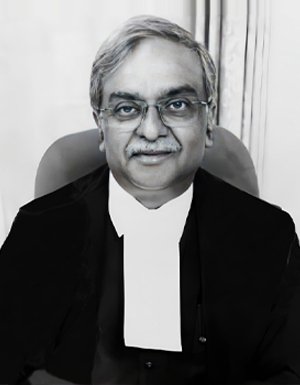
VIKRAM NATH, J.
CRL. APPEAL NOS…………../2024@ SLP(CRL.) NOS.672 -
675/2024:
1. Leave granted.
2. The present appeals arise out of the impugned
order dated 01.12.2023 passed by the Delhi High
Court in CRL.M.C. 406/2023 & CRL.M.A.
4294/2023, CRL.M.A. 4907/2023, CRL.M.A.
17294/2023, whereby the Court has directed the
respondent to pay only 20% of the total arrears
SLP(Crl.) Nos. 672-675 & 1168-1171of 2024 Page 2 of 27
of interim maintenance granted by the Additional
Sessions Judge, Gautam Budh Nagar to the
appellant in appeals before it. The present
appeals also challenge the rejection of the
appellant’s prayer for attachment of bank
account of the respondent and payment of the
complete arrears of Rs. 65,00,000/- (Rupees
Sixty-Five Lakhs only), as on date of the
impugned judgement, towards interim
maintenance.
3. The factual background of the present case is
that the marriage between the appellant -wife
and the respondent-husband was solemnized on
30.04.2015 and, within one year, on 13.04.2016
FIR No.34/2016 was registered on the basis of
the complaint made by the appellant -wife at
Police Station Mahila Thana, Gautam Budh
Nagar, U.P. under Sections 498A/323/504 of
Indian Penal Code, 1860
1 and Sections 3/4 of
Dowry Prohibition Act, 1961
2. In respondent’s
Criminal Miscellaneous Writ Petition before the
1
In short, “IPC”
2
In short, “Act, 1961”
SLP(Crl.) Nos. 672-675 & 1168-1171of 2024 Page 3 of 27
Allahabad High Court seeking stay on arrest and
quashing of FIR, vide order dated 06.05.2016 the
High Court referred the parties to mediation and
thereby granted stay on arrest of the respondent.
The Writ Petition was subsequently dismissed on
merit vide order dated 22.09.2016.
4. Appellant thereafter preferred Application No.
4622 of 2016 under Section 12 of the Protection
of Women from Domestic Violence Act, 2005
3
before Judicial Magistrate, Gautam Budh Nagar,
wherein an application seeking interim
maintenance had also been filed by her under
Section 23 of the PWDV Act. The Judicial
Magistrate, vide order dated 10.05.2018 ,
directed the respondent to pay interim
maintenance of Rs. 35,000/- (Rupees Thirty-Five
Thousand Only) to the appellant. Both the
parties challenged this order through two
separate appeals before the Additional Sessions
Judge, Gautam Budh Nagar. Vide order dated
01.02.2019, the Additional Sessions Judge
modified the order of the Judicial Magistrate and
3
In short, “PWDV Act”
SLP(Crl.) Nos. 672-675 & 1168-1171of 2024 Page 4 of 27
directed the respondent to pay Rs.45,000/- per
month to the appellant and Rs.55,000/ - per
month to her daughter. The appeal preferred by
the respondent was dismissed.
5. Aggrieved by the order of interim maintenance,
the respondent preferred an Application bearing
No. 12860/2019 under Section 482 of the Code
of Criminal Procedure, 1973
4. before the High
Court of Allahabad and the matter was again
referred to mediation vide order dated
09.04.2019. The mediation between the parties
failed on 06.07.2019 and the appellant preferred
a Criminal Application No. 41/2019 under
Section 31(1) of PW DV Act against the
respondent for non-compliance of order dated
01.02.2019 i.e. for non-payment of interim
maintenance. Summons were issued by the
Court of learned Additional Civil Judge, Third,
Gautam Budh Nagar. The summons were
challenged by the respondent before the High
Court of Allahabad through Application No.
33533/2019 under Section 482 of CrPC. Vide
4
In short, “CrPC
SLP(Crl.) Nos. 672-675 & 1168-1171of 2024 Page 5 of 27
order dated 16.09.2019, the summons were
stayed and vide order dated 13.12.2019, the High
Court of Allahabad directed expeditious disposal
of application of appellant under Section 12 of
PWDV Act pending before the Judicial Magistrate
as there was no stay operating in the
proceedings.
6. Upon application made by the respondent, the
proceedings in Application No. 4622 of 2016
under Section 12 of PWDV Act and Criminal
Application No. 41/2019 under Section 31(1) of
PWDV Act were transferred to Tis Hazari Courts,
Delhi vide order dated 13.08.2021 passed by this
Court. Case No. 41/2019 was registered at Delhi
as Case No. 882/2022 and Case No. 4622/2016
was registered as Case No. 691/2022. Notices
were issued to the parties on 04.04.2022 by the
Mahila Court, Tis Hazari, Delhi. In the meantime,
the High Court of Allahabad vide order dated
14.03.2023 dismissed the applications filed by
the respondent under Section 482 Cr.P.C. being
Application No. 33533/2019 and Application No.
12860/2019 as infructuous on the statement
SLP(Crl.) Nos. 672-675 & 1168-1171of 2024 Page 6 of 27
made by his counsel. Respondent preferred a
Criminal Revision Petition and a Criminal
Miscellaneous Application before the High Court
of Delhi which were registered as Criminal
Revision Petition No. 298 of 2023 and Criminal
Miscellaneous Case No. 1951 of 2023,
respectively, praying for similar reliefs as before
and challenging the orders of interim
maintenance.
7. The appellant filed a petition under Article 227 of
the Constitution of India read with Section 482,
Cr.P.C. seeking appropriate directions including
attachment of the accounts of the respondent, in
the cases pending before the Mahila Court, Tis
Hazari, Central, New Delhi, and the same was
registered as Criminal Miscellaneous Case No.
406 of 2023. Vide order dated 08.05.2023, the
High Court of Delhi disposed of the
Miscellaneous Application file by the appellant in
the petition and directed the respondent to pay
10% of the total arrears of interim maintenance
due till 31.12.2022, that is, 10% of Rs.
52,95,000/- as immediate interim relief to the
SLP(Crl.) Nos. 672-675 & 1168-1171of 2024 Page 7 of 27
petitioner therein within a period of fifteen days
from the date of the order.
8. In the proceedings before the Mahila Court at Tis
Hazari, Delhi, the above order of the High Court
was modified and the Court directed the
respondent to pay Rs. 2 Lakhs to the appellant
within twenty-four hours and remaining amount
of Rs. 3,92,500/- (Rupees Three Lacs Ninety-Two
Thousand and Five Hundred Only) before
09.06.2023.
9. The High Court of Delhi while finally disposing of
the appellant’s petition under Article 227 along
with criminal revision and the miscellaneous
application filed by the respondent, directed the
respondent to pay 20% of the total arrears of
interim maintenance to the petitioner therein,
that is, 20 % of 65,00,000/- (Rupees Sixty-Five
Lakhs only) within a period of twenty days. The
High Court further rejected the appellant’s
prayer for attachment of the respondent’s bank
accounts and for payment of complete arrears of
maintenance as on the date of the judgment,
SLP(Crl.) Nos. 672-675 & 1168-1171of 2024 Page 8 of 27
towards interim maintenance granted to the
appellant vide order dated 01.02.2019 passed by
the Additional Sessions Judge, Gautam Budh
Nagar in Appeal Nos.39 & 62 of 2018. The High
Court further directed the Metropolitan
Magistrate, Mahila Court, Central District, Tis
Hazari Court to decide the quantum of the
interim maintenance amount payable monthly
by the respondent to the appellant in the case
pending before it within three months, after
taking into consideration income affidavit of both
the parties. This order is challenged before us by
the appellant wife on the ground that the
respondent husband has disregarded the order
of interim maintenance by not paying any
amount towards interim maintenance since the
last 5½ years.
10. The respondent-husband has contested against
these appeals on the grounds that the appellant
has been gainfully employed all these years
during the pendency of the cases, has several
assets in the form of immovable property, and
with regard to her minor daughter from her
SLP(Crl.) Nos. 672-675 & 1168-1171of 2024 Page 9 of 27
previous marriage, she has already received
maintenance amount of Rs. 40 Lakhs. The
learned senior counsel for both the parties
vehemently disagreed on the amount of interim
maintenance that ought to be paid to the
appellant by the respondent. But they appear to
be in agreement of the strained relationship
between the parties which is stated by both
parties to be beyond the scope of reconciliation.
11. This Court also heard the parties in camera to
discuss the possibility of a reunion but during
the course of the proceedings both parties stated
that they are willing to have their marriage
annulled by mutual consent as there remains no
possibility of the parties reuniting and the
marriage now only exists on paper.
12. We have heard the learned senior counsel for the
respective parties at length.
13. At the outset it is relevant to be noted and does
not seem to be in dispute that differences arose
between the parties within the first year of
marriage itself and the appellant -wife and
SLP(Crl.) Nos. 672-675 & 1168-1171of 2024 Page 10 of 27
respondent-husband have been living separately
since the last nine years. It also appears from the
record that the parties were referred to mediation
at several stages by different courts and all
efforts for reconciliation and to continue the
marriage have failed, and there is no possibility
of a reunion between the part ies. Thus, it
appears that the marriage between the parties
has irretrievably broken down.
14. It is also apparent from the record that complaint
for cruelty, hurt, and dowry demand against the
respondent was registered by the appellant
within the first 11 months of their marriage
followed by an application seeking protection
under section 12 of PWD V Act filed by the
appellant. An application seeking interim
maintenance was filed by the appellant under
section 31(1) of the PWDV Act. Shortly thereafter,
the respondent filed a petition under
section17(1)(d) of the Special Marriage Act, 1954,
seeking dissolution of marriage on grounds of
cruelty. All these proceedings have since been
pending and several challenges have been made
SLP(Crl.) Nos. 672-675 & 1168-1171of 2024 Page 11 of 27
by both parties in the order of interim
maintenance as granted by the Judicial
Magistrate and subsequently modified by the
Additional Sessions Judge.
15. The above admitted facts of long -standing
separation between the parties, prolonged and
multiple litigations pending adjudication, and
several failed attempts at reconciliation are
evidence of the fact that the marriage between
the parties has completely broken down.
16. In Hitesh Bhatnagar v. Deepa Bhatnagar
5,
this Court observed that a marriage can be
dissolved by the courts on the grounds of
irretrievable breakdown of marriage only when it
appears that it has become impossible to save the
marriage, all efforts for reunion have failed and
the Court is convinced beyond any reasonable
doubt that there are no chances of the marriage
surviving and succeeding.
5
(2011) 5 SCC 234.
SLP(Crl.) Nos. 672-675 & 1168-1171of 2024 Page 12 of 27
17. Further, this Court had observed in Ashok
Hurra v. Rupa Bipin Zaveri
6, that upon
considering the cumulative effect of all necessary
factors and that the marriage has perished due
to long standing differences between the parties,
and thus no useful purpose, emotional or
practical, would be achieved by prolonging the
suffering of the parties and in postponing the
inevitable end to their relationship, the Court can
pass an order for dissolution of marriage.
18. This Court in a catena of judgments over the
years has exercised its inherent powers to
dissolve a marriage under Article 142 of the
Constitution of India where it finds that the
marriage is dead, unworkable, beyond repair,
emotionally perished and has thus irretrievably
broken down, even though no gr ounds for
divorce as provided in the applicable law are
made out in the facts of the case.
19. In Shilpa Sailesh v. Varun Sreenivasan
7, this
Court noted that it has the discretionary power
6
(1997) 4 SCC 226.
7
(2022) 15 SCC 754.
SLP(Crl.) Nos. 672-675 & 1168-1171of 2024 Page 13 of 27
under Article 142(1) of the Constitution of India
to dissolve the marriage on the ground of
irretrievable breakdown of marriage while
exercising the discretion cautiously on the basis
of the factual matrix in each case, evaluated on
objective criteria and factors. This Court further
held that whether the marriage has irretrievably
broken down is to be factually examined and
firmly established. The factors to be considered
in such examination are such as, period of
cohabitation after marriage, when they had last
cohabited, nature and gravity of allegations made
by the parties, orders passed in previous or
pending legal proceedings , attempts at
reconciliation or settlement and their outcomes,
period of separation and such other similar
considerations.
20. In the present case, the parties cohabited after
marriage for less than a year and have been living
separately since the last nine years. The nature
of allegations made by the appellant are grave as,
according to her, she was subjected to cruelty,
hurt, and dowry demands by the respondent,
SLP(Crl.) Nos. 672-675 & 1168-1171of 2024 Page 14 of 27
and she has also initiated criminal action against
her husband. Multiple attempts at reconciliation
between the appellant and respondent have been
made by the Courts at different stages but all
efforts have been futile. Multiple legal
proceedings are pending between the parties and
do not appear to possibly conclude in the near
future. This factual position is admitted by both
the parties before this Court and they have also
mutually agreed that they have no intention of
continuing their union as husband and wife.
Therefore, we are of the opinion that while the
interest of the appellant-wife to be compensated
needs to be protected through a one -time
settlement, this is a fit case to exercise the
discretionary powers vested in this Court under
Article 142 of the Constitution of India and to
dissolve the marriage between the parties.
21. Thus, considering all the facts and
circumstances of the case and analysing the
same in light of the considerations stated above,
the marriage between the appellant-wife and
respondent-husband is ordered to be dissolved in
SLP(Crl.) Nos. 672-675 & 1168-1171of 2024 Page 15 of 27
exercise of this Court’s powers under Article 142
of the Constitution of India.
22. The next contention in this case is with respect
to the amount of maintenance to be paid by the
respondent-husband to the appellant-wife. While
the issue of interim maintenance is now closed
with the dissolution of the marriage, the interest
of the wife still needs to be protected so that she
does not suffer financially. The parties have
vehemently argued and contested each other’s
financial position, their individual incomes, and
the assets owned by each other. In order to
establish the correct financial position of both
the parties, they have filed their respective
affidavits of income and assets as ordered by this
Court.
23. Before we go into the details of the financial
position of the parties, we find it necessary to
discuss the law laid down for adjudication and
determination of one -time settlement in
matrimonial disputes. This Court in a series of
judgments has touched upon the question of
SLP(Crl.) Nos. 672-675 & 1168-1171of 2024 Page 16 of 27
one-time settlement and the factors that should
be taken into consideration while determining
fair amount of permanent alimony. While the
cases deal with maintenance under different
provisions of law, the principle for determination
of maintenance by way of one-time settlement
apply equally to all statutes and personal laws.
24. In Vinny Paramvir Parmar v. Paramvir
Parmar
8, this Court held that there cannot be a
fixed formula or a straitjacket rubric for fixing the
amount of permanent alimony and only broad
principles can be laid down. The question of
maintenance is subjective to each case and
depends on various factors and circumstances as
presented in individual cases. This Court in the
above judgment stated that the courts shall
consider the following broad factors while
determining permanent alimony – income and
properties of both the parties respectively,
conduct of the parties, status, social and
financial, of the parties, their respective personal
needs, capacity and duty to maintain others
8
2011 (13) SCC 112.
SLP(Crl.) Nos. 672-675 & 1168-1171of 2024 Page 17 of 27
dependant on them, husband’s own expenses,
wife’s comfort considering her status and the
mode of life she was used to during the
subsistence of the marriage , among other
supplementary factors. This was further
reiterated by this Court in Vishwanath Agrawal
v. Sarla Vishwanath Agrawal
9, while
observing that permanent alimony is to be
granted after considering largely the social
status, conduct of the parties, the parties’
lifestyle, and other such ancillary factors.
25. A two-judge bench of this Court in Rajnesh v.
Neha and Another
10, elaborated upon the broad
criteria and the factors to be considered for
determining the quantum of maintenance. This
judgment lays down a comprehensive framework
for determining the quantum of maintenance in
matrimonial disputes, particularly focusing on
permanent alimony. The primary objective is to
prevent the dependent spouse from being
reduced to destitution or vagrancy due to the
9
(2012) 7 SCC 288.
10
(2021) 2 SCC 32.
SLP(Crl.) Nos. 672-675 & 1168-1171of 2024 Page 18 of 27
failure of the marriage, rather than punishing the
other spouse. The court emphasizes that there is
no fixed formula for calculating maintenance
amount; instead, it should be based on a
balanced consideration of various factors. These
factors include but are not limited to:
i. Status of the parties, social and financial.
ii. Reasonable needs of the wife and dependent
children.
iii. Qualifications and employment status of the
parties.
iv. Independent income or assets owned by the
parties.
v. Maintain standard of living as in the
matrimonial home.
vi. Any employment sacrifices made for family
responsibilities.
vii. Reasonable litigation costs for a non-working
wife.
viii. Financial capacity of husband, his income,
maintenance obligations, and liabilities.
The status of the parties is a significant factor,
encompassing their social standing, lifestyle, and
SLP(Crl.) Nos. 672-675 & 1168-1171of 2024 Page 19 of 27
financial background. The reasonable needs of
the wife and dependent children must be
assessed, including costs for food, clothing,
shelter, education, and medical expenses. The
applicant’s educational and professional
qualifications, as well as their employment
history, play a crucial role in evaluating their
potential for self-sufficiency. If the applicant has
any independent source of income or owns
property, this will also be taken into account to
determine if it is sufficient to maintain the same
standard of living experienced during the
marriage. Additionally, the court considers
whether the applicant had to sacrifice
employment opportunities for family
responsibilities, such as child-rearing or caring
for elderly family members, which may have
impacted their career prospects.
26. Furthermore, the financial capacity of the
husband is a critical factor in determining
permanent alimony. The Court shall examine the
husband's actual income, reasonable expenses
for his own maintenance, and any dependents he
SLP(Crl.) Nos. 672-675 & 1168-1171of 2024 Page 20 of 27
is legally obligated to support. His liabilities and
financial commitments are also to be considered
to ensure a balanced and fair maintenance
award. The court must consider the husband's
standard of living and the impact of inflation and
high living costs. Even if the husband claims to
have no source of income, his ability to earn,
given his education and qualifications, is to be
taken into account. The courts shall ensure that
the relief granted is fair, reasonable, and
consistent with the standard of living to which
the aggrieved party was accustomed. The court's
approach should be to balance all relevant
factors to avoid maintenance amounts that are
either excessively high or unduly low, ensuring
that the dependent spouse can live with
reasonable comfort post-separation.
27. Additionally, the judgment addresses specific
scenarios such as the right of residence under
the PWDV Act, the impact of the wife’s income on
maintenance, and the needs of minor children.
Even if the wife is earning, it does not bar her
from receiving maintenance; the Court should
SLP(Crl.) Nos. 672-675 & 1168-1171of 2024 Page 21 of 27
assess whether her income suffices to maintain
a lifestyle similar to that in the matrimonial
home. The judgment also considers the expenses
associated with the care of minor children,
including educational expenses and reasonable
amounts for extracurricular activities. Serious
disability or illness of a spouse, child, or
dependent family member, requiring constant
care and recurrent expenditur e, is also a
significant consideration. Key precedents cited to
reach this broad framework include Manish Jain
v. Akanksha Jain
11
, Shailja & Anr. v.
Khobbanna
12
, and Sunita Kachwaha & Ors. v.
Anil Kachwaha
13
, which reinforce these
principles and provide a sound, reasonable and
fair basis for determining maintenance in
subsequent cases.
28. In the case at hand, both the parties have
submitted their affidavits of assets as ordered by
this Court. It appears from the material on record
that both the parties are well educated, gainfully
11
(2017) 15 SCC 801.
12
(2018) 12 SCC 199.
13
(2014) 16 SCC 715.
SLP(Crl.) Nos. 672-675 & 1168-1171of 2024 Page 22 of 27
employed, have high standards of living, and also
have dependants to be taken care of. The
respondent-husband is working as the Vice
President of Deutsche Bank and has stated in the
affidavit to be earning a gross monthly salary of
around over Rs. 8 Lakhs and more than Rs. 5
Lakhs per month as net salary after deductions.
Respondent states to have dependant parents
who reside in the United States of America, but
they also have a cumulative annual income of
over Rs. 28 Lakhs. Respondent is responsible for
their medical expenses and stay when they are
visiting India. Respondent has also stated that he
has a dependant aunt with around Rs.55,000/-
medical expenses monthly being borne by him for
her. Apart from this, the respondent has
estimated his personal monthly expenses to be
around Rs. 4 Lakhs. The respondent has
submitted that, apart from certain stock
investments and fixed deposits, he has no other
properties in the form of assets. This submission
is challenged by the appellant-wife by stating
that respondent-husband allegedly owns a
property in Pune which was their matrimonial
SLP(Crl.) Nos. 672-675 & 1168-1171of 2024 Page 23 of 27
home and he also owns another immovable
property in New Jersey, USA.
29. The appellant-wife in her affidavit of assets has
stated that she is currently working as Head of
Human Resources with Sarla Holdings (P) Ltd.
with a salary of Rs.1,39,000/- per month. She
states that she is currently staying in her
parental home for which she pays rent to her
parents, and her dependants include her parents
and her minor daughter. She has estimated that
her monthly necessary expenses amount to over
Rs. 4 Lakhs. Apart from this, she has also stated
that she has to spend around Rs. 75,000/- per
month towards the living and education
expenses of her minor daughter. Respondent has
vehemently contested this and has impressed
upon his submission that the daughter is
appellant’s child from her previous marriage and
she had received Rs.40 Lakhs as p ermanent
alimony in that case towards the maintenance of
the appellant and her daughter. She has
submitted that her assets include certain
SLP(Crl.) Nos. 672-675 & 1168-1171of 2024 Page 24 of 27
immovable properties which she bought in the
last few years.
30. Both the parties appear to have similar
standards of living, which the appellant-wife has
continued to enjoy after their separation as well.
It is evident from their submissions that though
both of them are well qualified and gainfully
employed, the respondent -husband earns
approximately five times the monthly income of
the appellant-wife. Respondent-husband has
certain obligations towards three dependants,
his own expenses, and certain bank loans, but
he also evidently has the financial capacity to
maintain his former wife.
31. This Court explored the possibility of one-time
settlement between the parties and in the course
of the proceedings, the appellant-wife had put
forth a demand of Rs. 5 to 7 Crores as one-time
settlement which would cover her maintenance
expenses and necessary requirements. On the
other hand, the respondent-husband expressed
his willingness to pay only Rs. 50 Lakhs towards
SLP(Crl.) Nos. 672-675 & 1168-1171of 2024 Page 25 of 27
permanent alimony, submitting that the
appellant is employed, has several assets, and
that he has no obligation to maintain her
daughter as he never adopted her.
32. It is not in dispute that the respondent has the
legal obligation as also the financial capacity to
maintain his wife after dissolution of marriage. It
is also necessary to ensure that the award of
maintenance or permanent alimony should not
be penal but should be for the purposes of
ensuring a decent living standard for the
appellant wife. Considering the material on
record, the factors stated above, the
considerations noted herein, and the arguments
advanced by the learned senior counsel on both
sides, this Court is of the opinion that the
demand made by the appellant is exceptionally
high but, at the same time, the amount offered
by the respondent is insufficient in the broader
rubric of maintenance considerations.
33. Keeping in view the totality of the circumstances,
the social and financial status of the parties,
SLP(Crl.) Nos. 672-675 & 1168-1171of 2024 Page 26 of 27
their current employments as well as future
prospects, standards of living, and their
obligations, liabilities, and other expenses, a one-
time settlement amount of Rs. 2 Crores would be
a balanced and fair amount. This amount would
also cover all pending and future claims. Thus,
we fix the said amount as permanent alimony to
be paid by the respondent to the appellant within
a period of four months.
34. Consequently, the appeals are allowed, the
orders and judgments of the courts below are set
aside, any pending cases be disposed of
accordingly, and the decree of divorce be granted
in exercise of this Court’s power under Article
142 of the Constitution of India. Further, the
respondent-husband shall pay Rs. 2 Crores
towards permanent alimony to the appellant-wife
within the time stipulated above. Parties would
be at liberty to file certified copies of this order
before the respective Courts where the cases,
both civil and criminal, are pending whereupon
the Court concerned shall pass appropriate
orders closing such proceedings.
SLP(Crl.) Nos. 672-675 & 1168-1171of 2024 Page 27 of 27
35. No order as to costs.
CRL. APPEAL NOS……………….@SLP(CRL.) NOS -
1168-1171 OF 2024:
36. Leave granted.
37. These appeals are also disposed of in similar
terms/directions/observations, as above.
………………………………..……J
(VIKRAM NATH)
………………………………..……J
(PRASHANT KUMAR MISHRA)
NEW DELHI
JULY 15, 2024


Legal Notes
Add a Note....