
As per case facts, the petitioner, a retired government servant, sought the benefits of a Liberalised Pension Formula introduced by the government. This new formula, which revised pension calculation based ...
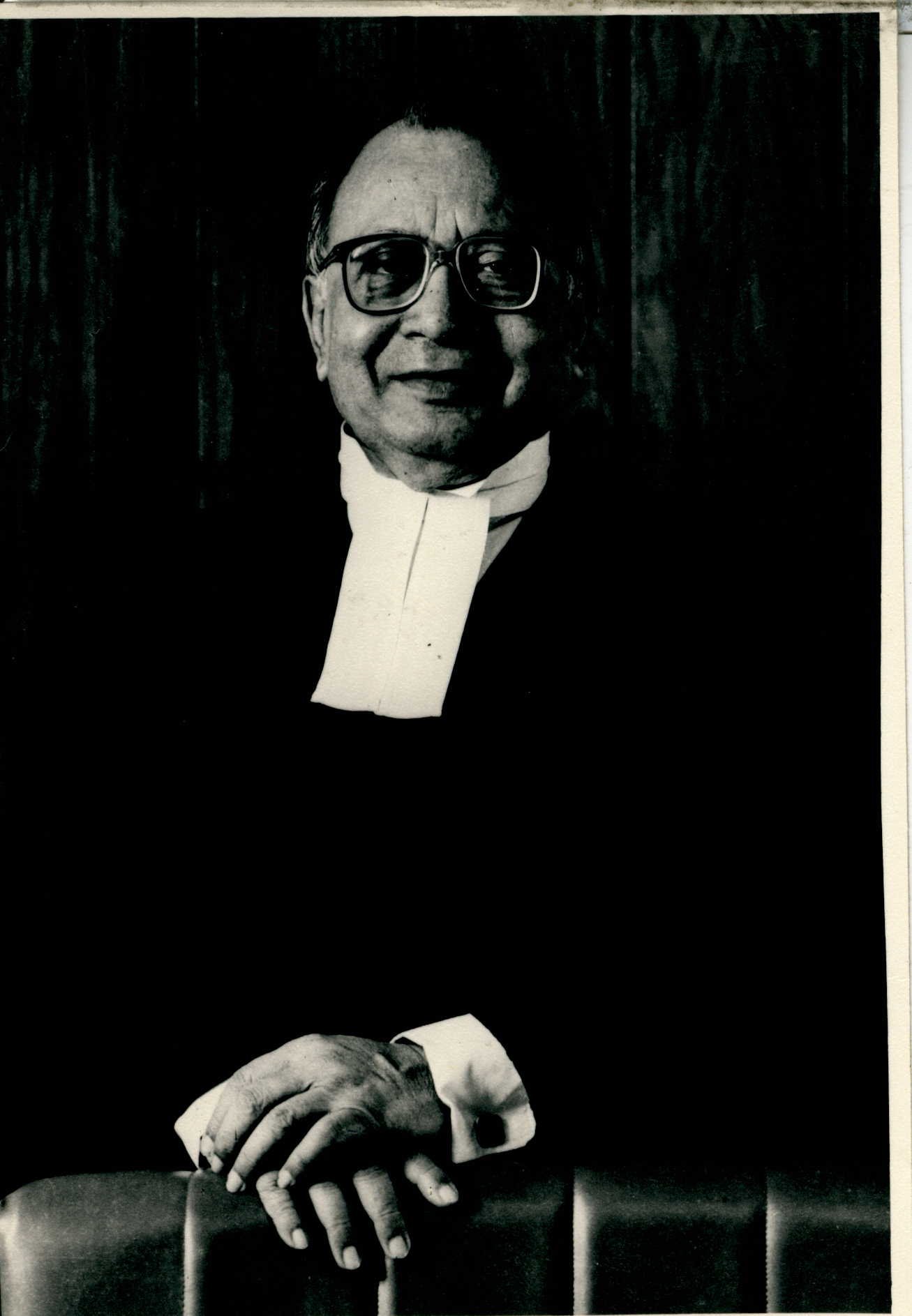
No Acts & Articles mentioned in this case
http://JUDIS.NIC.IN SUPREME COURT OF INDIA Page 1 of 4
PETITIONER:
K. L. RATHEE
Vs.
RESPONDENT:
UNION OF INDIA & ORS.
DATE OF JUDGMENT: 07/07/1997
BENCH:
S.C. AGRAWAL, SUHAS C. SEN.
ACT:
HEADNOTE:
JUDGMENT:
J U D G M E N T
SEN. J.
On 1.5.1968 the petitioner retired from Government
service as Secretary, Industrial Licensing Policy Inquiry
Committee and Joint Secretary to the Government of India in
the Ministry of Industrial Development and Company Affairs,
New Delhi. The petitioner got pension and other retirement
benefits according to the Government rules in force at that
time. On 25.5.1979 the Government of India introduced
Liberalised Pension Formula. The main feature of this
Formula was that it introduced revised method of calculation
of pension based on slab system and raised monthly pension
to Rs.150O/- per month. The benefit of the Liberalised
pension Formula, 1979 was made available only to those
Government servants who retired on or after 31.3.1979. A
Writ Petition was filed in this Court challenging the
fixation of the cut-off date of 31.3.1979 for payment of
Liberalised pension. It was claimed that irrespective of
the date of retirement the benefit of the Liberalised
Pension Formula must be made available to all the pensioners
governed by 1972 Rules will be governed by this Liberalised
scheme of pension irrespective of the date of their
retirement. In that case, D. S. Nakara & Ors. vs. Union of
India & Ors., 1983 (2) SCR 165 it was argued on behalf of
the petitioners that all petitioners entitled to receive
pension under the relevant rules formed a class irrespective
of the date of their retirement. There could not be a mini
classification within this class. The classification based
on retirement before or subsequent to the specified date was
invalid. The scheme of liberalisation in computation of
pension must be uniformly enforced with regard to all
pensioners.
On the basis of the judgment of this Court on
22.10.1983 the Government issued orders extending the
benefit of the judgment to all pensioners covered by CCS
(Pension Rules) as well as Liberalised Pension Rules 1950.
After promulgation of the Order dated 22.10.1983 doubts
arose regarding the extent of the benefit of various
liberalisations made from time to time in Pension Rules. It
was clarified by the Government that only the benefit of
http://JUDIS.NIC.IN SUPREME COURT OF INDIA Page 2 of 4
this liberalisation should be allowed to all pensioners as
had been mentioned in the Government Orders dated
22.10.1983. In all other respects the rules, prevalent on
the date of retirement of the pensioners, will apply.
According to the clarification issued by the Ministry of
Finances the revised pension is to be computed on the
average emoluments drawn during the last 10 months of
service. This rule will apply to all the pensioners. However
the definition of emoluments as in force at the time of the
retirement of an employee has not undergone any change. The
case of the petitioner is that following Nakara's case he
has to be given the same amount of pension as other
employees of his rank irrespective of the date of
retirement.
The case of the petitioner is that the judgment in
leaves no room for doubt that there should be no
discrimination among the persons getting pension from the
Government. There cannot be any classification among the
retired Government employees on the basis of date of
retirement. Therefore they must be given higher pension on
the same basis as it was being given to persons who have
retired after 1st April, 1979.
We are unable to uphold this contention. Nakara's Case
(supra) dealt with the manner of calculation. of pension on
the basis Of average emoluments of a retired Government
employee. Prior to the liberalisation of the formula for
computation of pension made by the memorandum dated 25th
May, 1979, average emoluments of the last thirty months of
service of the employee provided the basis for calculation
of pension. The 1979 memorandum provided that average
emoluments must be calculated on the basis of the emoluments
received by a Government servant during the last ten months
of the service. That apart, a new slab system for
computation of pension was introduced and the ceiling on
pension was raised. As a result of these changes, the
pensioners who retired prior to the specified date suffered
triple jeopardy, viz., lower average emoluments, absence of
slab system and the lower ceiling. This Court struck down
the provision including the memorandum which provided that:
"the new rates of pension are
effective from 1st April, 1979 and
will be applicable to all service
officers who became/become non
effective on or after that date."
The Court further held:
"Omitting the unconstitutional part
it is declared that all pensioners
governed by the 1972 Rules and Army
Pension Regulations shall be
entitled to pension as computed
under the liberalised pension
scheme from the specified date,
irrespective of the date of
retirement. Arrears of pension
prior to the specified date as per
fresh computation is not
admissible"
It is to be seen that the judgment did not strike down
the definition of 'emoluments'. It merely held That if
pension was to be calculated on the basis of the last ten
months' emoluments of a Government servant, after 1.4.1979,
there is no reason why those who have retired before
1.4.1979 should get pension calculated on the basis of
average of last thirty six months' emoluments. In other
words, the rule of computation must be the same. This Court
http://JUDIS.NIC.IN SUPREME COURT OF INDIA Page 3 of 4
did not held that those who have retired before 1.4.1979
must be treated as having the same emoluments as those who
retired on or after 1.4.1979 for the purpose of calculation
of pension. Therefore, on the strength (supra), the
petitioner is not entitled to ask for computation of pension
with reference to emoluments which he never got. Rule 5(1)
of CCS (Pension) Rules, 1972 provides:
"5/1) Any claim to pension or
family pension shall be regulated
by the provisions of these rules in
force at the time when a Government
servant retires or is retired or is
discharged or is allowed to resign
from service or dies, as the case
may be."
The average of the last ten months' emoluments must
form the basis for calculation of pension. That means those
who were actually drawing larger emoluments in the last ten
months of their service will get larger amounts of pension.
does not lay down that the same amount of pension must be
paid to persons retiring from Government service
irrespective of the date of retirement. The contention of
the petitioner that there is only one class of Government
employees for the purpose of calculation of pension cannot
be disputed. The Constitution Bench in Nakara's Case has
clearly laid down that there cannot be any mini
classification of Government servants for calculating the
amount of pension payable. That means the same method should
be adopted for calculating pension for all Government
servants. But the question is what should be the quantum of
pension payable to a Government servant? Even if pension is
calculated on the basis of the same formula the basis of
calculation has to be the average of the last ten months'
emoluments. This principle of adopting last ten months'
emoluments as the basis for calculation of pension must be
uniformly applied to all persons drawing pension from the
Central Government. This was all that was laid down in
Nakara's case. It, however, did not lay down that the
quantum of emoluments drawn during the last ten months of
service of each Government employee must be taken to be the
same for this purpose.
This aspect of the question was examined in the case of
Indian Ex Services Leaque and ors. etc. v. Union of India
and Ors.etc., (1991) 1 SCR 158. The case was argued on
behalf of Armed Forces personnel retiring from commissioned
ranks as well as Armed Forces personnel retiring from below
the commissioned rank who were represented by Shri
K.L.Rathee. J.S. Verma J. (As His Lordship, then was)
speaking for the Constitution Bench which heard the matter
observed that the contention of the writ petitioners on the
basis of Nakara decision was untenable. On behalf of the
petitioners, it had been contended that all retirees who
held the same ranks irrespective of their date of retirement
must be given the same amount of pension. In effect, what
was urged was that there must be "one rank one pension" for
all the retirees irrespective of their date of retirement.
This contention of the petitioners was rejected by the
Constitution Bench by holding that Nakara's decision was of
limited application. There was no scope for enlarging the
ambit of that decision to cover all claims made by the
petitioners for identical amount of pension to every retired
person from the same rank irrespective of the date of
retirement, even though the reckonable emoluments for the
purpose of computation of pension were different.
In fact, the principle laid down in the case of Indian
http://JUDIS.NIC.IN SUPREME COURT OF INDIA Page 4 of 4
Ex-services League & Ors, (supra) negates the case of the
petitioner in the instant case. Nakara's case does not lay
down that the last ten months emolument must be deemed to be
the same for all the employees at the time of their
retirement. The Government rules in force at the time of
retirement of the employees. But if the principle of average
of last ten months' emoluments has been adopted for some
employees, then that Principle must be extended to all the
employees who have retired before them. Nakara's Case did
not lay down that the reckonable emoluments for the purpose
of calculation of pension must be the same for a person
occupying the same post.
It is also to be noted that the case of Krishena Kumar
v. Union of India and others, AIR 1990 SC 1782, another
Constitution Bench examined the question whether on the
strength of Nakara's Case, petitioners were entitled to the
same Provident Fund benefits as were given to those who
retired subsequent to 31st March, 1979. It was argued on
behalf of the petitioner that state's obligation towards
pensioners was the same as that towards persons who were to
be paid Provident Fund benefits. This Court held that was
not the ratio of Nakara's Case On retirement of an employee
legal obligation under the Provident Fund account ended on
payment of the Provident Fund dues of the employee. The
Rules governing Provident Fund and contribution to such Fund
were entirely different from the rules governing pension.
It was also held in the case of Union of India v. All
India Services, Pensioners' Association and another, AIR
1988 SC 501, that the principles laid down in Nakara's Case
could not be extended to the case of payment of gratuity.
It clearly appears from all these cases that is not a
case of universal Application irrespective of the facts and
circumstances of the case. When the Government decided that
pension was to be calculated on the basis of average salary
drawn over a period of last ten months, it was held in
Nakara, that this principle has to be applied even to those
persons who had retired before the notified date. That.
however, does not mean that the emoluments of the person who
were retiring after the notified date and those who have
retired before the notified date holding the same status
must be treated to be the same. This argument was
specifically negatived by the Constitution Bench in the case
of All India Services Pensioners! Association (supra). What
the petitioner is claiming in this case is more or less the
same relief as was denied to him in the above case.
In view of the aforesaid this writ petition must fail
and is dismissed with no order as to costs.

 Login with google
Legal Notes
Add a Note....