
No Acts & Articles mentioned in this case
1
RESERVED
(AFR)
Case :- WRIT - A No. - 26189 of 2012
Petitioner :- Km. Sandhya Singh And Others
Respondent :- State Of U.P.Thru. Secy. And Others
Counsel for Petitioner :- Babu Nandan Singh
Counsel for Respondent :- C.S.C.,C.S.Singh,K.S.Shukla
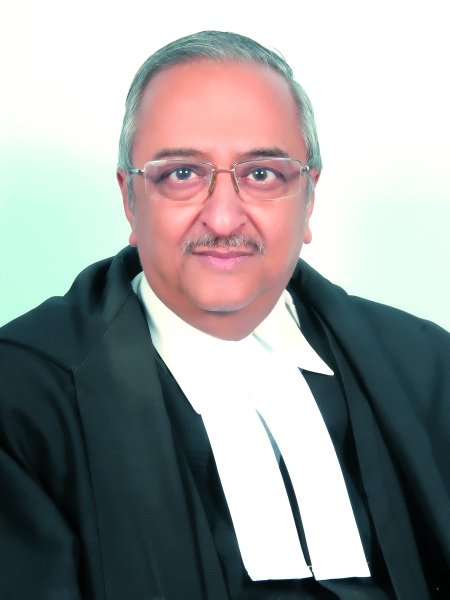
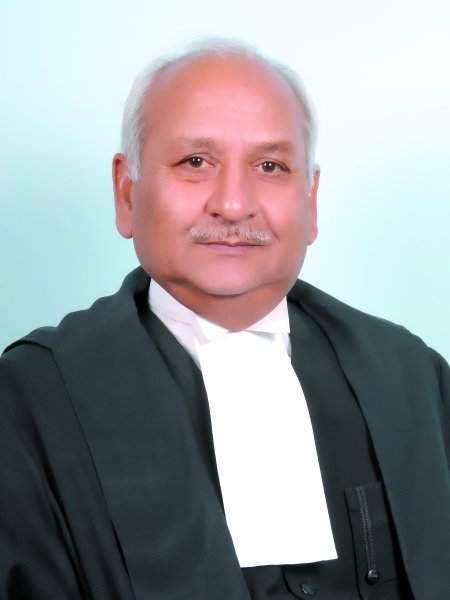
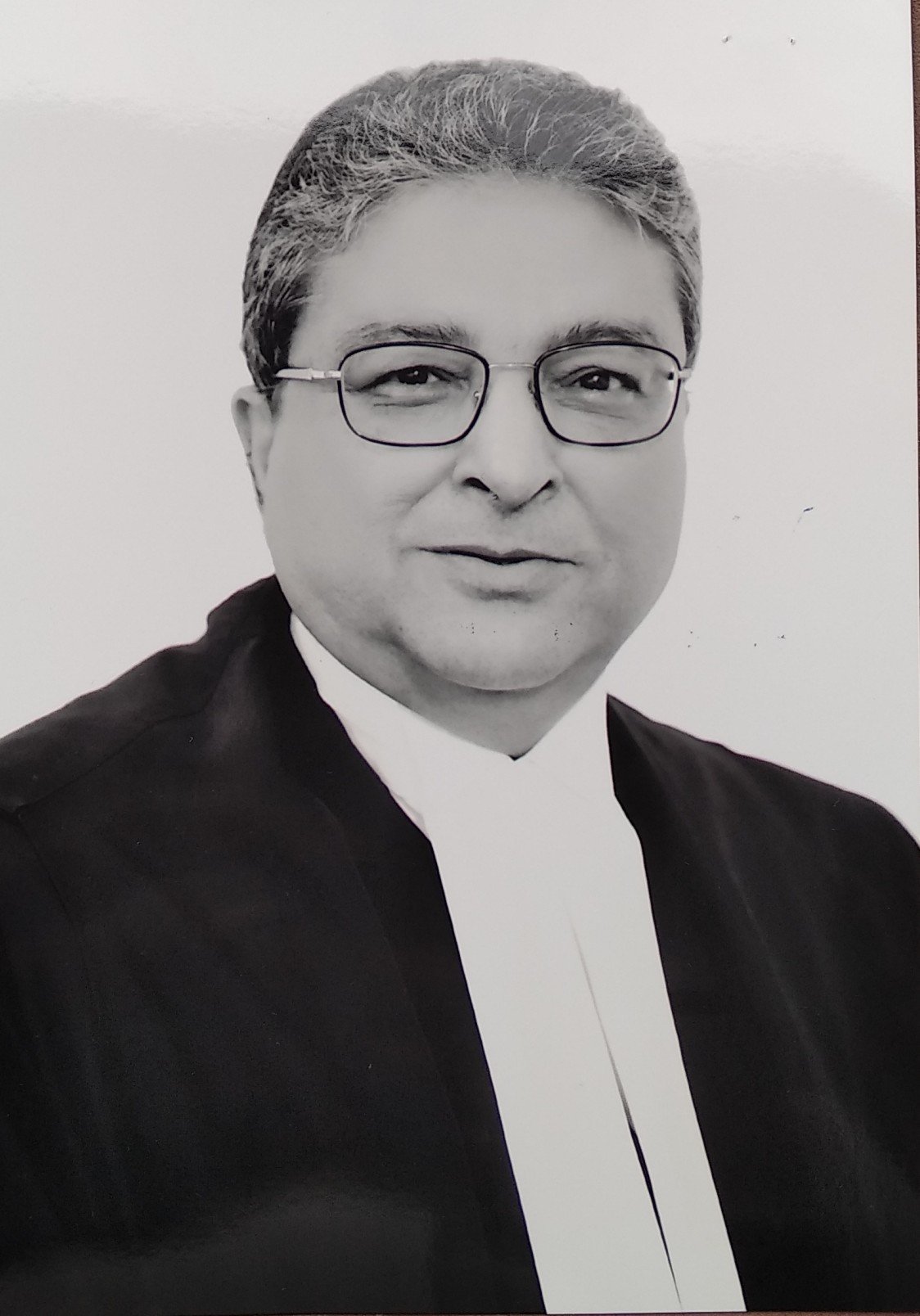
Hon'ble Vineet Saran,J.
Hon'ble Prakash Krishna,J.
Hon'ble Sanjay Misra,J.
(Delivered by Prakash Krishna, J.)
Finding two conflicting decisions given by two division benches of
this Court, a learned Single Judge, by the order dated 25th of May,
2012 has referred the following two questions of law for consideration
to a larger bench. That is how the matter has come up before us on the
nomination made by Hon'ble the Chief Justice. Following two questions
have been referred:
(A) Whether mere selection on a date prior to 02.06.2010 will
confer a right upon the incumbent to claim appointment and for being
sent for training as Shiksha Mitra even after the State Government has
imposed a ban on such appointment on 02.06.2010 and the scheme of
Shiksha Mitra itself has been dropped by the State Government.
(B) Whether the law laid down by the Division Bench in the case
of Sonika Verma vs. State of U.P. and others (supra) or the law laid
down by the Division Benches in the case of Km. Rekha Singh vs.
State of U.P. and others (supra) and in the case of Pankaj Kumar vs.
State of U.P. and others (supra) is the correct law.
The background facts, as set out in the writ petition, relevant to
the above questions may be noticed in brief.
The present petition has been filed by five petitioners jointly by
2
laying a claim to have been selected for the post of Shiksha Mitra in
the year 2009. The grievance is that the petitioners were neither
appointed as Shiksha Mitra nor were sent for training, notwithstanding
the said selection. The State Government, in the meantime, by the
government order dated 2nd of June, 2010 (the validity of which is not
in issue), imposed ban on further appointments of Shiksha Mitra. The
petitioners' claim that they are entitled for appointment as Shiksha Mitra
as the aforesaid government order dated 2nd of June, 2010 is
prospective in nature and does not prohibit the appointments of
Shiksha Mitra who were selected anterior to the said government
order. In support thereof, reliance has been placed by them on a
Division Bench decision of this Court delivered in Special Appeal
No.765 of 2011 : Smt. Sheela Yadav and others Vs. State of U.P.
and others on 9th of May, 2011 wherein the Division Bench held that
"The selection had been made for academic session 2009-2010
and the government order which was made on 2nd of June, 2010
was made for banning future appointments. The said government
order would, therefore, apply prospectively for the teachers'
selection from 2nd of June, 2010 onwards and would not apply
where appointments have been delayed on account of the
reasons which were relatable to the inaction of the respondents."
Reliance has also been placed on another Division Bench
decision of this Court in the case of Kumari Sonika Verma Vs. State
of U.P. and others, 2011 (1) ESC 681 wherein it was held that the
respondents therein could have only refused to make selection and
appointment after the date of ban i.e. 2nd of June, 2010.
According to the petitioners, in view of the authoritative
pronouncements by the aforesaid two Division Bench decisions, the
petitioners are entitled to be appointed as Shiksha Mitras, having been
selected prior to the date of ban.
The case of the respondents is as follows:-
An advertisement with a view to select 355 Shiksha Mitras was
3
published in Hindi Newspaper dated 19.02.2009. Due to enforcement
of Model Code of Conduct, as the Lok Sabha Elections were notified,
the process of selection for the time being was stopped. Subsequently,
a notification dated 25th of September, 2009 was published which
provided 7th and 8th October, 2009 as the dates fixed for finalization of
selection at Tehsil level. On October 5, 2009 the Director of Education
(Basic) in the meeting decided to stop the process of selection and
necessary directions were given to every District Basic Shiksha Adhikari
of the State. In pursuance of the said directions the Basic Shiksha
Adhikari, Azamgarh notified that till further orders, the selection process
will be kept in abeyance. Ultimately, the State Government took a
decision to completely stop the fresh engagements of Shiksha Mitras
by the government order dated 2nd of June, 2010.
The respondents' further case is that from April 1, 2010 the Right
to Education Act, 2009 has been enforced. In the light of the said
enactment, the government took a policy decision not to engage any
fresh Shiksha Mitra, with the result the fresh engagement of Shiksha
Mitra has been done away.
The learned Single Judge has referred in the referring order
certain other decisions. They are (1) Special Appeal No.305 of 2008:
Sanjay Kumar Singh Vs. State of U.P. decided on 3rd of March,
2008; and (2) Special Appeal No. (276) of 2011: Kumari Rekha
Singh Vs. State of U.P. and others, decided on 18th of July, 2011.
In the case of Sanjay Kumar Singh, the Court held that the
appointment was to be made for academic year 2005-2006 in a village
of District Basti. The said period having been expired without making
appointment, there cannot be any appointment either of the petitioner
or of the respondent no.7 therein. It further directed the concerned
District Magistrate to start the procedure to appoint Shiksha Mitra in
that particular village forthwith for the academic year 2008-2009 and to
see that the selection and appointment of Shiksha Mitra is done well
before the academic year starts from July, 2008.
4
In the case of Kumari Rekha Singh (supra) the Division Bench
held as follows:-
"The question for our consideration is whether the judgment of
the learned Single Judge suffers from any illegality. The post of
Shiksha Mitra was a tenure post for a particular period. However,
in the event, the services were found satisfactory, it could be
continued.
In the instant case, even before the petitioner-appellant could be
appointed and sent for training, on account of intervening
circumstance, the State took a stand that they are no longer
making appointment to the post of Shiksha Mitra in view of the
promulgation of the Right to Education Act, 2009.
The selection only gives a right to the selected candidate to be
considered. It is always open to the respondents to give
satisfactory reasons for not making appointment. In the instant
case, the respondents have given sufficient reason as to why the
appointment could not be made. That reason cannot be faulted,
namely that after promulgation of the Right to Education Act,
2009, they are no longer making any appointment to the post of
Shiksha Mitra.
Accordingly, we find no merit in the appeal. Hence, the appeal is
dismissed."
Having noticed the apparent two divergent views in the decisions
referred to herein above, it will be apt to take a note of relevant
government orders relied upon and referred by the counsel for the
parties, to find out the solution to the problem.
The first and the foremost government order on the subject is of
1st of July, 2000. The said government order was issued with an
avowed object of making eduction available at the grass-root level,
particularly to the children residing in villages. The State Government
felt that the standard teacher-taught ratio 1:40 be achieved in the village
schools. The idea was to develop a force and inspire educated persons
5
residing in villages to provide community service by providing education
to such children. The preface of the said government order is relevant
to find out the aim and object behind the scheme known as "Shiksha
Mitra Yojna". The said paragraph is reproduced below:-
fo"k; %&izns'k esa izkFkfed f'k{kk ds lkoZHkkSfedj.k ds y{; dh vksj vxzlj gksus
ds fy;s f'kf{kr ;qokvksa dh lgHkkfxrk gsrq f'k{kk fe= ;kstuk dk dk;kZUo;u A
egksn;]
mi;qZDr fo"k; ij 'kklukns'k la[;k&2604@15&5&99&282@98] fnukad 26-05-1999 ,oa
'kk0 la0&4386@15&5&99&282@98 Vhlh] fnukad 11-08-1999 ds vuqØe esa eq>s ;g dgus dk
funsZ'k gqvk gS fd izns'k esa izkFkfed f'k{kk ds lkoZHkkSfed ds y{; dh vksj vxzlj gksus ds iz;klksa esa
LosPNk mudh lgHkkfxrk lkeqnkf;d lsok ds {ks= esa xzke iapk;rksa }kjk izkIr djus ds fy, f'k{kk
fe= ;kstuk dh jpuk dh gSA oLrqr% ;g ;kstuk eq[; :i ls xzkeh.k f'kf{kr ;qok 'kfDr dks vius
gh xzke esa f'k{kk ds vkyksd dks lkeqnkf;d lsok ds :i esa izTofyr djus gsrq mUgsa mRizsfjr djus
ds y{; dks n`f"Vxr j[krs gq, izkjEHk dh x;h gSA ;gka ;g Hkh Li"V :i ls bafxr dj fn;k tkuk
vko';d gS fd f'k{kk fe= ;kstuk lsok;kstu ijd ;kstuk ugha gS] izR;qr bldk mn~ns'; xzkeh.k
f'kf{kr ;qokvksa dks izkFkfed f'k{kk ds {ks= esa mudks lkeqnkf;d lsok gsrq mRizsfjr djuk ek= gSA
The other part of the scheme lays down the salient feature of
the scheme such as the manner of identification of Shiksha Mitras,
their tenure, qualification and procedure for their selection, payment of
honorarium and the duties of Shiksha Mitras. It would show that in a
college having regular teacher Shiksha Mitra will be appointed in the
ratio of 3:2 in respect of full time teachers and Shiksha Mitras.
Shiksha Mitras will be appointed only in such colleges where at least
one regular teacher is working. Firstly, the colleges where Shiksha
Mitras are to be appointed shall be identified by the District Level
Committee. Thereafter, the applications from the candidates will be
invited by public notice. The candidate should possess the minimum
qualification as prescribed in clause - IV of the government order. The
academic period of a session will be July to May.
The tenure of Shiksha Mitras will come to an end automatically in
every session on the last day of May. It further provides that the
persons who have been selected by Gram Panchayat and approved by
the District Samiti will be sent for one month's training and after
6
completion of training the successful candidates shall be permitted to
work as Shiksha Mitra. Its clause-VII which may have some relevancy
is reproduced below:-
7-f'k{kk fe= dk izf'k{k.k%
xzke iapk;r }kjk p;fur ,oa ftyk lfefr }kjk vuqeksfnr f'k{kk fe= dks ftyk f'k{kk ,oa
izf'k{k.k laLFkku esa ,d ekg dk izf'k{k.k iznku fd;k tk;sxkA ;g izf'k{k.k f'k{kk fe= dks
lQyrkiwoZd izkIr djuk vfuok;Z gksxkA blds i'pkr~ gh xzke f'k{kk lfefr }kjk ikfjr
izLrkokuqlkj f'k{kk fe= dks f'k{kk dk;Z djus dh vuqefr iznku dh tk;sxhA bl izf'k{k.k vof/k ds
fy, mls :0 2250@& ds LFkku ij :0400@& dk ekuns; gksxkA
;fn f'k{kk fe= dks vxys f'k{kk l= ds fy;s p;u f'k{kk lfefr }kjk dj fy;k tkrk gS rks
mls vkxkeh l= esa 15 fnu dk iquZcks/kkRed izf'k{k.k lQyrkiwoZd izkIr djuk vfuok;Z gksxkA
iquZcks/kkRed izf'k{k.k vof/k esa mls :0 200@& dk ekuns; fn;k tk;sxkA
On May 2, 2006, the State Government provided that in case of
any complaint with regard to the proper selection of Shiksha Mitra, the
District Magistrate will examine the complaint and will ensure its
disposal in a transparent manner within a period of one month.
By the government order dated 12th of July, 2006 the scheme of
Shiksha Mitra, which was earlier confined to villages only, was
extended to urban population. Substantially, except consequential
changes such as with regard to the mode of the identification of
Shiksha Mitra, on similar lines the scheme provides that the working
period of Shiksha Mitra will come to an end automatically on the last
day of May of every academic session.
Now, comes the government order dated 2nd of June, 2010 not
impugned in the writ petition, banning the fresh appointments of
Shiksha Mitras with immediate effect. For the sake of convenience, the
relevant portion of the said government order is reproduced below:-
fo"k;% fu%'kqYd ,oa vfuok;Z f'k{kk dk vf/kdkj vf/kfu;e 2009 ds ifjizs{; esa f'k{kkfe=ksa dh uohu
fu;qfDr cUn fd;s tkus ds lEcU/k esaA
egksn;]
mijksDr fo"k;d vkids i= la[;k&f'k0fe0@614@2010&11] fnukad 06-05-2010 ds lanHkZ
esa eq>s ;g dgus dk funs'k gqvk gS fd fu%'kqYd ,oa vfuok;Z f'k{kk dk vf/kdkj vf/kfu;e 2009
fnukad 01-04-10 ls ykxw gks tkus ds ifjizs{; esa 'kklu }kjk lE;d~ fopkjksijkUr f'k{kk fe=ksa dh
7
uohu fu;qfDr rRdky izHkko ls cUn fd;s tkus dk fu.kZ; fy;k x;k gSA d`i;k bl laca/k esa
vko';d dk;Zokgh djus dk d"V djsaA
A reading of the said government order would show that the State
Government, in view of the enforcement of Right to Education Act,
2009 w.e.f. 1st of April, 2010 decided to completely ban the fresh
appointments of Shiksha Mitras.
Heard Sri Babu Nandan Singh, learned counsel for the petitioner,
in support of the writ petition. Shri Ashok Khare, learned senior counsel
appearing in the connected matters as well as Shri A.P. Tewari, learned
counsel also advanced the arguments. The learned counsel for the
petitioners submitted that on a true and proper construction of the
government orders referred to herein above and in view of the decision
of this Court in the case of Sheela Yadav (supra) which stands
confirmed by the Apex Court in as much as the Special Leave Petition
filed by the State having been dismissed, the petitioners are entitled to
be appointed as Shiksha Mitras. Elaborating the argument, it was
submitted that the petitioners having been selected prior to 2nd of
June, 2010, on which date the ban on fresh appointments of Shiksha
Mitras was enforced, are entitled to be appointed as such. Elaborating
the argument, it was submitted that the scheme of Shiksha Mitras was
introduced from the academic session 1999-2000 in pursuance of the
policy decision notified by the government order dated 26th of May,
1999. The government decided that for the academic year 1999-2000
around 10,000 Shiksha Mitras will be engaged on contract basis and
for this purpose a Committee at District level was constituted which
consisted of the District Magistrate as its Chairman. Zila Panchayat
Raj Officer, Accounts Officer of Basic Shiksha Adhikari and Basic
Shiksha Adhikari as members. Consequent upon approval by the said
Committee intimation was required to be given to Gram Shiksha Samiti,
the selected candidate was required to undergo one month's training
and after successful completion of the training, could function as
Shiksha Mitra. The appointment was an engagement on contract,
8
limited for academic session ending on the next 31st of May.
Subsequently, such appointments were made renewable on year to
year basis.
The learned Senior Counsel Shri Ashok Khare also referred to
other government orders to show that the contract of existing Shiksha
Mitras is made renewable automatically, except where there is some
complaint and the government is in process to accord them status of
assistant teachers. He has relied upon certain decisions to buttress his
arguments that change in norms of recruitment during the pendency of
selection process is not permissible under law. The submission is that
the government order dated 2nd of June, 2010 banning the fresh
appointments amounts to change in the norms of recruitment and as
such will not be applicable to the already selected candidates.
Refuting the above submission, Sri C.S. Singh, learned
Additional Chief Standing Counsel submits that the relied upon decision
in the case of Sheela Yadav though SLP has been dismissed, is not
correctly decided and the dismissal of the Special Leave Petition will
not come in the way of the State Government as the order dismissing
the SLP does not contain any reason. The other limb of the argument
is that the petitioners have no enforcible rights as (1) Mere Selection
does not confer any right on the selected candidate to claim
appointment as a matter of right, (2) The government orders are
executive instructions and if the State Government took a policy
decision, in view of the changed circumstances, has decided to stop
fresh selection/recruitment of Shiksha Mitras en-block, is not
justiciable issue, specially when the legality and validity of the said
government order dated 2nd of June, 2010 has not been questioned by
any petitioner.
The court was taken through the government orders referred to
herein-above with a view to establish that the purpose of Shiksha Mitra
scheme is not to provide employment. The government orders do not
create civil posts with a view to spread opportunity for education in the
9
first stage in the rural and in the second stage in urban areas also. A
policy decision was taken to select Shiksha Mitras. The idea was to
maintain teacher-taught relation in the ratio of 1:40 by engaging
educated youths already residing in the villages. The said object is now
being achieved through the enforcement of Right to Education Act,
2009, which is a better way of spreading education. The State
Government has done no wrong by completely blocking the fresh
appointments of new Shiksha Mitras.
Shri K.S. Shukla, learned counsel appearing for the Basic Shiksha
Parishad adopted the arguments of Sri C.S. Singh.
Considered the respective submissions of the learned counsel for
the parties and perused the record.
Right to Education has been held to be a fundamental right. In
Mohani Jain Vs. State of Karnatka (1992) 3 SCC 666 the Apex Court
observed that the right to education flows directly from right to life. The
right to life under Article 21 and the dignity of an individual cannot be
assured unless it is accompanied by the Right to Education. The State
Government is under obligation to make an endeavour to provide
education facilities at all levels to its citizens.
Article 45 of the Constitution fixes a time limit during which a
State shall provide free compulsory education for children until they
complete the age of fourteen years. In the case of Election
Commission of India Vs. Saint Mary's School (2008) 2 SCC 390
(Para 26) the Apex Court observed that 60 years of Independence,
however, have not brought about the desired result of imparting
compulsory education to all the children. Education is one of the most
important functions of the State. The State has basic responsibility in
regard thereto.
Presumably, in view of the various judicial pronouncements of the
Apex Court pointing out the need of education for the good governance
of the country and upliftment of the poor and down trodden public
mostly residing in villages, the State Government took a step in this
10
direction by deciding to evolve a scheme which came to be known as a
scheme of Shiksha Mitra Yojna. Its aim and object is self speaking and
has already been reproduced in the opening part of the judgment.
Upon hearing all the counsel for the parties, we are of the opinion
that the controversy on hand requires consideration of the following
points:-
1. When selection process of Shiksha Mitra is complete?
2. Whether such selected candidates can claim appointment as a
matter of right?
3. Indisputably, under executive instructions selected candidates were
permitted to work as Shiksha Mitra on payment of fixed monthly
amount called honorarium. In this view of the matter, still selected
candidates, to whom the appointment is not offered, can claim as a
right for appointment notwithstanding the ban order dated 2nd of June,
2010, the latter being not under scrutiny?
4. The effect of commencement of Right to Education Act, 2009?
5. Whether the apparent divergent views expressed by the different
Division Benches are reconcilable?
POINT NO.1.
The reference order presupposes that the petitioners are duly
selected candidates for Shiksha Mitra posts. Although when the
selection of Shiksha Mitras is complete, strictly speaking, is not within
the scope of the present reference but after hearing the counsel for the
parties, they were called upon to address us thereon. Along with the
writ petition, the petitioners could not enclose any document except the
copies of the proceedings of the Gaon Shiksha Samiti (Annexure-2)
(which is being disputed) that the petitioners are duly selected
candidates. The argument of the petitioners proceeded on the footing
that the petitioners' names were recommended by the Gram Shiksha
Samiti and as such, they stand selected, there being no disapproval to
the said resolution by the District Level Committee presided over by the
District Magistrate. The recommendations were made to the District
11
Level Committee which remained pending for a considerable period of
time and in the meantime, the government order dated 2nd of June,
2010 came to be in existence. The learned Additional Chief Standing
Counsel submitted that till the successful completion of training, the
recommendees of the Gram Shiksha Samiti cannot be treated as duly
selected candidate.
We have given careful consideration to the respective
submissions of the learned counsel for the parties.
In pursuance of orders passed by us requiring the parties to file
counter and rejoinder affidavits, counter affidavit has been filed by Smt.
Pushpa Joshi posted as Professional Education For All Board on behalf
of Ministry of Basic Education, U.P. Lucknow-respondent no. 1 wherein
the background of Shiksha Mitra Scheme has been given in some
details. The history relates to the year 1986 under National Educational
Policy 1986. It was decided for universalization of elementary education
i.e. education upto class VIIIth. It was resolved, as para-5.12 of the
policy, to provide free and compulsory education of satisfactory quality
to all the children upto 14 years of age before start of 21
st
century. In
furtherance thereto in the year 1993, a project duly financed by the
World Bank was mooted for expansion of quality basic education in the
State. A society for smooth running of this project, namely, Uttar
Pradesh Sabhee Ke Liye Shiksha Pariyojna Parishad (U.P. Education
for all Project Board) was established on 17
th
May, 1993. Initially when
basic project was started in the year 1993, it had covered only 17
districts and the project was completed in 2000. The District Primary
Programme II was started in the year 1997 in 22 districts of the State of
U.P. which ended in the year 2003. Thereafter, programme III
rd
was
started in rest of 32 districts in the year 2000 and has ended on 31
st
March, 2006. The popularly known programme Sarva Shiksha was
started in the State in the year 2001-02 and now it covers all the
districts of the State. Sarva Shiksha Abhiyan intend to achieve the goal
of universal elementary education by creating a sustainable and
12
decentralized educational management system and bringing the
community participation in all process of the programme. The scheme
of Shiksha Mitra came into existence in pursuance of Sarva Shiksha
Abhiyan. The State Government issued various government orders from
time to time. First government order is dated 26
th
May, 1999.
Government Order dated 26
th
May, 1999
Annexure-2 to the government order dated 26
th
May, 1999
contains the Shiksha Mitra Yojna. Its relevant clauses are reproduced
below:
**’kklukns’k la[;k 2604@15-5-99&282@98 fnukad 26 ebZ] 1999 dk layXud
f’k{kk fe= ;kstuk
izkFkfed f’k{kk ds lkoZHkkSfedj.k ds lanHkZ esa fu/kkZfjr ekud ds vuqlkj v/;kid Nk= vuqikr dks
cuk;s j[kus gsrq de ykxr ij f’k{k.k dh O;oLFkk ds fy;s f’k{kk fe= ;kstuk dh :ijs[kk fuEuor~
gSA ;g ;kstuk f’k{kk l= 1999&2000 ls ykxw gksxkA
1-f’k{kk fe= dh dYiuk-& LFkkuh; vko’;drk vkSj ekWax ds lanHkZ esa xzke lHkk Lrj ij
miyC/k b.VjehfM,V rd f’kf{kr O;fDr;ksa esa ls fu;e ekuns; ij iapk;r jkt vf/kfu;e ds
vUrxZr xfBr xzke iapk;r dh f’k{kk lfefr }kjk f’k{k.k dk;Z gsrq lafonk ij vkeaf=r fd;s tkus
okyk O;fDr ¼f’k{kk fe=½ gksxkA
2--------------------------------------------------------------------------------------------------------------------------------------
-------------------------------------------------------------------------------------------------------------------------------------
3--------------------------------------------------------------------------------------------------------------------------------------
-------------------------------------------------------------------------------------------------------------------------------------
4--------------------------------------------------------------------------------------------------------------------------------------
-------------------------------------------------------------------------------------------------------------------------------------
5--------------------------------------------------------------------------------------------------------------------------------------
-------------------------------------------------------------------------------------------------------------------------------------
6--------------------------------------------------------------------------------------------------------------------------------------
-------------------------------------------------------------------------------------------------------------------------------------
7-lafonk dh vof/k-& f’k{kk fe= xzke f’k{kk lfefr }kjk izLrko ikfjr dj pkyw 'kSf{kd l=
ds fy;s lafonk ij j[kk tk;sxkA tks ebZ ekg ds vfUre fnol dks Lor% lekIr gks tk;sxhA
8-lafonk vof/k dh ekuns;-& f’k{kk fe= dks lafonk ij :0 1450@& izfrekg fu;r ekuns;
ij j[kk tk;sxkA
9-lafonk lekIr djus dh izfØ;k-& ¼v½ fdlh Hkh f’k{kk fe= dk dk;Z larks"ktud u gksus dh
n’kk esa xzke f’k{kk lfefr ds nks frgkbZ cgqer ls fyf[kr izLrko ikfjr dj lafonk lekIr dj
13
ldrh gSA xzke f’k{kk lfefr }kjk bl laca/k esa fd;k x;k fu.kZ; vfUre gksxkA
¼c½ lEcfU/kr f’k{kk fe= dks ml ekg dk ekuns; gksxk ftl ekg esa mlds fo:) xzke
f’k{kk lfefr }kjk lafonk lekIr djus ds vk’k; dk izLrko ikfjr dj fu.kZ; fy;k tk;sxk rFkk
bl izdkj gVk;s x;s f’k{kk fe= dks iqu% lsok dk volj iznku ugha fd;k tk;sxkA
10-f’k{kk fe= ds ekuns; dh Lohd`fr-& ¼v½ mi;qZDr vuqPNsn&6 esa fu/kkZfjr izfØ;k ds vuqlkj
xzke f’k{kk lfefr }kjk f’k{kk fe= dk p;u djus ds mijkUr ,rnFkZ vuqnku izkIr djus gsrq
vkSipkfjd izLrko fu/kkZfjr izk:i ij iw.kZ lwpukvksa lfgr lacaf/kr lgk;s csfld f’k{kk vf/kdkjh ds
ek/;e ls ftyk csfld f’k{kk vf/kdkjh dks miyC/k djk;k tk;sxkA ftyk csfld f’k{kk vf/kdkjh
visf{kr lR;kiu ,oa iqf"V ds mijkUr izLrkoksa ij 'kklu }kjk ukfer lfefr dk vuqeksnu izkIr
djsaxs ,oa vuqeksnu izkIr gksus ds mijkUr vuqnku dks Lohd`fr vFkok vLohd`fr dj fu.kZ; lacaf/kr
xzke f’k{kk lfefr dks lwfpr djsaxsA
¼c½ vuqnku Lohd`r fd;s tkus dh lwpuk izkIr gksus ij lacaf/kr xzke f’k{kk lfefr lacaf/kr
f’k{kk fe= dks bl vk’k; dh lwpuk nsxh fd og ftyk f’k{kk vkSj izf’k{k.k laLFkku esa izkjfEHkd
izf’k{k.k gsrq viuh mifLFkfr nsaA muds }kjk larks"ktud <ax ls ,d ekg dk izf’k{k.k iw.kZ dj fy;s
tkus ij fu/kkZfjr izkFkfed Ldwy esa f’k{kk fe= dks v/;kiu dk;Z gsrq ekuns; :01450@& izfrekg
ij lafonk ds vk/kkj ij fu;qDr fd;k tk;sxkA og lafonk vkxkeh 31 ebZ dks Lor% lekIr gks
tk;sxhA**
Government Order dated 1
st
July, 2000
Besides the other things, it contains format of application to be
filled up by the candidates who are desirous to work as Shiksha Mitra.
The relevant portion is reproduced below :-
**Izk:i&,d
f’k{kk fe= ds :i esa lkeqnkf;d lsok dk volj fn;s tkus gsrq vkosnu i= dk izk:i
lsok esa]
v/;{k]
xzke f’k{kk lfefr]
xzke iapk;r -------------------
ftyk -------------------------------
egksn;]
xzke iapk;r ------------------------------------------------------------------- }kjk izkFkfed f’k{kk ds lkoZHkkSfedj.k ds
ifjizs{; esa f’kf{kr ;qokvksa dh lkeqnkf;d lsok esa lgHkkfxrk ds fy, f’k{kk fe= ;kstuk ds vUrxZr
vkosnu djus gsrq fnukad ----------------- dks izlkfjr foKkiu ds lanHkZ esa eSa f’k{kk fe= ds :i esa
lkeqnkf;d lsok fd;s tkus gsrq viuk vkosnu&i= izLrqr djrk gwWaA**
It prescribes form no. 2, the format on which consent letter be
14
given by Shiksha Mitra. The relevant portion is reproduced below :-
**Izk:i&nks
f'k{kk fe= }kjk fn;s tkus okyk lgefr i=
eSa --------------------------------------------------------------------- vkRet@ifr ---------------------------------------------- xzke
---------------------------------------------- iapk;r lfefr ----------------------------------------- ftyk ------------------------------------ LosPNk ls
lektlsoh dh gSfl;r ls f’k{kk fe= ds :i esa dk;Z djus ds vk/kkj ij fuEufyf[kr ’krsZ Lohdkj
djrk@djrh gwWaA
1-eSa xzke ds fo|ky; esa ,d lekt lsoh dh gSfl;r ls f’k{k.k dk;Z d:axk@d:axhA eSa ,d
LosfPNd dk;ZdrkZ gwW ,oa vius vkidks jktdh;@ifj"knh; deZpkjh ugha le>waxk@le>waxhA eSa bl
lekt lsok ds fy, dksbZ osru ugha ywaxk@ywaxh] dsoy bl fufeRr fu;ekuqlkj ns; ekuns; gh
izfrekg izkIr d:axk@d:axhA**
One of the stands taken in the counter affidavit of the respondents
is that names of the petitioners were never recommended by the Village
Level Committee. Further stand is that admittedly no appointment letter
has been issued to any of them nor any information or communication
was sent by any of the respondents informing any of them that names
have been recommended to District Level Committee for Shiksha Mitra.
It was submitted that unless any communication has been sent to the
petitioners (even if any recommendation was made by Village Level
Committee), it will not confer any right on the petitioners to claim
appointment in view of decision of the Apex Court in the case of
Bachhitar Singh v. State of Punjab, AIR 1963 SC 395. We need not
address upon the above issues being beyond scope of reference. The
matter if occasion so arises may be examined by the writ court.
The modus operandi for identification of Shiksha Mitra as
mentioned in the government order is —
1.Gaon Shiksha Samiti invites applications from residents of
village for an academic session.
2.The Gaon Shiksha Samiti prepares a graded list according
to quality point marks mentioned in the guideline.
3.The name of person who stands at top is sent through the
Assistant Basic Shiksha Adhikari to the District Basic
Shiksha Adhikari who happens to be the ex-officio secretary
15
of the District Shiksha Samiti under Sarva Shiksha
Abhiyan.
4.Thereafter, all the matters are placed before the District
Shiksha Samiti headed by the District Magistrate as
President/Chairman.
5.In the case of any objection to the recommendations, the
District Magistrate decides the objections and then
prepares a list of Shiksha Mitras at District Level and sends
the same to the Principal District Institute of Education
Training (DIET).
6.The training is imparted to such candidates and after
successful completion of training, contractual appointment
is offered to them in the prescribed format.
True, the District Level Committee headed by the District
Magistrate cannot on its own accord, add any name in the list of the
candidates recommended by the Gram Shiksha Samiti, but it requires
approval in the sense that if there is any complaint with regard to any
irregularity committed by the Village Level Committee to look into it and
address it by passing an appropriate order. The argument of the
petitioners that there is no disapproval to the recommendations made
by the Village Committee is far stretched as admittedly, there is no
material before us to show that the recommendations made by the
Village Level Committee was ever forwarded or considered by the
District Level Committee. Had there been any consideration by the
District Level Committee favourably about the recommendations made
by the Gram Shiksha Samiti, the position might have been different. In
absence of any material to show the consideration of the
recommendations by the District Level Committee, the case of the
petitioners is on a wrong footing that they are selected candidates for
Shiksha Mitras.
In addition to above, one of the conditions is the successful
completion of the training. This is also indicative of the fact that the
16
selection process will last up to the successful completion of the
training and not before.
The upshot of the above discussion is that it is a misnomer to
call the petitioners as selected candidates. The selection process will
come to an end only when a person is asked to give his consent on the
prescribed proforma to enter into a contract to serve as Shiksha Mitra
and not earlier to it.
POINT NO.2.
Assuming for the sake of argument that the petitioners were
selected, the contention of the respondents is that in view of the
leading judgment of the Apex Court in the case of Shankersandash
Vs. Union of India (1991) 3 SCC 47 the petitioners have no right to
claim appointment/to work as Shiksha Mitra, even if a vacancy exists.
The relevant paragraph is paragraph no.7 which is reproduced below:-
"7. It is not correct to say that if a number of vacancies are notified
for appointment and adequate number of candidates are found fit,
the successful candidates acquire an indefeasible right to be
appointed which cannot be legitimately denied. Ordinarily the
notification merely amounts to an invitation to qualified candidates
to apply for recruitment and on their selection they do not acquire
any right to the post. Unless the relevant recruitment rules so
indicate, the State is under no legal duty to fill up all or any of the
vacancies. However, it does not mean that the State has the
licence of acting in an arbitrary manner. The decision not to fill up
the vacancies has to be taken bona fide for appropriate reasons.
And if the vacancies or any of them are filled up, the State is
bound to respect the comparative merit of the candidates, as
reflected at the recruitment test, and no discrimination can be
permitted. This correct position has been consistently followed by
this Court, and we do not find any discordant note in the decisions
in State of Haryana v. Subhash Chander Marwaha and Others,
[1974] 1 SCR 165; Miss Neelima Shangla v. State of Haryana
17
and Others, [1986] 4 SCC 268 and Jitendra Kumar and Others
v. State of Punjab and Others, [1985] 1 SCR 899."
The aforesaid decision of the Apex Court has been followed and
referred in the following cases:-
1.AIR 2007 SCW 6899 (15,24).
2.AIR 2007 SCW 6967 (15,17).
3.AIR 2008 SCW 322 (30).
4.AIR 1993 SC 796 (10): Union Territory of Chandigarh Vs.
Dilbagh Singh and others.
5.AIR 1994 SC 736 (10): State of Bihar and others Vs.
Secretariat Assistant Successful Examinees Union 1986 &
Others.
6.AIR 1996 SC 1145 (5,8): State of Bihar & others Vs. Md.
Kalimuddin and others.
7.AIR 1996 SC 2340 (17):Union of India Vs. SS Uppal and
another.
8.AIR 1996 SC 3031 (6,8) : Union of India and others Vs. K.V.
Vijesh.
9. AIR 1997 SC 1803 (8) Dr. Ramulu and another etc. Vs.
Dr. S. Surya Prakash Rao and others.
10. AIR 1997 SC 1896 (2): N. Mohanan Vs. State of Kerala
and others.
11. AIR 1997 SC 3761 (12): Union of India and others Vs.
N.R. Banerjee and others.
12. AIR 1998 SC 3104 (9) : Rani Laxmibai Kshetriya Vs.
Chand Behari Kapoor and others.
13. AIR 1999 SC 849 (10): Dr. J. Shashidhara Prasad Vs.
Governor of Karnataka and another.
14. AIR 2000 SC 1898(22): Tamil Nadu Administrative
Service Officers Association and another Vs. Union of
India and others.
15. AIR 2001 SC 1851 (10): All India SC and ST
18
Employees Association and another etc. Vs. A. Arthur
Jeen and others etc.
16. AIR 2002 SC 1885 (12): Vinodan T and others Vs.
University of Calicut and others.
17. AIR 2003 SC 4062 (28): State of Uttranchal and others
Vs. Sidharth Srivastava and others.
18. AIR 2003 SC 4248(31): Baitarani Gramiya Bank Vs.
Pallab Kumar and others.
19. AIR 2003 SC 4588 (7): State of Orisa and others Vs.
Bhikari Charan Khuntia and others.
20. AIR 2004 SC 1724 (7): Bihar State Electricity Board Vs.
Suresh Prasad and others.
21. AIR 2004 SC 5061 (4): Punjab State Electricity Board
and others Vs. Malkiat Singh.
22. AIR 2005 SC 2540 (A12): Rajesh Kumar Gupta and
others Vs. State of U.P. and others.
23. AIR 2005 SC 2775 (A13): Food Corporation of India
and others Vs. Bhanu Lodh and others.
24. AIR 2006 SC 789 (A16): Union of India (U.O.I.) and
others Vs. Kalidass Batish and another.
25. AIR 2006 SC 3080 (20): State of U.P. and another Vs.
Om Prakash and others.
26. AIR 2007 SC (Supp.) 830 (8).
27. AIR 2008 SC 5 (16): Union of India and others Vs.
Vinod Kumar and others.
28. AIR 2008 SC 559 (9,12,17): Dir. SCTI for Med. Sci
and Tech & Anr. Vs. Pushkaran.
29. AIR 2008 SC 2760 (17): Subha B. Nair & Ors. Vs.
State of Kerala & ors.
In State of U.P. and others Vs. Raj Kumar Sharma and others
(Appeal (Civil) 1433 of 2006) decided on 3rd of March, 2006 the
Apex Court has laid down that the selectees cannot claim appointment
19
as a matter of right. Mere inclusion of candidate's name in the list
does not confer any right to be selected, even if some of the vacancies
remain unfilled, the concerned candidates cannot claim that they have
been given hostile discrimination. In the case on hand, the theory of
discrimination has not been put forward as it has not been set out
anywhere in the writ petition.
We, therefore, find that even if it is assumed what the petitioners
say that their names were recommended by the village level
committee, is correct, it does not confer upon them any enforceable
right to ask for a writ of mandamus.
POINT NOS.3, 4 & 5
It could not be disputed by the petitioners that the scheme for
appointment of Shiksha Mitra came into being through the government
orders i.e. executive instructions. To put it differently, the petitioners'
appointment/selection is contractual appointment as Shiksha Mitra.
Meaning thereby, there is no statutory backing to the petitioners' claim.
The petitioners' argument proceeds on the footing that the post of
Shiksha Mitra is a civil post and is governed by the Principle of
statutory service rules. The scheme itself provides that a person shall
be allowed to function as Shiksha Mitra under a contract for a fixed
period which will come to an end on 31st of May of the next year. No
honorarium shall be payable for the month of June. The scheme
shows that it will commence in the month of July of each year and will
end on 31st of May i.e. for eleven months. By modification it has been
provided that if nothing is there against a person he may continue as
Shiksha Mitra for the next academic session, subject to receiving a
short refresher training. All this cumulatively shows that the tenure of
Shiksha Mitra is a fixed term tenure, maximum up to the period of
eleven months which, of course, in view of the subsequent
amendments by the Government Order can be renewed for subsequent
academic sessions.
Having noticed the nature of working of Shiksha Mitra as
20
envisaged in the government orders, to which there appears to be no
quarrel by the petitioners, if the government has decided to discontinue
the scheme any further by the government order dated 2nd of June,
2010, the petitioners have hardly any right for the enforcement of which
a writ under Article 226 of the Constitution of India can be issued.
Right of Children to Free and Compulsory Education Act, 2009
was enacted in the year 2009 and it received the assent of the
President on 26th of August, 2009. The said Act has been enacted by
the Parliament to provide for free and compulsory education to all the
children of the age of six years to fourteen years. The National Council
for Teachers Training (NCTE) vide notification dated 23rd of August,
2010 has notified that apart from minimum qualification prescribed,
every candidate is supposed to clear the TET examination. In
pursuance thereof on 22nd of April, 2010, the Additional State Project
Director circulated a letter that if any selection process has started for
engagement of Shiksha Mitra, the same may be stopped immediately.
The Secretary of Education has also issued a communication under
the aforesaid Act, 2009 to all the District Magistrates which is dated
2nd of June, 2010. In view of the change scenario, the government
order dated 2nd of June, 2010 is a policy decision of the State
Government. Time and again, it has been laid down that in policy
decision matters, interference by the Court should be minimal, moreso,
in the present case when the government order dated 2nd of June,
2010 is not questioned by any of the petitioners. At this stage, we
cannot resist our temptation to reproduce the observation of the
Division bench headed by Hon'ble Justice H.L. Gokhale,C.J. (as He
then was), and one of us (Justice Vineet Saran) was a member.
"Everybody is forgetting that the scheme of Shiksha Mitra is to
spread education and it is not a scheme for employment. What is being
given is an honorarium to the concerned teacher. The appointment
comes to an end at the end of the academic year, with right to continue
if the performance is good."
21
We have borrowed the above observations from the case of
Sanjay Kumar Singh (supra) which contains the philosophy with regard
to the Shiksha Mitra's scheme, in condensed form.
The main plank of the petitioners' argument that the G.O. dated
2nd of June, 2010 is prospective as held in the case of Sheela Yadav
(supra) by Division Bench and the ban will not apply to such candidates
who were selected successfully prior to the date of the ban, needs
consideration. It is a short judgment. The following two paragraphs
were relied upon by the members at Bar":-
"However, the admitted position is that the selection had been
made for the academic session 2009-10 and the Government Order
which was made on 2.6.2010 was made for banning future
appointments. The said G.O. would therefore apply prospectively for
the teachers selection from 2.6.2010 onwards and would not apply
where the appointment had been delayed on account of reasons which
were relatable to the inaction of the respondents.
Learned counsel for the appellant has also referred to a Division
Bench decision of this Court in the case of Km. Sonika Verma versus
State of U.P. and others, reported in 2011(1) ESC 681 (All) (DB)
wherein this Court has considered a case of similar facts and
circumstances and has come to the conclusion that the respondents
could have only refused to make selection and appointment after the
date of ban i.e. 2.6.2010 and since the case in hand is relatable to the
selection made prior to the enforcement of ban by the G.O. dated
2.6.2010, the case of the appellant would not be covered by the said
G.O."
Indisputably, the Special Leave Petition filed against the aforesaid
judgment has been dismissed summarily by the Apex Court. The
Bench in the case of Sheela Yadav has relied upon a Division Bench
judgment in the case of Kumari Sonika Verma (supra).
Therefore, the factual matrix of the case of Sonika Verma and
the precise controversy involved therein needs consideration. In the
22
case of Sonika Verma the appellants therein along with twenty two
candidates who had applied against the advertised vacancies in
respect of urban area, were selected. The appointment letters were
offered to the twenty two selected candidates and other joined their
duties on 17th of April, 2010. The candidature of the appellant (Sonika
Verma) was placed in the category of 'disputed' by the Assistant Basic
Shikshadhikari. It was found that Sonika Verma was placed under the
said category for no fault on her part. Later on, she was informed that
in view of the government order dated 2nd of June, 2010 no
appointment can be offered to her. In this factual scenario the High
Court considered the case of Sonika Verma and held that it is a case
of discrimination vis a vis Sonika Verma. The word 'disputed' was
subsequently found by the respondents themselves as noticed in the
judgment as incorrect. In such situation, the Court ruled that
"to non suit the appellant would be to deny the opportunity of
employment to her on an erroneous assumption. The appellant
was entitled to be offered appointment along with other selected
candidates and there was no occasion to treat her selection to be
disputed. This being the factual position in the present case, in
our opinion, the respondents have erroneously applied the
government order dated 2nd of June, 2010, which cannot be
pressed into service on the facts of the present case. The
respondents can refuse to make selection and appointment after
2nd of June, 2010 if the policy can be held to be justiciable with
which we are not presently concerned. The present case is in
relation to a selection and appointment prior to the enforcement of
the said government order and therefore, as indicated above, the
same would not be governed by the same."
A meaningful reading of the above quoted paragraph would lead
us to the conclusion that the case was decided principally on the ground
that the name of the petitioner was wrongly placed in the case of
'disputed' for no fault of the appellant therein, which is not the case
23
here. The question of prospective application of the government order
dated 2nd of June, 2010 was not involved even remotely. This aspect
of the case was not brought to the notice of the Division Bench deciding
the case of Sheela Yadav.
A bare perusal of the judgment in the case of Sheela Yadav
would reveal that attention of the Court was not invited towards the fact
that in the Shiksha Mitra Scheme itself it is mentioned that it is not a job
oriented scheme. The facts that the appointment of Shiksha Mitra is
only for eleven months in a year and it comes to an end automatically
on 31st of May of the next year and that Shiksha Mitra Scheme is to
serve the society through local youths and in lieu of the same
honorarium is provided escaped the attention of the Court while
deciding the aforesaid case. All these factors were considered by the
other Division Benches taking a different view of the matter. In our
considered view, the judgments in the cases of Sheela Yadav and Km.
Sonika Verma having rendered de hors the Shiksha Mitra Scheme, do
not lay down correct law, there is no analysis of the Shiksha Mitra
Scheme.
Even otherwise also, there is no question of prospectivity or
retrospectivity of the government order dated 2nd of June, 2010. Every
government order, unless it provides otherwise, talks prospectively. The
same view has been taken in the case of Sheela Yadav (supra). Ban is
being imposed so far as it relates to fresh appointments of Shiksha
Mitras. The day on which the G.O. dated 2nd of June, 2010 came into,
no status of Shiksha Mitras was conferred on the petitioners as
admittedly none of them had undergone successful training to become
a Shiksha Mitra. Thus, from any angle, we fail to understand as to
how the judgment in the case of Sheela Yadav (supra) supports the
petitioners' case, the dismissal of SLP notwithstanding.
We may now consider the precedents relied upon by Sri Ashok
Khare, learned Senior Counsel for the petitioners. Reference was made
to A.A. Calton v. Director of Education and another, (1983) 3 SCC
24
33 wherein it has been laid down that the legislature may pass laws
with retrospective effect subject to the recognized constitutional
limitations, but no retrospective effect should be given to any statutory
provisions so as to impair or take away an existing right, unless that
statute either expressly or by necessary implication directs that it should
have such retrospective effect.
In the case of Dr. Ramji Dwivedi v. State of Uttar Pradesh and
others, (1983) 3 SCC 52, (para-13 in particular) the power to
appointment Principal was taken away by the State Government by
issuing the order dated 1
st
April, 1981. The appellant was appointed
thereafter by Committee of Management as Principal of the college. The
dispute arose with regard to validity of appointment of Principal
appointed on 1
st
May, 1981 i.e. after the State Government order dated
1
st
April, 1981 stopping all fresh selections and appointments. The
matter travelled to the Apex Court, which found that the appointment of
the appellant (Principal) by the Committee of Management was not
valid. This case, therefore, if at all applicable to the facts of present
case, runs to the counter of the petitioners’ case and supports the stand
of the respondents.
Next, reliance was placed on P. Mahendran and others v. State
of Karnataka and others, (1990) 1 SCC 411, wherein it was held that if
the qualification for appointment has been changed subsequently, the
select list prepared on the basis of the then existing qualification is
valid. The case has been decided on the ground that every statute or
statutory rule is prospective unless it is expressly or by necessary
implication made to have retrospective effect. This case also does not
support the case of the petitioners. The observations made therein were
made in different statutory set up. It is distinguishable and has no
application for the simple reason that here is not a case where there is
change in the qualification of a post. To the same effect is N.T. Devin
Katti and others v. Karnataka Public Service Commission and
others, (1990) 3 SCC 157.
25
Lastly, State of Bihar and others v. Mithilesh Kumar, (2010) 13
SCC 467, was pressed into service. A meaningful reading of the same
would show that it is distinguishable on facts and has no application to
the case on hands even remotely. In the case of Mithilesh Kumar
(supra), Mithilesh Kumar was declared successful in the interview which
was held on 9
th
November, 2002. Before that, by the letter dated 14
th
November, 2002, a request was made to Bihar Public Service
Commission not to send any further recommendation as scheme for
appointment of disabled person for vocational training is not valid. In
this case, reference of Constitution Bench decision of Apex Court in
Shankarsan Dash v. Union of India, (1991) 3 SCC 47 has been
made. Without making any comment on the said judgment, the Apex
Court has distinguished the judgment given in All India Railway
Recruitment Board v. K. Shyam Kumar, (2010) 6 SCC 614 on the
ground that there, the candidate was not considered as there was a
change in policy regarding recruitment in the meantime. For the sake of
convenience, paras 22 & 23 are reproduced below:-
22.There is no reason for us to have any
disagreement with the decision of this Court in All
India Railway Recruitment Board case (supra)
regarding the right to appointment even of selected
candidates, but this is not a case of the Respondent
having acquired any indefeasible right which has to
be cancelled on account of certain exigencies. On the
other hand, this is a case where although selected for
the purpose of appointment by the B.P.S.C., Patna,
the case of the Respondent was not even considered
as there was a change in policy regarding recruitment
in the meantime.
23.While a person may not acquire an indefeasible
right to appointment merely on the basis of selection,
26
in the instant case the fact situation is different since
the claim of the Respondent to be appointed had
been negated by a change in policy after the selection
process had begun.
The above quoted paragraphs would show that if the change in
policy regarding recruitment takes place before consideration of the
candidature on merit, then the case would be covered by the judgment
of the Apex Court in All India Railway Recruitment Board (supra) but if
the change in policy takes place after the selection process has begun,
fate of the selected candidates would be different. The facts of the case
on hands are more close to the facts of the case in All India Railway
Recruitment Board (supra) than in the case of Mithilesh Kumar (supra).
We are saying so as in the case of Mithilesh Kumar, it is apparent from
para-4 of the report that Mithilesh Kumar was declared successful. It
has been pointed out in earlier part of the judgment that the petitioners
have not placed any material before us to show that they have been
declared successful by any authority or respondent so far.
Sri C.S. Singh, learned Additional Chief Standing Counsel has
placed strong reliance on State of Gujrat v. Mirzapur Moti Kureshi
Kassab Jamat and others: AIR 2006 SC 212, for the proposition that
principle of stare decisis does not prohibit a fresh look in changed facts
and circumstances. Relevant paras 114, 120 and 176, for the sake of
convenience, are reproduced below:-
“114. The trend of judicial opinion, in our view, is
that stare decisis is not a dogmatic rule allergic to
logic and reason; it is a flexible principle of law
operating in the province of precedents providing
room to collaborate with the demands of changing
times dictated by social needs, State policy and
judicial conscience.
x x x x x x x x
x x x x x x x x
27
120.The doctrine of stare decisis is generally to be
adhered to, because well settled principles of law
founded on a series of authoritative
pronouncements ought to be followed. Yet, the
demands of the changed facts and circumstances
dictated by forceful factors supported by logic,
amply justify the need for a fresh look.
x x x x x x x x
x x x x x x x x
176.In this connection, it will be relevant to refer
the principle of stare decisis. The expression of '
stare decisis' is a Latin phrase which means “to
stand by decided cases; to uphold precedents; to
maintain former adjudications”. It is true that law is a
dynamic concept and it should change with the time.
But at the same time it shall not be so fickle that it
changes with change of guard. If the ground
realities have not changed and it has not become
irrelevant with the time then it should not be
reviewed lightly. I have discussed above the
reasons which have been given by the State of
Gujarat for reconsideration of the earlier decisions
on the subject, in my humble opinion the justification
so pleaded is not sufficient to change or review the
decision of the Constitution Bench by the present
Bench of seven Judges.”
Reference was made to State of Madhya Pradesh v. Narmada
Bachao Andolan and another, (2011) 7 SCC 639, with regard to per
incuriam doctrine. Relevant paras 65, 66 and 67 are reproduced
below :-
“Per incuriam doctrine
65.“Incuria” literally means “carelessness”. In
28
practice per incuriam is taken to mean per ignoratium.
The Courts have developed this principle in relaxation of
the rule of stare decisis. Thus, the “quotable in law” is
avoided and ignored if it is rendered, in ignorance of a
statute or other binding authority.
66.While dealing with observations made by a
seven-Judge Bench in India Cement Ltd. v. State of Tamil
Nadu, (1990) 1 SCC 12 : AIR 1990 SC 85, the five-Judge
Bench in State of West Bengal v. Kesoram Industries
Ltd., (2004) 10 SCC 201, observed as under:-
“57. …. A doubtful expression occurring in a
judgment, apparently by mistake or inadvertence, ought to
be read by assuming that the Court had intended to say
only that which is correct according to the settled position
of law, and the apparent error should be ignored, far from
making any capital out of it, giving way to the correct
expression which ought to be implied or necessarily read in
the context, …..
* * *
71.…. A statement caused by an apparent
typographical or inadvertent error in a judgment of the
Court should not be misunderstood as declaration of such
law by the Court.
(emphasis added)
(See also Mamleshwar Prasad v. Kanhaiya Lal, (1975) 2
SCC 232 : AIR 1975 SC 907, A.R. Antulay v. R.S. Nayak,
(1988) 2 SCC 602 : AIR 1988 SC 1531. State of U.P. v.
Synthetics and Chemicals Ltd., (1991) 4 SCC 139; and
Siddharam Satlingappa Mhetre v. State of Maharashtra,
(2011) 1 SCC 694.)
67. Thus, “per incuriam” are those decisions given
in ignorance or forgetfulness of some statutory provision
29
or authority binding on the Court concerned, or a
statement of law caused by inadvertence or conclusion
that has been arrived at without application of mind or
proceeded without any reason so that in such a case
some part of the decision or some step in the reasoning
on which it is based, is found, on that account to be
demonstrably wrong.”
Submission is that the judgment given in the case of Sheela
Yadav (supra) should be ignored as the attention of the Court was not
invited towards various clauses of Shiksha Mitra Policy and towards
binding precedent of the earlier decision of this Court. We find sufficient
force in the above submission.
The Additional Chief Standing Counsel also referred a Full Bench
Judgement of this Court delivered in Civil Misc. Writ Petition
No.12908 of 2013: Shiv Kumar Sharma Vs. State of U.P. and
others delivered on 31st of May, 2013 to buttress his argument. In this
Full Bench judgement the High Court has held that it is essential to a
teacher to possess Teacher Eligibility Test qualification which was
introduced subsequently after the selection. Elaborating the argument,
the learned Additional Chief Standing Counsel submitted that it does not
amount to changing the rules of game by making variation in the
qualification.
The learned counsel also placed reliance upon another Full Bench
judgement in the case of Arun Kumar Singh and others Versus
State of U.P. and others: Writ - A No. 20740 of 2012 delivered on
20.12.2012 wherein doctrine of per incuriam has been elaborately
dealt with.
Reliance was also placed by him on Black's Law Dictionary on
the meaning of word "approve", reproduced below:
"approve, vb. 1. To give formal sanction to; to confirm
authoritatively. 2. Parliamentary law. To adopt. See ADOPTION (5). —
approval, n."
30
The consistent view of this Court appears to be, as held by this
Court in the case of Sanjay Kumar Singh (supra) and Km. Rekha Singh
(supra), that the selection only gives right to the selected candidates to
be considered. It is always open to the respondents to give satisfactory
reason for not making appointment. The reasons given by the
respondents for not making appointment to the post of Shiksha Mitra in
view of the promulgation of Right to Education Act, 2009 has been
found to be justified, with which we also express our acceptance. More
or less, similar view has been taken by another Division bench in
Special Appeal No.(373) of 2011: Pankaj Kumar Vs. State of U.P.
decided on 13th of May, 2011.
Viewed as above, we do not find any divergence in the views of
Division Benches referred to herein above. The decision in the case of
Kumari Sonika Verma was rendered on its peculiar fact i.e.
discrimination vis a vis other duly selected candidates to whom
appointments were offered but it was denied to Sonika Verma for no
fault of her. In the case of Smt. Sheela Yadav (supra) the decision
given in the case of Sonika Verma was followed. It appears that peculiar
facts of the case of Sonika Verma were not brought to the knowledge
of the Bench. In addition to the above, the observation made in the
case of Sheela Yadav that the ban imposed by the G.O. dated 2nd of
June, 2010 is prospective should be read in the context of the facts of
that case.
The following order was passed by the Apex Court in the SLP:-
"Delay condoned.
The Special Leave Petition is dismissed on merits."
We do not want to burden this judgment with the various citations
referred by the learned counsel for the parties on the point that the
judgment of this Court in the case of Sheela Yadav stands confirmed by
the Apex Court or not.
With regard to question (A), in view of the above discussion, we
are of the opinion that the petitioners were not duly selected and even if
31
they were selected, the selection will not confer a right upon them to
claim appointment and for being sent for training as Shiksha Mitras in
view of the ban imposed by the State Government by the GO dated 2nd
of June, 2010. In other words, persons whose names even if
recommended prior to 2.6.2010, will not acquire any right to claim a
direction for appointment as Shiksha Mitra.
The question (B) is answered by holding that the case of Sonika
Verma was decided on its peculiar facts and therefore, it will have no
general application. The law laid down in the cases of Km. Rekha
Singh and Pankaj Kumar are correct enunciation of law and we
express our concurrence with them.
Let the matter be placed before learned Single Judge with our
above opinion.
(Sanjay Misra, J.) (Prakash Krishna, J.) (Vineet Saran, J.)
Order Date :- 08.08.2013
LBY

 Login with google
Legal Notes
Add a Note....