
As per case facts, a Sanitary Inspector was convicted by a special court for possessing assets disproportionate to his known income during a check period. The trial court determined his ...
No Acts & Articles mentioned in this case
APHC010289602006
IN THE HIGH COURT OF ANDHRA PRADESH
AT AMARAVATI
(Special Original Jurisdiction)
[3368]
THURSDAY, THE NINTH DAY OF APRIL
TWO THOUSAND AND TWENTY SIX
PRESENT
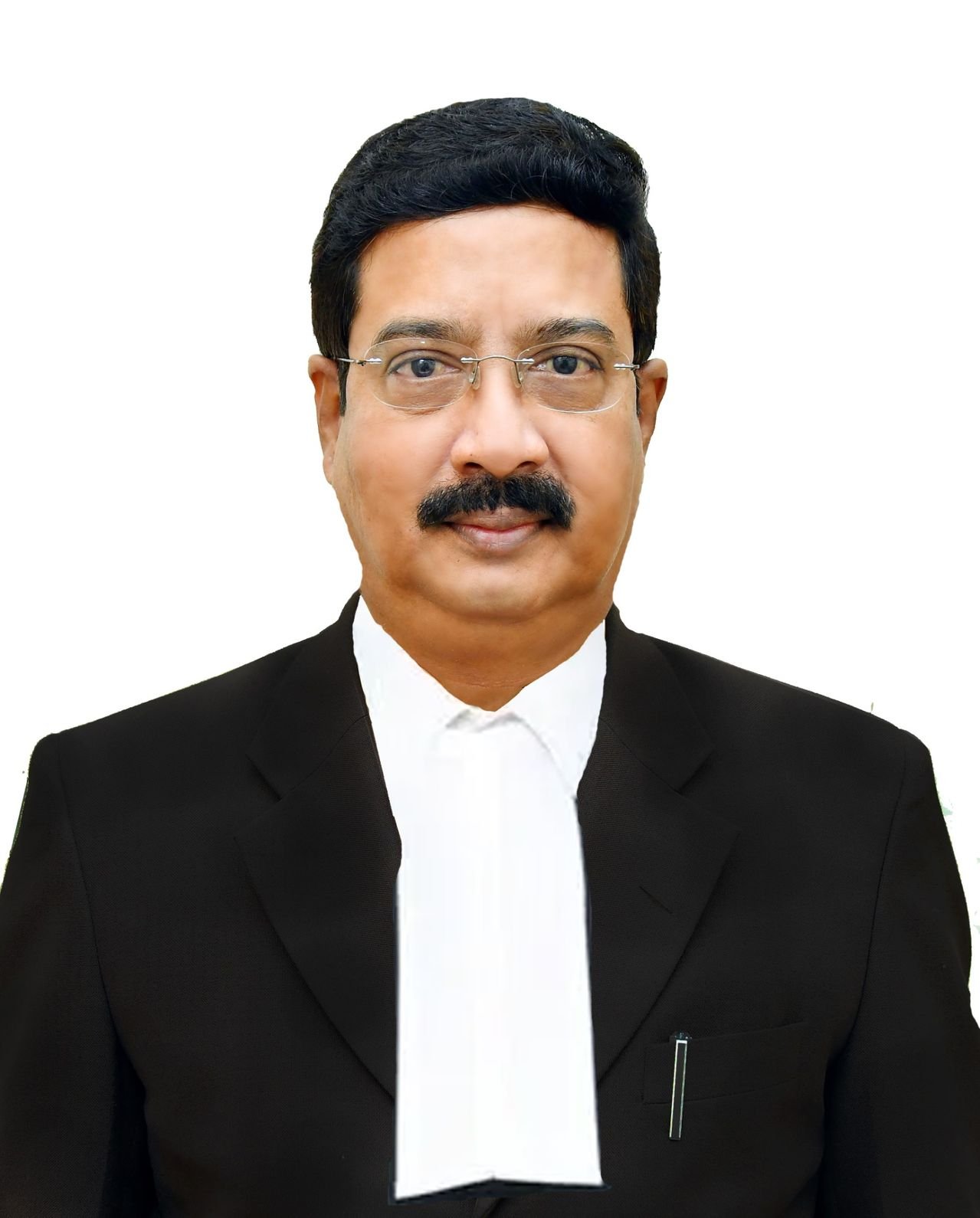
THE HONOURABLE SRI JUSTICE B V L N CHAKRAVARTHI
CRIMINAL APPEAL No: 1461/2006
Between:
1. K.OBI REDDY,, SANITARY INSPECTOR, ANANTHAPUR
MUNICIPALITY, ANANTHAPUR DISTRICT.
...APPELLANT
AND
1. THE STATE OF AP REP BY ITS PP HYD ACB INSP OF
POLICE, rep. by its Spl. Public Prosecutor, High Court of A.P., at
Hyderabad, through the Inspector of Police ACB. Ananthapur
District.
...RESPONDENT
Counsel for the Appellant(S):
1. O KAILASHNATH REDDY
Counsel for the Respondent:
1. S. SYAM SUNDER RAO SC cum Spl P.P. For ACB
The Court made the following:
2
THE HONOURABLE SRI JUSTICE B.V.L.N.CHAKRAVARTHI
CRIMINAL APPEAL No: 1461 OF 2006
J U D G M E N T:
Heard Sri O.Kailashnath Reddy, learned counsel for the
appellant and Sri S.Syam Sunder Rao, learned Special Public
Prosecutor-cum-Standing Counsel representing the respondent/ACB.
2. The appeal is preferred by the convict/accused, challenging the
judgment dated 19.10.2006 delivered by the Additional Special Judge
for SPE & ACB Cases at Hyderabad, in C.C.No.13/1997.
3. The appellant is the accused in the case. The Special Judge
convicted the appellant for the offence U/secs.13(1)(e)r/w.13(2) of the
P.C.Act, 1988 and sentenced him to suffer rigorous imprisonment for a
period of two (02) years and to pay a fine of Rs.10,000/- (Rupees Ten
Thousand only), in default, to suffer simple imprisonment for a period
of six (06) months for the above offence.
4. For convenience’s sake, the parties are referred to as arraigned
in the trial Court.
CASE OF THE PROSECUTION :
5. The case of the prosecution is that the appellant/accused
worked as Sanitary Inspector in the office of Ananthapur Munipality
from 23.07.1974 to 27.10.1994 in various capacities. The accused
being a public servant, acquired assets disproportionate to the known
3
sources of his income. Therefore, he committed the offence
punishable U/s.13(1)(e) of the P.C.Act, 1988.
6. The accused was in possession of assets worth of
Rs.8,15,532.70 paise during the above check period. The income of
the appellant was Rs.4,42,193.50 paise. The expenditure incurred was
Rs.3,57,287.80 paise. Therefore, likely savings of the accused is
Rs.84,905.70 paise, but the appellant had assets worth of
Rs.7,30,627/- i.e., disproportionate to his known sources of income.
The accused could not satisfactorily account for, though he was given
opportunity. The Government accorded sanction for prosecution of the
appellant.
7. The Special Court charged the accused for the offence
U/s.13(1)(e) r/w.13(2) of the P.C.Act, 1988. The charge was explained
to the accused. He pleaded not guilty and claims to be tried.
EVIDENCE FOR THE PROSECUTION :
8. The prosecution to substantiate the charge, examined P.Ws-1 to
45 and got marked Exs.P-1 to P-18, apart from M.O-1.
9. The accused was examined U/s.313 Cr.P.C. regarding the
incriminating circumstances appearing against him from the evidence
for the prosecution. He denied the incriminating circumstances.
D.Ws-1 to 6 were examined for the defence. Exs.D-1 to D-13 were got
marked for the defence.
4
FINDING OF THE SPECIAL COURT :
10. The Special Court on consideration of the above evidence,
convicted the accused for the offence U/s.13(1)(e) r/w.13(2) of the
P.C.Act, 1988, and sentenced him as mentioned above. Hence, the
appeal came to be preferred by the accused, challenging the judgment
of the Special Court on various grounds.
SUBMISSIONS ON BEHALF OF THE APPELLANT/A CCUSED:
11. Sri O.Kailashnath Reddy, learned counsel for the appellant
would argue that the burden of proof is on the prosecution to establish
that the appellant possessed assets that are disproportionate to the
known sources of income. Then only, the burden shifts to accused to
provide a satisfactory account of the source.
12. He would further argue that the trial Court found that in the case
on hand, the total income of the accused during the check period is
Rs.5,44,572.50 paise even as per the case of the prosecution. The
expenditure during the check period of Rs.2,58,490/-. Likely savings
during the check period is Rs.2,86,082.50 paise. The prosecution
contends that the total assets possessed by the accused as on
27.10.1994 is Rs.6,52,071.70 paise. Therefore, disproportionate
assets to the known sources of income are Rs.3,65,989.20 paise.
Therefore, found the accused guilty of the charge.
13. The learned counsel for the appellant vehemently argued that in
the State of Andhra Pradesh, a circular memo No.700/SC-D/88-4
5
dated 13.02.1989 was issued by the Government to consider 20%
bonus over the income of the Officer and it must be added to
determine the disproportionate assets. The trial Court found that 20%
bonus on the income of Rs.5,44,572.50 paise comes to
Rs.1,08,914.50 paise. But, come to an erroneous opinion that even if
the margin of 20% on the income of the Accused Officer is increased
as per memo dated 13.02.1989 mentioned above, the Accused Officer
cannot escape the liability and determined the worth of
disproportionate assets of Rs.3,65,989.20 paise by the end of the
check period. It is an error apparent on the record. The trial Court
having found that as per memo dated 13.02.1989 mentioned above
issued by the Government of Andhra Pradesh in the year 1989, it
should deduct a sum of Rs.1,08,914.50 paise from Rs.3,65,989.20
paise and asked the Accused Officer to satisfactorily explained or
account for the remaining amount only. Therefore, if a sum of
Rs.1,08,914.50 paise is deducted from Rs.3,65,989.20 paise, the
amount will come to Rs.2,57,074.70 paise only. The worth of
disproportionate assets would be Rs.2,57,074.70 paise.
14. The accused explained that a sum of Rs.2,00,000/- was
contributed by his father for house construction. But the trial Court did
not consider the same in proper perspective and rejected the same,
though accused placed evidence probable to his plea. Further, the
accused contended that the agriculture income shall be increased by
6
Rs.40,000/-. The trial Court also did not consider the same in proper
perspective, though there is ample evidence on record to accept the
contention of the accused.
15. Therefore, if a sum of Rs.2,00,000/- contributed by the father of
accused for construction of house made by the accused and a sum of
Rs.40,000/- is increased and added towards agricultural income of the
accused, the total income of the accused would come to
Rs.5,44,572.50 paise + Rs.2,40,000 = Rs.7,84,572.50 paise. Then
20% bonus shall be calculated on the said amount. It will come to
Rs.1,56,914/-. Therefore, the total income will come to Rs.9,41,486/-.
16. The expenditure as per the trial Court during the check period is
Rs.2,58,490/-. Hence, savings would be Rs.6,82,996/-. The worth of
assets possessed by the Accused Officer as determined by the trial
Court is Rs.6,52,071.70 paise. Therefore, the question of accused
having assets more than to his known sources of income would not
arise. Therefore, the judgment of the trial Court is not sustainable in
law.
SUBMISSIONS ON BEHALF OF THE RESPONDENT/ ACB:
17. Sri S.Syam Sunder Rao, learned Special Public Prosecutor-
cum-Standing Counsel for ACB would argue that the trial Court rightly
rejected the contention of the accused regarding contribution of
Rs.2,00,000/- made by the father of the accused for construction of the
house. The trial Court also did not find any reliable evidence to accept
7
the contention of the accused about the agricultural income. Hence,
the said amount cannot be included in the income of the accused for
the check period.
18. He would further argue that even if 20% bonus as claimed by
the accused is considered, accused is in possession of assets
disproportionate to his known sources of income, as rightly observed
by the learned trial Court. Therefore, there are no grounds to interfere
with the judgment of the learned trial Court.
19. In the light of above rival contentions, the points that arose for
consideration in this Criminal Appeal are as under:
1. Whether the appellant committed misconduct as a public
servant by possessing assets disproportionate to his
known sources of income that cannot be accounted for?
2. Whether there are grounds to interfere with the judgment
of the Special Court?
ANALYSIS
20. The income of the accused determined by the learned trial Court
for the check period i.e., 23.07.1974 to 27.10.1994 is Rs.5,44,572.50
paise. The contention of the accused is that his father contributed a
sum of Rs.2,00,000/- for construction of the house made by the
accused.
21. The accused examined his father as D.W-16. He deposed that
accused is his elder son. He has two more sons. Till date, they are
8
living as joint family. He inherited agricultural land in partition with
brothers. They owned Ac.3-00 wet land and Ac.6-00 of dry land. They
cultivate paddy in wet land and groundnut, red gram, green gram in
dry land. The net agricultural income of the joint family is around
Rs.3,00,000/- per annum. In addition to the cultivation, they also do
milk business since 1957. D.W-7 to milk business. He purchased milk
from them and sold the milk to the hotels at Puttaparthy. D.W-15 runs
a hotel at Kothacheruvu village. The family also sells milk to D.W-15.
Therefore, they got income from milk business would around
Rs.1,00,000/- per annum. Hence, he could contribute Rs.2,00,000/- for
construction of the house by the accused. He also contributed
Rs.2,50,000/- for construction of the house by the second son. He
constructed a house for the third son.
22. The contention of the learned counsel for the appellant is that
the prosecution did not elicit anything in the cross-examination of
D.W-16 to say that his testimony is not true. Learned counsel for the
appellant would argue that D. Ws-7 and 15 corroborated the evidence
of D.W-16 regarding milk business and agricultural activities.
23. He would submit that the witnesses examined by the
prosecution i.e., P.W-13, P.W-19, P.W-22 and P.W-23 i.e., Village
Administrative Officer, Mandal Revenue Inspector, Mandal Revenue
Officer and Assistant Statistical Officer coupled with Ex.P-71 and P-72
produced by the prosecution would show that the joint family of the
9
accused own Acx.3-90 cents of wet land and Ac.5-00 of dry land in the
village for several years. Their evidence also would disclose that
paddy is cultivated in the wet land; commercial crops were raised in
the dry land. The evidence of Village Administrative Officer would also
establish that they are also doing milk business. But the trial Court did
not discuss the above evidence in proper perspective and therefore,
came to an erroneous opinion.
24. P.W-19 evidence would show that he was working as Village
Administrative Officer at Kothacheruvu village, and he knows the
family members of the Accused Officer and their properties. During his
evidence, certain Adangals were marked regarding properties of the
Accused Officer’s family. P.W-19 in the cross-examination deposed
that father and mother of accused owns Ac.3-69 cents of wet land and
Ac.5-08 cents of dry land. The lands are fertile lands. They are owning
the lands for several years. They are raising groundnut in dry lands.
They also raising red gram and green gram crops, apart from red
gram. The wetlands are situated near Bukkapatnam tank. They are
irrigated with the water of the tank. They cultivate paddy in the
wetlands. The average yield is 30 to 32 bags of paddy per acre. Each
bag is of 80 KGs weight. He also categorically admitted that they
supplied milk to Kothacheruvu hotels. The family is a joint family, which
includes the Accused Officer.
10
25. P.W-22 is Mandal Revenue Inspector at Kothacheruvu village.
He produced rainfall certificate under Ex.P-70 and agricultural income
statement of the accused from fasli 1385 to 1387, 1391, 1393 to 1395,
1397 to 1403. He also produced Ex.P-72 abstract of agriculture
income derived by the accused from 1974-1975 to 1993-1994 as
Rs.1,84,085/-. During cross-examination, he admitted that there is no
mention in Ex.P-67 that it was prepared as per office records. He did
not produce the records, on which Ex.P-68 was prepared. He also
admitted that he did not prepare the particulars mentioned in Exs.P-69
and P-70. He also admitted that he has no personal knowledge about
the person, who furnished the particulars under Ex.P-70. There is no
mention in Exs.P-69 and P-70 about the records, on which the
particulars are mentioned. He admitted that the Municipal Rainfall
Particulars are maintained by the Assistant Statistical Officer in the
office of Chief Planning Officer. There is no proforma as shown in
Ex.P-71 maintained in their office. He admitted that he did not work at
Kothacheruvu Mandal in the year 1974-1975 to 1993-1994. They have
no personal knowledge about the prevailing rates at Kothacheruvu
during that period.
26. P.W-23 is the Mandal Revenue Officer of Thadimarri Mandal at
the relevant point in time. He deposed that Ex.P-70 is Rainfall
Certificate from 1989 to 1995. Ex.P-71 is agriculture income estimated
by him for the period from 1975-1976 to 1993-1994. The Assistant
11
Statistical Officer in their office-maintained Rainfall Data. In the cross-
examination, he admitted that he has no personal knowledge about
the agriculture income of the accused’s family. There is no prescribed
format maintained similar to Ex.P-71 in their office. It was prepared as
per records maintained by Assistant Statistical Officer. He admitted
that the Assistant Statistical Officer is not a signatory to Ex.P-71. He
admitted that the Assistant Statistical Officer maintained the record is
still in service. The original records based on which Ex.P-71 was
prepared are not produced before the Court.
27. P.W-24 is the Statistical Officer in the Office of Directorate of
Economics and Statistics. He deposed that Ex.P-74 letter dated
03.08.1995 was furnished about the particulars of average yield of
paddy and groundnut in Ananthapur District from the years 1974-1975
to 1993-1994 and statement is a general statement. He did not
prepare the statement. It was not prepared in his presence. He has no
personal knowledge about the contents of Ex.P-74.
28. Learned counsel for the appellant vehemently argued that no
reliance can be placed on the documents, particularly, Exs.p-71 and
P-72 produced by the prosecution in the light of evidence of P.W-19,
P.W-22, P.W-23 and P.W-24. They admitted that they have no
personal knowledge about the contents of the said documents. They
did not prepare the said documents. They say that the statements
under Exs.P-71 and P-72 were prepared based on records maintained
12
by the Assistant Statistical Officer and others. They admitted that the
persons, who prepared those statements did not sign on the said
statements. They were not examined as witnesses to prove the
contents that the abstracts were prepared based on original records in
the office, which cannot conveniently produce before the Court. In
those circumstances, no value can be attached to those documents to
consider the agriculture income of the Accused Officer during the
check period, as claimed by the prosecution. But the trial Court did not
consider the contention of the defence in proper perspective and came
to an erroneous opinion regarding the agriculture income as well as
the contribution made by the father of the accused for construction of
the house. Simply on the ground that there is no documentary
evidence produced by D.W-16 and on the ground that P.W-24
produced statistical data of the agriculture income as Rs.60,000/-
during the check period and therefore, the contention of the accused
cannot be accepted.
29. He would further submit that those statements produced through
P.Ws-23 and 24 are not admissible U/s.65(g) of the Indian Evidence
Act, as person/Officer, who prepared they was not examined by the
prosecution. The witnesses examined by the prosecution admitted that
they have no personal knowledge about the data found in the original
records, and they did not prepare Exs.P-71 and P-72. The persons,
who prepared the said statements also did not sign on the said
13
documents, certifying that they are prepared based on the original
records.
30. The learned Special Public Prosecutor-cum-Standing Counsel
for ACB would argue that as per section 65(g) of the Indian Evidence
Act, the evidence may be given as to the general result of the
document examined by any person, who is skilled in the examination
of said document. The evidence of P.W-23 would show that Ex.P-71
was prepared after due enquiries and based on office records.
Ex.P-71 is admissible in evidence, since it was proved by P.W-23.
31. The Hon’ble High Court of Andhra Pradesh in the case of
Vasam Hari Babu Vs. Vasam Veeraraghavamma
1
, held that “there
may be public documents, which cannot conveniently be produced
before the Court, the information contained in such documents is
nothing but an abstract of information gathered from various public
documents to be maintained by the Educational Institutions.
Therefore, if a document prepared from various other documents, they
cannot be considered as copies of the public documents. But, abstract
of the same and is, therefore, admissible under clause (g) of Section
65”.
32. The learned counsel for the appellant would submit that the
above judgment makes it clear that the evidence may be given as a
general result of the documents by any person, who has examined
1
2001(2) ALD 481
14
them and who is skilled in examination of such documents. But, in the
case on hand, P.Ws-23 and 24 categorically admitted that they have
no personal knowledge about the contents of the documents. They did
not prepare the abstract under Exs.P-71 and P-72. The persons, who
maintained the documents is Assistant Statistical Officer. He did not
sign on the said documents. He was not examined by the prosecution.
Therefore, the judgment relied on by the prosecution will not help the
case of the prosecution to contend that Ex.P-71 or Ex.P-72 are proved
in accordance with law, to accept their probative value as true and
correct.
33. In the light of rival submissions mentioned above, the dispute
confined to two aspects. One is non-inclusion of a sum of Rs.2,00,000-
in the income of the appellant towards contribution made by his father
at the time of construction of the house. Second is regarding in-correct
evaluation of agriculture income of the appellant.
34. The trial Court on consideration of the evidence, determined the
income of the accused during the check period as Rs.5,44,572.50
paise. The accused contended that his father contributed a sum of
Rs.2,00,000/- for construction of the house, as the father and brothers
of the accused are living as joint family. The father contributed a sum
of Rs.2,50,000/- for construction of house by the brother of the
accused. He also got constructed a house for the other brother of the
accused.
15
35. The accused to probable his plea, examined his father as
D.W-16. He deposed about the agriculture lands owned by joint family
income received on the agriculture lands and milk business carried on
by the family. He deposed that he contributed Rs.2,50,000/- for
construction of the house by the second son. He also constructed a
house for third son. He contributed Rs.2,00,000/- for construction of
the house by the elder son i.e., accused. The trial Court did not accept
the testimony of D.W-16 on the ground that no documentary evidence
is placed on record for contribution of the amount.
36. Learned counsel for the appellant vehemently argued that the
joint family of the accused, his father and brothers’ hail from village.
They live on agriculture and milk business. The evidence of Village
Administrative Officer (P.W-19) of the village would prove the same.
The joint family is having considerable income on agriculture lands and
milk business for several years. No regular accounts can be expected
from a person living on agriculture and maintaining cattle in the village,
which is not a commercial activity to expect accounts as maintained by
business people.
37. The evidence of Village Administrative Officer (P.W-19), Mandal
Revenue Inspector (P.W-22), Mandal Revenue Officer (P.W-23) and
other witnesses proved that the family of accused, his father and
brothers is a joint family. The joint family is having income from
wetlands, dry lands and on milk business.
16
38. D.W-16 on oath categorically deposed that he contributed
amount for construction of the house by all his sons. Nothing was
elicited in the cross-examination to jettison his testimony before the
Court. No contra evidence is available on record to say that he has no
such capacity to contribute amount.
39. The Hon’ble Supreme Court in the case of Dudh Nath Pandey
V. State of U.P.
2
, held that “the evidence of the defence witness shall
also be considered on par with the prosecution witnesses”. In the case
on hand, the trial Court simply brushed aside the testimony of the
father of the accused on the ground that no documentary evidence is
placed on record to prove the contribution. Hence, the said fining of
the trial Court is not based on evidence, and therefore, the said finding
is not sustainable either on facts or in law.
40. It is true P.W-19 Village Administrative Officer admitted that
accused, his father and brothers are living as joint family. The
evidence of P.W-19, Mandal Revenue Inspector (P.W-22) and Mandal
Revenue Officer (P.W-23) would also discloses that their family owned
wet lands, dry lands, they are cultivating paddy and commercial crops
for several years during the check period. The evidence of Village
Administrative Officer would also show that the joint family is also
having milching cattle and selling milk to nearby hotels located near
four road junction of the village. These facts and circumstances would
2
AIR 1981 SC 911
17
establish that the accused, his father and brothers are living as joint
family owns agriculture lands and milching cattle and earning
considerable income on agriculture and milk business in the village
even prior to the date of check period.
41. The father of accused was examined before the trial Court. On
oath, he made a statement about the contribution of amount of
Rs.2,00,000/- at the time of construction of the house by the accused,
as he contributed amounts to other sons also at the time of
construction of their houses. It is a common in joint families living in
villages.
42. As rightly argued by the learned counsel for the appellant, the
farmers in the village will earn livelihood on agriculture and milching
cattle. Generally, they will not maintain any accounts as maintained by
businesspeople doing commercial activities. Therefore, merely
because no accounts are placed before the trial Court, the evidence
mentioned above cannot be brushed aside on the sole ground that no
accounts are placed to prove the contribution. All the circumstances
coming forth from the evidence shall be considered, before brushing
aside the statement of father of the accused. Nothing was elicited in
the cross-examination of D.W-16 i.e., father of accused to say that he
suppressed the truth, made inconsistent statements, contrary to the
former statements. Therefore, the evidence of Village Administrative
Officer (P.W-19), Mandal Revenue Inspector (P.W-22), Mandal
18
Revenue Officer (P.W-23) coupled with the evidence of the father of
the accused, plea of the accused is probable.
43. It is settled law that accused need not prove his plea beyond
reasonable doubt. If the evidence placed on record would show that
the plea of the accused is also probable, in the circumstances of the
case, it cannot be brushed aside. Therefore, the opinion of the trial
Court rejecting the plea of the accused is not based on evidence.
Hence, it is not sustainable either on facts or in law. In that view of the
mater, this Court is of the considered opinion that a sum of
Rs.2,00,000/- shall be included in the income of the accused, during
the check period towards contribution made by his father for
construction of the house.
44. When coming to the agriculture income of the accused
determined in the case, the prosecution case is that the agriculture
income of the accused during the check period is Rs.46,021/-. It is
based on the evidence of P.W-45, who prepared Ex.P-110 relying on
the rates of agriculture produce furnished by P.W-21 and P.W-24.
45. The contention of the accused is that the agriculture income was
not properly considered by the Investigation Officer inspite of his
explanation;;The trial Court also failed to determine the same in proper
perspective on the ground that no documentary evidence produced by
the accused that his father cultivated lands on lease of others; The
trial Court based its finding on inadmissible documents, and evidence
19
of P.Ws-23 and 24, though they are not the authors of Exs.P-71 and
P.72; Therefore, trail Court considered the agriculture income
erroneously at Rs.60,000/- only during the check period, which is on
lower side when compared to the actual income received from the
agriculture lands and milk business carried on by the joint family of the
accused; Therefore, trial Court ought to have included further sum
Rs.40,000/- at least, towards agriculture income of the accused basing
on the prevailing rates of agriculture produce and milk, at the relevant
point in time i.e., during the check period.
46. The trial Court observed that the prosecution to prove the
agriculture income, examined P.W-19, P.W-22 and P.W-23. The trial
Court observed that P.W-45 i.e., Investigation Officer admitted that
accused is a member of joint family of his father and brothers. P.W-19
i.e., Village Administrative Officer also admitted the said fact. He also
admitted that the joint family owns Ac.3-69 cents of wet land and Ac.5-
08 cents of dry land. They used to cultivate paddy in wetlands and
commercial crops i.e., groundnut, red gram, green gram etc., were
cultivated in the dry lands during the check period and before by the
joint family.
47. P.W-23/Mandal Revenue Officer was examined by the
prosecution to prove the estimated agriculture income during the
check period basing on rainfall and rates of paddy and pulses at the
relevant point in time. P.W-23 relied on Exs.P-71 and P-72.
20
48. The contention of the accused is that Exs.P-71 and P-72 are
inadmissible in evidence. They are not proved in accordance with law.
The learned counsel for the appellant would submit that the
prosecution produced Exs.P-71 and P-72 as if they are the general
result of the documents maintained by concerned officials, who
examined them and skilled in the examination of such documents on
the request of P.W-23. The prosecution did not examine the
concerned officials i.e., Statistical Officer, who maintained the relevant
registers of rainfall and Agriculture Officer, who maintained the market
prices of paddy and pulses during the check period. The prosecution
did not examine the persons, who prepared the general result of the
records i.e., Exs.P-71 and P-72. P.Ws-23 and 24 admitted that they
have no personal knowledge about the general result covered by
Exs.P-71 and P-72. They also admitted that they did not verify or
compare Exs.P-71 and P-72 with original records. They admitted that
the concerned officials, who examined the original records and
prepared Exs.P-71 and P-72 did not attest Exs.P-71 and P-72
documents. They admitted that they are working in the office at the
time of trial, and available to the Court, to prove the said documents.
But the prosecution did not choose to examine the persons, who
maintained the records or the persons, who verified the records having
skill to examine such records and preparation of Exs.P-71 and P-72.
Therefore, Exs.P-71 and P-72 will not fall under the purview of section
21
65(g) of the Indian Evidence Act, 1872. The trial Court unfortunately
did not consider this legal aspect and relied on those documents and
rejected the contention of the accused. Hence, the finding of the trial
Court regarding agriculture income of the accused is against the facts
and in law and is not sustainable.
49. The contention of the accused is that his joint family was having
income of Rs.3,00,000/- during the check period and the joint family
was also doing milk business. Therefore, the agriculture income of the
accused would be not less than Rs.2,50,000/- during the check period.
But the trial Court erroneously enhanced it to Rs.60,000/- only.
50. As already mentioned above, learned Special Public Prosecutor-
cum-Standing Counsel for respondent/ACB vehemently argued that
Exs.P-71 and P-72 would come under the purview of section 65(g) of
the Indian Evidence Act, 1872 and they are admissible in evidence in
the light of the judgment of this Court in the case of Vasam Hari Babu
Vs. Vasam Veeraraghavamma . This Court in the above case,
considered section 65(g) of the Indian Evidence Act, 1872 and
observed that “if a document is prepared drawing information from
various other documents, may be the public documents, which cannot
conveniently be produced before the Court, the information contained
in such documents is nothing but an abstract information gathered
from various public documents to be maintained by the institutions. In
such circumstances, although the information contained in the public
22
document is gathered, they cannot be considered as copies of public
documents but an abstract of the same and is, therefore, admissible
under clause (g) of Section 65”.
51. As rightly argued by the learned counsel for the appellant,
P.Ws-23 and 24 are not the persons, who prepared Exs.P-71 and
P-72. They did not examine the public documents based on which,
Exs.P-71 and P-72 were prepared. The officials, who examined the
public documents maintained in the office of District Statistical Officer,
who examined the public documents maintained in their office and
prepared the abstract under Exs.P-71 and P-72, did not certify on
Exs.P-71 and P-72 that they examined the original records, and they
are having skill in the examination of such documents and Exs.P-71
and P-72 are the abstracts of the said documents.
52. P.Ws-23 and 24 in the cross-examination admitted that the
persons, who prepared Exs.P-71 and P-72 are available in their office
at the time of trial. Therefore, the prosecution failed to examine the
persons, who examined the original records and prepared general
result of the documents, to say that they are having skill in examination
of public documents, they examined the relevant public documents
and they prepared the abstract containing the general result of the
documents.
53. Admittedly, P. Ws-23 and 24 are not the persons, examined the
original public documents and prepared the abstract. In the above
23
circumstances, the prosecution did not prove Exs.P-71 and P-72 in
accordance with law, to consider Exs.P-71 and P-72 U/s.65(g) of the
Indian Evidence Act, 1872.
54. The trial Court without considering the above aspects,
erroneously accepted Exs.P-71 and P-72, and the evidence of
P.Ws-23 and 24 and determined the agriculture income of the
Accused Officer. The trial Court enhanced the agriculture income of
the accused to Rs.60,000/- from Rs.46,021/-. No reasons are assigned
why it was enhanced to Rs.60,000/- only.
55. The evidence of P.W-19, P.W-22 and P.W-23 discussed above
would establish that the joint family of the accused, his father and
brothers own Ac.3-50 cents of wet land and Ac.5-00 of dry land for
several years well before the check period. They cultivated paddy,
commercial crops every year. They also own cattle. They sold milk to
the local hotels located near the village. it was also admitted by
P.W-19/Village Administrative Officer, a common phenomenon in the
village.
56. The contention of the accused is that his agriculture income was
not less than Rs.2,50,000/- during the check period. As already
discussed above, the joint family owns Ac.3-69 cents of wet land and
Ac.5-08 cents of dry land. They are cultivated paddy and commercial
crops, well before the check period and during the check period. They
also did milk business for several years.
24
57. Therefore, the agriculture income of the accused during the
check period i.e., his 1/4
th
share received from the joint family can be
assessed at Rs.1,00,000/-, instead of Rs.60,000/- fixed by the trial
Court. Therefore, another sum of Rs.40,000/- shall be added to the
income of the Accused Officer towards agriculture income during the
check period. Hence, if the sum of Rs.2,00,000/- and Rs.40,000/- is
included in the income of the accused, during the check period, the it
will come to Rs.7,84,572.50 paise.
58. As per the memo issued by the Government of Andhra Pradesh
at that time, as discussed by the trial Court, 20% of margin can be
considered on his income. Therefore, if 20% is taken into
consideration over his income, it will come to Rs.1,56,914/-.
Therefore, the total income of the accused during the check period will
be Rs.9,41,487/-. The expenses of the accused during the check
period determined by the trial Court is Rs.2,58,490/-. Hence, likely
savings of the accused will come to Rs.6,82,997/-. The total worth of
assets possessed by the Accused Offic er as on 27.10.1994
determined by the trial Court is Rs.6,52,071/-. Therefore, it would show
that the assets possessed by the Accused Officer as on 27.10.1994
are less than his income received during the check period. In that view
of the matter, the judgment of the trial Court is not sustainable either
on facts or in law.
25
CONCLUSION:
59. In the light of foregoing discussion, the appeal be allowed.
RESULT:
60. In the result, the Criminal Appeal is allowed. The judgment of the
Additional Special Judge for SPE & ACB Cases, Hyderabad, dated
19.10.2006 passed in C.C.No.13 of 1997 is set aside. The
appellant/Accused is acquitted for the offence U/s.13(1)(e) r/w. section
13(2) of the P.C.Act, 1988. The fine amount, if any paid by the
appellant/accused, shall be refunded to him as per law. The bail bonds
of the appellant/Accused shall stand cancelled. This judgment be
certified to the trial Court, U/s.405 Cr.P.C.
As a sequel thereto, interlocutory applications, if any, pending
shall stand closed.
______________________________
JUSTICE B.V.L.N. CHAKRAVARTHI.
09.04.2026
PSK
26
THE HONOURABLE SRI JUSTICE B.V.L.N. CHAKRAVARTHI
1
CRIMINAL APPEAL No:1461 OF 2006
Date: 09.04.2026
W
PSK

 Login with google
Legal Notes
Add a Note....