
As per case facts, a driver was involved in a fatal road accident, acquitted in criminal proceedings, but faced disciplinary action resulting in an increment cut. The Management, however, in ...
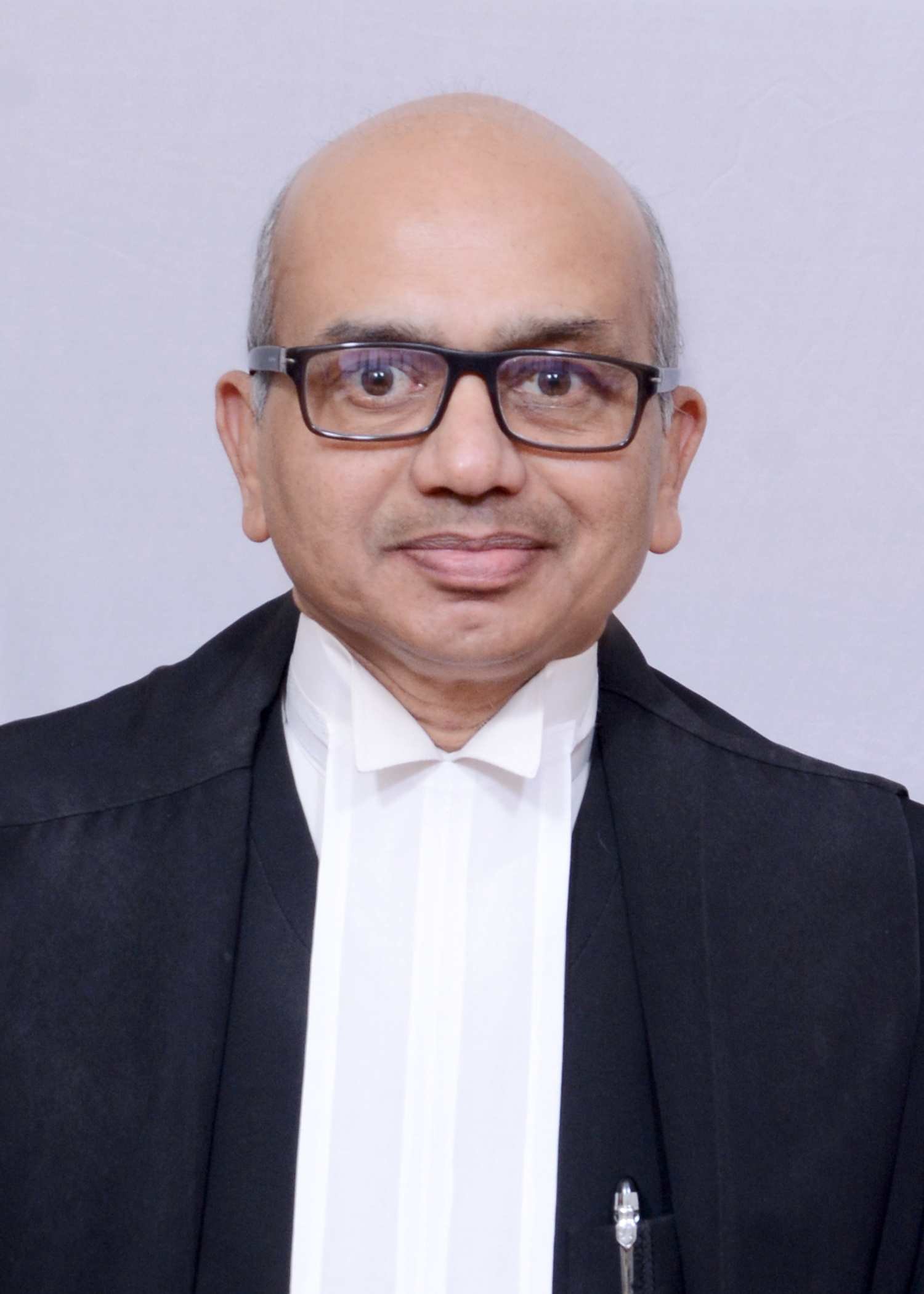
W.P.(MD).No.20886 of 2017
BEFORE THE MADURAI BENCH OF MADRAS HIGH COURT
RESERVED ON : 10.08.2026
PRONOUNCED ON : 19.08.2026
CORAM
THE HONOURABLE MR.JUSTICE N.DILIP KUMAR
W.P.(MD).No.20886 of 2017
K.Perumalsamy (died)
Vijayakumari
(the petitioner is substituted vide order
dated 08.08.2025) .. Petitioner
Vs.
1.The Managing Director,
Tamil Nadu State Transport Corporation (Madurai) Ltd.,
Bypass Road,
Madurai.
2.The General Manager,
Tamil Nadu State Transport Corporation (Madurai) Ltd.,
Dindigul Region,
Dindigul. .. Respondents
PRAYER: Writ Petition filed under Article 226 of the Constitution of India to
issue a writ of Certiorarified Mandamus, calling for the records relating to
the impugned order passed by the 1
st
respondent in Parvai:LD3BT/8157
dated 5.5.2017 in imposing the punishment of increment cut for four years
with cumulative effect and quash the same and consequently direct the
Respondents to restore increment for 4 years with all cumulative attendant
benefits.
For Petitioner : Mr.K.Guhan
For Respondents: Mr.J.Senthil Kumaraiah
standing counsel
Page 1 of 26 https://www.mhc.tn.gov.in/judis
W.P.(MD).No.20886 of 2017
ORDER
This writ petition has been filed by one K.Perumalsamy against the
Managing Director of Tamil Nadu State Transport Corporation (Madurai)
Limited, Madurai, as well as against the General Manager of Tamil Nadu
State Transport Corporation (Madurai) Limited, Dindigul Region, Dindigul.
2.The writ petitioner had sought for the issuance of a Writ of
Certiorarified Mandamus seeking to quash the order of the first respondent
dated 05.05.2017 and for a consequential Mandamus to restore the benefits
that were denied under the order impugned. Pending writ petition,
Mr.K.Perumalsamy died on 16.11.2020 and his widow has been brought on
record.
3.I have heard Mr.K.Guhan, learned counsel appearing for the writ
petitioner and Mr.J.Senthil Kumaraiah, learned standing counsel appearing
for the respondents. I have perused the materials available on record. The
written submissions filed on either side are also perused.
4.It is seen from the records that the writ petitioner, viz.,
Mr.K.Perumalsamy was working as a Driver in the respondent Corporation
viz., Tamil Nadu State Transport Corporation (Madurai) Limited. There was
a road accident on 31.08.2012 around 21.00 hours involving the bus bearing
Reg.No.TN 57 N 1923 belonging to the respondent Corporation and driven by
Page 2 of 26 https://www.mhc.tn.gov.in/judis
W.P.(MD).No.20886 of 2017
its Driver, viz., Mr.K.Perumalsamy (original writ petitioner) and a two wheeler
bearing Reg.No.TN 57 Q 5197. In such road accident, the pillion rider of the
two wheeler, Tmt.Shanthamani died. This led to three different proceedings
across different fora.
5.A criminal case in Crime No.22 of 2012 on the file of the Ambilikai
Police Station was registered against the original writ petitioner, viz.,
Mr.K.Perumalsamy for the offences under Sections 279, 337 and 304(A) of
I.P.C. Mr.K.Perumalsamy was charge sheeted by the prosecution and was
tried in CC.No.56 of 2013 before the Court of the learned Judicial
Magistrate, Ottanchathiram. After trial, on merits, the said CC.No.56 of 2013
ended in acquittal in favour of Mr.K.Perumalsamy. The learned trial Judge
held that the prosecution had failed to prove its case beyond reasonable
doubt.
6.Arising out of the same accident, the family members of the
deceased filed MCOP.No.1173 of 2012 before the Motor Accident Claims
Tribunal, Dindigul (herein after referred to as MACT). The written submission
filed on the side of the respondents informs that the Tribunal had allowed
the claim petition on 30.06.2015 and held that the respondent Corporation,
viz., Tamil Nadu State Transport Corporation (Madurai) Limited, is liable to
pay a compensation of Rs.3,51,000/- with interest at 7.5% and accordingly,
the respondents had deposited a sum of Rs.8,20,000/-.
Page 3 of 26 https://www.mhc.tn.gov.in/judis
W.P.(MD).No.20886 of 2017
7.The respondent Corporation also instituted the disciplinary
proceedings against the original writ petitioner, Mr.K.Perumalsamy, which is
the subject matter of the present writ petition. The original writ petitioner,
Mr.K.Perumalsamy, was suspended on 01.09.2012; issued with a charge
memo on 09.09.2012; upon conclusion of domestic enquiry, an enquiry
report was made ready on 24.03.2013; and after issuing a second show
cause notice dated 22.05.2013, the original writ petitioner,
Mr.K.Perumalsamy, was imposed with a punishment of stoppage of annual
increment for a period of five years with cumulative effect by the second
respondent on 04.12.2013.
8.The said punishment order passed by the second
respondent/Transport Corporation is available in the paper book. It reads
that the respondents were not finding any reasons to take a different view
from that of the Enquiry Officer and considering the past service of the
original writ petitioner, Mr.K.Perumalsamy and to grant him one more
opportunity, taking a lenient view, he is imposed with such punishment of
stoppage of annual increment for a period of five years with cumulative
effect.
9.Challenging this order, the original writ petitioner,
Mr.K.Perumalsamy, came before this Court with a writ petition in W.P.(MD)
Page 4 of 26 https://www.mhc.tn.gov.in/judis
W.P.(MD).No.20886 of 2017
No.2355 of 2016. In the meanwhile, he had filed an appeal before the first
respondent on 23.01.2014. Therefore, when the writ petition was taken up
for final hearing on 05.12.2016, he confined his request for a limited relief to
direct the first respondent to dispose of the appeal filed by the writ petitioner
on 23.01.2014. This Court, vide order dated 05.12.2016, accepted the said
request and directed the first respondent to pass orders on the pending
appeal within a period of one week.
10.Subsequent to the passing of the above order, the first respondent
passed an order on 23.03.2017 in the pending appeal. The first respondent
after referring to the operative portion of the order passed by this Court in
W.P.(MD) No.23551 of 2016 (stated supra), held that the past conduct of the
original writ petitioner is not inspiring and referred to the civil liability
imposed on the second respondent, viz., Tamil Nadu State Transport
Corporation (Madurai) Limited, Dindigul Region, Dindigul, by MACT to
deposit a sum of Rs.3,51,000/- with interest at 7.5%. The Appellate
Authority however modified the punishment and reduced it to stoppage of
annual increment for a period of four years instead of five years. Granting
such limited reduction of the number of years for stoppage of increment, the
appeal was otherwise dismissed.
11.Thereafter, the original writ petitioner, Mr.K.Perumalsamy, seems
to have made one another representation/appeal to the first respondent and
Page 5 of 26 https://www.mhc.tn.gov.in/judis
W.P.(MD).No.20886 of 2017
the same has been disposed of under the impugned order dated 05.05.2017.
It is held in the impugned order that the original writ petitioner has not
made out any new grounds warranting any change of mind or for reduction
of punishment and accordingly, such request of the writ petitioner,
Mr.K.Perumalsamy, was rejected. The writ petitioner while filing this writ
petition on 10.11.2017, sought to place reliance upon the judgment of the
Hon'ble Division Bench of this Court in the case of Tamil Nadu State
Transport Corporation, Tiruchirappalli, rep. by its Managing Director
and another Vs. P.Karuppusamy , reported in 2008-I-LLJ-460 (Mad).
12.The learned counsel for the writ petitioner made a specific reference
to the counter statement filed on behalf of the respondent Management
before the MACT, Dindigul. He would therefore argue that the respondent
Management could not have punished the writ petitioner, as even according
to the respondent Management, the writ petitioner was not responsible for
the accident. He would argue that having taken such a stand in their
counter to the claim petition, the respondents could not have found the writ
petitioner, Mr.K.Perumalsamy guilty for the act of negligent driving and
thereby, causing loss to the respondent Management.
13.In the counter affidavit filed in this writ petition on 16.04.2018 by
the respondent Management the maintainability of the writ petition is
objected to, on the ground of availability of an alternative remedy before the
Page 6 of 26 https://www.mhc.tn.gov.in/judis
W.P.(MD).No.20886 of 2017
Labour Court. The counter affidavit does not traverse into the merits of the
matter.
14.This writ petition has remained pending before this Court for
almost 9 years. When the matter was taken up for final hearing on
10.08.2026, both the learned counsel fairly submitted that the facts in issue
are not in dispute; what is challenged is the order of punishment in effect,
though there is no specific mention to the previous proceeding of the second
respondent dated 04.12.2013 and the proceeding of the first respondent
dated 23.03.2017.
15.The only issue that arises for consideration is whether the
respondent Corporation is bound by its pleadings before the MACT,
Dindigul, wherein they have specifically held that the writ petitioner/their
Driver was not responsible for the accident and can they take a different view
in the disciplinary proceedings.
16.The learned Standing Counsel for the respondent Corporation
raised an objection to entertain the writ petition on the premise that the writ
petition is not entertainable, as there is an effective alternative appellate
remedy available to the writ petitioner before the Labour Court.
Page 7 of 26 https://www.mhc.tn.gov.in/judis
W.P.(MD).No.20886 of 2017
17.The respective counsel referred to various precedents of this Court
in support of their contentions. I will refer to them in the later part of this
order.
18.Before I proceed to consider the submissions on the merits of the
matter, I would take up the objection of the respondent Management that
the writ petition is not entertainable under Article 226 of the Constitution of
India, as there is an alternative appellate remedy available to the writ
petitioner.
19.It has been long settled in a catena of decisions that the restriction
of a Writ Court to entertain a writ petition under Article 226 of the
Constitution of India, whenever there is an effective alternative appellate
remedy, is only a self imposed restriction and there is no absolute bar and
there are established exceptions available to the said Rule. Some of the
exceptions are, when there is a violation of principles of natural justice;
when the impugned proceeding is absolutely lacking in jurisdiction; when
there is a non speaking order lacking in reasons; when fundamental rights
are violated; and when the writ petition is kept pending before the Court for
a substantial time, more so when it does not involve disputed questions of
facts.
Page 8 of 26 https://www.mhc.tn.gov.in/judis
W.P.(MD).No.20886 of 2017
20.In this case, the original writ petitioner, Mr.K.Perumalsamy, having
filed the case on 10.11.2017 died on 16.11.2020; and thereafter, upon filing
of a substitution application in W.M.P.(MD) No.16948 of 2025,
Tmt.Vijayakumari, W/o.Mr.K.Perumalsamy, has been brought on record. It
would be too harsh on the widow to be now compelled after 9 years to go
before the alternative forum ie., Labour Court and raise an industrial dispute
against the punishment imposed way back in 2013.
21.The Hon'ble Supreme Court in the judgment delivered in Durga
Enterprises Private Limited and another Vs. Principal Secretary
Government of U.P. and others reported in (2004) 13 Supreme Court
Cases 665 has held that the High Court having entertained the writ petition
and kept it pending for a long period of 13 years ought not to have dismissed
the writ petition summarily on the ground that there is an alternative
appellate remedy available and it is only proper on the part of the High Court
to decide the case on merits instead of relegating the parties to the
alternative forum.
22.The aforesaid judgment is recently followed by the Hon'ble Apex
Court in the case of Utkal Highways Engineers and Contractors Vs.
Chief General Manager and others reported in 2025 SCC Online SC
1400. In the said case, the Hon'ble Supreme Court has held that it is not
Page 9 of 26 https://www.mhc.tn.gov.in/judis
W.P.(MD).No.20886 of 2017
proper to throw a person on the ground of availability of alternative remedy
after 10 years. Relevant portion of the same reads as under:-
“8.Be that as it may, the High Court has not dealt with the
merits of the writ petition. Moreover, it is not an inviolable rule that
no money claim can be adjudicated upon in exercise of writ
jurisdiction. Non-payment of admitted dues, inter alia, may be
considered an arbitrary action on the part of respondents and for
claiming the same, a writ petition may lie.1 Further, throwing a writ
petition on ground of availability of alternative remedy after 10
years, particularly, when parties have exchanged their affidavits,
is not the correct course unless there are disputed questions of fact
which by their very nature cannot be adjudicated upon without
recording formal evidence”
23.Furthermore, in this case, there are no disputed question of facts.
The issue revolves around a legal precinct. I therefore negative the objections
raised by the learned standing counsel for the respondents upon the
entertainability of this writ petition.
24.The learned counsel for the respondent Management has referred
to the Full Bench decision of this Court delivered in the case of V.Syril
Sundararaj Vs. The Presiding Officer, Labour Court, Thirunelveli and
others reported in 2024-2-CTC-465 = 2024-3-MLJ-22 = 2024-1-
Wr.L.R.-580.
25.In the said decision, a reference against the correctness of the order
relied upon by the writ petitioner at the time of filing of the writ petition, i.e.,
Tamil Nadu State Transport Corporation, Tiruchirappalli, rep. by its
Page 10 of 26 https://www.mhc.tn.gov.in/judis
W.P.(MD).No.20886 of 2017
Managing Director and another Vs. P.Karuppusamy , reported in 2008-I-
LLJ-460 (Mad) is doubted. The Hon'ble Full Bench in the said decision has
held that the State Transport Corporation is not barred by the principle of
estoppel in initiating disciplinary proceedings against its employee/Driver,
because they have filed a counter statement in his favour before the MACT.
The Hon'ble Full Bench has held as follows:-
“15.In a MACT proceedings, where the Government or TNSTC
is a respondent, the driver is not made as a party. The parties to
such proceedings are the injured or representatives of the deceased
and the Transport Corporation. It is possible that the driver might
be called as a witness. By the very nature of proceedings, a MACT
only decides the issue of fastening of liability. In such a proceeding,
the State Transport Corporation being a corporate body, cannot be
aware as to the nature and the manner of the accident. It is here,
the submission made by Mr.L.S.M.Hasan Fizal becomes relevant.
The stand taken by the Management is based on the statement that
was given by the driver as to what transpired at the time of the
accident. In other words, there is no representation by the
Management to the workman, but the state of affairs stated by the
workman is captured in the counter and filed as a defence in the
MACT proceedings. This shows that there is no representation from
the side of the Management to the workmen. In fact, if there has
been a representation by one person, it is the representation of the
driver to the Management and not vice versa. Without a
representation from the Management, which is sine qua non, for
applying the rule of estoppel, the said principle cannot be made
applicable here.
......
......
30. During the course of enquiry or before the Labour Court,
it is always open to the driver to confront the witness, that may be
presented by the Management, with the counter affidavit and when
the witness is so confronted, it is always open to the said witness
to explain the so called admission. That does not preclude the
Management from initiating proceedings as against the labourer
under its Standing Orders. The relationship between an employer
and employee depends upon the standing orders and therefore, to
read the judgement of Karuppusamy's case is a bar to initiate
Page 11 of 26 https://www.mhc.tn.gov.in/judis
W.P.(MD).No.20886 of 2017
disciplinary proceedings, is to read a bit too much into the same.
31. In the light of the above discussion we would answer the
question as follows:
(i) That the Management having filed a counter in the MACT
proceedings defending its driver, it does not preclude it from
initiating disciplinary proceedings against the driver.
(ii) The position to the contra as laid down in TNSTC vs.
Karuppusamy stands over ruled.”
26.The learned counsel for the respondent Management also referred
to a recent judgment of the Division Bench of this Court delivered in the case
of M.Raja Vs. The Managing Director, TNSTC, Madurai and another ,
W.A.(MD) No.647 of 2021, dated 10.03.2026.
27.The Hon'ble Division Bench followed the aforesaid Full Bench
decision and refused to accept the proposition canvassed on the side of the
workman that the decision of the Full Bench is diluted, because of the
subsequent decision of the Hon'ble Apex Court in the case of Maharashtra
State Road Transport Corporation Vs. Mahadeo Krishna Naik reported
in (2025) 4 Supreme Court Cases 321 . The Hon'ble Division Bench in the
said case had distinguished the judgment of the Hon'ble Apex Court on
facts.
28.Per contra, the learned counsel for the writ petitioner requested this
Court to consider the judgment of the Hon'ble Apex Court delivered in
Maharashtra State Road Transport Corporation Vs. Mahadeo Krishna
Page 12 of 26 https://www.mhc.tn.gov.in/judis
W.P.(MD).No.20886 of 2017
Naik reported in (2025) 4 Supreme Court Cases 321 and submitted that
the case is squarely covered under the said judgment and he also sought to
place reliance upon a judgment of the Hon'ble Division Bench of this Court
delivered in the case of The Management of Tamil Nadu State Transport
Corporation Vs. General Secretary , WA.No.209 of 2026 , dated
23.02.2026. He also wanted to draw the attention of this Court to another
judgment of the Madras High Court in the case of The Management of
Tamil Nadu State Transport Corporation Vs. General Secretary , W.P.
(MD) No.8924 of 2021, dated 12.06.2025.
29.Thus, it is evident that the employee wants the Management to be
bound by its pleadings filed before the MACT, Dindigul, whereas the
respondent Management wants to wriggle out of the same by referring to the
precedents cited in their support.
30.The Hon'ble Full Bench in the case of V.Syril Sundararaj Vs. The
Presiding Officer, Labour Court, Thirunelveli and others reported in
2024-2-CTC-465 = 2024-3-MLJ-22 = 2024-1-Wr.L.R.-580 was considering
the correctness of the judgment of the Hon'ble Division Bench in the case of
Tamil Nadu State Transport Corporation and another Vs.
S.Karuppusamy, reported in (2008) 3 LW 90 = (2008) 1 LLJ 460.
Page 13 of 26 https://www.mhc.tn.gov.in/judis
W.P.(MD).No.20886 of 2017
31.The primary issue and the answer given by the Full Bench is that if
the respondent Management had filed a counter in the MACT proceedings
defending its Driver, the respondent Management need not be restrained
from initiating disciplinary proceedings against the Driver, when upon
conclusin the MACT overruled the defence of the management and held its
driver responsible for the accident and accordingly it concluded that “no plea
of estoppel” will lie against the Management.
32.The Full Bench was conscious in noticing that the Driver will
always have an opportunity to confront the witness of the Management
during the proceedings before the Labour Court with the counter affidavit
filed by the Management before the MACT in his favour.
33.The Full Bench had also explained its reasonings by the
observation of the facts recorded in paragraph No.15 (extracted supra),
wherein it has been stated that the Management normally takes a stand
before the MACT, based on the statement given by its Dri ver as to what
transpired at the time of accident and therefore, when ultim ately the
Tribunal refuses to accept such stand of the Management and holds that the
Management is responsible for the compensation payable due to the accident
caused by its Driver, the Management can always have a change of
mind and initiate disciplinary proceedings. This observation of the Full
Page 14 of 26 https://www.mhc.tn.gov.in/judis
W.P.(MD).No.20886 of 2017
Bench turns our case in entirety, when the said judgment is applied to the
facts of the present case.
34.Before I proceed on this aspect, it is necessary to notice the facts in
the judgment of the Hon'ble Division Bench delivered in the case of M.Raja
Vs. The Managing Director, TNSTC, Madurai and another , W.A.(MD) No.
647 of 2021, dated 10.03.2026.
35.The Hon'ble Division Bench in the said case has rightly held that
the standard of proof in a criminal proceeding, civil proceeding like the claim
petition before the MACT and disciplinary proceeding are quite different and
distinct. The Division Bench has held as follows:-
“The issue can be approached from another perspective also.
Proceedings pertaining to an employee can take place in three ways.
He could be departmentally dealt with. He could be prosecuted. He
could be a respondent / defendant in civil proceedings. Let us take
the case of a driver such as the appellant. If he is guilty of negligent
driving, he can be hauled up by initiating disciplinary action. The
affected parties may initiate claim proceedings before the Motor
Accidents Claims Tribunal and along with the management, the
driver concerned also will be a respondent. The driver can be
prosecuted for reckless and negligent driving. Even though the driver
can be subject matter of all the three proceedings, the standard of
proof applicable to them will not be one and the same. The varying
standards are: a) proof beyond reasonable doubt, b) proof on the
basis of preponderance of probabilities and c) some evidence rule. It
is well settled that in criminal cases, the standard of proof is “proof
beyond reasonable doubt”. “Preponderance of probabilities” is the
civil law standard. The former constitutes a higher threshold
compared to the latter. Some evidence rule ranks below the rigour of
preponderance of probabilities standard.
11.If the Claims Tribunal had come to the conclusion that the driver
in question had been negligent and reckless, the driver has to
Page 15 of 26 https://www.mhc.tn.gov.in/judis
W.P.(MD).No.20886 of 2017
necessarily get the said finding vacated by filing an appeal before
the High Court. So long as the said finding is holding good, it is
binding on the management. As already mentioned, the standard
governing a civil proceeding is higher compared to a disciplinary
action. If by applying a higher standard, a person is found guilty,
disciplinary action has to follow as a consequence. This is
notwithstanding the defence that might have been taken by the
management before the Tribunal. The Hon'ble Full Bench in the
aforesaid decision had explicitly held that the management is not
precluded from initiating action against its employee even if it had
taken a plea before the Tribunal that its employee is not at fault.”
36.This conclusion of the Division Bench when applied to the facts of
this case, turns it against the respondent Management.
37.In this case, the disciplinary proceedings were initiated by issuing a
charge memo dated 09.09.2012 that culminated in the passing of an order of
punishment against the Driver on 04.12.2013. The petition filed before the
MACT is of the year 2012. However, a counter affidavit was filed on the side
of the Management, finally before the Tribunal on 11.09.2014 after the same
having been filed on 10.02.2014 and re-presented on 03.03.2014 and
__.08.2014. Thus, in the present case, the Management had already found
its Driver guilty for the charges levelled against him and it had already
arrived at a finding that its Driver was reckless in driving the vehicle and
causing the accident. That being the conclusion arrived at by the
Management in 2013, there is no explanation provided by the respondents
for taking a contradictory stand before the Tribunal, in its counter statement
filed on 11.09.2014.
Page 16 of 26 https://www.mhc.tn.gov.in/judis
W.P.(MD).No.20886 of 2017
38.The relevant portion of the counter affidavit filed by the
Management, reads as under:-
“6.This Respondent submits that the Petitioners have
deliberately suppressed the real manner in which the accident
happened and invented an entirely different and concocted
version soas to suit his claim of compensation. This Respondent
submits that the accident had not happened due to any rash and
negligent driving of the Respondent bus driver. On the other hand,
the accident had happened only due to the negligent act of the
motor-cyclist. So the Petitioner are put to strict proof of the same.
7.This Respondent submit that on 31.08.2012, this
Respondent driver was driving the vehicle bearing Regn.
No.TN57/N 1923 from Coimbatore to Madurai in a normal speed
duly observing all the traffic rules and regulation. While the bus
was proceeding near Ambikai bus-stop, one motor-cyclist along
with pillion rider who were coming from the opposite direction in a
rash and negligent manner without adopting not only the traffic
rules but also the M.V. Act. The Respondent bus driver suddenly
applied break and stopped the bus. But the motor-cyclist dashed in
the front left side body of the bus in a rash and speedy manner.
The accident had happened only due to the rash and negligent act
of the motor cyclist. The bus-driver was not at all connected with
this accident. As the driver of the bus is not responsible for this
accident, this Respondent-Management is in no way liable to pay
any compensation.”
39.Thus the counter statement of the respondent states that the
accident did not happen due to any rash and negligent driving of its bus
Driver and on the other hand, it happened only due to the negligent conduct
of the rider of the two wheeler.
40.The respondents had proceeded to explain the manner of the
accident in para No.7 and it is stated that the Driver of the bus had stopped
Page 17 of 26 https://www.mhc.tn.gov.in/judis
W.P.(MD).No.20886 of 2017
the bus by applying brake and still the rider of the two wheeler dashed on
the left side body of the bus and had thus, caused the accident. This
contradictory pleading by the Corporation is very serious and goes against
the findings in the domestic enquiry leading to the punishment. In this
regard, a reference is to be made to Section 169 of the Motor Vehicles Act,
1988 (Act 59/1988). The said provision reads as under:-
“169. Procedure and powers of Claims Tribunals. -
(1) In holding any inquiry under section 168, the Claims
Tribunal may, subject to any rules that may be made in this behalf,
follow such summary procedure as it thinks fit.
(2)The Claims Tribunal shall have all the powers of a Civil
Court for the purpose of taking evidence on oath and of enforcing the
attendance of witnesses and of compelling the discovery and
production of documents and material objects and for such other
purposes as may be prescribed; and the Claims Tribunal shall be
deemed to be a Civil Court for all the purposes of section 195 and
Chapter XXVI of the Code of Criminal Procedure, 1973.
(3)Subject to any rules that may be made in this behalf, the
Claims Tribunal may, for the purpose of adjudicating upon any claim
for compensation, choose one or more persons possessing special
knowledge of any matter relevant to the inquiry to assist it in holding
the inquiry.[(4) For the purpose of enforcement of its award, the
Claims Tribunal shall also have all the powers of a Civil Court in the
execution of a decree under the Code of Civil Procedure, 1908, as if
the award were a decree for the payment of money passed by such
court in a civil suit.”
41.The respondent Management is conscious of the fact that they
cannot make any false pleadings before the MACT in its counter statement.
The necessity to say the truth before the Tribunal, which has all the
adornings of a civil Court, could have compelled the respondents to come out
with the truth. They are also conscious that any false statement before the
Page 18 of 26 https://www.mhc.tn.gov.in/judis
W.P.(MD).No.20886 of 2017
Tribunal would have exposed them to adverse action including criminal
proceeding. The sanctity of pleadings and the requirement to make correct
statements before the Court of law is to be strictly emphasized. This Court as
also the Hon'ble Apex Court has time and again come down heavily upon the
parties, who were found guilty of suppression of material facts or found
guilty of making false statements by invoking the doctrine of suppresso veri,
suggestio falsi.
42.The Hon'ble Apex Court in the judgment delivered in the case of
Vijay Syal and another Vs. State of Punjab and others reported in
(2003) 9 Supreme Court Cases 401 has held that it is very much necessary
that the parties should not make false or knowingly inaccurate statements or
misrepresentation and/or should not conceal material facts with a design to
gain some advantage or benefit at the hands of the Court, more particularly
when a Court is a place, where truth and justice are the solemn pursuits.
43.The Hon'ble Supreme Court had emphasized on the sanctity and
solemnity of the proceedings in Courts of law. The relevant portion is
succinctly captured in paragraph No.24, which reads as under:-
. “24.In order to sustain and maintain sanctity and solemnity of
the proceedings in law courts it is necessary that parties should not
make false or knowingly, inaccurate statements or misrepresentation
and/or should not conceal material facts with a design to gain some
advantage or benefit at the hands of the court, when a court is
considered as a place where truth and justice are the solemn
pursuits. If any party attempts to pollute such a place by adopting
Page 19 of 26 https://www.mhc.tn.gov.in/judis
W.P.(MD).No.20886 of 2017
recourse to make misrepresentation and is concealing material facts
it does so at its risk and cost. Such party must be ready to take
consequences that follow on account of its own making. At times
lenient or liberal or generous treatment by courts in dealing with
such matters are either mistaken or lightly taken instead of learning
proper lesson. Hence there is a compelling need to take serious view
in such matters to ensure expected purity and grace in the
administration of justice.”
44.This requirement on the part of the Management to come out with
the truth before the Tribunal can be the only reason that prompted them to
defend their Driver before the Tribunal.
45.Now, the law laid down by the Full Bench in the case of V.Syril
Sundararaj Vs. The Presiding Officer, Labour Court, Thirunelveli and
others reported in 2024-2-CTC-465 = 2024-3-MLJ-22 = 2024-1-
Wr.L.R.-580 and the Division Bench in the case of M.Raja Vs. The
Managing Director, TNSTC, Madurai and another , W.A.(MD) No.647 of
2021, dated 10.03.2026, if applied to the facts of the present case, would
indicate that the Management has turned turtle upon their disciplinary
proceedings. This Court cannot shut its eyes to the said pleadings/counter
statements made by the respondent Management while considering the
correctness of the disciplinary proceedings. Further, the Hon'ble Supreme
Court in the case of Maharashtra State Road Transport Corporation Vs.
Mahadeo Krishna Naik reported in (2025) 4 Supreme Court Cases 321
has held as under:-
Page 20 of 26 https://www.mhc.tn.gov.in/judis
W.P.(MD).No.20886 of 2017
“..........However, the single judge held that the Corporation
had admitted in a sworn pleading that the accident was not due to
the negligence of Mahadeo. This newly produced material, which
existed when the Labour Court made its award and the order
dismissing the writ petition was made, could not be produced by
Mahadeo, yet, it was of such a clinching nature that on the face of
this material, no court could come to the conclusion that Mahadeo
was rightly dismissed from service due to gross negligence on his
part amounting to misconduct.
....
17.To our mind, the present controversy tasks us to address
four issues. The first is whether, the Corporation is guilty of
suggestio falsi by not disclosing what it had pleaded before the
MACT and suppresio veri by suppressing the said award........
...........
23.The Latin phrases suggestio falsi and suppresio veri
embody concepts of unethical conduct of a party having serious
consequences in various fields including law.
24.According to Black’s Law Dictionary30, suggestio falsi is a
false representation or a misleading suggestion while suppresio
veri 11th Edition connotes suppression of the truth; an indirect lie,
whether by words, conduct, or artifice. It is a type of fraud.
25.That the Corporation indulged in the misadventure of
suggestio falsi and suppresio veri is incontrovertible.
..........
30...........However, the Corporation could not have at any
rate resiled from what it pleaded in its own written statement before
the MACT on a sworn affidavit and deliberately withhold the
same...........
.....
32.........The contradictory nature of the stances taken by the
Corporation before the Labour Court and the MACT reeks of the
Corporation trying to approbate and reprobate on the same issue. It
is bound to cause immense prejudice to Mahadeo if the Corporation
is allowed to reverse its stance to suit its own interests..........
.........
39.The written statement of the Corporation filed before the
MACT and its award are documents of immense significance which
were sufficient to tilt the balance in favour of Mahadeo.......... ”
Page 21 of 26 https://www.mhc.tn.gov.in/judis
W.P.(MD).No.20886 of 2017
46. In the present case, the Management had filed a counter statement
in the MACTOP in complete contradiction to the findings arrived by it earlier
in their disciplinary proceedings. The standard of proof laid down by the
division Bench in the case of M.Raja Vs. The Managing Director, TNSTC,
Madurai and another, W.A.(MD) No.647 of 2021, dated 10.03.2026 was
not the reasaon to file such a contradictory statement. Rather they have
taken a completely divergent stand in support of the original writ petitioner.
47.Thus a conclusion has to be arrived from two possibilities ie., either
the respondent Corporation is guilty of suppresso veri, suggestio falsi or
being conscious of its requirement to state the truth in its pleadings before
the Court, it filed a statement, that its Driver is not responsible for the
accident and the entire lapse is only on the part of the rider of the two
wheeler. I would rather draw the second possibility that the respondent
Corporation made a true and correct statement before the MACT in its
counter statement that its Driver/original writ petitioner, namely,
K.Perumalsamy, is not responsible for the accident, than to draw the other
conclusion that the TNSTC, a state owned corporation made a false
statement.
48.An useful reference can also be made to the judgment of the
Hon'ble Division Bench of this Court in the case of The Management of
Page 22 of 26 https://www.mhc.tn.gov.in/judis
W.P.(MD).No.20886 of 2017
Tamil Nadu State Transport Corporation Vs. General Secretary ,
WA.No.209 of 2026, dated 23.02.2026. In the said case, it has been held
as follows:-
“8.It is an admitted fact that the Management has taken a
defence that the workman was not at all negligent, and it was only
due to the poor road condition, the accident has occurred........
............
12.In the above judgment, the Hon’ble Supreme Court has held
that the Corporation cannot resile from their pleading submitted
before the Motor Accident Claims Tribunal, while initiating
disciplinary proceedings. It is further held that it would become an
unfair practice, and in the industrial adjudication, apart from
principles of natural justice, fairness in procedure is essential as a
third limb of natural justice. Therefore, from the ratio of the Hon’ble
Supreme Court, it is amply clear that if the Management has taken a
particular stand before the Motor Accident Claims Tribunal, they are
bound by the same and they cannot resile from the stand while
taking disciplinary proceedings against workman.
13.Though, the Full Bench of this Court has answered that
notwithstanding the stand of the Management before the Motor
Accident Claims Tribunal still they can initiate the disciplinary
proceedings, the same becomes no longer good law in view of the
judgment of the Hon’ble Supreme Court in Mahadeo Krishna Naik’s
case [cited supra]. In the instant case, the Management has taken a
specific stand that their workman was not at all negligent and the
accident had taken place only due to the poor road condition.
Therefore, by virtue of the ratio of the Hon’ble Supreme Court in
Mahadeo Krishna Naik’s case [cited supra], the very framing of
charge regarding the rash and negligent driving against the workman
is illegal. Therefore, we absolutely concur with the findings of the
learned Single Judge and we do not find any merits in the present
Writ Appeal.”
49.Viewed from any angle, it is apparent that the finding in the
disciplinary proceeding is per se false and it has already been given up by
the respondent Management by taking a conscious stand to support its
Page 23 of 26 https://www.mhc.tn.gov.in/judis
W.P.(MD).No.20886 of 2017
Driver in its counter statement before the Tribunal. The subsequent
conclusion arrived at by the Tribunal on the standard of proof of
preponderance of probabilities cannot dilute the stand taken by the
respondents in respect of the writ petitioner.
50.There is one another serious infirmity in the impugned order of
punishment. Neither the punishment order dated 04.12.2013 nor the appeal
order dated 23.03.2017 and the further appeal order dated 05.05.2017
contain reasons. All these three orders are non speaking. There is no
reference to the explanations given by the delinquent employee and there is
no discussion of the explanations. There is no recording of findings as to why
those explanations offered by the employee were not acceptable. This Court
is emphatic in its finding that the impugned order cannot be sustained for
violating the essential requirement of Rule of law to record reasons.
51.In fine, this Court is of the considerate opinion that the impugned
order warrants an interference and accordingly, the same is set aside. The
Writ Petition stands allowed.
52.The respondent Management is directed to restore the benefits that
were denied under the impugned punishment order by stopping the annual
increment for a period of four years with cumulative effect against the
original writ petitioner, Mr.K.Perumalsamy. The revised benefits along with
Page 24 of 26 https://www.mhc.tn.gov.in/judis
W.P.(MD).No.20886 of 2017
accrued arrears shall be paid to the wife of the original writ petitioner,
viz.,Vijayakumari within a period of six weeks from the date of receipt of a
copy of this order. No costs.
NCC :Yes / No 19.08.2026
Index :Yes / No
Internet :Yes / No
speaking/non-speaking
mm
To
1.The Managing Director,
Tamil Nadu State Transport Corporation (Madurai) Ltd.,
Bypass Road,
Madurai.
2.The General Manager,
Tamil Nadu State Transport Corporation (Madurai) Ltd.,
Dindigul Region,
Dindigul.
Page 25 of 26 https://www.mhc.tn.gov.in/judis
W.P.(MD).No.20886 of 2017
N.DILIP KUMAR ,J.
mm
Pre-delivery Order made in
W.P.(MD).No.20886 of 2017
19.08.2026
Page 26 of 26 https://www.mhc.tn.gov.in/judis

 Login with google
Legal Notes
Add a Note....