
As per the case facts, the appellants, members of a political party and one a former elected Chairman, filed a writ petition seeking to quash an FIR registered against them ...
2025 INSC 811 1
REPORTABLE
IN THE SUPREME COURT OF INDIA
CRIMINAL APPELLATE JURISDICTION
CRIMINAL APPEAL NO(S). OF 2025
(Arising out of SLP (Crl.) No (s). 6607 of 2023)
LAL MOHD. & ANR. ….APPELLANT(S)
VERSUS
STATE OF U.P. & ORS. ….RESPONDENT(S)
J U D G M E N T
Mehta, J.
1. Heard.
2. Leave granted.
3. The present appeal by special leave, arises out
of the final judgment and order dated 3
rd May, 2023
1,
passed by the learned Division Bench of the High
Court of Judicature at Allahabad
2, in Criminal
1
Hereinafter referred to as the “impugned order”.
2
Hereinafter referred to as the “High Court”.
2
Crl. Appeal @ SLP (Crl.) No (s). 6607 of 2023
Miscellaneous Writ Petition No. 3494 of 2023,
whereby the High Court dismissed the Writ Petition
filed by the appellants seeking quashing of First
Information Report
3, in CC No. 132 of 2023
4 dated
30
th April, 2023, under Section 3(1) of the Uttar
Pradesh Gangsters & Anti -Social Activities
(Prevention) Act, 1986
5, lodged at Police Station
Khargupur, District-Gonda, Uttar Pradesh.
4. The factual background, essential for the
disposal of the instant appeal, is as follows:
4.1 The appellants herein claim to be members of a
political party in the State of Uttar Pradesh.
Appellant No. 1 is a former two -time elected
Chairman of the Nagar Panchayat, and appellant No.
2 is the son of appellant No. 1.
4.2 On 10
th October, 2022, one Rikki Modanwal
made a post on a social media platform in which he
allegedly used language perceived as defamatory
towards a particular religion. In response, several
believers of that religion (including the appellants
3
For short ‘FIR’.
4
Hereinafter referred to as ‘impugned FIR’
5
Hereinafter referred to as the ‘UP Gangsters Act’.
3
Crl. Appeal @ SLP (Crl.) No (s). 6607 of 2023
herein) assembled outside the shop owned by Rikki
Modanwal raising vociferous protests against the
said social media post. The protests escalated into
violence and acts of vandalism between two different
religious groups. Multiple FIR(s) were registered on
11
th October 2022, against the people involved in the
aforesaid incidents. An FIR, bearing CC No. 294 of
2022
6, was registered by Sonu Modanwal nominating
41 accused persons, which included the appellants
herein, for offences punishable under Sections 147,
148, 149, 427, 307, 323, 504, and 506 of Indian
Penal Code, 1860
7 and Section 7 of the Criminal Law
Amendment Act, 2013
8, at Police Station Khargupur,
District Gonda, Uttar Pradesh. Subsequently, a
second FIR, bearing CC No. 296 of 2022
9, was
registered by Sub-Inspector Bhole Shankar on the
same date, against members of both religious groups
(including the appellants and Rikki Modanwal) under
Sections 147, 148, 149, 332, 336, 353, and 427 of
the IPC and Section 7 of the Act 2013, and Sections
2 and 3 of the Prevention of Damage to Public
6
Hereinafter referred to as the ‘First FIR.’
7
Hereinafter referred to as ‘IPC’.
8
Hereinafter referred to as ‘Act 2013’.
9
Hereinafter referred to as the ‘Second FIR.’
4
Crl. Appeal @ SLP (Crl.) No (s). 6607 of 2023
Property Act, 1984, at Police Station Khargupur,
District Gonda, Uttar Pradesh. As a sequel to the
investigation into the FIRs registered in relation to
the aforesaid incident, the appellants herein were
arrested and then released on bail.
4.3 On 30
th April, 2023, Arun Kumar Dwivedi,
Inspector-in-charge, filed the impugned FIR against
the appellants herein and 39 other accused, under
Section 3(1) of the UP Gangsters Act alleging inter
alia, that on 10
th October, 2022, at around 8:00 P.M.,
a group of assailants, led by appellant No. 1, gathered
at Rikki Modanwal’s shop in Subzi Mandi,
Khargupur, armed with lathis and glass bottles. They
reportedly hurled abuses, issued death threats, and
vandalised the shop while protesting against the
social media post that targeted a specific religious
group. The incident led to fear in public, and
disruption of law and order. A Gang Chart was
prepared under the UP Gangsters Act and approval
for registration of an FIR against the accused persons
was granted by the District Magistrate vide sanction
letter dated 29
th April, 2023.
5
Crl. Appeal @ SLP (Crl.) No (s). 6607 of 2023
4.4 Aggrieved by the registration of impugned FIR
invoking the provisions of the UP Gangsters Act, the
appellants approached the High Court of Judicature
at Allahabad, by way of a criminal writ petition,
seeking quashing of the said FIR and a direction to
the concerned authorities to produce the gang chart,
if any, prepared by them, on the basis of which Arun
Kumar Dwivedi, Inspector-in-Charge, had lodged the
impugned FIR. The High Court, vide judgment dated
3
rd May, 2023, dismissed the said writ petition, which
is assailed by the appellants herein in this appeal by
special leave.
Submissions on behalf of the appellants: -
5. Learned counsel for the appellants, vehemently
and fervently contended that the High Court
seriously erred in rejecting the prayer seeking
quashing of the impugned FIR. In this regard, he
advanced the following submissions:
5.1 That, in the present case, the two earlier FIRs,
bearing CC No. 294 and CC No. 296 of 2022, were
registered on 11
th October, 2022, for the same
incident, involving identical allegations and the same
set of accused persons. The contents of both FIRs
6
Crl. Appeal @ SLP (Crl.) No (s). 6607 of 2023
relate to the events that unfolded on 10
th October,
2022 in Khargupur, Uttar Pradesh, leading to the
arrest of the appellants and their subsequent release
on bail upon the order of the competent court.
However, nearly six months subsequent to the two
earlier FIRs being registered, the impugned FIR came
to be registered on 30
th April, 2023, under the UP
Gangsters Act, which is based entirely on the same
allegations set out in the above two FIRs. This highly
belated invocation of stringent law, in the absence of
any intervening act or omission, gives rise to a strong
inference of severe bias and a persecutory approach
on the part of the prosecuting agency.
5.2 That the allegations as set out against the
appellants in the impugned FIR do not meet the
threshold justifying invocation of the UP Gangsters
Act, as there is no material indicating that they form
part of a “gang” as defined under the UP Gangsters
Act. There is no evidence/allegation against the
appellants of repeated criminal activity, habitual
behaviour, or any intent to gain undue pecuniary
advantage. The appellants are not involved in any
organised crime. They were simply a part of the
spontaneous protest against the incendiary social
7
Crl. Appeal @ SLP (Crl.) No (s). 6607 of 2023
media post made by Rikki Modanwal intended to hurt
religious sentiments. They have not formed any
unlawful syndicate. Their alleged involvement in the
protest being a singular act is already being dealt
with under regular criminal law and for which bail
has already been granted to the appellants.
5.3 That following their release on bail, no fresh
material was available to the prosecuting agency
indicating continuing criminal activity, breach of
public order, or prejudicial conduct on the part of the
appellants. The authorities are not seized of any fresh
material or credible evidence to indicate that the
appellants have subsequently committed any offence
or participated in any gangster-like activity. The
impugned FIR does not attribute any specific role or
leadership to the appellants, nor does it mention any
act that disturbed the peace after their arrest and
release on bail in the previous FIRs. For invoking the
UP Gangsters Act, there must be a demonstrable link
that connects the accused's actions with the
disruption of public order through anti -social
conduct, yet there is neither a clear nexus between
the appellants and the alleged unlawful assembly
that turned violent, nor any sustained course of
8
Crl. Appeal @ SLP (Crl.) No (s). 6607 of 2023
conduct that can be concluded as intimidating or
coercive to the general public. The UP Gangsters Act
was introduced to target habitual offenders and
organised crime syndicates, and not to penalise
isolated acts of protest-related transgressions.
Furthermore, the impugned FIR and gang chart only
refer to one of the FIRs, i.e., CC No. 294 of 2022, thus
demonstrating the lack of credible material to show
any persistent or systemic activity that could justify
the invocation of the UP Gangsters Act under these
facts.
5.4 That the impugned FIR under the Gangsters Act
was registered on 30
th April, 2023, with mala fide
intention. The timing of the FIR creates a grave doubt
on its bona fides as it came to be registered only 13
days after appellant No. 1's daughter-in-law filed her
nomination for Chairmanship of Nagar Panchayat
Khargupur on 17
th April, 2023. The appellants had
already anticipated this false case and filed a
representation on 25
th April, 2023, to the UP State
Election Commission and Party President raising a
concern about misuse of the UP Gangsters Act. This
representation was filed 5 days before the FIR was
actually registered. The proximity between the
9
Crl. Appeal @ SLP (Crl.) No (s). 6607 of 2023
political nomination and the criminal case, along
with the appellants' anticipated expression of
concern to authorities, clearly shows that the UP
Gangsters Act is being used as a political vendetta
rather than a genuine bona fide criminal prosecution.
Therefore, the FIR should be quashed as it
tantamounts to gross abuse of the process of law.
On these grounds, learned counsel for the appellants
implored this Court to allow the present appeal, set
aside the judgment passed by the High Court, and
quash the impugned FIR.
Submissions on behalf of the Respondents:
6. Per Contra, learned counsel appearing for the
State, vehemently and fervently opposed the
submissions advanced on behalf of the appellants,
and urged that the High Court has rightly rejected
the writ petition seeking the quashing of the
impugned FIR. In this regard, he has advanced the
following submissions:
6.1 The facts disclosed in the first and second FIRs
clearly show that the appellants led a large unlawful
assembly equipped with weapons like lathis and glass
10
Crl. Appeal @ SLP (Crl.) No (s). 6607 of 2023
bottles and actively participated in violent acts
targeting civilians and police personnel alike. The
group, acting violently, vandalised the property of
Sonu Modanwal , created panic among local
shopkeepers, and over and above that, caused severe
disruption to public peace, law & order. Such
coordinated violence, especially in a communally
sensitive context, squarely falls within the ambit of
‘anti-social activity’ and ‘disturbance of public order’
as defined under the UP Gangsters Act, which is
specifically designed to address situations where
individual offences under the IPC prove inadequate to
prevent the operation of criminal gangs that seek to
intimidate, threaten, or gain undue advantage
through violence.
6.2 That the two earlier FIRs, namely, CC No. 294
of 2022 and CC No. 296 of 2022 addressed specific
incidents of violence, while the impugned FIR relates
to the appellants’ continued involvement in organised
crime and their status as habitual offenders
threatening public order. The UP Gangsters Act
permits prosecution based on a pattern of conduct
that demonstrates the existence of a gang involved in
11
Crl. Appeal @ SLP (Crl.) No (s). 6607 of 2023
criminal activities and its operation over a period of
time. The appellant’s conduct before and after bail,
coupled with witness accounts and local reports,
justifies their classification as gang members. The
law does not require a fresh incident for invoking the
UP Gangsters Act if existing material establishes
continued unlawful activity intending to create fear
or extract undue benefit.
6.3 The contention raised by the appellants, that
the UP Gangsters Act cannot be invoked merely
because it refers to only one FIR, is misplaced and
legally unsustainable. The UP Gangsters Act does not
prescribe a numerical threshold of offences/FIRs for
its applicability. Rather, it focuses on the nature and
intent of the act, whether it amounts to an anti-social
activity intended to disturb public order or to gain
undue advantage. Learned counsel placed reliance
on the judgment of this Court in Shraddha Gupta
v. State of Uttar Pradesh and Others
10
, wherein it
was held that even a single offence or charge sheet
can form the basis for prosecution under the UP
Gangsters Act, provided it falls within the scope of
10
2022 SCC OnLine SC 514.
12
Crl. Appeal @ SLP (Crl.) No (s). 6607 of 2023
anti-social activities enumerated under Section 2(b)
of the Act. Thus, even if the prosecution is based on
one or two offences, if the prejudicial acts involve
organised crime, intimidation, or threat to public
order, the invocation of Sections 2 and 3 of the UP
Gangsters Act remains entirely valid and enforceable.
6.4 The appellant’s conduct in orchestrating a
violent riot on 11
th October, 2022, which disrupted
communal harmony and public peace, satisfies the
essential requirements of the statutory provisions
making the prosecution legally tenable.
On these grounds, learned counsel for the
respondents implored this Court to reject the present
appeal and uphold the judgment of the High Court.
Analysis & Discussion
7. We have given our thoughtful consideration to
the submissions advanced at the bar and perused the
material available on record.
8. Before delving into the submissions advanced
by both the parties, it is essential to first examine the
foundational principles that govern the quashing of
13
Crl. Appeal @ SLP (Crl.) No (s). 6607 of 2023
complaints and criminal proceedings at the
threshold. This Court in State of Haryana v.
Bhajan Lal
11, has laid down parameters for the
quashing of an FIR and the proceedings subsequent
thereto. The relevant paragraphs are reproduced
herein below:
“102. In the backdrop of the interpretation of the
various relevant provisions of the Code under Chapter
XIV and of the principles of law enunciated by this
Court in a series of decisions relating to the exercise
of the extraordinary power under Article 226 or the
inherent powers under Section 482 of the Code which
we have extracted and reproduced above, we have
given the following categories of cases by way of
illustration wherein such power could be exercised
either to prevent abuse of the process of any court or
otherwise to secure the ends of justice, though it may
not be possible to lay down any precise, clearly
defined and sufficiently channelised and inflexible
guidelines or rigid formulae and to give an exhaustive
list of myriad kinds of cases wherein such power
should be exercised.
(1) Where the allegations made in the first
information report or the complaint, even if they
are taken at their face value and accepted in their
entirety do not prima facie constitute any offence
or make out a case against the accused.
(2) Where the allegations in the first information
report and other materials, if any, accompanying the
FIR do not disclose a cognizable offence, justifying an
investigation by police officers under Section 156(1) of
11
1992 Supp (1) SCC 335.
14
Crl. Appeal @ SLP (Crl.) No (s). 6607 of 2023
the Code except under an order of a Magistrate within
the purview of Section 155(2) of the Code.
(3) Where the uncontroverted allegations made in
the FIR or complaint and the evidence collected
in support of the same do not disclose the
commission of any offence and make out a case
against the accused.
(4) Where, the allegations in the FIR do not constitute
a cognizable offence but constitute only a non -
cognizable offence, no investigation is permitted by a
police officer without an order of a Magistrate as
contemplated under Section 155(2) of the Code.
(5) Where the allegations made in the FIR or
complaint are so absurd and inherently improbable
on the basis of which no prudent person can ever
reach a just conclusion that there is sufficient ground
for proceeding against the accused.
(6) Where there is an express legal bar engrafted in
any of the provisions of the Code or the concerned Act
(under which a criminal proceeding is instituted) to
the institution and continuance of the proceedings
and/or where there is a specific provision in the Code
or the concerned Act, providing efficacious redress for
the grievance of the aggrieved party.
(7) Where a criminal proceeding is manifestly
attended with mala fide and/or where the
proceeding is maliciously instituted with an
ulterior motive for wreaking vengeance on the
accused and with a view to spite him due to
private and personal grudge.”
(emphasis supplied)
15
Crl. Appeal @ SLP (Crl.) No (s). 6607 of 2023
9. The core issue, which is posed for the
consideration of this Court in the present appeal is,
whether the prosecution of the appellants under the
UP Gangsters Act satisfies the statutory thresholds
prescribed under the Act, when it is based entirely on
a single FIR (Case Crime No. 294 of 2022), in which
the appellants were already arrested and released on
bail, and where no new act or omission has occurred
between the date of registration of the First FIR i.e.,
11
th October, 2022, and the preparation of the gang
chart on 29
th April, 2023.
10. The statutory definitions provided in Sections
2(b) and 2(c) of the UP Gangsters Act establish the
framework for determining who qualifies as “gang” or
“gangster” under the law.
11. Gainful reference in this regard may be made to
Sections 2(b) and (c) of the UP Gangsters Act, which
are being reproduced hereinbelow :
“2. (b) “gang” means a group of persons, who
acting either singly or collectively, by violence, or
threat or show of violence, or intimidation, or
coercion or otherwise with the object of disturbing
public order or of gaining any undue temporal,
pecuniary, material or other advantage for himself
16
Crl. Appeal @ SLP (Crl.) No (s). 6607 of 2023
or any other person, indulge in anti -social
activities (Act No. 2 of 1974), namely—
(i) offences punishable under Chapter XVI, or
Chapter XVII, or Chapter XXII of the Indian
Penal Code (Act No. 45 of 1860), or
(ii) distilling or manufacturing or storing or
transporting or importing or exporting or selling
or distributing any liquor, or intoxicating or
dangerous drugs, or other intoxicants or
narcotics or cultivating any plant, in
contravention of any of the provisions of the U.P.
Excise Act, 1910 (U.P. Act No. 4 of 1910) or the
Narcotic Drugs and Psychotropic Substances
Act, 1985 or any other law for the time being in
force, or
(iii) occupying or talking possession of
immovable property otherwise than in
accordance with law, or setting up false claims
for title or possession of immovable property
whether in himself or any other person, or (Act
No. 61 of 1985)
(iv) preventing or attempting to prevent any
public servant or any witness from discharging
his lawful duties, or
(v) offences punishable under the Suppression
of Immoral Traffic in Women and Girls Act,
1956, or
(vi) offences punishable under Section 3 of the
Public Gambling Act, 1867 (Act No. 104 of
1956), or
17
Crl. Appeal @ SLP (Crl.) No (s). 6607 of 2023
(vii) preventing any person from offering bids in
auction lawfully conducted, or tender, lawfully
invited, by or on behalf of any government
department, local body or public or private
undertaking for any lease or right or supply of
goods or work to be done, or
(viii) preventing or disturbing the smooth
running by any person of his lawful business
profession, trade or employment or any other
lawful activity connected therewith, or
(ix) offences punishable under Section 171-E of
the Indian Penal Code, or in preventing or
obstructing any public election being lawfully
held, by physically preventing the voter from
exercising his electoral rights, or
(x) inciting others to resort to violence to disturb
communal harmony, or
(xi) creating panic, alarm or terror in public, or
(xii) terrorising or assaulting employees or
owners or occupiers of public or private
undertakings or factories and causing mischief
in respect of their properties, or
(xiii) inducing or attempting to induce any
person to go to foreign countries on false
representation that any employment, trade or
profession shall be provided to him in such
foreign country, or
(xiv) kidnapping or abducting any person with
intent to extort ransom, or
18
Crl. Appeal @ SLP (Crl.) No (s). 6607 of 2023
(xv) diverting or otherwise preventing any
aircraft or public transport vehicle from
following its scheduled course;
(c) “gangster” means a member or leader or
organiser of a gang and includes any person who
abets or assists in the activities of a gang
enumerated in clause (b), whether before or after
the commission of such activities or harbours any
person who has indulged in such activities.”
(emphasis supplied)
12. This Court in Shraddha Gupta (supra), held
that an accused can be termed as ‘gangster’ when he
as a member of a ‘gang’, has indulged in any of the
enumerated anti-social activities, whether by means
expressly stated or otherwise, with the object of
disturbing public order or of gaining any undue
temporal, pecuniary, material or other advantage for
himself or any other person. The relevant paragraph
from the aforesaid judgment is reproduced
hereinbelow:
“25. A group of persons may act collectively or any
one of the members of the group may also act singly,
with the object of disturbing public order indulging in
anti-social activities mentioned in Section 2(b) of the
Gangsters Act, who can be termed as “gangster”. A
member of a “gang” acting either singly or collectively
may be termed as a member of the “gang” and comes
within the definition of “gang”, provided he/she is
found to have indulged in any of the anti -social
19
Crl. Appeal @ SLP (Crl.) No (s). 6607 of 2023
activities mentioned in Section 2(b) of the Gangsters
Act.
xx
27. As per the settled position of law, the provisions
of the statute are to be read and considered as it is.
Therefore, considering the provisions under the
Gangsters Act, 1986 as they are, even in case of a
single offence/FIR/chargesheet, if it is found that the
accused is a member of a “gang” and has indulged in
any of the anti-social activities mentioned in Section
2(b) of the Gangsters Act, such as, by violence, or
threat or show of violence, or intimidation, or coercion
or otherwise with the object of disturbing public order
or of gaining any undue temporal, pecuniary, material
or other advantage for himself or any other person
and he/she can be termed as “gangster” within the
definition of Section 2(c) of the Act, he/she can be
prosecuted for the offences under the Gangsters Act.”
13. While adjudicating upon the constitutionality of
the UP Gangsters Act, a Division Bench of High Court
of Allahabad in Ashok Kumar Dixit v. State of
U.P.
12, held that the term ‘gang’ means a group of
persons who by violence, or threat, or show of
violence, or intimidation, or coercion, or otherwise
indulge in anti-social activities with the object of
disturbing public order or gaining any undue or
pecuniary material or other advantage for himself.
The relevant paragraph is reproduced below:
12
1987 SCC OnLine All 203.
20
Crl. Appeal @ SLP (Crl.) No (s). 6607 of 2023
“12. Section 2(b) defines the term “Gang” to mean a
group of persons who by violence, or threat, or show
of violence or intimidation or coercion etc. indulge in
anti-social activities with the object of disturbing
public order of gaining any undue temporal or
pecuniary material or other advantage for himself. S.
2(b) read as a whole necessarily brings in the concept
of violence or intimidation or coercion etc. which is
resorted to for gaining material advantage. Then we
have cl. (c) of S. 2 which defines the word “Gangster”.
It means a member or leader or organiser of a group
which indulges in the kind of activities set out under
the various sub-clauses of cl. (b) of S. 2, by use of
violence or threat or show of violence or intimidation
etc. S. 3(i) lays down the penalty for being the member
or leader or organiser of a group which engages or
indulges in the kind of unsocial activities enumerated
under S. 2(b) by use of violence etc.”
14. From the above statutory provisions and
judicial precedents, the legal position concerning the
determination of "gang" and "gangster" under the UP
Gangsters Act, has been well-defined. The statutory
scheme delineates that a "gang" constitutes a group
of persons who, whether acting singularly or in
concert, perpetrate the enumerated anti -social
activities through the instrumentality of violence,
threat, intimidation, or coercion with the manifest
object of either disturbing public order or procuring
undue temporal, pecuniary, material or other
advantages. From the above exposition of law, a
group of persons may be said to constitute a gang
21
Crl. Appeal @ SLP (Crl.) No (s). 6607 of 2023
only when they, either singly or collectively, indulge
in any of the anti-social activities enumerated in
Clauses (i) to (xv) of Section 2(b), by means specified
therein, or otherwise, and most importantly, with the
object of disturbing public order, or securing any
undue temporal, pecuniary, material or other
advantage for himself or any other person.
15. The impugned FIR dated 30
th April, 2023,
lodged by Inspector Arun Kumar Dwivedi, narrates
that the appellants led an organised gang whose
members, armed with lathis and glass bottles,
attacked the shop owned by Vipin Modanwal and
others over a social media post disparaging a specific
religion, which created chaos, terror and disrupted
public order. The impugned FIR reads thus:
“Copy of application/complaint in Hindi written by
Head Constable (HM), Police station Kharagpur,
District Gonda…….
I, Inspector, Incharge, Arun Kumar Dwivedi alongwith
S.I. Akhilesh Yadav, S.I. Diwakar Mishra, Head
Constable Munawar Ali, Head Constable Raj Kishore,
Constable Satyajit Morya, constable Ritesh Gupta,
W/Ct. Shilpa Yadav, W/Ct. Satakshi Shukla in
government vehicle UP 43 G 0352 with its driver
Constable Umender Yadav was on the patrolling of
the area for controlling the crimes. Meanwhile I came
to know that accused persons Lal Mohd. son of Munir
Ahmed resident of Pure Harwahanpurwa, Kharagpur
22
Crl. Appeal @ SLP (Crl.) No (s). 6607 of 2023
town District Gonda has an organized gang. He
alongwith his accomplices Ramzan son of Usman
Gani resident of Pure Harwahanpurwa, Kharagpur
town, police station Kharagpur District Gonda,
Rehman son of Usman Gani resident of Rastogi
Mohalla, Kharagpur town, police station Kharagpur
District Gonda, Lukman son of Usman Gani resident
of Mohalla Rastogi, Kharagpur town, police station
Kharagpur District Gonda, Shamsher Ali son of
Mohd. Vaki resident of Thakurganj, Kharagpur town,
police station Kharagpur District Gonda, Mohd.
Yusuf son of Ali Raza resident of Old Bazar,
Kharagpur town, police station Kharagpur District
Gonda, Tanvir Ali son of Shamsher Ali resident of
Thakurganj, Kharagpur town, District Gonda, Taukir
Ali son of Shamsher Ali resident of Thakurganj ,
Kharagpur town, District Gonda, Mohd. Waris son of
Wali Mohd. resident of Pure Harwahan Purwa,
Kharagpur town, District Gonda, Yasin son of Sabir
resident of Chikwa Badhiya, Kharagpur town,
District, Gonda, Sakir son of Idu resident Kharagpur
town, District Gonda, Nakane son of Usman Ali
resident of Rastogi Mohalla, Kharagpur town, District
Gonda, Mohd. Akram son of Wali Mohd. resident of
Pure Harwahan Purwa, Kharagpur town, District
Gonda, Aslam son of Wali Mohd. resident of Pure
Harwahan Purwa, Kharagpu r town, District Gonda,
Liyakat son of Aliraza resident of Old Bazar,
Kharagpur town, District Gonda, Siraz Ali son of
Hamid Ali resident of Darzi, Kharagpur town West,
District Gonda, Meraz son of Salim resident of
Kharagpur town West, District Gonda, Reh mat Ali
son of Hamid Ali resident of Kathariya Mohalla,
Kharagpur town, District Gonda, Noor Alam son of
Nazir resident of Darzi, Kharagpur town East, District
Gonda, Nazir son of Badal resident of Kharagpur town
East, District Gonda, Rizwan son of Ramzan Ali
resident of Pure Harwahan Purwa, Kharagpur town,
District Gonda, Ramzan Ali son of Munir Ahmed
resident of Pure Harwahan Purwa, Kharagpur town,
District Gonda, Jahir alias Jahiruddin son of Lal
23
Crl. Appeal @ SLP (Crl.) No (s). 6607 of 2023
Mohd. resident of Pure Harwahan Purwa, Kharagpur
town, District Gonda, Asif son of Shabir resident of
Kharagpur town, District Gonda, Arif son of Shabir
resident of Kharagpur town, District Gonda, Mohd.
Shamim alias Nibaru son of Shafi resident of
Kharagpur town, District Gonda, Danish son of Ali
Mohd, resident of Kharagpur town, District Gonda,
Sonu son of Lallu resident of Kharagpur town,
District Gonda, Banthe son of Shyam Mohd. resident
of Kharagpur town, District Gonda, Zuber son of Teni
resident of Kharagpur town, District Gonda, Sakil son
of Sabbir resident of Kharagpur town, District Gonda,
Sameer son of Sabbir resident of Kharagpur town,
District Gonda, Arbaz son of Mobin resident of
Kharagpur town, District Gonda, Imran son of
Chhotu alias Shafikurrehman resident of Kharagpur
town, District Gonda, Azad alias Aizaz son of Irfan
resident of Kharagpur town, District Gonda, Saif son
of Manuddin resident of Kathariya town, Kharagpur,
District Gonda, Azmat Ali son of Tinai resident of Old
Bazar Kharagpur town, District Gonda, Rizwan son of
Abdul Hamid resident of Darzi East, Kharagpur town,
District Gonda, Jokhu son of Tinai resident of Old
Bazar Kharagpur town, District Gonda, Asif alias Raj
son of Raju resident of Old Bazar Kharagpur town,
District Gonda, Mohd. Imran son of Rafique resident
of Pure Harwahan Purwa Kharagpur town, District
Gonda, Gulam Haider son of Bakridi resident of Old
Bazar Kharagpur town, District Gonda organized
with their common intention, on the comments
made on Mohd. Prophet on 10 .10.2022 at 8.00 PM
at the shop of Vipin Modanwal situated at Subji
Mandi, Kharagpur town having lathis and glass
bottles in their hands, hurled abuses and by
extending threat to kill, they started vandalizing the
shop. When they were forbade to do so, then they
started attacking at Vipin, Sonu, Durgesh, Sarvesh at
their heads with lathis, wooden sticks and glass
bottles with intention to kill them. Due to this there
was a chaotic situation in the market and
shopkeepers started running away by closing their
24
Crl. Appeal @ SLP (Crl.) No (s). 6607 of 2023
shops. Consequently it created an atmosphere of
fear and terror in entire area and disturbed the law
and order. This organized gang/group was being
led by Lal Mohd. son of Munir Ahmed. Due to
criminal acts committed by aforementioned gang
and its members, general public has suffered with
heavy financial loss and law and order remained
disturbed for many days in the area due to
disturbance of social and religious harmony. Crime
case under sections
147/148/149/427/307/323/504/506 of Indian
Penal Code and section 7 of C.L.A. Act was registered
against accused persons and after completion of
investigation, charge sheet has been forwarded to the
Hon'ble Court, which is under consideration of
Hon'ble Court. Act committed by accused persons
falls under the category of offence mentioned in
Chapters 16 and 22 of the Indian Penal Code. It is not
interest in the general public that they set scot free in
the society. Offence committed by the accused
persons falls under the purview of section 2(Kha) of
Uttar Pradesh Gangsters and Anti-Social Activities
(Prevention) Act, 1986. In order to curb these criminal
acts of these accused persons and in order to control
the crime, a Gang Chart has got prepared under
section 3(1) of the Uttar Pradesh Gangsters and Anti-
Social Activities (Prevention) Act, 1986 and in
reference to approval accorded by the District
Magistrate, Gonda on 29.04.2023, gangster case be
registered against Gang Leader Lal Mohd. above
named and his above named members. Note - I,
Inspector Incharge has got written this complaint
through S.I. Diwakar on my dictation on the spot.
Sd/- in English Illegible (Arun Kumar Dwivedi),
Inspector Incharge, police station Kharagpur District
Gonda. Dated: 30.04.2023. Note - I, Nitish Mani
Tripathi do certify that contents of written complaint
have been mentioned by me in verbatim in CCTNS
except typographical errors.”
(emphasis supplied)
25
Crl. Appeal @ SLP (Crl.) No (s). 6607 of 2023
16. A careful scrutiny of the impugned FIR reveals
crucial deficiencies and fundamental flaws. The
impugned FIR merely refers to an isolated incident
that occurred on 10
th October 2022, involving
allegations of vandalism at Vipin Modanwal's shop
following disparaging comments made about a
particular religious belief by Rikki Modanwal which
the appellants follow. The absence of any subsequent
criminal acts or pattern of organized criminal
behavior between the foundational FIR (Case Crime
No. 294 of 2022) registered on 11
th October, 2022 and
the preparation of the gang chart on 29
th April, 2023
demonstrates that this single criminal incident dated
10
th October, 2022, regardless of its severity, does not
constitute a sustained pattern of activities.
17. While the FIR alleges that, appellant No. 1, lead
an ‘organized gang’ with numerous co-accused, it
provides no substantive evidence of hierarchical
structure, systematic planning, or coordinated
criminal activities that would distinguish this group
from a group of individuals involved in a spontaneous
communal protest. The impugned FIR contains a
mere conjectural statement, neither corroborated nor
26
Crl. Appeal @ SLP (Crl.) No (s). 6607 of 2023
substantiated by the facts available on record. The
impugned FIR's narrative suggests a reactive
response to instigation caused by an inflammatory
religious post rather than premeditated gang activity.
The mere listing of multiple accused persons without
demonstrating their organizational roles, command
structure, or evidence of prior or continued
coordinated criminal activities fails to meet the
stringent requirements for establishing gang
membership.
18. The whole incident appears to have been
triggered by the incendiary social media post made
by Rikki Mondalwal tending to defile the religious
sentiments of the appellants and other co-accused
rather than by calculated gang objectives of securing
material advantages or establishing territorial
control. Furthermore, the FIR does not demonstrate
any pattern of the offending group engaging in the
enumerated anti-social activities beyond this single
incident, thereby failing to establish the sustained
criminal enterprise that the UP Gangsters Act is
designed to address.
27
Crl. Appeal @ SLP (Crl.) No (s). 6607 of 2023
19. It is an undisputed fact that no new act or
omission occurred between the registration of the
first FIR on 11
th October, 2022 and the preparation
of the gang chart on 29
th April, 2023. This temporal
gap, devoid of any additional criminal activity,
undermines the prosecution's endeavour to
demonstrate ongoing gang operations or escalating
criminal behaviour that would justify the invocation
of the UP Gangsters Act. Mere involvement of the
accused appellants in a demonstration pursuant to a
communal flare-up, however serious, does not ipso
facto transform the participants into a ‘gang’ without
evidence of organised and continuous criminal
activity. Moreover, the impugned FIR fails to
distinguish adequately between the roles of the
nominated accused persons.
20. In the present case, the incident occurred on
10
th October, 2022, and the appellants were granted
bail in January, 2023, after the competent courts
found no criminal history and only simple injuries
resulting from the altercation. The gang chart was
prepared and approved on 29
th April, 2023, and the
impugned FIR was registered on 30
th April, 2023,
28
Crl. Appeal @ SLP (Crl.) No (s). 6607 of 2023
sans any fresh or intervening conduct. This sequence
indicates that the gang chart was manifestly a post-
facto construction aimed at recharacterizing an
already investigated and prosecuted communal
altercation as an act of organised crime, without any
new evidence to warrant such a serious escalation.
21. Furthermore, the impugned FIR was registered
coincidentally just 13 days after appellant No. 1's
daughter-in-law filed her nomination for the
Chairmanship of Nagar Panchayat Khargupur on
17
th April, 2023. The appellants' representation dated
25
th April, 2023 addressed to the UP-State Election
Commission and the Party President, regarding the
possibility of false implication under the UP
Gangsters Act, preceded the actual registration of the
FIR. This timing lends credence to their contention
that the Act may have been weaponised for
extraneous considerations.
22. When juxtaposed with the object and intent of
the UP Gangsters Act, which was enacted to combat
organised gang-based crime and dismantle criminal
syndicates that pose a persistent threat to public
order, the application of the Act to the appellants
29
Crl. Appeal @ SLP (Crl.) No (s). 6607 of 2023
based on a single incident of communal violence
flaring up from an incendiary post made by one
against a particular religion represents a significant
departure from its legislative purpose. The
afterthought application of the UP Gangsters Act in
the present case, in absence of any subsequent
criminal conduct of the appellant, bears the hallmark
of colourable exercise of power for purposes
extraneous to the Act’s legitimate objectives.
23. It is trite law that any procedure prescribed by
law must be fair, just, and reasonable, not arbitrary,
presumption, or oppressive. This principle, firmly
embedded in our constitutional jurisprudence, forms
the cornerstone of Article 21 of the Constitution of
India, which guarantees that no person shall be
deprived of life or personal liberty except according to
procedure established by law.
24. The constitutional guarantee of personal liberty
acquires even greater significance when
extraordinary legislation with stringent provisions,
such as the UP Gangsters Act, is invoked. While the
State has broad discretion in criminal prosecution,
this discretion must be exercised judiciously, based
30
Crl. Appeal @ SLP (Crl.) No (s). 6607 of 2023
on relevant considerations, and in conformity with
the statutory purpose. The power conferred upon the
State cannot be wielded as an instrument of
harassment or intimidation, particularly where
political motivations may be at play.
25. It is a cardinal principle of criminal
jurisprudence that extraordinary penal provisions,
particularly those that substantially abridge regular
procedural safeguards, must be invoked based on
evidence that meets a threshold of credibility and
substantiality. The materials relied upon must
establish a reasonable nexus between the accused
and the alleged criminal activity, demonstrating
actual probability of involvement rather than mere
theoretical possibility. When a statute creates serious
fetters on personal liberty, the evidentiary foundation
for its invocation must be commensurately strong,
supported by concrete, verifiable facts rather than
vague assertions.
26. In the present case, the impugned FIR and the
gang chart fail to meet this essential threshold, as
they rest largely on presumptive theories rather than
presenting tangible material to establish the
31
Crl. Appeal @ SLP (Crl.) No (s). 6607 of 2023
probability that the appellants were engaged in
organised criminal activity as contemplated by the
Act. With the trial in the previous FIR remaining
inconclusive, compelling the appellants to undergo
another prosecution under the UP Gangsters Act for
the same set of allegations, would constitute a
manifest abuse of the legal process and result in a
gross miscarriage of justice.
27. Before concluding, we would like to make a
reference to a recent Order passed by a Coordinate
Bench of this Court in Gorakh Nath Mishra v. The
State of Uttar Pradesh
13
, whereby the State of Uttar
Pradesh was directed to consider framing guidelines-
cum-parameters which are to be followed before
invoking provisions of the UP Gangsters Act. In
compliance with that directive, the Uttar Pradesh
State Government vide Office Memorandum Office
Memorandum-Circular No. 4619, framed guidelines
for invoking the provisions of the UP Gangsters Act,
directing strict compliance with those guidelines,
read with the UP Gangsters and Anti-Social Activities
(Prevention) Rules, 2021 framed under the UP
13
Criminal Appeal No. 2589 of 2025.
32
Crl. Appeal @ SLP (Crl.) No (s). 6607 of 2023
Gangsters Act, regarding the preparation of the gang
chart. The said guidelines have also been made part
of a judgment in the case of Vinod Bihari Lal v.
State of Uttar Pradesh.
14
28. These guidelines were not placed on record by
the appellants in the present case (as they were
issued subsequent to the filing of this petition),
however, upon a prima facie examination, it appears
to us that the invocation of the UP Gangsters Act in
the present matter would not withstand scrutiny
even under these guidelines which emphasise the
need for rigorous assessment of the gravity of
underlying offences, established patterns of criminal
activity, and proper verification of criminal
antecedents before invoking the Act. The allegations
in the present case fail to meet this rigour. However,
we clarify that this observation is based purely on the
facts of this case and not a definitive finding on the
application of the guidelines, which were not subject
to adversarial scrutiny in the present appeal.
14
2025 INSC 267.
33
Crl. Appeal @ SLP (Crl.) No (s). 6607 of 2023
29. Considering the foregoing facts and
circumstances, we are of the view that the procedural
and substantive thresholds prescribed under
Sections 2(b) and 2(c) of the UP Gangsters Act have
not been adequately met in the present case. Hence,
the impugned FIR dated 30
th April, 2023, namely CC
No. 132 of 2023, does not stand to scrutiny. The
impugned judgment dated 3
rd May, 2023, rendered
by a learned Division Bench of the High Court of
Judicature at Allahabad, in Criminal Miscellaneous
Writ Petition No. 3494 of 2023, stands set aside.
30. The impugned FIR CC No. 132 of 2023 and all
proceedings consequential thereto stand quashed.
However, we deem it proper to clarify that our
observations and analysis on the foundational FIRs
are strictly circumscribed to the limited purpose of
evaluating the impugned FIR under the UP Gangsters
Act and will not have any bearing on the two pending
FIRs, namely, CC No. 294 of 2022 and CC No. 296 of
2022, which shall be dealt with on their own merits
by the Courts concerned.
31. The appeal stands allowed in the aforesaid
terms.
34
Crl. Appeal @ SLP (Crl.) No (s). 6607 of 2023
32. Pending applications, if any, shall stand
disposed of.
….……………………J.
(VIKRAM NATH )
...…………………….J.
(SANDEEP MEHTA)
NEW DELHI;
May 14, 2025.
35
Crl. Appeal @ SLP (Crl.) No (s). 6607 of 2023
In a significant ruling concerning the application of special penal statutes, the Supreme Court of India recently delivered a crucial judgment in Lal Mohd. & Anr. v. State of U.P. & Ors. (2025 INSC 811). This case, now prominently featured on CaseOn, delves into the intricate balance between curbing organized crime and preventing the misuse of stringent laws, specifically regarding the UP Gangsters Act and the principles of FIR Quashing. The Court’s decision, delivered by Justice Sandeep Mehta, offers vital clarity on the procedural and substantive thresholds required for invoking such acts, underscoring the necessity for genuine criminal activity rather than isolated incidents. CaseOn highlights this ruling as a critical reference for legal practitioners navigating similar challenges.
The genesis of this legal battle dates back to October 10, 2022, when a social media post made by one Rikki Modanwal was perceived as defamatory towards a particular religion. This inflammatory post triggered vociferous protests. The appellants, Lal Mohd. (a former two-time elected Chairman of Nagar Panchayat) and his son, were among the many individuals who gathered outside Modanwal’s shop in Khargupur, Uttar Pradesh.
The protests unfortunately escalated into violence and vandalism between two religious groups. Consequently, multiple First Information Reports (FIRs) were registered on October 11, 2022. The primary FIR (CC No. 294 of 2022) was lodged by Sonu Modanwal, naming 41 accused, including the appellants, for serious offenses under the Indian Penal Code (IPC) and the Criminal Law Amendment Act, 2013. A second FIR (CC No. 296 of 2022) was also registered against members of both religious groups for similar offenses.
The appellants were arrested in connection with these incidents and subsequently released on bail.
Nearly six months after the initial incident and the registration of the first two FIRs, a new FIR (CC No. 132 of 2023) was filed on April 30, 2023, by Inspector Arun Kumar Dwivedi. This ‘impugned FIR’ invoked Section 3(1) of the Uttar Pradesh Gangsters and Anti-Social Activities (Prevention) Act, 1986 (UP Gangsters Act) against the appellants and 39 others. It alleged that the group, led by appellant No. 1, constituted an organized gang that attacked Modanwal’s shop, causing chaos, terror, and disrupting public order. A ‘Gang Chart’ was prepared, receiving approval from the District Magistrate on April 29, 2023.
Aggrieved by the registration of this new FIR under the UP Gangsters Act, the appellants approached the High Court of Judicature at Allahabad, seeking to quash it. However, the High Court dismissed their writ petition via a judgment dated May 3, 2023, leading the appellants to file a Special Leave Petition before the Supreme Court.
The central question before the Supreme Court was whether the prosecution of the appellants under the UP Gangsters Act was legally sustainable when it was based primarily on a single, isolated incident for which previous FIRs were already registered, and the appellants had been released on bail, without any fresh acts or omissions occurring in the intervening period. Specifically, the Court had to determine if the facts met the statutory thresholds for defining a 'gang' or 'gangster' under the Act and if the invocation of the stringent law constituted a colorable exercise of power or an abuse of the legal process.
The Supreme Court began its analysis by recalling the well-established parameters for quashing an FIR laid down in State of Haryana v. Bhajan Lal (1992 Supp (1) SCC 335). This landmark judgment outlines several categories where the extraordinary power under Article 226 or inherent powers under Section 482 of the Code of Criminal Procedure can be exercised to prevent the abuse of the court process or secure the ends of justice. Key among these are cases where:
The Court referred to Sections 2(b) and 2(c) of the UP Gangsters Act, which define "gang" and "gangster" respectively. A "gang" is a group of persons acting by violence, threat, intimidation, or coercion with the object of disturbing public order or gaining undue advantage, engaging in "anti-social activities" as enumerated in the Act. A "gangster" is a member, leader, or organizer of such a gang, or anyone who abets or assists in its activities.
The Court acknowledged precedents like Shraddha Gupta v. State of Uttar Pradesh and Others (2022 SCC OnLine SC 514) and Ashok Kumar Dixit v. State of U.P. (1987 SCC OnLine All 203), which clarified that even a single offense or charge sheet could form the basis for prosecution under the UP Gangsters Act, provided it falls within the scope of anti-social activities and demonstrates the existence of a gang involved in criminal activities over time. However, this is contingent on establishing the accused as a member of a ‘gang’ indulging in such activities with specific objects like disturbing public order or gaining undue advantage.
A crucial legal principle highlighted was the constitutional guarantee of personal liberty under Article 21, emphasizing that any procedure prescribed by law must be fair, just, and reasonable. The invocation of extraordinary legislation with stringent provisions, such as the UP Gangsters Act, necessitates a judicious exercise of discretion, based on credible and substantial evidence, not vague assertions.
The Court also referenced recent guidelines framed by the Uttar Pradesh State Government, following directives in Gorakh Nath Mishra v. The State of Uttar Pradesh (Criminal Appeal No. 2589 of 2025) and further discussed in Vinod Bihari Lal v. State of Uttar Pradesh (2025 INSC 267). These guidelines emphasize rigorous assessment of the gravity of underlying offenses, established patterns of criminal activity, and proper verification of criminal antecedents before invoking the Act.
The Supreme Court meticulously scrutinized the impugned FIR and the circumstances surrounding its registration:
The Court found crucial deficiencies and fundamental flaws in the impugned FIR. It merely referred to a single, isolated incident from October 10, 2022. The absence of any subsequent criminal acts or a pattern of organized criminal behavior between the initial FIR (October 11, 2022) and the preparation of the gang chart (April 29, 2023) was a significant finding. This temporal gap, devoid of fresh criminal activity, undermined the prosecution's claim of ongoing gang operations.
For legal professionals needing a quick grasp of such complex timelines and legal interpretations, CaseOn.in's 2-minute audio briefs provide an invaluable resource, allowing for swift analysis of rulings and their factual context.
While the FIR alleged that appellant No. 1 led an 'organized gang,' it lacked substantive evidence of a hierarchical structure, systematic planning, or coordinated criminal activities. The Court observed that the incident appeared to be a reactive response to an inflammatory social media post, a spontaneous communal protest, rather than a premeditated act driven by calculated gang objectives to secure material advantages or territorial control. The mere listing of multiple accused without demonstrating their organizational roles failed to meet the stringent requirements for establishing gang membership or a sustained criminal enterprise.
A significant factor in the Court's analysis was the timing of the impugned FIR. It was registered on April 30, 2023, just 13 days after appellant No. 1's daughter-in-law filed her nomination for Chairmanship of Nagar Panchayat Khargupur. The appellants had even filed a representation on April 25, 2023, anticipating false implication under the UP Gangsters Act. This proximity suggested a potential misuse of the Act for extraneous, possibly political, considerations, indicating a 'post-facto construction' aimed at recharacterizing a communal altercation as organized crime without new evidence.
The Court concluded that applying the UP Gangsters Act to a single incident of communal violence, flaring up from an incendiary post, represented a significant departure from the Act's legislative purpose. It found the application to bear the 'hallmark of colourable exercise of power for purposes extraneous to the Act’s legitimate objectives.' Compelling the appellants to undergo another prosecution for the same set of allegations, especially when the previous trial was inconclusive, would constitute a manifest abuse of the legal process and a gross miscarriage of justice.
Based on these findings, the Supreme Court held that the procedural and substantive thresholds prescribed under Sections 2(b) and 2(c) of the UP Gangsters Act were not adequately met. Therefore, the impugned FIR (CC No. 132 of 2023) dated April 30, 2023, was quashed, and all consequential proceedings were set aside. The Court also set aside the High Court’s judgment dated May 3, 2023.
Crucially, the Supreme Court clarified that its observations and analysis were strictly limited to evaluating the impugned FIR under the UP Gangsters Act and would not have any bearing on the two pending foundational FIRs (CC No. 294 of 2022 and CC No. 296 of 2022), which are to be dealt with on their own merits by the concerned courts.
This judgment is an important read for lawyers, law students, and legal scholars for several reasons:
All information provided in this article is for informational purposes only and does not constitute legal advice. While efforts have been made to ensure accuracy, readers should consult with a qualified legal professional for advice on specific legal issues. This analysis is based on the provided court document and should not be considered a substitute for comprehensive legal research or professional consultation.

 Login with google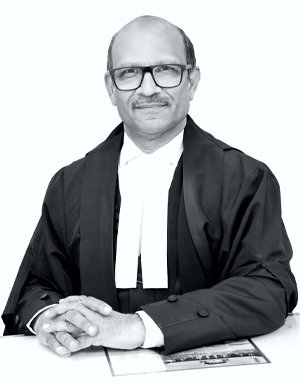
Legal Notes
Add a Note....