
By means of this petition under Article 226 of the Constitution, the petitioner has assailed the order dated 09.03.2018 passed by respondent no.4-Inspector General of Police, Moradabad Region, Moradabad and order dated 11.08.2018 ...
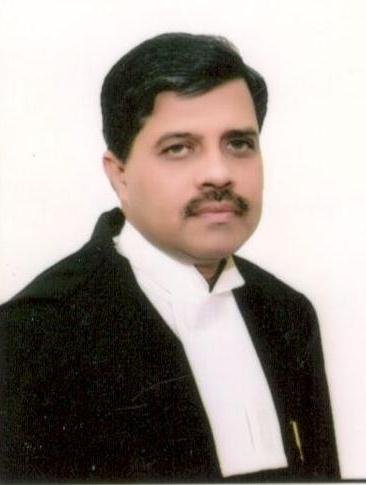
No Acts & Articles mentioned in this case
1
Writ-A No. 25018 of 2018
AFR
RESERVED
Court No. - 27
Case :- WRIT - A No. - 25018 of 2018
Petitioner :- Lokendra Pal Singh
Respondent :- State Of U.P. And 3 Others
Counsel for Petitioner :- Pankaj Kumar Tiwari, Amit Saxena
Counsel for Respondent :- C.S.C.
Hon'ble Vivek Varma, J.
By means of this petition under Article 226 of the
Constitution, the petitioner has assailed the order dated 09.03.2018
passed by respondent no.4-Inspector General of Police, Moradabad
Region, Moradabad and order dated 11.08.2018 passed by
respondent no.3-Additional Director General of Police, Bareilly
Region, Bareilly (Annexure Nos.5 and 9 to the writ petition).
Briefly, the facts of the case are that the petitioner was sub-
inspector in civil police. When he was posted as Station House
Officer in District Bulandshahar, he was approached by a lady,
namely, Ms. Ruma Chaudhary in connection with a land dispute
with her uncle. Upon intervention of the petitioner, the aforesaid
dispute was resolved. Thereafter, Ms. Ruma Chaudhary became
familiar with the family of the petitioner and won their trust. She
took a loan and financial help from the petitioner to continue her
studies. According to the petitioner, in the year 2011, Ms. Ruma
Chaudhary successfully qualified the examination of constable in
U.P. Police. But she still continued to take financial help from the
family of the petitioner. Even after 4 to 5 years of service, she
refused to repay the loan. It is stated that in October, 2017, the wife
of the petitioner filed a complaint case being Case No. 23786 of
NeutralU:itationUNocUpU49bHq“H:qbMM4G9
2
Writ-A No. 25018 of 2018
2017 (Smt. Geeta vs. Ruma Chaudhary), under Sections 406, 506
I.P.C. against Ms. Ruma Chaudhary. On 23.01.2018, Ms. Ruma
Chaudhary, it is submitted as a counter blast, lodged an FIR against
the petitioner under Sections 376, 377 and 506 I.P.C. alleging that
said offences have been committed from June, 2010 onwards.
Again on 09.02.2019, in order to pressurize the petitioner, Ms.
Ruma Chaudhary lodged another FIR under Sections 364, 511, 507,
504 and 506 I.P.C. Due to the aforesaid FIR and complaint of Ms.
Ruma Chaudhary, the petitioner was placed under suspension vide
order 14.02.2018 passed by S.S.P, Moradabad. On 27.03.2018, a
charge-sheet was submitted against the petitioner in the FIR dated
23.01.2018. Thereafter, the petitioner is stated to have challenged
the charge-sheet by filing Criminal Misc. Application U/S 482
Cr.P.C. No.21454 of 2018 and this Court vide order dated
20.06.2018 stayed the further proceedings. It is also stated that in
the FIR dated 09.02.2018, a final report was submitted and no
protest petition has been filed as yet.
It is submitted that while those proceedings were continuing,
a departmental preliminary enquiry was initiated against the
petitioner by the S.P. City, District Moradabad. The statements of
Ms. Ruma Chaudhary and the Investigating Officers of the two
cases instituted against the petitioner, were recorded by the enquiry
officer. The preliminary enquiry report recorded that, prima facie,
the allegations made by Ms. Ruma Chaudhary were correct.
On the basis of said ex-parte enquiry report, the petitioner
was dismissed from service vide order dated 09.03.2018 by the
Inspector General of Police, Moradabad Region, Moradabad under
Rule 8 (2) (b) of the Uttar Pradesh Police Officers of the
3
Writ-A No. 25018 of 2018
Subordinate Ranks (Punishment and Appeal) Rules, 1991
(hereinafter referred to as the “Rules, 1991”).
Aggrieved by the aforesaid order, the petitioner preferred a
departmental appeal and the same was rejected by the Additional
Director General of Police, Bareilly Region, Bareilly vide order
dated 11.08.2018. The orders dated 09.03.2018 and 11.08.2018 are
under challenge before this Court by means of present writ petition.
Heard Sri Amit Saxena, learned Senior Advocate, assisted by
Sri Ashish Pandey, learned counsel for the petitioner and Mr D. K.
Tiwari, learned Standing Counsel for the State.
Submission of Sri Amit Saxena, learned counsel for the
petitioner is that the dismissal order passed against the petitioner
without holding a departmental enquiry is entirely arbitrary,
discriminatory and the same has been passed in violation of the
principles of nature justice. There is no material before the
disciplinary authority for arriving at any subjective satisfaction to
dispense with the enquiry. There was no occasion to hold that
enquiry into the matter is neither reasonable nor practicably
possible.
Further submission is that reasons recorded for dispensing
with the enquiry was irrelevant and was arbitrary and, therefore, the
impugned termination was invalid and that the petitioner was liable
to be reinstated in service.
Per contra, learned Standing Counsel for the State, in support
of orders impugned, has submitted that Rule 8 (2) (b) of the Rules,
1991 has rightly been invoked in the matter as it was not possible to
hold a departmental enquiry. He has further stated that the enquiry
4
Writ-A No. 25018 of 2018
officer has clearly stated in his enquiry report that the petitioner
indulged in criminal acts.
I have considered the rival submission advanced by learned
counsel for the parties.
The services of the petitioner had been dismissed after
invoking, the proviso to Rule 8 (2) of the Uttar Pradesh Police
Officers of the Subordinate Ranks (Punishment and Appeal ) Rules,
1991. To appreciate the contention made by learned counsel for the
parties, it is necessary first to have a look at the provisions
contained in Rule 8 of the Rules, 1991. It reads as under:
"8. Dismissal and removal. - (1) No Police Officer shall be
dismissed or removed from service by an authority subordinate to
the appointing authority.
(2) No Police Officer shall be dismissed, removed or reduced in
rank except after proper inquiry and disciplinary proceedings as
contemplated by these rules :
Provided that this rule shall not apply -
(a) Where a person is dismissed or removed or reduced in rank on
the ground of conduct which has led to his conviction on a
criminal charge; or
(b) Where the authority empowered to dismiss or remove a
person or to reduce him in rank is satisfied that for some reason
to be recorded by that authority in writing, it is not reasonably
practicable to hold such enquiry; or
(c) Where the Government is satisfied that in the interest of the
security of the State is not expedient to hold such enquiry.
(3) All orders of dismissal and removal of Head Constables or
Constables shall be passed by the Superintendent of Police. Cases
in which the Superintendent of Police recommends dismissal or
5
Writ-A No. 25018 of 2018
removal of a Sub-Inspector or an Inspector shall be forwarded to
the Deputy Inspector-General concerned for orders.
(4) (a) The punishment for intentionally or negligently allowing a
person in police custody or judicial custody to escape shall be
dismissal unless the punishing authority for reasons to be
recorded in writing awards a lessor punishment.
(b) Every officer convicted by the Court for an offence involving
moral turpitude shall be dismissed unless the punishing authority
for reasons to be recorded in writing considers it otherwise.''
Bare perusal of the aforesaid Rule would go to show that
holding of inquiry is a rule and dispensing with the enquiry is an
exception. Before proceedings to impose any one of the major
penalty of dismissal, removal or reduction in rank the departmental
inquiry is must. However in certain contingency said rule can be
dispensed with. One such contingency provided for is that, it is not
reasonably practicable to hold an inquiry for reasons recorded in
writing. The said authority is to be exercised in exceptional
circumstances and that too by recording finding to the effect as to
why it is not reasonably practical to hold an inquiry. The sine quo
non for exercise of power under the proviso (b) to Rule 8 (2) of U.P.
Police Officers of the Subordinate Rank (Punishment and Appeal)
Rules, 1991, is the requirement to record reasons that it is not
reasonably practicable to hold such inquiry.
The proviso to Article 311 (2) of the Constitution of India,
which is analogous to Rule 8 (2) (b) of Rules, 1991 provides for the
mandatory requisites to dispense with the enquiry. In the aforesaid
provision also, an exception is carved out to the normal rule of
holding a departmental enquiry, before imposing a major
6
Writ-A No. 25018 of 2018
punishment upon the delinquent officer.
The condition precedent for exercise of powers to dispense
with the departmental enquiry arose for consideration before the
Hon’ble Supreme Court in the case of Union of India and another
vs. Tulsi Ram Patel
1
. The Hon’ble Court held as under:
"60. The Second Proviso to Article 311(2) Clause (2) of Article
311 gives a constitutional mandate to the principles of natural
justice and audi alteram partem rule by providing that a person
employed in a civil capacity under the Union or a State shall not
be dismissed or removed from service or reduced in rank until
after an inquiry in which he has been informed of the charges
against him and has been given a reasonable opportunity of being
heard in respect of those charges. To this extent, the pleasure
doctrine enacted in Article 310 (1) is abridged because Article
311 (2) is a express provision of the Constitution. This safeguard
provided for a government servant by clause (2) of Article 311,
however, taken away when the second proviso to that clause
becomes applicable. The safeguard provided by clause(1) of
Article 311, however, remains intact and continues to be available
to the government servant. The second proviso to Article 311 (2)
becomes applicable in the three cases mentioned in clauses (a) to
(c) of that proviso. These cases are :
(a) where a person is dismissed or removed or reduced in rank on
the ground of conduct which has led to his conviction on a
criminal charge; or
(b) where the authority empowered to dismiss or remove a person
or to reduce him in rank is satisfied that for some reason, to be
recorded by that authority in writing, it is not reasonably
practicable to hold such inquiry; and
(c) where the President or the Governor, as the case may be, is
1 AIR 1985 SC 1416
7
Writ-A No. 25018 of 2018
satisfied that in the interest of the security of the State it is not
expedient to hold such inquiry.
130. The condition precedent for the application of clause
(b) is the satisfaction of the disciplinary authority that "it is not
reasonably practicable to hold" the inquiry contemplated by
clause (2) of Article 311. What is pertinent to note is that the
words used are "not reasonably practicable" and not
"impracticable". According to the Oxford English Dictionary
"practicable" means "Capable of being put into practice, carried
out in action, effected, accomplished, or done; feasible". Webster's
Third New International Dictionary defines the word
"practicable" inter alia as meaning "possible to practice or
perform : capable of being put into practice, done or
accomplished : feasible". Further, the words used are not "not
practicable" but "not reasonably practicable". Webster's Third
New International Dictionary defines the word "reasonably" as
"in a reasonable manner : to a fairly sufficient extent". Thus,
whether it was practicable to hold the inquiry or not must be
judged in the context of whether it was reasonably practicable to
do so. It is not a total or absolute impracticability which is
required by clause (b). What is requisite is that the holding of the
inquiry is not practicable in the opinion of a reasonable man
taking a reasonable view of the prevailing situation. It is not
possible to enumerate the cases in which it would not be
reasonably practicable to hold the inquiry, but some instances by
way of illustration may, however, be given. It would not be
reasonably practicable to hold an inquiry where the government
servant, particularly through or together with his associates, so
terrorizes, threatens or intimidate witnesses who are going to
given evidence against him with fear of reprisal as to prevent them
from doing so or where the government servant by himself or
together with or through other threatens, intimidates and
8
Writ-A No. 25018 of 2018
terrorizes the officer who is the disciplinary authority or member
of his family so that he is afraid to hold the inquiry or direct it to
be held. It would also not be reasonably practicable to hold the
inquiry where an atmosphere of violence or of general indiscipline
and insubordination prevails, and it is immaterial whether the
concerned government servant is or is not a party to bringing
about such an atmosphere. In this connection, we must bear in
mind that numbers coerce and terrify while an individual may not.
The reasonable practicability of holding an inquiry is a matter of
assessment to be made by the disciplinary authority. Such
authority is generally on the spot and knows what is happening. It
is because the disciplinary authority is the best judge of this that
clause(3) of Article 311 makes the decision of the disciplinary
authority on this question final. A disciplinary authority is not
expected to dispense with a disciplinary inquiry lightly or
arbitrarily or out of ulterior motives or merely in order to avoid
the holding of an inquiry or because the Department's case
against the government servant is weak and must fail."
The Hon'ble Apex Court in the case of Jaswant Singh vs.
State of Punjab and others
2
, the Court while dealing with the
exercise of power as conferred by way of exception under Article
311 (2) (b) of the Constitution of India, opined as under:
“Clause (b) of the second proviso to Article 311 (2) can be invoked
only when the authority is satisfied from the material placed before
him that it is not reasonably practicable to hold a departmental
enquiry. This is clear from the following observation at page 270 of
Tulsiram Case: (SCC p.504, para 130)
A disciplinary authority is not expected to dispense with a
disciplinary inquiry lightly or arbitrarily or out of ulterior
motives or merely in order to avoid the holding of an
2 (1991) 1 SCC 362
9
Writ-A No. 25018 of 2018
inquiry or because the department's case against the
government servant is weak and must fail.
The decision to dispense with the departmental enquiry cannot,
therefore, be rested solely on the ipse dixit of the concerned
authority. When the sanctification of the concerned authority is
questioned in a court of law, it is incumbent on those who support
the order to show that the satisfaction is based on certain objective
facts and is not the outcome of the whim or caprice of the
concerned officer.”
In Reena Rani vs. State of Haryana
3
, after referring to the
various authorities holding the field, the Hon'ble Apex Court ruled
out when reasons are not ascribed, the order is vitiated and
accordingly set aside the order of dismissal which had been
concurred with by the Single Judge and directed for reinstatement
in service with all consequential benefits. It has also been observed
therein that the order passed by this Court would not preclude the
competent authority from taking action against the
appellant/petitioner in accordance with law.
Recently, in the case of Risal Singh vs. State of Haryana
and others
4
, while construing a similar provision, the Hon'ble Apex
Court Court observed as follows:
“Non-ascribing of reason while passing the order dispensing with
enquiry, which otherwise was must, definitely invalidates such
action....
Tested on the touchstone of the aforesaid authorities, the
irresistible conclusion is that the order passed by the
Superintendent of Police dispensing with the inquiry is totally
unsustainable and is hereby annulled. As the foundation founders,
3(2012) 10 SCC 215
4(2014) 13 SCC 244
10
Writ-A No. 25018 of 2018
the order of the High Court giving the stamp of approval to the
ultimate order without addressing the lis from a proper perspective
is also indefensible and resultantly, the order of dismissal passed
by the disciplinary authority has to pave the path of extinction”
The provisions of Rule 8 (2) (b) of the Rules, 1991 and
Article 311 (2) of the Constitution of India are almost in pari-
materia and the legislative intent behind the provisions are the
same.
In view of the law laid down by the Hon’ble Apex Court
noticed above, before exercising special powers to dispense with
the enquiry, the disciplinary authority must be satisfied on the basis
of objective material that it is not practicable to hold such enquiry.
At this stage, it would be appropriate to notice some
authorities in point rendered by this Court, while interpreting
proviso (b) to Rule 8 (2) of the Rules, 1991.
In Pushpendra Singh and another vs. State of U.P. and
another
5
, the Court in paragraphs 7, 8, 9 and 10 held as follows:
“7. …….. Thus, in order to dispense with the regular
departmental proceeding for inflicting punishment of dismissal,
removal or reduction in rank, recording reasons is condition
precedent. The idea or object of recording reasons is obviously to
prevent arbitrary, capricious and mala fide exercise of power.
Therefore, recording of reason is mandatory and in its absence the
order becomes laconic and cannot sustain. Onus is on the State or
its authorities to show that the order of dismissal has been passed
strictly as per prescription of the statutes. The Hon'ble Apex Court
in the case of Union of India v. Tulsi Ram Patel, AIR 1985 SC 1416
while considering Articles 310 and 311 of the Constitution of India
52008 (3) ADJ 689 (D.B.)
11
Writ-A No. 25018 of 2018
held that two conditions must be satisfied to uphold action taken
under Article 311 (2) of the Constitution of India, viz., (i) there
must exist a situation which renders holding of any enquiry not
reasonably practicable, (ii) the disciplinary authority must record
in writing its reasons in support of its satisfaction. The Hon'ble
Apex Court further observed that though Clause (3) of Article 311
makes the decision of the disciplinary authority in this behalf final,
yet such finality can certainly be tested in the Court of law and
interfered with if the action is found to be arbitrary or mala fide or
motivated by extraneous considerations or merely a rule to
dispense with the enquiry. The Hon'ble Apex Court at page 1479 in
Tulsi Ram Patel (supra) held as follows :
''A disciplinary authority is not expected to dispense with a
disciplinary authority lightly or arbitrary or out of ulterior
motives or merely in order to avoid the holding of an inquiry
or because the Department's case against the Government
servant is weak and must fail.''
8. The words some "reason to be recorded in writing that it is not
reasonably practicable to hold enquiry" means that there must be
some material for satisfaction of the disciplinary authority that it
is not reasonably practicable. The decision to dispense with the
departmental enquiry cannot, therefore, be rested solely on the
ipse dixit of the concerned authority. The Apex Court in the case of
Jaswant Singh v. State of Punjab and Ors. has observed as under:
“It was incumbent on the respondents to disclose to the Court
the material in existence at the date of the passing of the
impugned order in support of the subjective satisfaction
recorded by respondent No. 3 in the impugned order. Clause
(b) of the second proviso to Article 311(2) can be invoked only
when the authority is satisfied from the material placed before
him that it is not reasonably practicable to hold a
departmental enquiry.”
12
Writ-A No. 25018 of 2018
“...When the satisfaction of the concerned authority is
questioned in a court of law, it is incumbent on those who
support the order to show that the satisfaction is based on
certain objective facts and is not the outcome of the whim or
caprice of the concerned officer.”
9. Therefore, in view of the exposition of law such satisfaction
has to be recorded either in the impugned order or in any case it
must be available on record. In the case in hand, the impugned
order is enclosed as Annexure 5 to the writ petition. From a
perusal thereof it is evident that the Senior Superintendent of
Police merely reproduced the provisions contained in Rule 8(2)
(b) against the above police personnel, stating that it is not
reasonably practicable to hold such enquiry. It does not contain
any reason showing as to why it is not reasonably practicable to
hold regular enquiry. The satisfaction that it is not reasonably
practicable to hold such enquiry has to be spelled out either in
the order itself or at least it has to be available on record.
Learned Standing Counsel also during his submission could not
show us any such reason recorded by the competent authority in
the record to show any ground or reason for invoking the
provisions contained in Rule 8(2)(b) of the Rules. It is well
settled legal position that when a statutory functionary makes an
order based on some reasons or grounds, its validity is to be
tested on the ground or reasons mentioned therein and cannot be
supplemented by giving reasons through affidavit filed in the
case (See Mohinder Singh Gill and Anr. v. The Chief Election
Commissioner, New Delhi and Ors. ).
9. It is also an admitted position that the appellants have been
dismissed from service without holding any enquiry. They have
not been informed of the charges against them nor been afforded
opportunity of being heard in respect of charges before inflicting
punishment of dismissal from service. Thus, in the absence of
13
Writ-A No. 25018 of 2018
reasons for dispensing with the regular enquiry the impugned
order of dismissal is patently illegal and it is difficult to uphold
the same.”
In Dayashankar Tiwari and another vs. State of U.P. and
others
6
, the Court in paragraphs 9, 10 and 11 held as follows:
“9. In the present case, it is admitted that the petitioners were
caught red handed while on duty, and no preliminary enquiry
was held nor the petitioners were given opportunity to explain
their conduct. The Senior Superintendent of Police has found
that it was not reasonably practicable to hold a departmental
enquiry against them only on the ground that the act of police
personnel will cause serious damage to the police department,
and general public will loose confidence in the police
department.
10. In all the aforesaid cases, it was held that unless the
reasons given by the disciplinary authority that it was not
reasonably practicable to hold departmental enquiry, relevant
for the exercise of power, the courts will not exercise power of
judicial review.
11. In the present case, acceptance of bribe and being caught
red handed in the act, may lower the image of the police
department, and the confidence of general public, but that by
itself cannot be said to relevant grounds to dispense with the
preliminary and thereafter departmental enquiry. The exercise
of powers under Section 8 (2) (b) will require the act of
indiscipline or misconduct to be such, and not its consequences,
which may be relevant to record findings that it is not
reasonably practicable to hold departmental enquiry. Every
allegation of corrupt practice by police officers results into
possibility of indiscipline, lowering of image and loss of public
62010 (10) ADJ 574 (D.B.)
14
Writ-A No. 25018 of 2018
faith. These consequences cannot be taken to be sufficient not to
cause departmental enquiry to enquire into the truth of
allegations after affording an opportunity of hearing to the
delinquent employee.”
In Rajendra Prasad Singh vs. State of U.P. and others
7
, the
Court in paragraphs 9 & 10 held as follows:
“9. Thus, the consistent view is that holding an enquiry is a rule
and it's dispensation, an exception. The test is that in a
prevailing situation, what a reasonable man, taking a
reasonable view, would have done. Further, the decision to
dispense with the departmental enquiry is not based on the ipse
dixit of the authority concerned but should be based on
objective assessment of the relevant facts. If the subjective
satisfaction is challenged before the Court of law, it has to pass
the test laid down above and for which, it is the burden of the
disciplinary authority to place the relevant facts and material
before the Court to justify it's action in dispensing with the
disciplinary enquiry.
10. Applying these principles to the facts of the present case,
this Court finds that the decision to dispense with the enquiry is
not based on relevant considerations and cannot be sustained in
law. Perusal of the impugned order will demonstrate that the
decision to dispense with the disciplinary enquiry is primarily
based on two grounds: (1) that the delinquent continues to be
absent and there is no possibility of his co-operation in the
enquiry; and (2) the deeds of the delinquent were widely
reported in various newspapers and media and, therefore, it
would be inexpedient and impracticable to hold the enquiry.”
Recently, a Division Bench of this Court in the case of
Umesh Chandra vs. State of U.P. through Secretary, Special
72014 (3) AWC 2616
15
Writ-A No. 25018 of 2018
Appeal No.350 of 2017, decided on 06.08.2019, (of which I was a
member), the Court construed the provisions of Rule 8 (2) (b) of the
Rules, 1991. The relevant extract of the judgments is quoted below:
“The above provision is pari-materia with Article 311 (1) and
(2) of the Constitution, which gives constitutional protection to
a Member of civil service of the Union or of the State. The
normal rule is that no major punishment, such as, dismissal,
removal or reduction in rank should be inflicted without taking
recourse of regular disciplinary enquiry against any
delinquent. However, Rule 8 (2) (b) of the Rules, 1991 has
carved out certain exceptions where even without holding
regular proceeding punishment of dismissal, removal or
reduction in rank can be inflicted. In order to dispense with the
regular departmental proceeding for inflicting major
punishment recording reasons is a condition precedent to
prevent arbitrary, capricious and mala fide exercise of power.
Absence of reasons vitiates the order and renders it
unsustainable in law. Secondly, the authority has to record its
satisfaction based on credible material in the record, to
dispense with the enquiry. Onus is on the State or its
authorities to show that the order of dismissal has been passed
strictly as per prescription of the statutes.”
The authorities in point are long, but the position of law has
been consistent on the point.
In the case in hand, the Inspector General of Police vide his
order dated 09.03.2018, dismissed the services of the petitioner
relying upon a confidential/ex-parte preliminary enquiry report
dated 15.02.2018 conducted by Deputy Inspector of Police,
Moradabad by stating that since the petitioner had been posted as
Inspector in police department, a cloud of fear exists, no witness
16
Writ-A No. 25018 of 2018
came forward to depose against him, as such, further enquiry is not
possible.
The said order also records that the petitioner is a married
person and being a senior member of a disciplined force, has
committed misconduct within the meaning of Rule 3 of The U.P.
Government Servant Conduct Rules, 1956. He has tarnished the
image of the police force. The continuance of such undisciplined
and criminal minded person will cause serious damage to the
police department and general public will loose faith. For this
reason the disciplinary authority thought it fit to dispense with the
enquiry.
The recital in the impugned dismissal order dated 09.03.2018
that no witness came forward to depose against the petitioner in the
preliminary enquiry as such further enquiry is not possible, needs
consideration. It does not stand to reason how witnesses were aware
about the enquiry when even the petitioner was not informed. The
said reasoning by no stretch of imagination could be a ground for
dispensing with the disciplinary enquiry. It is a wholly subjective
opinion not arising from any objective material.
It is also relevant to be noted that if a preliminary enquiry can
be held then there is no reason as to why a regular departmental
enquiry cannot be held, in such facts. Admittedly, there are cross
cases registered between petitioner and Ms. Ruma Chaudhary and
also the fact that Ms. Ruma Chaudhary had duly appeared and
deposed before the ex-parte preliminary enquiry.
It is trite law that the satisfaction of the authority has to be
based upon objective material on record. There is no material on
17
Writ-A No. 25018 of 2018
record to justify the conclusion that it was not possible to hold a
departmental enquiry.
Also, the order has been passed on the basis of preliminary
enquiry. The preliminary enquiry report was never supplied to the
petitioner. The petitioner did not have an opportunity to refute the
preliminary enquiry report. The report was adverse to the petitioner.
The authority by failing to provide preliminary enquiry report to the
petitioner and omitting to call for objections from the petitioner, has
acted in violation of principles of natural justice. The procedure
adopted by the authority while passing the impugned order is
arbitrary and illegal. Even the appellate authority failed to
appreciate the aforesaid issues and dismissed the appeal. The
reasoning assigned in the impugned orders cannot be said to be
relevant grounds to dispense with the departmental inquiry.
In view of the admitted facts and the legal position referred to
above, the impugned dismissal order dated 09.03.2018 and
appellate order dated 11.08.2018 cannot be sustained and are hereby
set aside.
The writ petition is allowed.
The matter is remanded back to the disciplinary authority to
proceed from the stage prior to the passing of the impugned order
dated 09.03.2018 and conclude the enquiry within a period of six
months from the date of production of a certified copy of this Court.
Order Date :- 30.8.2019
Ajeet
(Vivek Varma, J.)

 Login with google
Legal Notes
Add a Note....