
☐The appeal is arising from a Special Leave Petition (Criminal) filed before the Supreme Court of India, against the order passed by the Rajasthan High Court, Jaipur Bench, which refused ...

No Acts & Articles mentioned in this case
Page 1 1
REPORTABLE
IN THE SUPREME COURT OF INDIA
CRIMINAL APPELLATE JURISDICTION
CRIMINAL APPEAL NO. 888 OF 2013
(ARISING OUT OF SLP(Crl.)NO .4513 OF 2012)
LOKESH KUMAR JAIN … APPELLANT
VERUS
STATE OF RAJASTHAN … RESPONDENT
J U D G M E N T
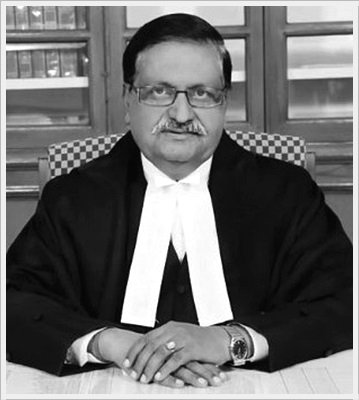
SUDHANSU JYOTI MUKHOPADHAYA, J.
Leave granted. This appeal has been preferred by the
appellant against the order dated 2
nd
March, 2012 passed by
the Rajasthan High Court, Jaipur Bench in S.B. Criminal
Miscellaneous Petition No.605 of 2006 titled Lokesh Kumar
Jain v. State of Rajasthan. By the impugned order, the High
Court refused to quash the FIR No.10/2000 lodged against
the appellant under Section 409 IPC at Police Station,
Dausa. The petition under Section 482 Cr.PC was disposed
of by the High Court with the following observation:
“This criminal misc. petition has been filed
under section 482 Cr.PC for quashing of FIR
No.10/2000 registered at Police Station, Dausa.
Page 2 2
This Court has asked the learned counsel for
the petitioner whether challan has been filed or
not. He replied that still challan has not been
filed and the matter is under investigation.
If it is to, the petitioner is permitted to
file representation/documents on the basis of the
judgment of the Hon'ble Supreme Court or any other
Court, the I.O. Should investigate the matter on the
basis of the judgment/documents/representation so
filed by the petitioner and thereafter shall file
progress before the court concerned.
Accordingly, the petition is disposed of.”
2.In order to appreciate the rival stands of the parties,
it would be necessary to notice the background facts in a
greater detail.
3.The appellant was posted as Lower Division Clerk (for
short, 'LDC') during the period November, 1996 to
November,1997 in the Office of District Literacy Education
Officer, Dausa. On 4
th
January, 2000, the District Literacy
Education Officer, Dausa registered a First Information
Report (for short, 'FIR') in Police Station, Dausa alleging
therein that when the appellant was posted as LDCcum
Cashier, a financial irregularity was committed by him. As
per the report of Auditor General, an embezzlement of
Rs.4,39,617/ has been discovered. The original copies of
the bills and documents were available in the office of the
Auditor General and in the office of Directorate for the
Page 3 3
State Literacy Programme. Therefore, on the basis of
report given by the Auditor General, the FIR was filed.
4.On the basis of report submitted by the complainant, the
Police lodged FIR No.10/2000 of the incident alleged to
have taken place in the year 19961997, implicating
appellant as an accused. After making investigation, the
Police submitted a final report in the matter on 2
nd
June,2000 before the Chief Judicial Magistrate, Dausa
(hereinafter referred to as the, “CJM, Dausa”)
5.During the pendency of the matter before the CJM, Dausa,
the complainant filed an application on 18
th
November, 2000
before the CJM, Dausa requesting therein to send back the
matter to the Police for further investigation. The CJM,
Dausa vide order dated 18
th
November, 2000, sent back the
matter to the Police under Section 156(3) of Cr.PC. Since
then the matter remained pending with the police.
According to the appellant, he met as well as represented
on a number of times to the Police Authorities and the
Departmental Authorities but still no action has been taken
by the Authorities. Neither final report is submitted nor
the challan is being filed and the matter is pending since
then. Earlier in the final report, it was stated that the
Page 4 4
Police informed that the original copies of the bills and
another documents are not available, therefore, no
investigation could be made.
6.Having waited for more than six years, the appellant
preferred a petition under Section 482 Cr.PC before the
Rajasthan High Court being Criminal Miscellaneous Petition
No.605/2006 to set aside the FIR No.10/2000 registered at
Police Station, Dausa.
7.In the meantime, a Departmental Inquiry was initiated
against the appellant for the same charges in which the
Inquiry Officer after inquiry submitted his report on 15
th
December,2008 exonerating the appellant from the charges.
8.The High Court by impugned order dated 2
nd
March, 2012
chose not to interfere with the FIR and again left the
matter in the hands of the authorities. Hence, the special
leave petition was filed by the appellant before this
Court.
9.Learned counsel for the appellant challenged the decision
of the High Court on the following grounds:
(a)Since the date of order passed by the CJM, Dausa
the appellant has been suffering the harassment of
Page 5 5
investigation for more than 13 years which is not
completed till date because of lack of supply of
documents.
(b)After filing the closure report way back in the
year 2000 no effective investigation has taken place.
(c)If investigation is allowed to continue even in
absence of document, it will be futile and can only
cause harassment to the appellant, serving no purpose
as even in the departmental inquiry for said charges
conducted against the appellant in the year 2009, the
appellant was exonerated as none of the charges which
also form the basis of the present FIR could be proved
against the appellant.
10.He also relied on decisions of this Court which will be
discussed in the following paragraphs of this judgment.
11.The State of Rajasthan has filed counter affidavit.
According to them, the investigation is still continuing
and the appellant himself is delaying the same due to non
cooperative attitude adopted by him. In any case, from the
investigation carried out till now, offence under Section
409 IPC is clearly made out against the appellant and on
Page 6 6
this ground alone, the petition seeking quashing of FIR is
liable to be dismissed and the legal process deserves to be
taken to a logical end.
12.Though the aforesaid stand has been taken by the
respondent in their counter affidavit, the respondent is
silent about the documents i.e. whether they have been made
available to the Police for further investigation. Further
no specific instance was shown to suggest that the
appellant failed to cooperate with the Investigating Agency
on any particular date.
13.Before deciding the question whether under the given
circumstances the High Court should have exercised its
inherent powers under Section 482 Cr.PC to prevent abuse of
process of any court or otherwise to secure the ends of
justice, it will be desirable to notice some of the
decisions of this Court relating to categories of cases
wherein extraordinary power under Section 482 Cr.PC could
be exercised by the High Court to prevent abuse of process
of the Court.
Page 7 7
14.In State of Haryana v. Bhajan Lal, 1992 (Suppl.) 1 SCC
335 this Court while formulating the categories of cases by
way of illustration, wherein the extraordinary power under
the aforestated provisions could be exercised by the High
Court to prevent abuse of process of the Court and observed
as follows:
“102. In the backdrop of the interpretation of the
various relevant provisions of the Code under Chapter
XIV and of the principles of law enunciated by this
Court in a series of decisions relating to the exercise
of the extraordinary power under Article 226 or the
inherent powers under Section 482 of the Code which we
have extracted and reproduced above, we give the
following categories of cases by way of illustration
wherein such power could be exercised either to prevent
abuse of the process of any court or otherwise to
secure the ends of justice, though it may not be
possible to lay down any precise, clearly defined and
sufficiently channelised and inflexible guidelines or
rigid formulae and to give an exhaustive list of myriad
kinds of cases wherein such power should be exercised.
(1) Where the allegations made in the first
information report or the complaint, even if they are
taken at their face value and accepted in their
entirety do not prima facie constitute any offence or
make out a case against the accused.
(2) Where the allegations in the first information
report and other materials, if any, accompanying the
FIR do not disclose a cognizable offence, justifying an
investigation by police officers under Section 156(1)
of the Code except under an order of a Magistrate
within the purview of Section 155(2) of the Code.
(3) Where the uncontroverted allegations made in the
FIR or complaint and the evidence collected in support
of the same do not disclose the commission of any
offence and make out a case against the accused.
Page 8 8
(4) Where, the allegations in the FIR do not
constitute a cognizable offence but constitute only a
noncognizable offence, no investigation is permitted
by a police officer without an order of a Magistrate as
contemplated under Section 155(2) of the Code.
(5) Where the allegations made in the FIR or
complaint are so absurd and inherently improbable on
the basis of which no prudent person can ever reach a
just conclusion that there is sufficient ground for
proceeding against the accused.
(6) Where there is an express legal bar engrafted in
any of the provisions of the Code or the concerned Act
(under which a criminal proceeding is instituted) to
the institution and continuance of the proceedings
and/or where there is a specific provision in the Code
or the concerned Act, providing efficacious redress for
the grievance of the aggrieved party.
(7) Where a criminal proceeding is manifestly
attended with mala fide and/or where the proceeding is
maliciously instituted with an ulterior motive for
wreaking vengeance on the accused and with a view to
spite him due to private and personal grudge.”
15.Need for speedy investigation and trial as both are
mandated by the letter and spirit of the provisions of
Cr.PC have been emphasized by this Court in numerous cases.
16.In Hussainara Khatoon v. Home Secretary, State of
Bihar, (1980) 1 SCC 81 this Court observed that Article 21
confers a fundamental right on every person not to be
deprived of his life or liberty except according to
procedure established by law; that such procedure is not
some semblance of a procedure but the procedure should be
“reasonable, fair and just”; and therefrom flows, without
Page 9 9
doubt, the right to speedy trial. This Court further
observed that:
“8. In regard to the exercise of the judicial power to
release a prisoner awaiting trial on bail or on the
execution of a personal bond without sureties for his
appearance, I have to say this briefly. There is an
amplitude of power in this regard within the existing
provisions of the Code of Criminal Procedure, and it
is for the courts to fully acquaint themselves with
the nature and extent of their discretion in
exercising it. I think it is no longer possible to
countenance a mechanical exercise of the power. What
should be the amount of security required or the
monetary obligation demanded in a bond is a matter
calling for the careful consideration of several
factors. The entire object being only to ensure that
the undertrial does not flee or hide himself from
trial, all the relevant considerations which enter
into the determination of that question must be taken
into account. A synoptic impression of what the
considerations could be may be drawn from the
following provision in the United States Bail Reform
Act of 1966:
“In determining which conditions of releases
will reasonably assure appearance, the judicial
officer shall, on the basis of available
information, take into account the nature and
circumstances of the offence charged, the
weight of the evidence against the accused, the
accused's family ties, employment, financial
resources, character and mental condition, the
length of his residence in the community, his
record of convictions, and his record of
appearance at court proceedings or of flight to
avoid prosecution or failure to appear at court
proceedings.”
These are considerations which should be kept in mind
when determining the amount of the security or
monetary obligation. Perhaps, if this is done the
abuses attendant on the prevailing system of pretrial
release in India could be avoided or, in any event,
greatly reduced.”
Page 10 10
17.In Abdul Rehman Antulay v. R.S. Nayak, (1992) 1 SCC
225, the Court formulated as many as 11 propositions with a
note of caution that these were not to be treated as
exhaustive and were meant only to serve as guidelines.
86. In view of the above discussion, the following
propositions emerge, meant to serve as guidelines. We
must forewarn that these propositions are not
exhaustive. It is difficult to foresee all situations.
Nor is it possible to lay down any hard and fast
rules. These propositions are:
(1) Fair, just and reasonable procedure implicit in
Article 21 of the Constitution creates a right in the
accused to be tried speedily. Right to speedy trial is
the right of the accused. The fact that a speedy trial
is also in public interest or that it serves the
social interest also, does not make it any the less
the right of the accused. It is in the interest of all
concerned that the guilt or innocence of the accused
is determined as quickly as possible in the
circumstances.
(2) Right to speedy trial flowing from Article 21
encompasses all the stages, namely the stage of
investigation, inquiry, trial, appeal, revision and
retrial. That is how, this Court has understood this
right and there is no reason to take a restricted
view.
(3) The concerns underlying the right to speedy trial
from the point of view of the accused are:
(a) the period of remand and preconviction detention
should be as short as possible. In other words, the
accused should not be subjected to unnecessary or
unduly long incarceration prior to his conviction;
(b) the worry, anxiety, expense and disturbance to
his vocation and peace, resulting from an unduly
prolonged investigation, inquiry or trial should be
minimal; and
(c) undue delay may well result in impairment of the
ability of the accused to defend himself, whether on
account of death, disappearance or nonavailability of
witnesses or otherwise.
Page 11 11
(4) At the same time, one cannot ignore the fact that it
is usually the accused who is interested in delaying
the proceedings. As is often pointed out, “delay is a
known defence tactic”. Since the burden of proving the
guilt of the accused lies upon the prosecution, delay
ordinarily prejudices the prosecution. Non
availability of witnesses, disappearance of evidence
by lapse of time really work against the interest of
the prosecution. Of course, there may be cases where
the prosecution, for whatever reason, also delays the
proceedings. Therefore, in every case, where the right
to speedy trial is alleged to have been infringed, the
first question to be put and answered is — who is
responsible for the delay? Proceedings taken by either
party in good faith, to vindicate their rights and
interest, as perceived by them, cannot be treated as
delaying tactics nor can the time taken in pursuing
such proceedings be counted towards delay. It goes
without saying that frivolous proceedings or
proceedings taken merely for delaying the day of
reckoning cannot be treated as proceedings taken in
good faith. The mere fact that an application/petition
is admitted and an order of stay granted by a superior
court is by itself no proof that the proceeding is not
frivolous. Very often these stays are obtained on ex
parte representation.
(5) While determining whether undue delay has occurred
(resulting in violation of Right to Speedy Trial) one
must have regard to all the attendant circumstances,
including nature of offence, number of accused and
witnesses, the workload of the court concerned,
prevailing local conditions and so on — what is
called, the systemic delays. It is true that it is the
obligation of the State to ensure a speedy trial and
State includes judiciary as well, but a realistic and
practical approach should be adopted in such matters
instead of a pedantic one.
(6) Each and every delay does not necessarily prejudice
the accused. Some delays may indeed work to his
advantage. As has been observed by Powell, J. in
Barker “it cannot be said how long a delay is too long
in a system where justice is supposed to be swift but
deliberate”. The same idea has been stated by White,
J. in U.S. v. Ewell in the following words:
Page 12 12
‘... the Sixth Amendment right to a speedy trial is
necessarily relative, is consistent with delays, and
has orderly expedition, rather than mere speed, as its
essential ingredients; and whether delay in completing
a prosecution amounts to an unconstitutional
deprivation of rights depends upon all the
circumstances.’
However, inordinately long delay may be taken as
presumptive proof of prejudice. In this context, the
fact of incarceration of accused will also be a
relevant fact. The prosecution should not be allowed
to become a persecution. But when does the prosecution
become persecution, again depends upon the facts of a
given case.
(7) We cannot recognize or give effect to, what is
called the ‘demand’ rule. An accused cannot try
himself; he is tried by the court at the behest of the
prosecution. Hence, an accused's plea of denial of
speedy trial cannot be defeated by saying that the
accused did at no time demand a speedy trial. If in a
given case, he did make such a demand and yet he was
not tried speedily, it would be a plus point in his
favour, but the mere nonasking for a speedy trial
cannot be put against the accused. Even in USA, the
relevance of demand rule has been substantially
watered down in Barker and other succeeding cases.
(8) Ultimately, the court has to balance and weigh the
several relevant factors — ‘balancing test’ or
‘balancing process’ — and determine in each case
whether the right to speedy trial has been denied in a
given case.
(9) Ordinarily speaking, where the court comes to the
conclusion that right to speedy trial of an accused
has been infringed the charges or the conviction, as
the case may be, shall be quashed. But this is not the
only course open. The nature of the offence and other
circumstances in a given case may be such that
quashing of proceedings may not be in the interest of
justice. In such a case, it is open to the court to
make such other appropriate order — including an order
to conclude the trial within a fixed time where the
trial is not concluded or reducing the sentence where
Page 13 13
the trial has concluded — as may be deemed just and
equitable in the circumstances of the case.
(10) It is neither advisable nor practicable to fix any
timelimit for trial of offences. Any such rule is
bound to be qualified one. Such rule cannot also be
evolved merely to shift the burden of proving
justification on to the shoulders of the prosecution.
In every case of complaint of denial of right to
speedy trial, it is primarily for the prosecution to
justify and explain the delay. At the same time, it is
the duty of the court to weigh all the circumstances
of a given case before pronouncing upon the complaint.
The Supreme Court of USA too has repeatedly refused to
fix any such outer timelimit in spite of the Sixth
Amendment. Nor do we think that not fixing any such
outer limit ineffectuates the guarantee of right to
speedy trial.
(11) An objection based on denial of right to speedy
trial and for relief on that account, should first be
addressed to the High Court. Even if the High Court
entertains such a plea, ordinarily it should not stay
the proceedings, except in a case of grave and
exceptional nature. Such proceedings in High Court
must, however, be disposed of on a priority basis.”
18.Seven learned Judges of this Court in P. Ramachandra
Rao v. State of Karnataka, (2002) 4 SCC 578 , considered the
validity of the ratio laid down in Common Cause case (I) as
modified in Common Cause case (II) and Raj Deo Sharma (I)
and (II) cases wherein this Court prescribed periods of
limitation beyond which the trial of a criminal case or a
criminal proceeding cannot continue and directed to close
the proceeding by an order acquitting or discharging the
accused in such cases. In the said case of P. Ramachandra
Page 14 14
Rao(supra) after exhaustive consideration of the authority
on the subject this Court held:
“29. For all the foregoing reasons, we are of the
opinion that in Common Cause case (I) [as modified in
Common Cause (II)] and Raj Deo Sharma (I) and (II) the
Court could not have prescribed periods of limitation
beyond which the trial of a criminal case or a
criminal proceeding cannot continue and must
mandatorily be closed followed by an order acquitting
or discharging the accused. In conclusion we hold:
(1) The dictum in A.R. Antulay case is correct and
still holds the field.
(2) The propositions emerging from Article 21 of the
Constitution and expounding the right to speedy trial
laid down as guidelines in A.R. Antulay case
adequately take care of right to speedy trial. We
uphold and reaffirm the said propositions.
(3) The guidelines laid down in A.R. Antulay case are
not exhaustive but only illustrative. They are not
intended to operate as hardandfast rules or to be
applied like a straitjacket formula. Their
applicability would depend on the fact situation of
each case. It is difficult to foresee all situations
and no generalization can be made.
(4) It is neither advisable, nor feasible, nor
judicially permissible to draw or prescribe an outer
limit for conclusion of all criminal proceedings. The
timelimits or bars of limitation prescribed in the
several directions made in Common Cause (I), Raj Deo
Sharma (I) and Raj Deo Sharma (II) could not have been
so prescribed or drawn and are not good law. The
criminal courts are not obliged to terminate trial or
criminal proceedings merely on account of lapse of
time, as prescribed by the directions made in Common
Cause case (I), Raj Deo Sharma case (I) and (II). At
the most the periods of time prescribed in those
decisions can be taken by the courts seized of the
trial or proceedings to act as reminders when they may
be persuaded to apply their judicial mind to the facts
and circumstances of the case before them and
determine by taking into consideration the several
relevant factors as pointed out in A.R. Antulay case
and decide whether the trial or proceedings have
become so inordinately delayed as to be called
oppressive and unwarranted. Such timelimits cannot
Page 15 15
and will not by themselves be treated by any court as
a bar to further continuance of the trial or
proceedings and as mandatorily obliging the court to
terminate the same and acquit or discharge the
accused.
(5) The criminal courts should exercise their
available powers, such as those under Sections 309,
311 and 258 of the Code of Criminal Procedure to
effectuate the right to speedy trial. A watchful and
diligent trial Judge can prove to be a better
protector of such right than any guidelines. In
appropriate cases, jurisdiction of the High Court
under Section 482 CrPC and Articles 226 and 227 of the
Constitution can be invoked seeking appropriate relief
or suitable directions.
(6) This is an appropriate occasion to remind the
Union of India and the State Governments of their
constitutional obligation to strengthen the judiciary
— quantitatively and qualitatively — by providing
requisite funds, manpower and infrastructure. We hope
and trust that the Governments shall act.”
19.This Court in Vakil Prasad Singh v. State of Bihar,
(2009) 3 SCC 355 considered the question of quashing of
criminal proceedings due to delay, when warranted.
Referring to earlier decisions of this Court on the issue,
this Court held that speedy investigation and trial, both
are enshrined in Cr.PC. The right to speedy trial is
guaranteed under Article 21 and the same is applicable not
only to actual proceedings in court but also includes
within its sweep the preceding police investigations as
well.
20.In Vakil Prasad Singh(supra) one search operation was
conducted by the office of Superintendent of Police, Crime
Page 16 16
Investigation Department (Vigilance), Muzaffarpur, on the
basis of a complaint lodged by a civil contractor against
the accused, an Assistant Engineer in the Bihar State
Electricity Board (Civil) Muzaffarpur, for allegedly
demanding a sum of Rs.1000 as illegal gratification for
release of payment for the civil work executed by him. The
case was instituted on 8
th
April, 1981 and the chargesheet
for aforesaid offences was filed against the accused on 28
th
February, 1982. The Magistrate took cognizance on 9
th
December,1982 but nothing substantial happened. The accused
filed a petition under Section 482 Cr.PC before the Patna
High Court against the order passed by the Special Judge,
Muzaffarpur taking cognizance of the said offences, on the
ground that the Inspector of Police, who had conducted the
investigations, on the basis whereof the chargesheet was
filed, had no jurisdiction to do so. Accepting the plea,
the High Court by its order dated 7
th
December, 1990 quashed
the order of the Magistrate taking cognizance and directed
the prosecution to complete the investigation within three
months. However, no further progress was made and the
matter rested there till 1998, when the accused filed
another petition under Section 482 Cr.PC, giving rise to
the appeal before this Court.
Page 17 17
21.Having noticed the ratio laid down by this Court in
number of cases including State of Haryana v. Bhajan Lal
(supra), Hussainara Khatoon (supra), Abdul Rehman Antulay
(supra) etc. and the relevant facts of Vakil Prasad Singh
(supra) case, this Court was of the view that it was a fit
case where the High Court should have exercised its power
under Section 482 Cr.PC as the State was not sure as to
whether a sanction for prosecuting the accused is required
and if so, whether it has been granted or not and that the
case was pending for about 17 years and the proceedings
against the appellant was quashed.
22.To find out the factual scenario, we have noticed the
background in a greater detail as mentioned hereunder:
23.On 4
th
January, 2000, the following allegation was made
by the complainantDistrict Literacy & Education Mission
Officer, Dausa in the FIR, the relevant portion of which is
quoted below:
“First Information Report
Office of literacy and continuous education mission,
Dausa File No.672 dated 4.1.2000
To,
The SHO
Police Station: Dausa
Page 18 18
Subject: Regarding misappropriation of the amount of
pending Bill for the period 11.9611.97 by Sh.Lokesh
Jain LDC(Cashier),
In reference to the above subject, it is requested
that Sh. Lokesh Jain, Lower Division Clerk (Cashier)
presently under suspension while working on the post
of cashier has committed financial irregularities for
which financial department and office of CAG conducted
an enquiry which is annexed herewith.
As per the enquiry report Rs.4,39,617 has been
misappropriated, all the copies of the original bill
are present in the office of CAG and the original
documents are available in the office of Directorate
State Literacy and Education Mission.
Hence, it is requested that an FIR may be got
registered on the basis of the annexed enquiry report
of the office of the CAG.
Enclosures enquiry 8 pages
Sd/
District Literacy & Education
Mission Officer, Dausa”
24.After conducting investigation, the Investigation
Agency submitted Final Report on 2
nd
June,2000 before the
CJM, Dausa, the relevant portion of which reads as follows:
“Brief Facts of the case:
Respected Sir,
The facts of the present case are that on
4.1.2000 Sh. Murari lal S/o Sh. Harmukh Prasad,
caste: Brahmin, aged 56 years, R/o Village: Oonch,
P.S: Nandbai, District:Bharatpur presently posted as
district literacy and mission education officer,
Dausa, presented in the Police Station and filed one
report against Sh. Lokesh Kumar Jain (LDC) presently
under suspension that Lokesh Jain while working as
cashier, committed certain financial irregularities
which emerged during an enquiry conducted by the
office of the Controller and Auditor General as per
Page 19 19
which misappropriation of Rs.4,39,619/ has been
reflected.
Copy of report is annexed; copies of the original
document of CAG and original document of state
literacy and mission education office are available.
On the basis of the said report FIR No.10/2000 u/s
409 of IPC was registered and investigation witnesses
were recorded. Oral requests were made several times
to the concerned department for producing the
requisite document pertaining to the case but was
ineffective subsequently on 13.4.2000. A notice was
issued u/s 91 Cr.PC for making available of the
requisite document but despite that no record was
made available.
Again on 21.4.2000 a notice u/s 91 Cr.PC was
issued and directions were given that in case of non
supply of document one sided action will be taken.
No document, no record was produced.
During the course of investigation pertaining to
Lokesh Jain (LDC) for the period 11.96 11.97
statements of Sh. Kailash and Ram Kishor Bairwa (Jr.
accountant) who stated that during investigation
creditdebit record was not made available and they
showed their inability to produce the record before
the I.O, No. T.P. 31162, a complaint was also given
in this regard, C.O. has also written to the
department to produce the record but they showed
their inability to produce the same.
The present case, several requests were made for
production of record but the same was not produced.
No evidence came against Sh. Lokesh Jain, from the
file of the education department. The case has been
pending since long and there is no probability of
availability of record in the near future. Further
investigation will be taken on the receipt of the
records from the concerned departments.
Hence FR No.67/2000 is being filed for kind
perusal and acceptance because of insufficient
evidence.”
25.On perusal of Final Report, the CJM, Dausa passed the
following order:
Page 20 20
“Before the Chief Judicial Magistrate
District: Dausa, Dausa
Complainant: Murari Lal
FIR No. 10/2000
18.11.2000
Present App.
Present complainant: Sh Murari Lal Sharma
In this case final report has been filed with the
avernment that the original record has not been
supplied to the SHO and hence investigation cannot be
carried out. The complainant Murari Lal is present and
he is ready to cooperate with the police officers for
procuring the said records.
Hence u/s 156(3) Cr.PC the SHO Dausa is directed to re
investigate the case with the assistance of Sh. Murari
Lal literacy and mission education officer to procure
the original records. Final report is not accepted,
case diary is being returned.
Sd/ CJM
District: Dausa, Dausa”
26.Thereafter, nothing on the record suggest that after
the order dated 18
th
November, 2000 passed by the CJM, Dausa
the respondent produced the original records before the
Investigation Agency for further investigation.
27.At least for more than nine years neither original
records could be traced by the Authorities nor any relevant
document could be found to implicate the appellant, as
evident from the Inquiry Report dated 15
th
December,2008
submitted by the Inquiry Officer whereby the appellant was
Page 21 21
exonerated over the identical charges for which criminal
case was lodged. The respondent inspite of repeated
requests by the Inquiry Officer failed to produce any
records including originals from the Bank to establish the
guilt of the delinquent official, Sh.Lokesh Kumar Jain. The
relevant portions of Inquiry Report dated 15
th
December,
2008 are quoted hereunder:
“The prosecuting officer after the lapse of various
dates has presented the following documents:
a) Books of accounts, Encashment Register and Bill
register (all photocopies)
b) Letter dated 26042004 issued by S.B.B.J. Bank
Branch Dausa which was addressed to the office of
Literacy officer, Dausa.
c) Letter dated 21112008 issued by the office of the
treasurer of the treasury.
d) Letter bearing CA/II/Dausa/176 dated 04112008
issued by the office of the chief auditor.
According to the aforesaid documents, the photocopies
of the original documents was shown to the alleged
officer. After the perusal of the photocopies, the
alleged officer denying the same has again filed the
application on 12012009 and demanded that he might be
allowed to peruse the original records. The objections
were raised by the alleged officer and the prosecuting
officer was given strict direction to present the
original record and evidence. On the next several
dates also the prosecuting officer failed to produce
any other original record.
On 24072009, the alleged officer along with the
assistant perused the case and the related document and
letters in the presence of the prosecution party and
for the purpose of the presenting the written argument
the case was fixed for 29072009. The defence
Page 22 22
appearing along with the assistant has filed his
written argument which was taken on record.
The prosecution party and the defence party were given
one last and final opportunity to present the
witness/evidence/documents in accordance with the
principle of natural justice. On the date fixed neither
the prosecution nor the defence has filed their
witness/evidence/documents.
According to the notification, following offence was
alleged against Shri Jain on 22122007:
1. That you Shri Lokesh Kumar Jain (Cashier) being in
the office of the District Education and Education
officer Dausa from 20111995 to 13111997, was given
the work of accountant.
According the inquiry report of 11/96 to 11/97, an
embezzlement of Rs.4,39,617/ was found to be done by
you.
The details of the allegation is depicted as follows:
a) Bills of F.V.C. amounting to Rs.65,330/ is found to
be entered in the Bill Register but after the passing
of the bill from the treasury, the entry of which was
not found in the encashment register and books of
account.
There is no entry of any bill of F.V.C. in the
aforesaid manner in the photocopy of the records (Cash
book, Encashment Register) filed by the prosecution in
respect of the offence alleged. From the bare perusal
it becomes clear that the bill which is entered, the
earlier entry record of which is entered according to
the rules. The letter of both the agencies were
produced in respect of the withdrawal of various bills
of F.V.C. amounting to Rs.65,330/ (P1) from the banks
and in respect of passing from the treasury and the
said bills are also found to be mentioned in the bill
register (P2) (P3). The entries of the bills are not
available in the other records apart from the Bill
Register. On the basis of the documents produced (P2)
(P3) by the prosecution, the original bill which was
to be obtained from the office of the Chief Auditor,
was not received (P4).
Hence it is not clear that which person has withdrawn
the said bills from the bank nor the original bill is
there on record, looking into the pages of which
Page 23 23
conclusion could be drawn that who has withdrawn the
amount of the said bills from the bank.
In the light of the said evidence (P2) (P3) the first
part of the offence (1), the offence of embezzlement of
amount by withdrawing the amount of said bills from the
banks could not establish the guilt of the Delinquent
Officer Shri Lokesh Kumar Jain. Hence the part of the
offence is not established in respect of the accused.
2. The entry of the Bills of F.V.C. amounting to
Rs.2,96,100/ is found in the Bill Register, Encashment
Register and Books of account:
In respect of the said offence, the original bill or
the carbon copy of the said bills is not filed by the
prosecution. On the basis of the documents P1 and P2
filed by the State, the delinquent member could not be
held guilty for the withdrawal of the amount of the
said bills. The said offence merely on the basis of
the letters of the bank and Treasury could not be
regarded as cogent evidence. The entries of the bills
are not available on any record of the related office.
In the inquiry, the original bills are not available
with the Assistant Agency Treasury nor the carbon
copies of the bills are available in the office. In
the said facts and circumstances, it could not be
established that the said bills are withdrawn by Shri
Lokesh Kumar Jain because in ordinary course of
business it is not possible for single person to
execute the entire work that is to say generation of
bills, getting it passed and withdrawing the same.
Hence the second part of offence is not proved against
Shri Lokesh Kumar Jain for want of cogent and
sufficient proof.
3. Embezzlement of the amount of Rs.78,179/ by
withdrawing the bills of the other department in the
head of Literacy and Education in the Budget.
The prosecution has filed the evidence of (P2) (P3)
in respect of the offence. According to the evidence,
the payment was made for the purpose of making the
payment of the bills of said Sparsh Vidyalaya RAMAVI
Dhigariya but in the budget the same is under the head
of Literacy and Education department.
The entire part of the offence is completely disputed.
There is withdrawal of the bills of the other
department in the head of Literacy and Education in the
Page 24 24
Budget but it is not clear as to who has received the
payments. Merely on the basis of the Treasury office
regarding the fact of expenditure and receiving the
payments does not prove the delinquent officer to be
the guilty of the offence. It is possible that error
might have happened by the other assisting agency. It
is also impossible to pass the bill merely on the
budget head. It could not be ascertained, without
looking to pages of the original records, whether the
guilty officer has obtained the payment of the bills
from the bank or not.
CONCLUSION:
On the basis of the records, evidence and documents
presented in the proceedings and upon the basis of
written and oral arguments of both the parties, the
undersigned comes to the conclusion that who was made
the payment of amount of various bills alleged in the
offence is doubtful. All the said bills were passed by
the Treasurer. The original and carbon copies of the
said entire bills is not available with the department.
Merely on the basis of the letters of the Assisting
Agencies the offence against the alleged officer is not
found to be established.
Sd/ Chitarmal Meena
Inquiry Officer and Principal Officer,
RAU Department Bhandarej, Dausa.”
28.In P.S. Rajya v. State of Bihar, (1996) 9 SCC 1, this
Court noticed that the appellant was exonerated in the
departmental proceeding in the light of report of the
Central Vigilance Commission and concurred by the Union
Public Service Commission. The criminal case was pending
since long, in spite of the fact that the appellant was
exonerated in the departmental proceeding for same charge.
Page 25 25
29.Having regard to the aforesaid fact, this Court held
that if the charges which is identical could not be
established in a departmental proceedings, one wonders what
is there further to proceed against the accused in criminal
proceedings where standard of proof required to establish
the guilt is far higher than the standard of proof required
to establish the guilt in the departmental proceedings.
30.Having regard to the factual scenario, noted above, and
for the reasons stated below, we are of the opinion that
the present case of the appellant is one of the fit cases
where the High Court should have exercised its power under
Section 482 Cr.PC. It is not disputed by the respondent
that the departmental proceeding was initiated against the
appellant with regard to identical charges made in the FIR.
It was alleged that as per CAG Inquiry Report dated 15
th
December, 2008 Rs.4,39,617/ has been misappropriated by
the appellant, all the copies of original bills and
documents are available in the office of CAG and the
original documents are available in the office of the
Directorate, State Literacy Programme.
31.In the departmental proceeding identical allegation was
made that as per the Inquiry Officer Report, an
Page 26 26
embezzlement of Rs.4,39,617/ was found to be done by the
appellant.
32.During the investigation inspite of several requests
made by the Investigating Agency (Police), the records in
respect of allegation were not produced. No evidence came
against the appellantLokesh Kumar Jain, from the file of
the education department. As the case was pending since
long and there was no possibility of availability of record
in the near future, FR No.67/2000 against the appellant was
filed before the CJM, Dausa. The CJM, Dausa by his order
dated 18
th
November, 2000 on perusal of Final Report, in
exercise of power conferred under Section 156(3) Cr.PC
directed the SHO, Dausa to reinvestigate the case with the
assistance of complainant and to procure the original
records. Inspite of order dated 18
th
November, 2000, for
nine years, records were not made available, as apparent
from the Inquiry Report dated 15
th
December,2008.
33.There is nothing on the record, even by way of counter
affidavit filed before this Court to show that record has
now been traced to make it available to the Investigating
Agency. There is no probability of finding out original
documents or evidence mentioned in the counter affidavit.
Page 27 27
Though, delay has been alleged on the part of the
appellant, there is nothing on the record to suggest that
the appellant caused delay in the matter of investigation.
On the other hand, the silence on the part of the
respondent regarding availability of the original record or
other evidence before the Investigating Agency shows that
the delay caused due to inaction on the part of the
respondent. Therefore, in our view, keeping investigation
pending for further period will be futile as the respondent
including Directorate for the State Literacy Programme is
not sure whether original records can be procured for
investigation and to bring home the charges. Considering
the fact that delay in the present case is caused by the
respondent, the constitutional guarantee of a speedy
investigation and trial under Article 21 of the
Constitution is thereby violated and as the appellant has
already been exonerated in the departmental proceedings for
identical charges, keeping the case pending against the
appellant for investigation, is unwarranted, the FIR
deserves to be quashed.
Page 28 28
34.In the result, the appeal is allowed and the FIR
No.10/2000 lodged in Police Station, Dausa as against the
appellant is hereby quashed.
………………………………………………………………………… .J.
(T.S. THAKUR)
……………………………………………………………………….J.
(SUDHANSU JYOTI MUKHOPADHAYA)
NEW DELHI,
JULY 9,2013

Legal Notes
Add a Note....