
As per case facts, the Petitioner questioned the extent to which ordinary courts' jurisdiction is ousted for refund claims of illegally levied taxes under the Central Excise Act, 1944. The ...
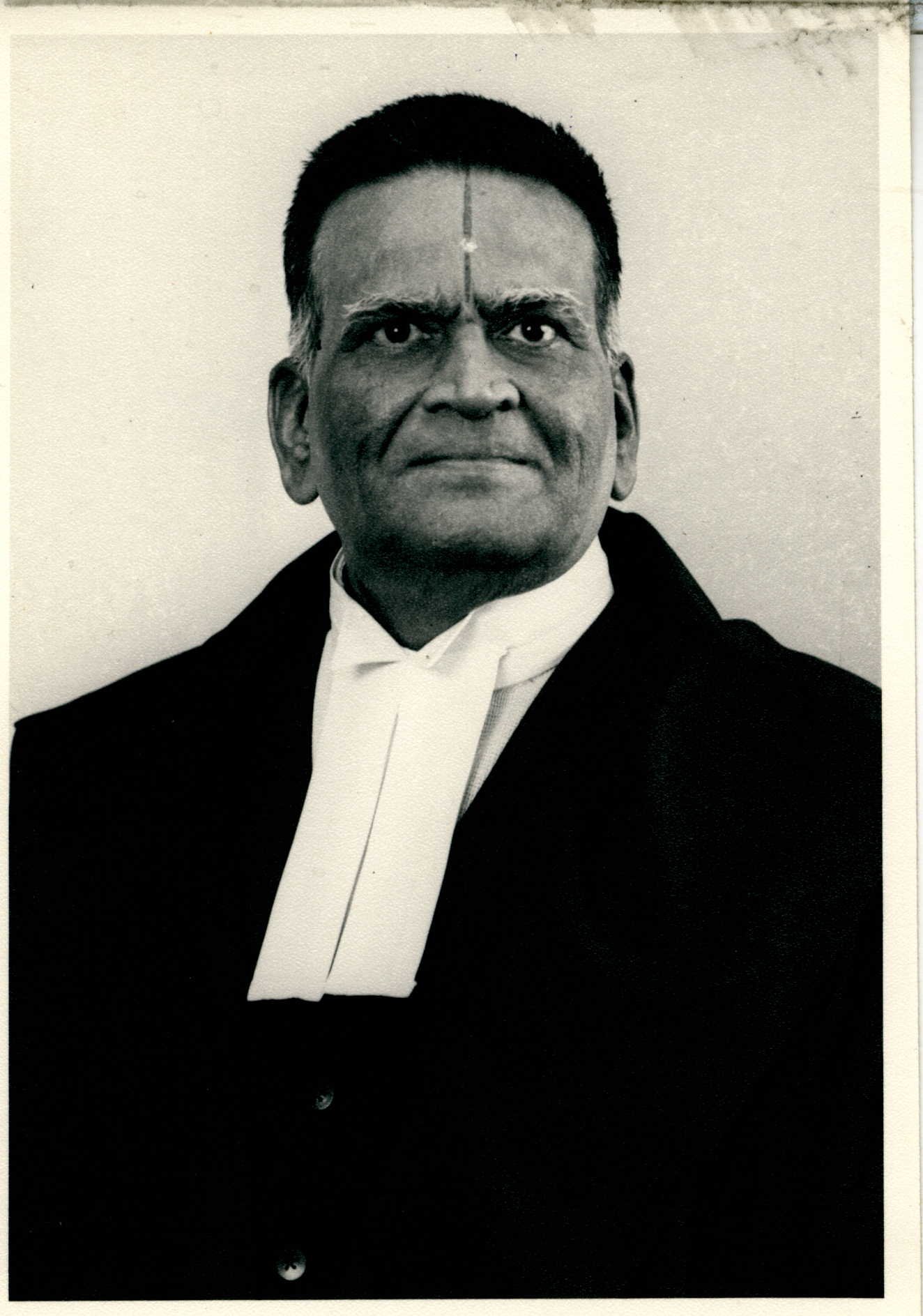
No Acts & Articles mentioned in this case
http://JUDIS.NIC.IN SUPREME COURT OF INDIA Page 1 of 5
PETITIONER:
MAFATALAL INDUSTRIES LTD. ETC. ETC.
Vs.
RESPONDENT:
UNION OF INDIA ETC. ETC.
DATE OF JUDGMENT: 19/12/1996
BENCH:
CJI, A.M. AHMADI
ACT:
HEADNOTE:
JUDGMENT:
J U D G M E N T
Ahmadi, CJI
I have had the benefit of studying the judgments of my
learned brothers Reddy, Sen and Paripoornan, JJ. Pursuant to
the discussions that I have had with them and with all my
other learned brothers on this bench, I find myself to be
broadly in agreement with the conclusions recorded by Reddy,
J., subject to the two aspects on which I have recorded my
views hereunder:
The first of these is the issue regarding the extent to
which the jurisdiction of ordinary courts is ousted in
respect of claims for refund of taxes illegally levied and
collected. In my view, it would be incorrect to hold, as
Reddy, J. has done, that every claim for refund of illegal
or unauthorised levy tax is necessarily required to be made
in accordance with the provisions of the Central Excise Act,
1944 (hereinafter called "the Excise Act"). The leading
authority governing this issue is the decision of this court
in Dhulabhai and others Vs. State of Madhya Pradesh and
Another, [1968] 3 S.C.R. 662. In this case, after analysing
the leading decisions in the field, this Court laid down the
Following propositions with a view to determining the extent
to which the jurisdiction of civil courts can be ousted:
"(1) Where the statute gives a
finality to the orders of the
special tribunals the Civil Courts'
jurisdiction must be held to be
excluded if there is adequate
remedy to do what the civil Courts
would normally do in a suit. Such
provision, however, does not
exclude those cases where the
provisions of the particular Act
have not been complied with or the
statutory tribunal has not acted
in conformity with the fundamental
principles of judicial procedure.
(2) Where there is an express bar
of the jurisdiction of the court,
an examination of the Scheme of the
http://JUDIS.NIC.IN SUPREME COURT OF INDIA Page 2 of 5
particular Act to find the adequacy
or the sufficiency of the remedies
provided may be relevant but is not
decisive to sustain the
jurisdiction of the civil court.
Where there is no express
exclusion the examination of the
remedies and the scheme of the
particular Act to find out the
intendment becomes necessary to see
if the statute creates a special
right or a liability and provides
for the determination of the right
or liability and further lays down
that all questions about the said
right and liability shall be
determined by the tribunals so
constituted, and whether remedies
normally associated with actions in
civil courts are prescribed by the
said statute or not.
(3) Challenge to the provisions of
the particular Act as ultra vires
cannot be brought before Tribunals
constituted under that Act. Even
the High Court cannot go into that
question on a revision or reference
from the decision of the Tribunals.
(4) When a provision is already
declared unconstitutional or the
constitutionality of any provision
is to be challenged, a suit is
open. A writ of certiorari may
include a direction for refund if
the claim is clearly within the
time prescribed by the Limitation
Act but it is not a compulsory
remedy to replace a suit lies.
(5) Where the particular Act
contains no machinery for refund of
tax collected in excess of
constitutional limits or illegally
collected a suit lies.
(6) Questions of the correctness
of the assessment apart from its
constitutionality are for the
decision of the authorities and a
civil suit does not lie if the
orders of the authorities are
declared to be final or there is an
express prohibition in the
particular Act. In either case the
scheme of the particular Act must
be examined because it is a
relevant enquiry.
(7) An exclusion of the
jurisdiction of the Civil Court is
not readily to be inferred unless
the conditions above set down
apply."
In view of these propositions, which have been
reiterated by this court on several occasions and thus
constitute sound law, it is clear that actions by way of
suits of petitions under Article 226 of the Constitution
cannot be completely eliminated. The claims for refund can
http://JUDIS.NIC.IN SUPREME COURT OF INDIA Page 3 of 5
arise under three broad classes and issue of ouster of
jurisdiction of civil courts can be understood by focussing
on the parameters of these classes which are as follows:
Class I: "Unconstitutional Levy"-- where claims for refund
are founded on the ground that the provision of the Excise
Act under which the tax was levied is unconstitutional.
Cases falling within this class are clearly outside the
ambit of the Excise Act. In such cases assessees can either
file a suit under Section 72 of the contract Act, 1872
(hereinafter called "Contract Act") or invoke the writ
jurisdiction of the High Court under Article 226 of the
Constitution.
Class II: "Illegal Levy"-- Where claims for refund are
founded on the grounded that there is
misinterpretation/misapplication/erroneous interpretation of
the Excise Act and the Rules framed thereunder.
Ordinarily, all such claims must be preferred under the
provisions of the Exercise Act and the Rules framed
thereunder by strictly adhering to the stipulated procedure.
However, in cases where the authorities under the Excise Act
arrogate to themselves jurisdiction even in cases where
there is clear want of jurisdiction, the situation poses
some difficulty . Reddy, J. has held that in all cases,
except where unconstitutionality is alleged, the remedy is
to be pursued within the framework of the Excise Act. This
is a dangerous proposition for it will not cater to
situations where the authorities under the Excise Act assume
authority in cases where there is an inherent lack of
jurisdiction. This is because, if one were to follow Reddy,
J.'s reasoning , the authorities under the Act will have the
final say over situations in which they totally lack
inherent jurisdiction in cases which are ultra vires the
Excise Act but intra vires the constitution. To that
extent, I would hold that in cases where the authorities
under the Excise Act initiate action though lacking in
inherent jurisdiction, the remedy by
way of a suit under Section 72 of the Contract Act or a writ
under Article 226 of the Constitution, will lie. Such a
conclusion will not frustrate the exclusion of jurisdiction
of civil courts by the Excise Act because the areas where an
authority acting under a statute is said to lack inherent
jurisdiction have been clearly demarcated by several
decisions of this court.
Class III: "Mistake of Law" -- Where claims for refund
are initiated on the basis of a decision rendered in favour
of another assessee holding the levy to be : (1)
unconstitutional; or (2) without inherent jurisdiction.
Ordinarily, no assessee can be allowed to reopen
proceedings that have been finally concluded against him on
the basis of a favourable decision in the case of another
assessee. This is because an order which has become final in
the case of an assessee will continue to stand until it is
specifically recalled or set aside in his own case.
In Cases where the levy of a tax has been held to be
(1) unconstitutional ; or (2) void for want of inherent
jurisdiction (as explained in Class II), it is open for the
assessees to take advantage of the declaration of the law so
made and claim refunds on the ground that they paid the tax
under a mistake of law. This is because such claims are
outside the ambit of the Excise Act. In such cases, the
limitation period applicable will be that specified in
section 17 (1) (c) of the Limitation Act.
Reddy, J. has moulded an exception to the above stated
principle. He has held that where a person approaches the
High Court or the Supreme Court challenging the
http://JUDIS.NIC.IN SUPREME COURT OF INDIA Page 4 of 5
constitutional Validity of a provision but fails, he cannot
take advantage of the declaration of unconstitutionality
obtained by another person on another ground; this is for
the reason that so far as he is concerned , the decision
has become final and cannot be ignored or put aside as if it
did not exist on the basis of the decision in another
person's case. However, in my opinion, since the levy of tax
has been held to be unconstitutional (which would lead to
the conclusion that it should never have been levied in the
first place) such an interpretation would be unfair to an
assessee who had the foresight to discern the
unconstitutionality of the provision (albeit on a different
ground) but was unfortunate in not being able to convince
the concerned court of the unconstitutionality of the
provision. Considering the gravity of the case, in my
opinion, it should be left open to such an assessee to use
such legal remedy as may be available to him to have the
earlier order reviewed or recalled on the basis of the order
made in the subsequent case. If he succeeds, well and good;
if he fails he must take the consequence of an adverse order
against him.
On the issue of the retrospective application of the
amended provisions of the Excise Act, I wish to emphasise
one practical difficulty that may arise. Reddy, J. has held
that in respect of proceedings that have been finally
culminated, there is no question of reopening proceedings,
and retrospectively applying the amended section 11B.
However, in respect of decrees and orders that have become
final but have not been executed, the non obstante clause,
Section 11B(3), provides as follows:
"(3) Notwithstanding anything to
the contrary contained in any
judgment, decree, order or
direction of the Appellate Tribunal
or any court or in any other
provision of this Act or the Rules
made thereunder or any other law
for the time being in force, no
refund shall be made except as
provided in sub-section (2)."
(Emphasis added)
It is, therefore, clear that in respect of such decrees
and orders, the procedure and conditions prescribed in
Section 11B will have to be complied with. However, under
the scheme of the amended Excise Act, the application for
refund which is a pre-requisite for invoking Section 11B
(2), is required to be made within six months from the
payment of duty. It is obvious that this requirement cannot
be complied with in respect of pending decrees and orders.
But it must at the same time be realised that in such a
case, the assessee was protesting against the recovery of
the excise duty from him for which he had even initiated
legal proceedings. It would therefore be in order to assume
that he had paid the duty even though he was protesting its
recovery. To ensure that such orders and decrees are not
frustrated, its must be deemed that the duties of excise in
such cases were paid "under protest" within the meaning of
the second proviso to clause (1) of Section 11B. this would
enable the assessees in such cases to file fresh
applications under Section 11B(2), thereby complying with
the scheme of the amended Excise Act.
Subject to the above, I agree with the rest of the
conclusions reached by Reddy, J.
http://JUDIS.NIC.IN SUPREME COURT OF INDIA Page 5 of 5

 Login with google
Legal Notes
Add a Note....