
The present appeal is filed by the appellant herein-a Medical Practitioner, being aggrieved and dissatisfied with the order passed by the Additional Judicial Magistrate- IV, Mathura on January 09, 2007 ...
No Acts & Articles mentioned in this case
REPORTABLE
IN THE SUPREME COURT OF INDIA
CRIMINAL APPELLATE JURISDICTION
CRIMINAL APPEAL NO. 1625 OF 2008
ARISING OUT OF
SPECIAL LEAVE PETITION (CRL.) NO. 2023 OF 2007
MAHADEV PRASAD KAUSHIK … APPELLANT
VERSUS
STATE OF U.P. & ANR. … RESPONDENTS
J U D G M E N T
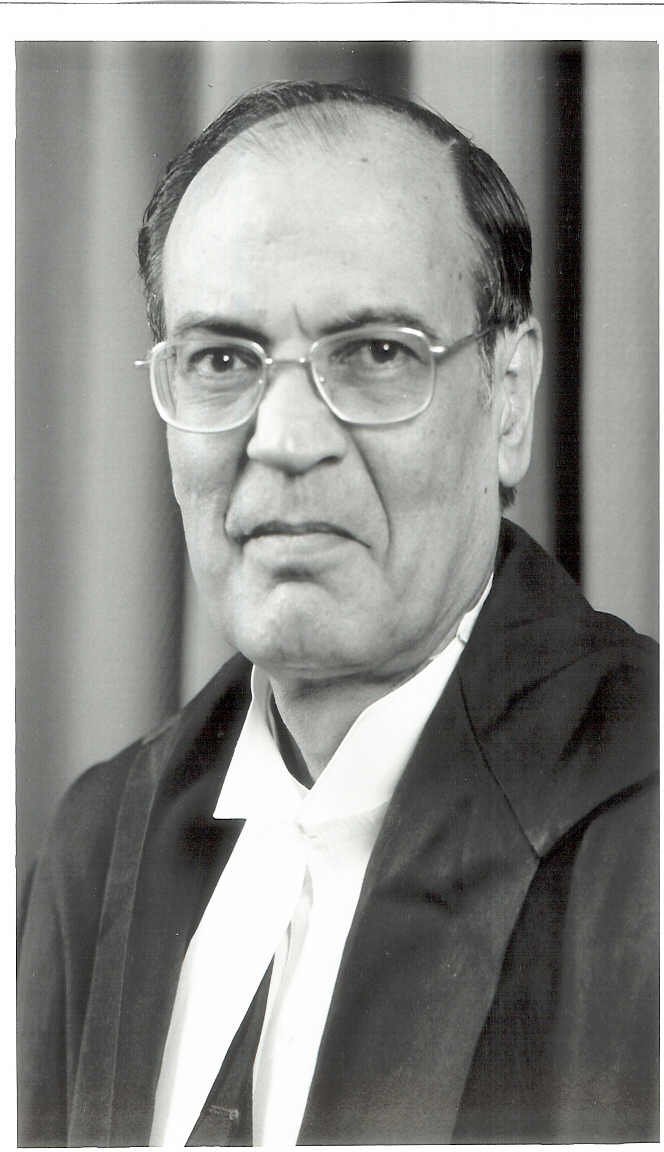
C.K. THAKKER, J.
1. Leave granted.
2. The present appeal is filed by the
appellant herein-a Medical Practitioner, being
aggrieved and dissatisfied with the order
passed by the Additional Judicial Magistrate-
IV, Mathura on January 09, 2007 in Case No. 28
of 2006 and confirmed by the High Court of
Judicature at Allahabad on February 09, 2007 in
Criminal Revision No. 366 of 2007. By the said
orders, the courts below issued summons to the
appellant for commission of offences punishable
under Sections 304, 504 and 506, Indian Penal
Code (‘IPC’ for short).
3. Briefly stated, the facts of the case
are that the appellant herein is a Medical
Practitioner. It is the case of respondent No.
2 - complainant, resident of village
Amanullahpur, Police Station Surir, District
Mathura that he is residing at the aforesaid
place. That the father of the complainant had
pain in his body. On July 04, 2001 at about
6.00 p.m., therefore, the complainant brought
his father Buddha Ram to the clinic of the
appellant herein for treatment. According to
the complainant, treatment was given by the
appellant who administered three injections to
Buddha Ram. Within half an hour, Buddha Ram
died. The appellant asked the complainant to
remove the dead-body of Buddha Ram immediately
and also threatened the complainant not to take
any action against the appellant.
2
4. It is the case of the complainant that
he immediately went to Surir Police Station to
lodge a report against the appellant but the
police refused to register any case. He,
therefore, filed a complaint in the Court of
Additional Judicial Magistrate III, Mathura on
January 03, 2002. In the said complaint, the
above facts had been stated by the complainant.
A prayer was, therefore, made to take
appropriate action against the appellant-doctor
for offences punishable under Sections 304, 504
and 506, IPC.
5. It was alleged that on July 04, 2001,
the father of the complainant died because of
negligence on the part of the appellant. It
was also stated in the complaint that the
complainant went to villege Khaira on August
20, 2001. In the morning at about 8.00 a.m.,
the appellant-accused met the complainant near
Puran Tea stall and abused the complainant
stating as to why he had filed a complaint
against the appellant. According to the
3
complainant, the appellant also took out a
revolver and threatened the complainant to kill
him unless he would withdraw the complaint. It
was stated by the complainant that since the
police refused to lodge report against the
appellant, he was constrained to file the
complaint. A prayer was, therefore, made to the
Court to direct Police Station, Surir to
register a complaint of the complainant, to
take up investigation and take appropriate
legal steps against the appellant.
6. An order was passed by the learned
Magistrate under sub-section (3) of Section 156
of the Code of Criminal Procedure, 1973
(hereinafter referred to as ‘CrPC’) and
investigation was directed to be made by the
Police Authorities. The Police Authorities, as
per the said direction made the inquiry and
submitted a final report under Section 169,
CrPC on May 27, 2002 stating therein that no
offence had been committed by the appellant
herein. In the report, it was inter alia
4
observed that Buddha Ram had suffered “heart
attack” and he died during the course of
“transit” from village Khaira before he was
brought to the clinic of Dr. Mahadev-appellant
herein. It was also observed that it had not
come on record that the deceased had taken any
treatment from Dr. Mahadev nor there was
anything to show that Dr. Mahadev administered
threat to the complainant. The investigation
was, therefore, closed.
7. According to the complainant, since
the final report submitted by the Police was
biased, factually incorrect and had been
prepared only with a view to favour the
appellant herein, Protest Petition was filed by
the complainant which was registered as Case
No. 120 of 2007 by the Court. In the Protest
Petition, it was asserted by the complainant
that his father Budha Ram had no heart trouble
at all. Buddha Ram was taken to the clinic of
the appellant. The appellant gave three
5
injections to Buddha Ram and within half an
hour, the colour of his body went blue and he
died in the clinic of the appellant. The
appellant also threatened the complainant
ordering him to take away dead body of Buddha
Ram immediately. It was, therefore, prayed
that the final report submitted by the Police
Authorities should not be accepted and the case
may be decided in accordance with law.
8. The learned Magistrate heard the
parties. After perusing the complaint and
recording statements under Section 200 of the
CrPC, the learned Magistrate observed that from
the statements of the complainant Devendra
Kumar as also PW 1 Har Dayal, PW 2 Gopal Prasad
and PW 3 Shiv Devi, it was clear that on July
04, 2001, at about 6.00 p.m., the father of the
complainant got indisposed and was taken to the
clinic of appellant-Dr. Mahadev with the help
of other village persons. Buddha Ram was given
three injections and within a short time, body
of Buddha Ram turned into blue colour and he
6
died. According to the learned Magistrate, the
allegation of the complainant was supported by
eye-witnesses.
9. The Court also noted that newspaper
reports revealed that the Chief Medical Officer
and District Collector passed orders pursuant
to which the clinic of Dr. Mahadev was closed.
It was also alleged that Dr. Mahadev was
stocking poisonous injections and illegal drugs
in his clinic. The learned Magistrate,
therefore, observed that there was sufficient
evidence to call upon the accused as to what he
had to say in the case.
10. Being aggrieved by the said order, the
appellant preferred Revision Petition No. 368
of 2007, which was dismissed by the High Court
by a brief order. The said order is challenged
by the appellant in the present appeal.
11. Notice was issued by this Court and
considering the nature of proceedings, the
Registry was directed to place the matter for
7
final hearing. That is how the matter has been
placed before us.
12. We have heard the learned counsel for
the parties.
13. The learned counsel for the appellant
contended that no case has been made out
against him and both the Courts were in error
in issuing process against the appellant for
offences punishable under Sections 304, 504 and
506, IPC. It was submitted that as per Police
Report, Buddha Ram was suffering from heart
ailment and died before he reached clinic of
the appellant. The said report ought to have
been accepted by the Court.
14. In the alternative, the learned
counsel submitted that serious error of law has
been committed by the Courts below in issuing
process for commission of offences punishable
under Sections 304, 504 and 506, IPC. It was
submitted that so far as Sections 504 and 506,
IPC are concerned, even the learned Magistrate
8
has not stated anything as to why process for
the aforesaid two sections should be issued.
15. As to issuance of process under
Section 304, IPC, the counsel submitted that
even if it is assumed for the sake of argument
that whatever is stated by the complainant is
true, the appellant is a Doctor and it is well-
established that in exercise of his
professional conduct, no criminal liability can
be imposed on him. The process under Section
304, therefore, deserves to be quashed.
According to the learned counsel, at the most
process could have been issued under Section
304A and not under Section 304, IPC. There can
neither be intention (mens rea) nor
‘knowledge’ on the part of the appellant that
his act would result or likely to cause death
of the patient. Hence, even if all the
allegations are treated to be true, it is an
act of negligence covered by Section 304A, IPC.
9
16. The learned counsel for the
complainant, on the other hand, supported the
order of the trial Court and confirmed by the
High Court. It was submitted that the father of
the complainant was admitted to the clinic of
the appellant, the appellant gave injections
and within half an hour, the patient lost his
life. Section 304, IPC was, therefore, rightly
invoked. Since the appellant had administered
threat, the Court was right in issuing process
for offences punishable under Sections 504 and
506, IPC as well. The High Court upheld the
action. Hence, no interference with the orders
of the Courts below is called for.
17. Having heard the learned counsel for
the parties and having applied our mind to the
material on record, in our opinion, the appeal
deserves to be partly allowed.
18. So far as threat said to have
administered by the appellant herein, it may be
noted that the learned Magistrate, in the order
dated January 09, 2007 did not even refer to
10
such threat. In the said order, the learned
Magistrate, dealing with the incident, dated
July 04, 2001, observed that the complainant
took his father Buddha Ram to the clinic of the
appellant and the appellant gave three
injections to the patient. Within some time,
Buddha Ram died. Over and above the
complainant, three witnesses also stated about
the said fact. The clinic of the appellant was
also ordered to be closed. There was,
therefore, ‘sufficient evidence’ to issue
process against the appellant in relation to
the said allegation.
19. But in the operative part of the
order, the learned Magistrate said;
“Summons for the offence punishable
under Sections 304, 504, 506 of Indian
Penal Code are issued against the
accused Dr. Mahadev. Applicant is
directed to file the process fee
within 7 days. Summons be issued on
filing the process fee. File be
listed on 26.02.2007 for appearance”.
(emphasis supplied)
11
20. From what is stated hereinabove,
it is clear that in the body of the order,
there is no whisper about the threat alleged to
have been given by the appellant to the
complainant nor the learned Magistrate recorded
even a prima facie finding as to such threat.
The High Court also, in the impugned order,
does not refer to such intimidation. On the
contrary, the High Court observed that the
allegations were sufficient to summon the
appellant for causing death of Buddha Ram under
Section 304, IPC.
21. In our considered opinion, therefore,
the submission of the learned counsel for the
appellant is well-founded that on the facts and
in the circumstances of the case, no summons
could have been issued to the appellant-accused
for commission of offences punishable under
Sections 504 and 506, IPC. We uphold the
contention and quash proceedings initiated
against the appellant herein for offences
punishable under Sections 504 and 506, IPC.
12
22. The question then is as regards
issuance of summons under Section 304, IPC.
Section 304 reads thus;
304. Punishment for culpable homicide
not amounting to murder
Whoever commits culpable homicide
not amounting to murder shall be
punished with imprisonment for life,
or imprisonment of either description
for a term which may extend to ten
years, and shall also be liable to
fine, if the act by which the death is
caused is done with the intention of
causing death, or of causing such
bodily injury as is likely to cause
death;
or with imprisonment of either
description for a term which may
extend to ten years, or with fine, or
with both, if the act is done with the
knowledge that it is likely to cause
death, but without any intention to
cause death, or to cause such bodily
injury as is likely to cause death.
23. Plain reading of the above section
makes it clear that it is in two parts. The
first part of the section is generally referred
to as “Section 304, Part I”, whereas the second
part as “Section 304, Part II”. The first part
13
applies where the accused causes bodily injury
to the victim with intention to cause death; or
with intention to cause such bodily injury as
is likely to cause death. Part II, on the other
hand, comes into play when death is caused by
doing an act with knowledge that it is likely
to cause death, but without any intention to
cause death or to cause such bodily injury as
is likely to cause death.
24. The Makers of the Code observed;
“The most important consideration
upon a trial for this offence is the
intention or knowledge with which the
act which caused death, was done. The
intention to cause death or the
knowledge that death will probably be
caused, is essential and is that to
which the law principally looks. And
it is of the utmost importance that
those who may be entrusted with
judicial powers should clearly
understand that no conviction ought to
take place, unless such intention or
knowledge can from the evidence be
concluded to have really existed”.
25. The Makers further stated;
“It may be asked how can the
existence of the requisite intention
or knowledge be proved, seeing that
14
these are internal and invisible acts
of the mind? They can be ascertained
only from external and visible acts.
Observation and experience enable us
to judge of the connection between
men’s conduct and their intentions. We
know that a sane man does not usually
commit certain acts heedlessly or
unintentionally and generally we have
no difficulty in inferring from his
conduct what was his real intention
upon any given occasion”.
26. Before Section 304 can be invoked, the
following ingredients must be satisfied;
(i) the death of the person must have been
caused;
(ii)such death must have been caused by the
act of the accused by causing bodily
injury;
(iii) there must be an intention on the part
of the accused
(a)to cause death; or
(b) to cause such bodily injury
which is likely to cause death;
(Part I) or
(iv) there must be knowledge on the part
of the accused that the bodily
15
injury is such that it is likely to
cause death (Part II).
27. Section 304A was inserted by the
Indian Penal Code (Amendment) Act, 1870 (Act
XXVII of 1870) and reads thus;
304A. Causing death by negligence
Whoever causes the death of any
person by doing any rash or negligent
act not amounting to culpable
homicide, shall be punished with
imprisonment of either description for
a term which may extend to two years,
or with fine, or with both.
28. The section deals with homicidal death
by rash or negligent act. It does not create a
new offence. It is directed against the
offences outside the range of Sections 299 and
300, IPC and covers those cases where death has
been caused without ‘intention’ or
‘knowledge’. The words “not amounting to
culpable homicide” in the provision are
significant and clearly convey that the section
seeks to embrace those cases where there is
neither intention to cause death, nor knowledge
16
that the act done will in all probability
result into death. It applies to acts which are
rash or negligent and are directly the cause of
death of another person.
29. There is thus distinction between
Section 304 and Section 304A. Section 304A
carves out cases where death is caused by doing
a rash or negligent act which does not amount
to culpable homicide not amounting to murder
within the meaning of Section 299 or culpable
homicide amounting to murder under Section 300,
IPC. In other words, Section 304A excludes all
the ingredients of Section 299 as also of
Section 300. Where intention or knowledge is
the ‘motivating force’ of the act complained
of, Section 304A will have to make room for the
graver and more serious charge of culpable
homicide not amounting to murder or amounting
to murder as the facts disclose. The section
has application to those cases where there is
neither intention to cause death nor knowledge
17
that the act in all probability will cause
death.
30. In Empress v. Idu Beg, (1881) ILR 3
All 776, Straight, J. made the following
pertinent observations which have been quoted
with approval by various Courts including this
Court;
“Criminal rashness is hazarding a
dangerous or wanton act with the
knowledge that it is so, and that it
may cause injury, but without
intention to cause injury, or
knowledge that it will probably be
caused. The criminality lies in
running the risk of doing such an act
with recklessness or indifference as
to the consequences. Criminal
negligence is the gross and culpable
neglect or failure to exercise that
reasonable and proper care and
precaution to guard against injury
either to the public generally or to
an individual in particular, which,
having regard to all the circumstances
out of which the charge has arisen, it
was the imperative duty of the accused
person to have adopted”.
31. Though the term ‘negligence’ has not
been defined in the Code, it may be stated that
negligence is the omission to do something
which a reasonable man, guided upon those
18
considerations which ordinarily regulate the
conduct of human affairs would do, or doing
something which a reasonable and prudent man
would not do.
32. The learned counsel for the appellant-
accused submitted that by no stretch of
imagination, it can be said that the appellant
while administering injections to deceased
Buddha Ram said to have committed an offence
punishable under Section 304, IPC. It can
never be said that the death of Buddha Ram had
been caused by the appellant by doing the act
of giving injections with intention to cause
his death or to cause such bodily injury as is
likely to cause death. Likewise, it is
impossible to think that the purported act has
been done by the appellant-accused with the
knowledge that in all probability, it would
result into the death of Buddha Ram.
33. In our opinion, the submission of the
learned counsel for the appellant-accused is
19
well-taken and deserves acceptance. Even if
the averments made in the complaint are
accepted in their entirety, the act in question
of giving injections to deceased Buddha Ram
would not fall within the mischief of Section
304, IPC. In our opinion, therefore, no process
could have been issued against the appellant-
accused for commission of an offence punishable
under the said section. To that extent,
therefore, the plea raised on behalf of the
appellant must be upheld.
34. The next question relates to
applicability of Section 304A, IPC. The
learned counsel for the appellant submitted
that the law on the point is settled by various
pronouncements of this Court, the latest in the
line is a three-Judge Bench decision in Jacob
Mathew v. State of Punjab & Anr., (2005) 6 SCC
1. In that case, one Jiwan Lal Sharma, father
of the complainant was admitted as a patient in
a hospital. Jiwan Lal felt difficulty in
breathing. The complainant’s elder brother
20
approached the duty Nurse who tried to contact
a doctor, but no doctor was available for about
half an hour. The appellant then reached to the
room of the patient. Oxygen cylinder was
brought and an attempt was made to ensure that
breathing problem of the patient does not
aggravate. The oxygen cylinder, however, was
not working. Another cylinder was brought. But
by the time it could be made active, the
patient died. An offence was registered under
Section 304A, IPC against the doctor which was
challenged by him under Section 482, CrPC and
prayer was made for quashing of criminal
proceedings. The High Court dismissed the
petition. The aggrieved appellant approached
this Court.
35. Considering the relevant provisions of
CrPC as also negligence by professionals, this
Court held that in every mishap or death during
medical treatment, a medical man cannot be
proceeded against in a criminal Court.
Criminal prosecutions of doctors without
21
adequate medical opinion pointing to their
guilt would be doing disservice to the
community at large. If the Courts were to
impose criminal liability on hospitals and
doctors for everything that goes wrong, the
doctors would be more worried about their own
safety than giving all best treatment to their
patients. It would also lead to shaking the
mutual confidence between the doctor and
patient. Every failure or misfortune in the
hospital or in a clinic of a doctor cannot be
termed as act of negligence so as to try him of
an offence punishable under Section 304A of the
Code.
36. The Court observed that a physician
would not assure the patient of full recovery
in each and every case. He cannot and does not
guarantee that the result of his treatment
would invariably be beneficial much less to the
extent of 100% for the person treated by him.
The only guarantee which a professional can
give or can be understood to have given by
22
necessary implication is that he is possessed
of requisite skill in that branch or profession
which he is practising and while undertaking
performance of the task entrusted to him, he
would be exercising his skill with reasonable
competence.
37. In the light of the above test, the
Court stated;
“Judged by this standard, a
professional may be held liable for
negligence on one of two findings:
either he was not possessed of the
requisite skill which he professed to
have possessed, or, he did not
exercise, with reasonable competence
in the given case, the skill which he
did possess”.
38. The standard to be applied for judging
whether a person charged has been negligent or
not would be that of an ordinary competent
person exercising ordinary skill in that
profession.
39. It was further observed that mere
deviation from normal professional practices is
not necessarily evidence of negligence. An
23
error of judgment on the part of the
professional is also not negligence per se.
Higher the acuteness in emergency and higher
the complication, more are the chances of error
of judgment. At times, the professional is
confronted with making a choice between the
devil and the deep sea and he has to choose the
lesser evil. Medical profession is often
called upon to adopt a procedure which involves
higher element of risk, but which a doctor
honestly believes as providing greater chances
of success for the patient rather than a
procedure involving lesser risk but higher
chances of failure. Which course is more
appropriate to follow would depend on facts and
circumstances of a given case.
40. It was, therefore, held that the
prosecution of the doctor was ill-founded and
accordingly, it was quashed.
41. Strongly relying on the above decision
in Jacob Mathew reiterated in State of Punjab
v. Shiv Ram & Ors., (2005) 7 SCC 1, the learned
24
counsel submitted that in the case on hand,
criminal prosecution of the appellant-accused
was not well-founded. At the most, it was a
case of ‘error of judgment’ on the part of the
appellant. Even if it were so, no complaint
could have been filed by the complainant nor
the appellant could be summoned by a Court
under Section 304A, IPC. The criminal
prosecution, therefore, deserves to be quashed.
42. In our opinion, however, the learned
counsel for the respondent-complainant is right
in submitting that the trial Court found prima
facie case against the appellant. We have
already noted in the earlier part of the
judgment that the complaint of Budddha Ram was
only as regards pain in body. It is no doubt
true that in the final report submitted by the
Police under Section 169, CrPC, it was stated
that the deceased was suffering from heart
ailment and before he could reach the clinic of
the appellant herein, he died in transit. The
case of the complainant, on the other hand, was
25
that the said report was not only incorrect but
was biased and had been prepared only with a
view to oblige and favour the appellant. It was
also asserted that immediately, the complainant
went to the Police Station to lodge a complaint
against the appellant but the police refused to
lodge such complaint. It was because of the
order passed by the Court that the Police
Authorities had to carry out the investigation.
One sided investigation then had been made by
the Police Authorities and the report was
submitted favouring the appellant which
compelled the complainant to file Protest
Petition which was heard by the learned
Magistrate and on the basis of statements
recorded under Section 200, CrPC that the
summons was issued against the appellant.
43. In the circumstances, in our opinion,
though on the facts and in the circumstances of
the case, no summons could have been issued by
the trial Court against the appellant for an
offence punishable under Section 304, IPC,
26
summons for an offence under Section 304A, IPC
ought to have been issued. The decisions on
which strong reliance has been placed by the
learned counsel for the appellant expressly
allows such a step in certain circumstances,
such as absence of possession of requisite
skill or failure to exercise reasonable care by
a professional. Nothing has been stated by the
appellant about his qualifications or of
‘requisite skill’ in the profession he was
practising. There was also nothing to show that
before administering injections, he had
undertaken reasonable care ought to have been
taken by a professional.
44. In this connection, we may refer to a
decision of the High Court of Madhya Pradesh in
Khushaldas Pammandas (Dr.) v. State of Madhya
Pradesh, AIR 1960 MP 50. In that case, the
appellant, Hakim examined M, who was ‘tired’
and ‘exhausted’. The Hakim found that M had no
temperature. The Hakim, however, advised M to
take a Procaine Penicillin injection. Injection
27
was then given to M, who perspired profusely,
started vomiting and died. The Hakim was
prosecuted for commission of an offence
punishable under Section 304A, IPC and was
convicted.
45. Upholding the conviction, the High
Court observed that a person totally ignorant
of science of medicine or practice of surgery
cannot undertake a treatment or perform
operation. If he does so, it is a material
circumstance to show his gross rashness and
negligence in undertaking the treatment so as
to attract Section 304A, IPC.
46. On the facts of the case, ailment of
Buddha Ram prima facie could not be said to be
of such a serious nature which would result in
death during his treatment. The allegation of
the complainant which has been corroborated by
statements of other eye-witnesses is that
immediately after administration of three
injections, the colour of the body of Buddha
Ram turned into blue and within half an hour he
28
died. If in the light of the above facts and
circumstances, proceedings have been initiated
against the appellant for an offence punishable
under Section 304A, IPC (though not under
Section 304, IPC), it cannot be said that no
such action could be taken. We are, therefore,
of the view that submission on behalf of the
learned counsel for the complainant deserves to
be accepted to the above extent.
47. For the foregoing reasons, in our
judgment, the appeal deserves to be partly
allowed. So far as issuance of process for
offences punishable under Sections 504 and 506,
IPC is concerned, it is liable to be quashed
and is hereby quashed. Likewise, process for an
offence punishable under Section 304, IPC is
ill-conceived on the facts of the case and the
process could only be issued by the learned
Magistrate to the appellant-accused for an
offence punishable under Section 304A, IPC. The
appeal is accordingly allowed to the extent
indicated above.
29
48. Before parting with the matter, we may
clarify that we have not entered into merits of
the matter or allegations and counter
allegations by the parties and we may not be
understood to have expressed any opinion one
way or the other. All observations made by us
hereinabove have been made only for the limited
purpose of deciding the issue before us. As
and when the matter will come before the Court,
it will be considered on its own merits without
being inhibited or influenced by the
observations made by the trial Court, by the
High Court or by us in the present order.
49. Ordered accordingly.
…………………………………………………J.
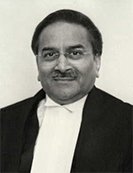
(C.K. THAKKER)
NEW DELHI, …………………………………………………J.
October 17, 2008. (D.K. JAIN)
30

 Login with google
Legal Notes
Add a Note....