
As per case facts, an appeal was filed for enhancement of compensation after a Motor Accident Claims Tribunal awarded an amount for the death of a homemaker in a road ...
FAO-1565-2011 (O&M) -1-
IN THE HIGH COURT OF PUNJAB & HARYANA
AT CHANDIGARH
FAO-1565-2011 (O&M)
MAHESH KUMAR AND ORS. ......Appellants
Vs.
GAJENDER @ GAJIA AND ORS. ......Respondents
Reserved on: 09.02.2026
Pronounced on: 11.02.2026
Uploaded on: 12.02.2026
Whether only the operative part of the judgment is pronounced? NO
Whether full judgment is pronounced? YES
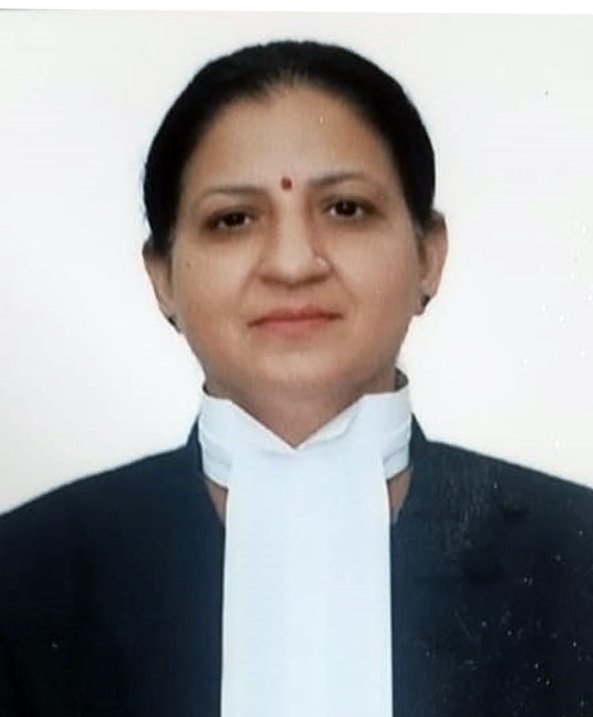
CORAM: HON'BLE MRS. JUSTICE SUDEEPTI SHARMA
Present: Mr. Mohit Garg, Advocate
for the appellant.
Ms. Vandana Malhotra, Advocate (through v.c.)
Ms. Manvi Verma, Advocate
for respondent No.6-Insurance Company.
****
SUDEEPTI SHARMA J.
1. The present appeal has been preferred against the award dated
22.09.2009 passed in the claim petition filed under Section 166 of the Motor
Vehicles Act, 1988 (in short ‘1988 Act’), by the learned Motor Accident
Claims Tribunal, Bhiwani (in short ‘the Tribunal’) for enhancement of
compensation, granted to the appellants/claimants to the tune of
Rs.3,12,000/- along with interest @ 7% per annum on account of death of
deceased Smt. Anokha in a Motor Vehicular Accident, occurred on
01.02.2007.
FAO-1565-2011 (O&M) -2-
2. As sole issue for determination in the present appeal is confined
to quantum of compensation awarded by the learned Tribunal, a detailed
narration of the facts of the case is not required to be reproduced and is
skipped herein for the sake of brevity.
SUBMISSIONS OF LEARNED COUNSEL FOR THE PARTIES
3. The learned counsel for the appellants/claimants contends that
the compensation awarded by the learned Tribunal is on the lower side and
deserves to be enhanced. Therefore, he prays that the present appeal be
allowed and the compensation awarded to the appellants/claimants be
enhanced, as per latest law.
4. Per contra, learned counsel for the respondent No.6-Insurance
Company, however, vehemently argues on the lines of the award and
contends that the amount of compensation as assessed by Ld. Tribunal, has
rightly been granted to the appellants/claimants. She further contends that
respondent No.6-Insurance Company has preferred FAO-2801-2010,
FAO-2802 to 2816-2010 and CR-5035-2010, challenging the liability as
affixed upon Insurance Company. She further contends that vide order dated
19.01.2011, Coordinate Bench of this Court has set aside the liability of
Insurance Company and made owner of the offending vehicle to pay the
compensation to the claimants. She therefore prays that respondent No.6-
Insurance Company should not be made liable to pay the compensation.
Therefore, she prays for dismissal of the present appeal.
5. I have heard learned counsel for the parties and perused the
whole record of this case.
FAO-1565-2011 (O&M) -3-
SETTLED LAW ON COMPENSATION
6. Hon’ble Supreme Court in the case of Sarla Verma Vs. Delhi
Transport Corporation and Another [(2009) 6 Supreme Court Cases 121],
laid down the law on assessment of compensation and the relevant paras of
the same are as under:-
“30. Though in some cases the deduction to be made towards
personal and living expenses is calculated on the basis of units
indicated in Trilok Chandra, the general practice is to apply
standardised deductions. Having a considered several
subsequent decisions of this Court, we are of the view that
where the deceased was married, the deduction towards
personal and living expenses of the deceased, should be one-
third (1/3rd) where the number of dependent family members is
2 to 3, one-fourth (1/4th) where the number of dependent family
members is 4 to 6, and one-fifth (1/5th) where the number of
dependent family members exceeds six.
31. Where the deceased was a bachelor and the claimants are
the parents, the deduction follows a different principle. In
regard to bachelors, normally, 50% is deducted as personal and
living expenses, because it is assumed that a bachelor would
tend to spend more on himself. Even otherwise, there is also the
possibility of his getting married in a short time, in which event
the contribution to the parent(s) and siblings is likely to be cut
drastically. Further, subject to evidence to the contrary, the
father is likely to have his own income and will not be
considered as a dependant and the mother alone will be
FAO-1565-2011 (O&M) -4-
considered as a dependant. In the absence of evidence to the
contrary, brothers and sisters will not be considered as
dependants, because they will either be independent and
earning, or married, or be dependent on the father.
32. Thus even if the deceased is survived by parents and
siblings, only d the mother would be considered to be a
dependant, and 50% would be treated as the personal and
living expenses of the bachelor and 50% as the contribution to
the family. However, where the family of the bachelor is large
and dependent on the income of the deceased, as in a case
where he has a widowed mother and large number of younger
non-earning sisters or brothers, his personal and living
expenses may be restricted to one-third and contribution to the
family will be taken as two-third.
* * * * *
*
42. We therefore hold that the multiplier to be used should be as
mentioned in Column (4) of the table above (prepared by
applying Susamma Thomas³, Trilok Chandra and Charlie),
which starts with an operative multiplier of 18 (for the age
groups of 15 to 20 and 21 to 25 years), reduced by one unit for
every five years, that is M-17 for 26 to 30 years, M-16 for 31 to
35 years, M-15 for 36 to 40 years, M-14 for 41 to 45 years, and
M-13 for 46 to 50 years, then reduced by two units for every
five years, that is, M-11 for 51 to 55 years, M-9 for 56 to 60
years, M-7 for 61 to 65 years and M-5 for 66 to 70 years.
FAO-1565-2011 (O&M) -5-
7. Hon’ble Supreme Court in the case of National Insurance
Company Ltd. Vs. Pranay Sethi & Ors. [(2017) 16 SCC 680] has clarified
the law under Sections 166, 163-A and 168 of the Motor Vehicles Act, 1988,
on the following aspects:-
(A) Deduction of personal and living expenses to determine
multiplicand;
(B) Selection of multiplier depending on age of deceased;
(C) Age of deceased on basis for applying multiplier;
(D) Reasonable figures on conventional heads, namely, loss
of estate, loss of consortium and funeral expenses, with
escalation;
(E) Future prospects for all categories of persons and for
different ages: with permanent job; self-employed or fixed
salary.
The relevant portion of the judgment is reproduced as under:-
“52. As far as the conventional heads are concerned,
we find it difficult to agree with the view expressed in
Rajesh². It has granted Rs.25,000 towards funeral
expenses, Rs 1,00,000 towards loss of consortium and Rs
1,00,000 towards loss of care and guidance for minor
children. The head relating to loss of care and minor
children does not exist. Though Rajesh refers to Santosh
Devi, it does not seem to follow the same. The
conventional and traditional heads, needless to say,
cannot be determined on percentage basis because that
would not be an acceptable criterion. Unlike
FAO-1565-2011 (O&M) -6-
determination of income, the said heads have to be
quantified. Any quantification must have a reasonable
foundation. There can be no dispute over the fact that
price index, fall in bank interest, escalation of rates in
many a field have to be noticed. The court cannot remain
oblivious to the same. There has been a thumb rule in this
aspect. Otherwise, there will be extreme difficulty in
determination of the same and unless the thumb rule is
applied, there will be immense variation lacking any kind
of consistency as a consequence of which, the orders
passed by the tribunals and courts are likely to be
unguided. Therefore, we think it seemly to fix reasonable
sums. It seems to us that reasonable figures on
conventional heads, namely, loss of estate, loss of
consortium and funeral expenses should be Rs.15,000,
Rs.40,000 and Rs.15,000 respectively. The principle of
revisiting the said heads is an acceptable principle. But
the revisit should not be fact-centric or quantum-centric.
We think that it would be condign that the amount that we
have quantified should be enhanced on percentage basis
in every three years and the enhancement should be at
the rate of 10% in a span of three years. We are disposed
to hold so because that will bring in consistency in
respect of those heads.
* * * *
*
FAO-1565-2011 (O&M) -7-
59.3. While determining the income, an addition of 50%
of actual salary to the income of the deceased towards
future prospects, where the deceased had a permanent
job and was below the age of 40 years, should be made.
The addition should be 30%, if the age of the deceased
was between 40 to 50 years. In case the deceased was
between the age of 50 to 60 years, the addition should be
15%. Actual salary should be read as actual salary less
tax.
59.4. In case the deceased was self-employed (or) on a
fixed salary, an addition of 40% of the established
income should be the warrant where the deceased was
below the age of 40 years. An addition of 25% where the
deceased was between the age of 40 to 50 years and 10%
where the deceased was between the age of 50 to 60
years should be regarded as the necessary method of
computation. The established income means the income
minus the tax component.
59.5. For determination of the multiplicand, the
deduction for personal and living expenses, the tribunals
and the courts shall be guided by paras 30 to 32 of Sarla
Verma⁴ which we have reproduced hereinbefore.
59.6. The selection of multiplier shall be as indicated in
the Table in Sarla Verma¹ read with para 42 of that
judgment.
FAO-1565-2011 (O&M) -8-
59.7. The age of the deceased should be the basis for
applying the multiplier.
59.8. Reasonable figures on conventional heads, namely,
loss of estate, loss of consortium and funeral expenses
should be Rs 15,000, Rs 40,000 and Rs 15,000
respectively. The aforesaid amounts should be enhanced
at the rate of 10% in every three years.”
8. Hon’ble Supreme Court in the case of Magma General
Insurance Company Limited Vs. Nanu Ram alias Chuhru Ram &
Others [2018(18) SCC 130] after considering Sarla Verma (supra) and
Pranay Sethi (Supra) has settled the law regarding consortium. Relevant
paras of the same are reproduced as under:-
“21. A Constitution Bench of this Court in Pranay Sethi²
dealt with the various heads under which compensation
is to be awarded in a death case. One of these heads is
loss of consortium. In legal parlance, "consortium" is a
compendious term which encompasses "spousal
consortium", "parental consortium", and "filial
consortium". The right to consortium would include the
company, care, help, comfort, guidance, solace and
affection of the deceased, which is a loss to his family.
With respect to a spouse, it would include sexual
relations with the deceased spouse.
21.1. Spousal consortium is generally defined as rights
pertaining to the relationship of a husband-wife which
allows compensation to the surviving spouse for loss of
FAO-1565-2011 (O&M) -9-
"company, society, cooperation, affection, and aid of the
other in every conjugal relation".
21.2. Parental consortium is granted to the child upon
the premature death of a parent, for loss of "parental aid,
protection, affection, society, discipline, guidance and
training".
21.3. Filial consortium is the right of the parents to
compensation in the case of an accidental death of a
child. An accident leading to the death of a child causes
great shock and agony to the parents and family of the
deceased. The greatest agony for a parent is to lose their
child during their lifetime. Children are valued for their
love, affection, companionship and their role in the
family unit.
22. Consortium is a special prism reflecting changing
norms about the status and worth of actual relationships.
Modern jurisdictions world-over have recognised that the
value of a child's consortium far exceeds the economic
value of the compensation awarded in the case of the
death of a child. Most jurisdictions therefore permit
parents to be awarded compensation under loss of
consortium on the death of a child. The amount awarded
to the parents is a compensation for loss of the love,
affection, care and companionship of the deceased child.
23. The Motor Vehicles Act is a beneficial legislation
aimed at providing relief to the victims or their families,
FAO-1565-2011 (O&M) -10-
in cases of genuine claims. In case where a parent has
lost their minor child, or unmarried son or daughter, the
parents are entitled to be awarded loss of consortium
under the head of filial consortium. Parental consortium
is awarded to children who lose their parents in motor
vehicle accidents under the Act. A few High Courts have
awarded compensation on this count. However, there was
no clarity with respect to the principles on which
compensation could be awarded on loss of filial
consortium.
24. The amount of compensation to be awarded as
consortium will be governed by the principles of
awarding compensation under "loss of consortium" as
laid down in Pranay Sethi². In the present case, we deem
it appropriate to award the father and the sister of the
deceased, an amount of Rs 40,000 each for loss of filial
consortium.
9. A perusal of the impugned award shows that the age of the
deceased was 35 years at the time of accident. The factum of age is not
disputed by either of the party before this Court. Consequently, the age of
the deceased is taken as 35 years.
10. A further perusal of the award reveals that deceased was stated
to be a homemaker. Her monthly income was asserted to be Rs.15,000/- but
no documentary evidence substantiating her income was produced before the
learned Tribunal. However, the learned Tribunal has erred in taking income
FAO-1565-2011 (O&M) -11-
of deceased housewife as Rs.3,000/- per month by taking into account the
minimum wages for unskilled labourers in the State of Haryana.
11. This Court in FAO-1292-2006, titled as ‘Jasbir Singh and
another Vs. Surjit Singh and others’, decided on 22.03.2018 while
assessing the notional income of the housewife has held as under:-
“In FAO No. 218 of 2014, a co-ordinate Bench of this
Court, while relying upon the principles laid down in
Lata Wadhwa and others v. State of Bihar and others
2001(4) RCR(Civil) 673), made the following
observations:-
“Learned counsel for the appellant has argued that
even while noticing that the income of a skilled
worker in 2012 was approximately Rs.8000/- the
Tribunal has wrongly assessed the income of the
deceased as Rs.9000/-. As per him once the
notional income had been taken a deduction had to
be made for personal expenses. This argument is
flawed. In Lata Wadhwa and others v. State of
Bihar and others reported as 2001(4) RCR (Civil)
673 (where the accident had taken place in 1981)
the Hon'ble Supreme Court evaluated the
contribution of a house wife at Rs.3000/-per month.
The accident in the present case took place after 23
years. In my considered opinion to tag a house wife
as a 'skilled worker' alone does not do complete
justice to her multifarious role as a home manager.
Keeping in view the lapse of 23 years between the
accident in the case of Lata Wadhwa and the
present accident and my conclusion that a house
wife is something more than a mere skilled worker
it would not be unreasonable to estimate the
contribution of the deceased in the present case at
FAO-1565-2011 (O&M) -12-
a higher figure. On the whole I see no reason for
reducing the quantum."
7. I find sufficient reason to follow the judgment in FAO
No. 218 of 2014, particularly as I am informed that the
Special Leave Petition (SLP) filed against the order in
this case has been dismissed by the Hon'ble Supreme
Court. Similarly, the SLP filed in the other case cited by
the appellants has also met the same fate. Consequently,
these orders have attained finality, leaving no scope for
further dispute regarding their binding nature.
8. It is imperative to acknowledge the multifaceted role of
a housewife as a homemaker. Her contributions extend
beyond measurable economic parameters, encompassing
household management, child care, emotional support,
and the upkeep of familial stability. These services,
though often unrecognized in monetary terms, are
invaluable to the functioning and well- being of a
household. In assessing compensation, the court must
factor in this indispensable contribution, which would
otherwise necessitate considerable expenditure if
outsourced. In view of the above, it is just and reasonable
to determine the monthly income of the deceased
Charanjit Kaur, housewife at Rs.9,000/- per month,
therefore, the award requires interference by the Court.”
12. In Jasbir Singh’s case (supra), the notional income of a
housewife was taken as Rs.9000/-. Therefore, in the present case, with the
accident occurring in 2007, and in view of sustained inflation, the rising cost
of living, and jurisprudential acknowledgment of the far-reaching economic
contribution of homemakers, it is both just and reasonable to reassess the
notional income of the deceased.
FAO-1565-2011 (O&M) -13-
13. The work of a housewife transcends caretaking embracing
preparation of meals for the entire family; procurement of groceries and
household supplies; cleaning and maintenance of the house and
surroundings; financial planning and budget management; child care and
education; tending to elderly dependents; coordinating repairs and
homebased healthcare etc. These services, if procured in the open market,
would command substantial remuneration, underscoring the integral role
played by a homemaker in family stability.
14. In light of the above legal position and having due regard to the
facts and circumstances of the present case, this Court finds it appropriate to
assess the notional income of the deceased-Smt. Anokha at Rs.6,000/- per
month.
15. The learned Tribunal has erred in not adding future prospects
while calculating the compensation.
16. In addition to this, no amount was awarded under the head of
loss of estate, funeral expenses and loss of consortium. Moreover, learned
Tribunal has erred in applying multiplier of 13 instead of 16. Therefore, the
award requires indulgence of this Court.
CONCLUSION
17. In view of the law laid down by the Hon’ble Supreme Court in
the above referred to judgments, the present appeal is allowed. The award
dated 22.09.2009 passed by the learned Motor Accident Claims Tribunal,
Bhiwani is modified accordingly. The appellants/claimants is entitled to the
enhanced amount of compensation from the respondents, as per the
calculations made here-under:-
18. So far as the interest part is concerned, as held by Hon’ble
Supreme Court in Dara Singh @ Dhara Banjara Vs. Shyam Singh Varma
2019 ACJ 3176 and R.Valli and Others VS. Tamil Nandu State Transport
Corporation (2022) 5 Supreme Court Cases 107, the amount so
calculated shall carry an interest @ 9% per annum from the date of filing of
the claim petition, till the date of realization.
19. So far as the liability to pay compensation is concerned,
Coordinate Bench of this Court in FAO-2801-2010, FAO-2802 to 2816-2010
and CR-5035-2010 has set aside the liability of Insurance Company and
made owner of the offending vehicle to pay the compensation to the
claimants. Consequently, the respondent No.2 is directed to deposit the
enhanced amount along with interest with the Tribunal within a period of
two months from the date of receipt of copy of this judgment. The Tribunal
is directed to disburse the same to the appellants/claimants in their bank
FAO-1565-2011 (O&M) -15-
accounts. The appellants/claimants are directed to furnish their bank account
details to the Tribunal.
20. Pending applications, if any, also stand disposed of.
(SUDEEPTI SHARMA)
JUDGE
11.02.2026
Ayub/Sahil
Whether speaking/non-speaking : Yes/No
Whether reportable : Yes

 Login with google
Legal Notes
Add a Note....