
As per case facts, Assistant Professors (appellants), who were direct recruits, sought pay parity with junior Assistant Professors whose prior ad hoc services were counted for Senior Scale/Selection Grade under ...

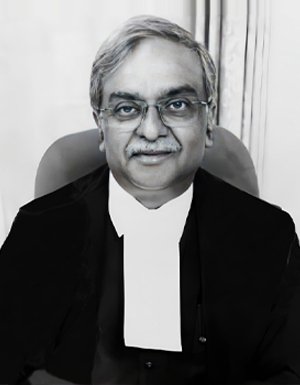
No Acts & Articles mentioned in this case
2024 INSC 608 SLP(C) No. 9098 of 2018 etc.etc. Page 1 of 27
Reportable
IN THE SUPREME COURT OF INDIA
CIVIL APPELLATE JURISDICTION
CIVIL APPEAL NO. OF 2024
(Arising out of SLP (C) No.9098 of 2018)
MAHESHKUMAR CHANDULAL
PATEL & ANR. …APPELLANT(S)
VERSUS
THE STATE OF GUJARAT
& ORS ..RESPONDENT(S)
WITH
Civil Appeal No. of 2024
(@ SLP (C) No.9272 of 2018)
WITH
Civil Appeal No. of 2024
(@ SLP (C) No.9974 of 2018)
WITH
Civil Appeal Nos. of 2024
(@ SLP (C) No.4613-4632 of 2019)
WITH
Civil Appeal Nos. of 2024
(@ SLP (C) Nos.5193-5212 of 2019)
SLP(C) No. 9098 of 2018 etc.etc. Page 2 of 27
WITH
Civil Appeal No. of 2024
(@ SLP (C) Nos.5169-5188 of 2019)
WITH
Civil Appeal Nos. of 2024
(@ SLP (C) Nos.8484-8514 of 2019)
AND WITH
Civil Appeal Nos. of 2024
(@ SLP (C) Nos.10247-10261 of 2019)
J U D G M E N T
VIKRAM NATH, J.
1. Leave granted.
2. These appeals assail the common impugned
order dated 28.12.2017 passed by the Division
Bench of the High Court of Gujarat in LPA No.
765/2017 in Special Civil Application No.
3210/2016 along with other allied appeals. The
LPA was preferred by the respondent State of
Gujarat against the order of Single Judge dated
19.04.2017 directing the State of Gujarat to
remove the anomaly in the pay of the appellants
Petitioners qua their juniors by stepping up their
SLP(C) No. 9098 of 2018 etc.etc. Page 3 of 27
pay. The Division Bench allowed the LPA by the
State and set aside the Single Judge’s order.
FACTUAL MATRIX –
3. The matters pertain to the issue whether or not
the principle of stepping up of pay of an employee
on the basis of the pay of his junior, is applicable
in the present case, where the appellants are put
on a lesser pay scale than the Assistant
Professors who were appointed before them as ad
hoc lecturers and subsequently regularized. The
genesis of controversy goes back to the period of
1984-95 when 111 persons came to be engaged
as Lecturers on ad hoc basis in various
Government Colleges. The University Grants
Commission
1 has framed the Regulations of
1998, inter alia, providing for minimum length of
service of four years for lecturers (Assistant
Professor) with PhD and M. Phil and of six years
for others to be eligible to move to Senior Scale
(i.e., 10000-325-15200) and on completion of
another five years of service, for being eligible to
move to Selection Grade (i.e., 12000-420-18300).
1
UGC, hereinafter
SLP(C) No. 9098 of 2018 etc.etc. Page 4 of 27
The said regulations also provided for counting of
services during ad hoc period for grant of Senior
Scale and Selection Grade Pay.
4. In view of the above regulations, the Education
Department, issued a Government Resolution
dated 17.06.1999 for considering previous
services rendered by the ad hoc lecturers for the
purpose of their placement in Senior
Scale/Selection Grade. Subsequent to the said
Resolution, the Government provided benefits to
some of the ad hoc lecturers subject to conditions
as provided therein. In 2001, some other ad hoc
lecturers [1984-95 Group] approached the High
Court for regularization of their services.
However, the said Special Civil Application was
dismissed against which LPA No. 485 of 2002
was preferred.
5. In the year 2001 itself, the appellants in the
instant case came to be directly selected and
appointed as Assistant Professors by the Gujarat
Public Service Commission
2.
2
GPSC, hereinafter
SLP(C) No. 9098 of 2018 etc.etc. Page 5 of 27
6. On 15.11.2002, the State Government framed
the Gujarat Civil Services (Pay) Rules, 2002
3
wherein Rule 21 provides for stepping up of a pay
of Government Employee on the basis of the pay
of his junior, while categorically stipulating that
the provision of the said Rule will apply where the
pay of a junior is fixed higher than his senior on
his promotion to the higher cadre.
7. Alongside, in LPA No. 485 of 2002 preferred by
the ad hoc lecturers for regularization, the
Division Bench of the High Court in its order
dated 11.12.2002 held that the services of the ad
hoc lecturers cannot be regularized contrary to
the Recruitment Rules in the post for which
direct recruits were already selected through
GPSC, but in the facts and circumstances of the
case, directed the ad hoc lecturers to be treated
as a separate class in view of their ad hoc
continuance for nearly a decade and be
considered for absorption in such posts as may
be available with the government. Accordingly,
rest of the ad hoc Assistant Professors came to be
3
2002 Pay Rules, hereinafter
SLP(C) No. 9098 of 2018 etc.etc. Page 6 of 27
selected through GPSC and appointed as regular
Assistant Professors in addition to the ad hoc
lecturers who were already appointed as regular
Assistant Professors in 2001.
8. Further, the ad hoc lecturers who were appointed
as regular Assistant Professors in 2001
approached the High Court by way of Special
Civil Application No. 6597 of 2007 and other
connected matters seeking the relief of counting
ad hoc services for the purpose of senior
scale/selection grade. The High Court disposed
of the said matters by directing the State
Authorities to decide their representation. The
State Government, vide its letter dated
29.03.2008, rejected their claim for counting ad
hoc services for the purpose of grant of senior
scale/selection grade on the ground that their
initial appointment was without the requisite
permission of GPSC.
9. In 2009, the Assistant Professors who got
selected through direct appointment were
extended the benefit of senior scale/selection
grade effective from their date of selection
through GPSC.
SLP(C) No. 9098 of 2018 etc.etc. Page 7 of 27
10. On 30.06.2010, UGC framed Regulations of 2010
treating Career Advancement Scheme as an
avenue for promotion. It may be noted here that
ad hoc services were eligible to be counted for
different recruitments/promotion under Career
Advancement Scheme.
11. The Government vide its resolution dated
03.08.2011 allowed the ad hoc services of 111
Professors [1984-95 Group] to be counted for the
purpose of pay, leave and pension.
Subsequently, a letter dated 27.09.2011 was
written by the Joint Secretary, Education
Department to the Commissioner, Higher
Education, clarifying that the benefit of
Resolution dated 03.08.2011 would not be
extended for the purpose of seniority.
12. Consequently, the State Government, while
referring to its earlier Government Resolution
dated 17.06.1999 and the Government
Resolution dated 02.08.2011, issued the
Government Resolution dated 22.12.2014 for
counting the previous services rendered by the
erstwhile ad hoc lecturers for extending the
benefits of Senior Scale/Selection Grade to the
SLP(C) No. 9098 of 2018 etc.etc. Page 8 of 27
eligible Assistant Professors out of the total
erstwhile ad hoc lecturers [1984-95 Group].
13. Accordingly, the State Government issued an
Order dated 10.08.2015 granting the benefit of
Senior Scale and Selection Grade to 85 eligible
Assistant Professors by considering their
previous ad hoc services. It so happened that by
counting such ad hoc services rendered by such
lecturers [1984-95 Group], all of them were
getting higher pay than the direct appointees
selected by GPSC. Aggrieved by this, a
representation dated 19.10.2015 was submitted
to the Government by the direct appointees to
step up their pay in accordance with Rule 21 of
the 2002 Pay Rules. It also gave rise to filing of
petitions before the Single Judge of the High
Court for appropriate writ, direction and order to
remove the anomaly in their pay resulting from
the office order dated 10.08.2015 and grant
stepping up their pay on the basis of Rule 21. It
is also to be noted here that the State
Government, vide Resolution dated 06.03.2017,
clarified that the Career Advancement Scheme is
not related to promotion and deleted the terms
SLP(C) No. 9098 of 2018 etc.etc. Page 9 of 27
“promotion” occurring in resolutions dated
18.04.2016 and 03.08.2016.
14. The Single Judge of the High Court, vide
judgment dated 19.04.2017, held that Rule 21 is
applicable in the present case based on the
finding that the grant of Senior Scale and
Selection Grade under the Career Advancement
Scheme can be said to be promotion and
therefore, when at the time of grant of Senior
Scale and Selection Grade under the Career
Advancement Scheme, there is anomaly in the
pay scale between the Senior and Junior . It,
accordingly, granted the benefit of stepping up,
holding that the seniors (original Petitioners) are
entitled to pay at par with their junior who were
selected and appointed subsequent to them.
15. The Single Judge also specifically observed that
the original petitioners have not challenged the
Government Resolutions dated 03.08.2011 and
22.12.2014 and the office order dated
10.08.2015, or the action of the Respondents in
granting the Senior Scale and Selection Grade to
the said junior lectures by counting their past
seniority rendered as ad hoc. Therefore, the
SLP(C) No. 9098 of 2018 etc.etc. Page 10 of 27
Court chose to refrain itself from expressing any
opinion on the validity of the said Government
Resolutions. The Single Judge also noted that the
subsequent appointees appear to have been
treated as a separate class by the State for the
purpose of considering their past ad hoc services
as permissible under the UGC Regulations and
such classification is not discriminatory, thus
the ground of equal pay for equal work taken by
the Petitioners therein would not stand. However,
by granting the benefit of Rule 21, the State was
directed to step up the pay of the original
Petitioners.
16. Feeling aggrieved by the judgment of the Single
Judge, original Respondents-State and others
preferred Letters Patent Appeals before the
Division Bench of the High Court.
17. It was held by the Division Bench of the High
Court that in the peculiar facts and
circumstances of the case, Rule 21 of the 2002
Pay Rules shall not be applicable at all since it
applies only where the anomaly so caused must
be the direct result of the application of Rule 21.
The Court proceeded on the footing that grant of
SLP(C) No. 9098 of 2018 etc.etc. Page 11 of 27
Senior Scale and Selection Grade under the
Career Advancement Scheme can be said to be
promotion. It was observed that if the case on
behalf of the original petitioners is accepted and
their pay is fixed at par with all those 85
Assistant Professors who as such rendered their
services as ad hoc lecturers, in that case, all the
original petitioners, who admittedly never
rendered their services as ad hoc lecturers like all
those 85 lecturers and who for the first time
joined their services in 2001, will be granted the
benefit of the earlier years during which they
never rendered their services as ad hoc or
otherwise and/or when they were not even born
in the cadre.
18. The Division Bench also noted that though it is
the specific case on behalf of the original
Petitioners that counting the earlier services of
85 Assistant Professors as ad hoc is absolutely
illegal, still the very Petitioners are asking the
same pay which all those 85 Assistant Professors
are getting by counting their earlier ad hoc
services, meaning thereby, it can be said that the
original Petitioners pray that they may also be
SLP(C) No. 9098 of 2018 etc.etc. Page 12 of 27
granted the benefit of such illegality. There
cannot be negative discrimination. Accordingly,
it was held that the Single Judge had materially
erred in granting the benefit of stepping up under
Rule 21. The Division Bench allowed the appeals
preferred by the State and set aside the order
passed by the Single Judge.
19. Aggrieved by the said order, the original writ
Petitioners are in appeals before us. We have
heard Mr.Shyam Divan, learned senior counsel
appearing for the appellants and Mr.Kanu
Agarwal and Ms .Swati Ghildiyal, learned
counsels appearing for the respondents.
ARGUMENTS ADVANCED –
20. Appellants have submitted that it is an
undeniable fact that the subsequent appointees
are junior to the Petitioners. The appellants who
are seniors are seeking pay parity with the junior
members of the cadre. That the instant case
fulfils the requisite conditions for invoking Rule
21 of the 2002 Pay Rules as the said rule does
not contemplate such anomalous situation
where the junior is paid more salary than the
senior. It was argued that the provisions of Rule
SLP(C) No. 9098 of 2018 etc.etc. Page 13 of 27
21 are applicable in the fact-situation of the
present case in view of: -
a. Junior and senior government employees
belong to one and same cadre;
b. Time-scale of pay of the lower post held by
the junior and senior is identical; and,
c. Time-scale of the higher-post to which the
government employee is promoted, is identical.
21. It is also submitted by the appellants that the
State Government has resolved that Career
Advancement Scheme is in the nature of
promotion as indicated in the UGC guideline.
Thus, Rule 21 is applicable and if the junior to
the appellants have been granted the benefit of
Career Advancement Scheme, the appellants
who are senior to them, are entitled to the salary
that they draw when the appellants are granted
the benefit of Career Advancement Scheme.
22. Further, at one point, it is also argued by some
of the appellants that the change from ad hoc to
regular employees should be treated as break in
service and service rendered as ad hoc ought not
to be considered at the time of calculating total
length of service. The Respondents, by passing
SLP(C) No. 9098 of 2018 etc.etc. Page 14 of 27
the aforementioned resolutions, have led to the
present anomaly.
23. Appellants also argued that if juniors get higher
pay than the seniors, and the seniors have no
promotional avenue, their seniority becomes
insignificant. In that case, the very purpose of
making regular appointment through GPSC after
following the due recruitment process would be
frustrated and this could have demoralizing
effect on the working of seniors. It is to avoid
such situation that their pay deserves to be
stepped up to the pay equal to their juniors.
24. Lastly, appellants relied on the following
judgments to supplement weight to their
arguments:
i) Union of India & Ors. v. C.R. Madhava
Murthy & Anr.
4
,
ii) Ashok Ram Parhad & Ors. v. State of
Maharashtra & Ors.
5
,
iii) Gurcharan Singh Grewal v. Punjab SEB
6
4
(2002) 6 SCC 183
5
(2023) SCC Online SC 265
6
(2009) 3 SCC 94
SLP(C) No. 9098 of 2018 etc.etc. Page 15 of 27
25. On the other hand, Respondents submitted that
they are not disputing the fact that the
appellants are senior to the ad hoc appointees
[1984-95 Group] and the same position has also
been accepted by the Single Bench as well as
Division Bench of the High Court. It is submitted
that despite the ad hoc appointees being juniors,
Rule 21 is not applicable in the present case
since the conditions stated in the said rule have
not been fulfilled in the present case as the
anomaly in pay is not a direct result of the
application of the rule. That Clause (v) of Sub-
rule (1) of Rule 21 clearly contemplates that if
even in the lower post the junior Government
employee draws from time to time the higher rate
of pay than the senior by virtue of fixation of the
pay under the normal rule or by grant of advance
increments for any reasons, the same shall not
be applicable to step up the pay of the senior
Government employees.
26. Further, it was submitted that if the argument of
the appellants that Rule 21 is applicable and
consequently, their pay should be stepped up, is
to be accepted, it would amount to giving benefit
SLP(C) No. 9098 of 2018 etc.etc. Page 16 of 27
to the Petitioners and others of the earlier years,
during which admittedly they were not even born
in the cadre and not even serving, unlike the
1984-95 Group.
27. The Respondents relied upon the following
judgments to stress that in similar facts and
circumstances, this Court has held that rule of
stepping up shall not be applicable:
i) Union of India v. R. Swaminathan
7
,
ii) Union of India v. M. Suryanarayana Rao
8
,
iii) Union of India v. Sushil Kumar Paul
9
,
iv) ESI Corporation v. P.K.
Srinivasmurthy
10
,
ISSUE AT HAND –
28. It is not in dispute that the appellants have not
challenged the Resolutions dated 22.12.2014
and 10.08.2015, nor have they made 85
Assistant Professors [1984-95 Group] as party to
the present proceedings. Therefore, it is clear
that it is not the case of the appellants that the
said 85 Assistant Professors have been wrongly
7
(1997) 7 SCC 690
8
(1998) 6 SCC 400
9
(1998) 5 SCC 268
10
(1997) 11 SCC 533
SLP(C) No. 9098 of 2018 etc.etc. Page 17 of 27
granted the benefit, through the said resolutions.
It is also not the case of the appellants that the
said 85 Assistant Professors were not eligible for
getting the said benefits.
29. Further, it is also an admitted fact that the
appellants are seniors to the 1984-95 Group and
is not under dispute. Moreover, even though the
Government, vide resolution dated 06.03.2017,
has clarified that the Career Advancement
Scheme is not related to promotion and therefore
deleted the terms “promotions” occurring in
resolutions dated 18.04.2016 and 03.08.2016,
the High Court had proceeded on the footing that
the grant of Senior Scale and Selection Grade
under the Career Advancement Scheme can be
said to be promotion to elucidate that such an
argument would not help the case of the
Petitioners. So, considering that the said
resolutions of the Government are not under
challenge in the instant case, we will also deal
with the relevant issue at hand presuming that
even if the Career Advancement Scheme is
considered to be promotion.
SLP(C) No. 9098 of 2018 etc.etc. Page 18 of 27
30. The short question that requires determination
in the present case boils down to whether Rule
21 of the 2002 Pay Rules would be applicable in
the facts and circumstances of the present case
or not. Rule 21 is quoted as under:
“21. Stepping up of a pay of a Government
employee on the basis of the pay of his
junior:
(1) Where on regulating initial pay of a
Government employee under above rules-11,
13, 15 to 17 & 19 or on his appointment to a
higher post if his pay is fixed at a lower rate
of pay in that cadre than another
Government employee junior to him in the
lower grade but promoted or appointed
subsequently in such another identical
cadre; the pay of the senior Government
employee on the higher post shall be stepped
up to the figure equal to the pay as fixed for
the junior Government employee in that
higher post with effect from the date of
promotion of the junior Government
employee and it shall be subject to the
following conditions viz:-
i. both, the junior and the senior
Government employees belong to one and the
same cadre and the posts to which they have
been promoted or appointed, shall be
identical and in the same cadre and in the
same line of promotion;
ii. the time-scales of pay of the lower posts
held by the senior and the junior
Government employees shall be identical;
SLP(C) No. 9098 of 2018 etc.etc. Page 19 of 27
iii. the time scales of the higher posts to
which the Government employees are
promoted or appointed shall be identical;
iv. the senior Government employee had he
not been appointed to the higher post earlier
than his junior, he would have been eligible
to draw pay at a stage not lower than that
admissible to his junior in the lower post
immediately prior to the appointment of the
junior Government employee to the higher
post;
iv. the anomaly so caused must be the direct
result of the application of this rule. For
example, if even in the lower post the junior
Government employee draws from time to
time a higher rate of pay than the senior by
virtue of fixation of pay under the normal
rules or by grant of advance increment(s) for
any reason, these provisions shall not be
applicable to step up the pay of the senior
Government employee.
v. the pay of the senior Government employee
so increased due to stepping up of pay shall
not be reduced on reversion of the junior
Government employee nor shall it be
increased again with reference to the pay of
the same officer.
(2) After the re-fixation of pay of the senior
Government employee with reference to the
pay of his junior, the next increment shall
occur to him only after he has rendered the
qualifying service which is necessary for
drawing such increment from the stage at
which his pay had been refixed.”
SLP(C) No. 9098 of 2018 etc.etc. Page 20 of 27
ANALYSIS –
31. A bare reading of the above provision makes it
clear that a strict compliance of the said rule is
necessary. The Rule of stepping up shall apply
only if the conditions specified therein are
fulfilled. Specifically, condition no. (v) of Rule 21
stipulates that the anomaly must be the direct
result of the application of this rule. It further
states by way of an example that, if even in the
lower post the junior Government employee
draws from time to time the higher rate of pay
than the senior by way of fixation of the pay
under the normal rule or by grant of advance
increments for any reasons, the same shall not
be applicable to step up the pay of the senior
Government employee.
32. It is to be noted that in the present case, the
anomaly in pay is not a direct result of Rule 21.
Rather, the alleged anomaly arose because the
85 Assistant Professors [1984-95 Group] have
been granted the benefit of Senior
Scale/Selection Grade Pay by taking into
account the ad hoc services that they have
SLP(C) No. 9098 of 2018 etc.etc. Page 21 of 27
rendered in the past. Therefore, Rule 21 becomes
inapplicable in the present case.
33. Moreover, if the present appeals are allowed,
then it would amount to giving benefit to the
appellants and others of the earlier years, during
which admittedly they were not even born in the
cadre and not even serving. This would go
against the principle of equity. Such a benefit
cannot be claimed by the Petitioners for the years
of service that they have not actually rendered.
34. The case laws cited by the Appellants are not
applicable to the instant case as they are
distinguishable on facts. More specifically,
Madhava Murthy (supra), it was a case where a
junior was drawing more pay on account of
upgradation under the ACP Scheme and there
was an anomaly and therefore, the pay of senior
was required to be stepped up. However, the said
junior had not rendered any ad hoc services,
which is not quite the case at hand. Similarly,
Gurcharan Singh Grewal (supra) was also not a
case involving ad hoc services. It was a matter
wherein the Appellant was merely seeking to step
SLP(C) No. 9098 of 2018 etc.etc. Page 22 of 27
up his pay as was done for another appellant
situated similarly. Lastly, in Ashok Ram Parhad
(supra), the grant of monetary benefit was not
under contention. Rather, that matter was with
regards to the inter se seniority which is not a
point of dispute in the instant case. Hence, none
of the case laws relied on by the Appellants help
their case.
35. It is also befitting here to briefly refer to the
relevant judgments by this Court rendered
earlier on the subject-matter, which have been
relied by the Respondents:
36. The case of R. Swaminathan (supra) is a matter
with very similar factual matrix wherein certain
employees claiming seniority were claiming step
up if their juniors are getting more pay on
account of their ad hoc services being counted.
Certain junior employees had officiated on a
promotional post on an ad hoc basis due to
administrative exigencies., due to which their
pay on their regular promotion was fixed higher
than their senior. The Court held as under:
“10. According to the aggrieved employees,
this has resulted in an anomaly, Government
SLP(C) No. 9098 of 2018 etc.etc. Page 23 of 27
Order bearing No. F.2(78)-E.III(A)/66 dated
4-2-1966 has been issued for removal of
anomaly by stepping up of pay of a senior on
promotion drawing less pay than his junior.
It provides as follows:
“10. Removal of anomaly by stepping up of
pay of senior on promotion drawing less pay
than his junior.—(a) As a result of application
of FR 22-C.—In order to remove the anomaly
of a government servant promoted or
appointed to a higher post on or after 1-4-
1961 drawing a lower rate of pay in that post
than another government servant junior to
him in the lower grade and promoted or
appointed subsequently to another identical
post, it has been decided that in such cases
the pay of the senior officer in the higher post
should be stepped up to a figure equal to the
pay as fixed for the junior officer in that
higher post. The stepping up should be done
with effect from the date of promotion or
appointment of the junior officer and will be
subject to the following conditions, namely:
(a) Both the junior and senior officers should
belong to the same cadre and the posts in
which they have been promoted or appointed
should be identical and in the same cadre;
(b) the scale of pay of the lower and higher
posts in which they are entitled to draw pay
should be identical;
(c) the anomaly should be directly as a result
of the application of FR 22-C. For example, if
even in the lower post the junior officer draws
from time to time a higher rate of pay than
the senior by virtue of grant of advance
increments, the above provisions will not be
invoked to step up the pay of the senior
officer.
SLP(C) No. 9098 of 2018 etc.etc. Page 24 of 27
The orders refixing the pay of the senior
officers in accordance with the above
provisions shall be issued under FR 27. The
next increment of the senior officer will be
drawn on completion of the requisite
qualifying service with effect from the date of
refixation of pay.”
As the Order itself states, the stepping up is subject
to three conditions: (1) Both the junior and the senior
officers should belong to the same cadre and the
posts in which they have been promoted should be
identical and in the same cadre; (2) the scales of pay
of the lower and higher posts should be identical;
and (3) anomaly should be directly as a result of the
application of Fundamental Rule 22-C which is now
Fundamental Rule 22(I)(a)(1). We are concerned
with the last condition. The difference in the pay
of a junior and a senior in the cases before us is
not as a result of the application of Fundamental
Rule 22(I)(a)(1). The higher pay received by a
junior is on account of his earlier officiation in
the higher post because of local officiating
promotions which he got in the past. Because of
the proviso to Rule 22 he may have earned
increments in the higher pay scale of the post to
which he is promoted on account of his past
service and also his previous pay in the
promotional post has been taken into account in
fixing his pay on promotion. It is these two
factors which have increased the pay of the
juniors. This cannot be considered as an anomaly
requiring the stepping up of the pay of the
seniors.
11. The Office Memorandum dated 4 -11-1993,
Government of India, Department of Personnel
and Training, has set out various instances where
stepping up of pay cannot be done. It gives, inter
alia, the following instances which have come to
SLP(C) No. 9098 of 2018 etc.etc. Page 25 of 27
the notice of the Department with a request for
stepping up of pay. These are:
“(a) Where a senior proceeds on
Extraordinary Leave which results in
postponement of date of next increment in
the lower post, consequently he starts
drawing less pay than his junior in the lower
grade itself. He, therefore, cannot claim pay
parity on promotion even though he may
have been promoted earlier to the higher
grade:
(b) If a senior foregoes/refuses promotion
leading to his junior being
promoted/appointed to the higher post
earlier, the junior draws higher pay than the
senior. The senior may be on deputation
while the junior avails of the ad hoc
promotion in the cadre. The increased pay
drawn by a junior either due to ad hoc
officiating/regular service rendered in the
higher posts for periods earlier than the
senior, cannot, therefore, be an anomaly in
strict sense of the term.
(c) If a senior joins the higher post later than
the junior for whatsoever reasons, whereby
he draws less pay than the junior, in such
cases the senior cannot claim stepping up of
pay on a par with the junior.
(d) ***”
There are also other instances cited in the
Memorandum. The Memorandum makes it
clear that in such instances a junior drawing
more pay than his senior will not constitute
an anomaly and, therefore, stepping up of
pay will not be admissible. The increased
pay drawn by a junior because of ad hoc
officiating or regular service rendered by
him in the higher post for periods earlier
SLP(C) No. 9098 of 2018 etc.etc. Page 26 of 27
than the senior is not an anomaly because
pay does not depend on seniority alone
nor is seniority alone a criterion for
stepping up of pay.
13. The employees in question are,
therefore, not entitled to have their pay
stepped up under the said Government
Order because the difference in the pay
drawn by them and the higher pay drawn
by their juniors is not as a result of any
anomaly; nor is it a res ult of the
application of Fundamental Rule
22(I)(a)(1).”
37. Similarly, in the case of Suryanarayana Rao
(supra), the Respondent was promoted and he
was senior to two other persons, yet his pay was
fixed at a lesser scale whereas the pay of the said
two persons was fixed on a higher scale for the
reason that the said juniors were promoted
earlier to the promotional posts on an ad hoc
basis. The Court had relied on the ratio laid down
in R. Swaminathan (supra) and refused to
grant the relief of stepping up.
CONCLUSION –
38. In light of the facts and circumstances of the
case(s), the discussion laid out above
surrounding Rule 21 and a perusal of the
SLP(C) No. 9098 of 2018 etc.etc. Page 27 of 27
authorities elucidated above, we do not find any
merit in the contentions of the appellants.
39. We, thus, hold that Rule 21 of the 2002 Pay Rules
is inapplicable in the instant case(s) and no relief
can be granted to the appellants. The present
appeals deserve to be dismissed. It is ordered
accordingly.
40. Pending applications (if any) are disposed of.
……………………………………J.
(VIKRAM NATH)
……………………………………J.
(PRASHANT KUMAR MISHRA )
NEW DELHI
AUGUST 14, 2024

 Login with google
Legal Notes
Add a Note....