
As per case facts, the Appellant initially filed a suit alleging mismanagement, which led to a Respondent filing an application for arbitration. This application was rejected by lower courts but ...
2026 INSC 701 1
REPORTABLE
IN THE SUPREME COURT OF INDIA
CIVIL APPELLATE JURISDICTION
CIVIL APPEAL NOS. …………..… OF 2026
(ARISING OUT OF SLP (CIVIL) NOS. 7233-7234 OF 2026)
MANASH KAMAL BEZBORUAH ….APPELLANT(S)
VERSUS
M/S BOKAHOLA TEA COMPANY
PRIVATE LIMITED & ORS.
…RESPONDENT(S)
J U D G M E N T
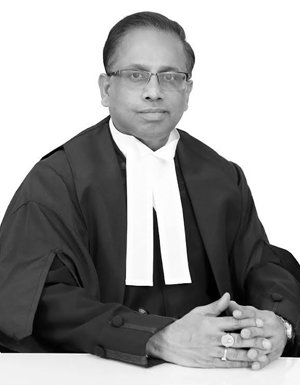
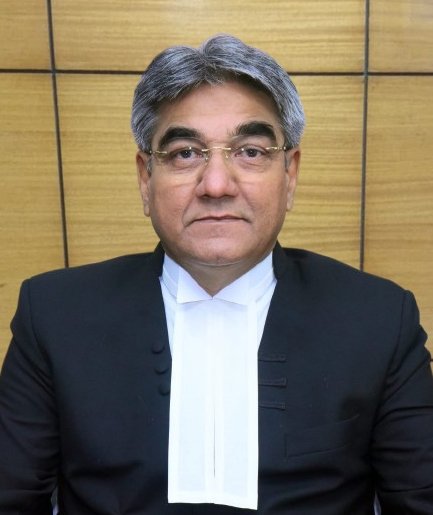
VIJAY BISHNOI, J.
1. Leave Granted.
2. The present appeals have been preferred by the Appellant
challenging the interim order dated 02.09.2025 and order dated
28.01.2026 in CRP/120/2025, passed by the High Court of
Gauhati at Guwahati (hereinafter referred to as “High Court”),
2
wherein the High Court vide interim order dated 02.09.2025 stayed
the notice issued by the Arbitral Tribunal (hereinafter referred to
as “the Tribunal”) to Respondent Nos. 1 to 3 and further, vide
order dated 28.01.2026, rejected the preliminary objection raised
by the Appellant regarding the maintainability of a Revision Petition
filed under Article 227 of the Constitution of India.
FACTUAL MATRIX
3. On 19.09.1948, M/s Boloma Tea Company (Respondent No.
5 herein) was constituted as a partnership firm by Late Ram Kamal
Bezboruah, Late Dr. Nil Kamal Bezboruah, Late Indra Kamal
Bezboruah and Shri Dhirendra Nath Bezboruah, each holding a
share of 25%. A fresh partnership deed was subsequently executed
on 28.12.1951 with effect from 01.01.1951, under which Late
Indra Kamal Bezboruah, the Appellant's father, continued to hold
a 25% share in the firm. In 1967, M/s Bokahola Tea Company Pvt.
Ltd. (Respondent No. 1 herein) and M/s Kasojan Tea Company
Pvt. Ltd. (Respondent No. 2 herein) were incorporated under the
Companies Act, 1956. Following the demise of Late Indra Kamal
Bezboruah on 09.04.1967, a fresh partnership deed was executed
3
on 28.12.1967 with effect from 10.04.1967, under which the
remaining three partners held equal shares of 33.33% each in the
partnership firm.
4. In 1974, the Appellant, being an IAS Officer, obtained
permission from the Government of India to become a sleeping
partner in the partnership firm. A fresh partnership deed dated
16.11.1976 was executed whereby, Late Dr. Nil Kamal Bezboruah,
Late Ram Kamal Bezboruah and the Appellant were allotted 25%
share each; and Shri Dhirendra Nath Bezboruah and Late Smt.
Kamala Bezboruah were allotted 12.5% share each. Clause 5 of
the partnership deed contained an arbitration clause, providing
that disputes or differences among partners would first be referred
to the other partners and, if unresolved, would be referred to
arbitration before a mutually agreed third party.
5. Late Ram Kamal Bezboruah passed away on 07.08.1989,
whose Legal Representatives are Respondent No. 12 to Respondent
No. 15 herein. Thereafter, on 15.03.1992, Late Smt. Kamala
Bezboruah died and after her death, Late Dr. Amala Bezboruah
was inducted as her Legal Representative in Respondent No. 5 -
4
Company. Later, M/s Bokahola Investment Pvt. Ltd. (Respondent
No. 3 herein) was incorporated on 09.06.1995.
6. In July 2012, the Appellant instituted Title Suit No. 38 of
2012 before the Court of Civil Judge (Senior Division), Johrat
(hereinafter referred to as “Trial Court”), seeking various reliefs
including rendition of accounts relating to the affairs of Respondent
companies and reserving a right to claim losses and damages
arising out of alleged mismanagement and financial irregularities.
During the pendency of the suit, an application under Section 8
of the Arbitration and Conciliation Act, 1996 (hereinafter
referred to as “the Act”) was filed by Respondent No. 7 seeking
reference of disputes to arbitration. Subsequently, vide order dated
07.08.2014, the Trial Court rejected the application filed by
Respondent No. 7 under Section 8 of the Act, observing inter alia
that reliefs had been sought against all defendants and that several
defendants (including Respondent Nos. 1 to 3) were not parties to
the partnership deed. The Trial Court further relying on this
Court’s judgment in Sukanya Holdings (P) Ltd. v. Jayesh H.
Pandya And Another, reported in (2003) 5 SCC 531, held that the
suit cannot be split up as some defendants were non-signatories to
5
the arbitration agreement but were necessary parties to the suit.
Hence, the Trial Court held that the suit could not be referred to
arbitration under Section 8 of the Act, as all the defendants were
non-signatories to the arbitration agreement contained in the
partnership deed.
7. Aggrieved by the order of the Trial Court dated 07.08.2014,
Respondent No. 7 preferred Civil Revision Petition No.
CRP/185/2015 before the High Court. By judgment and order
dated 01.11.2021, the High Court dismissed the revision petition
and affirmed the Trial Court’s decision, holding that, having regard
to the nature of the reliefs claimed in the suit, the application under
Section 8 of the Act had been rightly rejected. Consequently,
Respondent No. 7 filed SLP(C) No. 10445 of 2022 before this Court
which was later numbered as Civil Appeal No. 13188 of 2024,
wherein this court vide order dated 21.11.2024, with the consent
of the parties, referred the disputes to be decided through
arbitration and further, appointed Justice (Retd.) B.P. Katakey,
former Judge of the Gauhati High Court, as Sole Arbitrator to
adjudicate the disputes between the parties. The order dated
6
21.11.2024 passed by this court in Civil Appeal No. 13188 of 2024,
is as follows:
“1. Leave granted.
2. The instant appeal is directed against an order dated
01.11.2021, passed by the Gauhati High Court, whereby the
High Court upheld the order dated 07.08.2014, passed by the
learned Civil Judge at Jorhat in Title Suit No.38/2012,
rejecting the application under Section 8 of the Arbitration and
Conciliation Act, 1996, whereby the dispute between the
parties was sought to be referred to arbitration as per the
Arbitration Agreement, and thus dismissed the Revision
Petition filed by the appellants herein.
3. On the joint request made by learned counsel for the parties,
vide order dated 19.09.2022, the dispute raised in the instant
appeal was referred to the Supreme Court Mediation Centre to
get it resolved amicably.
4. As per the Mediation Report dated 11.01.2024, in spite of
comprehensive mediation sessions between the parties on
different occasions, the parties are not agreeable to arrive at
an amicable settlement.
5. On 08.04.2024, learned counsel for the parties submitted
that they would take further instructions as to whether any
resolution is possible for mediation. In the meantime, learned
counsel for the parties were directed to file brief written
submissions. In deference to the said order, respondent No.1
has filed written submission.
6. Heard learned counsel for the parties and carefully perused
the material placed on record.
7. Both sides seek appointment of a Sole Arbitrator in terms of
Clause 5 of the Partnership Deed dated 16.11.1976, executed
between the parties, which reads as follows:
"5. That R.K. Bezbaruah and N.K. Bezbaruah two of the
partners shall jointly manage the financial affairs and bank
accounts of the firm. Any dispute or difference unless
otherwise agreed, shall be referred to the other partners in the
first instance and if not resolved shall be referred to the
arbitration of mutually agreed third party."
8. On a perusal of the aforesaid Clause, we find that the
parties agreed to arbitrate their dispute or differences as the
7
Partnership Deed clearly stipulates that any dispute or
difference unless otherwise agreed, shall be referred to the
other partners in the first instance and if not resolved shall be
referred to the arbitration of mutually agreed third party.
9. We, accordingly, with the consent of learned counsel for the
rival parties, consider it just and appropriate to appoint Justice
(Retd.) B.P. Katakey, a former Judge of the Gauhati High
Court, as the Sole Arbitrator to adjudicate the dispute between
the parties. The Arbitrator appointed by us, will proceed with
the matter, after complying with the provisions of Section 12 of
the Arbitration and Conciliation Act, 1996.
10. Needless to mention, that the fee of the Arbitrator shall be
fixed, in terms of the Fourth Schedule of the Arbitration and
Conciliation Act, 1996 [as amended by the Arbitration and
Conciliation (Amendment) Act, 2015.]
11. Keeping in view the age of respondent No.1, who is stated
to be a 80 year old pensioner, we request the learned
Arbitrator to permit him to appear through virtual mode in the
arbitral proceedings.
12. The Registry is directed to communicate the instant order
to the learned Arbitrator.
13. The appeal stands disposed of in the above terms.
14. As a result, the pending interlocutory applications also
stand disposed of.”
It is pertinent to note here that Respondent Nos. 1 to 3 were
parties to Civil Appeal No. 13188 of 2024 and were served notices
but they did not contest the same.
8. Pursuant, to the consent order of this Court dated
21.11.2024, notices were issued to all the parties and the schedule
of arbitration proceedings was fixed by the Tribunal vide order
dated 23.01.2025. Subsequently, the Appellant filed his statement
of Claims and the Respondent No. 5 to Respondent No. 7 filed their
8
Statement of Defence before the Tribunal on 09.03.2025 and
05.05.2025 respectively. Thereafter, Respondent Nos. 1 to 3 filed
separate applications under Order VII Rule 11 read with Order I
Rule 10(2) and Section 151 of the Code of Civil Procedure, 1908
(hereinafter referred to as “CPC”) before the Tribunal seeking
deletion of their names from the array of parties. Since the said
applications are jurisdictional objections filed by Respondent No. 1
to 3 before the Tribunal and hence, should be treated as
applications filed under section 16 of the Act.
9. Later, the Tribunal Vide order dated 09.06.2025 after
considering the Statement of Claim and Statement of Defence filed
by the parties, framed issues for determination in the arbitration
proceedings which included the issue of maintainability of the
proceedings against non-signatories including Respondent Nos. 1
to 3. The relevant extract of the order dated 09.06.2025 is as
follows:
“1. Heard the learned counsel appearing for the claimant and
the Respondent Nos. 1, 2, 3 and 4 on the framing of issues.
2. The Arbitral Tribunal, upon hearing the learned counsel
appearing for the claimant as well as the learned counsel
appearing for the Respondent Nos. 1, 2, 3 and 4, and upon
consideration of the pleadings of the parties in the Statement
9
of Claim and the Statement of Defence filed, framed the
following issues for determination:
(a) Whether the Respondent No. 2 is a partnership
registered under the Indian Partnership Act, 1932?
If not, whether the claims of the claimant are barred
under Section 69 of the said Act?
(b) Whether the claims of the claimant are barred by
the law of limitation?
(c) Whether the arbitration proceedings against the
Respondent Nos. 5 to 15 are maintainable, they
being non-signatories and not parties to the
partnership deed?
(d) Whether the arbitration clause in Clause 5 of the
partnership deed is valid and binding and the
disputes raised by the claimant fall within its scope,
as against the Respondent Nos. 5, 6, 7, 8 and 9?
(e) Whether the Respondent No. 3 has the authority
to file the Statement of Defence on behalf of the
Respondent Nos. 2 and 4?
(f) Whether the Respondent No. 2 partnership firm
stood automatically dissolved on 01.08.2009 on the
death of Late Dr. Nil Kamal Bezboruah, there being
no other partners other than the claimant? If so,
whether the claimant became the sole owner of the
partnership business to the exclusion of other legal
heirs of Dr. Nil Kamal Bezboruah?
(g) Whether the claimant is the sole successor to the
25% share of Late Indra Kamal Bezboruah in the
Respondent No. 2 partnership firm? If not, whether
the other legal heirs of Indra Kamal Bezboruah,
including his daughters, are necessary parties and
entitled to share therein?
(h) Whether the claimant, a partner of the
Respondent No. 2 partnership firm, is entitled to
rendition of accounts and the comprehensive audit
of the assets, accounts and functioning of
Respondent No. 2 as well as of Respondent Nos. 5,
6 and 7?
(i) Whether the claims of oppression and
mismanagement against Respondent Nos. 5, 6 and
7 are beyond the scope of arbitration and whether
10
such claims lie exclusively before the statutory
forums under the Companies Act, 2013?
(j) Whether the claimant could prove the allegations
including but not limited to the allegations of
oppression, mismanagement, fraud,
misappropriation, suppression of accounts,
diversion of profits, etc. against the concerned
respondents, as alleged in the Statement of Claim?
If so, whether the claimant is entitled to an award?
(k) Whether the claims of the claimant relating to
alleged mismanagement, suppression of accounts
and diversion of profits, etc. are barred by waiver or
acquiescence because of the delay and the past
conduct of the claimant?
(l) Whether Respondent Nos. 3 and 4 fraudulently
and mala fidely violated the Status Quo Order dated
03.08.2012 and are jointly and severally liable to
return the amount of Rs. 1,83,32,000/ - with
interest, withdrawn in violation of the Status Quo
Order dated 03.08.2012 passed in Misc. Case No.
25 of 2012 in T.S. No. 38 of 2012?
(m) Whether Respondent Nos. 8 and 9 have failed in
their duty as professional Chartered Accountants
and auditors functioning on behalf of the claimant
and other partners/shareholders and not only for
Late Dr. Nil Kamal Bezboruah and Respondent Nos.
3 and 4, and have assisted and facilitated Late Dr.
Nil Kamal Bezboruah and Respondent Nos. 3 to 7 in
the manipulation of accounts and in conducting
fraud on Respondent No. 2?
(n) Whether the parties are entitled to interest and
cost as prayed for?
(o) To what relief(s) the parties are entitled to?...”
10. Subsequently, the Tribunal Vide order dated 04.08.2025,
while deciding the maintainability of arbitration proceedings
against non-signatories to the partnership deed, rejected the
11
applications filed by Respondent Nos. 1 to 3, seeking deletion of
their names. The Tribunal held that the Supreme Court referring
all the parties to dispute to arbitration left no scope for the Tribunal
to reconsider whether non-signatories could be subjected to
arbitration. The relevant extract of the order dated 04.08.2025
passed by the Tribunal is as follows:
“16. Law relating to the application of the doctrine of 'Group of
Companies' is, therefore, no longer res integra. There cannot
be two opinions that a non -signatory company can be
impleaded to single composite arbitration by invoking the
'Group of Companies' doctrine on certain circumstances. It is
always not necessary that a company for being impleaded in
an arbitration proceeding has to be a signatory to an
arbitration agreement between the claimant and other
respondents in such arbitration proceeding. As discussed
above, the respondent Nos. 5, 6 and 7 did not contest the plea
taken by Sri Krishore Kamal Bezboruah, respondent No. 4, in
the SLP filed before the Hon'ble Supreme Court for invoking the
doctrine of 'Group of Companies'. By the aforesaid order
passed by the Hon'ble Supreme Court, it was not left to the
Arbitral Tribunal to decide whether the non-signatory is bound
by the arbitration agreement. The contention that the
respondent Nos. 5, 6 and 7 are also subjected to the Civil Suit
at the same time, is not acceptable in view of the aforesaid
order passed by the Hon'ble Supreme Court referring all the
disputes or differences for arbitration.”
11. Aggrieved by the order passed by the Tribunal, Respondent
Nos. 1 to 3 filed a Civil Revision Petition bearing CRP/120/2025,
under Article 227 of the Constitution of India before the High Court.
The High Court passed an interim impugned order dated
02.09.2025, stayed the notices issued to the Respondent Nos. 1 to
12
3. The relevant extract of the impugned interim impugned order is
as follows:
“After going through the materials available in the case record,
at this stage, this Court is of the opinion that the notice issued
to M/s Bokahola Tea Company Private Limited, M/s Kasojan
Tea Company Private Limited and M/s Bokahola Investment
Private Limited needs to be stayed.
Accordingly, the notice issued to the petitioners shall be stayed
till returnable date.
The further proceeding before the learned Arbitrator shall
continue.
List after 4 (four) weeks.”
12. Furthermore, the High Court Vide impugned order dated
28.01.2026, rejected the Appellant's preliminary objection
regarding maintainability of the revision petition. The High Court
observed that the Tribunal had wrongly passed the order dated
04.08.2025 as the Apex Court's order did not discuss anything
regarding invoking the "Group of Companies" doctrine to bring the
non-signatory parties within the ambit of the arbitral proceedings.
Further, the High Court placing reliance on this Court's judgments
in Deep Industries Ltd. v. Oil and Natural Gas Corporation Ltd.
and Another reported in (2020) 15 SCC 706, and Punjab State
Power Corporation Limited v. Emta Coal Limited and Another
reported in (2020) 17 SCC 93, held that where the Tribunal's
13
rejection order suffers from a "patent lack of inherent jurisdiction",
the supervisory jurisdiction of the High Court under Article 227 of
the Constitution cannot be ousted. The relevant extract of
impugned order is as follows:
“23. The petitioners have impugned the order passed by the
arbitral tribunal on the ground of lack of inherent jurisdiction
as well as on the ground of alleged perversity in the impugned
order to the extent that the tribunal has observed that by the
order of the Apex Court, passed in the Special Leave Petition
(Civil) No. 10445/2022, it has left nothing for the arbitral
tribunal to decide as to whether a non-signatory is bound by
arbitration agreement or not. However, since the petitioners
have raised the plea that the Apex Court has referred only
those parties who had appeared before it in the aforesaid SLP
and had consented to referring the matter to the arbitration
and since prima facie, it appears that in the order of the Apex
Court, it has not discussed anything regarding invoking the
doctrine of group of companies to bring the petitioners within
the ambit of the arbitral proceeding, hence, this Court, in the
light of the observations made by the Apex Court in its
judgments discussed in paragraphs 21 and 22 of this order,
is of considered opinion that it does not lack jurisdiction, under
Article 227 of the Constitution of India, to examine the
contention raised by the petitioners as to whether the
dismissal of the prayer regarding jurisdiction of the arbitral
tribunal to subject the petitioners to the arbitral proceeding
suffers from a patent lack of inherent jurisdiction or not, or
whether it is perverse or not.
24. Since the petitioners have raised the plea of lack of
inherent jurisdiction, as well as of perversity on the part of
arbitral tribunal in passing the impugned order and since
same cannot be totally negated at this stage, the jurisdiction
of this Court under Article 227 of the Constitution of India to
examine the said issues is not ousted.
25. In view of the discussion made and reasons stated in the
foregoing paragraphs, the objection raised by the respondent
No. 1 regarding maintainability of the instant civil revision
petition is rejected.”
14
13. Aggrieved, the Appellant preferred the instant appeals before
this Court. During the pendency of the present appeals, this Court,
by order dated 16.02.2026, issued notice and condoned the delay
in filing. This Court further stayed the operation of the interim
impugned order as well as the impugned order passed by the High
Court, and also stayed all further proceedings before the High
Court. The relevant portion is reproduced hereinunder:
“1. Delay condoned.
2. Issue notice, returnable on 20.04.2026.
3. Dasti service, in addition, is permitted.
4. In the meantime, the orders of the High Court dated
02.09.2025 and 28.01.2026 shall remain stayed. There shall be
a stay of further proceedings in the High Court.”
14. Furthermore, Respondent Nos. 1 to 3 filed I.A. No. 76430 of
2026 seeking exemption from participating in the arbitral
proceedings. This Hon’ble Court, by order dated 19.03.2026,
allowed the said application and directed the parties to approach
the Arbitral Tribunal for adjournment of the proceedings beyond
20.04.2026. This Court further directed the learned Arbitrator to
consider such a request for adjournment. The relevant portion is
reproduced hereinunder:
15
“4. Having heard the learned counsel appearing for the parties,
we are of the view that parties shall make a request to the
learned Arbitrator to adjourn the proceedings beyond
20.04.2026.
5. If any such request is made, the learned Arbitrator shall take
the same into consideration.
6. The Interlocutory Application No. 76430/2026 stands
allowed accordingly.”
SUBMISSIONS ON BEHALF OF APPELLANT
15. Mr. Abir Phukan, the learned counsel appearing for the
Appellant submitted that the Respondent No. 1 to 3 are veritable
parties to the disputes evidenced by the inter-party relations,
commonality in subject matter and their incorporation being
through borrowings from the partnership firm (Respondent No. 5).
Further relying on the Constitution Bench judgment in Cox and
Kings Ltd. v. SAP India Pvt. Ltd. and Another, reported in 2024
(4) SCC 1, the counsel argued that non-signatories can be referred
to arbitration when there is a direct relationship, commonality of
subject matter, composite transactions, and conduct
demonstrating an intention to bind them.
16. The learned counsel for the Appellant submitted that the
Respondent No. 1 to 3, are estopped from challenging the arbitral
reference made via this Court's consent order dated 21.11.2024.
16
The Respondent No. 1 to 3 chose not to appear or object despite
being served on multiple occasions. Further, the learned counsel
for the Appellant submitted that the High Court’s interference
under Article 227 of the Constitution to stay the arbitral
proceedings constitutes an abuse of process. Relying on the 101st
Report of the Law Commission of India , the counsel noted that
allowing appeals against the rejection of a Section 16 of the Act,
jurisdictional challenge defeats the statutory scheme, as the proper
remedy is to apply for setting aside of the award under Section 34
of the Act. It is further argued that no perversity existed in the
Arbitral Tribunal's order to warrant interference; and in support of
the same, the learned counsel cited Associate Builders v. Delhi
Development Authority, reported in (2015) 3 SCC 49 and Punjab
State Power Corpn. Ltd. (supra) to emphasize that patent lack of
inherent jurisdiction must "stare one in the face". Additionally, M/s
Tarini Prasad Mohanty v. M/s Sunflag Iron and Steel Company
Limited, reported in 2026 INSC 566, was cited to argue that
minimal interference in writ jurisdiction at an interim stage is
imperative.
17
17. The learned counsel for the Appellant further argued that the
High Court without giving any specific reasoning as to perversity or
inherent lack of jurisdiction in the order dated 04.08.2025 of the
Tribunal, mechanically decided the maintainability of the Revision
Petition filed under Article 227 of the Constitution. In addition to
this he also highlighted that the Tribunal has already framed the
issues for determination of the proceedings which are pending
adjudication. The learned Counsel for the appellant after apprising
relevant facts of the case and legal position has prayed for setting
aside the interim order dated 02.09.2025 and order dated
28.01.2026 passed by the High Court.
SUBMISSIONS ON BEHALF OF RESPONDENT NO. 1 TO 3.
18. Mrs. Madhavi Diwan, learned Senior Counsel appearing for
the Respondents submitted that the Appellant's own prior stand
belies any mutual intention to refer Respondent Nos. 1 to 3 to
arbitration. In earlier civil proceedings, the Appellant had explicitly
argued that these Respondents were not parties to the arbitration
agreement. The learned Senior Counsel further highlighted that, in
the earlier Civil Revision Petition preferred by Respondent No. 7,
the High Court relying on the submission of the Appellant that
18
Respondent No. 1 to 3 are not parties to the agreement and citing
Sukanya Holdings (P) Ltd. (supra), dismissed the revision
petition. Having secured favorable orders on this premise, the
Appellant cannot now approbate and reprobate by claiming they
are veritable parties.
19. The learned Senior Counsel submitted that Respondent Nos.
1 to 3 do not fulfill the test of a "veritable party" laid out in Cox and
Kings (supra), nor did they show any mutual intention to be
bound. Further, this Court's consent order dated 21.11.2024 was
only intended to bind the parties who came forward and gave
consent. It was argued that Respondent No. 7 had no authority or
Board Resolution to consent on behalf of Respondent Nos. 1 to 3.
20. The learned Senior Counsel submitted that the Tribunal's
assumption of jurisdiction over non-signatories based on mere
non-appearance before the Supreme Court falls squarely within the
"narrow band of perversity". To justify the High Court's interference
under Article 227 due to a patent lack of inherent jurisdiction, the
Senior Counsel relied on Deep Industries (supra), and Punjab
State Power Corporation Ltd. (supra). In view of the above
submissions the learned Senior Counsel has prayed that the
19
Respondent Nos. 1 to 3 are not veritable parties and hence they
should be removed from the arbitration proceedings.
ANALYSIS
21. Having considered the rival submissions advanced by both
sides and the material available on record, the sole question that
arises for our consideration in the present appeals is whether the
High Court was justified in passing the impugned order holding
that a revision petition under Article 227 of the Constitution of
India is maintainable against an order of the Arbitral Tribunal.
22. Before adverting to the legal positioning present case, it is
imperative to outline the statutory scheme and object of the Act.
The Act is a Code in itself. This phrase is not merely perfunctory,
but has definite legal consequences. One such consequence is
stated under the non-obstante clause given in Section 5 of the Act,
which limits the extent of judicial intervention unless explicitly
contemplated under the Act. This provision was included to uphold
the intention of the legislature to adopt the UNCITRAL Model Law
and Rules to reduce excessive judicial interference. Fur ther,
Section 16 of the Act gives effect to the doctrine of kompetenz-
20
kompetenz, empowering the Arbitral Tribunal to rule on its own
jurisdiction. In the usual course of an arbitral proceeding, the Act
provides for a mechanism to challenge an Arbitral Award under
Section 34 of the Act.
23. In the present case, initially a suit was instituted by the
Appellant due to mismanagement of funds in Respondent No. 5,
wherein Respondent No. 7 filed an application under section 8 of
the Act seeking initiation of arbitration proceedings, which was
rejected by the Trial Court and the rejection was further upheld by
the High Court in revision petition. Subsequently, Respondent No.
7 approached this Court by filing Civil Appeal No. 13188 of 2024,
wherein this court on the basis of the consent of the parties to
arbitrate the disputes, appointed an arbitrator to decide the matter
through arbitration. Respondent No. 1 to 3 were also parties to the
said SLP but never contested the same. It is imperative to note here
that, Respondent No. 1 to 3, never sought modification or review of
the order passed by this Court at any point of time.
24. Thereafter, during arbitration proceedings, Respondent Nos.
1 to 3 filed applications under Order VII Rule 11 read with Order I
Rule 10(2) and Section 151 of CPC before the Tribunal seeking
21
deletion of their names from the array of parties. This application
being in the nature of challenge to the jurisdiction of the Tribunal,
should be treated as an application filed under Section 16 of the
Act. The Tribunal in view of this Court’s consent order dated
21.11.2024 passed in Civil Appeal No. 13188 of 2024, of referring
the parties to arbitration, rejected the said applications. The order
was later challenged by Respondent Nos. 1 to 3 by filing an Revision
Petition before the High Court under Article 227 of the Constitution
of India, wherein the High Court while rejecting the objections filed
by Appellant held that, the Revision Petition filed under Article 227
of the Constitution of India is maintainable. It is to be noted that
while passing the impugned order dated 28.01.2026 the High court
has not recorded any specific finding as to perversity or any patent
lack of inherent jurisdiction in the order dated 04.08.2025 passed
by the Tribunal
25. Ordinarily, the power of the High Courts under Article 227 of
the Constitution of India to exercise supervisory jurisdiction over
all courts and tribunals within their territorial jurisdiction forms
part of the basic structure of the Constitution and cannot be
abrogated or excluded by legislation. Consequently, although
22
Section 5 of the Act restricts judicial intervention, except as
expressly provided under the Act, such restriction cannot curtail or
oust the constitutional jurisdiction of the High Courts under Article
227 of the Constitution of India. At the same time, it is imperative
to note that the Act was enacted with the objective of ensuring the
expeditious resolution of disputes through arbitration, with
minimal judicial interference and without the supervisory
involvement of traditional courts, except to the limited extent
expressly contemplated under the Act.
26. The Constitution Bench in SBP & Co. v. Patel Engineering
Ltd. and Another, reported in (2005) 8 SCC 618, stating that the
Act mandates minimal judicial intervention, has explicitly
disapproved the approach of High Courts correcting orders of an
Arbitral Tribunal under Article 226 or 227 of the Constitution of
India during the pendency of arbitral proceedings. The relevant
portion of the said judgment is extracted hereinbelow:
45. It is seen that some High Courts have proceeded on the
basis that any order passed by an Arbitral Tribunal during
arbitration, would be capable of being challenged under Article
226 or 227 of the Constitution. We see no warrant for such an
approach. Section 37 makes certain orders of the Arbitral
Tribunal appealable. Under Section 34, the aggrieved party
has an avenue for ventilating its grievances against the award
including any in-between orders that might have been passed
23
by the Arbitral Tribunal acting under Section 16 of the Act. The
party aggrieved by any order of the Arbitral Tribunal, unless
has a right of appeal under Section 37 of the Act, has to wait
until the award is passed by the Tribunal. This appears to be
the scheme of the Act. The Arbitral Tribunal is, after all, a
creature of a contract between the parties, the arbitration
agreement, even though, if the occasion arises, the Chief
Justice may constitute it based on the contract between the
parties. But that would not alter the status of the Arbitral
Tribunal. It will still be a forum chosen by the parties by
agreement. We, therefore, disapprove of the stand adopted by
some of the High Courts that any order passed by the Arbitral
Tribunal is capable of being corrected by the High Court under
Article 226 or 227 of the Constitution. Such an intervention by
the High Courts is not permissible.
46. The object of minimising judicial intervention while the
matter is in the process of being arbitrated upon, will certainly
be defeated if the High Court could be approached under
Article 227 or under Article 226 of the Constitution against
every order made by the Arbitral Tribunal. Therefore, it is
necessary to indicate that once the arbitration has commenced
in the Arbitral Tribunal, parties have to wait until the award is
pronounced unless, of course, a right of appeal is available to
them under Section 37 of the Act even at an earlier stage.
27. Furthermore, this Court in the case of Deep Industries
(supra), has held that the High Court under article 227 can only
deal with orders of the Tribunal wherein there is patent lack of
inherent jurisdiction. The relevant portion of the said judgment is
extracted hereinbelow:
“17. This being the case, there is no doubt whatsoever that if
petitions were to be filed under Articles 226/227 of the
Constitution against orders passed in appeals under Section
37, the entire arbitral process would be derailed and would
not come to fruition for many years. At the same time, we
cannot forget that Article 227 is a constitutional provision
which remains untouched by the non obstante clause of
24
Section 5 of the Act. In these circumstances, what is important
to note is that though petitions can be filed under Article 227
against judgments allowing or dismissing first appeals under
Section 37 of the Act, yet the High Court would be extremely
circumspect in interfering with the same, taking into account
the statutory policy as adumbrated by us hereinabove so that
interference is restricted to orders that are passed which are
patently lacking in inherent jurisdiction.”
28. Subsequently, a three Judge Bench of this Court in the case
of Punjab State Power Corpn. Ltd. (supra) clarified as to what
would be categorised as ‘Patent lack in inherent jurisdiction’. The
primary parameter is that the Order passed should be so perverse
that the only possible conclusion is that there is a patent lack in
inherent jurisdiction. A patent lack requires no argument
whatsoever, it must be the perversity of the Order that must stare
one in the face. Further, while addressing the misuse of Article 227
of the Constitution of India petitions in arbitral proceedings, this
Court directed that High Courts, upon considering the objections
raised, should promptly dismiss petitions under Article 227
wherever no patent lack of inherent jurisdiction is made out. The
relevant portion of the said judgment is extracted hereinbelow:
“4. We are of the view that a foray to the writ court from a
Section 16 application being dismissed by the arbitrator can
only be if the order passed is so perverse that the only possible
conclusion is that there is a patent lack in inherent jurisdiction.
25
A patent lack of inherent jurisdiction requires no argument
whatsoever — it must be the perversity of the order that must
stare one in the face.
5. Unfortunately, the parties are using this expression which
is in our judgment in Deep Industries Ltd. [Deep Industries Ltd.
v. ONGC, (2020) 15 SCC 706] , to go to the Article 227 Court in
matters which do not suffer from a patent lack of inherent
jurisdiction. This is one of them. Instead of dismissing the writ
petition on the ground stated, the High Court would have done
well to have referred to our judgment in Deep IndustriesLtd.
[Deep Industries Ltd. v. ONGC, (2020) 15 SCC 706] and
dismiss the Article 227 petition on the ground that there is no
such perversity in the order which leads to a patent lack of
inherent jurisdiction. The High Court ought to have
discouraged similar litigation by imposing heavy costs. The
High Court did not choose to do either of these two things.”
29. Recently, this Court in M/s Tarini Prasad Mohanty (supra),
has emphasized that while exercising writ jurisdiction under
Articles 226 and 227 of the Constitution of India, courts must
strictly keep in mind the statutory scheme of the Arbitration Act.
Specifically, since the Act already provides for a final statutory
remedy under Section 34 and clearly mandates minimal judicial
interference while arbitral proceedings are still ongoing, courts
must respect this legislative intent and limit their intervention
accordingly.
“22. Besides the well settled parameters to be borne in mind
while exercising jurisdiction under Articles 226 and 227 of the
Constitution, it is also necessary to be mindful of the statutory
scheme of the concerned enactment from which the impugned
order arises. If the enactment besides providing for a statutory
26
remedy [herein, Section 34] also expects minimal judicial
interference prior to the culmination of the arbitral proceedings
[herein, Section 5], the said factor would be of relevance while
considering the exercise of jurisdiction. In other words the
threshold to be satisfied before exercising discretion under
Articles 226 and 227 of the Constitution in the light of such
legislative intent would be higher. As held in Re: Interplay
(supra), the non-obstante clause in Section 5 of the A and C Act
must take precedence over any other law for the time being in
force. It would have to be demonstrated that notwithstanding the
availability of an alternate remedy at the conclusion of the
proceedings, such challenge cannot await the final adjudication
of the proceedings and despite the Civil Appeal arising out of SLP
(C) No.27534 of 2025 Page 33 of 39 statutory expectation of
minimal interference, intervention in exercise of writ jurisdiction
at an interim stage is imperative. We may clarify that our
observations are as regards the ‘entertainability’ of a writ
petition under Articles 226 and 227 of the Constitution and not
with regard to its ‘maintainability’. This Court in M/s Godrej Sara
Lee Ltd. Vs. The Excise and Taxation Officer-cum-Assessing
Authority and others has succinctly explained these concepts as
under :-
“4 …In a long line of decisions, this Court has made it
clear that availability of an alternative remedy does not
operate as an absolute bar to the “maintainability” of
a writ petition and that the rule, which requires a party
to pursue the alternative remedy provided by a statute,
is a rule of policy, convenience and discretion rather
than a rule of law. Though elementary, it needs to be
restated that “entertainability” and “maintainability”
of a writ petition are distinct concepts. The fine but real
distinction between the two ought not to be lost sight
of. The objection as to “maintainability” goes to the root
of the matter and if such objection were found to be of
substance, the courts would be rendered incapable of
even receiving the lis for adjudication. On the other
hand, the question of “entertainability” is entirely
within the realm of discretion of the high courts, writ
remedy being discretionary. A writ petition despite
being maintainable may not be entertained by a high
court for very many reasons or relief could even be
refused to the petitioner, despite setting up a sound
legal point, if grant of the claimed relief would not
further public interest….””
27
30. Therefore, this is a settled position of law that the High Court
must exercise extreme circumspection while invoking its
supervisory jurisdiction under Article 227 of the Constitution of
India in matters challenging an Arbitral Tribunal’s rejection of an
application under Section 16 of the Act. In the absence of such a
manifest jurisdictional defect, judicial interference at the
interlocutory stage would be unwarranted and contrary to the
legislative policy of minimal court intervention in arbitral
proceedings. Orders passed by the Tribunal on an application
under Section 16 of the Act are ordinarily amenable to challenge
only under Section 34 of the Act upon the conclusion of the arbitral
proceedings and the passing of the final award. It is always safe for
the High Courts that, before entertaining revision petitions under
Article 227 of the Constitution of India against the Orders passed
by the Arbitral Tribunal, while exercising powers under Section 16
of the Act, it should record a prima facie finding regarding the
patent lack of inherent jurisdiction and that too after providing an
opportunity of hearing to the rival party/parties.
31. In the present case, the Arbitral Tribunal, while considering
the applications filed under Order VII Rule 11 read with Order I
28
Rule 10(2) and Section 151 of CPC by Respondent Nos. 1 to 3
seeking deletion of their names from the array of parties on the
ground that they are non-signatories to the arbitration agreement,
the Tribunal referring to the consent order dated 21.11.2024, had
rejected the application. The Constitutional Bench of this Court in
Cox and Kings Ltd. (supra) has laid down that the determination
of whether a non-signatory is a veritable party to an arbitration
agreement is a complex inquiry involving factual, circumstantial,
and legal aspects. In cases involving the joinder of non-signatory
parties, the referral court is only required to prima facie rule on the
existence of the arbitration agreement, leaving the intricate
determination of whether the non-signatory is indeed bound by the
agreement to the Arbitral Tribunal. This interpretation gives true
effect to the doctrine of kompetenz-kompetenz enshrined under
Section 16 of the Act, which empowers the Arbitral Tribunal to rule
on its own jurisdiction. Therefore, the Arbitral Tribunal possessed
the absolute competence to decide the question as to whether
Respondent Nos. 1 to 3 were veritable parties to the arbitration
agreement, notwithstanding their non-signatory status and hence
29
the order of the Tribunal in the present case ought not have been
challenged by filing an Article 227 Petition before the High Court.
32. At the same time, it is also pertinent to mention that
Respondent Nos. 1 to 3 were parties to the earlier Civil Appeal filed
before this Court, but they did not contest the same. Even if they
felt that there was any discrepancy in the order passed by this
court which might cause prejudice as to parties to the proceedings,
they ought to have filed for modification of the order or a review but
they failed to do so. Respondent Nos. 1 to 3 cannot now come before
us with a dispute which they could have been raised at an earlier
occasion. This practice unnecessarily resulted in another round of
litigation, which could have been avoided. These types of practices
must be avoided by parties to an arbitration proceedings, as these
multiple judicial interventions create unnecessary delay in
proceedings, which ultimately destroys the object with which the
Act was introduced.
CONCLUSION
33. In view of the detailed analysis above, we hold that the High
Court was not justified in entertaining the challenge under Article
227 of the Constitution and staying the arbitral proceedings. The
30
remedy against the rejection of a Section 16 of the Act application
strictly lies under Section 34 of the Act after the pronouncement of
the final award. Hence, we deem it appropriate to set aside both the
impugned orders of the High Court and dismiss the revision
petition before the High Court.
34. However, since the Tribunal had already framed relevant
issues with respect to the jurisdictional objections raised by
Respondent Nos. 1 to 3 regarding their non-signatory status, we
deem it appropriate to direct the Tribunal to decide the status of
Respondent Nos. 1 to 3 with respect to the arbitration proceedings
independently uninfluenced by the decision of this Court and
complete the arbitration proceedings expeditiously in accordance
with law.
35. The appeals are disposed of in the above terms. Pending
application(s), if any, shall also stand disposed of.
.………………………, J.
(K.V. Viswanathan)
………………………., J.
(VIJAY BISHNOI)
NEW DELHI;
JULY 14, 2026.
The Supreme Court of India recently delivered a crucial judgment in Manash Kamal Bezboruah v. M/s Bokahola Tea Company Private Limited & Ors., 2026 INSC 701, significantly impacting Arbitration Law India. This authoritative ruling, now available on CaseOn, reiterates the narrow scope of High Court Jurisdiction Article 227 in overseeing arbitral tribunal orders, reinforcing the legislative intent of minimal judicial interference in ongoing arbitration proceedings.
The dispute originated from a partnership firm, M/s Boloma Tea Company, formed in 1948. Over the years, the partnership evolved, with a 1976 deed including an arbitration clause for unresolved disputes. The Appellant, Manash Kamal Bezboruah, an IAS officer, became a sleeping partner in 1974.
In 2012, the Appellant filed a Title Suit seeking various reliefs, including an account rendition related to alleged mismanagement by Respondent companies. An application under Section 8 of the Arbitration and Conciliation Act, 1996 (the Act) to refer disputes to arbitration was initially rejected by the Trial Court and upheld by the High Court, primarily because several defendants (including Respondent Nos. 1 to 3) were non-signatories to the partnership deed and the suit could not be split.
Aggrieved, Respondent No. 7 approached the Supreme Court. In 2024, by a consent order (21.11.2024), the Supreme Court referred *all disputes* to arbitration and appointed a Sole Arbitrator. Crucially, Respondent Nos. 1 to 3 were parties to this appeal but did not contest the reference.
During the subsequent arbitration proceedings, Respondent Nos. 1 to 3 filed applications (treated as Section 16 applications) seeking deletion of their names, arguing they were non-signatories. The Arbitral Tribunal rejected these applications in 2025, holding that the Supreme Court's referral of *all parties* to arbitration left no scope to reconsider whether non-signatories could be subjected to arbitration, implicitly invoking the 'Group of Companies' doctrine.
Respondent Nos. 1 to 3 then filed a Civil Revision Petition under Article 227 before the High Court. The High Court issued an interim stay on the arbitration notices (02.09.2025) and subsequently ruled the revision petition maintainable (28.01.2026). The High Court observed that the Supreme Court's referral order did not explicitly discuss the 'Group of Companies' doctrine and concluded that the Tribunal's order suffered from a 'patent lack of inherent jurisdiction', justifying its intervention.
Was the High Court justified in entertaining a revision petition under Article 227 of the Constitution against an Arbitral Tribunal's order rejecting a Section 16 application (challenging jurisdiction), especially after the Supreme Court had, with consent, referred all parties to arbitration?
The Court's decision hinges on several key legal principles:
Arbitration and Conciliation Act, 1996: Section 5 mandates minimal judicial intervention, limiting it to instances expressly provided in the Act. Section 16 enshrines the doctrine of *kompetenz-kompetenz*, empowering the Arbitral Tribunal to rule on its own jurisdiction. Challenges to Section 16 orders are generally reserved for Section 34 (setting aside the final award) or specific appeals under Section 37.
Article 227 of the Constitution of India: This grants High Courts supervisory jurisdiction over lower courts and tribunals. However, its exercise in arbitration matters is highly restricted.
Supreme Court Precedents:
In SBP & Co. v. Patel Engineering Ltd. (2005), a Constitution Bench disapproved of High Courts correcting arbitral tribunal orders under Article 226/227 during ongoing arbitration, stating parties must generally await the final award.
Deep Industries Ltd. v. ONGC (2020) clarified that Article 227 intervention is permissible only for orders suffering from a 'patent lack of inherent jurisdiction'.
Punjab State Power Corporation Limited v. Emta Coal Limited (2020) further refined this, defining 'patent lack of inherent jurisdiction' as a perversity that 'stares one in the face', requiring no argument. It urged High Courts to promptly dismiss Article 227 petitions lacking such patent perversity.
Most recently, Cox and Kings Ltd. v. SAP India Pvt. Ltd. (2024), a Constitution Bench judgment, affirmed that determining if a non-signatory is a 'veritable party' to an arbitration agreement is a complex factual and legal inquiry best decided by the Arbitral Tribunal itself, aligning with *kompetenz-kompetenz*.
M/s Tarini Prasad Mohanty v. M/s Sunflag Iron and Steel Company Limited (2026 INSC 566) reinforced the need for courts to respect the statutory scheme of the Arbitration Act and limit intervention, especially at interim stages.
The Supreme Court found the High Court's intervention unwarranted. Firstly, the High Court failed to record any specific finding of perversity or patent lack of inherent jurisdiction in the Arbitral Tribunal's order, as required by precedents like *Deep Industries* and *Punjab State Power Corporation*. The mere fact that the Supreme Court's prior consent order didn't explicitly discuss the 'Group of Companies' doctrine did not automatically imply a patent lack of jurisdiction for the Tribunal to consider it.
Furthermore, the Tribunal was well within its rights, under Section 16 and guided by the *Cox and Kings* judgment, to determine whether non-signatories were veritable parties. This is a complex inquiry that falls squarely within the Tribunal's competence, not a 'patent lack of inherent jurisdiction' justifying High Court intervention at an interlocutory stage.
The Court also highlighted the conduct of Respondent Nos. 1 to 3, who were parties to the initial Supreme Court appeal but did not contest the referral to arbitration. Raising these objections at a later stage through an Article 227 petition constituted an avoidable round of litigation, undermining the expeditious nature of arbitration.
CaseOn.in's 2-minute audio briefs provide legal professionals with quick, digestible summaries of complex rulings like this, offering insights into the evolving landscape of arbitration law and judicial oversight, aiding in the analysis of specific judgments and their broader implications for legal practice.
In summary, the Supreme Court unequivocally held that the High Court was not justified in entertaining the Article 227 petition and staying the arbitral proceedings. The Court reiterated that remedies against the rejection of a Section 16 application primarily lie under Section 34 of the Act, after the final award. Consequently, both impugned orders of the High Court were set aside, and the revision petition was dismissed.
However, acknowledging that the Tribunal had already framed issues regarding the non-signatory status of Respondent Nos. 1 to 3, the Supreme Court directed the Arbitral Tribunal to decide this matter independently, uninfluenced by the current Supreme Court judgment, and to conclude the arbitration proceedings expeditiously.
This judgment serves as a critical reminder of the well-established judicial policy of minimal intervention in arbitration proceedings. For lawyers, it clarifies the narrow gateway for challenging arbitral tribunal orders, particularly those concerning jurisdiction under Section 16, emphasizing that Article 227 should be a last resort, reserved for cases of undeniable and staring patent lack of inherent jurisdiction. For law students, it illustrates the interplay between constitutional jurisdiction (Article 227) and specialized statutes (Arbitration Act, 1996), reinforcing the principles of *kompetenz-kompetenz* and the sanctity of the arbitral process. It also highlights the importance of timely raising objections and avoiding multifarious litigation.
Disclaimer: All information provided in this article is for informational purposes only and does not constitute legal advice. Readers are advised to consult with a qualified legal professional for advice on any specific legal issue or matter.

Legal Notes
Add a Note....