
Grant of permits of the liberalised procedure envisaged in the new Act and new permits were irrespective of number of persons already in the route, it affected different criteria provided ...
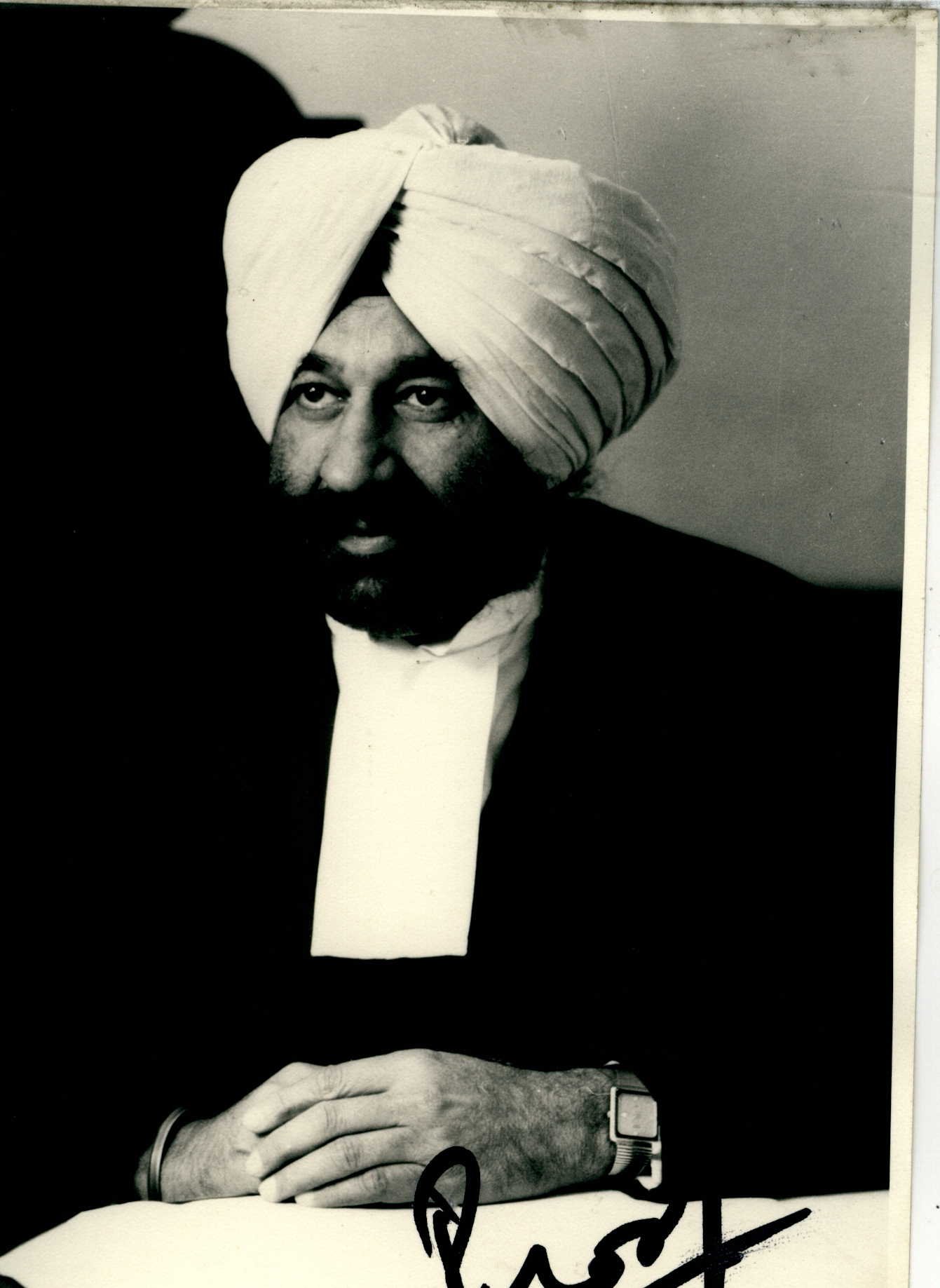
No Acts & Articles mentioned in this case
http://JUDIS.NIC.IN SUPREME COURT OF INDIA Page 1 of 14
PETITIONER:
MITHILESH GARG ETC. ETC.
Vs.
RESPONDENT:
UNION OF INDIA AND ORS. ETC. ETC.
DATE OF JUDGMENT22/11/1991
BENCH:
KULDIP SINGH (J)
BENCH:
KULDIP SINGH (J)
MISRA, RANGNATH (CJ)
KANIA, M.H.
CITATION:
1992 AIR 443 1991 SCR Supl. (2) 428
1992 SCC (1) 168 JT 1991 (4) 447
1991 SCALE (2)1088
CITATOR INFO :
D 1992 SC1888 (13)
ACT:
Motor Vehicles Act, 1988/1939:
Sections 71, 72,80,88/47,5 7---Grant of permits--Libera-
lised procedure envisaged in the new Act--New permits irre-
spective of number of persons already in the route--Rights
of existing operators--Whether affected--Different criteria
provided for inter-region, intra-region and inter-State
permits--Whether violative of the Constitutional guarantee
under Article 14--Factors to be taken into consideration by
Regional Transport Authority before grant of permit.
Constitution of India, 1950:
Articles 14 and 19(1)(g)--Provisions of Motor Vehicles
Act, 1988 Liberalised procedure for issue of permits--Grant
of more permits in the same route-Different criteria for
inter-region, intra-region and interState permits--Whether
violative of.
HEADNOTE:
These Writ Petitions filed before this Court challenged
the liberalisation for private sector operations in the Road
Transport field, under the Motor Vehicles Act, 1988. The
petitioners were the existing operators on different routes.
On behalf of the petitioners, it was contended that the
issue of more permits on the same route adversely affected
their rights guaranteed under Articles 14 and 19 of the
Constitution of India. It was further contended that though
imposition of limit for grant of inter-State permits was
permissible under Section 88(5) of the Act, it was not so in
respect of intra-region permits and hence it is discrimina-
tory; that in public interest the grant of intra-region
permits should be limited.
Dismissing the Writ Petitions, this Court,
HELD: 1.1. Restricted licensing under the old Act led to the
429
concentration of business in the hands of few persons there-
by giving rise to a kind of monopoly, adversely affecting
the public interest. The apprehensions of the petitioners,
that too many operators on a route are likely to affect
http://JUDIS.NIC.IN SUPREME COURT OF INDIA Page 2 of 14
adversely the interest of weaker section of the profession,
is without any basis. The transport business is bound to be
ironed-out ultimately by the rational of demand and supply.
Cost of a vehicle being as it is the business requires huge
investment. The intending operators are likely to be con-
scious of the economics underlying the profession. Only such
number of vehicles would finally remain in operation on a
particular route as are economically viable. In any case the
transport system in a State is meant for the benefit and
convenience of the public. The policy to grant permits
liberally under the new Act is directed towards the said
goal. [438 A-C].
1.2 The petitioners are in the full enjoyment of their
fundamental right guaranteed to them under Article 19(1)(g)
of the Constitution of India. There is no threat of any kind
whatsoever from any authority to the enjoyment of their
right to carry on the occupation of transport operators.
There is no complaint of infringement of any of their statu-
tory rights. More operators mean healthy competition and
efficient transport system. Over-crowded buses, passengers
standing in the aisle, persons clinging to the bus-doors and
even sitting on the roof-top are some of the common sights
in this country. More often one finds a bus which has noisy
engine, old upholstery, uncomfortable seats and continuous
emission of blacksmoke from the exhaust pipe. It is, there-
fore, necessary that there should be plenty of operators on
every route to provide ample choice to the commuter-public
to board the vehicle of their choice and patronise the
operator who is providing the best service. Even otherwise
the liberal policy is likely to help in the elimination of
corruption and favouritism in the process of granting per-
mits. [437 EH; 438-A].
Hans Raj Kehar & Ors. v. The State of U.P. and Ors.,
[1975] 2 SCR 916, followed.
Jasbhai Desai v. Roshan Kumar & Ors., [1976] 3 SCR 58;
,Saghir Ahmad v. The State of U.P. and Ors., [1955] 1 SCR
707, relied on.
Rameshwar Prasad & Ors. v. State of Uttar Pradesh &
0rs.[1983] 2 SCC 195, distinguished.
2. It is only the State which can impose reasonable res-
tric-
430
tions within the ambit of Article 19(6) of the Constitution
of India. Section 47(3) and S7 of the old Act were some of
the restrictions which were imposed by the State on the
enjoyment of the right under Article (19)(1)(g) so far as
the motor transport business was concerned. The said re-
strictions have been taken away and the said provisions have
been repealed from the Statute Book. The new Act provides
liberal policy for the grant of permits to those who intend
to enter the motor transport business. The provisions of the
Act are in conformity with Article 19(1)(g) of the Constitu-
tion of India. When the State has chosen not to impose any
restriction under Article 19(6) of the Constitution of India
in respect of motor transport business and has left the
citizens to enjoy their right under Article 19(1)(g) there
can be no cause for complaint. [440 B-D].
3. The three categories of permit-seekers in respect
of interegion, intra-region and inter-State permits cannot
be considered to be belonging to the same class. Different
criteria have been provided under the Act for granting
permits in respect of each of the categories. It is not the
case that Section 80 brings about discrimination in the
matter of grant of permits between applicants belonging to
the same class. [442-B]
http://JUDIS.NIC.IN SUPREME COURT OF INDIA Page 3 of 14
Hans Raj Kehar & Ors. v. The State of U.P. and Ors.
[1975] 2 SCR 916, relied on.
4. Matters such as conditions of roads, social status
of the applicants possibility of small operators being
eliminated by big operators, conditions of hilly routes,
fuel availability and pollution control are supposed to be
within the comprehension of the transport authorities. The
legislative policy under the Act cannot be challenged on
these grounds. It is not disputed that the Regional Trans-
port Authority has the power under the Act to refuse an
application for grant of permit by giving reasons. It is for
the authority to take into consideration all the relevant
factors at the time of quasi-judicial consideration of the
applications for grant of permits. The statutory authorities
under the Act are bound to keep a watch on the erroneous and
illegal exercise of. power in granting permits under the
liberalised policy. [444 D-F]
JUDGMENT:
ORIGINAL JURISDICTION: Writ Petition (Civil) No. 1345 of
1989.
(Under Article 32 of the Constitution of India).
431
WITH
WRIT PETITION (Civil) 1110/89, 869/90, 740/90, 1100/90,
194/91, 195/91, 265/90, 327/91, 337/91, 334/91, 333/91,
330/91, 329/91, 322/91, 432/91, 420/91, 431/91, 573/91,
181/91, 316/91, 381/91, 390/91, 238/91, 686/91, 687/91 &
167/91)
R.K. Garg, R.K.Jain, Govind Mukhoty, Ved Prakash Gupta,
Suresh Chand Garg, Ms. Bharti Sharma, Rani Chhabra, B.S.
Chauhan, Gaurav Jain, N.K. Goel, D.B. Vohra, Ms. Abha Jain,
Vijay Hansaria, A.K. Tiwari and C.K. Ratnaparkhi for the
Petitioners.
Yogeshwar Prasad, Mrs. S.Dixit, G.V.Rao, A.V.Rangam,
B.Parthasarthy and Ms. A. Subhashini for the Respondents.
The Judgment of the Court was delivered by
KULDIP SINGH, J. The liberalization for private sector
operations in the Road Transport field - under Section 80
and other provisions of The Motor Vehicles Act, 1988 - has
been challenged in these bunch-petitions under Article 32 of
the Constitution, filed by the existing-operators, primarily
on the ground that they have been adversely affected in the
exercise of their rights under Articles 14 and 19 of the
Constitution of India.
It is necessary to notice the statutory provisions
operating in the field of motor transport business prior to
and after the coming into force of The Motor Vehicles Act,
1988 (hereinafter called 'the Act') The Motor Vehicles Act,
1939 (hereinafter called 'the old Act was enacted and en-
forced with the object of having closer control to establish
a coordinated system of transport. The subject of 'Mechani-
cally Propelled Vehicles' being in List-Ill of the VIIth
Schedule to the Constitution, various amendments were made
from time to time by several State Legislatures either
adding to or modifying the provisions of the old Act. Chap-
ter IV of the old Act consisted of sections 42 to 68 provid-
ing "control of transport vehicles". Sections 47 and 57, to
the relevant-extent, are re-produced as under:-
"47.Procedure of Regional Transport Authority
in considering application for stage carnage
permit- (1) A Regional Transport Authority
shall, in considering an application for a
http://JUDIS.NIC.IN SUPREME COURT OF INDIA Page 4 of 14
stage carriage permit, have regard to the
following matters, namely:-
(a) the interest of the public generally;
(b) the advantages to the public of the serv-
ice to be provided,
432
including the saving of time likely to be
effected thereby and any convenience arising
from journeys not being broken;
(c) the adequacy of other passenger
transport services operating or likely to
operate in the near future, whether by road or
other means, between the places to be served:
(d) the benefit to any particular locali-
ty or localities likely to be afforded by the
service;
(e) the operation by the applicant of
other transport services, including those in
respect of which applications from him for
permits are pending;
(f) the condition of the roads included
in the proposed route or area,
and shall also take into consideration any
representations made by persons already pro-
viding passenger transport facilities by any
means along or near the proposed route or
area, or by any association representing
persons interested in the provision of road
transport facilities recognized in this behalf
by the State Government, or by any local
authority or police authority within Whose
jurisdiction any part of the proposed route or
area lies; .................
(3) A Regional Transport Authority may, having
regard to the matters mentioned in sub-section
(1), limit the number of stage carriages
generally or of any specified type for which
stage carriage permits may be granted in the
region or in any specified area or on any
specified route within the region.
57. Procedure in applying for and granting
permits.- (1) An application for a contract
carriage permit or a private carrier's permit
may be made at any time.
(2) An application for a stage carriage permit
or a public carrier's permit shall be made not
less than six weeks before the date on which
it is desired that the permit shall take
effect, or, if the Regional Transport Authori-
ty appoints dates for the receipt of such
applications, on such dates.
(3) On receipt of an application for a stage
carnage permit or a public carrier's permit,
the Regional Transport Authority shall make
the application available for inspection at
the office of the Authority and shall publish
the application or the sub'
433
stance thereof in the prescribed manner to-
gether with a notice of the date before which
representation in connection therewith may be
submitted and the date, not being less than
thirty days from such publication, on which,
and the time and place at which, the applica-
tion and any representations received will be
http://JUDIS.NIC.IN SUPREME COURT OF INDIA Page 5 of 14
considered:
Provided that, if the grant of any permit in
accordance with the application or with modi-
fications would have the effect of increasing
the number of vehicles operating in the re-
gion, or in any area or any route within the
region, under the class Of permits to which
the application relates, beyond the limit
fixed in that behalf under sub-section (3) of
Section 47 or sub-section (2) of Section 55,
as the case may be,, the Regional Transport
Authority may summarily refuse the application
without following the procedure laid down in
this sub-section.
The old Act was repealed by the Act which came
into force on July 1, 1989. The Statement of
Objects and Reasons appended to the Act is
re-produced as under:-
"The Motor Vehicles Act, 1939 (4 of 1939),
consolidates and amends law relating to motor
vehicleS. This has been amended several times
to keep it up to date. The need was, however,
felt that this Act should now inter alia, take
into account also changes in the road trans-
port technology, pattern of passenger and
freight movements, development of the road
network in the country and particularly the
improved techniques in the motor vehicles
management.
2. Various Committees like National Transport
Policy Committee, National Police Commission,
Road Safety Committee, Low Powered Two-wheel-
ers Committee, as also the Law Commission have
gone into different aspects of road transport.
They have recommended updating, simplification
and rationalisation of this law. Several
Members of Parliament have also urged for
comprehensive review of the Motor Vehicles
Act, 1939, to make it relevant to the modern-
day requirements.
3. A Working Group was, therefore, constitut-
ed in January, 1984 to review all the provi-
sions of the Motor Vehicles Act, 1939 and to
submit draft proposals for a comprehensive
legislation to replace the existing Act. This
Working Group took into account the suggestion
and recommendations earlier made by various
bodies and institutions like Central Institute
of Road
434
Transport Automotive Research Association of
India, and other transport organisations
including the manufacturers and the general
public. Besides, obtaining comments of State
Governments on the recommendations of the
Working Group, these were discussed in a
specially convened meeting of Transport Minis-
ters of all States and Union Territories. Some
of the more important modifications so sug-
gested related for taking care of-
(a)...........................
(b).............................
(c) the greater flow of passenger and
freight with the least impediments so that
islands of isolation are not created leading
http://JUDIS.NIC.IN SUPREME COURT OF INDIA Page 6 of 14
to regional or local imbalances;
(d).........................
(e) simplification of procedure and
policy liberalization for private sector
operations in the road transport field; and
(f).....................
The proposed legislation has been prepared in
the light of the above background. Some of the
more important provisions of the Bill provide
for the following matters, namely:-
(a) to
(f) ....................................
(g) liberalized schemes for grant of
stage carriage permits on non-nationalized
routes, all-india tourist permits and also
national permits for goods carriages...
(h) to 1) .........................
Chapter V of the Act-substitute for Chapter IV of the
old Act consisting of Sections 66 to 96, provides for 'co-
ntrol of transport vehicles'. Sections 71, 72 and 80, to the
relevant extent, are reproduced as under:
"71.Procedure of Regional Transport Authority
in considering application for stage carriage
permit. - (1) A Regional Transport Authority
shall, while considering an application for a
stage carriage permit, have regard to the
objects of this Act:
Provided that such permit for a route
of fifty kilometers or less shall be granted
only to an individual or a State transport
undertaking.
435
(2) A Regional Transport Authority shall
refuse to grant a stage carnage permit if it
appears from any time-table furnished that the
provisions of this Act relating to the speed
at which vehicles may be driven are likely to
be contravened:
Provided that before such refusal an
opportunity shall be given to the applicant to
amend the time-table so as to conform to the
said provisions.
(3)(a) The State Government shall, if so
directed by the Central Government having
regard to the number of vehicles, road condi-
tions and other relevant matters, by notifica-
tion in the Official Gazette, direct a State
Transport Authority and a Regional Transport
Authority to limit the number of stage car-
riages generally or of any specified type, as
may be fixed and specified in the notifica-
tion, operating on city routes in towns with a
population of not less than five
lakhs.....................
(4) A Regional Transport Authority shall not
grant more than five stage carriage permits to
any individual or more than ten stage carriage
permits to any company (not being a State
transport undertaking).
(5) In computing the number of permits to be
granted under sub-section (4), the permits
held by an applicant in the name of any other
persons and the permits held by any company of
which such applicant is a director shall also
be taken into account.
http://JUDIS.NIC.IN SUPREME COURT OF INDIA Page 7 of 14
72. Grant of stage carriage permits - (1)
Subject to the provisions of Section 71, a
Regional Transport Authority may, on an appli-
cation made to it under Section 70, grant a
stage carriage permit in accordance with the
application or with such modifications as it
deems fit or refuse to grant such a permit:
Provided that no such permit shall be
granted in respect of any route or area not
specified in the application.
80. Procedure in applying for and granting
permits, - (1) An application for a permit of
any kind may be made at any time.
(2) A Regional Transport Authority shall not
ordinarily refuse to grant an application for
permit of any kind made at any time under this
Act:
Provided that the Regional Transport
Authority may summarily refuse the application
if the grant of any permit in
436
accordance with the application would have
the effect of increasing the number of stage
carriages as fixed and specified in a notifi-
cation in the Official Gazette under clause
(a) of sub-section (3) of section 71 or of
contract carriages as fixed and specified in
a notification in the Official Gazette under
clause (a) of sub-section (3) of Section 74:
Provided further that where a Regional
Transport Authority refuses an application for
the grant of a permit of any kind under this
Act, it shall give to the applicant in writing
its reasons for the refusal of the same and an
opportunity of being heard in the matter."
A comparative-reading of the provisions of the Act and
the old Act make it clear that the procedure for grant of
permits under the Act has been liberalised to such an extent
that an intended operator can get a permit for asking irre-
spective of the number of operators already in the field.
Under Sections 57 read with Section 47(1) of the old Act an
application for a stage carnage permit was to be published
and kept for inspection in the office of the Regional Trans-
port Authority so that the existing operators could file
representations/objections against the said application. The
application, along with objections, was required to be
decided in a quasi-judicial manner, Section 47(3) of the old
Act further permitted the imposition of limit on the grant
of permits in any region, area or on a particular route. It
is thus obvious that the main features of Chapter IV "con-
trol of transport vehicles" under old Act were as under:
1. The applications for grant of permits were
published and were made available in the
office of the Regional Transport Authority so
that the existing operators could file repre-
sentations;
2. The applications for grant of permits
along with the representations were to be
decided in quasi judicial manner; and
3. The Regional Transport Authority was to
decide the applications for grant of permits
keeping in view the criteria laid down in
section 47(1) and also keeping in view the
limit fixed under Section 47(3) of the Act. An
application for grant of permit beyond the
http://JUDIS.NIC.IN SUPREME COURT OF INDIA Page 8 of 14
limited number fixed under Section 47(3) was
to be rejected summarily.
The Parliament in its wisdom has completely effaced the
above features. The scheme envisaged under Section 47 and 57
of the old Act has been completely done away with by the
Act. The right of existing-
437
operators to file objections and the provision to impose
limit on the number of permits have been taken away. There
is no similar provision to that of Section 47 and Section 57
under the Act. The Statement of Objects and Reasons of the
Act shows that the purpose of bringing in the Act was to
liberalize the grant of permits. Section 71(1) of the Act
provides that while considering an application for a stage
carriage permit the Regional Transport Authority shall have
regard to the objects of the Act. Section 80(2), which is
the harbinger of Liberalisation, provides that a Regional
Transport Authority shall not ordinarily refuse to grant an
application for permit of any kind made at any time under
the Act. There is no provision under the Act like that of
Section 47(3) of the old Act and as such no limit for the
grant of permits can be fixed under the Act. There is,
however, a provision under Section 71(3) (a) of the Act
under which a limit can be fixed for the grant of permits in
respect of the routes which are within a town having popula-
tion of more than five lakhs.
The petitioners are existing stage-carnage operators on
different routes. They hold permits granted by the Regional
Transport Authorities concerned. Mithlesh Garg, petitioner
in Civil Writ Petition No. 1345/89 has stated that he holds
a stage carnage permit and plies his vehicles on the
Meerut-Parikshitgarh-Hasifabad-Laliana and allied routes
under the jurisdiction of the Regional Transport Authority,
Meerut. According to him prior to the enforcement of the
Act, 23 permit-holders were operating on the said route but
thereafter under Section 80 of the Act the Regional Trans-
port Authority, Meerut has issued 272 more permits in re-
spect of the same route. Similar facts have been stated in
the other writ petitions. As mentioned above the petitioners
are permit holders and are existing operators. They are
plying their vehicles on the routes assigned to them under
the permits. They are in the full enjoyment of their funda-
mental right guaranteed to them under Article 19(1)(g) of
the Constitution of India. There is no threat of any kind
whatsoever from any authority to the enjoyment of their
right to carry on the occupation of transport operators.
There is no complaint of infringement of any of their statu-
tory rights. Their only effort is to stop the new operators
from coming in the field as competitors. We see no justifi-
cation in the petitioners' stand. More operators mean
healthy-competition and efficient transport system. Over-
crowded buses, passengers standing in the aisle, persons
clinging to the bus-doors and even sitting on the roof-top
are some of the common sights in this country. More often
one finds a bus which has noisy engine, old upholstry,
uncomfortable seats and continuous emission of black-smoke
from the exhaust pipe. It is, therefore, necessary that
there should be plenty of operators on every route to pro-
vide ample choice to the commuter-public to board the vehi-
cle of their choice and patronize the operator who is
438
providing the best service. Even otherwise the liberal
policy is likely to help in the elimination of corruption
and favouritism in the process of granting permits. Re-
stricted licensing under the old Act led to the concentra-
http://JUDIS.NIC.IN SUPREME COURT OF INDIA Page 9 of 14
tion of business in the hands of few persons thereby giving
rise to a kind of monopoly, adversely affecting the public
interest. The apprehensions of the petitioners, that too
many operators on a route are likely to affect adversely the
interest of weaker section of the profession, is without any
basis. The transport business is bound to be ironed-out
ultimately by the rationale of demand and supply. Cost of a
vehicle being as it is the business requires huge invest-
ment. The intending operators are likely to be conscious of
the economics underlying the profession. Only such number of
vehicles would finally remain in operation on a particular
route as are economically viable. In any case the transport
system in a state is meant for the benefit and convenience
of the public. The policy to grant permits Liberally under
the Act is directed towards the said goal. The petitioners
who are already in the business want to keep the fresh
entrants out of it and as such eliminate the healthy compe-
tition which is necessary to bring efficiency in the trade.
This Court in Jasbhai Desai v. Roshan Kumar & Ors., [1976] 3
S.C.R. 58 posed the following questions for its determina-
tion:-
"Whether the proprietor of a cinema theater
holding a licence for exhibiting cinematograph
films, is entitled to invoke the certiorari
jurisdiction ex debito justitiae to get a
'No-Objection Certificate', granted under Rule
6 of the Bombay Cinema Rules, 1954 (for short,
the Rules) by the District Magistrate in
favour of a rival in the trade, brought up and
quashed on the ground that it suffers from a
defect of jurisdiction, is the principal
question that falls to be determined in this
appeal by special leave."
Sarkaria, J. speaking for the Court an-
swered the question in the following words:-
"In the light of the above discussion, it is
demonstrably clear that the appellant has not
been denied or deprived of a legal right. He
has not sustained injury to any legally pro-
tected interest. In fact the impugned order
does not operate as a decision against him,
much less does it wrongfully affect his title
to something. He has not been subjected to a
legal wrong. He has suffered no legal griev-
ance. He has no legal peg for a justiciable
claim to hang on...... While a Procrustean
approach should be avoided, as a rule the
Court should not interfere at
439
the instance of 'stranger' unless there are
exceptional circumstances involving a grave
miscarriage of justice having an adverse
impact on public interests. Assuming that the
appellant is a 'stranger', and not a busybody,
then also, there are no exceptional circum-
stances in the present case which would justi-
fy the issue of a writ of certiorari at his
instance. On the contrary, the result of the
exercise of these discretionary powers, in his
favour, will, on balance, be against public
policy. It will eliminate healthy competition
in this business which is so essential to
raise commercial morality; it will tend to
prepetuate the appellant's monopoly of cinema
business in the town; and above all, it will,
http://JUDIS.NIC.IN SUPREME COURT OF INDIA Page 10 of 14
in effect, seriously injure the fundamental
rights of respondents 1 & 2, which they have
under Article 19(1) (g) of the Constitution,
to carry on trade or business subject to
'reasonable restrictions' imposed by law. The
instant case fails well-nigh within the ratio
of the this Court's decision in Rice and Flour
Mills v. N.T. Gowda, wherein it was held that
a rice mill-owner has no locus standi to
challenge under Article 226, the setting up of
a new rice-mill by another-even if such
setting up be in contravention of S. 8(3) (c)
of the Rice Milling Industry (Regulation) Act,
1958 because no right vested in such an appli-
cant is infringed. For all the foregoing
reasons, we are of opinion that the appellant
had no locus standi to invoke this special
jurisdiction under article 226 of the Consti-
tution. Accordingly, we answer the question
posed at the commencement of this judgment, in
the negative."
We, therefore, see on justification for the petitioners
to complain against the liberalised policy for grant of
permits under the Act.
Article 19(1)(g) of the Constitution of India guarantees
to all citizens the right to practice any profession, or to
carry on any occupation, trade or business subject to rea-
sonable restrictions imposed by the State under Article
19(6) of the Constitution of India. A Constitution Bench of
this Court in Saghir Ahmad v. The State of U.P. and Others,
[1955] 1 S.C.R. 707 held that the fundamental right under
Article 19(1)(g) entitles, any member of the public to carry
on the business of transporting passengers with the aid of
the vehicles. Mukerjea, J. speaking for the Court observed
as under:
"Within the limits imposed by State regula-
tions any member of the public can ply motor
vehicles on a public road. To that extent he
can also carry on the business of transporting
passen-
440
gers with the aid of the vehicles. It is to
this carrying on of the trade or business that
the guarantee in article 19(1)(g) is attracted
and a citizen can legitimately complain if any
legislation takes away or curtails that right
any more than is permissible under clause (6)
of that article."
It is thus a guaranteed fight of every citizen whether rich
or poor to take up and carry on, if he so wishes, the motor
transport business. It is only the State which can impose
reasonable restrictions within the ambit of Article 19(6) of
the Constitution of India. Section 47(3) and 57 of the old
Act were some of the restrictions which were imposed by the
State on the enjoyment of the fight under Article 19(1)(g)
so far as the motor transport business was concerned. The
said restrictions have been taken away and the provisions of
Section 47(3) and 57 of the old Act have been repealed from
the Statute Book. The Act provides liberal policy for the
grant of permits to those who intend to enter the motor
transport business. The provisions of the Act are in con-
formity with Article 19(1)(g) of the Constitution of India.
The petitioners are asking this Court to do what the Parlia-
ment has undone. When the State has chosen not to impose any
restriction under Article 19(6) of the Constitution of india
http://JUDIS.NIC.IN SUPREME COURT OF INDIA Page 11 of 14
in respect of motor transport business and has left the
citizens to enjoy their right under Article 19(1)(g) there
can be no cause for complaint by the petitioners.
On an earlier occasion this Court dealt with somewhat
similar situation. The Uttar Pradesh Government amended the
old Act by the Motor Vehicle (U.P. Amendment) Act, 1972 and
inserted Section 43A. The new Section 43-A apart from making
certain changes in Section 47 of the old A Act also omitted
sub-section (3) of Section 47 of the old Act) Section 43A
provided that in the case of non nationalised routes, if the
State Government was of the opinion that it was for the
public interest to grant permits to all eligible applicants
it might, by notification in the official gazette issue a
direction accordingly. The necessary notification was issued
with the result that the transport authorities were to
proceed to grant permits as if sub-section (3) of section 47
was omitted and there was no limit for the grant of permits
on any specified route within the region. Section 43-A and
the consequent notification was challenged by the existing
operators before the Allahabad High Court. The High Court
dismissed the writ petitions. On appeal this Court in Hans
Raj Kehar & Ors. v. The State of U.P. and Ors., [1975] 2
S.C,R. 916 dismissed the appeal. Khanna, J.speaking for the
Court held as under;-
"It hardly need much argument to show that the
larger number of buses operating on different
routes would be for the conven-
441
ience and benefit of the travelling public and
as such would be in the public interest. Any
measure which results in larger number of
buses operating on various routes would neces-
sarily eliminate or in any case minimise long
hours of waiting at the bus stands. It would
also relieve congestion and provide for quick
and prompt transport service. Good transport
service is one of the basic requirements of a
progressive society. Prompt and quick trans-
port service being a great boon for those who
travel, any measure which provides for such an
amenity is in the very nature of things in the
public interest................. The conten-
tion that the impugned notification is viola-
tive of the rights of the appellants under
article 19(1)(f) or (g) of the Constitution(is
equally devoid of force. There is nothing in
the notification which prevents the appel-
lants from acquiring, holding and disposing of
their property or prevents them from practis-
ing any profession or from carrying on any
occupation, trade or business. The fact that
some others have also been enabled to obtain
permits for running buses cannot constitute a
violation of the appellants' rights under the
above two clauses of article 19 of the Consti-
tution. The above provisions are not intended
to grant a kind of monopoly to a few bus
operators to the exclusion of other eligible
persons. No right is guaranteed to any private
party by article 19 of the Constitution of
carrying on trade and business without compe-
tition from other eligible persons. Clause (g)
of article 19(1) gives a right to all citizens
subject to article 19(6) to practise any
profession or to carry on any occupation,
http://JUDIS.NIC.IN SUPREME COURT OF INDIA Page 12 of 14
trade or business. It is an enabling provision
and does not confer a right on those already
practising a profession or carrying on any
occupation, trade or business to exclude and
debar fresh eligible entrants from practising
that profession or from carrying on that
occupation, trade or business. The said provi-
sion is not intended to make any profession,
business or trade the exclusive preserve of a
few persons. We, therefore, find no valid
basis for holding that the impugned provisions
are violative of article 19".
The identical situation has been created by Sections 71,
72 and 80 of the Act by omitting the provisions of Section
47(3) of the old Act. It has been made easier for any person
to obtain a stage carriage permit under the Act. The attack
of the petitioner on Section 80 on the ground of Article 19
has squarely been answered by this Court in Hans Raj Kehar's
case (supra).
It has been contended in the writ petitions that differ-
ent yard-sticks have been provided for interregion, intra-
region and inter-State permits
442
under the Act. According to the petitioners the imposition
of limit for grant of inter-State permits is permissible
under Section 88(5) of the Act whereas no such limit can be
imposed in respect of intra-region permits. The contention
is that the provisions are discriminatory and are violative
of article 14 of the Constitution of India. We are not
impressed by the argument. The three categories of permit-
seekers cannot be considered to be belonging to the same
class. Different criteria have been provided under the Act
for granting permits in respect of each of the categories.
It is nobody's case that Section 80 brings about discrimina-
tion in the matter of grant of permits between applicants
belonging to the same class. The argument on the ground of
Article 14 is thus wholly untenable and is rejected. This
question also came for consideration in Hans Raj Kehar's
case (supra) and this Court rejected the contention in the
following words:-
"Argument has also been advanced that the
deletion of Section 47(3) would have the
effect of removing the limit on the number of
permits for intra-region routes but that fact
would not prevent the imposition of a limit
for the number of permits for inter-region
routes. This argument has been advanced in the
context of the case of the appellants that the
impugned provisions discriminate in the matter
of issue of permits for intraregion routes and
those for inter-region routes and as such are
violative of article 14 of the Constitution.
We are not impressed by this argument for we
find no valid basis for the inference that if
there is no limit on the number _of permits
for intra-region routes,limit on the number of
permits for interregional routes would' have
to be imposed. The object of the impugned
notification is to liberalise the issue of
permits and we fail to see as to how such a
liberal measure can have the effect of intro-
ducing strictness or stringency in the matter
of grant of permits for inter-region routes.
Assuming that a different rule is applicable
in the matter of inter-region routes, the
http://JUDIS.NIC.IN SUPREME COURT OF INDIA Page 13 of 14
differentiation is based upon reasonable
classification. It is nobody's case that the
impugned provision brings about discrimination
in the matter of grant of permits between
applicants belonging to the same class. The
argument about the impugned provision being
violative of article 14 is wholly trotenable."
The learned counsel for the writ petitioners, have
relied upon a later decision of this Court in Rameshwar
Prasad & Ors., v. State of Uttar Pradesh & Ors., [1983] 2
S.C.C. 195 and have contended that the decision of this
Court in Hans Raj Kehars case (supra) no longer holds the
443
field. There is no force in the contention. This Court on
two occasions interpreted the old Act as amended by the
State of Uttar Pradesh at the relevant times. The provisions
of law which were interpreted in Hans Raj Kehar's case were
entirely different than those which were before this Court
in Rameshwar Prasad's ease. The legal position with which we
are faced in these writ petitions is almost similar to that
which was considered by this Court in Hans Raj Kehar's case.
What happened in the State of Uttar Pradesh was that after
the U.P. Amendment of 1972 to the old Act, which was subject
matter of interpretation before this Court in Hans Raj
Kehars ease, it was found that certain anomalies had arisean
in the working of the liberal policy of granting permits.
With a view to remedy the situation the U.P. Legislature
amended the old Act again by the U.P. Act 15 of 1976 permit-
ting imposition of limit on the number of permits to be
issued. In spite of the restrictions on grant of permits as
provided in the U.P. Act 15 of 1976 the State Government
issued notifications permitting grant of permits to all
eligible applicants without any upper limit. This Court held
in Ratneshwar Prasad's ease that the said notifications were
inconsistent with the limitation as to the number of permits
introduced by the U.P. Amending Act 1976 and as such were
bad in law. Venkataramiah, J. (as he then was) speaking for
the Court in Rameshwar Prasad's ease observed as under:
"We may here state that any observations made
in Hans Raj Kehar case would be inapplicable
so far as these cases presently before us are
concerned. In that case the court was con-
cerned with sub-section (2) of Section 43-A of
the Act as it stood then which was a provision
enacted by the legislature. That sub-section
provided that without prejudice to the gener-
ality of the power contained in Section 43-
A(1) of the Act where the State Government was
of opinion that it was in public interest to
grant stage carriage permits (except in re-
spect of routes or areas for which schemes
have been published under Section 68-C) or
contract carriage permits or public carrier
permits to all eligible applicants it may
issue appropriate directions as stated there-
in. That sub-section contained a clear legis-
lative policy which considered that there
could be no public prejudice if all eligible
applicants were granted permits. Without
saying anything more on the point, it may be
slated that whatever this court may have
observed while considering that provision
would not apply now as there is a clear depar-
ture made by the legislature from that policy
when it enacted the new sub-section (2) of
http://JUDIS.NIC.IN SUPREME COURT OF INDIA Page 14 of 14
Section 43-A."
It is thus obvious that the reliance by the petitioners
on the ratio and observations of this Court in Rameshwar
Prasad's case is wholly mis-
444
placed. The Parliament has, under the Act, made a clear
departure from the policy and has reverted to the position
which was before this Court in Hans Raj Kehar's case.
Relying on Rameshwar Prasad's case the petitioners
contend that it is in 'public interest' to limit the grant
of permits on intra-region routes and while fixing the limit
various factors indicated by this Court in the said case are
to be taken into consideration. We do not agree. The concept
of public interest, in relation to motor transport business,
as propounded by this Court in Rameshwar Prasad's case was
only in the context of the old Act as amended by the U.P.
Act. We are of the view that the Act having brought-in
complete change in the policy of granting permits, the
observations of this Court in Rameshwar Prasad's case are
not relevant in the present context. The provisions of law
for consideration before this Court in Hans Raj Kehar's case
were almost similar to Section 80 of the Act. We are, there-
fore, bound by the law laid down by the four-Judges Bench of
this Court in Hans Raj Kehar's case.
The petitioners have further contended that the condi-
tions of roads, social status of the applicants, possibility
of small operators being eliminated by big operators, condi-
tions of hilly routes, fuel availability and pollution
control are some of the important factors which the Regional
Transport Authority is bound to take into consideration
while taking a decision on an application for grant of
permit. These are the matters which are supposed to be
within the comprehension of the transport authorities. The
legislative policy under the Act cannot be challenged on
these grounds. It is not disputed that the Regional Trans-
port Authority has the power under the Act to refuse an
application for grant of permit by giving reasons. It is for
the authority to take into consideration all the relevant
factors at the time of quasi-judicial consideration of the
applications for grant of permits. The statutory authorities
under the Act are bound to keep a watch on the erroneous and
illegal exercise of power in granting permits under the
liberalised policy.
We, therefore, see no force in any of the contentions
raised by the petitioners and as such we dismiss the writ
petitions. The parties are left to bear their own costs.
G.N. Petitions dis-
missed.
445
The landmark case of Mithilesh Garg Etc. Etc. vs. Union of India & Ors. Etc. Etc. stands as a pivotal judgment on the principles of economic liberalisation and fundamental rights in India. This ruling, available on CaseOn, directly addresses the constitutionality of the Motor Vehicles Act 1988 and the policy of Liberalisation of Road Transport Permits. The Supreme Court's decision dismantled the arguments of existing transport operators who sought to protect their businesses from new competition, firmly establishing that the right to trade does not guarantee a right to a monopoly.
The case emerged from a significant legislative overhaul. The previous law, the Motor Vehicles Act, 1939, operated under a restrictive regime. Under Sections 47 and 57 of the old Act, the number of permits for a particular route could be limited, and existing operators had the right to object to new applications. This system often led to a concentration of business in the hands of a few, creating monopolies that adversely affected public convenience and service quality.
In 1988, Parliament enacted a new Motor Vehicles Act with a stated objective of simplifying procedures and liberalising the private transport sector. Section 80 of the new Act was a game-changer, stipulating that a Regional Transport Authority should not ordinarily refuse a permit application. This new liberal policy was challenged by a group of existing operators, who argued it was unconstitutional and detrimental to their livelihood.
The Supreme Court was tasked with determining the following key legal questions:
The legal framework central to this case included:
The petitioners, who were established operators on various routes, contended that the new Act, by allowing an unrestricted influx of new operators, would create ruinous competition, harm their businesses, and negatively impact public interest. They essentially argued for a right to be shielded from competition.
The Supreme Court systematically dismantled the petitioners' arguments, focusing on the core principles of public welfare and constitutional rights.
Understanding the nuances between landmark rulings like Hans Raj Kehar & Ors. v. The State of U.P., which the court relied upon, is crucial for legal arguments. For busy professionals, CaseOn.in offers 2-minute audio briefs that distill the essence of these specific rulings, making complex case law analysis faster and more efficient.
The Supreme Court of India dismissed the writ petitions, holding that the liberalised policy for granting permits under the Motor Vehicles Act, 1988, was constitutionally valid. The Court concluded that the new policy did not infringe upon the fundamental rights of the petitioners and was, in fact, in the larger public interest.
The Supreme Court upheld the liberalisation of private sector operations in the road transport field as envisaged by the Motor Vehicles Act, 1988. It ruled that the right to business under Article 19(1)(g) does not protect existing operators from competition. The Court found the new policy to be in the public interest, as it promotes healthy competition, leads to better and more efficient transport services, and provides more choice to the public. The argument of discrimination under Article 14 was also rejected, as the different categories of permits were deemed to belong to different classes.
For lawyers and law students, Mithilesh Garg vs. Union of India is a foundational text for several reasons:
Disclaimer: This article is for informational purposes only and does not constitute legal advice. The information provided is based on the court judgment and should not be relied upon as a substitute for professional legal consultation.

 Login with google
Legal Notes
Add a Note....