
No Acts & Articles mentioned in this case
1.
Reserved
AFR
Case :- CRIMINAL APPEAL No. - 1813 of 2014
Appellant :- Monu
Respondent :- State of U.P.
Counsel for Appellant :- Vikrant Rana, Gajendra Kumar Gautam,
Pradeep Kumar
Counsel for Respondent :- Govt. Advocate
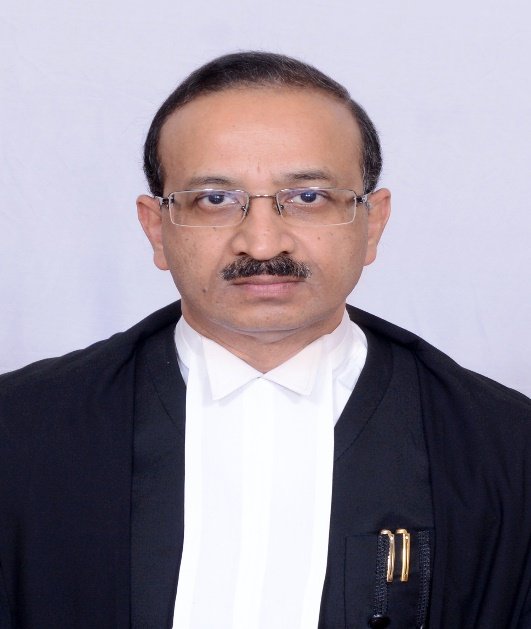
Hon'ble Manoj Kumar Gupta,J.
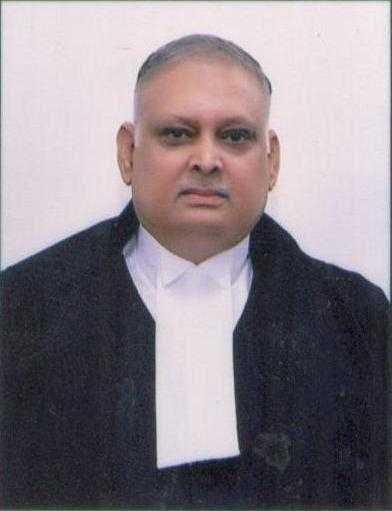
Hon'ble Om Prakash Tripathi, J.
(Per Manoj Kumar Gupta, J.)
The accused appellant has filed the instant appeal assailing the
judgment and order dated 7.04.2014 and 11.04.2014, passed by
Additional District & Sessions Judge, Court No.4, Ghaziabad in S.T.
No.1408 of 2006 convicting him under Section 302 IPC and awarding
rigorous imprisonment for life and fine of Rs.50,000/- and in default in
payment thereof, to three years additional simple imprisonment and
under Section 506 IPC to seven years rigorous imprisonment and fine
of Rs.20,000/- and in default in payment thereof, to ten months
additional simple imprisonment and in Sessions Trial No.1409 of 2006
under Section 25 (1) (b) of the Arms Act, to three years rigorous
imprisonment and fine of Rs.10,000/- and in default in payment
thereof, additional simple imprisonment of six months.
According to the prosecution case, on 13.6.2006 at about 10:30
p.m., accused Monu (appellant) and Khalid, neighbours of the victim
Manju Sharma came to her house while she was sitting on a cot
2.
alongwith her daughter Komal (PW-1) on the open terrace. Her mother
Sheela and brother Yogesh and Nitin were in the courtyard. Monu had
some talk with her. After about five minutes, he took out pistol
(tamancha) from his pocket and fired at the victim from the back side.
While his accomplice co-accused Khalid, who was carrying some
object made of iron, hit her on the head and hand several times. Her
daughter Komal (PW-1/complainant), who had witnessed the incident,
raised alarm and whereupon both of them escaped through the staircase
brandishing the tamancha and threatening Yogesh and Nitin (brothers
of the victim) and Smt. Sheela (mother of the victim) to kill them if
they come in their way. The accused were duly identified in the moon
light and light of lantern, as they live in the neighbourhood and the
complainant (Komal) had known them since her childhood. Her mother
was rushed to Jeevan Hospital by her maternal uncle. The victim was
later shifted to Narendra Mohan Hospital and thereafter to Jang
Bahadur Hospital, Delhi where she succumbed to her injuries and died
on 14.06.2006 at 4:10 p.m. A first information report relating to the
incident was got registered by Komal on 13.06.2006 under Sections
307, 506 IPC as Crime Case No.227 of 2006. Later on offence was
converted to Section 302 IPC. The accused surrendered in court on
26.06.2006. On 04.07.2006, the court allowed police remand of 24
hours. On the same day, the police, on pointing out of the accused,
3.
recovered a country made pistol (tamancha) of 315 bore, 3 live
cartridges – 315 bore and an iron handle of hand-pump. The Police,
after investigation, submitted charge sheet under Sections 302 and 506
IPC. The Chief Judicial Magistrate by order dated 14.9.2006 committed
the trial to the Court of Sessions and it came to be registered as S.T.
No.409 of 2006. By order dated 3.7.2007, the trial court declared co-
accused Khalid as juvenile and he was tried separately by the Juvenile
court.
During course of investigation of Crime Case No.227 of 2006, a
separate case bearing No.270 of 2006 was registered against the
appellant under Section 25 of the Arms Act on basis of recovery of a
country made pistol of 315 bore and three live cartridges 315 bore on
4.7.2006. The police, after investigation, submitted a charge sheet. The
Chief Judicial Magistrate by order dated 14.9.2006 forwarded the
charge sheet to the Court of Sessions, where it came to be registered as
S.T. No.1408 of 2006. Both the cases were tried together and have been
decided by common judgment impugned herein.
During course of trial, the prosecution examined two witnesses of
facts. The first one is Km. Komal (PW-1), who is daughter of the
victim and also the complainant. She had seen the accused firing and
assaulting her mother. The other is Nitin Sharma (PW-4), who is
4.
brother of the deceased victim and had seen the accused running away
after committing the offence. The prosecution had examined thirteen
other witnesses: PW-5, Pawan Kumar, Assistant in Jeevan Hospital,
PW-6, Dr. Barkha Gupta, who conducted the postmortem, PW-7 S.I.
Chamu Bhagat, the police officer, who prepared the death report and
got the postmortem done, PW-8 S.I. Krishna Pal, scribe of the first
information report (Ex. Ka.10), PW-9 Inspector Somveer Singh,
Investigating Officer of Crime Case No.227 of 2006, PW-10 S.I. Aftab
Ali, Investigating Officer of Crime Case No.270 of 2006, PW-11,
retired S.I. Ram Saran, witness of seizure memo, PW-12 S.I. Vishesh
Kumar Singh, last Investigating Officer of Crime Case No.227 of 2006,
PW-13 S.I. Parvinder Pal Singh, first Investigating Officer of Crime
Case No.227 of 2006.
The prosecution proved the written complaint (Ex. Ka-1) by
examining PW-1, FIR (Ex. Ka-10) by examining PW-8, the Fard of
ordinary and blood stained earth (Ex. Ka-2) by examining Chokhey Lal
(PW-3), application filed by Nitin Sharma (Ex. Ka-3) by examining
him (PW-4), postmortem report (Ex. Ka-4) by examining Dr. Barkha
Gupta (PW-6), seizure memo of country made pistol, 3 live cartridges
and iron handle of hand-pump (Ex. Ka-12) by examining PW-9, report
of Vidhi Vigyan Prayogshala (Ex. Ka-20) by examining PW-12.
5.
The accused was confronted with the incriminating material and
evidence under Section 313 Cr.P.C. wherein he denied his involvement
and stated that he was falsely implicated and claimed to be tried.
We have heard counsel for the parties and perused the record and
the impugned judgment and order.
Learned counsel for the appellant submitted that the prosecution
has utterly failed to bring home the charges. The appellant was falsely
implicated. The deceased was a call girl and woman of loose character
and she had been to jail in a double murder. There are inherent
inconsistencies in the statement of PW-1 and PW-4. It is submitted that
while PW-1, in her statement, said that her mother was not doing any
work, PW-4 stated that she was working in a bulb factory in Modi
Nagar. Again PW-1 admitted that her mother remained confined in jail
in connection with murder of one Shashi but PW-4 feigned ignorance
regarding her incarceration. It is further submitted that the medical
evidence does not support the prosecution case; that the prosecution
could not lead any evidence to prove mens rea. It is also urged that the
alleged bullet recovered from the body of the victim was not sent for
forensic examination, therefore, the prosecution had failed to establish
link between the seized weapon and the bullet recovered from the body
of the victim. In other words, the contention is that in the absence of the
6.
report of ballistic expert to connect the appellant with the bullet
recovered from the body of the victim, the prosecution had failed to
establish its case.
On the other hand, learned A.G.A. for the State submitted that the
prosecution has succeeded in proving its case to the hilt. The eye
version account of PW-1, daughter of the victim, is of unimpeachable
character and so is the statement of her brother Nitin Sharma (PW-4).
The prosecution story stands corroborated by the postmortem report
wherein the injuries were found to tally with the manner in which the
injuries were said to have been inflicted as per the prosecution story. It
is submitted that the doctor PW-6 had fully proved that injury no.2 is a
entry wound of bullet and was sufficient to cause death. The other
injuries, as per her statement, are attributable to blows received from
hard and blunt object and the prosecution had successfully established
that those were inflicted by the iron handle of hand-pump. He further
submitted that there is no material contradiction in the testimony of
PW-1 and PW-4 inasmuch as their consistent version was that the
victim died because of gun shot injury and other blows by a hard
object. It is urged that the prosecution story is fully supported by
medical evidence and consequently, it is wholly immaterial whether the
bullet recovered from the body of the victim was sent for ballistic
7.
report or not. In support of his contention, he has placed reliance on
judgments of Supreme Court in State of Himachal Pradesh Vs.
Mast Ram, AIR 2004 SC 5056 and Munna alias Surendra
Kumar Vs. State of M.P., AIR 2003 SC 3346.
The first issue for consideration is whether the prosecution has
succeeded in proving the time and place of occurence. The incident, as
per prosecution case, had taken place on 13.6.2006 at 10:30 p.m. on the
open terrace of the house of the victim. The first information report was
got registered on 13.6.2006 i.e. on the same date at 11:20 p.m. The
consistent version of eye witness PW-1, daughter of the victim and PW-
4, brother of the victim, is that the victim received grievous injuries as a
result of assault and was rushed to hospital by her brother. PW-1, who
was stated to be 16 years of age at the time of alleged incident, got the
report scribed by S.P. Samaniya, her neighbour and thereafter informed
the police station. The F.I.R. was thus got registered immediately
without any delay. There was no suggestion to any witness during
cross-examination that the incident had not taken place on the terrace of
the house of the victim, but at some other place. In fact, the accused
appellant during his examination under Section 313 Cr.P.C. did not
deny the time and place of incident but alleged that several other
persons used to visit the house of the victim and thus tried to attribute
8.
the offence to them. He also claimed to have been falsely implicated.
Pawan Kumar (PW-5), Assistant, Jeewan Hospital stated that the
victim was brought to the hospital on 13.6.2006 in serious condition.
The first aid was given to her by Dr. Upendra Rana (Surgeon).
Thereafter she was referred for further treatment to other hospital. S.I.
Charmu, who prepared the death report of the victim, stated that she
was admitted to the hospital on 13.6.2006 with number of injuries. She
died on 14.6.2006 at 3 p.m. We thus find that time and place of incident
is fully proved.
The next question is whether the prosecution case that the victim
was shot from close range from the back side and also hit on her head
and hand with some iron object, also from back side, is proved or not
and what was the cause of her death? According to post mortem report,
the following ante-mortem injuries were found :-
1.Lacerated wound 5.5 x 0.5 cm bone deep on left occipital
protuberance, obliquely placed, medial end above the lateral end.
2.Firearm entry wound 3.0 x 2.0 cm on Right upper back of chest
2.0 cm outer to right from midline and 4.0 cm below shoulder
top, surrounded by tatooing in a area of 20.0 x 10.0 cm more on
Right side blackening present on Right side of the wound. On
exploration wound was packed with surgical gauge piece. The
track of the wound was going forward, downward and medially
after shattering the vertebra T
1
and T
2
through and through bullet
9.
was found lodged in left mediastinal tissue surrounded by blood
clots after injuring the mediastinal blood vessels.
3.Reddish bruise 5.0 x 1.0 cm present on outer aspect of right
forearm 8.0 cm below elbow joint.
4.Incised wound 3.6 x 0.6 cm x 0.2 cm horizontally placed on
Right thigh on front aspect 11.0 cm above the knee.
5.Incised wound skin deep 15.0 x 0.5 x 0.2 cm horizontally placed
situated 0.8 cm below shoulder top on right back of the chest.
6.Reddish linear scratch mark 16.0 x 0.1 cm horizontally placed 2.0
cm below shoulder top on right back of chest 1.2 cm below injury
No.5.
7.Linear Reddish abrasion 10.0 x 0.2 cm on Right lower back of
chest horizontally placed 26.0 cm above gluteal cleft and inner
end situated at midline.
According to medical opinion, cause of death is hemorrhagic
shock due to ante mortem injury to mediastinal blood vessel produced
by projectile of fire arm. Injury No.2 is fire arm entry wound on the
back of chest. There is tattooing and blackening in the area of 20 x 10
cms on right side of the wound. The bullet was found lodged in left
mediastinal tissue (between the lungs). This supports the prosecution
case that firing was done from a close distance from the back side. The
bullet recovered from the body measured 3.3 cm in length and 0.8 cm
in diameter. It was opined that injury No.2 was sufficient to cause death
in ordinary course of nature. Dr. Barkha Gupta, who conducted the post
mortem, was examined as PW-6. In her statement she reiterated that
10.
injury No.2 was sufficient to cause death. She further stated during
cross-examination that death had occurred due to profuse bleeding
from the mediastinal vessel caused by gun shot injury.
PW-6 in her cross-examination clarified that injury No.1 was
outcome of blow from kundala and injury No.5 by a sharp weapon. All
other injuries were on shoulder, back of chest and fore arm. It duly
supports the prosecution case that co-accused Khalid who was carrying
some object made of iron, which during investigation was found to be
iron handle of hand-pump was used in hitting the victim from the back
side. There was no suggestion by the defence during cross-examination
of PW-6 that the injuries found on the body of the victim were not
result of gun shot or blows from iron handle of hand-pump. PW-1, who
is eye witness, in her statement fully supported the prosecution version.
Despite a lengthy cross-examination, the defence could not succeed in
extracting anything which may demolish the prosecution story. The
prosecution has thus succeeded in proving that the victim died because
of gun shot and other injuries sustained during assault.
The most crucial issue is whether the prosecution has succeeded
in proving that the accused-appellant was responsible for the crime in
question or not? PW-1, as noted above, was eye witness of the
occurrence. She is daughter of the victim and was aged about 16 years
at that time. She has unequivocally supported the prosecution case that
11.
accused Monu and Khalid who are resident of same mohalla, came to
the open terrace of her house where she was sitting on a cot alongwith
the victim. Monu had some talk with the victim and after five minutes
he fired at her from the back followed by several blows by co-accused
Khalid with a hatthi (gRFkh). The victim shouted and PW-1 also
shouted. Her maternal uncle and her Naani, on hearing the shouts came
near the staircase. However, Monu, brandishing the tamancha and
threatening to fire at them, succeeded in running away from the gali
towards field. The accused were identified in moon light and light of
lantern. She further stated that she was able to identify them as they are
her neighbours and she had been seeing them since childhood. She also
stated that her mother was grieviously hurt as a result of assault from
fire arm and iron hatthi. Her maternal uncle rushed her mother to
Narendra Mohan Hospital and in the end to Jang Bahadur Hospital
where she died. In her cross-examination, she clarified that her father
had died when she was nine months of age. Her mother had since been
residing with her Naani. She specifically denied that her mother was
having enmity with other persons and they were instrumental in her
murder. She also denied the suggestion that she had falsely implicated
the appellant-accused as her engagement with him got snapped.
PW-4 Nitin Sharma is the brother of the victim. He stated that he
12.
was present in the courtyard of the house at the time of occurrence. He
also stated that it was a moonlit night and there was also light of
lantern. The accused came to his house at about 10:30 p.m. on
13.06.2006. At that time the victim and her daughter were sitting on
open terrace. He further stated that the accused told him that they want
to talk to the victim and they were told that she was on terrace.
Thereafter the accused went to the terrace through the staircase. After
5-6 minutes, he heard sound of gun shot and PW-1 was shouting for
help. When he rushed towards the terrace, the accused were coming
down through the staircase. Accused-appellant Monu was having
tamancha and Khalid was having handle of hand-pump in his hand.
Monu asked him to clear his way otherwise he will fire at him. He
thereafter succeeded in running away. When they went on the terrace,
they found victim bleeding profusely. The victim was taken to the
hospital.
The submission of learned counsel for the appellant was that the
statement of PW-1 and PW-4 is contradictory and has therefore to be
discarded. It is true that PW-1 in her cross-examination stated that the
victim was not doing any work, while PW-4 stated that she was
engaged in a company at Noida. Again, PW-1 in her cross-examination
admitted that her mother had been to jail in connection with a case
relating to murder of two persons and was released after three months
13.
on bail, but denied her illicit relationship with them, or having
murdered them, but PW-4 feigned ignorance regarding these facts.
These small variations in the statement of PW-1 and PW-4 are not
sufficient to doubt the creditworthiness of the witnesses as their
testimony on the other crucial aspects as noted above, is fully
consistent and unambiguous and totally supports the prosecution case.
They are consistent and unambiguous on the point that the accused-
appellant and his accomplice came to their house, went to the terrace,
where the victim was sitting with PW-1. While PW-1 had witnessed the
accused firing and inflicting grievous injuries to the victim, PW-4 who
was in the courtyard had heard the sound of gun shot and seen them
running away. The suggestion that accused-appellant was falsely
implicated because of enmity, was categorically denied. The defense
had made feeble attempt during cross-examination to show that the
victim was having illicit relationship with two persons and was sent to
jail in that connection, but neither it was able to prove the same nor
does it in any manner detract from the merits of the prosecution version
regarding the involvement of the accused-appellant in the crime.
The accused appellant had surrendered before the court on
26.6.2006. On 4.7.2006 the Court allowed police remand for 24 hours.
On the same day, the police on pointing out of the accused recovered a
country made pistol of 315 bore, three live cartridges -315 bore and an
14.
iron handle of hand-pump from nearby field burried under heap of
grass. As per site plan, the said place was at the distance of 200 paces
from the house of the deceased victim. It corroborates the version of
PW-1 and PW-4 that the accused after committing the crime escaped
through the gali to the adjoining field.
Inspector Somveer Singh PW-9 and Retired S.I. Ram Saran
Sharma PW-11 proved the seizure memo (Ex. Ka-14). They also
identified the accused-appellant and stated that the recovery was made
on the pointing out of the accused. They also stated that only one
seizure memo was prepared in respect of all seized goods. PW-9 who
prepared the site plan relating to seizure (Ex. Ka-15) proved the same.
Learned counsel for the appellant vehemently contended that
since the firearm and cartridges were not sent for examination by
ballistic expert, therefore, according to him, the prosecution had failed
to connect the appellant with the weapon of crime. It is noteworthy that
the trial court directed the prosecution to produce the lead bullet and
the case property of Session Trial No. 1408 of 2006. The prosecution
failed to produce the lead bullet and it transpired during enquiry held
by the trial court that there was no entry relating to lead bullet in the
register maintained at Malkhana. The trial court had found dereliction
of duty and negligence on part of A.S.I. Chamu Bhagat and directed for
enquiry to be held in that regard by the Director General of Police,
15.
Lucknow and by Police Commissioner, Delhi and for taking action
against him and all other found responsible for the same.
The crucial question for consideration by this Court is whether on
account of negligence on part of the investigating agency in ensuring
safe custody of lead bullet and sending it for opinion of ballistic expert,
the prosecution version comes under doubt and has to be discarded or
conviction of the appellant could be made on basis of other oral and
material evidence on record.
A similar situation arose for consideration before the Supreme
Court in Vineet Kumar Chauhan vs. State of Uttar Pradesh,
(2007) 14 SCC 660. The Supreme Court held that it cannot be laid
down as a general proposition that in every case where there is a
firearm injury, the prosecution must lead evidence of ballistic expert to
prove the charge, irrespective of the quality of the direct evidence
available on record. The Supreme Court went on to observe that where
direct evidence is of unimpeachable character and the nature of injuries
disclosed in the postmortem report is consistent with the direct
evidence, the examination of ballistic expert may not be essential. The
relevant observation in this regard is as follows: -
“11.It cannot be laid down as a general proposition that in every
case where a firearm is allegedly used by an accused person, the
prosecution must lead the evidence of a Ballistic Expert to prove
the charge, irrespective of the quality of the direct evidence
available on record. It needs little emphasis that where direct
16.
evidence is of such an unimpeachable character, and the nature of
injuries, disclosed by post-mortem notes is consistent with the
direct evidence, the examination of Ballistic Expert may not be
regarded as essential. However, where direct evidence is not
available or that there is some doubt as to whether the injuries
could or could not have been caused by a particular weapon,
examination of an expert would be desirable to cure an apparent
inconsistency or for the purpose of corroboration of oral
evidence. (See: Gurcharan Singh Vs. State of Punjab ).”
The Supreme Court in the above judgment has also considered its
earlier judgment in Mohinder Singh vs. The State, AIR 1963
SC 340 and distinguished the same by observing thus: -
“12. In Mohinder Singh's case (supra) on which strong reliance
is placed on behalf of the appellant, this Court has held that
where the prosecution case was that the accused shot the
deceased with a gun but it appeared likely that the injuries on the
deceased were inflicted by a rifle and there was no evidence of a
duly qualified expert to prove that the injuries were caused by a
gun, and the nature of the injuries was also such that the shots
must have been fired by more than one person and not by one
person only, and the prosecution had no evidence to show that
another person also shot, and the oral evidence was of witnesses
who were not disinterested, the failure to examine an expert
would be a serious infirmity in the prosecution case. It is plain
that these observations were made in a case where the
prosecution evidence was suffering from serious infirmities.
Thus, in determining the effect of these observations, the facts in
respect of which these observations came to be made cannot be
lost sight of. The said case therefore, cannot be held to lay down
an inflexible rule that in every case where an accused person is
charged with murder caused by a lethal weapon, the prosecution
case can succeed in proving the charge only if Ballistic Expert is
examined. In what cases, the examination of a Ballistic Expert is
essential for the proof of the prosecution case, must depend upon
the facts and circumstances of each case.”
17.
In Sukhwant Singh vs. State of Punjab, AIR 1995 SC
1380, the Supreme Court found that the evidence of the complainant,
the solitary eye witness, was not reliable, as it stood belied by the
medical evidence. The presence of Gurmeet Singh, elder brother of the
deceased, was also found to be doubtful. In the said background, the
Supreme Court held that where the presence of the accused is doubtful,
the prosecution ought to have sent the recovered empty cartridges and
seized pistol for opinion of ballistic expert to connect the accused with
the crime and omission on part of the prosecution in that regard was
held to have seriously affected the creditworthiness of the prosecution
case. Relevant observations made in this regard in paragraph 21 and 22
are as follows: -
“21. There is yet another infirmity in this case. We find that
whereas an empty had been recovered by PW6, ASI Raghubir
Singh from the spot and a pistol alongwith some cartridges were
seized from the possession of the appellant at the time of his
arrest, yet the prosecution, for reasons best known to it, did not
send the recovered empty and the seized pistol to the ballistic
expert for the examination and expert opinion. Comparison could
have provided link evidence between the crime and the accused.
This again is an omission on the part of the prosecution for which
no explanation has been furnished either in the trial court or
before us. It hardly needs to be emphasised that in cases where
injuries are caused by fire arms, the opinion of the Ballistic
Expert is of a considerable importance where both the fire arm
and the crime cartridge are recovered during the investigation to
connect an accused with the crime. Failure to produce the expert
opinion before the trial court in such cases affects the credit-
worthiness of the prosecution case to a great extent.
18.
22. From a critical analysis of the material on the record, we find
that it would not be safe to rely upon the sole testimony of PW3
Gurmej Singh, the brother of the deceased, without independent
corroboration in view of the infirmities pointed out by us above
which render his testimony as not wholly reliable and since in the
present case no such independent corroboration is available on
the record, it would be unsafe to rely upon the testimony of PW3
only to uphold the conviction of the appellant. The prosecution
has not been able to establish the case against the appellant
beyond a reasonable doubt. The trial court, therefore, fell in error
in convicting and sentencing the appellant. His conviction and
sentence cannot be sustained. This appeal consequently succeeds
and is allowed. The conviction and sentence of the appellant is
set aside. The appellant is on bail. His bail bonds shall stand
discharged.”
The judgement in Sukhwant Singh case was considered by the
Supreme Court in Surendra Paswan vs. State of Jharkhand,
(2003) 12 SCC 360. The Supreme Court once again reiterated that
Sukhwant Singh is not an authority for the proposition that
whenever bullet is not sent for ballistic examination, the prosecution
has to fail. In that case the victim was fired on the left eye. On
receiving bullet injuries the victim fell down and was later declared
dead. The Supreme Court after considering the oral and medical
evidence held that there was only one injury on the body of the
deceased which was fully explained by the doctor in his evidence and
consequently, failure to send the weapon and the bullet for ballistic
examination did not result in denting the prosecution version. The
relevant observations are as follows :-
19.
“10.So far as the effect of the bullet being not sent for ballistic
examination is concerned, it has to be noted that Sukhwant
Singh's case (supra) is not an authority for the proposition as
submitted that whenever a bullet is not sent for ballistic
examination the prosecution has to fail. In that case one of the
factors which weighed with this Court for not finding the accused
guilty was the prosecution's failure to send the weapon and the
bullet for ballistic examination. In the instant case, the weapon
was not seized. That makes a significant factual difference
between Sukhwant Singh's case (supra) and the present case.
11.It has to be noted that there was not even a suggestion to
any of the prosecution witnesses that the injuries were sustained
by the accused-appellant in the manner indicated by him, as
stated for the first time in the statement under Section 313 Cr.P.C.
12.So far as the confusion relating to bullet and pellet is
concerned, the same has been clarified by the doctor's evidence.
In his examination the doctor (PW-3) has categorically stated that
there was only one injury on the body of the deceased and no
other injury was found anywhere on the person of the deceased.
Therefore, the question of the deceased having received any
injury by a pellet stated to have been recovered by the
investigating officer is not established. The investigating officer
has clarified that the embodied bullet was given to the police
officials by the doctor which was initially not produced as it was
in the Malkhana but subsequently the witness was recalled and it
was produced in Court.”
Once again, the Supreme Court in State of Himanchal
Pradesh vs. Mast Ram, AIR 2004 SC 5056 reiterated the legal
proposition that the bullet recovered from the body of the victim need
not be necessarily sent for ballistic examination or in case of failure,
an adverse inference is liable to be drawn. Paragraph 7 of the
judgement, which is relevant, is reproduced below :-
20.
“7. Thirdly, the High Court was of the view that during the
course of post-mortem examination conducted by PW-2 Dr.
Sanjay Kumar Mahajan, two pellets were recovered - one each
from the right and left lung of the deceased, which were handed
over to the police. However, the pellets recovered were never
sent for examination to a ballistic expert in order to find out if
such pellets were fired from the gun (Ex. P-11) or not. According
to the High Court, failure of the prosecution to send the pellets
for examination by a ballistic expert will draw an inference
against the credibility of the prosecution story. This finding, in
our view, is utterly perverse. It is not the requirement of law that
pellets recovered from the body be sent to ballistic expert to
determine as to whether the pellets were fired from the exhibited
gun or not. On the contrary, the recovery of pellets from the body
clearly establishes the prosecution case that the deceased died of
gun shot injuries.”
In a more recent judgement in Prabhash Kumar Singh vs.
State of Bihar (now Jharkhand), (2019) 9 SCC 262 , the
Supreme Court was dealing with a case where the weapon of assault
and the bullet were not even recovered. The issue was whether on the
basis of eye witness account, the accused can be convicted. The
Supreme Court dealt with the said issue in the concluding paragraph of
the judgement as follows :-
“13................As there is clear eyewitness account of the incident
and none of the two eyewitnesses could be shaken during cross-
examination and they had stuck to the recollection of the facts
relating to the incident, the mere fact that the weapon of assault
or the bullet was not recovered cannot demolish the prosecution
case.”
21.
Thus law on the point whether it is essential for the prosecution to
obtain report of ballistic expert to prove the charge of gun shot injury
against the accused is clear and unambiguous. Where there is direct
evidence of unimpeachable character and nature of injury stands
corroborated by medical evidence, the examination of the ballistic
expert would not be essential. However, where the oral evidence of the
witness is not trustworthy or the injuries sustained do not stand
corroborated by medical evidence, the prosecution may have to take aid
of the ballistic expert to bring home the guilt.
In the instant case, as discussed above, the statement of PW-1
and PW-4 who were eye witnesses is consistent and of unimpeachable
character. They were put to lengthy cross-examination but the defence
could not succeed in extracting anything which may demolish the
prosecution case. The injuries sustained by the victim is fully
corroborated by the medical evidence. Albeit, it would have been better
if the lead bullet was sent for opinion of the ballistic expert but the
same is not sufficient to demolish the prosecution case which otherwise
stands fully proved. We thus find no force in the submission that the
prosecution of the appellant should fail for want of opinion of ballistic
expert.
22.
In view of the foregoing discussions, it is clear that the accused
appellant inflicted injuries with the intention of causing such bodily
injury as he knew to be likely to cause death of the victim. He has
rightly been held guilty of criminal intimidation and murder and
convicted for the offences.
As regards offence under the Arms Act, according to the
prosecution version, a tamancha (an immitation firearm converted into
firearm) and three live cartridges were recovered on the pointing out of
the appellant. Concededly, the appellant was not having any licence in
that behalf, as envisaged under Section 6 of the Act. The seizure memo
was duly proved by PW-9 and PW-11. The contention that in absence
of public witness to the seizure memo, it cannot be relied upon, stands
rightly discarded by the trial court relying on the judgement of the
Supreme Court in Manish Dixit and others vs. State of
Rajasthan, (2001) 1 SCC 596 and judgement of Delhi High Court
in Ashraf Ali vs. State, (1991) 2 Crimes 226. Learned counsel
for the appellant did not make any other submission relating to the
finding of conviction and sentence recorded by the court below in
respect of commission of offence under the Arms Act. We have perused
the statement of PW9 and PW11 and we fully endorse the findings
recorded by the trial court in relation to commission of offence and
under Section 25(1)(b) of the Arms Act.
23.
As regards sentence, since the offence was committed in a
preplanned and ghastly manner inside the house of the victim, we do
not find any reason to take lenient view and interfere with the sentence
imposed by the trial court. Accordingly, we uphold the conviction and
sentence as awarded by the trial court in toto.
Before parting, we clarify that this judgement will in no manner
influence or prejudice the proceedings, if any, pending before any court
of law in respect of co-accused Khalid, who was declared juvenile and
against whom separate trial was held.
The appeal lacks merit and is accordingly dismissed.
Order Date: 22.11.2021
SL
(Om Prakash Tripathi, J.) (Manoj Kumar Gupta, J.)

 Login with google
Legal Notes
Add a Note....