
As per case facts, the appellant challenged a High Court judgment that set aside his election to the Lok Sabha due to alleged corrupt practices under the Representation of the ...

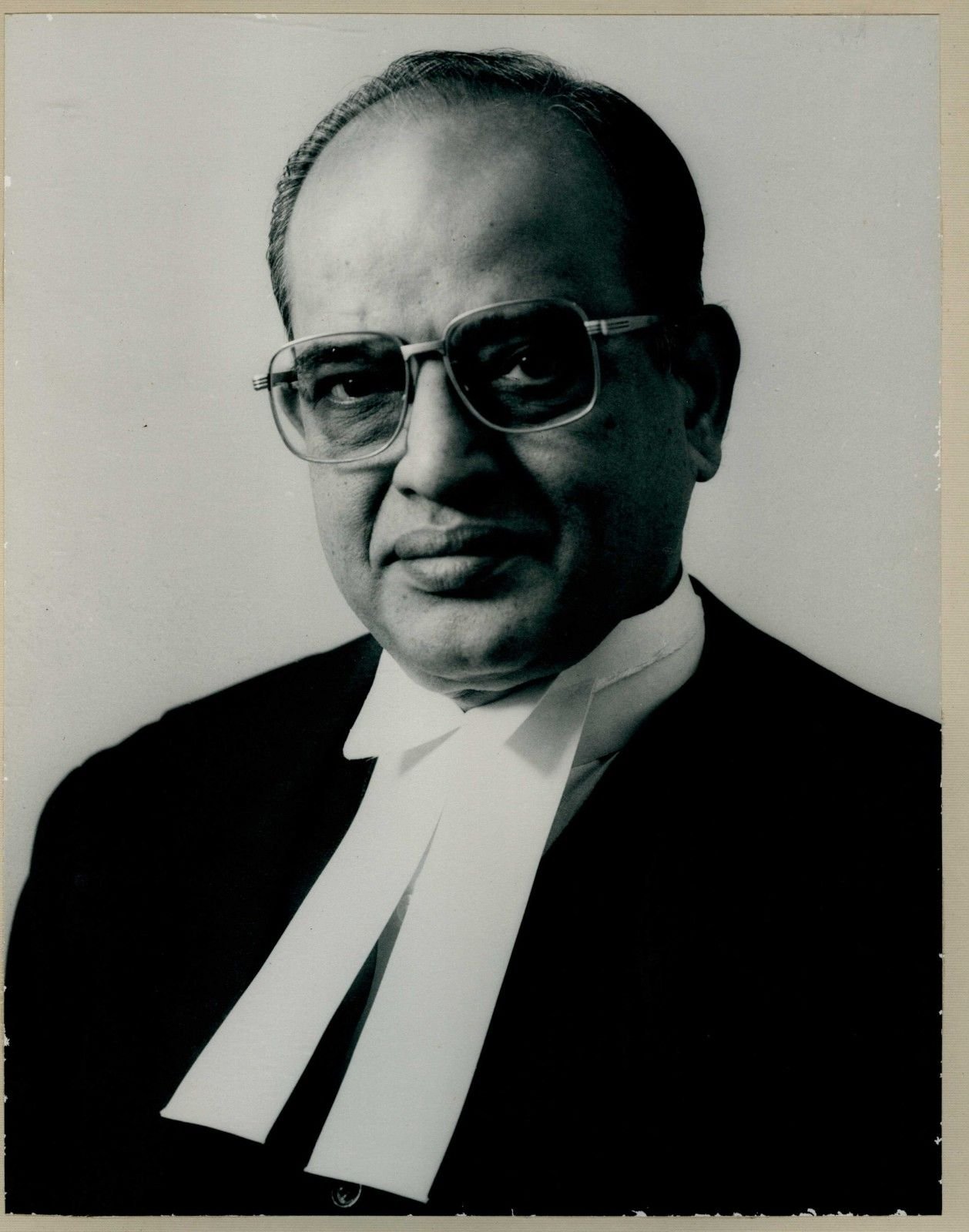
No Acts & Articles mentioned in this case
http://JUDIS.NIC.IN SUPREME COURT OF INDIA Page 1 of 4
PETITIONER:
MORESHWAR SAVE
Vs.
RESPONDENT:
DWARKADAS YASHWANTRAO PATHRIKAR
DATE OF JUDGMENT11/12/1995
BENCH:
VERMA, JAGDISH SARAN (J)
BENCH:
VERMA, JAGDISH SARAN (J)
SINGH N.P. (J)
VENKATASWAMI K. (J)
CITATION:
1996 SCC (1) 394 JT 1995 (9) 68
1995 SCALE (7)85
ACT:
HEADNOTE:
JUDGMENT:
J U D G M E N T
J.S. VERMA, J. :
This is an appeal under Section 116A of the
Representation of the People Act, 1951 (for short, "the R.P.
Act") against the judgment dated 16.4.1992 in Election
Petition No. 4 of 1991 by A.A. Halbe, J. of the Bombay High
Court by which the election of the returned candidate
Moreshwar Save from 33-Aurangabad Parliamentary Constituency
to the Lok Sabha held on 12.6.1991 has been set aside on the
ground under Section 100(1)(b) for commission of corrupt
practices under Sections 123(3) and 123(3A) of the R.P. Act.
The relevant paras of the election petition relating to
the pleading of corrupt practices are paras 6, 10, 11, 13
and 15. Para 6 contains a general averment without pleading
the relevant material facts therein that the respondent had
appealed on the basis of religion to the Hindus by
canvassing that the Hindu religion was in danger and the
Hindus should awaken and meet the challenge posed by the
minority specially the Muslims. In paras 10 and 11, it is
pleaded that Manohar Joshi gave a speech on 6.5.1991 at
Aurangabad in which he said that the candidate of BJP-Shiv
Sena belongs to the Hindutva faction and that 85 per cent
Hindus want to live with self-respect and if they do not
want a Government at the Centre which pleases the minority
they should vote for the appellant (respondent in the
election petition). Then in para 13, it is pleaded that Bal
Thackeray gave a speech on 12.5.1991 to the effect mentioned
therein. At this stage, it is common ground that the only
relevant portion of the pleading which was attempted to be
proved by evidence is as under :-
1) ...... taking the saffron flag march forward with the
slogan Har Har Mahadev.
2) Hindutva was not wave but it was the breath and if
Hindutva was to stop the breath will also stop.
http://JUDIS.NIC.IN SUPREME COURT OF INDIA Page 2 of 4
3) Hindutva is the third eye of Lord Shankra and if it
opens it will reduce every thing to ash.
Then in para 15, it is pleaded that Chhagan Bhujbal had
in his speech stated inter alia as under :-
". . . . . . He further said that we
are first Hindus and then Brahmin,
Maratha, Koli, Mali, Sali etc. For the
Hindus to stay alive it is necessary to
elect a Government headed by BJP, Shiv
Sena. He further states that to bring
the culture of Shriram who was Ekvachni
Ek Patne. It is necessary to erect the
Ram temple and show the people who
oppose to it their place ....."
It may be mentioned at the outset that no evidence was
led to prove the allegation of corrupt practice based on the
speech of Chhagan Bhujbal and, therefore, the pleading in
that respect, particularly in para 15 of the election
petition, has to be ignored as it was not relied on by the
election petitioner and for that reason it also does not
form the basis of the impugned judgment.
Shri Ram Jethmalani, learned counsel for the appellant
submitted that this stand of the election petitioner in the
High Court as also in this appeal is evidently on account of
the fact that Chhagan Bhujbal has, since then, shifted his
allegiance from Shiv Sena to its political opponents. There
can be no doubt that the pleadings of the three speeches by
Manohar Joshi, Bal Thackeray and Chhagan Bhujbal on which
alone the election petition is based show that the speech of
Chhagan Bhujbal is comparatively the harshest of all these
speeches, irrespective of the fact whether it too
constitutes a corrupt practice or not. It cannot also be
doubted that if the speech of Chhagan Bhujbal does not
amount to an appeal for votes on the ground of religion to
constitute a corrupt practice under Section 123(3), then the
other two speeches being comparatively mild cannot fall
within its ambit. In such a situation, the election
petitioner having abandoned the case based on the alleged
speech of Chhagan Bhujbal at the stage of trial itself in
the High Court, the criticism made by Shri Jethmalani cannot
be said to be baseless. At any rate, the credibility of the
version of the election petitioner with regard to the
remaining two speeches which alone were pressed into service
to support the election petition does appear to be
considerably shaken. However, there is another more
important aspect to which we shall now advert.
The only basis for the corrupt practice found proved
against the appellant is the two speeches by others, namely,
on 6.5.1991 by Manohar Joshi and on 12.5.1991 by Bal
Thackeray and not any speech by the appellant himself. Thus,
the liability fastened on the appellant is vicarious on the
basis of the two alleged speeches of Manohar Joshi and Bal
Thackeray. No notice under Section 99 was given either to
Manohar Joshi or Bal Thackeray. We have already held in the
connected Civil Appeal No. 4973 of 1993 - Manohar Joshi vs.
Nitin Bhaurao Patil & Anr. - decided today, that a combined
reading of Sections 98 and 99 of the R.P. Act leaves no
doubt that the final order holding the candidate guilty of
corrupt practice in such a situation vicariously, cannot be
made under Section 98 of the Act without simultaneously
complying with the requirement of Section 99. This is
obviously for the reason that in such a situation a
simultaneous verdict against the notice under Section 99 and
the candidate has to be given at one time while deciding the
election petition after proper compliance of Section 99 of
http://JUDIS.NIC.IN SUPREME COURT OF INDIA Page 3 of 4
the R.P. Act. Combined reading of Sections 98 and 99 leaves
no doubt that in such a situation, the High Court has no
option to ignore the allegation against the person for whose
act the candidate is held liable vicariously; and the court
also cannot proceed to decide the case of the candidate and
the notice separately or piecemeal. This defect of want of
notice to Manohar Joshi or Bal Thackeray is alone sufficient
to vitiate the judgment requiring it to be set aside.
The question now is of the course to adopt in such a
situation. Ordinarily the matter may require to be remanded
for a fresh decision of the election petition after notice
to the persons to be named for commission of the corrupt
practice in accordance with Section 99 ; or the decision of
this appeal may be deferred and in the meantime notice may
be given under Section 99 to those persons and after the
requisite inquiry by the High Court its finding in respect
of those persons be called for deciding the case against the
candidate and the notices at one time while deciding the
appeal in this Court. However, the second course does not
appear to be the appropriate in the present case for the
reasons given hereafter.
There is no clear pleading or finding of the
appellant's consent which is a constituent part to the
corrupt practice resulting from an act of any person other
than the candidate or his agent. This alone would indicate
the absence of one of the constituent parts of the alleged
corrupt practice. Case in the election petition is based
only on the ground contained in Section 100(1)(b) and not
Section 100(1)(d)(ii) of the R.P. Act. Admittedly, neither
Manohar Joshi nor Bal Thackeray were the election agents of
the appellant to dispense with the requirement of consent
for the ground under Section 100(1)(b) to declare the
election void. Any further inquiry into this matter is,
therefore, futile and sheer waste for the only ground on
which the election petition and the judgment are based.
Moreover, there is nothing pleaded or proved in the
alleged speeches of Manohar Joshi and Bal Thackeray in the
present case to attract the corrupt practice under sub-
section (3A) of Section 123 by bringing therein the element
of promotion of or attempt to promote feelings of enmity or
hatred as envisaged in that provision. The allegations as
well as the attempted proof are all very vague. Similar
vagueness is there even with regard to the requirement of
Section 123(3) since that requires an appeal for votes on
the ground of 'his' religion. The general statements
attributed in the speeches of Manohar Joshi and Bal
Thackeray as pleaded in the election petition are too vague
to constitute the requisite appeal which is a corrupt
practice under Section 123(3). In this context, it is not
insignificant that in spite of the averment in the election
petition of a more critical speech by Chhagan Bhujbal, no
attempt was made to prove the same and it was not relied on
even in the High Court to support the petition. This factor
has significance for assessing the credibility of the
version of the election petitioner and the probative value
to be attached to it for the case pursued in the election
petition. In our opinion, what is attributed to Manohar
Joshi and Bal Thackeray in the averments made in this
election petition, keeping in view the fact that the consent
of the appellant is neither clearly pleaded nor duly
considered for a finding of its proof, this election
petition does not merit any further consideration or trial.
It is indeed surprising that pleading of corrupt
practice in the election petition made so vaguely and
casually occasioned a serious trial thereof and ultimately
http://JUDIS.NIC.IN SUPREME COURT OF INDIA Page 4 of 4
was accepted by the High Court to set aside the electoral
verdict and that too in clear contravention of Section 99 of
the R.P. Act. This appeal must, therefore, be allowed.
Consequently, the appeal is allowed. The impugned
judgment of the High Court is set aside and the election
petition is dismissed. The appellant would get his costs
throughout from the respondent.

 Login with google
Legal Notes
Add a Note....