
As per case facts, the Petitioner, after resigning from Respondent No.1, was denied gratuity, leading him to the Controlling Authority, which ordered a substantial payment. However, the Appellate Authority later ...
No Acts & Articles mentioned in this case
k 1/22 WP 11812 of 2026
IN THE HIGH COURT OF JUDICATURE AT BOMBAY
CIVIL APPELLATE JURISDICTION
WRIT PETITION NO.11812 OF 2026
Mr. Murali Venkataramana ....Petitioner
V/S
1. Philips Klin Services (India) Pvt. Ltd.
2. Life Insurance Corporation of India ....Respondents
_________
Mr. Avinash Jalisatgi with Mr. T.R. Yadav, Mr. Nagendra Dube,
Ms. Divya Wadekar, Mr. Mulanshu Vora and Mr. Shivam S. Dube for the
Petitioner.
Mr. Haresh Shivdasani for Respondent No.1.
__________
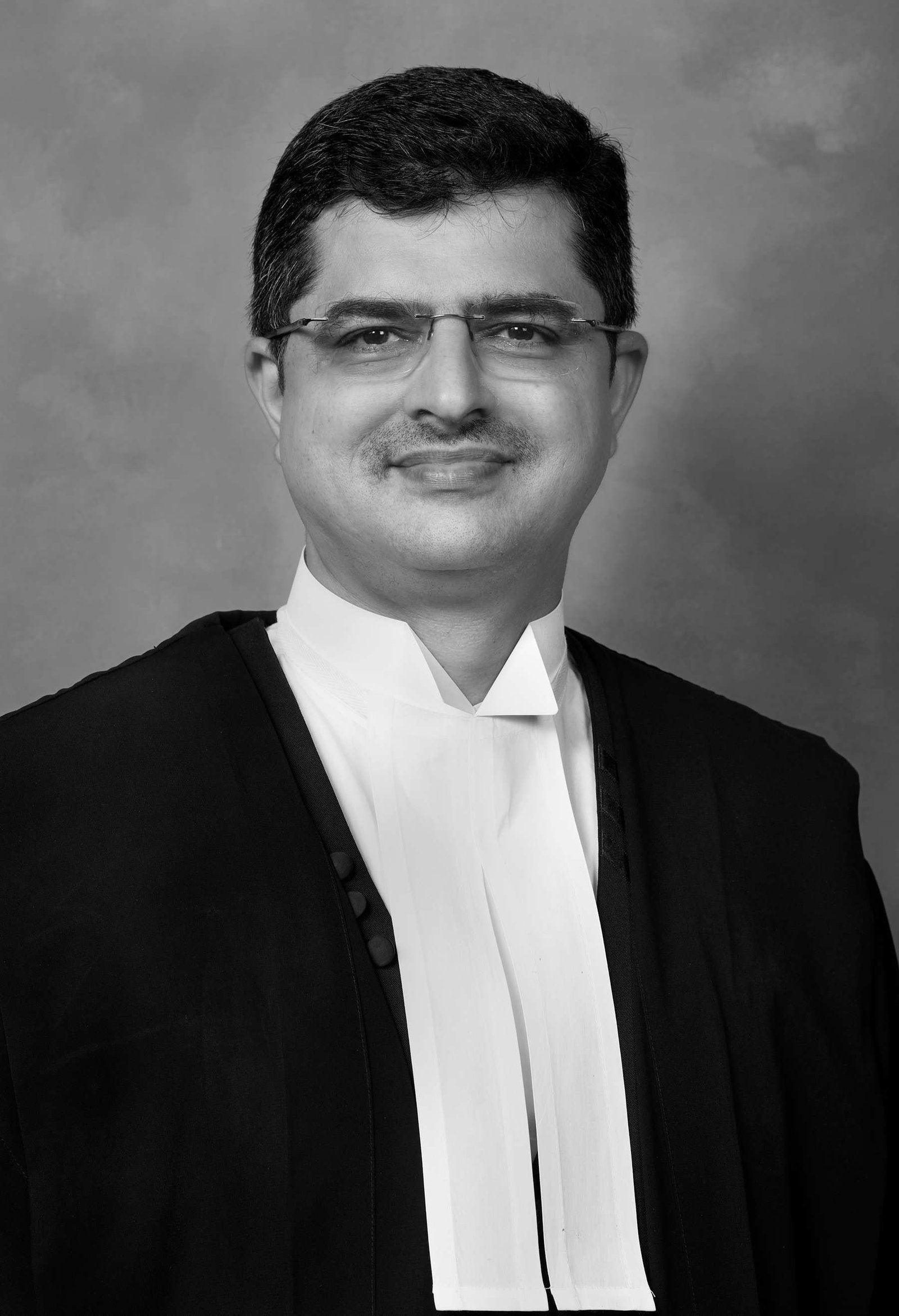
CORAM : SANDEEP V. MARNE, J.
RESERVED ON : 12 OCTOBER 2026.
PRONOUNCED ON : 26 OCTOBER 2026.
J U D G M E N T :
1.By this Petition, Petitioner has challenged judgment and order
dated 17 August 2026 passed by the Appellate Authority constituted
under the Payment of Gratuity Act, 1972 (PG Act). By the impugned
judgment and order, the Appellate Authority has partly allowed the
Appeal (PGA) No. 25 of 2024 preferred by Respondent No.1 and has set
aside the judgment and order dated 22 January 2024 passed by the
Controlling Authority in Application (PGA) No.156 of 2013. The
Controlling Authority had directed payment of gratuity of Rs.27,64,384/-
to the Petitioner. The Appellate Authority, while setting aside the order
katkam Page No. 1 of 22
2026:BHC-AS:43383
k 2/22 WP 11812 of 2026
of the Controlling Authority dated 22 January 2024 has reduced the
amount of gratuity payable to the Petitioner to Rs.10,00,000/-, which is
directed to be paid along with interest at the rate of 10% per annum
from 17 October 2012. Petitioner is aggrieved by reduction of amount of
gratuity payable to him from Rs.27,64,384/- to Rs.10,00,000/- and has
accordingly filed the present Petition.
2.Petitioner joined the services of Respondent No.1 on 23 March
1995. He served with Respondent No.1 for 17 years and 6 months and
rose to the position of Vice President. He was drawing basic wages of
Rs.1,33,100/- per month and his annual package was Rs.48,00,000/-.
Petitioner tendered the resignation from service of Respondent No.1 on
5 September 2012. According to Petitioner, 17 October 2012 was his last
day of work.
3.Respondent No.1 has created a trust for administration of gratuity
payable to its employees and has also obtained insurance policy from
Life Insurance Corporation of India (Respondent No.2). Petitioner relies
on email dated 14 February 2011 under which Respondent No.1 agreed
to pay slab-wise gratuity for employees putting in over 10 years of
service. Gratuity at the rate of 30 days’ for each completed year of
service, was agreed to be paid under the email dated 14 February 2011.
4.Respondent No.1 issued legal notice to the Petitioner on 26
November 2012 leveling certain allegations, which was replied to by the
Petitioner on 2 January 2013. According to the Petitioner, he was not
paid gratuity despite orally demanding the same.
katkam Page No. 2 of 22
k 3/22 WP 11812 of 2026
5.Since Petitioner was denied gratuity, he approached the
Controlling Authority under the PG Act and filed Application (PGA)
No.156 of 2013 and claimed gratuity of Rs.23,95,800/-. The Application
was resisted by Respondent No.1 by filing Written Statement. After
learning that Respondent No.1 had purchased policy from LIC,
Petitioner applied for impleadment of LIC to the PG Application.
Accordingly, LIC was impleaded as Respondent No.2 to the PG
Application. The Application preferred by LIC for its deletion from PG
Application was rejected by the Controlling Authority by order dated 1
September 2023. Respondent No.2-LIC also filed written statement.
Petitioner examined himself. Respondent No.1 examined Mr. Vijay A.
Vengurlekar, Accounts Executive, to prove its defence.
6.The Controlling Authority thereafter passed judgment and order
dated 22 January 2024 directing Respondent No.1 to pay gratuity of
Rs.27,64,384/- to the Petitioner with simple interest at the rate of 10%
per annum from 17 October 2012 onwards.
7.Respondent No.1 filed Appeal before the Appellate Authority
under Section 7(7) of the PG Act challenging the order of the Controlling
Authority. It appears that Petitioner had filed SC Suit No.1687 of 2015
for payment of various legal dues in which Respondent No.1 had filed
counterclaim. Parties settled the dispute and entered into Consent
Terms dated 15 December 2025. Under the Consent Terms, Respondent
No.1 paid amount of Rs.4,42,002/- to the Petitioner against various
claims. It was also agreed that the accumulated balance in
superannuation fund with LIC was Rs.24,19,690/-, to which Petitioner
katkam Page No. 3 of 22
k 4/22 WP 11812 of 2026
would be entitled to, without deductions. It was further agreed that the
settlement was restricted to claims arising out of the suit and that
gratuity claim pending before Appellate Authority would remain
unaffected.
8.The Appellate Authority heard the Appeal preferred by
Respondent No.1 and by judgment and order dated 17 August 2026, the
Appeal has been partly allowed by setting aside the order of the
Controlling Authority dated 22 January 2024. The Appellate Authority
has held Respondent No.1 is liable to pay amount of Rs.10,00,000/-
towards gratuity to the Petitioner with interest at the rate of 10% per
annum from 17 October 2012 onwards. Petitioner is aggrieved by
reduction of gratuity amount from Rs.27,64,384/- to Rs.10,00,000/- and
has accordingly filed the present Petition.
9.Mr. Jalisatgi, the learned counsel appearing for Petitioner submits
that the Appellate Authority has grossly erred in interfering in the order
of the Controlling Authority. He submits that the Controlling Authority
had rightly ascertained the gratuity payable to the Petitioner as
Rs.27,64,384/-. That the email dated 14 February 2011 expressly provided
for payment of gratuity as per revised terms. That under Section 4A of
the PG Act, Petitioner is entitled to draw higher amount of gratuity than
the one payable under the PG Act. He relies on Board Resolution dated
16 August 2012 in support of his plea that Respondent No.1 had
specifically agreed to lift the maximum limit applicable under PG Act
well before coming into effect of Petitioner's resignation. That
subsequent execution of Deed of Variation on 19 November 2012 is mere
katkam Page No. 4 of 22
k 5/22 WP 11812 of 2026
ministerial act for giving effect to the Board Resolution. He submits that
once a decision is taken to pay higher amount of gratuity, the same
cannot be made subject to technical formalities of execution of Deed of
Variation. He submits that similarly placed employees have been paid
higher amount of gratuity by implementing orders passed by the
Controlling Authority. He prays for setting aside the order passed by the
Appellate Authority.
10.The Petition is opposed by Mr. Shivdasani, the learned counsel
appearing for Respondent No.1. He submits that the Appellate Authority
has rightly appreciated the position that the varied scheme of payment
of gratuity without applying limit under PG Act was brought into effect
from 20 November 2012. That at the time of cessation of Petitioner's
service on 17 October 2012, the scheme introduced with effect from 1
April 2011 was in vogue which provided for application of maximum
limit of PG Act to the slab-wise gratuity. That the maximum limit was
lifted by revised scheme introduced from 20 November 2012. He invites
attention of this Court to clause 9 of the Trust Deed in support of his
contention that any variation in the scheme requires three-stage
procedure of passing of board resolution, execution of variation deed,
and securing approval of the Income Tax Department to the varied
scheme. He submits that mere passing of board resolution is not
sufficient for effecting variations in the scheme. That the varied scheme
was ultimately incorporated in the Trust Deed on 19 November 2012 and
came into effect from 20 November 2012. That therefore payment of
gratuity without applicability of any limit would only apply to those
katkam Page No. 5 of 22
k 6/22 WP 11812 of 2026
ceasing in service after 20 November 2012. Mr. Shivdasani relies on
judgment of this Court in Pune District Central Co-operative Bank
Limited vs. Shivajirao Dinkarrao Jadhavrao and Ors.
1
in support of his
contention that mere passing of board resolution is not sufficient and
that the revised scheme comes into effect only after approval is given to
the scheme by the Income Tax authorities. He relies on judgment of this
Court in Mercedes-Benz India Pvt. Ltd. and Ord. vs. Noshir Nani Desai
2
in support of its contention that mere email correspondence does not
create any agreement between the parties. He prays for dismissal of the
Petition.
11.Rival contentions urged on behalf of the parties now fall for my
consideration.
12.Petitioner is aggrieved by reduction in the amount of gratuity by
the Appellate Authority. The Controlling Authority had granted gratuity
amount of Rs.27,64,384/- to the Petitioner, which is brought down to
Rs.10,00,000/- by the Appellate Authority by the impugned judgment
and order dated 17 August 2026.
13.It appears that Respondent No.1 has created a Trust for
administration of gratuity payable to the employees and has also
obtained policies from Life Insurance Corporation of India. Copy of the
Trust Deed dated 20 June 2007 is placed on record. Under clause 11(a) of
the Trust Deed, the trustees agreed to provide for payment of gratuity on
termination of service, on death or retirement of the member or as
1(2004) 4 Mh.L.J. 859
22024 SCC OnLine 199
katkam Page No. 6 of 22
k 7/22 WP 11812 of 2026
provided in the rules of the Scheme. Under annexure to the Trust Deed,
Group Gratuity Assurance Scheme was introduced with effect from 1
April 2007. Under the Scheme, gratuity was payable at the rate of 15 days
salary for each year of service.
14.Respondent No.1-Company however decided to offer higher
amount of gratuity to the employees and officers as a token of
appreciation for their continued service in the Company. The Company
voluntarily increased the gratuity entitlement as:
20 days basic salary for 5-7 years of service,
25 days of basic salary for 7-10 years of service and
30 days of basic salary for more than 10 years of service.
15. The decision of the management was communicated to the
employees vide email dated 14 February 2011. The relevant part of
email dated 14 February 2011 reads thus:
GRATUITY
As per the Government of India rules, the Company is obliged to pay 15 days
salary, if an employee completes 5 years of permanent service in the Company.
As a token of our appreciation for your continued service in the Company,
Company is voluntarily increasing the gratuity payment as follows:-
5-7 years 20 days of basic salary
7-10 years 25 days of basic salary
More than 10 years30 days of basic salary
We have applied to Government of India for approval of above proposal and on
receipt of the same, we will implement the above proposal
16.Thus, Respondent No.1-Company agreed to provide higher
amount of gratuity depending on length of service for employees who
katkam Page No. 7 of 22
k 8/22 WP 11812 of 2026
had put in more than 10 years of service. Respondent No.1 agreed to pay
gratuity at the rate of 30 days’ of basic salary per completed year of
service. To give effect to the decision communicated to the employees by
email dated 14 February 2011, a Deed of Variation was made on 21 April
2011 to the Trust Deed by which amendments were effected in various
clauses of the Scheme. The amendment reflected in Annexure-A to the
Deed of Variation dated 21 April 2011 reads thus:
ANNEXURE ‘A’
Years of unbroken
service on date of
cessation of service
Gratuity payable (Basic + DA)
5 years and more but
less than 7 years
20 days salary for each completed year of sservice
subject to maximum limit specified in the Payment
of Gratuity Act, 1972, as amended from time to time.
Over 7 years but less
than 10 years
25 days for each completed year of service subject to
maximum limit specified in the Payment of Gratuity
Act, 1972, as amended from time to time.
Over 10 years 30 days for each completed year of service subject to
maximum limit specified in the Payment of Gratuity
Act, 1972, as amended from time to time.
The above mentioned amendment shall take effect from 1.04.2011.
17.Thus, the Revised Scheme of payment of slab-wise gratuity came
into effect from 1 April 2011. However, though the email was silent on
applicability of maximum limit, while executing the Deed of Variation,
the trustees incorporated maximum limit specified under PG Act in each
of the slabs. It was never the intention of Respondent No.1 to apply any
maximum limit on payment of slab-wise gratuity. Respondent No.1
realized the mistake committed while executing the Deed of Variation,
katkam Page No. 8 of 22
k 9/22 WP 11812 of 2026
and accordingly the Board of Respondent No.1 adopted following
resolution in meeting held on 16 August 2012:
TRUE EXTRACT FROM THE MINUTES OF THE MEETING OF THE BOARD
OF DIRECTORS OF PHILLIPS KILN SERVICES (INDIA) PVT. LTD. HELD ON
16TH AUGUST, 2012.
The Board of Directors vide their meeting held on 15th March, 2007 have
approved the Gratuity Cum Life Insurance Scheme with the Life Insurance
Corporation of India (LIC) and the Trust Deed and Rules thereto. The Board
informed that vide Board resolution dated 11the February 2011 amended the
ELIGIBILITY Clause in the Gratuity Trust Deed and its Rules by giving effect to
the admission of working Directors and also participate in the said Gratuity
Scheme of all eligible members who are not more than 70 years and also
extended graded benefits of Gratuity stated in Section III of the Rules of the
Trust Deed.
The Board informed that while making the deed of variation, even though the
gratuity benefits based on the years' of service with the Company was
extended, the maximum Gratuity payable under Rule 8,9and 10 has wrongly
been specified as per the Payment of Gratuity Act, 1972 as amended from time
to time. However, the intention of the Board was not to restrict the maximum
gratuity payable as per the Gratuity Act. Hence, this clause needs an
amendment in the Trust Deed and Its Rules and also the Group Gratuity
Scheme with LIC of India.
After discussions, it is RESOLVED THAT the Gratuity payable Clause in the
Gratuity Trust Deed and its Rules be amended to give effect to the actual
amount of gratuity payable as per the graded scale of benefits based on the
years' of service with the Company and deleting the word "Subject to
maximum limit specified in the Payment of Gratuity Act, 1972, as amended
from time to time".
FURTHER RESOLVED THAT the Trustees of the Gratuity Trust Scheme be
authorized do all acts in carrying out the above said amendments in the Trust
Deed and Rules. The Trustees also carry out necessary modifications in the
Scheme with LIC in co-ordination with LIC.
IT IS FURTHER RESOLVED THAT on carrying out the necessary amendments
in the Trust Deed and Rules, the Common Seal of the Company be affixed to
the said amended Trust Deed/ Deed of Variation.
18.Thus, it is emphatically stated in the board resolution dated 16
August 2012 that the maximum limit under PG Act was wrongly
katkam Page No. 9 of 22
k 10/22 WP 11812 of 2026
specified, though the intention of the Board was not to restrict
maximum gratuity payable. The Board accordingly resolved to amend
the Trust Deed to give effect to actual amount of gratuity payable as per
the graded scale of benefits by removing the words "subject to maximum
limit specified in the Payment of Gratuity Act, 1972, as amended from
time to time".
19.Accordingly, a Deed of Variation dated 19 November 2012 was
executed, in which following amendments were introduced in the Trust
Deed:
AMENDMENTS
IN THE RULES:
(1) Rule No.7 “Scheme of Insurance” :
Delete the words “as specified in The Payment of Gratuity Act 1972, as
amended from time to time” wherever appearing in “Annexure A” under the
rule #7 as amended by leader of origin dated 21st April 2011.
Further add following words in the 14
th
line before the word “provided….”
“However life cover will be restricted as per the Rules of the Corporation
amended from time to time.”
(2) Rule No.8,9,10 Benefits:
Delete the words “as specified in the Payment of Gratuity Act, 1972 as
amended form time to time” wherever appearing in “Annexure A” under the
Rule No. 8, 9 & 10 as amended by deed of variation dated 21
st
April 2011.
Hence the gratuity payable under Rule No.7, 8, 9 & 10 shall be with no ceiling.
The above mentioned amendments shall take effect from 20/11/2012.
20.The Petitioner resigned from service during this gap period of the
two Deeds of Variation dated 21 April 2011 and 19 November 2012. He
resigned on 5 September 2012 and his resignation took effect from 17
October 2012. According to Respondent No.1-Company, the amended
scheme removing the maximum limit came into effect from 20
katkam Page No. 10 of 22
k 11/22 WP 11812 of 2026
November 2012, and therefore the same does not apply to the Petitioner.
Therefore, the short issue that arises for consideration is whether
Petitioner can be extended the benefit of gratuity payable as per the
decision taken by Board of Directors of Respondent No.1 without
imposition of any maximum limit.
21.If proceedings filed before the Controlling Authority are perused,
it appears that Respondent No.1 initially took a plea that no gratuity was
payable to the Petitioner on account of non-submission of I-Form,
commission of prejudicial acts, and cause of huge financial loss to
Respondent No.1 leading to forfeiture of gratuity and in the Written
Statement, Respondent No.1 levied serious allegations of cause of
financial loss by the Petitioner and raised the plea of forfeiture of
gratuity. Respondent No.1-Company also raised the plea that it was
entitled to recover amount of Rs.6,40,000/- from Petitioner towards
notice pay and further amount of Rs.4,01,507/- being paid excess to him.
In paragraph 1(d) of the written statement, Respondent No.1 raised a
vague plea that as per the provisions of PG Act, the Trust Deed and
Insurance Policy obtained from LIC, no employee is entitled to gratuity
above Rs.10,00,000/- and as on 17 October 2012, maximum amount of
gratuity was capped at Rs.10,00,000/-.
22.The Controlling Authority adjudicated Petitioner's Application by
judgment and order dated 22 January 2024 and held that since Board
Resolution was passed prior to submission of resignation by the
Petitioner, he was entitled to draw slab-wise gratuity without
application of any upper limit. Accordingly, Respondent No.1-Company
katkam Page No. 11 of 22
k 12/22 WP 11812 of 2026
was directed by the Controlling Authority to pay gratuity of
Rs.27,64,384/- alongwith interest.
23.When Respondent No.1-Company filed Appeal (PGA) No.25 of
2024, there was apparently a shift in its stand and it gave up the plea of
non-entitlement of Petitioner to receive any amount towards gratuity.
Respondent No.1 prosecuted the Appeal by raising the plea of
applicability of maximum cap of Rs.10,00,000/- at the time of
resignation of the Petitioner. The Appellate Authority has accepted the
plea raised by Respondent No.1-Company by holding that the revised
scheme introduced vide Deed of Variation dated 19 November 2012 came
into effect on 20 November 2012 when Petitioner was not in service. It
therefore held that the maximum cap of Rs.10,00,000/- was applicable as
on the date of resignation of the Petitioner. This is how the Appellate
Authority has capped the maximum amount of gratuity payable to the
Petitioner at Rs.10,00,000/-.
24.In my view, the Appellate Authority has mechanically considered
the case of the Petitioner without appreciating the intention of
Respondent No.1 to extend the benefit of higher amount of gratuity to
its employees. As observed above, there was an error on the part of the
trustees while executing the Deed of Variation dated 21 April 2011. The
email dated 14 February 2011 did not reflect imposition of any upper
limit on amount of gratuity payable to the employees. The higher
amount of gratuity as per applicable slab was extended as token of
appreciation towards employees, who continued in service of the
Company for more than five years. There was no intention on the part
katkam Page No. 12 of 22
k 13/22 WP 11812 of 2026
the management to apply any upper limit while introducing the scheme
of grade-wise gratuity. However, while executing the Deed of Variation
dated 21 April 2011, erroneously maximum limit specified in the PG Act
came to be inserted while making applicable the grade-wise gratuity
scheme.
25.The Board of Respondent No.1 realized the mistake in execution
of the Deed of Variation dated 21 April 2011. The mistake was corrected
by passing Board Resolution dated 16 August 2012. However, while
giving effect to the Board Resolution dated 16 August 2012, the trustees
once again committed the mistake of not making applicable the decision
to delete maximum gratuity limit with effect from date of application of
slab-wise gratuity i.e. 1 April 2011. The amendment was effected from 20
November 2012.
26.Thus, if a hyper-technical approach is adopted, Petitioner can be
denied the benefit of slab-wise gratuity scheme by applying maximum
limit of Rs.10,00,000/-. However, such hyper-technical approach needs to
be shunned in the present case considering the intention of Respondent
No.1. The Board Resolution dated 16 August 2012 expressly stated that
“However, the intention of the Board was not to restrict the maximum
gratuity payable as per the Gratuity Act”.
27.Also, application of limit of Rs.10,00,000/- to slab-wise gratuity
scheme renders the objective of paying higher gratuity to the employees
otiose in case of most of the employees. If a case of an employee drawing
salary of Rs.50,000/- at the time of retirement and who has put in 25
katkam Page No. 13 of 22
k 14/22 WP 11812 of 2026
years of service is taken into consideration, the gratuity payable under
slab-wise scheme would be in excess of Rs.10,00,000/- and in such
situation, applying the maximum limit of Rs.10,00,000/- would render
the very objective of offering higher amount of gratuity ineffective.
28.Therefore, in the facts of the present case, intention of
Respondent No.1-Company needs to be borne in mind and due
importance needs to be given to the specific statement in the Board
Resolution that the Company never intended to apply maximum limit
while paying gratuity under slab-wise scheme. The intention was to pay
gratuity under the slab-wise scheme without putting any upper limit.
This objective must be given effect to rather than adopting a hyper-
technical approach that the Deed of Variation removed the provision for
maximum limit from 20 November 2012 i.e. after resignation of the
Petitioner. In the facts of the case where a mistake was committed in
applying maximum limit under the Deed of Variation dated 21 April
2011. Once the mistake was sought to be cured by execution of fresh
Deed of Variation dated 19 November 2012, the benefit of removal of
mistake must be extended to the Petitioner.
29.Respondent No.1 appears to carry some grudge against the
Petitioner, which is the reason why no gratuity was paid to him and he
was driven to the Controlling Authority for securing his gratuity. Before
the Controlling Authority, a bitter battle was fought levelling several
allegations of misconduct against the Petitioner. Otherwise, Respondent
No.1 appears to have paid higher amount of gratuity to all other officers
and employees. The witness of Respondent No.1 Mr. Vijay Audumbar
katkam Page No. 14 of 22
k 15/22 WP 11812 of 2026
Vengurlekar, gave an admission that Mr. Manisubramaniam, one of the
Directors of the Company, received massive amount of gratuity of
Rs.2,53,84,671/-. The other Director, Ms. Bhanumati Subramaniam,
received gratuity of Rs.53,66,871/-.
30.The case also involves an element of unjust enrichment by
Respondent No.1. As observed above, Respondent No.1 has obtained a
policy from LIC for payment of gratuity to its employees. It appears that
gratuity of Rs.27,64,385/- had accumulated in the account of Petitioner
maintained with LIC. This is clear from email dated 5 June 2015. Mr.
Shivdasani has sought to distance Respondent No.1 from email dated 5
June 2015 contending that the same is fabricated. However, cross-
examination of the witness Vijay Vengurlekar would indicate that he
gave express admission that the email was received by him from LIC.
Since recipient of the email has himself admitted existence of the
document, Respondent No.1 cannot contend that same is fabricated.
Though the witness has denied contents of the email, he has admitted
existence thereof. There is one more document on record being bank
account extract which indicates an amount of Rs.29,80,808/- was
transferred in the bank account of Respondent No.1 by LIC. It is the case
of Respondent No.1 that gratuity amount accumulated with LIC is
apportioned by Respondent No.1. This is disputed by Mr. Shivdasani
contending that the remittance received under the relevant bank entry
does not pertain to Petitioner alone. However there is no material placed
by him on record that the said transmitted amount did not include the
gratuity payable to Petitioner. Also the remittance is not restricted to Rs.
katkam Page No. 15 of 22
k 16/22 WP 11812 of 2026
10,00,000/- Therefore there appears to be prima facie truth in the
contention of the Petitioner about Respondent No. 1 receiving amount
in excess of Rs. 10,00,000 from LIC. Thus, the gratuity payable by the
Respondent No.1 to Petitioner is appropriated by Respondent No.1 and
to this extent there appears to be unjust enrichment by Respondent
No.1. However, it is not necessary to delve deeper into this aspect. What
needs to be taken into consideration is that gratuity amount of
Rs.27,64,385/- was available with LIC to be paid to the Petitioner and the
said amount more or less matches the amount directed to be paid by the
Controlling Authority.
31.Respondent No.1 has placed on record copy of letter dated 25
April 2011 addressed to Income Tax Authorities in support of its
contention that variation in the Scheme required approval of
Commissioner of Income Tax. However, no document is placed on record
to demonstrate that similar approval was sought in respect of Deed of
Variation dated 19 November 2012.
32.I am also not impressed by submission of Mr. Shivdasani that
three-stage procedure was mandatory for giving effect to any variation
in the Scheme. The three-stage procedure may be relevant for the
purpose of effecting variation in the gratuity scheme. In the present
case, variation was brought upon by Deed of Variation dated 21 April
2011. What is done subsequently is merely correction in the said Deed of
Variation. For such correction, it was not necessary to procure fresh
approval from Income Tax Authorities. Correction of error in the earlier
katkam Page No. 16 of 22
k 17/22 WP 11812 of 2026
Deed of Variation ordinarily ought to have been given effect from 1 April
2011. The same is erroneously given effect from 20 November 2012.
33.Reliance by Mr. Shivdasani on judgment of this Court in Pune
District Central Cooperative Bank Limited (supra) is inapposite. In that
case, the gratuity payable under the PG Act at the time of retirement of
Respondent therein was Rs.1,00,000/- and the said amount was paid to
him. Shortly before his retirement, a Board Resolution was passed on 3
February 1997 for introduction of group gratuity scheme alongwith Life
Insurance Corporation, under which gratuity was to be raised to
Rs.2,50,000/-. The scheme was introduced w.e.f. 1 April 1997.
Respondent therein was denied the benefit of group gratuity scheme
since he retired on 28 February 1997 i.e., prior to 1 April 1997. In the
peculiar facts of that case, this Court held in paragraphs 6 and 7 of the
judgment as under:
6. A proper reading of the gratuity application filed before the Controlling
Authority would establish that what was sought was payment of gratuity
under the Act. There was no reference made at all to any resolution nor was
any reference made to other persons having been paid gratuity in excess of Rs.
1,00,000/- nor was there any submission that the petitioner-bank had shown
favouritism to some employees or had discriminated against the respondent-
workman by not paying him gratuity in excess of Rs. 1,00,000/-. The written
statement, therefore, naturally did not contain any pleading about the
resolution of the bank dated 3-2-1997. According to the bank, as contended in
the written statement, the gratuity of Rs. 1,00,000/- had been paid to the
workman on 18-3-1997 in accordance with the Act and no further amounts
were payable to him. It appears that it was during the course of evidence and
arguments before the Controlling Authority that material was brought on
record to indicate that some persons had been paid gratuity in excess of Rs.
1,00,000/- although they had retired after the respondent-workman but before
the amendment to the Act in September, 1997 raising the ceiling to Rs.
2,50,000/-. The Controlling Authority, therefore, was in error to grant gratuity
to the respondent-workman in excess of Rs. 1,00,000/- when the claim of
gratuity was made under the Act and there was no evidence on record to
katkam Page No. 17 of 22
k 18/22 WP 11812 of 2026
indicate that the bank was paying gratuity at a more beneficial rate than that
available under the Act. The only reason for granting the application is that
the other employees, who had retired prior to the amendment being brought
into force, were paid gratuity in excess of Rs. 1,00,000/-. The Controlling
Authority has observed that the Board resolution of 3-2-1997 had not been
brought on record. The Labour Court had given no reasons to indicate as to
why the amount in excess of the gratuity claimed should have been paid to the
respondent. There was no scheme available before the Controlling Authority
which stipulated that gratuity in excess of Rs. 1,00,000/- was payable to the
employees. That being so, the Controlling Authority was wholly in error to
grant this amount.
7. The Appellate Authority has committed a further error by confirming the
judgment and order of the Controlling Authority. The resolution of the bank
dated 3-2-1997 was brought on record before the Appellate Authority. The
Appellate Authority has interpreted the resolution to mean that the bank
intended to pay the enhanced gratuity to the employees who were on their
muster rolls on 3-2-1997. The submission made by the petitioner that the
group gratuity scheme was applicable only from 1-4-1997 was not accepted by
the Appellate Authority because by the resolution it was decided to ascertain
the burden of the estimated gratuity payable on 3-2-1997. A perusal of the
resolution dated 3-2-1997 indicates that the Board of Directors of the bank
had taken a decision to introduce the group gratuity scheme in view of the
provisions of law then existing as well as the future amendments to the
Payment of Gratuity Act which would stipulate Rs. 2,50,000/- as the maximum
limit of gratuity payable to an employee. After deciding to introduce the
gratuity scheme in principle, the resolution stated that Rs. 17,78,47,261/- was
the liability as on that date. It was then resolved to make a deposit of this
amount in instalments with the Life Insurance Corporation towards the group
gratuity scheme. A further decision was taken to introduce the scheme in
respect of workmen who were on the rolls on 21-3-1997. It was also decided to
introduce the scheme from 1-4-1997. The Commissioner of Income-Tax, Pune
had accorded approval to the scheme of gratuity known as the Pune District
Central Co-operative Bank Limited Employees' Group Gratuity cum Life
Insurance Scheme. This approval was effective from 1-4-1997. Therefore,
obviously, the scheme could come into operation only w.e.f. 1-4-1997. There is
no doubt that some workmen who, the respondent-workman claimed, had
retired after him were paid gratuity in excess of Rs. 1,00,000/-. These persons
had retired some time in July 1997. Obviously, therefore, they were paid
gratuity under the Group Gratuity Scheme introduced on 1-4-1997 under
which there was no ceiling for the payment of gratuity, although a ceiling
existed under the Act. The petitioner bank therefore, cannot be faulted for
having paid those persons who had retired after the introduction of the
scheme on 1-4-1997 gratuity in excess of Rs. 1,00,000/-.
katkam Page No. 18 of 22
k 19/22 WP 11812 of 2026
34.Thus, in Pune District Central Co-operative Bank (supra), the
scheme for payment of higher gratuity was never placed before the
Controlling Authority, which had directed payment of amount of
Rs.2,50,000/- to Respondent therein only on account of other employees
being paid the said amount. The Resolution dated 3 February 1997 was
brought on record for the first time before the Appellate Court. This
Court held that the revised scheme came into operation from 1 April
1997 when approval of Commissioner of Income Tax was accorded. The
facts of the case in Pune District Central Co-operative Bank (supra) are
clearly distinguishable, in that the said case did not involve commission
of mistake in execution of Deed of Variation. In the present case,
Respondent No.1 has admitted the mistake while executing the Deed of
Variation and resolved to correct the said mistake. Therefore, the
judgment in Pune District Central Cooperative Bank (supra) cannot be
made applicable to the unique facts and circumstances of the present
case.
35.Mr. Shivdasani relies on judgment of this Court in Mercedes Benz
India Pvt. Ltd. (supra) in support of his contention that email does not
constitute agreement between the parties. This Court held in paragraphs
10, 11 and 12 of the judgment as under:
10. On the other hand, in Writ Petition No. 12201 of 2021 filed by the Mr.
Desai, he is aggrieved by capping of Rs. 10,00,000/- by the Appellate Authority
while determining the entitlement of employee towards gratuity. According to
Mr. Rao, there is email correspondence between the parties which clearly
provided for payment of higher amount of gratuity and according to him, the
same would constitute an exception within the meaning of Section 4(5) of the
Gratuity Act. Sub-Section 5 of Section 4 reads thus:
katkam Page No. 19 of 22
k 20/22 WP 11812 of 2026
(5) Nothing in this section shall affect the right of an employee receive better
terms of gratuity under any award or agreement or contract with the employer.
11. It is therefore necessary to examine whether there is any agreement
between the parties for payment of higher amount of gratuity than the one
provided under the Gratuity Act. I have gone through the email
communications dated 24 October 2012 and 31 October 2012 which reads
thus:
“Payment of Gratuity-Even the gratuity was considered as part of retirals which
were added in the post salary…. However, we have taken the reasonable approach
and decided to pay gratuity on basis of your current salary as of 2012 which is
over and above the amount legally paybale to you”
12. Perusal of the above email communication does not indicate, in any
manner, that there is any agreement or settlement for payment of higher
amount of gratuity than the one payable under the provisions of the Gratuity
Act. Mr. Rao would rely upon the judgment of this Court in Transport Manager,
Kolhapur Municipal Transport Undertaking, Kolhapur1. In that case, there was a
settlement providing for payment of gratuity at the rate of 21 days wages per
year which is better as compared to 15 days' wages per year as per Gratuity Act.
It is in the light of such settlement that this Court held that the Respondent
therein was entitled to better terms of gratuity under Section 4(5) of the
Gratuity Act. The judgment would have no application to the present case,
where there is no settlement or agreement for payment of higher/better
gratuity than the one provided for in the Act. I therefore do not find any
serious flaw in the view taken by the Appellate Authority in holding that the
email-communication cannot be termed as contract admitting better terms
under Section 4(5) of the Gratuity Act.
(emphasis in original)
36.In my view, the judgment in Mercedes Benz (supra) has no
application to the facts of the present case. Here there is no issue
involved as to whether email created agreement or not. The issue is
about giving retrospective effect to correction of mistake committed in
execution of Deed of Variation. There is an express admission by
Respondent No.1 while passing Board Resolution that it never intended
to apply maximum limit to payment of gratuity. Therefore, the judgment
in Mercedes Benz (supra) has no application to the facts of the case.
katkam Page No. 20 of 22
k 21/22 WP 11812 of 2026
37.Payment of Gratuity Act is a beneficial piece of legislation. It is
enacted for the benefit of employees. Therefore, if there is any
ambiguity, the interpretation must be in favour of person for whose
benefit the PG Act is enacted. The present case involves unique
circumstances where mistake got committed in execution of Deed of
Variation and commission of mistake is admitted by Respondent No.1.
An ambiguity is created on account of execution of subsequent Deed of
Variation dated 19 November 2012 giving effect to deletion of maximum
limit with effect from 20 November 2012. Thus, there is variance
between the actual intention of Respondent No.1 and the amendment
effected in the scheme. In these peculiar circumstances, the ambiguity
needs to be removed by interpreting the stipulations of Deed of
Variation in favour of the Petitioner and against Respondent No.1 who
has clearly enriched itself unjustly. Respondent No.1 has acted
arbitrarily by denying gratuity to the Petitioner. It initially raised a false
plea of forfeiture of gratuity even though no charges were leveled against
the Petitioner nor any finding of guilt was recorded against him. It
appropriated the amount of gratuity generated in LIC gratuity fund.
Before the Appellate Authority, Respondent No.1 changed its stance and
agreed to pay gratuity of Rs.10,00,000/-. Thus, the conduct of
Respondent No.1 in the entire episode is not above board.
38.Considering the above circumstances, I am of the view that the
order passed by the Appellate Authority deserves to be set aside by
confirming the order passed by the Controlling Authority. The Petition
accordingly succeeds and I proceed to pass the following order:
katkam Page No. 21 of 22
k 22/22 WP 11812 of 2026
i)Judgment and order dated 17 August 2026 passed by the
Appellate Authority in Appeal (PGA) No.25 of 2024 is set aside.
ii)Judgment and order dated 22 January 2024 passed by the
Controlling Authority in Application (PGA) No.156 of 2013 is
confirmed.
39.Writ Petition is allowed in above terms with no order as to costs.
(SANDEEP V. MARNE, J.)
40.After the judgment is pronounced, Mr. Shivdasani, the learned
counsel appearing for Respondent No.1 prays for stay on the withdrawal
of the deposited amount of gratuity. Request is opposed by the learned
counsel appearing for the Petitioner. Considering the fact that the
Petitioner has ceased to be in service of Respondent No.1 since
September 2012, and is denied gratuity for the last 14 long years, the
request for stay is rejected.
(SANDEEP V. MARNE, J.)
katkam Page No. 22 of 22

 Login with google
Legal Notes
Add a Note....