
As per case facts, the petitioner participated in an auction for land for a petrol pump. Initially, the lease period was stated as 25 years, but after objections, the JDA ...
[2026:RJ-JP:31695]
HIGH COURT OF JUDICATURE FOR RAJASTHAN
BENCH AT JAIPUR
S.B. Civil Writ Petition No. 5846/2012
CNR: RJHC020332132012 | URN: CW / 9652U / 2012
M/s Ajit Service Station near Power House, Malviya Nagar, Jaipur
through its partner Shri Naresh Kumar Arora son of Shri Bihari Lal,
resident of C-242, Krishna Marg, Malviya Nagar, Jaipur
----Petitioner
Versus
1. State of Rajasthan through the Secretary, Urban & Housing
Development Department, Jaipur
2. Jaipur Development Authority, through the Secretary, J.D.A.
building , J.L.N. Marg, Jaipur
3. The Director (Finance) Jaipur Development Authority, J.D.A.
building J.L.N. Marg, Jaipur
----Respondents
For Petitioner(s) : Mr. Gunjan Pathak, Advocate
For Respondent(s) : Mr. Amit Kuri, Standing Counsel for the
Jaipur Development Authority with
Mr. Dharma Ram, Advocate
Mr. Ayush Sharma, Advocate
HON'BLE MR. JUSTICE VINOD KUMAR BHARWANI
Order
Reserved on ::: 31/08/2026
Pronounced on ::: 10/09/2026
***
Instant writ petition under Article 226 of the Constitution of
India has been filed on behalf of the petitioner-firm with the following
prayer:-
“It is, therefore, respectfully prayed that the writ petition be
allowed and the impugned decision of the respondent No.2
dt.30.09.2003 (Annexure-16), decision of the J.D.A. Appellate
Tribunal dt.10.07.2009 (Annexure-27) and decision of the
State Government dt. 06.02.2012 (Annexure-28) and the
decision of the State Government dt.24.07.2015 (Annexure-
31) and the order dt.07.08.2014 (Annexure-33) be quashed
and set aside.
By further writ, order or direction, the respondents may be
directed to issue correct lease deed by incorporating the period
of lease as 99-years.
Any other appropriate writ, order or direction, which this
Hon’ble Court deems just and proper in the facts and
[2026:RJ-JP:31695] (2 of 18) [CW-5846/2012]
circumstances of this case, may kindly be passed in favour of
the petitioner.
Cost of the litigation may also be awarded to the petitioner.”
Facts of the present case, in brief, are that the petitioner is
a partnership firm. The dispute pertains to land measuring 843.99 sq.
metres situated at Malviya Nagar, Jaipur, which was intended for the
construction of a petrol pump.
Earlier to the present auction, subject land was allotted to
M/s. Guru Nanak Tubewell Pvt. Ltd. being the highest bidder @
Rs.2,705/- per sq. meter; however, its bid was not approved by the
JDA. Thereafter, the JDA recommended allotment of the same petrol-
pump site to one Shri Mohan Lal Sharma under the Government Policy
dt.04.07.1989. Accordingly, an allotment letter was issued to him on
11.05.1994 at the market rate @ Rs.3,100/- per sq. meter for a lease
period of 99 years.
M/s. Guru Nanak Tubewell Pvt. Ltd. challenged the allotment
by filing S.B. Civil Writ Petition No.2726/1994. The petitioner-firm’s
application under Order 1 Rule 10 CPC for impleadment was rejected,
and the writ petition was dismissed by ld. Single Judge on 28.10.1994.
Thereafter, the petitioner & M/s. Guru Nanak Tubewell Pvt. Ltd.
preferred Special Appeals, which were allowed by the Division Bench
vide judgment dt.19.05.1995.
The Jaipur Development Authority issued an advertisement
in the newspaper inviting bids for the auction of the said land stating
that the terms & conditions of the auction would be disclosed at the
time of the auction. On 21.07.1995, the petitioner, alongwith other
interested persons was present & participated in the auction. At the
outset, the petitioner & other participants raised an objection to
Condition No.1 of the terms & conditions, under which the lease period
was prescribed as 25 years.
[2026:RJ-JP:31695] (3 of 18) [CW-5846/2012]
Thereupon, the Officers of the JDA present at the site and
the members of the auction committee held discussions with the higher
Officials of the JDA. It was thereafter communicated to all the
participants that the lease period would be considered for 99 years.
Acting on the said representation and under the bona-fide belief that
the lease period would be 99 years, the petitioner participated in the
auction. The petitioner emerged as the highest bidder and was
accordingly, declared the successful bidder.
Thereafter, the petitioner deposited the auction amount,
lease money and other miscellaneous charges, total amounting to Rs.
27,37,295/-. Subsequently, in terms of Clause 4 of the terms &
conditions of the auction, the petitioner-firm applied for issuance of the
licence deed & deposited the requisite fees and stamp duty with the
JDA. The JDA, accordingly, issued a licence-deed dt.23.08.1995 for a
period of 99 years containing certain terms & conditions.
The petitioner-firm thereafter, requested the JDA to issue
the lease-deed and also deposited the requisite stamp papers. However,
despite the passage of considerable time, the lease-deed was not
issued. The petitioner submitted several representations & reminders
requesting the issuance of the lease-deed for a period of 99 years and
also sought a one-time lease exemption certificate, as the petitioner
had already deposited the one-time lease amount. After a long delay,
lease-deed was issued on 16.08.2003 but the same was issued only for
25 years instead of 99 years. Against the aforesaid illegality, the
petitioner-firm preferred a representation.
Initially, the J.D.A. rejected the petitioner’s representation
without assigning any reasons. Subsequently, the matter was
considered by the Core Committee of the J.D.A. During the course of
consideration, the Director (Finance) sought an explanation as to why
[2026:RJ-JP:31695] (4 of 18) [CW-5846/2012]
the lease period for the petrol-pump land had been fixed for 25 years
when commercial land was generally leased for a period of 99 years.
Thereafter, considering the petitioner’s contention, the J.D.A. referred
the matter to the Urban Development & Housing Department (UDH) for
an appropriate decision.
The petitioner also filed a complaint before the Lokayukta
regarding the action of the J.D.A. In response thereof, the JDA informed
the Lokayukta that the Commissioner had referred the matter to the
State Government for a decision regarding correction of the lease
period.
Thereafter, the petitioner filed a reference before the JDA
Tribunal. In its reply, the JDA contended that all previous allotments/
sales had been made for a period of 25 years and, therefore, the
auction in the petitioner’s case had also been correctly conducted for a
lease period of 25 years. The JDA Tribunal ultimately dismissed the
reference preferred by the petitioner.
On the petitioner’s representation, an opinion was also
sought from the Law Department. The Officer of the Law Department
opined in favour of the petitioner stating that the JDA had agreed to
issue the lease-deed for a period of 99 years. However, by order
dt.06.02.2012, the Law Minister rejected the said opinion and held that
the lease-deed for a period of 25 years was correct.
Subsequently, by letter dt.07.08.2014, the UDH Department
admitted that the lease period had wrongly been reduced from 99 years
to 25 years without obtaining prior permission from the State
Government. The UDH Department also directed the JDA not to commit
such a mistake in future.
During the pendency of the present petition, the petitioner
once again approached the State Government seeking correction of the
[2026:RJ-JP:31695] (5 of 18) [CW-5846/2012]
lease period from 25 years to 99 years. However, the said request was
rejected by the UDH Department vide letter dt.24.07.2015.
The contentions advanced by learned counsel appearing for
the petitioner-firm are that earlier to the present dispute, the same
land was allotted to Shri Mohan Lal Sharma on a 99-year-leasehold-
basis. However, the said allotment was set aside by the Division Bench
of this Court on the ground that the land can only be allotted by public
auction. There was no decision to reduce the lease period; nevertheless,
Condition No.1 of the terms & conditions prescribed a lease period
contrary to law. When the bidders raised objections at the auction site,
the Chief Revenue Officer (CRO), representing the JDA, clearly
announced that the auction would be conducted for a lease period of 99
years. Accordingly, the licence-deed dt.23.08.1995 was issued by the
CRO Cell for a period of 99 years. Therefore, mentioning the lease
period as 25 years was arbitrary & illegal and ought to have been
rectified.
It has further been contended that the JDA could not
prescribe lease terms contrary to the Rajasthan Municipalities (Disposal
of Urban Land) Rules, 1974 (herein-after referred as Rules,1974). The
prior approval of the State Government was mandatory for fixing a
lease period of less than 99 years, but no such approval was obtained.
The JDA & the Rajasthan Housing Board had allotted petrol-pump sites
on 99-year leasehold basis in accordance with the Rules. The JDA had
neither followed the statutory Rules nor complied with the instructions
issued by the State Government. The directions issued by the Division
Bench had also not been followed in their true spirit. The JDA failed to
decide the matter by passing a speaking & reasoned order. The JDA
Appellate Tribunal also failed to consider the provisions of the Rules
1974 and the similar allotments made in favour of one Ashish Saraf.
[2026:RJ-JP:31695] (6 of 18) [CW-5846/2012]
In the present case, the petitioner had offered a bid
substantially higher than the commercial reserve price, and the
petitioner-firm had also deposited one-time lease amount for 99 years
and the petitioner had offered a substantially higher amount in the open
auction. In these circumstances, the lease period could not legally be
restricted to 25 years. On the petitioner’s representation, the matter
was also examined by the Administrative Department & the Law
Department of the State Government.
It has also been submitted that the petitioner-firm was not
afforded an opportunity of hearing & the relevant material available on
record was not duly considered while passing the impugned order. The
impugned order was, therefore, contrary to the principles of natural
justice and is liable to be quashed.
Further submission is that the auction had been conducted
pursuant to the judgment of the Division Bench dt.09.05.1995 and the
Government instructions dt.04.07.1989. Therefore, any condition
inconsistent with the terms of the auction was illegal, void & contrary to
law.
Lastly, it was contended that the land had been auctioned
on a 99-year leasehold basis, with the bidding commencing @
Rs.2,730/- per square metre, being the commercial reserve price.
Consequently, the lease period could not subsequently be reduced from
99 years to 25 years. The Officers of the Law Department had also
opined that in the absence of prior permission from the State
Government, the JDA had no authority to reduce the lease period from
99 years to 25 years.
In support of his contentions, learned counsel appearing for
the petitioner-firm, has placed reliance upon the following judgments:-
(i) Jal Mahal Resorts (P) Ltd. Vs. K.P. Sharma, (2014) 8 SCC 804, (ii)
[2026:RJ-JP:31695] (7 of 18) [CW-5846/2012]
Y. Mahaboob Sheriff & Sons Vs. Mysore State Transport Authority, AIR
1960 SC 321, (iii) State of Rajasthan Vs. Harishanker Rajendrapal,
AIR 1966 SC 296, (iv) Harishanker Vs. State of Rajasthan, 1962 RLW
672 and (v) M/s. Kardhani Fuel Centre Vs. State of Rajasthan &
Others, SB CWP No.15876/2015 decided on 18.01.2017 respectively.
Per-contra, learned counsel appearing for respondent
Nos.2 & 3, has submitted that at the very out set the petitioner’s claim
deserves to be dismissed on the ground of delay & latches, the
petitioner participated in the public auction in 1995, executed the
registered lease-deed in 2003, submitted its first objection after an
eight years silence and approached the J.D.A. Tribunal in Reference
No.455/2008 only after an unexplained lapse of 13 years. The land in
question was auctioned on 21.07.1995 subject to the terms &
conditions contained in Annexure-10. The foremost condition, i.e.,
Condition No.1, provided for a lease period of 25 years. The petitioner
willingly accepted the said condition by signing the terms & conditions
of the auction, without raising any objection & with full knowledge of its
implications. Accordingly, a lease-deed for a period of 25 years was
executed & registered in favour of the petitioner on 16.08.2003. The
petitioner voluntarily signed the said lease-deed without any objection
and subsequently, deposited the lease amount for the entire lease
period i.e. up to 25.07.2020.
Learned counsel for the JDA further submitted that merely
mentioning a period of 99 years in the licence did not create any right in
favour of the petitioner to seek execution of a lease deed for 99 years.
The lease-deed was executed subsequently in strict accordance with the
terms & conditions of the auction and, being the subsequent &
operative document, superseded the licence.
[2026:RJ-JP:31695] (8 of 18) [CW-5846/2012]
It was further contended that the general provisions
contained in Rule 4 of the Rules, 1974 stood superseded and excluded
by the specific proviso to Rule 5, which mandated compliance with the
policy directives issued by the State Government in respect of allotment
of land for petrol pumps. According to the respondents, the said policy
directives uniformly prescribed a lease tenure of 25 years.
Learned counsel also referred to the State Government's
order dt.07.08.2014, whereby it was stated that the lease period of the
plot had been fixed for 25 years in accordance with the conditions of the
auction and that it was not possible to extend the same to 99 years.
The said order further observed that reducing the lease-period from 99
years to 25 years without obtaining prior approval of the State
Government was improper and directed that such a mistake should not
be repeated in future.
It was, however, submitted that at the time when the plot
was auctioned in 1995, Rule 4 of the Rules 1974 did not contain any
requirement for obtaining prior approval of the State Government. The
requirement of prior State Government sanction to deviate from the 99
years Rule was only inserted into Rule 4 via a gazetted notification on
15.01.2002 and cannot be applied retrospectively to invalided a public
auction completed in 1995. Therefore, the petitioner cannot claim for
the lease for the period of 99 years in respect of land in question and
present writ petition be dismissed.
The registered lease-deed expired naturally by efflux of time
on 20.08.2020, extinguishing all rights of the petitioner in the absence
of any renewal covenant. Following the expiration, the petitioner’s
status was reduced to a tenant at sufferance, and the Jaipur
Development Authority resumed actual physical possession of the land
on 21.08.2020 via a formal Possession Memo. In view of the
[2026:RJ-JP:31695] (9 of 18) [CW-5846/2012]
unchallenged possession proceedings and the State Government’s
binding circular dt.14.08.2015 barring the extension of expired 25-year
commercial leases, the writ petition has been rendered completely
infructuous and is liable to be dismissed with costs.
In support of their submissions, learned counsel appearing
for the respondent/JDA Nos.2 & 3, has placed reliance upon the
following judgements:- (i) Syndicate Bank Vs. R. Veeranna & Others,
2003 (2) SCC 15, (ii) Tamil Nadu Electricity Board & Another Vs. N.
Raju Reddiar & Another, 1996 (4) SCC 551, (iii) State Bank of
Travancore Vs. Kingston Computers India Private Limited, 2011 (11)
SCC 524, (iv) UP Jal Nigam & another Vs. Jaswatn Singh & Another,
2006 (11) SCC 464, (v) State of Maharashtra Vs. Digambar, 1994 (4)
SCC 683, (vi) Union of India & Others Vs. Har Dayal, 2010 (1) SCC
394, (vii) Sudha Parhar Vs. Jaipur Development Authority, SB CWP
5778/2006, decided on 20.11.2014 RHCB Jaipur, (viii) Jaipur
Development Authority Vs. M/s. Boutique Hotels India Pvt. Ltd. &
Others, SB CWP 2593/2009 decided on 13.04.2023 RHCB Jaipur, (ix)
Krishan Pal Dheer Vs. State of Rajasthan & Others, SB CWP 4679/2017
decided on 31.08.2022 RHCB Jaipur and (x) Union of India & Another
Vs. Kartick Chandra Mondal & Another, 2010 (2) SCC 422 respectively.
In the case of U.P. Jal Nigam (supra), the Hon’ble Apex
Court, in Para 12 held as under:-
“The statement of law has also been summarized in Halsbury's
Laws of England, Para 911, pg. 395 as follows :-
"In determining whether there has been such delay as to
amount to laches, the chief points to be considered are :
(i) acquiescence on the claimant's part; and
(ii) any change of position that has occurred on the defendant's
part.
Acquiescence in this sense does not mean standing by while the
violation of a right is in progress, but assent after the violation
has been completed and the claimant has become aware of it.
It is unjust to give the claimant a remedy where, by his
conduct, he has done that which might fairly be regarded as
[2026:RJ-JP:31695] (10 of 18) [CW-5846/2012]
equivalent to a waiver of it; or where by his conduct and
neglect, though not waiving the remedy, he has put the other
party in a position in which it would not be reasonable to place
him if the remedy were afterwards to be asserted. In such
cases lapse of time and delay are most material. Upon these
considerations rests the doctrine of laches."
In the case of State of Maharashtra (supra), the Hon’ble
Apex Court, in Para 14 held as under:-
“How a person who alleges against the State of deprivation of
his legal right, can get relief of compensation from the State by
invoking writ jurisdiction of the High Court under Article 226 of
the Constitution even though, he is guilty of laches or undue
delay is difficult to comprehend, when it is well settled by
decisions of this Court that no person, be he a citizen or
otherwise, is entitled to obtain the equitable relief under Article
226 of the Constitution if his conduct is blame-worthy because
of laches, undue delay, acquiescence, waiver and the like.
Moreover, how a citizen claiming discretionary relief
under Article 226 of the Constitution against a State, could be
relieved of his obligation to establish his unblameworthy
conduct for getting such relief, where the State against which
relief is sought is a welfare State, is also difficult to
comprehend. Where the relief sought under Article 226 of the
Constitution by a person against the welfare State is founded
on its alleged illegal or wrongful executive action, the need to
explain laches or undue delay on his part to obtain such relief,
should, if anything, be more stringent than in other cases, for
the reason that the State due to laches or undue delay on the
part of the person seeking relief, may not be able to show that
the executive action complained of was legal or correct for want
of records pertaining to the action or for the officers who were
responsible for such action not being available later on. Further,
where granting of relief is claimed against the State on alleged
unwarranted executive action, is bound to result in loss to the
public exchequer of the State or in damage to other public
interest, the High Court before granting such relief is required
to satisfy itself that the delay or laches on the part of a citizen
or any other person in approaching for relief under Article
226 of the Constitution on the alleged violation of his legal
right, was wholly justified in the facts and circumstances,
instead of ignoring the same or leniently considering it. Thus, in
our view, persons seeking relief against the State under Article
226 of the Constitution, be they citizens or otherwise, cannot
get discretionary relief obtainable thereunder unless they fully
satisfy the High Court that the facts and circumstances of the
case clearly justified the laches or undue delay on their part in
approaching the Court for grant of such discretionary relief.
Therefore, where a High Court grants relief to a citizen or any
other person under Article 226 of the Constitution against any
person including the State without considering his blame-
worthy conduct, such as laches or undue delay, acquiescence or
waiver, the relief so granted becomes unsustainable even if the
relief was granted in respect of alleged deprivation of his legal
right by the State.”
In the case of Tamil Nadu Electricity Board (supra), the
Hon’ble Apex Court, in Para 7 held as under:-
“At the outset it must be borne in mind that the agreement
between the parties was a written agreement and therefore the
parties are bound by the terms and conditions of the agreement.
Once a contract is reduced to writing, by operation of Section
91 of the Evidence Act it is not open to any of the parties to seek
to prove the terms of the contract with reference to some oral or
[2026:RJ-JP:31695] (11 of 18) [CW-5846/2012]
other documentary evidence to find out the intention of the
parties. Under Section 92 of the Evidence Act where the written
instrument appears to contain the whole terms of the contract
then parties to the contract are not entitled to lead any oral
evidence to ascertain the terms of the contract. It is only when
the written contract does not contain the whole of the agreement
between the parties and there is any ambiguity then oral
evidence is permissible to prose the other conditions which also
must not be inconsistent with the written contract. The case in
hand has to be adjudged bearing in mind the aforesaid principles
and the plaintiffs being conscious of this position along with the
tender appended a letter and in that letter inserted certain terms
by writing in ink to establish the case that the acceptance of the
plaintiffs' tender would tantamount to the acceptance to the
terms contained in the letter in which there was insertion in
writing to the effect that it was on multi slab basis. It is in this
context the question whether such hand written portion was
originally there or was subsequently inserted assumes great
significance. We are unable to accept the stand taken by the
learned counsel for the respondents that there was no such issue
on this question inasmuch as this question was considered by
the learned Trial Judge while discussing Issue No. 1 on the basis
of evidence laid and the Trial Judge had given a finding in favour
of the plaintiffs. The said finding, however, on the face of it
appears to us to be wholly unsustainable. As has been stated
earlier there was no signature either by the persons submitting
the tender or by the persons receiving the same on the hand
written portion of the letter. The learned Trial Judge had noticed
that the certified copy which was issued by the Board on
11.7.1978 of the aforesaid letter clearly contains the hand
written portion and therefore he came to the conclusion that the
hand written portion was there at the time of submission of the
tender. The tender itself was submitted on 12.7.1978 and we fail
to understand how the Board could grant a certified copy of the
letter on 11.7.1978 when the plaintiffs' case itself is that along
with the tender he had appended the letter in question. On this
ground alone it can be safely held that hand written portion in
Exhibit P-1 was not there at the time of submission of the tender
but was subsequently inserted obviously with the connivance of
the officers of the Board. The Board in its rejoinder affidavit filed
in this Court has stated that the attested copy was actually
received on 28.12.1978, much later than the finalization of the
tenders and agreement and in order to build up a case the
aforesaid interpolation has been made. In the facts and
circumstances of the present case the aforesaid stand of the
Board appears to us to be wholly justified and at any rate we
have no hesitation to come to the conclusion that the hand
written portion in Exhibit P-1 was not there initially and has been
inserted subsequently. The main basis of the plaintiffs' case on
which a multi slab rate was claimed therefore fails. The written
agreement between the parties nowhere indicates that the rate
to be paid to the plaintiffs was on multi slab basis and the terms
and conditions of the written contract is not susceptible of such a
construction.”
Heard learned counsel appearing for the parties. Perused
the impugned orders/letter and the case-laws cited herein-above by
both the parties as well as the material made available on record.
In the present case, in the year 1995, an advertisement was
published in the newspaper with regard to the subject land, wherein the
duration of the lease was not disclosed. Subsequently, at the time of
[2026:RJ-JP:31695] (12 of 18) [CW-5846/2012]
bidding, the terms & conditions were disclosed, and under Condition
No.1, the duration of the lease was initially fixed for 25 years. However,
on objections being raised by the bidders, the respondent-JDA assured
the bidders that the period of the lease-deed would be 99 years and,
accordingly, they should participate in the bidding process. The
petitioner-firm also participated in the auction and, being the highest
bidder, was declared successful and the subject land was allotted to
him. Pursuant to the auction conducted in year 1995, the respondent-
JDA issued a demand-note to the petitioner requiring him to deposit the
one-time lease payment for a period of 99 years. Upon deposit of the
requisite payment, a licence-deed dt.23.08.1995 was issued by the
respondent-JDA in favour of the petitioner-firm for a period of 99 years.
However, the respondent-JDA contended that a licence is merely a
revocable permission and does not create any estate or proprietary
interest in favour of the licensee, and that the same stood entirely
superseded by the formal registered lease-deed dt.16.08.2003. Since
the JDA asserted that the lease-deed had rightly been executed for a
period of 25 years, during the pendency of the present petition, this
Court, vide its order dt.27.04.2017, required the respondent-JDA to
inform the Court as to the additional amount, if any, that would be
payable by the petitioner, if the lease were to be treated as being for a
period of 99 years. In compliance with the order dt.27.04.2017, the
respondent-JDA submitted an affidavit stating therein that the JDA was
willing to refund the excess amount deposited by the petitioner-firm.
The formal lease-deed was only a document meant to
officially record and confirm an agreement that had already been
finalized between the parties. It could not unilaterally reduce, change,
or weaken the 99-year tenure that had already been granted to the
petitioner-firm under the 99-year licence-deed. Having put the
[2026:RJ-JP:31695] (13 of 18) [CW-5846/2012]
petitioner in possession for 99 years through, a formal legal instrument,
the JDA was functus-officio regarding the duration of the grant. It could
not, seven years later in 2003, downgrade the estate into a 25 years
tenure.
Significantly, in its affidavit filed in compliance with the
order dt.27.04.2017, the JDA itself admitted that the petitioner had
deposited the one-time lease premium for a period of 99 years. The fact
that the minimum bid amount was to be determined with reference to a
99 years tenure lends further support to the petitioner’s contention that
the economic and contractual basis of the transaction was the grant of a
99 years lease. If the bid had, in fact, been invited for a tenure of only
25 years, the financial consideration would necessarily have required
determination with reference to that shorter tenure, subject of course to
the applicable rules. The JDA's contention that it is willing to refund the
excess money is legally impermissible. An authority cannot after the
economic basis of a transaction decades after retaining the citizen's
capital, refunding with nominal interest while stripping away 74 years of
lease hold rights amount to expropriatory state action. A statutory
authority cannot hold public money for years and offer an exit route
that severely penalizes the citizen while rewarding its own
administrative lapse.
Rules 4 & 31 of the Rajasthan Municipalities (Disposal of
Urban Land) Rules, 1974 are relevant to quote here as under:-
“4. Tenure of lease.- Sale of lease hold rights in land shall
be for a period of 99 years.
Provided that the trust may with the previous sanction of
the State Govt. grant lease for lessor period of such terms and
conditions as may be determined by the State Govt.
31.Power to relax rules.- In exceptional cases where the
State Government is satisfied that operation of these rules
causes hardship in any particular case or where the State
Government is of the opinion that it is necessary or expedient
in public interest to do so, may relax the provisions of these
rules in respect of the price, [penalty, conditions imposed in
relation to any allotment and] size of plot/strip of land to such
[2026:RJ-JP:31695] (14 of 18) [CW-5846/2012]
extent and subject to such conditions as it may consider
necessary for dealing with the case in a just and equitable
manner.”
In respect of the above Rules, the respondent/JDA
contended that the proviso to Rule 4 came into force only in the year
2002 and, therefore, cannot be applied to the present case and prior
approval of the State Government was not required. The said contention
is not sustainable. As per Rule 4 of the Rules, 1974, a lease-deed can
only be issued for 99 years and, for issuance of a lease-deed for a
period of less than 99 years, prior approval of the State Government is
mandatory under Rule 31 of Rules, 1974, whereas in the present case,
no prior approval from the Government in accordance with Rules 4 & 31
of the Rules, 1974, has been taken. Neither in letter dt.04.07.1989
issued by the State Government nor in the order dt.19.05.1995 passed
by the Division Bench of this Court contains any stipulation that the
land was to be allotted for a period of less than 99 years, nor have any
other documents in this regard been submitted, which can reflect that
prior approval of the State Government was taken.
Even assuming that the proviso to Rule 4 introduced in 2002
was not applicable to the auction conducted in 1995, the substantive
mandate contained in Rule 4, supports the conclusion that the disposal
of urban land by local authorities on a leasehold basis was intended to
be for a period of 99 years, unless a shorter tenure was specifically
sanctioned by the competent authority under Rule 31. In this regard
Rule 31 of the Rules, 1974 specifically states about the relaxation of
rules by the State Government. The State and its instrumentalities were
under an obligation to ensure that the documentation faithfully reflected
the substantive rights created in favour of an allottee, who had duly
discharged the entire financial obligation prescribed for a 99-year lease.
[2026:RJ-JP:31695] (15 of 18) [CW-5846/2012]
The substantive provision of Rule 4 expressly contemplates
that the urban land disposed of by local authorities on a leasehold basis
shall be granted for a period of 99 years. A subordinate local authority
cannot, in the absence of any specific statutory or administrative
authorization, prescribe an arbitrary shorter tenure so as to defeat the
uniform 99-year leasehold framework contemplated under the
Rajasthan Urban Land Policy. The Rules did not confer upon the
respondent-JDA any unfettered discretion to depart from this prescribed
tenure or to unilaterally curtail the period of lease.
The conduct of the respondent-JDA is, in any event, wholly
inconsistent with its present stand. On the one hand, the JDA issued a
licence-deed dt.23.08.1995 expressly providing for a tenure of 99 years
after accepting the entire consideration payable for such tenure; on the
other hand, it subsequently executed the formal lease-deed
dt.16.08.2003 for a period of only 25 years. The J.D.A. cannot be
permitted to adopt two mutually inconsistent positions in respect of the
same transaction, particularly when the petitioner had already fulfilled
its entire financial obligation on the basis of the 99-year tenure.
The subsequent execution of a 25-year lease-deed could
not, therefore, lawfully override or extinguish the substantive rights that
had already accrued to the petitioner pursuant to the auction, payment
of the full consideration, and the 99-year grant made by the JDA itself.
Learned counsel for respondent-JDA also contended that the
lease-deed executed in the year 2003 is a registered instrument, and
any modification, alteration or rectification of its terms can only be
adjudicated by a competent Civil Court. In this regard, counsel for the
petitioner submitted that in identical matters concerning other petrol
pumps, the respondent-JDA itself, at its own level, altered the duration
of the lease-deed from 25 years to 99 years. Thus, the JDA cannot
[2026:RJ-JP:31695] (16 of 18) [CW-5846/2012]
adopt two different stands on the very same subject matter.
Furthermore, the State Government, vide letter dt.07.08.2014, has
acknowledged that the said lease-deed was issued for a period of 25
years instead of 99 years without the prior approval of the State
Government, which is improper. Relevant portion of the aforesaid order
dt.07.08.2014 reads as under:-
“^mijksDr fo"k;kUrxZr funsZ'kkuqlkj ys[k gS fd iz'uxr izdj.k esa yht vof/k
uhykeh dh 'krksZa ds vuqlkj 25 o"kZ dh xbZ gS] ftls 99 o"kZ fd;k tkuk laHko ugha
gSA
mDr izdj.k esa jkT; ljdkj dh iwoZ vuqefr ds fcuk gh yht vof/k 99 o"kZ ds
LFkku ij 25 o"kZ dh xbZ gS] tks mfpr ugha gSA vr% bl laca/k esa ;g Hkh funsZ'k
iznku fd;s tkrs gSa fd Hkfo"; esa bl rjg dh xyrh ugha dh tkosaA^“
This admission by the competent department of the State
Government materially supports the petitioner's case and contradict the
subsequent stand of the J.D.A. that the 25-year tenure was legally
granted.
A public authority cannot apply two different Rules to the
same situation. The J.D.A. extended the lease duration from 25 years to
99 years for other petrol-pumps at its own administrative level. It
cannot grant the same relief to others while refusing to do so for the
petitioner on identical facts. Doing so would be discriminatory and
would violate the principle of equality before law.
The respondent-JDA has also raised an objection regarding
the maintainability of the writ petition, contending that the petition is
barred by gross delay & laches. Counsel further submitted that auction
was conducted in the year 1995, the reference before the JDA Appellate
Tribunal was filed in the year 2008 and after an unexplained delay of
nearly nine-years from the date of the execution of the lease-deed
dt.16.08.2003, the petitioner is disentitled to invoke the extraordinary
jurisdiction of this Court under Article 226 of the Constitution of India.
In this regard, learned counsel for the petitioner submitted that the
[2026:RJ-JP:31695] (17 of 18) [CW-5846/2012]
lease-deed was issued on 16.08.2003 for a period of 25 years. Being
aggrieved by the said lease-deed, the petitioner-firm continuously
submitted representations before the J.D.A. and the State Government.
Subsequently, in the year 2008, the petitioner-firm approached the JDA
Appellate Tribunal by way of Reference No.455/2008. Therefore, in the
aforesaid circumstances, it was submitted that the cause of action had
not arisen prior to the year 2003.
In this regard, it is trite law that the doctrine of delay &
laches under article 226 of the Constitution is a rule of judicial prudence
and self imposed restraint, not an absolute rule of limitation. In
adjudicating the question of laches, the Court must consider the nature
of the right infringed and the status of possession. The petitioner was
put into physical possession of the land under an operative licence-deed
dt.23.08.1995 executed for 99 years, having discharged the entirety of
the financial liability demanded. The chronology of events demonstrates
that the petitioner was not sleeping over his rights. Following the
execution of the 2003 lease-deed, representations were submitted,
culminating in a formal reference proceeding instituted before the JDA
Tribunal in the year 2008. A citizen, who bonafide pursues
administrative or statutory remedies before the concerned authority to
resolve an internal discrepancy cannot be penalized for not rushing
immediately to the High Court.
Thus, even on the JDA's own interpretation of the applicable
rules, there was no justification for reducing the petitioner's tenure from
99 years to 25 years, particularly after the petitioner had paid the entire
consideration for the 99-year lease-deed and the J.D.A. had itself issued
a licence-deed dt.23.08.1995. Further, the lease-deed was issued for a
period of 25 years instead of 99 years without the prior approval of the
State Government. The error, if any, was entirely attributable to the
[2026:RJ-JP:31695] (18 of 18) [CW-5846/2012]
respondent-authority and could not lawfully be used to the detriment of
the petitioner.
Consequently, the issuance of the lease-deed dt.16.08.2003
for a term of only 25 years, despite the deposit of the entire auction
consideration & the statutory requirement and/or understanding that
the lease would be for 99-year, is liable to be set aside.
Resultantly, the present petition stands allowed. The
impugned orders dt.30.09.2003 (Anx-16), dt.10.07.2009 (Anx-27),
dt.06.02.2012 (Anx-28), letter dt.24.07.2015 (Anx-31) as well as the
letter dt.07.08.2014 (Anx.33) (only to the extent of finding that the
lease period from 25 years to 99 years cannot be extended), are hereby
quashed & set aside.
The respondent-JDA is directed to rectify the lease period
from 25 years to 99 years and to issue a fresh/corrected lease-deed
incorporating the lease period of 99 years commencing from the original
date of allotment in 1995. It is made clear that the respondent/JDA
shall complete the execution & registration formalities of the rectified
lease-deed within a period of one month from the date of receipt of
certified copy of this order.
Pending application, if any, also stands disposed of.
(VINOD KUMAR BHARWANI),J.
ASHOK

 Login with google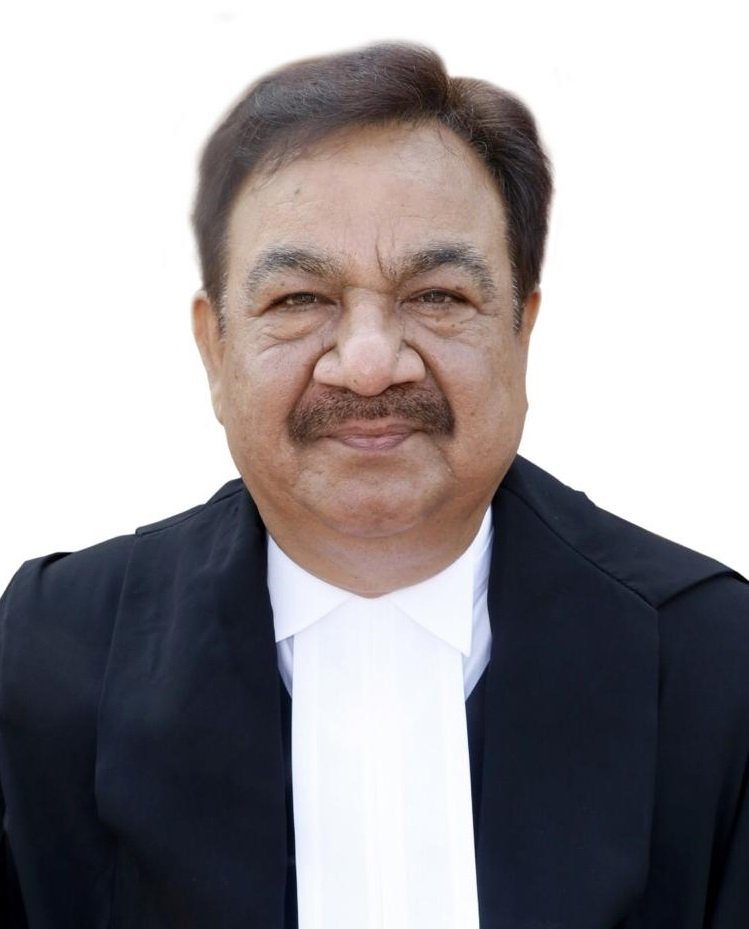
Legal Notes
Add a Note....