
As per case facts, the Petitioner participated in an e-auction for a nursing home site, became the highest bidder, and after the bid was accepted and an agreement to sell ...

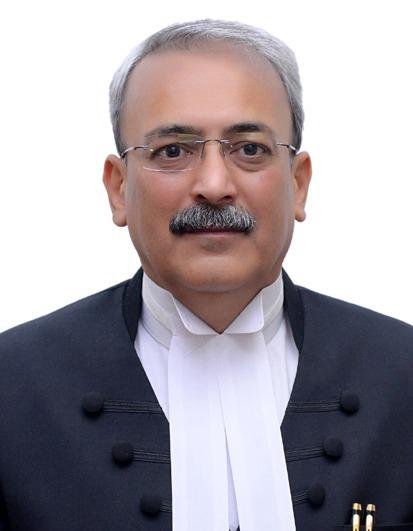
No Acts & Articles mentioned in this case
CWP No. 2811 of 2023 (O&M) -1-
In the High Court of Punjab and Haryana at Chandigarh
CWP No. 2811 of 2023 (O&M)
Reserved on: 20.2.2025
Date of Decision: 01.4.2025
M/s Bedi Hospital ......Petitioner
Versus
Chandigarh Administration and another .....Respondents
CORAM: HON'BLE MR. JUSTICE SURESHWAR THAKUR
HON'BLE MR. JUSTICE VIKAS SURI
Argued by:Mr. Puneet Bali, Senior Advocate with
Mr. Piyush Aggarwal, Advocate,
Mr. Aakash Sharma, Advocate and
Mr. Anmol Chandan, Advocate
for the petitioner.
Mr. Amit Jhanji, Sr. Standing Counsel with
Mr. Sumeet Jain, Addl. Standing Counsel and
Ms. Eliza Gupta, Advocate
for respondents No. 1 and 2.
Mr. Kanwaljit Singh, Senior Advocate with
Mr. Munish Kapila, Advocate
for applicants-respondents No. 3 to 6.
****
SURESHWAR THAKUR , J.
1. Through the instant writ petition, the petitioner seeks the
quashing of the letter dated 27.1.2023 (Annexure P-13), wherebys after
execution of the agreement to sell and the depositing of the entire sale
consideration, the respondents concerned, have allegedly unilaterally
cancelled the bid contract in respect of Nursing Home Site No. 4, Sector 33-
C, Chandigarh. Furthermore, the petitioner also seeks the quashing of the
letter dated 9.2.2023 (Annexure P-24), wherebys the agreement to sell dated
28.10.2022 has been cancelled by the respondents.
CWP No. 2811 of 2023 (O&M) -2-
Brief facts of the case
2. It is averred in the instant petition, that respondent No. 2
published a notice dated 31.8.2022 (Annexure P-1) for conducting an e-
auction of commercial and nursing home sites on freehold basis in
Chandigarh. The general terms and conditions (Annexure P-2) of the e-
auction were uploaded on the e-auction website. Subsequently on 4.9.2022,
respondent No. 2 issued a corrigendum wherebys, the last date for payment
of Earnest Money Deposit (EMD, and, for submission of the documents,
was extended upto 13.10.2022. As per the said corrigendum, the auction
was scheduled to be held from 18.10.2022 till 20.10.2022. It is further
averred in the instant petition, that as per e-auction notice, there were two
nursing home sites, which became offered for sale on freehold basis i.e.
Nursing Home Site Nos. 3 and 4, both located at Sector 33-C, Chandigarh,
and having same measurement i.e. 744.44 sq. yds each, besides having same
reserve price of Rs. 6,91,75,598/- each. The petitioner applied for
participating in the e-auction of both the sites (supra) and on 20.9.2022, the
petitioner deposited Rs. 27,67,024/- as advance EMD, being 2% of the
reserve price of the said sites.
3. It is further averred, that e-auction of the above sites were
started on 18.10.2022 and the same went on till 20.10.2022. The petitioner
was the highest bidder for site No. 4 with a bid of Rs. 12,58,75,598/-, which
was duly accepted by the respondent concerned, and, the acknowledgment
for Award of subject sites was issued in favour of the petitioner vide
intimation letter dated 20.10.2022 and e-mail dated 21.10.2022. On
21.10.2022, the petitioner deposited the 25% of the bid amount i.e. Rs.
3,05,16,488/- with respondent No. 2. Since the petitioner had already
CWP No. 2811 of 2023 (O&M) -3-
deposited Rs. 13,83,512/- as advance EMD, therefore, the total amount
deposited by the petitioner stood at Rs. 3,19,00,000/-. Subsequently, on
28.10.2022, in compliance of sub-clause (1) of Clause VI of the general
terms and conditions, respondent No. 2 executed an agreement to sell
(Annexure P-9) with the petitioner. Though, as per Clause V of the general
terms and conditions, the remaining 75% of the bid amount was to be
deposited within a period of 90 days from the date of the auction, yet the
petitioner deposited the balance amount i.e. Rs. 9,39,75,598/- on 16.11.2022,
which was much in advance before the deadline for the deposit being made
i.e. on 15.12.2022. Therefore, 100% of the bid amount i.e. Rs.
12,58,75,598/- stood deposited by the petitioner.
4. Furthermore, it is averred in the petition that as per sub-clause
(4) of Clause VI of the general terms and conditions, sub-clause whereof
becomes extracted hereinafter, upon receipt of the full consideration amount,
an allotment letter was to be issued by respondent No. 2 in favour of the
petitioner, wherebys the petitioner was to be called upon to execute a
conveyance deed in form ‘C’.
“Upon the receipt of full consideration money, the Estate Officer
shall issue allotment letter to the intending purchaser giving the
terms and conditions of the allotment and calling upon him to
execute conveyance of deed in Form ‘C’. These documents shall be
issued/executed by the Estate Office and the purchaser, within a
period of 30 days from the date of issue of the allotment letter. The
allottee shall bear all the expenses occurring for the registration
and stamp duty etc.”
5. Vide e-mail dated 16.11.2022, the petitioner confirmed the
deposit of 100% of the sale consideration and requested the respondent
concerned, for the issuance of the allotment letter. Since therebys no
CWP No. 2811 of 2023 (O&M) -4-
response was received from the respondent concerned, thereupon the
petitioner moved a representation dated 12.1.2023 to respondent No. 2 with
a request to issue the allotment letter. However, instead of issuing the
allotment letter, respondent No. 2 issued the impugned letter, whereins, it
was stated that the bid contract awarded in favour of the petitioner on
20.1.2022, in respect of the nursing home site No. 4 stood cancelled, as the
bid amount did not reflect the market trend. The reason for cancelling the
bid contract was that the adjacent plot bearing nursing home site No. 3, had
fetched an amount of Rs. 18,25,75,598/-, and, since there was a gap of more
than Rs. 6 Crores between the two sites, therefore, the respondents decided
to cancel the bid contract, and, to refund the bid money deposited by the
petitioner. The respondents further decided to re-auction the nursing home
site No. 4 in order to fetch a higher amount. The respondents concerned, sent
another impugned letter dated 9.2.2023 upon the petitioner intimating it
about the cancellation of the agreement to sell dated 28.10.2022. The
relevant contents of the agreement to sell dated 28.10.2022 (Annexure P-9)
become ad verbatim extracted hereinafter.
“xx x x
1.That the total consideration money has been fixed at Rs.
12,58,75,598/- (Rupees Twelve Crore Fifty Eight Lakh Seventy Five
Thousand Five Hundred Ninety Eight only) in respect of the Nursing
Home Plot No. 4, Sector 33-C, Chandigarh, measuring 744.44 sq.
yards (out of which a sum of Rs. 3,19,00,000/- (Rupees Three Crore
Nineteen Lakh only) being 25% amount of the total consideration
money has been paid by the purchasers/bidders. The seller hereby
acknowledge the receipts of the same.
2.That the balance amount of 75% of the consideration money
shall be paid by the purchasers/bidders in 90 days in terms of the
provisions of the Chandigarh Estate Rules, 2007.
3.That the failure on the part of the purchasers/bidders to
CWP No. 2811 of 2023 (O&M) -5-
deposit 75% of the consideration money within the prescribed
period of 90 days shall result in cancellation of the allotment of
site/building, as the case may be and the amount deposited by
him/her/them shall be forfeited to the seller which in no case shall
exceed 10% of the total consideration money, interest and other
dues payable in respect of the site of building or both and the
intending purchaser/bidder shall have no claim to any damages.
4.That similarly on the failure on the part of the seller to fulfill
its obligation to transfer the property for any reasons other than the
reasons connected with public order, security of State or change in
public policy, the seller shall return the amount of 25% so paid by
the purchasers/bidders and the intending purchasers/bidders shall
have no claim to any damages.
5.That the purchasers/bidders shall abide by the provisions of
the Capital of Punjab (Development and Regulation) Act, 1952 and
the Chandigarh Estate Rules, 2007, as amended from time to time.
6.That this agreement to sell has been prepared in duplicate
and each party has kept a copy of the same.”
Submissions on behalf of the learned senior counsel for the petitioner
6. The learned senior counsel for the petitioner submits-
(i)That after confirmation of sale, and execution of the
agreement to sell, besides upon receipt of the entire sale consideration, the
respondent concerned, has no power/authority to review or cancel the bid
contract, as the agreement to sell denotes, that after its execution and after
the entire sale consideration being paid, the respondent concerned, shall
issue the allotment letter.
(ii)That as per the provisions referred in the impugned letter,
the power and authority to review the auction, though vests with the
respondent concerned, but the said empowerment is to be exercised before
the acceptance of the bid, and, not subsequent to the execution of the
agreement to sell. However, it is submitted that since prior to the
CWP No. 2811 of 2023 (O&M) -6-
confirmation of the bid, the respondent concerned did not recall the bid, but
rather the respondent concerned, thus post the execution of the agreement to
sell, rather proceeded to make the impugned annexures, therebys the
drawing of the impugned annexures is illegal and unsustainable in the eyes
of law.
(iii)That the respondents concerned, while cancelling the
auction have relied upon clause 4 of the agreement to sell, which opens with
‘on failure on the part of the seller to fulfill its obligations’. However, the
agreement to sell dated 28.10.2022 has been cancelled only for the reason
that the respondents concerned, might fetch a better price for the site in
question, which does not amount to failure on the part of the seller to fulfill
its obligations. Therefore, the said clause cannot be invoked by the
respondents.
(iv) That the case of the petitioner is squarely covered by
clause (vi) of Rule 5 of the Chandigarh Estate Rules, Rule whereof, become
extracted hereinafter, which casts a duty upon the Estate Officer to issue
allotment letter to the intending purchaser. Since the petitioner has paid the
full consideration amount within time, therefore, it was mandatory for the
Estate Officer to issue allotment letter in favour of the petitioner.
5. Sale/Lease by Auction
(i)In case of sale/lease by auction, the interested bidders will
have to deposit an earnest money of Rupees two lakhs, in cash or by
means of demand draft drawn on any Scheduled Bank situated at
Chandigarh in favour of Estate Officer, U.T. Chandigarh with the
Estate Officer, U.T. Chandigarh in order to become eligible for
participating in the auction.
(ii)On the acceptance of the highest bid, twenty five per cent of
the bid accepted by the auctioning officer shall be paid at the fall of
the hammer by the highest auction purchaser by means of demand
CWP No. 2811 of 2023 (O&M) -7-
draft drawn in favour of Estate Officer UT Chandigarh.
(iii)If the auction purchaser fails to pay the amount of 25% of the
auction price at the fall of hammer, the earnest money deposited
under sub-rule (i) above shall be forfeited.
(iv)Thereafter, an Agreement to Sell shall be executed between
the Estate Officer, U.T., Chandigarh and the auction purchaser in
the prescribed form as at Form-B or Form B-I, as the case may be,
with a stipulation that in case of default in making timely payment of
the remaining balance of 75% within the stipulated time period, the
amount of 25% paid by the auction purchaser shall be forfeited.
Similarly in case the Chandigarh 4 Administration fails to fulfill its
obligation to transfer/lease out the property for any reason other
than the reasons connected with public order, security of State or
change in public policy, the Administration shall return the amount
of 25% paid by the auction purchaser alongwith the equivalent
amount deposited by him/her as damages for non-performance.
(v)The remaining 75% of the consideration money shall be
deposited by the intending purchaser in lump sum within 90 days of
the date of the auction by way of the prescribed mode of payment
failing which the offer of allotment shall be deemed to have been
cancelled and the payment made under sub-rule (ii) shall be
forfeited and the intending purchaser shall have no claim to any
damages. Provided that if the last day happens to be a public
holiday, the next working day shall be deemed to be the last day for
such payment. Provided further that in case of allotments to
Government(s) or semi Government or autonomous bodies/
organizations, the period for the above said payment may be
extended by the Chief Administrator on a written request by the
organization/Department justifying the delay to the satisfaction of
the Chief Administrator, subject to payment of interest @ 12% per
annum for the period of delayed payment, provided that such delay
shall in no case exceed one year or 12 months in the whole.
(vi)Upon the receipt of full consideration money, the Estate
Officer shall issue allotment letter to the intending purchaser giving
the terms and conditions of the allotment and calling upon him to
execute a Conveyance deed / Lease deed in Form ‘C’ or Form ‘D’
as the case may be. These documents shall be issued/executed by the
CWP No. 2811 of 2023 (O&M) -8-
Estate Office and the purchaser, as the case may be, within a period
of 30 days from the date of issue of the allotment letter.”
(v)That once the auction was confirmed, and when through
the drawing of an agreement to sell, a concluded contract came into
existence. Moreover, when all the contractual obligations cast upon the
present petitioner, imperatively the one related to the entire sale
consideration being liquidated to the respondent concerned, also became
fully discharged. As such, it is argued, that the respondent concerned, was
under a contractual obligation to execute a deed of conveyance, than to
through the impugned letter (Annexure P-13), contents whereof become
extracted hereinafter, rather intimating the petitioner, that the said contract
between the parties is yet required to be annulled on the premise, that the
contractual sale consideration is not a correct reflection of the market trend.
“It is intimated that the bid contract awarded in your favour on
20.10.2022 in respect of Nursing Home Site No. 4, Sector 33-C,
Chandigarh is hereby cancelled with immediate effect due to the
reason that the site adjacent to Nursing Home Site No. 4 having
same area, has fetched the highest bid of Rs. 18,25,75,598/-. Such
huge difference i.e. Rs. 6 crores between the adjacent sites having
same area does not reflect the market trend. Therefore, it has been
decided by the Administration to cancel the current bid for Nursing
Home Site No. 4 and re-auction it with reserve price as the highest
bid for Nursing Home Site No. 3, Sector 33-C, Chandigarh. The
refund of the amount deposited by you has been processed and will
be credited in your account by 31.1.2023.
It is pertinent to mention here that as per sub clause (i) under
clause I of the general terms and conditions for sale of Nursing
Home Sites by E-auction on Free hold basis at Chandigarh,
whereby “The Estate Officer, U.T., Chandigarh has absolute right
to accept or reject any or all the offer(s) or adjourn/postpone/cancel
the e-auction without assigning any reason thereof.
Further as per Clause No. 4 of Agreement to Sale executed on
28.10.2022- “That similarly on the failure of the Seller to fulfill its
obligation to transfer the property for any reason other than the
reasons connected with public order, security of State or change in
public policy, the seller shall return the amount of 25% so paid by
the purchasers/bidders and the intending purchasers/bidders shall
have no claim to any damages.”
CWP No. 2811 of 2023 (O&M) -9-
You may participate in the bid, whenever the site is re-
auctioned by the department.
This issues with the approval of Hon’ble Administrator, U.T.,
Chandigarh.”
Submissions on behalf of the learned senior counsel for the respondents-
U.T., Chandigarh
7. The learned senior counsel for the respondents-U.T. submits-
(i)That both the nursing home sites No. 3 and 4 are adjacent sites having
same area. The highest bid received for site No. 3 was Rs. 18,25,75,598/-,
whereas the highest bid received for site No. 4 was Rs. 12,58,75,598/-, and,
the bid contract was awarded on 20.10.2022, thus to both the highest bidders
respectively to one Satinder Pal Singh and to M/s Bedi Hospital.
Subsequently, the proceedings of the e-auction were forwarded to the
Secretary, Estate, thus apprising him vis-a-vis the difference in the highest
bid of both the adjacent sites, whereupon on 11.1.2023, a decision was taken
to re-auction/re-bid the Nursing Home Site No. 4, with the reserve price
similar to the highest bid price fetched qua Nursing Home Site No. 3, as
both the sites are contiguous, and, such a huge difference in the highest bid,
will cause huge financial loss to the Administration.
(ii)That the petitioner himself has participated in the e-
auction of site No. 3 and stood as H3 in the said e-auction. The petitioner’s
last bid for the adjacent site No. 3 was for Rs. 17,76,75,598/-. Therefore, the
true value of site No. 4 is much more than the bid made by the petitioner
i.e. Rs. 12,58,75,598/-.
(iii)That the petitioner under the garb of the present petition,
has been seeking the relief of specific performance, and, that the present
petition has been filed by the petitioner to wriggle out of the mandate of
Section 69 of the Partnership Act, rather requiring the making of compulsory
CWP No. 2811 of 2023 (O&M) -10-
registration upon the joinings’ of persons, thus in a mercantile activity,
thereupon, with the present petitioner being an unregistered firm, whereupon
it could not initiate the instant litigation, as it did not have the locus standi to
do so.
(iv)That the present petition is not maintainable as disputed
question of facts are involved in the instant case, and the remedy available to
the petitioner is to file a civil suit.
(v)That a perusal of the terms and conditions of the
e-auction and agreement discloses that no legal or contractual obligations for
allotment has accrued in favour of the petitioner, and, that till the time the
allotment letter is issued, thereupto the respondents became empowered to
cancel the e-auction process at any stage.
(vi)That it was clearly mentioned in the terms and conditinos
of the e-auction, that the Estate Officer may withdraw any site that may have
been put up for auction and he may accept or reject the highest bid amount
without assigning any reason and the decision of the Estate Officer in this
regard shall be final.
(vi)That the acceptance of highest bid is always subject to
conditions of holding public auction and the right of the highest bidder is
always liable to become examined in the context of the peculiar conditions
in which the auction has been held.
Inferences of this Court
8. The embodiment of sub-clause (i) of clause (1) of the General
Terms and Conditions (Annexure P-2) sub-clause whereof become extracted
hereinafter, in the impugned letter(s), whereupon the respondents concerned,
proceeded to annul the confirmed auction bid, to the considered mind of this
CWP No. 2811 of 2023 (O&M) -11-
Court, is an empowerment which was to be exercised prior to the
confirmation of the bid, and, not subsequent to the confirmation of the
auction bid.
“(i)The Estate Officer, U.T., Chandigarh has absolute right to
accept or reject any or all the offer (s) or adjourn/postpone/cancel
the e-auction without assigning any reason thereof. The e-bidders
are advised to go through the detailed terms and conditions of e-
auction on the web portal eauction.gov.in before submitting their
registration fee, bid amount and taking part in e-auction. The
intending e-bidder should register their name(s) at eauction.gov.in.
E-auction without digital signatures will not be accepted by the e-
auction portal. ”
9. Moreover, the said power was not to be exercised post the
settlement of a contract amongst the concerned through theirs entering into
an undisputed agreement to sell. Since the petitioner fully discharged the
apposite contractual obligation cast upon it, whereas, the respondent(s)
concerned, failed to discharge the contractual obligations cast upon it/them,
inasmuch as, its/theirs failing to yet execute a registered deed of conveyance
in respect of the subject site vis-a-vis the present petitioner. Consequently,
the failure on the part of the respondent concerned, to discharge its/their
contractual obligation, thus favourably attracts vis-a-vis the present
petitioner, thus the principles of legitimate expectation, and, of promissory
estoppel. The said principles are expounded in the relevant paragraphs of a
judgment rendered by the Apex Court in case titled as Vice Chairman and
Managing Director, City and Industrial Development Cooperation
Maharashtra and another versus Shishir Reality Private Ltd. and others,
reported in 2021 SCC OnLine SC 1141. The relevant paragraphs of the said
judgment become extracted hereinafter.
“58.When a contract is being evaluated, the mere possibility of
CWP No. 2811 of 2023 (O&M) -12-
more money in the public coffers, does not in itself serve public
interest. A blanket claim by the State claiming loss of public money
cannot be used to forgo contractual obligations, especially when it
is not based on any evidence or examination. The larger public
interest of upholding contracts and the fairness of public authorities
is also in play. Courts need to have a broader understanding of
public interest, while reviewing such contracts.
x x x x
64. Before we delve into the aforesaid arguments, it is imperative
for us to go to have a look at certain decisions of this Court. This
Court in the case of Motilal Padampat Sugar Mills Co. Ltd. v. State
of Uttar Pradesh, (1979) 2 SCC 409 laid down the necessity of the
government being bound by the principles of promissory estoppel in
the following words:
“24. … The law may, therefore, now be taken to be settled as
a result of this decision, that where the Government makes a
promise knowing or intending that it would be acted on by the
promisee and, in fact, the promisee, acting in reliance on it,
alters his position, the Government would be held bound by
the promise and the promise would be enforceable against the
Government at the instance of the promisee, notwithstanding
that there is no consideration for the promise and the promise
is not recorded in the form of a formal contract as required by
Article 299 of the Constitution. … It is indeed difficult to see
on what principle can a Government, committed to the rule of
law, claim immunity from the doctrine of promissory
estoppel… It was laid down by this Court that the Government
cannot claim to be immune from the applicability of the rule
of promissory estoppel and repudiate a promise made by it on
the ground that such promise may fetter its future executive
action. If the Government does not want its freedom of
executive action to be hampered or restricted, the Government
need not make a promise knowing or intending that it would
be acted on by the promisee and the promisee would alter his
position relying upon it. But if the Government makes such a
promise and the promisee acts in reliance upon it and alters
his position, there is no reason why the Government should
not be compelled to make good such promise like any other
private individual. The law cannot acquire legitimacy and
gain social acceptance unless it accords with the moral values
of the society and the constant endeavour of the Courts and
the legislature, must, therefore, be to close the gap between
law and morality and bring about as near an approximation
between the two as possible. The doctrine of promissory
estoppel is a significant judicial contribution in that direction.
But it is necessary to point out that since the doctrine of
promissory estoppel is an equitable doctrine, it must yield
CWP No. 2811 of 2023 (O&M) -13-
when the equity so requires. If it can be shown by the
Government that having regard to the facts as they have
transpired, it would be inequitable to hold the Government to
the promise made by it, the Court would not raise an equity in
favour of the promisee and enforce the promise against the
Government. The doctrine of promissory estoppel would be
displaced in such a case because, on the facts, equity would
not require that the Government should be held bound by the
promise made by it. When the Government is able to show
that in view of the facts as have transpired since the making of
the promise, public interest would be prejudiced if the
Government were required to carry out the promise, the Court
would have to balance the public interest in the Government
carrying out a promise made to a citizen which has induced
the citizen to act upon it and alter his position and the public
interest likely to suffer if the promise were required to be
carried out by the Government and determine which way the
equity lies. ….The burden would be upon the Government to
show that the public interest in the Government acting
otherwise than in accordance with the promise is so
overwhelming that it would be inequitable to hold the
Government bound by the promise and the Court would insist
on a highly rigorous standard of proof in the discharge of this
burden.”
65.In the aforesaid case, this Court held that it would not be
enough for the Government to merely state that public interest
requires that the Government should not be compelled to carry out
the promise. It is imperative that the Government when seeking
exoneration from liability of enforcing contract, must satisfy the
Court as to how public interest overrides the necessity of enforcing
the contract.”
10. The principles which can be culled out from the said judgment,
are that (i) the doctrine of promissory estoppel and the doctrine of legitimate
expectancy, are grooved in equity, and, do not predominate either public
interest or public policy. (ii) Contrarily, both public interest and public
policy eclipse the efficacy of supra equitable doctrines. The constitutional
Courts are required to be thus balancing the endowment of the doctrine of
promissory estoppel to the petitioner vis-a-vis the predominant theretos, thus
public interests and public policies.
11. Though, the exception to the said principles is grooved in the
CWP No. 2811 of 2023 (O&M) -14-
factum, that unless the promise concerned, direly affects or jeopardizes the
public policy, thereupon the apposite endowments of the equitable principles
of promissory estoppel and consequent thereto principle(s) of legitimate
expectation(s), thus cannot become endowed to the promisee.
12. Be that as it may, much beyond what has been expostulated in
the judgment (supra), expostulations whereof become premised on equity,
rather with the presently executed effective and undisputed agreement to sell
especially when thereunders cast contractual obligation vis-a-vis the present
petitioner becomes fully discharged by the latter, but yet the respondent
concerned, failing to discharge the contractual obligation enjoined
thereunder vis-a-vis it/them, through its/theirs omitting to execute the
registered deed of conveyance, but thus more firmly favourably begets
attraction vis-a-vis the present petitioner. The said inference becomes
spurred, in the context of the presently settled inviolable contract, thus
coming into existence inter se the present petitioner and the respondent
concerned. Resultantly therebys since the supra equitable principles but
necessitated theirs becoming effectively applied vis-a-vis the respondent
welfare state, which otherwise stands on a footing different than a private
individual, whereupons the respondent becomes overloaded with the
necessity of discharging the constitutional requirement of ensuring that the
promises made by it, to the promisee rather remain unreneged. However, the
said constitutional assurance becomes attempted to become reneged, that too
merely on the pretext, that in case any breach becomes made by the
government or its agencies vis-a-vis the apposite contractual obligation cast
upon it, therebys the promisee being led to file a suit for specific
performance, whereupon the solemnity of the mandate encapsulated in
CWP No. 2811 of 2023 (O&M) -15-
Article 299 of the Constitution of India, rather would suffer immense
erosion.
13. Therefore, in the face of an evident breach being made to an
inviolable contract executed by the State or its agencies, thus with private
individuals, especially when the promisee rather has evidently fully
discharged the apposite contractual obligation made upon it, whereas, the
respondent concerned, omitting to discharge the contractual obligation cast
upon it, that too for no well made reasons quartered within the statutory
rules. Resultantly therebys, this Court becomes empowered to make a
mandamus upon the respondent concerned, to execute the registered deed of
conveyance. Therefore, in the said context, this Court does not become
coaxed to direct the petitioner to file a suit for specific performance, as
therebys, the apposite failure on the part of the respondent to discharge its
inviolable contractual obligations, rather would cause breach becoming
made to the supra constitutional duties encumbered upon the respondent-
State, whereas, thereunders a constitutional assurance becomes meted to the
promisee concerned, that the contract entered inter se him/her, hence with
the State or its agencies, thus shall become rigorously abided by.
14. In other words, if there is yet an endowment of permissibility to
State or its agencies to renege from the apposite contractual promises, or if
the State agencies are not estopped from the mandate of the supra
constitutional provisions, from thus making breaches vis-a-vis their
contractual obligations cast upon them, therebys the basis of a welfare state,
besides the basis of the rule of law, which is the pillar of the Constitution,
but would become ineffective.
15. Moreover, the said inference is also lent strength through the
CWP No. 2811 of 2023 (O&M) -16-
provisions, which occur in Article 299 of the Constitution of India, provision
whereof becomes extracted hereinafter.
“299. Contracts. -- (1) All contracts made in the exercise of the
executive power of the Union or of a State shall be expressed to be
made by the President, or by the Governor of the State, as the case
may be, and all such contracts and all assurances of property made
in the exercise of that power shall be executed on behalf of the
President or the Governor by such persons and in such manner as
he may direct or authorise.
(2) Neither the President nor the Governor shall be personally
liable in respect of any contract or assurance made or executed for
the purposes of this Constitution, or for the purposes of any
enactment relating to the Government of India heretofore in force,
nor shall any person making or executing any such contract or
assurance on behalf of any of them to personally liable in respect
thereof.”
16. Since the said provision becomes embodied in the Constitution
of India, which but is the prime enforceable document, therebys when
contracts entered into by the Union of India in the name of the President of
India, or by any of the federal units concerned, in the name of the Governors
of such federal units, thus theretos constitutional sanctity becomes assigned.
Moreover, when therebys all the assurances made thereunders to the vendees
or the promisees, are also constitutionally assured to become meted the
utmost deference. In sequel, therebys, any contract entered into by the State
of Haryana, State of Punjab and or by their respectively created
instrumentalities or agency(ies) and or by the corporate entities established
under the State legislations concerned, thus become covered within the
ambit of Article 299 of the Constitution of India. Resultantly, the
thereunders made assurances to the promisees concerned, are required to
become meted the declared constitutional sanctity, besides unless strong
compelling reasons comeforth qua the said promises meted to the promisees
concerned, by all supra, being not enforceable, thereupon the apposite
constitutional provisions require utmost deference becoming meted thereto.
CWP No. 2811 of 2023 (O&M) -17-
Predominantly, the vitals of the foremost regulatory document i.e. the
Constitution of India, is to remain throughout in operation, rather than the
said constitutional provisions becoming violated, and that too intentionally
and willfully by all supra.
17. Since in the present scenario, the agreement to sell has been
rescinded through Annexure P-24, that too without prima facie any apposite
annulling jurisdiction becoming vested in the author of Annexure P-24,
especially when the jurisdiction to annul the agreement to sell becomes
solitarily vested in the Civil Court of competent jurisdiction. Resultantly,
when there is complete lack of empowerment in the author of Annexure P-
24 to annul the validly executed agreement to sell, therebys the cancellation
or annulment of the agreement to sell also requires being quashed and set
aside.
18. Furthermore, to the considered mind of this Court, in case there
was any rigging of the e-auction bid, therebys the said fact was to be borne
in mind but prior to the confirmation of the e-auction bid, rather than post
the conclusion of the e-auction bid. Imperatively, since the cancellation of
the e-auction bid, is ordained by the supra extracted rules, to be done prior to
the confirmation of the e-auction bid, and, not subsequently thereto, as has
been untenably done in the instant case.
19. Furthermore, if both the auctioned sites are undisputendly
adjacent to each other, and, with the highest bidder vis-a-vis the site adjacent
to the present subject site, also participating in the present subject bid, and,
yet his failing to give an offer equivalent to the one, as he offered vis-a-vis
the site adjacent to the subject bid. In sequel, since the respondent
CWP No. 2811 of 2023 (O&M) -18-
concerned, also genuinely conceived that the auction bid as became offered
vis-a-vis the site adjacent to the present subject site, thus was not required to
be offered vis-a-vis present subject site. Resultantly therebys too, there was
no rigging of the present subject bid. On the other hand, in the face of the
above, the respondent concerned, also did acquiesce that the price offered by
the present petitioner rather was the only realistic price of the present subject
bid, whereupons he becomes estopped to challenge the finalized bid, as
became offered by the present petitioner, and, which resulted in a binding
and concluded inviolable contract becoming drawn between the present
petitioner and the respondent concerned. Resultantly theretos, constitutional
sanctity is to become endowed, besides theretos the principles of promissory
estoppel and of legitimate expectation do firmly accrue vis-a-vis the present
petitioner.
Final order
20. Accordingly, this Court finds merit in the instant petition, and,
is constrained to allow it. Consequently, the instant petition is allowed. The
impugned annexures are quashed, and, set aside.
21. The miscellaneous application(s), if any, is/are also disposed of.
(SURESHWAR THAKUR)
JUDGE
(VIKAS SURI)
JUDGE
April 1
st
, 2025
Gurpreet
Whether speaking/reasoned: Yes/No
Whether reportable : Yes/No
In a significant **Supreme Court Ruling** concerning urban development and **Heritage Conservation**, the apex court, in *Chandigarh Administration v. Registrar General, High Court of Punjab and Haryana, Chandigarh and Others* (2025 INSC 786), has largely upheld the directives of the Punjab and Haryana High Court. This detailed judgment, now fully published on CaseOn, addresses critical issues regarding modifications to the Chandigarh Capitol Complex, a UNESCO World Heritage Site, and the creation of essential parking infrastructure. The decision navigates the delicate balance between architectural preservation, environmental concerns, and the practical needs of public institutions.
The case presented two primary issues for the Supreme Court's consideration, both stemming from Public Interest Litigation (PIL) in the High Court.
The first major point of contention was the High Court's directive for the Chandigarh Administration (CA) to construct a verandah in front of Court Room No. 1. This was intended to match existing verandahs in front of Court Rooms No. 2 to 9, providing much-needed protection from the elements for litigants and lawyers.
The primary legal framework invoked by the Chandigarh Administration was Paragraph 172 of the Operational Guidelines for the Implementation of the World Heritage Convention. This guideline mandates that "major restorations or new constructions which may affect the Outstanding Universal Value (OUV) of the property" must be communicated to the World Heritage Committee (UNESCO) for approval. The key concern was that such a modification could lead to the loss of the Chandigarh Capitol Complex's UNESCO World Heritage status.
The Chandigarh Administration, represented by the learned Solicitor General, Shri Tushar Mehta, argued that while they did not object to the verandah in principle, the potential loss of World Heritage status was a grave concern. They stated that they had initiated communication with the Foundation Le Corbusier, Paris, and UNESCO, seeking original drawings and permissions, and had also engaged IIT Roorkee for a Heritage Impact Assessment (HIA).
Conversely, the High Court administration, through Shri Nidhesh Gupta, supported the High Court's orders. They highlighted the practical necessity of the verandah, citing instances of rainwater seepage and the lack of protection for court users. They also pointed to a historical context, revealing a proposal for a similar verandah in 1956, which was then rejected by the Chief Justice on personal grounds. Shri Gupta emphasized that the proposed verandah, designed to be in sync with existing structures and potentially collapsible/removable, would not constitute a "major" alteration that would significantly impact the OUV or violate UNESCO guidelines.
The Supreme Court critically noted the absence of concrete evidence from the CA proving actual communication with UNESCO or the Foundation Le Corbusier for permissions. The Court found merit in the High Court administration's submission that a carefully designed verandah, aligning with existing structures and possibly being of a collapsible nature, would not fall under the category of a "major restoration or new construction" that would threaten the property's OUV. The Court recognized the dire need for protection from the elements for those frequenting the High Court.
The Supreme Court upheld the High Court's directive for the construction of the verandah in front of Court Room No. 1. Recognizing the CA's concerns about procedural compliance, the Court granted a twelve-week abeyance for any contempt proceedings initiated against the Chief Engineer, allowing the CA time to comply with the order and, if deemed necessary, seek *ex-post facto* approval from UNESCO. The Court emphasized that this minimal protective measure was justified and would not violate UNESCO guidelines.
The second issue pertained to the High Court's direction to lay green paver blocks in an open area near the High Court building, which was already being used for parking.
To swiftly grasp the nuances of such complex environmental and heritage disputes, legal professionals often rely on concise summaries. CaseOn.in's 2-minute audio briefs provide an invaluable resource for quickly analyzing these specific rulings, offering key insights without requiring extensive reading of the full judgment.
The legal principle at play here revolved around the concept of sustainable development, which necessitates a balanced approach between developmental activities and environmental protection. The Supreme Court specifically referred to its own judgment in *Rajeev Suri v. Delhi Development Authority* (2021 SCC OnLine SC 7), which articulated that "environment and development are not sworn enemies of each other" and that legitimate development can proceed in harmony with environmental preservation through mitigating measures. The Chandigarh Master Plan, 2031, which designated the area as a green belt, was also a relevant consideration.
The Chandigarh Administration argued that the area in question was a designated green belt under the Master Plan, and laying paver blocks would irreversibly alter its character. They stressed the importance of vertical greenery.
The High Court administration countered that there was an acute parking shortage, with 3000-4000 vehicles parking in the area daily, far exceeding the capacity of existing facilities. They advocated for green paver blocks as an eco-friendly solution. These blocks allow rainwater to percolate, reduce dust pollution (which affects the High Court building's facade), and can be combined with tree planting to maintain and enhance green cover.
The Supreme Court recognized the severe parking problem faced by the High Court campus. It endorsed the use of green paver blocks as a pragmatic and environmentally conscious solution. The Court reasoned that these blocks, unlike conventional paving, would allow water percolation and, when integrated with tree planting at regular intervals, would contribute to both horizontal and vertical green cover. This approach, it concluded, effectively balances the need for essential infrastructure with ecological considerations, aligning with the principles of sustainable development.
The Supreme Court upheld the High Court's orders dated 7th February, 2025, and 21st February, 2025, directing the laying of green paver blocks for parking. The Court further instructed the High Court administration to consult landscaping experts to ensure optimal tree plantation alongside the paver blocks, maximizing green cover and providing shade. This exercise is to be monitored by a concerned Committee of the High Court.
The Supreme Court has delivered a nuanced judgment, addressing two key administrative and environmental challenges faced by the Chandigarh High Court. For the proposed verandah in front of Court Room No. 1, the Court prioritised the functional needs of the High Court and its users, finding that the construction, if sensitively executed, would not endanger the UNESCO World Heritage status of the Capitol Complex. Simultaneously, on the issue of parking, the Court endorsed an innovative, eco-friendly solution by allowing green paver blocks in a designated green belt area, recognizing the acute parking shortage and the environmental benefits of such blocks when integrated with tree planting. The judgment reflects a pragmatic approach to governance, balancing heritage preservation, environmental sustainability, and the practical requirements of public institutions.
This judgment is invaluable for legal professionals and students for several reasons:
All information provided in this article is for informational purposes only and does not constitute legal advice. While efforts have been made to ensure accuracy, readers should consult a qualified legal professional for advice on any specific legal matter.

 Login with google
Legal Notes
Add a Note....