
As per case facts, Flowmore Polyesters Ltd. was declared a sick industrial company, leading the BIFR to invite revival proposals. SRF proposed a merger, while Garware and another company submitted ...
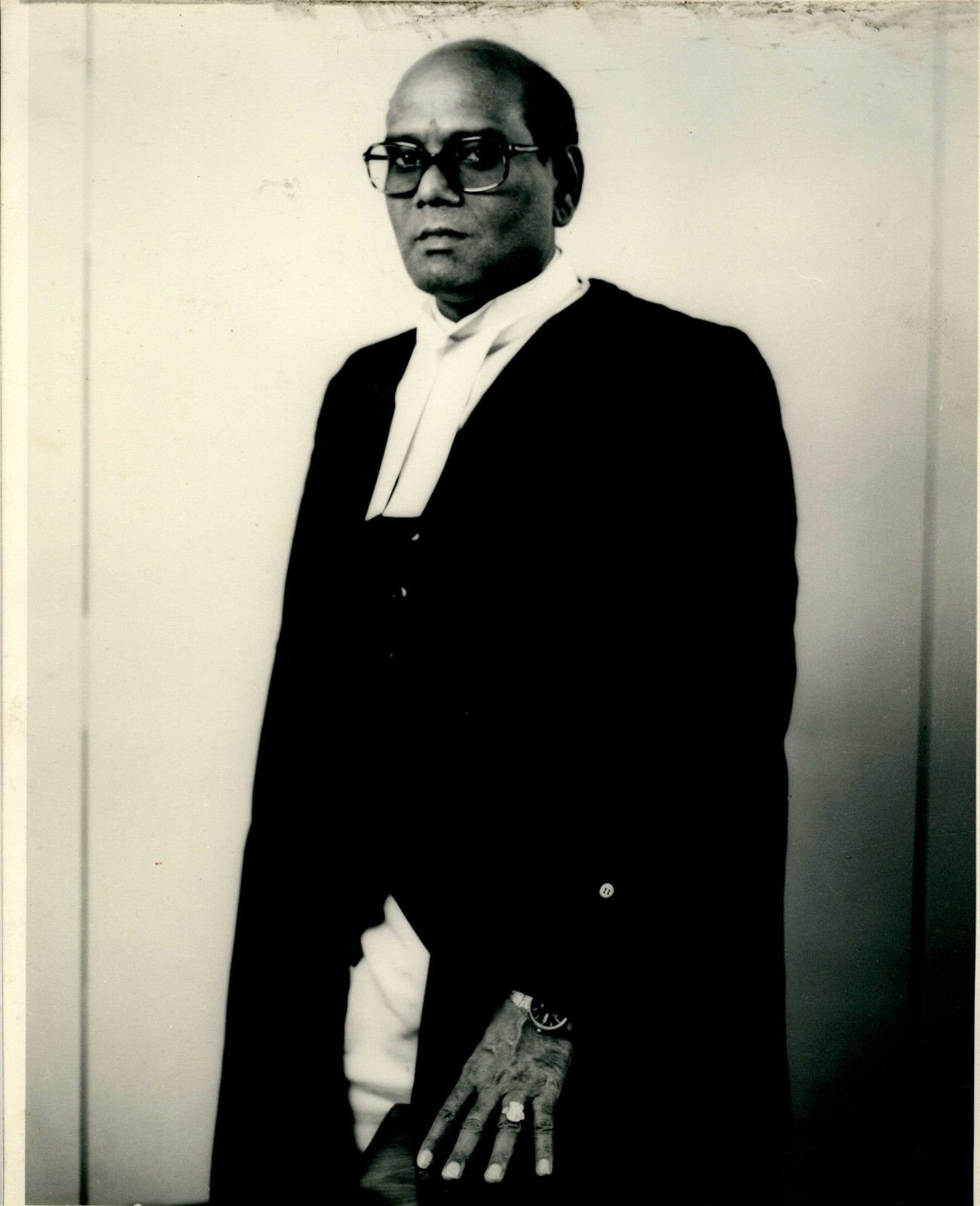

No Acts & Articles mentioned in this case
http://JUDIS.NIC.IN SUPREME COURT OF INDIA Page 1 of 8
PETITIONER:
M/S S.R.F. LIMITED
Vs.
RESPONDENT:
M/S GARWARE PLASTICS AND POLYESTERS LTD. AND ORS.
DATE OF JUDGMENT07/03/1995
BENCH:
RAMASWAMY, K.
BENCH:
RAMASWAMY, K.
VENKATACHALA N. (J)
CITATION:
1995 AIR 2228 1995 SCC (3) 465
JT 1995 (3) 11 1995 SCALE (2)187
ACT:
HEADNOTE:
JUDGMENT:
K. RAMASWAMY, J.:
1. Leave granted.
2. These appeals By special leave arise from the judgment
and order of the Division Bench of the Delhi High Court
made in Civil Writ Petition No. 1493/94 dated August 8,
1994. The appellants are respondent No.3 and respondent No.
4- M/s Flowmore Polyesters Ltd, (for short, 'Flowmore') in
the writ petition and 3rd appellant-B.P. Mittal is a share-
holder. Flowmore was closed from August 1990. Pursuant to
a reference made by its Board of Directors under Sub-s.(1)
of s. 15 of the Sick Industrial Companies (Special Provi-
sions) Act, 1985, (for short, 'SICA') Flowmore was declared
a sick industrial company (for short, 'sick company') by the
Board for Industrial and Financial Reconstruction (for
short, 'BEFR') by order dated December 6, 1991. By an order
made under s. 17(3) of SICA, the IFCI was appointed as
operating agency (for short, 'OA') to prepare a financial
package to revive Flowmore with a cut off date as 30.9.92.
By clause (3) thereof, OA was directed to examine the
feasibility of amalgamation of Flowmore with other "healthy
companies or change of management of the company on stand
alone basis" and directed to submit its report by July 30,
1992, The OA invited offers from the parties evincing
interest in the revival of Flowmore and requested to submit
their revival proposals before May 15, 1992. The first
appellant (for short, 'SRF'), the first respondent (for
short, 'Garware') and Assam Asbestos Limited (for short
'AAL') submitted their respective schemes. The schemes
submitted on 15.7.92 (after seeking three extensions) by
Garware and AAL were on 'Stand Alone' basis while the one
submitted by SRF was for "merger" of Flowmore with SRF.
Despite the BIFR sending notices to all parties including
Garware intimating that they would be heard on their
respective schemes on October 5, 1992 and of receipt of such
notices by them, Garware did not appear. SRF and AAL being
http://JUDIS.NIC.IN SUPREME COURT OF INDIA Page 2 of 8
represented through their agents were heard. On October 5,
1992, BIFR gave further time to SRF and
14
AAL and all other bidders to submit their final offers along
-with their revival proposals to the OA by November 7, 1992
so as to enable it to submit its report by October 13, 1992.
OA had stated at the hearing that SRF, Garware and AAL had
already undertaken techno-economic viability study of
Flowmore prior to the receipt of the proposals and "the
consensus at the joint meeting of the banks and the in-
stitutions was that only the proposal of NV s SRF Ltd. based
on merger of the unit with SRF was acceptable". The BIFR
passed an order stating in para 10 therein that the
representatives of AAL shall submit by October 15, 1992 to
the Bench and OA with a copy thereof to the banks and the
institutions, the detailed proposals for rehabilitation of
the company indicating the source of their technology and
the expenditure involved therein. The OA was further
directed to give detailed right-up on technology proposed to
be utilised for manufacture of various products, breakup of
processing features, dues etc. All the proposals for
revival of the unit if found unviable, the OA was required
to explore the possibility of change of management. The
copy of the order even though was sent to Garware, it did
not file any revised scheme with OA or review application to
the Board as to why its earlier proposal should not have
been rejected. By proceedings dated October 19, 1992, BIFR,
at the request of AAL, granted extension of time for
submitting revised proposals to the OA up. to November 7,
1992. It was further stated that "no further extension of
time will be granted". Even this order was communicated to
the Garware but it did not submit any revised scheme to the
OA by November 7, 1992. BIFR sent notice on the report
submitted by the OA on November 5, 1992, to all parties
including Garware intimating that it would hear the matter
on December 11, 1992 and Annexure-B is the copy of the
notice sent to all. On November 30, 1992, OA submitted its
evaluation report as directed by BIFR on the revival
proposal submitted by SRF and AAL. On December 3, 1992,
Garware by its letter addressed to AAL offered its technical
assistance to AAL for revival of Flowmore. On December 8,
1992, the OA submitted its report to BIFR along with minutes
of the joint meeting it had held with banks and financial
institutions. It would, therefore, be apparent that instead
of submitting its revised proposal to the OA or BIFR,
Garware had agreed with AAL to assist it for revival of
Flowmore. At the time of hearing by BIFR, on December 11,
1992, the AAL had referred to and BIFR had taken note of the
letter of Garware dated December 3, 1992, in which Garware
had undertaken to assist AAL for the revival of Flowmore on
stand alone basis, as is evident from para 3 of the
proceedings at page 130 of the paper book. Although time
and again, Garware was given repeated opportunities to sub-
mit its revised scheme for revival of Flowmore on stand
alone basis, it had chosen to stand out from BIFR and had
contracted with AAL to give its technical know-how
assistance to AAL for consideration for revival of Flowmore.
3. On December 11, 1992, BIFR had considered the proposals
of SRF and AAL. At this juncture, it may be relevant to
note that one ATCO, a U.S. based company, also represented
to assist AAL and appeared before the Board which was di-
rected to deposit by December 1992 an amount of one million
U.S. dollars in a 'No Lien Account' with the Lead Bank, the
State Bank of Saurashtra, and latter
15
http://JUDIS.NIC.IN SUPREME COURT OF INDIA Page 3 of 8
was directed to communicate, by December 21, 1992, to the OA
with a copy marked to the BIFR whether ATCO had deposited
the amount with them or not. AAL and ATCO were directed to
submit by December 28, 1992 the revised proposal with the OA
marking a copy to BIFR, besides making available any other
information required by OA after adopting cut off date of
30th September 1992. SRF was also directed to submit its
modified revival proposal within the aforesaid period. The
BIFR thereafter in the final order directed to submit to it
by January 18, 1993 a revival report of SRF and AAL by
January 18, 1993 along with minutes of its joint meeting
with Banks and financial institutions. It had also ordered
that "no request for extension of time either for deposit of
fund or for submission of proposal shall be entertained in
any case" and that it would hear the case as soon as OA
submitted its report. On January 13, 1993, the OA submitted
its report. Again on February 15, 1993, BIFR had sent no-
tice to all parties including Garware intimating that it
would hear the matter on March 18, 1993, (Annex-C is the
notice). On March 18, 1993, Garware did not appear before
the BIFR. BIFR noted that two schemes submitted by SRF and
AAL were being considered. After hearing the parties, SRF,
AAL/ATCO and Flowmore, the order was reserved. By this
stage, ATCO had backed out from its earlier proposal and it
did not deposit the amount as directed in the earlier
proceedings. It would, thus, be clear that after submitting
its revival proposal on stand alone basis, despite repeated
directions and notices, Garware neither complied with the
directions of the BIFR for modification of its original
scheme as per the R-BI guidelines for evinced any further
interest in the matter of revival of the sick company on
stand alone basis nor did it participate in any of the
proceedings before BIFR.
4. By order dated April 23, 1993, BIFR approved the scheme
of revival of Flowmore proposed by SRF with the observation
that "However, its main and substantial demerit is that it
envisages much larger sacrifices from financial institutions
banks apart from a huge tax-shield of Rs. 10. 17 crores at
the cost of the Central Exchequer under Section 72-A of the
Income Tax Act, which makes the proposal, in comparison with
that of AAL too expensive an alternative for the revival of
the sick company. The large stream of gross profits of
nearly Rs.73 crores over a period of first seven years, in
the context of which a further gain of Rs. 10. 17 crores
under Section 72-A would be wholly unwarranted. " The SRF
in its letter dated March 23, 1993 and April 16, 1993 filed
before BIFR expressly had given up s.72A benefits,
Therefore, by petition dated May 4, 1993, SRF sought review
of the order dated April 23, 1993 pointing out its
undertaking in the aforesaid two letters and requested the
Board to modify the order and approve the merger scheme. By
order dated November 1993, BIFR had rectified the mistake.
5. Before it was done, SRF filed an appeal before the
Appellate Authority for Industrial and Financial
Reconstruction (for short, 'Appellate Authority'). On May
1993, the Appellate Authority dismissed the appeal on the
ground that order dated April 23, 1993 was only an interim
order. By a joint meeting held on June 10, 1993, the banks
and financial institutions including OA agreed for the
merger proposal submitted by SRF as "most appropriate"
16
and they recommended to the BIFR accordingly by its report.
ATCO also file an appeal before the Appellate Authority. On
September 7, 1993, the Chief Office of the ATCO stated that
ATCO was not willing to invest any money in the Flowmore.
http://JUDIS.NIC.IN SUPREME COURT OF INDIA Page 4 of 8
So the appeal was dismissed. ATCO then filed a writ
petition in the High Court of Allahabad which was also dis-
missed as withdrawn on October 27, 1993.
6. As stated earlier, by proceedings dated November 1993,
BIFR had rectified the mistake it had committed and accepted
rehabilitation-cum-merger scheme of SRF and directed
circulation and publication of the draft schemes and fixed
January 27, 1994 for hearing of the objections or sug-
gestions to the scheme. The copy thereof was also sent to
Garware - Annex-D. On January 14, 1994 Garware filed the
appeal before the Appellate Authority against the order
dated November 19, 1993 and on January 21, 1994 and after
hearing the arguments of all concerned, order was reserved.
Before it pronounced the order, Garware filed writ petition
No.354/94 before the High Court of Bombay at Aurangabad
Bench which admittedly has no territorial jurisdiction. The
High Court did not pass any interim orders but issued notice
returnable on February 8, 1994. On January 27, 1994,
Garware appeared before- the BIFR and admitted its failure
to submit its revival proposal after rejecting its initial
proposal. By proceedings dated January 28, 1994, the
Appellate Authority dismissed the appeal of the Garware.
Subsequently, Garware amended the writ petition which was
transferred by this Court to the Delhi High Court.
7. The Division Bench allowed the writ petition primarily
on the ground that Garware is "an interested person" and
"deeply interested in the revival of' the Flowmore by "stand
alone basis". The High Court set aside the orders of BIFR
dated November 19, 1993 made without notice to Garware
noting that it was violative of principle of natural justice
and fair play. The merger scheme entails with huge
financial sacrifice at the cost of the central exchequer
without notice either to the Central Government or to the
Central Board of Direct Taxes and that, therefore, the order
of revival of Flowmore (sick company) with SRF was bad in
law. Accordingly, the orders dated November 19, 1993 and
January 27, 1994 of BIFR and order dated January 28, 1994 of
the Appellate Authority were set aside and remitted the
matter to the BIFR for reconsideration and decision
according to law.
8. Shri F.S. Nariman, learned senior counsel for the first
appellant, contended that the High Court was wholly
unjustified in its finding that Garware is an interested
person and deeply interested in the revival of Flowmore on
stand alone basis. The BIFR was justified in its conclusion
that SRF alone was in the field to revive Flowmore. Garware
though was given number of chances to submit its revised
scheme on stand alone basis, it did not do it. The revival
by merger was not vitiated for failure to give notice to
Garware. Garware at no point of time had evinced any
interest after rejecting its revival scheme by BIFR nor did
it submit fresh proposals. The consistent conduct of
Garware would show that Garware is not an interested person.
The omission to appear either before BIFR or OA with revised
proposal is eloquent and self speaking. Its agreement with
AAL would indicate that it was interested only in earning
17
profits. Garware lacked bona-fides in the revival of its
trade rival-Flowmore and intended to keep its trade rival
closed for long, as is evident from its conduct of filing
the. writ petition in Bombay High Court at Aurangabad which
has no territorial jurisdiction since Flowmore is admittedly
in Uttar Pradesh and no part of the cause of action had
arisen within the territorial jurisdiction of the Bombay
High Court. - Admittedly, it is a trade rival and had trade
http://JUDIS.NIC.IN SUPREME COURT OF INDIA Page 5 of 8
interest. It is interested to prolong the revival of
Flowmore so as to keep the company away from the
competition. It had acquiesced to the order passed by the
BIFR at different dates. The High Court was, therefore, not
right in its conclusion that Garware was deeply interested
person and is entitled to file its revised scheme on stand
alone basis. While conceding that notices to the Central
Government and the Central Board of Direct Taxes necessarily
should have been given by the BIFR, he contended that SRF
had expressly given up before BIFR the benefits of s.72-A.
During the course of the hearing in the High Court, his
counter-part, Shri Harish Salve, had undertaken and SRF
still stood by, that the revival scheme would be operative
from April 1, 1994. Thereby, other benefits of set off
under s.70, 71 and 72 of the Income Tax Act would be
marginalised. Therefore, there would be no revenue sac-
rifices to the State. The benefit of rebate on interest on
the outstanding loans paid during relevant accounting year
to the banks and financial institutions would be available
either to Flowmore on stand alone basis or SRF on merger
basis since it would arise only after the rehabilitating the
company. Therefore, there is no revenue loss or revenue
sacrifice to the State. The preamble and the provisions of
SICA would indicate that revival of the company should be
done expeditiously. The proceedings before BIFR or Appel-
late Authority or before the Court under Article 226 are
meant to be disposed of expeditiously and should not be
procrastinated. The delay in revival would entail the
workmen with great financial hardship and loss of revenue to
the State. Therefore, it was not meant to be used by trade
rival to prolong the rehabilitation. The BIFR without
unduly prolonging the matter, should enquire and complete
the proceeding keeping always the urgency at the back of its
mind.
9. Shri Desai, learned senior counsel for Garware,
contended that under SICA the BIFR has to consider either
stand alone scheme or merger scheme, whichever is more
feasible to revive sick company, when change of management
was found to be not sufficient to revive Flowmore (sick
company). Since AAL had submitted its revised proposal on
stand alone basis, Garware had agreed to assist AAL to
rehabilitate Flowmore on stand alone basis when BIFR
initially ordered SRF to revive Flowmore on stand alone
basis it had no grievance but when it reviewed the order and
directed revival by merger of Flowmore with SRF, notice
should have been given by BIFR to the Garware and it would
have been heard before passing the impugned order dated
January 23, 1994. The Appellate Authority committed equally
the same manifest error in that behalf. He also contended
that when a huge financial sacrifice was to be made and an
additional benefits in the region of Rs.70 crores with Rs.
10. 17 crores would accrue to SRF under s.70 to s.72-A of
the Income Tax Act, notices to the Central Government as
well as Central Board of Direct Taxes were mandatory. An
order of revival by merger
18
without notice to them is per-se illegal.
10. Having given our anxious consideration to the respective
contentions, we are of the view that the contentions of Sri
Nariman merit acceptance. The first question for
consideration is whether the proceedings before the BIFR
should be expeditiously disposed of? The preamble of SICA
reads thus: -
"An Act to make in public interest, special
provisions with a view to securing the timely
http://JUDIS.NIC.IN SUPREME COURT OF INDIA Page 6 of 8
detection of sick and potentially sick
companies owning industrial undertakings, the
speedy determination by a Board of experts of
the preventive, ameliorative, remedial and
other measures which need to be taken with
respect to such companies and the expeditious
enforcement of the measures so determined and
for matters connected therewith or incidental
thereto. "
11. Under,s.17(1), the Board, after making inquiry, has to
decide, as soon as may be by order in writing, whether it is
practicable for the company to make its networth exceed the
accumulated losses within a reasonable time. Similarly, s.
18(1) envisages for preparations of sanction of schemes.
The Board while making the order under s. 17, the operating
agency shall prepare, as expeditiously as possible and
ordinarily within a period of ninety days from the date of
such order, a scheme as per the particulars enumerated
thereunder. Section 26 of the Act has expressly divested
the civil 'court of its jurisdiction over the orders passed
by the Board or the Appellate Authority or the proposals
made under the Act. The legislative intent which,
therefore, becomes clear is that sick or potentially sick
industry should be detected timely. Proceedings for revival
and rehabilitation of the sick or potentially sick company
should expeditiously be completed within the time frame and
if unavoidable, it should be done within a reasonable time
thereafter, say six months. The proceedings are not to be
allowed to be used as dilatory tactics to prevent reha-
bilitation of the sick company or potential sick company, in
particular by rival companies. The Board and the Appellate
Authority and the High Court should give effect to the
provisions, comply with procedural format, should finalise
the proceedings expeditiously within the time frame so that
not only the starving workmen who are kept in agonising wait
for revival of sick company without wages, be rescued, but
also needless accumulation of losses by the company and the
loss of revenue to the State is avoided.
12. The question then is whether Garware is an interested
person? The SICA indicates that the Board has to devise a
scheme for rehabilitation of sick industry with diverse
steps. Section 16 read with regulations 21 to 25 provides
the procedure for inquiry by BIFR to determine whether the
industry became a sick company. On recording its finding
under s. 1 7(1 ) read with regulation 26 that it became a
sick company, the Board has to decide whether it is
practicable to make the networth of the sick company, exceed
the accumulated losses within a reasonable time as envisaged
in s.17(1). If the BIFR decides that it is not so
practicable, then next step would be whether it is necessary
or expedient in the public interest to adopt any of the
measures specified in s. 1 8 and to direct any operating
agency to prepare a scheme as provided in sub-s.(3) of s. 18
as per the provisions and R.B.I. guidelines and the Board
has been given power to review or modify such order after
the OA makes submission in that behalf as envisaged under
s.18(1)and (2) of SICA. After its examination and hearing
all concerned as envisaged under s.18(3) and regulations 27
to 3 1, the Board would finalise it and direct sanctioning
the-scheme and specify the date when the sanctioned scheme
shall come into force as enjoined under s. 18(4) of the Act.
The regulations provide the procedure in that behalf. It is
seen, as held earlier, that inquiry shall be completed and
concluded as expeditiously as possible to revise the sick
company or potential sick company.
http://JUDIS.NIC.IN SUPREME COURT OF INDIA Page 7 of 8
13. The question, therefore, is whether the procedure
Ldopted by the BIFR is vitiated by any error of law and
Garware is an interested person in reviving Flowmore. It is
seen that Garware and AAL had offered their schemes on stand
alone basis. All through SRF had submitted its scheme of
rehabilitation by merger of Flowmore with SRF. The
narration of facts given earlier obviate the need to
reiterate them. However, they make it obvious that despite
notices and opportunities given to Garware, time and again,
it did not chose to submit its revised scheme as directed by
BIFR before OA. Its consistent conduct in not appearing
before the Board on different dates, do establish that,
after rejection of its scheme initially submitted, Garware
evinced no interest in the matter. On the other hand, it
had entered with an agreement with AAL to extend its
technical know-how assistance for revival of Flowmore for
consideration even though at every stage, the proceedings
were communicated to Garware. Therefore, G was put on
notice of the steps taken and the orders passed by the
Board. Yet Garware evinced no interest in the revival of
Flowmore on stand alone basis or any other alternative
scheme. Thereby it is not a person interested. For its
initial interest evinced by Garware, it had acquiesced by
its conduct in the orders passed by the Board. It is true
that in the order dated April 23, 1993, the Board declined
to approve merger scheme of SRF on the premise that SRF
would gain undue advantage of the tax benefits under s.72-A
etc. etc. and stand alone basis proposal was ordered to be
published. But when the mistake it had committed in the
matter was brought to its notice, the Board reviewed its
order on November 19, 1993, no doubt without hearing any
party and accepted the scheme for merger of Flowmore with
SRF and direction in that behalf was accordingly issued to
the OA for publication of scheme as draft scheme. Since
Garware had acquiesced in the order passed and had not
evinced any interest, only two persons that remained in the
field were AAL and SRF. AAL also did not challenge the
order. SRF unquestionably a 'healthy' company and its
capacity to revise Flowmore was not in doubt. All through
its scheme was for merger of Flowmore with SRF. Therefore,
no fault can be found with the orders passed by the Board
approving the scheme of the OA of the merger of Flowmore
with SRF for revival of Flowmore. The High Court was
clearly in error in holding that though Garware stood by, it
was not out and still an interested person and was entitled
to be heard before accepting the scheme of SRF for merger of
Flowmore with SRF.
14. It is true that no notice was issued by the Board
either to the Central Government or to the Central Board of
Direct Taxes. He Central Government shall be required to
pass an order under s.72-A of
20
tax benefits and that therefore it is entitled to be heard.
Since merger scheme, which was given effect from April 1,
1992, involves tax concessions and sacrifices enumerated in
ss.70, 71 and 72 as set off. So, there would be great
revenue losses. Therefore, Central Government and Central
Board of Direct Taxes are necessary and proper parties
before the Board. The Board before finalising merger scheme
and approving its draft scheme for merger of the sick
industrial company with a healthy company, notice should be
given to the Central Government as well as to the Central
Board of Direct Taxes. Admittedly by two letters SRF had
given up the benefits under s.72-A. The counsel for the SRF
had given an undertaking in the High Court and reiterated
http://JUDIS.NIC.IN SUPREME COURT OF INDIA Page 8 of 8
before this Court that the merger scheme would be effective
from April 1, 1994. Consequently, the benefits of set off
under ss.70, 71 and 72 have been marginalised and,
therefore, no considerable revenue loss would occur to the
public exchequer. Any minor benefits would be consequential
to the offer of merger with the healthy company. In these
appeals and before the High Court, they are impleaded as
respondents and were heard through Sri. Ahuja, learned
senior counsel, who has stated that there would be no loss
of revenue to the State and benefit under s. 43-B of Income
Tax Act is bound to be given to a company revived on either
basis. In that view, the order passed by the Board and
approved by the Appellate Authority are not vitiated by any
error of law warranting interference.
15. The appeal filed by the shareholder smacks a bone-
fides. After hearing him and others by proceedings dated
December 6, 1991, the Board declared "Flowmore to be a sick
industrial company." As per the audited report for the year
ending 31.3.91, the accumulated losses stood at Rs.1131.45
lakhs against the networth of Rs.764.80 lakhs comprising of
paid-up capital only, the company has suffered cash loss of
Rs.451.72 lakhs and Rs.626.60 lakhs for the years ending
31.3.90 and 31.3.91, respectively. As on 31.3.91, the
company owned Rs.2699.10 lakhs to the financial institutions
and the banks besides other contingent liabilities.
According to Section 3(o), "sick industrial company" means
an industrial company being a company registered for not
less than five years which has at the end of any financial
year accumulated losses equal to or exceeding its entire net
worth. He had not challenged the order of BIFR declaring
Flowmore a sick company by filing any proceedings in the
High Court. Proceedings under s.16 were initiated on the
basis of the report by Board of Directors of Flowmore and
its audit report. On the other hand, he stood by and has
shown only a facade of interest by filing appeal as a
pretext before the Appellate Authority against the final
order passed by the Board by which date Garware had already
initiated writ proceedings. The camouflage of interest is
torn apart from his conduct which would indicate that he is
only pretender to Garware who intends to see that Flowmore,
a trade rival, would not be revived so that he may continue
to have market monopoly in the field. Therefore, he is only
a stooge in the hands of Garware -and his special leave
application directly filed under Article 136 against the
orders of the Appellate Authority deserves to be dismissed
with exemplary costs of Rs.25,000/-.
16. The appeals arc accordingly allowed. The orders of
the High Court are
21
set aside and those of the Appellate Authority and the Board
are confirmed with costs quantified as Rs.20,000/-. All
costs may be deposited with the Supreme Court Legal Aid
Committee within four weeks and in default, the SCLA
Committee would be entitled to recover the same as a decree
in its favour.
22

 Login with google
Legal Notes
Add a Note....