
As per case facts, Community Health Volunteers (CHVs) working for the Municipal Corporation of Greater Mumbai for many years were paid a fixed honorarium, leading them to seek minimum wages ...
Neeta Sawant WP 1156 of 2021 and group
IN THE HIGH COURT OF JUDICATURE AT BOMBAY
CIVIL APPELLATE JURISDICTION
WRIT PETITION NO.1156 OF 2021
Municipal Corporation of Greater Mumbai
through Municipal Commissioner
...Petitioner
V/s.
Sangeeta Devdas Salvi and others ...Respondents
WITH
WRIT PETITION (STAMP) NO.98222 OF 2020
Municipal Corporation of Greater Mumbai
through Municipal Commissioner
...Petitioner
V/s.
Ujwala Sampatrao Hajare and others ...Respondents
WITH
WRIT PETITION (STAMP) NO.863 OF 2021
Municipal Corporation of Greater Mumbai
through Municipal Commissioner
...Petitioner
PAGE NO. 1 of 37
13 August 2026
Neeta Sawant WP 1156 of 2021 and group
V/s.
Rupa Vijaybahadur Yadav and others ...Respondents
WITH
WRIT PETITION NO.1154 OF 2021
Municipal Corporation of Greater Mumbai
through Municipal Commissioner
...Petitioner
V/s.
Rasika Ganpat Aagre and others ...Respondents
WITH
WRIT PETITION NO.1307 OF 2021
Municipal Corporation of Greater Mumbai
through Municipal Commissioner
...Petitioner
V/s.
Naji Ganpat Jogale and others ...Respondents
WITH
WRIT PETITION NO.1599 OF 2021
PAGE NO. 2 of 37
13 August 2026
Neeta Sawant WP 1156 of 2021 and group
Municipal Corporation of Greater Mumbai
through Municipal Commissioner
...Petitioner
V/s.
Surekha Suresh Dhakorkar and others ...Respondents
WITH
WRIT PETITION NO.1158 OF 2021
Municipal Corporation of Greater Mumbai
through Municipal Commissioner
...Petitioner
V/s.
Manju Tamradhwaj Kamble and others ...Respondents
WITH
WRIT PETITION NO.14081 OF 2022
Municipal Corporation of Greater Mumbai
through Municipal Commissioner
...Petitioner
V/s.
Aarti Sanjay Shastri and others ...Respondents
PAGE NO. 3 of 37
13 August 2026
Neeta Sawant WP 1156 of 2021 and group
WITH
WRIT PETITION NO.776 OF 2023
Municipal Corporation of Greater Mumbai
through Municipal Commissioner
...Petitioner
V/s.
Vidya R. Bhosale and others ...Respondents
WITH
WRIT PETITION NO.789 OF 2023
Municipal Corporation of Greater Mumbai
through Municipal Commissioner
...Petitioner
V/s.
Seema Santosh Phapal and others ...Respondents
WITH
WRIT PETITION NO.5921 OF 2023
Municipal Corporation of Greater Mumbai
through Municipal Commissioner
...Petitioner
PAGE NO. 4 of 37
13 August 2026
Neeta Sawant WP 1156 of 2021 and group
V/s.
Darshana Anand Gamare and others ...Respondents
________________
Mr. A. S. Peerzada with Mr. Santosh Mali for MCGM, Petitioner in
WP/1156/2021.
Mr. Santosh Mali for MCGM, Petitioners in other Petitions.
Mr. P.V. Devdas with Ms. Vidula S. Patil and Ms. Manasi Kanitkar for the
Respondents.
________________
CORAM: SANDEEP V. MARNE, J.
RESERVED ON: 6 AUGUST 2026
PRONOUNCED ON: 13 AUGUST 2026
Judgment:
SHE IS CALLED A ‘VOLUNTEER’. THE STATE DEPENDS ON HER
LIKE A WORKER.
1) The above quote in the Article
1
highlights the plight of
Community Health Volunteers engaged by the country’s largest civic
governing body, the Municipal Corporation of Greater Mumbai, who are
denied digni�ed wages. Community Health Volunteers act as a vital
grassroot link between local communities and public health systems.
They support maternal-child health, assist in disease and vector control,
1
‘Volunteers in Indian Labour Laws: How the State uses a word to deny women their rights’ by Kabir
Jain, published in ‘Change in Content’ on 24 April 2026
PAGE NO. 5 of 37
13 August 2026
Neeta Sawant WP 1156 of 2021 and group
and help execute national and municipal health programs across
Mumbai's wards. They are paid a �xed honorarium by the Municipal
Corporation, and their �ght is for payment of minimum wages
guaranteed under the Minium Wages Act, 1948.
2) These Petitions are �led by the Municipal Corporation of
Greater Mumbai challenging the common judgment and order dated 7
September 2020 passed by the Authority under the Minimum Wages Act,
1948 and the Assistant Commissioner of Labour, Mumbai City allowing
the Applications preferred by the Respondents and their Unions, and
upholding the claims of Community Health Volunteers (CHVs) for
minimum wages. The Authority has directed the Municipal Corporation
to pay CHVs the difference in the minimum wages plus special allowance
and the honorarium already paid to them. The amounts payable in
respect of the claims raised in each of the applications are quanti�ed by
the Authority with direction to the Municipal Corporation to pay the
same to the CHVs.
3) Petitioner is a Municipal Corporation established under the
provisions of the Mumbai Municipal Corporation Act, 1888. It provides
civic amenities to the residents of Mumbai city. One of the mandatory
duties which the Petitioner-Municipal Corporation is required to ful�ll is
provision of health related services within its territorial jurisdiction. In
the year 1988, the Municipal Corporation implemented ‘India Population
Project V’ (Project) with the �nancial assistance of the World Bank. The
Project envisaged development and expansion of health family welfare
centers. It was proposed to establish 176 centers named as ‘Health Posts’
PAGE NO. 6 of 37
13 August 2026
Neeta Sawant WP 1156 of 2021 and group
including 56 Family Welfare Centers in Mumbai. The objective of the
project was to provide health services to slum dwellers in Mumbai such
as family planning, maternal and child healthcare, vaccination, ante-
natal and post-natal services and creating awareness in slum areas and
to prevent spread of diseases like plague, dengue and create awareness in
avoiding spread of such diseases. The Project was also aimed at
providing preventive and curative health services to the community at
large. With the passage of time, several other services and schemes were
introduced by the Municipal Corporation such as control of polio
through Pulse Polio, AIDS control programme, leprosy eradication,
tuberculosis control, malaria eradication, promotion of small family by
adopting family planning measures etc. In order to execute the Project,
the Municipal Corporation decided to take assistance of volunteers to
work as part-time woman community health workers.
4) The assistance received through World Bank for
implementation of the Project was discontinued from 31 March 1996.
However, the assurance was apparently given by the Mu nicipal
Corporation to the World Bank that the services established under the
India Population Project V will be continued even without the �nancial
assistance from the World Bank. Accordingly, after 1996, the Municipal
Corporation has made a provision for expenditure in its own budget for
operation of the Health Posts created under the project. Each Health
Post used to be apparently manned by one full-time Medical Of�cer, one
Public Healthcare Nurse, 3 to 5 Auxiliary Nurses, 3 to 5 Multipurpose
Workers and about 25 Part-time Woman Health Workers and a Center
PAGE NO. 7 of 37
13 August 2026
Neeta Sawant WP 1156 of 2021 and group
Attendant. To cover the entire territory area and population in Mumbai,
176 Health Posts were established.
5) For implementing various schemes under the Project and for
providing health care services amongst communities especially the slum
areas, the Municipal Corporation started hiring local women in the
community. They were hired as part-time CHVs. The CHVs so engaged
by the Municipal Corporation are paid �xed honorarium for number of
hours of work performed by them. It appears that they were engaged for
different hours every day. Some worked for 3 hours a day, some worked
for 4 hours a day and it is claimed by Respondents in the present case
that they have worked for 5 hours every day.
6) Mahapalika Aarogya-Seva Karmachari Sanghatana (Union)
took up the cause of CHVs and raised a demand for their absorption as
regular employees of the Municipal Corporation. At the instance of the
Union, Reference (IT) No.39 of 2000 was referred to Industrial Tribunal,
Mumbai. The Reference was resisted by the Municipal Corporation,
questioning the status of CHVs as ‘workman’ under Section 2(s) of the
Industrial Disputes Act, 1947 (ID Act) for maintainability of the
Reference. Accordingly, the Industrial Tribunal framed preliminary issue
about status of CHVs within the meaning of Section 2(s) of the ID Act. By
Part-I Award dated 2 March 2002, the Industrial Tribunal held that
Voluntary Women Health Workers/Community Health Workers were
‘workman’ within the meaning of Section 2(s) of the ID Act. Writ Petition
No. 4027 of 2002 was �led in this Court challenging the Part-I Award,
which was withdrawn with liberty to challenge Part-I Award. Final Award
PAGE NO. 8 of 37
13 August 2026
Neeta Sawant WP 1156 of 2021 and group
in Reference (IT) No. 39 of 2000 was made on 13 January 2004 by the
Industrial Tribunal rejecting the demand for absorption in municipal
service. However, the Municipal Corporation was directed to increase the
honorarium by Rs.150/- per month so that CHVs were also entitled for
remuneration of Rs.900/- per month w.e.f. 13 January 2004. The
Municipal Corporation was also directed to ensure uniformity in working
hours of CHVs.
7) The Union challenged the �nal Award dated 13 January 2004
by �ling Writ Petition No.7958 of 2005, challenging rejection of demand
Nos.1 and 3 to 6, relating to absorption etc. As against this, Municipal
Corporation �led Writ Petition No.8947 of 2004, challenging Part-I
Award upholding the status of CHVs as workman. This Court took up the
cross Petitions for hearing with various other petitions relating to CHVs.
By a common judgment and order dated 4 January 2017, this Court has
dismissed Writ Petition No.7958 of 2005 �led by the Union as well as
Writ Petition No.8947 of 2004 �led by the Municipal Corporation. The
Municipal Corporation has �led Special Leave Petition (C) No. 9660 of
2017 before the Hon’ble Supreme Court, challenging the judgment and
order passed by this Court on 4 January 2017. By Order dated 13 April
2017, the Hon’ble Supreme Court stayed operation of the impugned
judgment. The leave has been granted in the SLP by order dated 28
August 2018. It is reported that the Appeal is still pending before the
Hon’ble Supreme Court.
8) In the above background, Application Nos. 1 to 12 of 2016
was �led by CHVs and their Union under Section 20(2) of the Minimum
PAGE NO. 9 of 37
13 August 2026
Neeta Sawant WP 1156 of 2021 and group
Wages Act, 1948 before the Authority appointed under the Act seeking
payment of difference of wages due according to minimum rates of
wages �xed by Government Noti�cation dated 24 February 2015 and the
wages actually paid. Different amounts were quanti�ed in each of the
Applications and recovery thereof was sought from the Municipal
Corporation.
9) The Applications were resisted by the Municipal
Corporation by �ling Written Statements. On behalf of the CHVs, their
advocate was examined as a witness. On behalf of the Municipal
Corporation, Dr. Pratibha Dilip Jadhav was examined as its witness. Shri.
Sunil Tulsiram Jangale, Divisional Labour and Welfare Of�cer in the
Municipal Corporation was also examined as a witness. After considering
the pleadings, documentary and oral evidence, the Authority has passed
common judgment and order dated 7 September 2020, allowi ng
Application No. 1 to 12 of 2016 and has upheld the entitlement of CHVs
to receive minimum wages under the Minimum Wages Act. Accordingly,
the Municipal Corporation is directed to pay the quanti�ed amounts of
difference between minimum wages and the wages actually paid to
CHVs. Municipal Corporation is aggrieved by the judgment and order
dated 7 September 2020 and has �led the present petitions.
10) Mr. Peerzada, the learned counsel appearing for the
Petitioner-Municipal Corporation submits that the Authority has grossly
erred in allowing the applications preferred by the CHVs. He submits that
CHVs are not employed by the Municipal Corporation in any manner.
That since there is no employer-employee relationship, there is no
PAGE NO. 10 of 37
13 August 2026
Neeta Sawant WP 1156 of 2021 and group
question of Municipal Corporation paying minimum wages to them. That
CHVs do not �t into de�nition of the term ‘employee’ under Section 2(i)
of the Minimum Wages Act. That in any case, the issue of status of CHVs
is already pending before the Hon’ble Supreme Court and that the Award
has already been stayed during pendency of the civil appeal. That
therefore the Authority could not have adjudicated the issue of status
once again when the same is sub judice before the Hon’ble Supreme
Court. He therefore submits that CHVs are volunteers who are engaged
for performing the task under a speci�c project. That no recruitment
process is followed for their initial engagements. That their services are
hired on need basis. That since wages are not paid to CHVs, there is no
question of determining their entitlements under the Minimum Wages
Act. That the applications were grossly barred by limitation. That issues
were not properly framed by the learned Authority. That the Authority
has failed to appreciate and consider various Awards passed by the
Industrial Tribunal including Reference (IT) No. 5 of 2000 as well as order
of this Court dated 4 January 2017 wherein entitlement of CHVs is
upheld only to the extent of payment of honorarium. That their prayer
for absorption in municipal service is already rejected. That the same
prayers were sought to be introduced in an indirect manner after being
unsuccessful in securing reliefs in Reference (IT) No. 5 of 2000, as well as
before this Court.
11) Mr. Peerzada further submits that the impugned order of the
learned Authority is in the teeth of judgment of this Court dated 4
January 2017. That de�nition of the term ‘workman’ under Section 2(s)
of the ID Act is more or less similar to the term ‘employee’ under Section
PAGE NO. 11 of 37
13 August 2026
Neeta Sawant WP 1156 of 2021 and group
2(i) of the Minium Wages Act. That in the present case, none of the CHVs
has stepped into the witness box and the evidence is adduced by an
advocate. That Applications could not have been allowed by taking into
consideration evidence of an advocate. That CHVs are already paid wages
almost equivalent to minimum wages. That currently they are receiving
honorarium of Rs.14,000/- per month for rendering services for only 5
hours in a day. That the scheme itself is such that the volunteers are
never treated as part of the establishment of the Municipal Corporation.
That since their prayer for absorption has been rejected, the same cannot
be sought to be introduced in the form of payment under the Minimum
Wages Act. In the above broad circumstances, Mr. Peerzada prays for
setting aside the impugned order passed by the learned Authority.
12) Mr. Devdas, the learned counsel for the Respondents
opposes the Petition. He submits that absorption in service is a concept
different than payment of minimum wages as per the Minimum Wages
Act and that therefore, mere rejection of Reference for absorption cannot
be a ground for presuming that the Respondents will not get the relief of
payment of digni�ed wages. That services of CHVs are being exploited
by payment of meager honorarium. That the Noti�cation for payment of
minimum wages was issued on 24 February 2015 and therefore, CHVs
�led an application before the learned Authority. That the issue of
payment of minimum wages was not involved in Reference (IT) No. 39 of
2000. That in respect of several other CHVs , orders have been passed for
payment of minimum wages to them. That except CHVs, all other
temporary workers hired by the Municipal Corporation received
PAGE NO. 12 of 37
13 August 2026
Neeta Sawant WP 1156 of 2021 and group
minimum wages. That services of CHVs are being exploited by the
Municipal Corporation. He therefore prays for dismissal of the Petitions.
13) Rival contentions urged on behalf of the parties now fall for
my consideration.
14) The issue involved in the present Petition is about
entitlement to receive minimum wages by the CHVs as per the
Noti�cations issued from time to time under the Minimum Wages Act.
Respondents are CHVs whose services are volunteered on part-time basis
by the Municipal Corporation for implementation of various health
related programmes and schemes. As observed above, India Population
Project V was implemented by the Municipal Corporation in the year
1988, under which about 176 ‘Health Posts’ were created as Urban Health
Centers throughout the territory of Mumbai City with the �nancial
assistance of the World Bank. The Project was meant to supplement the
health services and family welfare programmes of the Municipal
Corporation. Each Health Post was to be manned by one Medical Of�cer,
one Public Health Nurse, 3 to 5 Auxiliary Nurses and other paramedical
staff alongwith women volunteers on a part-time basis. It appears that
the number of CHVs hired by the Municipal Corporation throughput the
city of Mumbai is substantially high. In the order dated 4 January 2017,
this Court has recorded the number of CHVs as 3400. Mr. Peerzada has
submitted that as of now there are about 3000 CHVs utilised by the
Petitioner-Municipal Corporation to serve as a link between Health Posts
and the community served by such Health Posts. As observed above, the
CHVs do not perform full-time work and are engaged on part-time basis.
PAGE NO. 13 of 37
13 August 2026
Neeta Sawant WP 1156 of 2021 and group
Their duty hours are varied. In some cases, they used to work for 3 hours
a day. Mr. Devdas has submitted that the CHVs who are currently
engaged, perform duties for 5 hours a day.
15) The CHVs so hired by the Municipal Corporation �rst made
an attempt for their absorption in the municipal service through
Reference (IT) No.39 of 2000. The Reference was for adjudication of
following demands:
१) eta SwnW P156o fto2e0StdW(CHVS) oWgW wWrWund0 poW e0t0 Io0 dWo d1ToWH oWt0.
२) eta SwnW P156o fto2e0StdW(CHVS) oW2gW G1 wW Cro0 NOUU/- �ेतन दे�यात या�े �
�यानंतर ��येक ��" �पये २५०/- देऊन मनपातील �कमान �ेतना�या ५०% �ेतन दे�यात या�े.
३) eta YwुL.0iBo P156o d a/W1B(MPW) � सम��यक(Co-Ordinator) चे पदनाम बदलून
eWta)Sgd P156o Sg1B9d(Public Health Inspector) कर�यात या�े � �यांना क�न� अ�े�क
(J.O.) �या �ेतन�ेणीबरोबर आण�यात या�े.
४) ewWzod rh1/Wh1dW t FWfHStd(A.N.M.S.) t SwnW dWoa90lB(FFW) चे पदनाम बदलून
�युSg31 w0:, m‘wu)’1 d1ToWH oWt0 t RoW2gW voुSg31 w0:, m‘wu)’1poW t0Hg 704BY15Y1
आण�यात या�े.
५) eWta)Sgd P156o rh1/Wh1dW(PHNS) oW2gW wWrWund0 poW C64WnoWHBn eWta)Sgd P156o
प�रचा�रकाला लागू असलेली �ेतन�ेणी दे�यात या�ी.
६) d54RoWwB cW)KB e2f,0/0 dW [W1HBo n5de2]oW Fd:r- O CBn d a/WDoW2gW G0ToWH o0A
नये.
७) t1Bn d a/WDoW2/B dW W/B t0F eWH HWe d1ToWH oWtB.
16) In the Reference, the Municipal Corporation questioned
their status, contending that they do not answer the description of the
term ‘workman’ appearing under Section 2(s) of the ID Act. The objection
of the Municipal Corporation was repelled by the Industrial Tribunal by
Part-I Award dated 2 March 2002. After upholding the status of CHVs as
‘workman’, the Industrial Tribunal proceeded to determine remaining
issues and by �nal Award dated 13 January 2004, it has rejected demand
Nos. 1, 3 to 6 as enumerated above. Thus, the demand for absorption in
the municipal service is rejected. Similarly, demands No.3 to 6, which
PAGE NO. 14 of 37
13 August 2026
Neeta Sawant WP 1156 of 2021 and group
were not really concerning CHVs were also rejected. Demand No.2 was
partly allowed by directing increase in the honorarium by Rs.150/- per
month. Demand No.7 was also partly allowed by directing uniformity in
working hours. The challenge to the Award by the Union of CHVs has
been rejected by this Court vide judgment and order dated 4 January
2017. The cross challenge raised by the Municipal Corpor ation
questioning status of CHVs as ‘workman’ has also been rejected by this
Court. Now, the Appeals are pending before the Hon’ble Apex Court, in
which the impugned judgment has been stayed.
17) In the present case, however, this Court is not concerned
with the issue of absorption of CHVs in the municipal service. In that
sense, pendency of appeals before the Hon’ble Supreme Court would not
ipso facto come in the way of this Court deciding the issue of payment of
minimum wages to the CHVs. Mr. Peerzada has however submitted that
there are overlapping issues in the Reference and in the Application for
minimum wages. According to him, the issue of status of CHVs which is
pending before the Apex Court has a material bearing on right of CHVs to
receive minimum wages. He submits that the Municipal Corporation has
challenged the declaration of status of CHVs as ‘workman’ by the
Industrial Tribunal and by this Court before the Hon’ble Apex Court and
that till the said issue is decided, the Authority under the Minimum
Wages Act could not have gone into the issue of payment of minimum
wages to the CHVs. However, I am not inclined to accept the contention
raised by Mr. Peerzada.
PAGE NO. 15 of 37
13 August 2026
Neeta Sawant WP 1156 of 2021 and group
18) The demand for absorption in municipal service raised in
the earlier Reference has nothing to do with the demand for payment of
minimum wages under the Minimum Wages Act. Even a person not in
regular employment of the establishment can raise a demand for
minimum wages. It appears that de�nition of the term ‘workman’ under
Section 2(s) of the ID Act is substantially different from de�nition of the
term ‘employee’ under Section 2(i) of the Minimum Wages Act. It would
be apposite to reproduce both the de�nitions:
Section 2(s) of ID Act Section 2(i) of the Minimum Wages Act
(s) “workman” means any person (including
an apprentice) employed in any industry to
do any manual, unskilled, skilled, technical,
operational, clerical or supervisory work for
hire or reward, whether the terms of
employment be express or implied, and for
the purposes of any proceeding under this
Act in relation to an industrial dispute,
includes any such person who has been
dismissed, discharged or retrenched in
connection with, or as a consequence of,
that dispute, or whose dismissal, discharge
or retrenchment has led to that dispute, but
does not include any such person—
(i) who is subject to the Air Force
Act, 1950 (45 of 1950), or the Army
Act, 1950 (46 of 1950), or the Navy
Act, 1957 (62 of 1957); or
(ii) who is employed in the police
service or as an officer or other
employee of a prison; or
(iii) who is employed mainly in a
managerial or administrative
capacity; or
(iv) who, being employed in a
supervisory capacity, draws wages
exceeding ten thousand rupees per
mensem or exercises, either by the
nature of the duties attached to the
office or by reason of the powers
vested in him, functions mainly of a
managerial nature.
(i) “employee” means any person who is
employed for hire or reward to do any work,
skilled or unskilled, manual or clerical, in a
scheduled employment in respect of which
minimum rates of wages have been fixed;
and includes an out-worker to whom any
articles or materials are given out by another
person to be made up, cleaned, washed,
altered, ornamented, finished, repaired,
adapted or otherwise processed for sale for
the purposes of the trade or business of that
other person where the process is to be
carried out either in the home of the out-
worker or in some other premises not being
premises under the control and management
of that other person; and also includes an
employee declared to be an employee by the
appropriate Government; but does not
include any member of the Armed Forces of
the Union.
PAGE NO. 16 of 37
13 August 2026
Neeta Sawant WP 1156 of 2021 and group
19) Thus, de�nition of the term ‘employee’ under Section 2(i) of
the Minimum Wages Act appears to be substantially wider. So, every
person who is employed for hire or reward to do any work, which is
skilled or unskilled, managerial or clerical, in the scheduled employment
is covered by de�nition of the term ‘employee’ under Section 2(i) of the
Minimum Wages Act. What needs to be established is th at the
employment for hire or reward to do work is under the scheduled
employment for which the minimum rates of wages have be en
prescribed. There is no dispute to the position that establishment of the
Petitioner-Municipal Corporation is a scheduled employment within the
meaning of the Minimum Wages Act. The only contention of the
Petitioner-Municipal Corporation is that CHVs are not ‘employed’ by the
Municipal Corporation and that therefore they cannot be treated as
‘employees’ within the meaning of Section 2(i) of the Minimum Wages
Act.
20) In my view, the term ‘employed’ appearing under Section
2(i) of the Minimum Wages Act is not to be confused with the concept of
‘appointment’. Ordinarily, appointments on the establishment of
Municipal Corporation need to be made by following the established
procedure and in accordance with the Rules and Regulations. The
employees, who are appointed in municipal service are re gular
employees of the Municipal Corporation. The word ‘employed’ in the
de�nition under Section 2(i) has to be read in conjunction with the
words ‘for hire or reward’. Therefore, every person who is paid
remuneration for services rendered for Municipal Corporation would be
covered by the expression ‘employee’ for the purpose of Minimum Wages
PAGE NO. 17 of 37
13 August 2026
Neeta Sawant WP 1156 of 2021 and group
Act. Such employee may be permanent, temporary, casual, ad hoc, work
charged, contractual, badli etc. The nomenclature may be different, but
the common thread that runs across the entire class is employment for
hire or reward. Thus, when a person is hired and serves th e
establishment and receives a �xed sum every month as a reward, he
becomes employee within the meaning of the Minimum Wages Act. In
that sense, whether CHVs answer the description of ‘workman’ under
Section 2(s) of the ID Act or not is an irrelevant factor and what needs to
be examined is that they are ‘employees’ for the limited purpose of
determining their entitlement to wages under the Minimum Wages Act.
21) In my view, mere branding of wages paid to the CHVs as
‘honorarium’ would not deny them the status of ‘employees’ for the
purpose of payment of minimum wages. If the nomenclature of reward
paid for hire becomes the decisive factor, it would be easy for the
employer to treat the wages as honorarium to escape the liability under
the Minimum Wages Act. The word ‘wages’ has been de�ned under
Section 2(h) of the Minimum Wages Act as under:
(h) “wages” means all remuneration, capable of being expressed in terms of
money, which would, if the terms of the contract of employment, express or
implied, were ful�lled, be payable to a person employed in respect of his
employment or of work done in such employment, and includes house rent
allowance, but does not include—
(i) the value of—
(a) any house-accommodation, supply of light, water, medical
attendance, or
(b) any other amenity or any service excluded by general or
special order of the appropriate Government;
(ii) any contribution paid by the employer to any Pension Fund or
Provident Fund or under any scheme of social insurance;
(iii) any travelling allowance or the value of any travelling concession;
PAGE NO. 18 of 37
13 August 2026
Neeta Sawant WP 1156 of 2021 and group
(iv) any sum paid to the person employed to defray special expenses
entailed on him by the nature of his employment; or
(v) any gratuity payable on discharge;
22) So, every ‘remuneration’, which is capable of being
expressed in terms of money, which is payable to a person in respect of
his employment becomes wages. Thus, ‘remuneration’ drawn by CHVs
during the course of their engagements, though branded as
‘honorarium’ , would be covered by de�nition of the term ‘wages’ under
Section 2(h) of the Minimum Wages Act.
23) There is no dispute to the position that Municipal
Corporation pays minimum wages to temporary employees. However,
minimum wages are denied in the present case to the volunteers on the
ground that they are never employed by the Municipal Corporation.
However, it is a matter of fact that CHVs work for a considerable period
of time for the Municipal Corporation. Many of them are continued as
volunteers till they cross the age of retirement. Their relationship with
the Municipal Corporation is virtually like an employee. They are
supervised by Health Post doctors and nurses. Their muster rolls are
maintained. Thus, they are not volunteers in true sense who work on
voluntary basis to assist the Municipal Corporation. Ordinarily, the word
‘volunteer’ means a person who offers or agrees to do something without
being forced or paid for. In the present case, Respondents are not
volunteers as understood in common parlance. They have to report for
duties, perform duty for 5 hours, obey orders of Health Post doctors and
nurses, and are paid �xed remuneration every month.
PAGE NO. 19 of 37
13 August 2026
Neeta Sawant WP 1156 of 2021 and group
24) It must also be borne in mind that engagement of
Respondents as CHVs is not a matter of casual engagement for few days
as per need. Though the scheme of providing of health related services
commenced in the year 1988 towards implementation of Project funded
by the World Bank, the said scheme is continued for the last 38 long
years. There appears to be no reason why the Municipal Corporation
would discontinue offering health related services to the community. It
is commonly known fact that about 40% population of Mumbai City
resides in slums. The Municipal Corporation has undertaken the noble
task of creating health awareness through community volunteers. The
community volunteers play a dual role. Since they are a part of the same
community, they are well versed with the needs of the residents of
locality. They are more accessible within the community and play an
important role in providing necessary medical facilities to the
community concerned. Thus, they provide an important linkage/bridge
between the doctors and nurses posted at Health Post and t he
community which they serve. They are thus communicators or conveyors
of needs and information of residents in a community to the Doctors and
Nurses at the Heath Post. Additionally, they perform the duties assigned
to them by the Doctors and Nurses at the Health Post. This is how
engagement of local community women assists the Municip al
Corporation in gauging the needs of the community and spread the
health awareness programs in an effective manner.
25) The Governments and its instrumentalities do need to
employ causal and temporary workers for various purposes. Such casual
workers, who do no not have right of absorption in service and who
PAGE NO. 20 of 37
13 August 2026
Neeta Sawant WP 1156 of 2021 and group
remain at the mercy of the employer, were also being denied digni�ed
salaries which regular employees earn in the organization. The judgment
of the Apex Court in State of Punjab and Ors. vs. Jagjit Singh and Ors.
2
marks a watershed movement in the area of guaranteeing digni�ed
wages to such casual and temporary workers. As a result of the judgment
of the Apex Court in Jagjit Singh (supra), now it is mandatory for
Governments and its instrumentalities to pay wages at the minimum of
the pay scales payable to regular employees once it is established that
both perform same nature of duties. In para-54 to 61 of the judgment,
the Apex Court has held as under:
54. The Full Bench of the High Court while adjudicating upon the above
controversy had concluded that temporary employees were not entitled to the
minimum of the regular pay scale, merely for the reason, that the activities
carried on by daily wagers and regular employees were similar. The Full Bench
however, made two exceptions. Temporary employees, who fell in either of the
two exceptions, were held entitled to wages at the minimum of the pay scale
drawn by regular employees. The exceptions recorded by the Full Bench of the
High Court in the impugned judgment are extracted hereunder : (Avtar Singh
case [Avtar Singh v. State of Punjab, 2011 SCC OnLine P&H 15326 : ILR (2013) 1
P&H 566] , SCC OnLine P&H para 37)
“(1) A daily wager, ad hoc or contractual appointee against the
regular sanctioned posts, if appointed after undergoing a selection
process based upon fairness and equality of opportunity to all other
eligible candidates, shall be entitled to minimum of the regular pay
scale from the date of engagement.
(2) But if daily wagers, ad hoc or contractual appointees are not
appointed against regular sanctioned posts and their services are
availed continuously, with notional breaks, by the State Government or
its instrumentalities for a suf�cient long period i.e. for 10 years, such
daily wagers, ad hoc or contractual appointees shall be entitled to
minimum of the regular pay scale without any allowances on the
assumption that work of perennial nature is available and having
worked for such long period of time, an equitable right is created in
such category of persons. Their claim for regularisation, if any, may
have to be considered separately in terms of legally permissible scheme.
2
(2017) 1 SCC 148
PAGE NO. 21 of 37
13 August 2026
Neeta Sawant WP 1156 of 2021 and group
(3) In the event, a claim is made for minimum pay scale after more
than three years and two months of completion of 10 years of
continuous working, a daily wager, ad hoc or contractual employee shall
be entitled to arrears for a period of three years and two months.”
54.1. A perusal of the above conclusion drawn in the impugned judgment
(passed by the Full Bench), reveals that the Full Bench carved out an exception
for employees who were not appointed against regular sanctioned posts, if
their services had remained continuous (with notional breaks, as well), for a
period of 10 years. This category of temporary employees was extended the
bene�t of wages at the minimum of the regular pay scale. In Umadevi (3)
case [State of Karnataka v. Umadevi (3), (2006) 4 SCC 1 : 2006 SCC (L&S) 753] ,
similarly, employees who had rendered 10 years' service were granted an
exception (refer to para 53 of the judgment extracted in the preceding
paragraph). The above position adopted by the High Court reveals, that the
High Court intermingled the legal position determined by this Court on the
subject of regularisation of employees, while adjudicating upon the
proposition of pay parity, emerging under the principle of “equal pay for equal
work”. In our view, it is this mix-up, which has resulted in the High Court
recording its afore-extracted conclusions.
54.2. The High Court extended different wages to temporary employees by
categorising them on the basis of their length of service. This is clearly in the
teeth of the judgment in Daily Rated Casual Labour case [Daily Rated Casual
Labour v. Union of India, (1988) 1 SCC 122 : 1988 SCC (L&S) 138] . In the above
judgment, this Court held that classi�cation of employees based on their
length of service (those who had not completed 720 days of service, in a period
of 3 years; those who had completed more than 720 days of service—with
effect from 1-4-1977; and those who had completed 1200 days of service), for
payment of different levels of wages (even though they were admittedly
discharging the same duties), was not tenable. The classi�cation was held to be
violative of Articles 14 and 16 of the Constitution.
54.3. Based on the consideration recorded hereinabove, the determination in
the impugned judgment rendered by the Full Bench of the High Court, whereby
it classi�ed temporary employees for differential treatment on the subject of
wages, is clearly unsustainable and is liable to be set aside.
55. In view of all our above conclusions, the decision rendered by the Full
Bench of the High Court in Avtar Singh v. State of Punjab [Avtar Singh v. State of
Punjab, 2011 SCC OnLine P&H 15326 : ILR (2013) 1 P&H 566] , dated 11-11-
2011, is liable to be set aside, and the same is hereby set aside. The decision
rendered by the Division Bench of the High Court in State of Punjab v. Rajinder
Singh [State of Punjab v. Rajinder Singh, 2009 SCC OnLine P&H 125] is also
liable to be set aside, and the same is also hereby set aside. We af�rm the
decision rendered in State of Punjab v. Rajinder Kumar [State of
Punjab v. Rajinder Kumar, 2010 SCC OnLine P&H 13009] , with the modi�cation
PAGE NO. 22 of 37
13 August 2026
Neeta Sawant WP 1156 of 2021 and group
that the employees concerned would be entitled to the minimum of the pay
scale, of the category to which they belong, but would not be entitled to
allowances attached to the posts held by them.
56. We shall now deal with the claim of temporary employees before this Court.
57. There is no room for any doubt that the principle of “equal pay for equal
work” has emerged from an interpretation of different provisions of the
Constitution. The principle has been expounded through a large number of
judgments rendered by this Court, and constitutes law declared by this Court.
The same is binding on all the courts in India under Article 141 of the
Constitution of India. The parameters of the principle have been summarised
by us in para 42 hereinabove. The principle of “equal pay for equal work” has
also been extended to temporary employees (differently described as work-
charge, daily wage, casual, ad hoc, contractual, and the like). The legal position,
relating to temporary employees has been summarised by us, in para 44
hereinabove. The above legal position which has been repeatedly declared, is
being reiterated by us yet again.
58. In our considered view, it is fallacious to determine arti�cial parameters to
deny fruits of labour. An employee engaged for the same work cannot be paid
less than another who performs the same duties and responsibilities. Certainly
not, in a welfare State. Such an action besides being demeaning, strikes at the
very foundation of human dignity. Anyone, who is compelled to work at a
lesser wage does not do so voluntarily. He does so to provide food and shelter
to his family, at the cost of his self-respect and dignity, at the cost of his self-
worth, and at the cost of his integrity. For he knows that his dependants would
suffer immensely, if he does not accept the lesser wage. Any act of paying less
wages as compared to others similarly situate constitutes an act of exploitative
enslavement, emerging out of a domineering position. Undoubtedly, the action
is oppressive, suppressive and coercive, as it compels involuntary subjugation.
59. We would also like to extract herein Article 7 of the International Covenant
on Economic, Social and Cultural Rights, 1966. The same is reproduced below:
“7. The States Parties to the present Covenant recognise the right of everyone
to the enjoyment of just and favourable conditions of work which ensure, in
particular:
(a) Remuneration which provides all workers, as a minimum, with:
(i) Fair wages and equal remuneration for work of equal value without
distinction of any kind, in particular women being guaranteed conditions of
work not inferior to those enjoyed by men, with equal pay for equal work;
(ii) A decent living for themselves and their families in accordance with
the provisions of the present Covenant;
(b) Safe and healthy working conditions;
PAGE NO. 23 of 37
13 August 2026
Neeta Sawant WP 1156 of 2021 and group
(c) Equal opportunity for everyone to be promoted in his
employment to an appropriate higher level, subject to no
considerations other than those of seniority and competence;
(d) Rest, leisure and reasonable limitation of working hours and
periodic holidays with pay, as well as remuneration for public holidays.”
(emphasis supplied)
India is a signatory to the above Covenant having rati�ed the same on 10-4-
1979. There is no escape from the above obligation in view of different
provisions of the Constitution referred to above, and in view of the law
declared by this Court under Article 141 of the Constitution of India, the
principle of “equal pay for equal work” constitutes a clear and unambiguous
right and is vested in every employee—whether engaged on regular or
temporary basis.
60. Having traversed the legal parameters with reference to the application of
the principle of “equal pay for equal work”, in relation to temporary employees
(daily-wage employees, ad hoc appointees, employees appointed on casual
basis, contractual employees and the like), the sole factor that requires our
determination is, whether the employees concerned (before this Court), were
rendering similar duties and responsibilities as were being discharged by
regular employees holding the same/corresponding posts. This exercise would
require the application of the parameters of the principle of “equal pay for
equal work” summarised by us in para 42 above. However, insofar as the instant
aspect of the matter is concerned, it is not dif�cult for us to record the factual
position. We say so, because it was fairly acknowledged by the learned counsel
representing the State of Punjab, that all the temporary employees in the
present bunch of appeals were appointed against posts which were also
available in the regular cadre/establishment. It was also accepted that during
the course of their employment, the temporary employees concerned were
being randomly deputed to discharge duties and responsibilities which at some
point in time were assigned to regular employees. Likewise, regular employees
holding substantive posts were also posted to discharge the same work which
was assigned to temporary employees from time to time. There is, therefore, no
room for any doubt, that the duties and responsibilities discharged by the
temporary employees in the present set of appeals were the same as were
being discharged by regular employees. It is not the case of the appellants, that
the respondent employees did not possess the quali�cations prescribed for
appointment on regular basis. Furthermore, it is not the case of the State that
any of the temporary employees would not be entitled to pay parity on any of
the principles summarised by us in para 42 hereinabove. There can be no
doubt, that the principle of “equal pay for equal work” would be applicable to
all the temporary employees concerned, so as to vest in them the right to claim
wages on a par with the minimum of the pay scale of regularly engaged
government employees holding the same post.
PAGE NO. 24 of 37
13 August 2026
Neeta Sawant WP 1156 of 2021 and group
61. In view of the position expressed by us in the foregoing paragraph, we have
no hesitation in holding that all the temporary employees concerned, in the
present bunch of cases would be entitled to draw wages at the minimum of the
pay scale (at the lowest grade, in the regular pay scale), extended to regular
employees holding the same post.
26) The law expounded by the Apex Court in State of Punjab vs.
Jagjit Singh has been reiterated in Sabha Shanker Dube vs. Divisional
Forest Of�cer and Ors.
3
, in which it has held in paras-10 to 12 as under:
10. On a comprehensive consideration of the entire law on the subject of parity
of pay scales on the principle of equal pay for equal work, this Court in Jagjit
Singh [(2017) 1 SCC 148] held as follows: (SCC p. 223, para 58)
“58. In our considered view, it is fallacious to determine arti�cial
parameters to deny fruits of labour. An employee engaged for the same
work cannot be paid less than another who performs the same duties
and responsibilities. Certainly not, in a welfare State. Such an action
besides being demeaning, strikes at the very foundation of human
dignity. Anyone, who is compelled to work at a lesser wage does not do
so voluntarily. He does so to provide food and shelter to his family, at
the cost of his self-respect and dignity, at the cost of his self-worth, and
at the cost of his integrity. For he knows that his dependants would
suffer immensely, if he does not accept the lesser wage. Any act of
paying less wages as compared to others similarly situate constitutes an
act of exploitative enslavement, emerging out of a domineering
position. Undoubtedly, the action is oppressive, suppressive and
coercive, as it compels involuntary subjugation.”
11. The issue that was considered by this Court in Jagjit Singh is whether
temporary employees (daily-wage employees, ad hoc appointees, employees
appointed on casual basis, contractual employees and likewise) are entitled to
the minimum of the regular pay scales on account of their performing the same
duties which are discharged by those engaged on regular basis against the
sanctioned posts. After considering several judgments including the judgments
of this Court in Tilak Raj [State of Haryana v. Tilak Raj, (2003) 6 SCC 123]
and Surjit Singh [State of Punjab v. Surjit Singh, (2009) 9 SCC 514] , this Court
held that temporary employees are entitled to draw wages at the minimum of
the pay scales which are applicable to the regular employees holding the same
post.
12 In view of the judgment in Jagjit Singh, we are unable to uphold the view of
the High Court that the appellants herein are not entitled to be paid the
3
(2019) 12 SCC 297
PAGE NO. 25 of 37
13 August 2026
Neeta Sawant WP 1156 of 2021 and group
minimum of the pay scales. We are not called upon to adjudicate on the rights
of the appellants relating to the regularisation of their services. We are
concerned only with the principle laid down by this Court initially in Putti
Lal [State of U.P. v. Putti Lal, (2006) 9 SCC 337] relating to persons who are
similarly situated to the appellants and later af�rmed in Jagjit Singh that
temporary employees are entitled to minimum of the pay scales as long as they
continue in service.
27) Thus, post Jagjit Singh era, it is not permissible for
Government and its instrumentalities to exploit casual workers by paying
them wages as per whims and caprices of the employer. Now it is a right
for even casual/temporary workers to receive digni�ed wages at least at
the minimum of scales drawn by permanent employees. They may not
earn promotions or increments and there is no guarantee f or
employment. However, so long as they are continued, th ey are
guaranteed digni�ed wages.
28) In the present case, the ratio of the judgment of the Apex
Court in Jagjit Singh may not strictly apply on account of the fact that
CHVs do not perform duties and responsibilities of permanent workers.
However, the spirit behind the judgment needs to be appreciated. The
spirit is that once a person is hired for reward by Governments or its
instrumentalities, they must be paid digni�ed wages and should not be
exploited.
29) The Municipal Corporation is aware of the important role
played by the CHVs. It is aware that the vital health related programs
cannot be taken to the grassroots levels unless assistance of community
women volunteers is taken. Recognizing the vital role played by the
CHVs, the Municipal Corporation has increased the remuneration
PAGE NO. 26 of 37
13 August 2026
Neeta Sawant WP 1156 of 2021 and group
payable to them from time to time. As of now, the remuneration payable
to CHVs is represented as Rs.14,000/- per month. No doubt, they do not
perform full-time work. They are expected to discharge duties for only 5
hours in a day. In my view therefore, they need to be paid wages at the
minimum rates prescribed in the Noti�cation at least for those 5 hours.
30) There are several types of workers who are given the
nomenclature ‘volunteers’ by Governments and its instrumentalities like
ASHA workers (Accredited Social Health Activist), Anganwadi Sevikas etc. I
do not propose to broaden the scope of enquiry in the present case so as
to cover ASHA workers engaged by National Health Mission or
Anganwadi Sevikas engaged under the Integrated Child Development
Services Scheme in the matter of payment of minimum wages. However,
so far as MCGM is concerned, in my view, CHVs need to be paid at least
digni�ed wages so long as their services are hired. As observed above,
MCGM is already paying them what they call as honorarium of
Rs.14,000/-. The MCGM therefore cannot really be accused of ‘exploiting’
them, in real sense, by paying them meager wages. However, though the
amount of remuneration of Rs.14,000/- offered by MCGM to CHVs may
not be called pittance, at the same time, law requires MCGM to pay
minimum wages to every worker as noti�ed under the Minimum Wages
Act.
31) It must be noted that even when contracts are awarded by
Municipal Corporations on a turnkey basis, it is ensured that workers
engaged by contractors are paid minimum wages. In all the tenders
issued by the Municipal Corporation, a speci�c condition is put for
PAGE NO. 27 of 37
13 August 2026
Neeta Sawant WP 1156 of 2021 and group
ensuring that minimum wages are paid by the contractors to the workers.
To illustrate, when a contract for handling the solid waste is issued by
the Municipal Corporation, though the contract may be on the basis of
volume of solid waste handled without reference to wages of workers, the
Municipal Corporation still insists that the contractor must pay
minimum wages to his worker. This is also because the Municipal
Corporation has the responsibility of paying minimum wages even to
workers of the contractors on account of provisions of Section 21 of
Contract Labour (Regulation and Abolition) Act, 1970 in capacity as
principal employer. It is thus unfathomable that Municipal Corporation
ensures payment of minimum wages to someone who is hired by
contractor and with whom there is no absolutely no relationship with
the Municipal Corporation, but to CHVs, who are directly paid
remuneration by the Municipal Corporation, minimum wages are not
payable.
32) Neither of the parties have brought to the notice of this
Court any judgment of the Apex Court dealing with the issue of payment
of minimum wages to volunteers engaged in schemes implemented by
the Governments. It would however be apt to refer to views taken by
some of the High Courts. The Gujarat High Court in State of Gujarat and
Ors. vs. Adarsh Gujarat Anganwadi Union and Ors.
4
had an occasion to
deal with the issue of wages payable to Anganwadi workers. The demand
for treatment of Anganwadi workers and helpers as regularly selected
permanent employees holding civil posts is rejected by the Gujarat High
Court. It has held that the Anganwadi centers do not have permanent
4
2025 SCC Online Guj 3426
PAGE NO. 28 of 37
13 August 2026
Neeta Sawant WP 1156 of 2021 and group
status and can be closed once the objective of the scheme is achieved.
The prayer for payment of ‘equal pay for equal work’ is also rejected by
the Division Bench. However, so far as the issue of determination of
wages is concerned, the Gujarat High Court has held that Anganwadi
workers and helpers are entitled to receive ‘living wages’ which is above
minimum and fair wages. The Gujarat High Court held as under:
67. The �nal issue, which remains to be deliberated upon, is the conferment of
minimum wages to the AWWs and AWHs.
68. In this regard, we may borrow the perception of the Constitution Bench of
the Apex Court in the decision rendered in the case of Hindustan Times Ltd.,
New Delhi v. Workmen, AIR 1963 SC 1332, wherein the Apex Court, while
examining the issue of �xation and revision of wages under the Industrial
Disputes Act, 1947, has held as under:
“5. The �xation of wage structure is among the most dif�cult tasks that
industrial adjudication has to tackle. On the one hand not only the
demands of social justice but also the claims of national economy require
that attempts should be made to secure to workmen a fair share of the
national income which they help to produce, on the other hand, care has to
be taken that the attempt at a fair distribution does not tend to dry up the
source of the national income itself. On the one hand, better living
conditions for workmen that can only be possible by giving them a “living
wage” will tend to increase the nation's wealth and income on the other
hand, unreasonable inroads on the pro�ts of the capitalists might have a
tendency to drive capital away from fruitful employment and even to affect
prejudicially capital formation itself. The rise in prices that often results
from the rise of the workmen's wages may in its turn affect other members
of the community and may even affect prejudicially the living conditions of
the workmen themselves. The effect of such a rise in price on the Country's
international trade cannot also be always ignored. Thus numerous complex
factors, some of which are economic and some spring from social
philosophy give rise to con�icting considerations that have to be borne in
mind. Nor does the process of valuation of the numerous factors remain
static.
6. In trying to keep true to the two points of social philosophy and
economic necessities which vie for consideration, industrial adjudication
has set for itself certain standards in the matter of wage �xation. At the
bottom of the ladder, there is the minimum basic wage which the employer
PAGE NO. 29 of 37
13 August 2026
Neeta Sawant WP 1156 of 2021 and group
of any industrial labour must pay in order to be allowed to continue an
industry. Above this is the fair wage, which may roughly be said to
approximate to the need based minimum, in the sense of a wage which is
“adequate to cover the normal needs of the average employee regarded as a
human being in a civilised society.” Above the fair wage is the “living wage”
a wage “which will maintain the workman in the highest state of industrial
ef�ciency, which will enable him to provide his family with all the material
things which are needed for their health and physical well-being, enough to
enable him to qualify to discharge his duties as a citizen.” (Cited with
approval by Mr. Justice Gajendragadkar in Standard Vacuum Company's
Case (1) from “The living Wage” by Philip Snowden).”
69. Subsequently, in the case of Workmen represented by Secretary v. Reptakos
Brett. & Co. Ltd., (1992) 1 SCC 290, the Apex Court has reiterated as under:
“12. The concept of ‘minimum wage’ is no longer the same as it was in
1936. Even 1957 is way behind. A worker's wage is no longer a contract
between an employer and an employee. It has the force of collective
bargaining under the labour laws. Each category of the wage structure has
to be tested at the anvil of social justice which is the live-�bre of our society
today. Keeping in view the socioeconomic aspect of the wage structure, we
are of the view that it is necessary to add the following additional
component as a guide for �xing the minimum wage in the industry:
“(vi) children's education, medical requirement minimum
recreation including festivals/ceremonies and provision for old age
marriages etc. should further constitute 25 per cent of the total
minimum wage.”
13. The wage structure which approximately answers the above six
components is nothing more than a minimum wage at subsistence level.
The employees are entitled to the minimum wage at all times and under all
circumstances. An employer who cannot pay the minimum wage has no
right to engage labour and no justi�cation to run the industry”.
14 A living wage has been promised to the workers under the Constitution.
A ‘socialist’ framework to enable the working people a decent standard of
life, has further been promised by the 42nd Amendment. The workers are
hopefully looking forward to achieve the said ideal. The promises are
pilling-up but the day of ful�lment is nowhere in sight. Industrial wage-
looking as a whole - has not yet risen higher than the level of minimum
wage.”
70. Albeit, we have addressed the �nancial implications of “regularization”-
absorption” of AWWs and AWHs on Class-III and Class-IV posts however,
PAGE NO. 30 of 37
13 August 2026
Neeta Sawant WP 1156 of 2021 and group
concurrently, we cannot be seen as intransigent for enhancement of wages.
Indubitably, the AWWs and AWHs are being paid a meager amount of Rs.
10,000/- and Rs. 5,500/- respectively. Though, the foregoing decisions of the
Apex Court relate to the �xation of wages of workmen/labourers governed by
the Labour Laws, the observations made by the Apex Court relating to the
socio-economic factors, while �xing the wages, cannot be ignored and will
apply to the working conditions, responsibilities and the onerous duties of the
AWWs and AWHs, more particularly on their inclusion under the umbrella of
the Payment of Gratuity Act, 1972. The Constitution Bench of the Apex Court
almost 60 years back has emphasized the living conditions of workmen, rise in
prices and various complex factors, some of which are economic and some
spring from social philosophy give rise to con�icting considerations that have
to be borne in mind. The Apex court has categorized, ‘minimum basic wage’,
‘fair wage’ and ‘living wage’. The ‘minimum basic wage’ is paid in order to be
allowed to continue an industry. Thereafter, above that is the ‘fair wage’, which
may roughly be said to approximate to the need based minimum, in the sense
of a wage which is “adequate to cover the normal needs of the average
employee regarded as a human being in a civilized society.” Above the fair
wage is the “living wage” a wage “which will maintain the workman in the
highest state of industrial ef�ciency, which will enable him to provide his
family with all the material things which are needed for their health and
physical well-being, enough to enable him to qualify to discharge his duties as
a citizen. Subsequently, in the case of Reptakos Brett. & Co. Ltd. (supra), the
Apex Court has asserted the socio-economic facet of the wage structure. The
Apex Court held that while �xing the minimum wage, the industry has to add
the component of children's education, medical requirement minimum
recreation, including festivals/ceremonies and provision for old age marriages
etc. It further held that a wage structure, which approximately answers the
above six components, is nothing more than a minimum wage at subsistence
level, and the employees are entitled to the minimum wage at all times and
under all circumstances. The Apex Court has also cautioned that an employer,
who cannot pay the minimum wage, has no right to engage labour and no
justi�cation to run the industry.
71. In the decision of Maniben (supra), the Apex Court has held that “Thus, the
honorarium paid to AWWs and AWHs will also be covered by the de�nition of
“wages”. As AWWs and AWHs are employed by the State government for wages in
the establishment to which the 1972 Act “applies”, the AWWs and AWHs are
employee within the meaning of 1972 Act. In view of the said Rules of the Gujarat
Government, the Aanganwadi Centers are not under the control of the Central
Government. Therefore, the State Government will be an appropriate Government
within the meaning of clause(a) of Section 2 of the 1972 Act.”
72. Thus, considering the nature of duties and the mode of appointment, in
our considered opinion, the AWWs and AWHs are entitled to at least “Living
wage” above the ‘Minimum’ and ‘Fair wage’ so that it may supply the need of
PAGE NO. 31 of 37
13 August 2026
Neeta Sawant WP 1156 of 2021 and group
their families with all the material things, which are needed for their health
and physical well-being, enough to enable them to qualify to discharge their
duties as a citizens. The meager amount of Rs. 10,000/- and Rs. 5,500/- to the
AWWs and AWHs impinges their arduous obligations. The irony is that the
AWWs and AWHs, who ful�ll the needs of pregnant and lactating mothers,
health and education of minors, are deprived of living a life with dignity and
respect for want of apposite remuneration. Hence, the denial of “Living Wage”
to the AWWs and AWHs is violative of fundamental rights enshrined under
Article 21 of the Constitution of India.
33) The Allahabad High Court in Gobinddas & Anr. Vs. State of
UP
5
has dealt with the issue of payment of minimum wages to
Safaikarmis engaged for sweeping activities in police stations who were
being paid a �xed honorarium of Rs. 1200/- per month.
22. Accepting the respondents' case that the petitioners are part-timers,
they are clearly entitled to receive minimum wages, �xed and revised
from time to time under the Act of 1948, and not in accordance with the
Government Order dated 09.03.2019. The Government Order dated
09.03.2019 is an executive order of the Government, revising wages for
part-time sweepers, employed in police stations, chowkis, from Rs.600/-
per month to Rs.1200/-. It has to give way to the minimum wages �xed
by a noti�cation issued by the State Government under the Act of 1948,
in case of a scheduled employment. The rates �xed by the noti�cation
under the Act of 1948 is statutory in character and would, therefore,
prevail over the Government Order dated 09.03.2019, a purely executive
order.
23. A similar question arose in case of part-time sweepers, employed in
the establishment of the Regional Ayurvedic/ Unani Of�cers, Behraich
in Amarjeet Yadav v. State of U.P. and others, 2022 (4) ADJ 540 (LB). In
Amarjeet Yadav (supra), it was held:
“8. From the above it becomes abundantly clear that since
sweeping as an employment �nds mention under the list of
scheduled employment, therefore, the
employment of the petitioner engaged by respondent No. 3 as a
sweeper falls under the purview of Scheduled Employment.
9. Next issue is whether the respondents as an employer are
exempted from the application of the Act of 1948. Section 2(e)
5
Writ A 10655 of 2024 decided on 15 November 2025
PAGE NO. 32 of 37
13 August 2026
Neeta Sawant WP 1156 of 2021 and group
when read with Section 26 of the Act of 1948 makes it clear that
unless there is an express exemption by the appropriate
Government, employers of the scheduled employment will
always be under the purview of this Act. Section 2(e) (ii) reads :
xxxx
11. The Learned Standing Counsel has failed to place on record
any noti�cation issued under Section 26 of the Act of 1948
exempting the respondent department from the application of
the Act of 1948. In view thereof, petitioner is entitled for the
minimum wages under the Minimum Wages Act, 1948.
12. Therefore, respondent No. 3 Regional Ayurvedic/Unani
Of�cer, Bahraich is directed to pay minimum wages to the
petitioner as noti�ed under the Minimum Wages Act, 1948 with
regard to part-time sweepers within a period of two months
from the
date a certi�ed copy of this order is placed before him.”
24. In the overall conspectus of facts while holding that the petitioners
are part-time wagers and working as such in the Police Stations
Madanpur and Barrar Narahat, District Lalitpur, it is also held that they
are entitled to be remunerated according to the minimum wages
noti�ed from time to time under the Act of 1948 and not in accordance
with Government Order dated 09.03.2019.
34) A Reference can also be made to judgment delivered by this
Court in Municipal Corporation of Greater Mumbai vs. Mumbai
Mahanagarpalika Karyalayeen Karmachari Sanghatana
6
, wherein this
Court has upheld the order passed by the Industrial Court holding that
Welfare Centre Volunteers are eligible to appear for examination for
appointment as Clerks. In that case, two Welfare Center Volunteers were
already appointed as Clerks by the Municipal Corporation after they
clearing the examination. The remaining 5 Welfare Center Volunteers
could not be appointed as Clerks as they were not allowed to appear in
6
Writ Petition No.13695 of 2016 decided on 14 July 2026
PAGE NO. 33 of 37
13 August 2026
Neeta Sawant WP 1156 of 2021 and group
the selection. This Court has therefore granted them compensation. The
relevant portion of the judgment reads thus:
18) So far as the 5 volunteers, whose names appear at serial nos.3 to 7 in the
complaint are concerned, the Industrial Court directed the Petitioner to permit
them to appear in the examination for promotion to the post of Clerk,
whenever conducted. The said direction is issued on the ground that the
Municipal Corporation relaxed the criteria of 4 hours per day and 8 years of
service to 3 hours per day and 9 years of service. However, there is no direct
document on record to draw such presumption. The requirement of 4 hours
duty is indicated in the Rules of 1979, which are applied in every Circular. Even
in 2011, when selection was held, the prescribed eligibility criteria for part-
time workers was 4 hours duty every day. The Industrial Court further referred
to the decision taken in the meeting for relaxation of the said criteria. This is
clear from the following observations in the impugned order of the Industrial
Court:
xxx
19) It appears that the Industrial Court also took note of Written Statement
�led in Reference (IT) No.34 of 1999 for recording a �nding that volunteers
working in welfare centers, who put in 9 years of service were eligible for being
considered as Clerk provided they had put in 3 hours per day. In addition to
Written Statement, it appears that evidence was led by Petitioner’s witness in
the said Reference recognizing the right of volunteers of welfare centers
putting in 3 hours of service for 9 years. This is clear from the following
�ndings of the Industrial Court :
xxx
20) Thus, there appears to be pleading as well as evidence on behalf of the
Petitioner in Reference (IT) No. 34 of 1999 about providing opportunity to
welfare center volunteers putting in 3 hours of service for 9 years for
promotion to the post of Clerk. In that view of the matter, though the Rule
does not appear to be speci�cally amended, there appears to be a policy
decision adopted as well as practice followed for permitting part-time workers
with 3 hours of duty and 9 years of service to participate in selection for
promotion to the post of Clerk. Therefore, the Industrial Court cannot be
seriously faulted in directing Petitioner to provide opportunity to the 5
volunteers to participate in examination for promotion to the post of Clerk as
and when conducted.
26) I have not found any in�rmity in the view taken by the Industrial Court
that the Municipal Corporation had relaxed the condition and had promised to
consider welfare center volunteers with 3 hours duties and 9 years’ service for
appointment on the post of Clerk. By making that representation, Reference
(IT) No. 34 of 1999 was defeated by the Municipal Corporation. Thus, denial of
PAGE NO. 34 of 37
13 August 2026
Neeta Sawant WP 1156 of 2021 and group
opportunity to the 5 volunteers in the 2011 selection appears to be improper.
No relief can be granted to them on account of they not securing opportunity
to compete in the selection process. All of them have crossed the age of
retirement. In my view therefore, it would be appropriate to award lump sum
compensation to those 5 volunteers who have missed the bus of becoming
regular Clerks on par with their two cohorts. Considering the facts of the case,
it would be appropriate to award compensation of Rs.2,00,000/- to each of
those volunteers. This arrangement is being done considering the peculiar
facts and circumstances of the case, which shall not be treated as precedent in
any other case.
35) This Court is not referring to the judgment in MCGM vs.
Mumbai Mahanagarpalika Karyalayeen Karmachari Sanghatan a
(supra) for holding that Respondents are direct employees of the
Municipal Corporation. Even if they are not treated as direct employees
for purposes such as regularization, appointments as Clerks, etc, still the
bene�t of minimum wages cannot be denied to them in view of the above
discussions.
36) The Respondents have relied on some of the orders passed
by the Industrial Court during pendency of the Petition to buttress their
contention that CHVs are otherwise held to be employees of Municipal
Corporation. It appears that in Complaint (ULP) No.24 of 2016 �led by
the Mumbai Mahanagarpalika Karmachari Mahasangh, directions are
issued by the Industrial Court for appointment of committees as per
agreement dated 19 September 2011 for resolving demands such as
minimum wages for contract labourers, labourers under the Dattak Vasti
Scheme, and community organisers under the Nehru Rojgar Yojana.
However, it would not be appropriate for this Court to refer to the orders
passed by the Industrial Court in unrelated cases for the purpose of
assuming existence of employer-employee relationship in the present
PAGE NO. 35 of 37
13 August 2026
Neeta Sawant WP 1156 of 2021 and group
case. The present case relates to a very basic demand of payment of
digni�ed wages to CHVs without involving any other element such as
regularisation, promotion etc.
37) Conspectus of the above discussion is that CHVs are utilized
by the Municipal Corporation for carrying out vital activities of
spreading heath awareness amongst the community. Their engagements
are not casual for satisfying a temporary need of the Municipal
Corporation. The program on which they are engaged has continued for
38 long years. Though branded as volunteers, CHVs almost work as
workers of the Municipal Corporation. They do not merely ‘volunteer’ in
real sense but actually discharge vital duties for the Municipal
Corporation for reward. They have worked for the Municipal Corporation
for the last over 38 long years. Many of them have crossed age of
retirement. They are not being absorbed in municipal service. They do
not receive other service bene�ts like increments, promotions, leave
wages etc. They would also not receive pension. They do not have any
right to remain as CHVs and they can be discontinued when need for
their services ceases. However, so long as they are utilized, they must be
paid wages prescribed under the Noti�cation issued under the Minimum
Wages Act. Therefore, for the limited purpose of payment of digni�ed
wages, they will have to be treated as ‘employees’.
38) I am therefore of the view that denial of minimum wages to
CHVs is clearly against the legislative objective of the Minimum Wages
Act. The Industrial Tribunal has rightly upheld entitlement of CHVs to
minimum wages. No doubt, award of minimum wages to CHVs may put
PAGE NO. 36 of 37
13 August 2026
Neeta Sawant WP 1156 of 2021 and group
some �nancial burden on the Municipal Corporation. However, �nancial
burden alone cannot be a reason for denying digni�ed and living wages
to CHVs who now form part of mainstream activities of the Municipal
Corporation. Mere grant of minimum wages to CHVs does not make them
entitled to any other bene�ts. By mere reason of grant of minimum
wages, they cannot claim absorption/permanency in municipal service.
In my view therefore, except some �nancial burden, grant of minimum
wages to CHVs does not prejudice the Municipal Corporation in any
manner. They will be entitled to draw minimum rates of wages
corresponding to the number of hours of duty performed by them. I am
therefore not inclined to interfere in the order passed by the Industrial
Tribunal.
39) The Writ Petitions are devoid of merits. They are accordingly
dismissed without any order as to costs.
[SANDEEP V. MARNE , J.]
40) After the judgment is pronounced, the learned counsel
appearing for Municipal Corporation seeks stay of the judgment for a
period of six weeks. It is however seen that there has been no stay on
implementation of the judgment and order dated 7 September 2020
during pendency of the present Petitions. In that view, prayer for stay is
rejected.
[SANDEEP V. MARNE , J.]
PAGE NO. 37 of 37
13 August 2026
NEETA
SHAILESH
SAWANT
Digitally
signed by
NEETA
SHAILESH
SAWANT
Date:
2026.08.13
17:16:09
+0530
This significant ruling, extensively analyzed on CaseOn, delves into the rights of Community Health Volunteers and their entitlement under the Minimum Wages Act. The Bombay High Court's judgment on these Writ Petitions, filed by the Municipal Corporation of Greater Mumbai, addresses the long-standing debate over whether these crucial frontline workers, often labeled 'volunteers,' are indeed 'employees' deserving of minimum wages. This case is a critical read for legal professionals seeking to understand the evolving landscape of labor rights in the public sector.
The central question before the Bombay High Court in this consolidated set of Writ Petitions was whether the Community Health Volunteers (CHVs) engaged by the Municipal Corporation of Greater Mumbai (MCGM) are entitled to receive minimum wages as per the provisions of the Minimum Wages Act, 1948. The MCGM challenged an earlier order that upheld the CHVs' claims for minimum wages, arguing that these individuals were "volunteers" and not "employees."
The court meticulously examined the definitions of 'workman' under Section 2(s) of the Industrial Disputes Act, 1947 (ID Act), and 'employee' under Section 2(i) of the Minimum Wages Act, 1948. While the ID Act's definition of 'workman' has specific exclusions and focuses on certain types of work for industrial disputes, the court observed that the definition of 'employee' under the Minimum Wages Act is substantially broader. It encompasses "any person who is employed for hire or reward to do any work, skilled or unskilled, manual or clerical, in a scheduled employment in respect of which minimum rates of wages have been fixed." Crucially, this definition includes out-workers and those declared as employees by the appropriate Government, explicitly excluding only members of the Armed Forces.
The judgment extensively references the landmark Supreme Court ruling in State of Punjab and Ors. vs. Jagjit Singh and Ors., which established that governments and their instrumentalities cannot exploit casual or temporary workers by paying arbitrary wages. This principle, reaffirmed in Sabha Shanker Dube vs. Divisional Forest Officer and Ors., mandates that temporary employees performing the same nature of duties as regular employees are entitled to at least the minimum of the pay scales applicable to their permanent counterparts. The court emphasized that the spirit of these judgments is to ensure dignified wages and prevent exploitation, even if the strict "equal pay for equal work" doctrine might not apply directly due to differing duties from permanent staff.
The court also clarified the definition of 'wages' under Section 2(h) of the Minimum Wages Act. This section defines 'wages' as "all remuneration, capable of being expressed in terms of money, which would, if the terms of the contract of employment, express or implied, were fulfilled, be payable to a person employed in respect of his employment or of work done in such employment." The judgment asserts that any 'remuneration' received by CHVs, even if branded as 'honorarium,' falls squarely within this definition. The court noted that merely changing the nomenclature of payment cannot be an escape route for employers to avoid Minimum Wages Act liabilities.
The court critically assessed the MCGM's argument that CHVs are merely 'volunteers.' It highlighted that CHVs work for considerable periods, sometimes until retirement age, under the supervision of Health Post doctors and nurses, with muster rolls maintained. They perform duties for fixed hours (e.g., 5 hours a day) and receive fixed monthly remuneration (Rs.14,000/- as of the judgment date). The court concluded that these individuals are not 'volunteers' in the conventional sense (persons offering service without being paid or forced), but rather function as workers performing vital duties for a 'reward.' The program itself, initiated in 1988 with World Bank assistance, has continued for 38 years, indicating a long-term, essential engagement rather than casual or temporary work. They serve as a crucial link between health posts and slum communities, undertaking health awareness and facility provision.
The MCGM contended that since CHVs' demand for absorption into permanent municipal service was rejected in previous litigation (including a pending appeal before the Supreme Court), they could not claim minimum wages. The court rejected this, stating that the issue of absorption is distinct from the right to minimum wages. Even a person not in regular employment can demand minimum wages if they meet the definition of an 'employee' under the Act. The previous rulings, which focused on regularization, did not address the specific issue of minimum wage entitlement.
The judgment drew support from decisions by other High Courts. The Gujarat High Court, in State of Gujarat and Ors. vs. Adarsh Gujarat Anganwadi Union and Ors., while rejecting Anganwadi workers' claims for permanent employee status, held that they were entitled to "living wages," which are above minimum and fair wages. Similarly, the Allahabad High Court, in Gobinddas & Anr. Vs. State of UP, directed the payment of minimum wages to Safaikarmis despite their fixed honorarium, emphasizing that statutory minimum wages prevail over executive orders. These cases underscore the judicial commitment to ensuring dignified remuneration for workers in similar roles.
Addressing the Municipal Corporation's implied concern about financial burden, the court unequivocally stated that financial burden alone cannot be a reason to deny dignified and living wages to CHVs. It highlighted that granting minimum wages would not automatically entitle CHVs to other benefits like absorption or permanency, thereby limiting the financial impact. The payment would simply correspond to the hours of duty performed, ensuring fair compensation for their essential services.
The Bombay High Court ultimately dismissed the Municipal Corporation's Writ Petitions, upholding the Industrial Tribunal's decision. It affirmed that Community Health Volunteers (CHVs), despite being labeled 'volunteers,' are to be treated as 'employees' for the limited purpose of receiving dignified wages under the Minimum Wages Act, 1948. Their long-term, supervised engagement, fixed remuneration for essential public health services, and the broader definition of 'employee' under the Act solidified their entitlement. The court emphasized that denying minimum wages would violate the legislative objective of the Act and the spirit of ensuring fair compensation for work.
This judgment is highly significant for several reasons:
All information provided in this analysis is for informational purposes only and does not constitute legal advice. While efforts have been made to ensure accuracy, readers should consult with a qualified legal professional for advice on specific legal matters. CaseOn does not endorse or guarantee the accuracy of any external links or third-party content mentioned.

 Login with google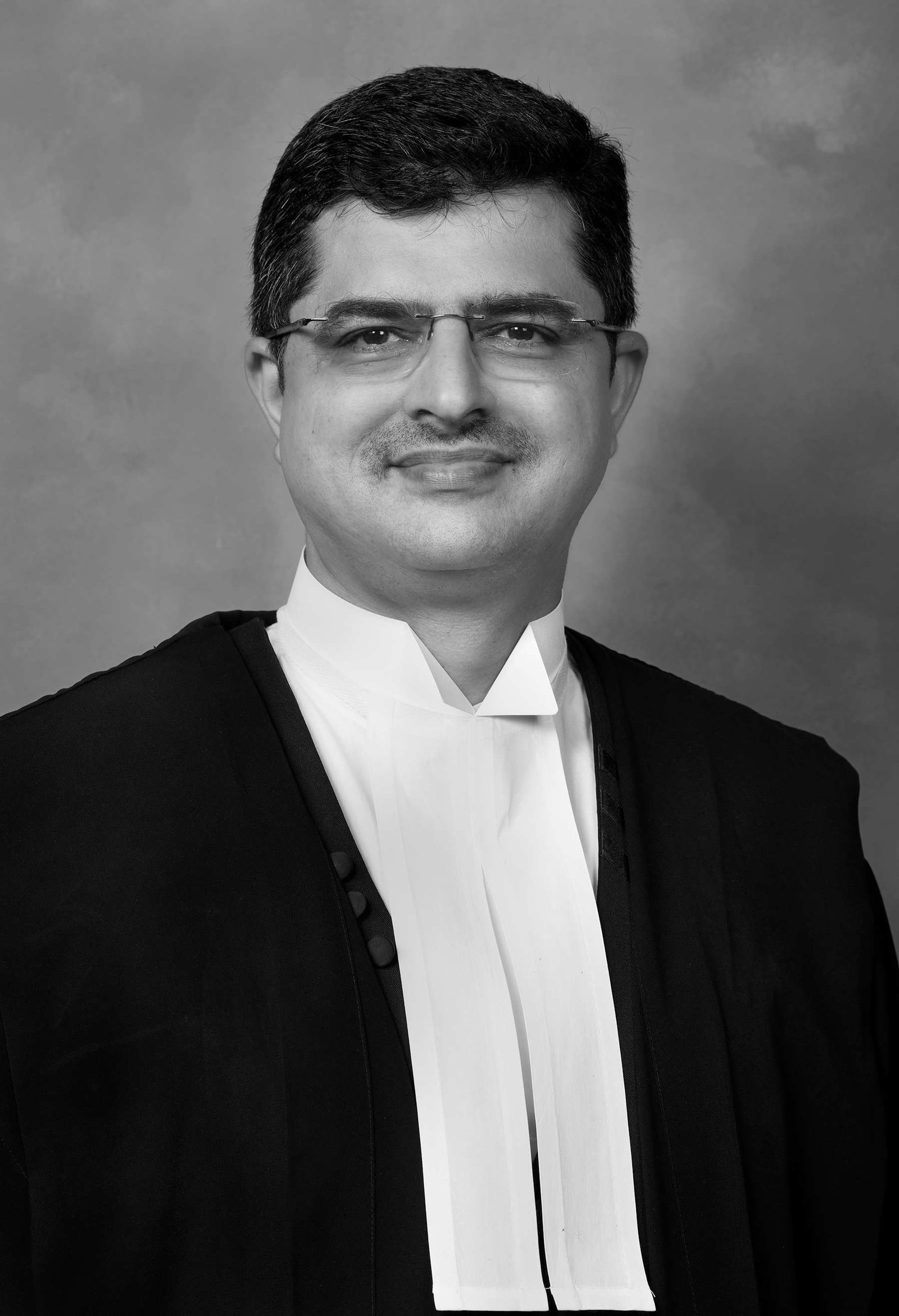
Legal Notes
Add a Note....