

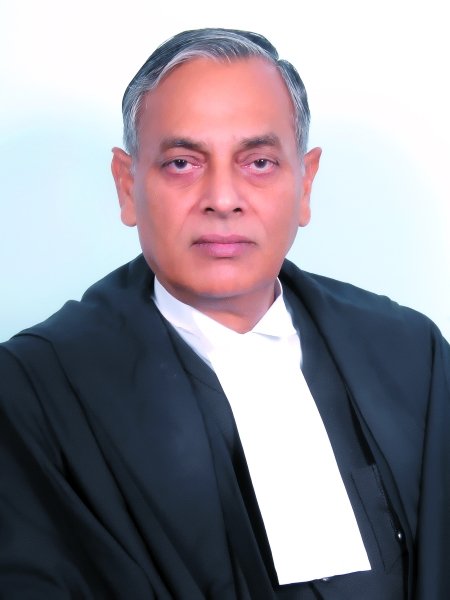
No Acts & Articles mentioned in this case
Reserved
AFR
Criminal Revision No. 4414 of 2004
Munna Singh @ Shivaji Singh & Ors. Vs. State of U.P. & Anr.
With
Criminal Revision No. 1045 of 2002
Smt. Murti Devi & Ors. Vs. State of U.P. & Ors.
And
Criminal Revision No. 5236 of 2004
Prem Narayan @ Prem Sagar Vs. State of U.P. & Ors.
And
Criminal Revision No. 5419 of 2004
Surya Pratap Singh @ Pappu Vs. State of U.P. & Ors.
And
Criminal Revision No. 5447 of 2004
Suresh Chandra Vs. State of U.P. & Ors.
And
Criminal Revision No. 5452 of 2006
Pramod Kumar Agrawal & Ors. Vs. State of U.P. & Ors.
And
Criminal Revision No. 5720 of 2006
Smt. Sharunnishan Vs. State of U.P. & Ors.
*****
Hon'ble Amar Saran, J.
Hon'ble A.P. Sahi, J.
Hon'ble Surendra Singh, J.
(Delivered by Hon'ble A.P. Sahi,J.)
Chronic disputes relating to immovable property involving claims to
lawful possession, founded on complicated facts seeking legal review,
often give rise to an apprehension of breach of peace that leads to
initiation of steps for maintaining law and order, and preventing
unwarranted situations, calling upon the authorities empowered under the
Criminal Procedure Code to take action for attachment and pass orders
under the provisions of Sections 145(1) and 146(1) of the Code. Such
orders that may affect the rights of the parties, whether can be subject
2
matter of a revision under Sub Section (2) of Section 397 of the Code, is
the main issue of reference before this Full Bench.
To be precise, it would be appropriate to gainfully reproduce the
issue framed by the learned Single Judge after having noted the decisions
relied upon by either of the parties which is as follows:-
“Whether the orders passed by the Magistrate under
Section 145(1) and 146(1) of the Code are interlocutory
orders simplicitor and no revision petition under Section 397
or 403 of the Code or petition under Section 482 of the Code
is maintainable against the same.”
The learned Single Judge was of the opinion that cases in which
such proceedings are drawn have different facts and different
implications. It has been further indicated that denial of the revisional
jurisdiction to a litigant would be unjustified and for that the learned
Single Judge has relied on his own judgment in the case of Gulab Chand
Vs. State of U.P. & another, reported in 2004 (48) ACC 579 . While
proceeding to make the reference the learned Single Judge however
expressed his opinion that the bar of Sub Section (2) of Section 397 of
the Code would not apply uniformly and for that the opinions expressed in
two Division Benches of this Court in the case of Indra Deo Pandey Vs.
Smt. Bhagwati Devi, 1981 (18) ACC 316 and in the case of Sohan
Lal Burman Vs. State of U.P., 1977 ACC 10 were considered, and then
referring to the Supreme Court decisions given subsequently, particularly
in the case of Ranbir Singh Vs. Dalbir Singh and others, 2002 (2)
Allahabad Criminal Ruling 1457, referred this matter for a definite
opinion on the law to be laid down by a larger bench. The learned Single
Judge held that even orders of temporary nature may have far reaching
consequences upon the rights or interest of the aggrieved party, and such
a litigant cannot be rendered remediless as this was not the intention of
the framers of the statute while creating the bar under Sub Section (2) of
Section 397.
3
Sri R.C. Yadav while advancing his submissions in the leading case
of Munna Singh (supra) has urged that a Civil Suit No. 111 of 1980, in
which the respondent no. 2 Guru Ram Vishwakarma Madhukar is the
plaintiff is still pending, and a status quo interim order is operating as
such there was no occasion for the Magistrate to have passed the orders
impugned herein. The submission is that the revision against preliminary
orders passed under Section 145(1) Cr.P.C. and 146(1) Cr.P.C. are
amenable to the revisional jurisdiction under the Code as they touch upon
the rights of the parties and are therefore not mere interlocutory orders.
Reliance has been placed on the judgments that have been referred to by
the learned Single Judge in the referring order as follows:-
1.1978(15) ACC 183 SC Madhu Limaye Vs. State of
Maharashtra.
2.AIR 1980 SC 962 V.C. Shukla Vs. State.
3.1985 ACC 45 SC, Ram Sumer Mahant Puri Vs. State of
U.P.
4.2001(1) JIC 381 SC Mahant Ram Saran Das Vs. Harish
Mohan & another.
5.2002 (2) ACr.R 1457 SC Ranbir Singh Vs. Dalbir Singh
and others.
6.2000(1) ACr.R 514 Ram Lachchan and others Vs. State
of U.P. and another.
7.2004(48) ACC 579 Gulab Chand Vs. State of U.P. &
another.
8.1999 (39) ACC 649 Laxmi Kant Dubey Vs. Smt. Jamuni
& others.
Sri B.N. Rai on behalf of the respondent no. 2 submits that the
revisionist herein Munna Singh, was not a party to the civil suit, and
therefore there was no option but to proceed under Sections 145 and 146
Cr.P.C. against him. The action does not give any rise to a cause so as to
make the orders revisable in the present case. Sri Rai contends that in
the event of emergency, such powers can be invoked and along with his
written submissions he has relied on the following decisions to
substantiate his arguments:-
4
1 1969 Crl.LJ Page 13 (Vol. 75 C.N. 4) (SC) R.H.
Bhutani Vs. Miss Mani J. Desai and others.
2. 1980 SCC (Cri) Page 9 Mathura Lal Vs. Bhanwar Lal
& another.
3. 1980 SCC Page 116 Rajpati Vs. Bachan and
another.”
Sri V. Singh has advanced his submissions in Criminal Revision No.
1045 of 2002 (Smt. Murti Devi and others Vs. State of U.P. & others),
contending that where an order under Sub Section (1) of Section 145
which involves the jurisdiction of the Magistrate to proceed or terminate
the proceedings, may be revisable. An order under 146(1) Cr.P.C. cannot
be according to him, subjected to a revision under Sub Section (2) of
Section 397 Cr.P.C. In this case the learned Additional District Judge has
set aside the order passed under Section 145 read with Section 146(1) on
the ground that a civil suit in relation to the disputed property was
pending for the past 10 years in which a status quo order had been
passed on 23
rd
March, 1990 and therefore the Magistrate erroneously
assumed jurisdiction to proceed in the matter. Sri Singh contends that
where there is an apprehension of immediate breach of peace then an
order passed under Sub Section (1) of Section 146 would be an
interlocutory order and not an order of the nature as urged on behalf of
the respondents. He therefore contends referring to almost the same
decisions as relied on by the other counsel and referred to hereinabove,
that an order passed under Section 145(1) Cr.P.C. would be revisable but
not an order under Section 146(1) of the Code as it is only for a
temporary purpose.
Sri S.B. Singh who has appeared for the opposite parties No. 2 and
3 Ram Lakhan and Mukut Dhari has also furnished his written submissions
contending that parallel proceedings under the Criminal Procedure Code
have to be avoided and multiplicity of litigation is against public interest.
Therefore keeping in view the decisions cited at the bar, the impugned
5
orders under Sections 145(1) and 146(1) of the Code have to be treated
as intermediary orders and not mere interlocutory orders, hence revisable
under Section 397(1) of the Criminal Procedure Code. Sri S.B. Singh has
relied on the following decisions in support of his submissions:-
1.A.I.R. 2000 SC 1504 (Amresh Tiwari Vs. Lalta Pd. Dubey
& Ors.)
2.2001 (1) JIC 381 (S.C.) (Mahant Ram Saran Das Vs.
Harish Mohan and others)
3.1985 A.W.C. 128 S.C. (Ram Sumer Puri Mahant Vs.
State and others)
4.2001 All JIC 95 S.C. (Laphinoris Shang Pling and others
Vs. Hambay Shullai and another)
5.1999 (39) ACC 649 (Lakshmi Kant Dubey Vs. Smt.
Jamuni and others)
6.1999 (39) ACC 678 (Vishwanath and another Vs. Addl.
Session Judge, Basti and others)
7.2004 (48) ACC 579 (Gulab Chand Vs. State of U.P. and
others)
8.1978 (15) ACC 183 (S.C.) (Madhu Limaye Vs. State of
Maharashtra)
9.2002 Alld. JIC 378 (Ranbir Singh Vs. Dalbir Singh and
others)
10. 2000(40) ACC 738 (Ram Lachchan and others Vs.
State of U.P. and others)
11. AIR 1980 SC 962 (V.C. Shukla Vs. State of U.P.
and others).
Learned A.G.A. on behalf of the State submits that a revision having
been specifically barred against a interlocutory order by the legislature
under Section 397 (1) Cr.P.C., this court while answering the reference
will have to clarify the law in order to enable the Magistrates and the
Revising Authorities to decipher the cases where such a bar would not
operate. The learned A.G.A. has also invited the attention of the Court to
the decisions and the relevant paragraphs that have already been cited on
6
behalf of the learned counsel for the either side.
Having heard learned counsel for the parties, it would be
appropriate to reproduce Sections 145, 146 and Section 397 of the Code
of Criminal Procedure to understand the controversy:-
“145.Procedure where dispute concerning land or
water is likely to cause breach of peace.-
(1) Whenever an Executive Magistrate is satisfied from a
report of a police or upon other information that a dispute
likely to cause a breach of the peace exists concerning any
land or water or the boundaries thereof, within his local
jurisdiction, he shall make an order in writing, stating the
grounds of his being so satisfied, and requiring the parties
concerned in such dispute to attend his Court in person or by
pleader on a specified date and time, and to put in written
statements of their respective claims as respects the fact of
actual possession of the subject of dispute.
(2) For the purposes of this section, the expression "land or
water" includes buildings, markets, fisheries, crops or other
produce of land, and the rents or profits of any such
property.
(3) A copy of the order shall be served in the manner
provided by this Code for the service of a summons upon
such person or persons as the Magistrate may direct, and at
least one copy shall be published by being affixed to some
conspicuous place at or near the subject of dispute.
(4) The Magistrate shall then, without reference to the merits
or the claims of any of the parties to a right to possess the
subject of dispute, peruse the statements so put in, hear the
parties, receive all such evidence as may be produced by
them, take such further evidence, if any, as he thinks
necessary, and, if possible, decide whether any and which of
7
the parties was, at the date of the order made by him under
sub-section (1), in possession of the subject of dispute:
Provided that if it appears to the Magistrate that any party
has been forcibly and wrongfully dispossessed within two
months next before the date on which the report of a police
officer or other information was received by the Magistrate,
or after that date and before the date of his order under sub-
section (1), he may treat the party so dispossessed as if that
party had been in possession on the date of his order under
sub-section (1).
(5) Nothing in this section shall preclude any party so
required to attend, or any other person interested, from
showing that no such dispute as aforesaid exists or has
existed; and in such case the Magistrate shall cancel his said
order, and all further proceedings thereon shall be stayed,
but, subject to such cancellation, the order of the Magistrate
under sub-section (1) shall be final.
(6) (a) If the Magistrate decides that one of the parties was,
or should under the proviso to sub-section (4) be treated as
being, in such possession of the said subject, he shall issue
an order declaring such party to be entitled to possession
thereof until evicted therefrom in due course of law, and
forbidding all disturbance of such possession until such
eviction; and when he proceeds under the proviso to sub-
section (4), may restore to possession the party forcibly and
wrongfully dispossessed.
(b) The order made under this sub-section shall be served
and published in the manner laid down in sub-section (3).
(7) When any party to any such proceeding dies, the
Magistrate may cause the legal representative of the
deceased party to be made a party to the proceeding and
shall thereupon continue the inquiry, and if any question
8
arises as to who the legal representative of a deceased party
for the purposes of such proceeding is, all persons claiming to
be representatives of the deceased party shall be made
parties thereto.
(8) If the Magistrate is of opinion that any crop or other
produce of the property, the subject of dispute in a
proceeding under this section pending before him, is subject
to speedy and natural decay, he may make an order for the
proper custody or sale of such property, and, upon the
completion of the inquiry, shall make such order for the
disposal of such property, or the sale-proceeds thereof, as he
thinks fit.
(9) The Magistrate may, if he thinks fit, at any stage of the
proceedings under this section, on the application of either
party, issue a summons to any witness directing him to
attend or to produce any document or thing.
(10)Nothing in this section shall be deemed to be in
derogation of the powers of the Magistrate to proceed under
section 107.
146.Power to attach subject of dispute and to appoint
receiver.-
(1) If the Magistrate at any time after making the order
under sub-section (1) of section 145 considers the case to be
one of emergency, or if he decides that none of the parties
was then in such possession as is referred to in section 145,
or if he is unable to satisfy himself as to which of them was
then in such possession of the subject of dispute, he may
attach the subject of dispute until a competent Court has
determined the rights of the parties thereto with regard to
the person entitled to the possession thereof:
Provided that such Magistrate may withdraw the attachment
9
at any time if he is satisfied that there is no longer any
likelihood of breach of the peace with regard to the subject of
dispute.
(2) When the Magistrate attaches the subject of dispute, he
may, if no receiver in relation to such subject of dispute has
been appointed by any Civil Court, make such arrangements
as he considers proper for looking after the property or if he
thinks fit, appoint a receiver thereof, who shall have, subject
to the control of the Magistrate, all the powers of a receiver
appointed under the Code of Civil Procedure, 1908:
Provided that in the event of a receiver being subsequently
appointed in relation to the subject of dispute by any Civil
Court, the Magistrate-
(a) shall order the receiver appointed by him to hand over
the possession of the subject of dispute to the receiver
appointed by the Civil Court and shall thereafter discharge
the receiver appointed by him;
(b) may make such other incidental or consequential orders
as may be just.”
397. Calling for records to exercise powers of revision: -
(1)The High Court or any Sessions Judge may call for and
examine the record of any proceeding before any inferior
Criminal Court situate within its or his local jurisdiction for the
purpose of satisfying itself or himself; to the correctness,
legality or propriety of any finding, sentence or order,
recorded or passed, and as to the regularity of any
proceedings of such inferior Court, and may, when calling, for
such record, direct that the execution of any sentence or
order be suspended, and if the accused is in confinement that
he be released on bail or on his own bond pending the
examination of the record.
Explanation:- All Magistrates, whether Executive or Judicial
10
and whether exercising original or appellate jurisdiction shall
be deemed to be inferior to the Sessions Judge for the
purposes of this sub-section and of Section 398.
(2) The powers of revision conferred by sub-section
(1) shall not be exercised in relation to any
interlocutory order passed in any appeal, inquiry, trial
or other proceeding.
(3) If an application under this section has been made by any
person either to the High Court or to the Sessions Judge, no
further application by the same person shall be entertained
by the other of them.”
The legal wrangle began when different courts gave their
interpretations in the absence of any precise definition of the words
“interlocutory order” occurring in the Code. The same not having been
either illustratively or exhaustively defined came to be given different
shades on the facts of a case in which the said words were sought to be
interpreted. We may gainfully refer to the locus classicus and magnum
opus on this subject rendered by the apex court in the celebrated decision
of Madhu Limaye Vs. State of Maharashtra, reported in AIR 1978
Supreme Court 47 . This case has been referred to and followed as an
illustration which in turn had relied on two earlier decisions in the case of
Smt. Parmeshwari Devi Vs. The State & another, AIR 1977
Supreme Court 403 and the decision in the case of Mohan Lal Magan
Lal Thacker Vs. State of Gujarat, AIR 1968 Supreme Court 733 .
The said decision is an authority for having coined the terminology of an
intermediate order or intermediary order which can be subject to a
revision under Sub Section (1) of Section 397 of the Code. While dealing
with the issue of distinction between an interlocutory order and a final
order their Lordships noticed the definition contained in the third Edition
of Halsbury's Laws in England as follows in Paragraph 12 of the said
judgment:-
11
“Para 12. Ordinarily and generally the expression 'interlocutory
order' has been understood and taken to mean as a converse
of the term 'final order.' In volume 22 of the third edition of
Halsbury's Laws of England at Page 742, however, it has been
stated in para 1606:-
“..........................a judgment or order may be final for
one purpose and interlocutory for another, or final as to part
and interlocutory as to part. The meaning of the two words
must therefore be considered separately in relation to the
particular purpose for which it is required.”
In para 1607 it is said:
“In general a judgment or order which determines the
principal matter in question is termed 'final'.”
In para 1608 at pages 744 and 745 we find the words:
“An order which does not deal with the final rights of the
parties, but either (1) is made before judgment and gives no
final decision on the matter in dispute but is merely on a
matter of procedure or (2) is made after judgment, and
merely directs how the declarations of right already given in
the final judgment are to be worked out is termed
“interlocutory.” An interlocutory order, through not conclusive
of the main dispute, may be conclusive as to the subordinate
matter with which it deals.”
An illustration that would be worth referring is in the case of Amar
Nath and others Vs. State of Haryana and others, reported in AIR
1977 Supreme Court 2185 where the choice of the legislature to
introduce the bar was traced out and explained in paragraph 6 of the said
judgment as follows:-
6. ….... The main question which falls for determination
in this appeal is as to what is the connotation of the term
“interlocutory order” as appearing in sub-section (2) of Section
397 which bars any revision of such an order by the High
Court. The term “interlocutory Order” is a term of well-known
legal significance and does not present any serious difficulty. It
12
has been used in various statutes including the Code of Civil
Procedure. Letters Patent of the High Courts and other like
statutes. In Webster's New World Dictionary “interlocutory”
has been defined as an order other than final decision. Decided
cases have laid down that interlocutory orders to be
appealable must be those which decide the rights and liabilities
of the parties concerning a particular aspect. It seems to us
that the term “interlocutory order” in Section 397(2) of
the 1973 Code has been used in a restricted sense and
not in any broad or artistic sense. It merely denotes
orders of a purely interim or temporary nature which do
not decide or touch the important rights or the liabilities
of the parties. Any order which substantially affects the
rights of the accused, or decides certain rights of the
parties cannot be said to be an interlocutory order so as
to bar a revision to the High Court against that order,
because that would be against the very object which
formed the basis for insertion of this particular
provision in Section 397 of the 1973 Code. Thus, for
instance, orders summoning witnesses, adjourning cases,
passing orders for bail, calling for reports and such other steps
in aid of the pending proceeding, may no doubt amount to
interlocutory orders against which no revision would lie under
Section 397 (2) of the 1973 Code. But orders which are
matters of moment and which affect or adjudicate the
rights of the accused or a particular aspect of the trial
cannot be said to be interlocutory order so as to be
outside the purview of the revisional jurisdiction of the
High Court.”
In the case of Smt. Parmeshwari Devi (supra) the law laid down in
Mohan Lal's case (supra) was explained as follows:-
“7. The Code does not define an interlocutory order, but it
obviously is an intermediate order, made during the
preliminary stages of an enquiry or trial. The purpose of
13
sub-section (2) of Section 397 is to keep such an order
outside the purview of the power of revision so that the
enquiry or trial may proceed without delay. This is not
likely to prejudice the aggrieved party for it can always
challenge it in due course if the final order goes against it.
But it does not follow that if the order is directed against a
person who is not a party to the enquiry or trial, and he will
have no opportunity to challenge it after a final order is
made affecting the parties concerned, he cannot apply for
its revision even if it is directed against him and adversely
affects his rights.
8. A somewhat similar argument came up for
consideration before this Court in Mohan Lal Magan Lal
Thacker v. State of Gujarat (1968) 2 SCR 685 = (AIR 1968
SC 733). The controversy there centred round the meaning
of Article 134(1) (c) of the Constitution and the Court
examined the meaning of the words “final” and
“interlocutory.” It was held that the meaning “had to be
considered separately in relation to the particular purpose
for which it is required” to be interpreted. No single test
can be applied to determine whether an order is final or
interlocutory. Then it has been held by this Court in that
case as follows-
“An interlocutory order, though not conclusive of the
main dispute may be conclusive as to the subordinate
matter with which it deals.” It may thus be conclusive with
reference to the stage at which it is made, and it may also
be conclusive as to a person, who is not a party to the
enquiry or trial, against whom it is directed..........”
Thus, in view of the aforesaid decisions, it is clear that no exclusive
or exhaustive singular test can be framed in a straight jacket formula to
determine as to whether an order would be final or interlocutory. The
meaning of the words have to be understood in the light of the facts of
each particular case in relation to the particular purpose for which the
word is required to be interpreted. This in our opinion is reflected in the
14
decision in the case of Ranbir Singh (supra) where while upholding the
order of the High Court it was clearly indicated that where the parties
have already entered into a litigation before the Civil Court then such
proceedings should be avoided.
Before proceeding to express our opinion on the connotation of the
words interlocutory orders, final orders and intermediary orders, it would
be appropriate to refer to the decisions of this Court which have impelled
the learned single Judge to refer the matter for a definite pronouncement.
The Division Bench in the case of Sohan Lal Burman (supra) was held to
be no longer good law by the Division Bench in the case of Indra Deo
Pandey (supra). The case of Indra Deo Pandey went on to hold that an
order passed under Sub Section (1) of Section 146 for attachment during
the pendency of the proceedings of Section 145 even if improper, is an
error of purely temporary and intermediate in nature which does not
purport to decide any legal rights of the parties. It was further held that
such an order is passed for the purpose of effective final adjudication of
the proceedings and it does not amount to any disposal of any part of the
controversy between the parties.
This aspect of the matter came to be considered in a case by a full
bench of the Jammu and Kashmir High Court pertaining to an order
passed under Section 145(1) of the Code read with the amendments
brought about in the criminal procedure code as applicable in the State of
Jammu & Kashmir under the Amending Act No. 37 of 1978 in the case of
Brij Lal Chakoo Vs. Abdul Ahmad, 1980 Cr.L.J. Pg. 89. The Full Bench was
called upon to resolve the issue about the maintainability of a revision in
relation to an interlocutory order of a similar nature as involved herein.
The decision went on to hold that the assumption of jurisdiction by
the Magistrate under Section 145 Cr.P.C. and the making of a preliminary
order cannot be termed as a mere interlocutory order, inasmuch as, the
very foundation upon which the Magistrate proceeds is based on a
satisfaction that there is a dispute relating to possession of immovable
15
property and there is an apprehension of breach of peace. Whether the
Magistrate had the jurisdiction to proceed or not was held to be not a
mere interlocutory order and therefore revisable if the ingredients of
jurisdiction are missing. The decision further went on to hold that the
attachment of the property under Sub Section (4) of Section 145 in such
a situation would also be without jurisdiction as it affects the possessory
right of a party. It was further held that even though the order of
attachment is made at an interim stage of the proceedings nevertheless
“it is an order of moment which has the effect on the right of the
party in possession and cannot therefore be said to be a mere
interlocutory order so as to bar the revisional jurisdiction of the
high court”.
The Court further went on to hold that there are cases where
Magistrates invoke such provisions arbitrarily in a routine manner which
has the effect of dispossessing a person already in possession. In such a
situation the aggrieved party can always demonstrate before the
revisional court that no such emergent circumstance existed justifying the
invoking of such powers or that the Magistrate had no jurisdiction to
make such an order regardless of the procedure laid down under Section
145 Cr.P.C. Relying on the decision in the case of Smt. Parmeshwari Devi
(supra) in Paragraph 17 held as follows:-
Para 17. It is worthy to mention here that the orders of the
category as mentioned above though not conclusive of the
main dispute are, undoubtedly, conclusive as to the
subordinate matter. That such an order is amenable to the
revisional jurisdiction of the High Court cannot be gainsaid.”
This full bench decision has been followed by a learned Single Judge
of the Gauhati High Court in the case of Indrapuri Primary Co-
operative Housing Society Ltd. and another Vs. Sri Bhabani Gogoi,
reported in 1991 Cri.LJ. 1765.
16
To the contrary however a pure order under Section 146(1) was
held to be an interlocutory order by the Full Bench of the Punjab &
Haryana High Court in the case of Kartar Singh and others Vs. Smt.
Pritam Kaur and another, 1984 Cr.L.J. 248 . The said decision
however went on to deal with the matter on the footing that the issue
revolved around the composite provisions of Sections 145 and 146 Cr.P.C.
and unequivocally held that these proceedings do not substantially call for
being subjected to a revision. In Paragraph 12 of the decision the Division
Bench judgment of this Court in the case of Indra Deo Pandey (supra)
was approved as follows:-
“Para 12. Apart from the judgments of this Court, the recent
Division Bench decision in Indra Deo Pandey Vs. Smt. Bhagwati
Devi, 1981 All LJ 687, renders a complete answer to most of
the contentions raised on behalf of the petitioner. After an
exhaustive examination of the matter (with which I entirely
concur), it was held that the earlier Division Bench view of the
same High Court in Sohan Lal Burman Vs. State of U.P., 1977
Cri LJ 1322, was in fact no longer good law after the
authoritative pronouncement in Mathuralal's case (1980 Cri LJ
1) (SC) (supra).”
Nonetheless, it is necessary to refer to Paragraph 4 of the same Full
Bench judgment of Kartar Singh's case (supra) where the Court has
expressed its difficulty in attempting a precise and conclusive definition so
as to draw a distinction between an interlocutory order and a final order
or any other order falling in between. Paragraph 4 of the said judgment is
gainfully reproduced herein under:-
“Para 4. It is plain that the specific question herein is but a
limb of the larger yet perennial controversy as to what
constitutes a final as against a merely interlocutory order and
the penumbral area lying betwixt the two extremes. In view of
the mass of conflicting case law on the point, it would appear
that these two terms are not capable of a precisely exclusive
17
definition for each and it would be a vain attempt to define
what seems to be inherently undefinable. One cannot help
commenting that the erudite attempts to confine each of the
terms to a procrustean bed of the precise legal definition is
reminiscent of the somewhat tautologist definition of a circle as
one, that is, circular. Therefore, without launching into a
dissertation as to what are the precise legal attributes of a final
order as against an interlocutory one and attempting to draw a
razor-sharp line betwixt the two, I propose to confine myself to
the limited focal question – whether in the peculiar context of
Section 146 (1) of the Code, the attachment of immovable
property is broadly interlocutory in nature and that too for the
specific purposes of S. 397 (2) thereof.”
However while proceeding to answer the reference as noted above,
the Court went on to take into consideration the provisions of Section 145
as well. But while answering the reference the recital contained in
Paragraph 16 of the judgment is as follows:-
“Para 16. To conclude, the answer to the question posed at
the very outset, is rendered in the affirmative and it is held
that an order of attachment of an immovable property under
Section 146 (1) of the Code is interlocutory in nature within
the meaning of Section 397 (2) of the Code and consequently
no revision against the same is maintainable.”
Then came the decision in the case of Ram Sumer Puri Mahant
Vs. State of U.P & others, reported in 1985 (1) SCC 427 as
explained in the later decision of the apex court in the case of
Jhummamal Vs. State of Madhya Pradesh (1988) 4 SCC 452 and
later on dealt with in the case of Amresh Tiwari Vs. Lalta Prasad
Dubey and another reported in (2000) 4 SCC 440. The outcome of
these three decisions was to the effect that where an injunction order
passed by a competent court of civil jurisdiction existed, then proceedings
initiated under Section 145 Cr.P.C. deserved to be dropped. The Apex
18
Court however in the case of Ranbir Singh (supra) held that even though
the orders of the High Court setting aside the orders under Section
145(1) and 146(1) were unsustainable, yet in the circumstances of the
case, the order of the High Court quashing the preliminary order under
Section 145 (1) and 146(1) Cr.P.C. were maintained leaving it open to the
parties to approach the civil court for an appropriate interim order where
the dispute was pending without being influenced by the findings recorded
by the High Court. The emphasis therefore again was laid on the principle
that where a civil proceeding has been initiated and the matter is pending
between the parties, then the Magistrate should be slow in invoking the
jurisdiction of attaching or taking into possession of a property involved in
such a dispute.
In a matter of reference before the Madhya Pradesh High Court a
Division Bench went on to hold that an order passed under Section 146
(1) Cr.P.C. is not an interlocutory order and would therefore be revisable.
The said decision is reported as Keshav Prasad Bhatt Vs. Ramesh
Chandra 1990 Cr.L.J. 1541.
While carving out a distinction between the orders of a final nature
and interlocutory nature the apex court in the case of V.C. Shukla Vs.
State, AIR 1980 Supreme Court 962 gave the nomenclature of an
“intermediate order” to be between a final order and the initiation of a
proceeding which may be affecting the interest of either of the parties,
and could not be termed as a pure and simple interlocutory order. This
view came to be followed by a learned Single Judge of this Court earlier
who has made the present reference in the case of Gulab Chand Vs.
State of U.P. 2004 (48) ACC 579 and again by a learned single Judge
of this Court in the case of Lakshmi Kant Dubey Vs. Smt. Jamuni &
others, reported in 1999 (39) ACC 649.
In the aforesaid background this Court has therefore to proceed to
first give an indication as to meaning of the words final order,
interlocutory order and an intermediate or intermediary order and the
distinction between them.
19
The term “final order” means a decision finally affecting the rights
of the contending parties. It is an issue which goes to the foundation of a
trial and can be never questioned if it has been allowed to stand. It would
therefore be final. The test of such finality would depend upon the facts of
a case indicating termination of proceedings and ultimately affecting the
fate of the parties. A final order is one which leaves nothing more to be
decided by its own force.
The word 'Final' connotes that which comes at the end. It marks the
last stage of a process leaving nothing to be looked for or expected. It is
something ultimate in nature. It puts to an end to something or in other
words, it brings to a close any strife or uncertainty. It is the conclusion of
an event, that which comes last. It connotes the finishing of some act and
completion of some beginning. It does not allow the inclusion of anything
or something that might be possible thereafter. A decisive stroke that
cannot be reversed or altered is final.
The word “interlocutory order” as defined in the Law Lexicon by
P. Ramanatha Aiyar 1997 Edition, is an order made pending the cause and
before a final hearing is concluded on merits. Such an order is made to
secure some end and purpose necessary and essential to the progress of
the litigation, and generally collateral to the issues formed by the
pleadings and not connected with the final judgment. It has been termed
as a purely interim or temporary nature of an order which does not decide
the important rights or liabilities of the parties.
An interlocutory stage is an intermediate moment before the
happening of the main event. It is something during the course of an
action in the shape of a pronouncement which is not finally decisive of a
dispute. It is provisional but not final touching some incident or emergent
question.
Then comes the third category of the orders which fall in between.
In our opinion it is this aspect which was left out in the decision of the
20
Punjab & Haryana High Court in the case of Kartar Singh (supra) which
deserves to be adverted to. The word intermediate order as defined in the
law Lexicon (supra) is an order granted before entry of judgment, made
between the commencement of an action and the final pronouncement.
The word 'Intermedium' means between or in the middle. It is
something intermediate in position or an intervening action or
performance before the final conclusion. That which is situated or
occurring between two things is intermediate. It holds the middle place or
degree between two extremes interposed in between.
There is no doubt about what are final orders and the controversy
stands narrowed down to the difference between an interlocutory order
and an intermediate/intermediary order.
The distinction between the two, interlocutory and intermediary
would be that the former does not bring about any consequence of
moment and is an aid in the performance of the final Act. It does not
affect any existing rights finally or to the disadvantage of either extremes.
An intermediate order can touch upon the rights of the parties or be an
order of moment so as to affect any of the rival parties by its operation.
Such an order affecting the rights of a person or tending to militate
against either of the parties even at the subordinate stage can be termed
as an intermediate or an intermediary order.
The invoking of the emergent powers under Section 146(1) Cr.P.C.
is dependant on the satisfaction of the Magistrate that it is a case of
emergency and none of the parties are in possession or the Magistrate at
that stage unable to decide as to which of the parties was in possession.
It is only then that attachment can be resorted to. An emergency is an
unforeseen occurrence or a crisis with a pressing necessity which
demands immediate action. An emergent situation is one that suddenly
comes to notice and is almost unexpected or unapprehended. It is a
situation that requires prompt attention impelling immediate action.
21
The action to be taken would however be dependant on the
satisfaction of a Magistrate recorded under Section 145(1) Cr.P.C. that
there exists an apprehension of breach of peace either on the basis of a
police report or upon other information received. The order of attachment
on such a dispute being brought to the notice of the Magistrate therefore
is clearly linked with the right of a party to retain lawful possession. The
aforesaid ingredients have to exist to allow the Magistrate to exercise his
authority within his jurisdiction. Accordingly the assumption of jurisdiction
is dependant on the contingency that may arise in a dispute referable to
the said provisions and hence what necessarily follows that if there is an
exercise for want of jurisdiction or erroneous exercise of jurisdiction, then
the order on the given facts of a case may not be a mere interlocutory
order. If the exercise of a power and passing of an order is questionable
to the extent of touching the rights of the parties or are orders of
moment, depending on the peculiar facts of individual cases, then the
order in our opinion would be an intermediate nature of an order that can
be subjected to a revision under Section 397 Cr.P.C.
The legislature in its wisdom will be presumed to have curtailed the
revisional jurisdiction to the extent as spelt out under Sub Section (2) of
Section 397 Cr.P.C. in order to prevent any delays or unnecessary
impediments in proceedings relating to trials under the Criminal
Procedure Code. As noticed above, the orders which do not fall within the
exact nature of an interlocutory order may therefore not be prohibited
from being subjected to a revision in larger public interest. A litigant who
is aggrieved by an action which does not involve immediate urgency can
always knock the doors of the revisional court, dependant on the facts of
each individual case as explained hereinabove.
We would also like to add that there were divergent views with
regard to the jurisdiction of the Magistrate proceeding after attachment
under 146(1) Cr.P.C. but the said issue came to be resolved by the apex
court in the case of Mathuralal Vs. Bhanwarlal, 1979 (4) SCC 665.
22
In view of what has been expressed hereinabove, we find ourselves
in respectful agreement with the views expressed by the various courts
and this Court to the effect that there is a third category of order which
falls in between an interlocutory and a final order that does touch upon
the rights of the parties and is an order of moment. An order under
Section 145(1) followed by an order under Section 146(1), or even
passed simultaneously, brings to the forefront the primary question of the
assumption of jurisdiction by the Magistrate to proceed in a matter. If the
facts of a particular case do not warrant the invoking of such a
jurisdiction, for example, in cases where civil disputes are pending and
orders are operating, then in view of the law laid down by the apex court
in the decisions referred to hereinabove following Ram Sumer Puri
Mahant's case (supra), an order ignoring such proceedings will have to be
curtailed for which a revision would be maintainable under Sub Section
(1) of Section 397 as, such an order, would not be a mere interlocutory
order and would touch upon the rights of the parties.
We have also come across an unreported judgment of the apex
court in the case of Gyatri & others Vs. Ranjit Singh & others, Special
Leave to Appeal (Crl) No. 3584 of 2006 decided on 13.2.2008 where the
same view has been reiterated.
The difficulty again is that can such a list of illustrations be
catalogued so as to confine the revisional jurisdiction in relation to such
intermediate orders. Our obvious answer is in the light of what has been
said in the case of Mohan Lal's case (supra) by the apex court that the
determination of such an issue as to whether a revision would be
maintainable or not would in turn depend upon the nature of the order
and the circumstances in which it came to be passed. Thus it would
depend on the facts and circumstances of each separate individual case
where the revising authority will have to examine as to whether the
Magistrate has proceeded to exercise his judicious discretion well within
his jurisdiction or has travelled beyond the same, keeping in view the
various shades of litigation in such matters where the apex court and this
23
Court has held that an intermediate order, which is not necessarily an
interlocutory order, could be subjected to revision. An order not
conclusive of the main dispute between the parties, but conclusive of the
subordinate matters with which it deals is not a purely interlocutory order
even though it may not finally adjudicate the main dispute between the
parties. In our opinion therefore a revision would not be barred under Sub
Section (1) of Section 397 of the Code if the orders impugned before the
revising authority fall within the tests indicated hereinabove.
Our answer to the question referred would be therefore in the
negative, and we hold that orders passed under Sections 145(1) and
146(1) of the Code are not in every circumstance, orders simplicitor, and
therefore a revision would be maintainable in the light of the observations
made in this judgment depending on the facts involved in each case.
Coming to the issue as to whether a petition under Section 482
would be maintainable or not, the same has been dealt with by a Full
Bench of our court in the case of H.K. Rawal and another Vs. Nidhi
Prakash and another reported in 1990 Cr.L.J. 961. We having gone
through the said decision, do not find it necessary to answer the same as
the question under reference before this Court is primarily relating to the
maintainability of a revision that has been dealt with hereinabove.
Let the papers be now placed before the learned Single Judge for
proceeding to decide the revisions in accordance with the principles
indicated hereinabove.
Dt. 11
th
Oct. 2011
Sahu
(Surendra Singh,J.) (A.P. Sahi,J.) (Amar Saran,J.)

 Login with google
Legal Notes
Add a Note....