
The appellant by the way of civil appeal, questions whether bid lands were required to be taken into consideration for the purpose of land ceiling under the Gujarat Agricultural Lands ...

No Acts & Articles mentioned in this case
1
IN THE SUPREME COURT OF INDIA
CIVIL APPELLATE JURISDICTION
CIVIL APPEAL NO.7519 OF 2010
(Arising out of SLP(C) No. 14245 of 2004)
Nagbhai Najbhai Khackar …. Appellant(s)
Versus
State of Gujarat ….Respondent(s)
with
CIVIL APPEAL No.7520 of 2010 (@ S.L.P. (C) No.14182 of
2004),
CIVIL APPEAL No.7521 of 2010 (@ S.L.P. (C) No.14248 of
2004),
CIVIL APPEAL No.7522 of 2010 ((@ S.L.P. (C) No.14249 of
2004),
C.A. No.7523 of 2010 (@ S.L.P. (C) No.26879 of 2004),
CIVIL APPEAL No.7524 of 2010 (@ S.L.P. (C) No.14947 of
2004),
CIVIL APPEAL No.7525 of 2010 (@ S.L.P. (C) No.26880 of
2004),
CIVIL APPEAL No.7526 of 2010 (@ S.L.P. (C) No.26881 of
2004),
CIVIL APPEAL No.7527 of 2010 (@ S.L.P. (C) No.14949 of
2004),
CIVIL APPEAL No.7528 of 2010 (@ S.L.P. (C) No.26882 of
2004),
CIVIL APPEAL No.7529 of 2010 (@ S.L.P. (C) No.15022 of
2004),
CIVIL APPEAL No.7530 of 2010 (@ S.L.P. (C) No.26883 of
2004),
CIVIL APPEAL No.7531 of 2010 (@ S.L.P. (C) No.26884 of
2004),
CIVIL APPEAL No.7532 of 2010 (@ S.L.P. (C) No.15020 of
2004),
CIVIL APPEAL No.7533 of 2010 (@ S.L.P. (C) No.26885 of
2004),
CIVIL APPEAL No.7534 of 2010 (@ S.L.P. (C) No.14940 of
2004),
CIVIL APPEAL No.7535 of 2010 (@ S.L.P. (C) No.26886 of
2004),
CIVIL APPEAL No.7536 of 2010 (@ S.L.P. (C) No.14946 of
2004),
CIVIL APPEAL No.7537 of 2010 (@ S.L.P. (C) No.14950 of
2
2004),
CIVIL APPEAL No.7538 of 2010 (@ S.L.P. (C) No.14965 of
2004),
CIVIL APPEAL No.7539 of 2010 (@ S.L.P. (C) No.14993 of
2004),
CIVIL APPEAL No.7540 of 2010 (@ S.L.P. (C) No.15029 of
2004).
J U D G M E N T
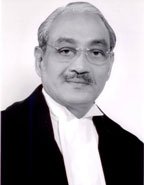
S. H. KAPADIA, CJI
Leave granted.
2. A short question which arises for determination in
this batch of cases is whether bid lands were required to
be taken into consideration for the purpose of land
ceiling under the Gujarat Agricultural Lands Ceiling Act,
1960, as amended vide Act 2 of 1974, which came into force
from 1.4.1976.
3. At the outset, we may state that writ petitions were
filed in the High Court inter alia challenging the
provisions of the Gujarat Agricultural Lands Ceiling
Amendment Act 2 of 1974 as violative of Articles 14 and 19
of the Constitution. We may state that Amending Act 2 of
1974 has been included as Item No. 71 in the Ninth
Schedule to the Constitution of India by the Constitution
Thirty-fourth Amendment Act. That inclusion was challenged
before the Constitution Bench of this Court on the ground
that Thirty-fourth Amendment to the Constitution violated
3
the basic structure of the Constitution which challenge
has now been given up in view of the judgment of this
Court in the case of I.R. Coelho (Dead) by Lrs. v.
State of Tamil Nadu reported in 2007 (2) SCC 1.
4. As regards the question of includability of the bid
lands in the lands ceiling is concerned, the case of the
appellant(s) before us was, that bid lands held by the
appellant(s) being uncultivable waste lands; being rocky
and stony were not included in the definition of “land” in
the 1960 Act as originally enacted; that “bid lands” held
by the appellant(s) were sought to be included in the
total holding of the appellant(s) to determine the ceiling
under the 1960 Act only by reason of Amendment Act 2 of
1974. At this stage, it may be noted that the said
Amendment Act 2 of 1974, which came into force from
1.4.1976, was challenged only for the reason that under
Section 5(1)(a) of Saurashtra Estates Acquisition Act,
1952 (“1952 Act” for short) no bid lands which were
uncultivable waste vested in the State Government, which
bid lands are now sought to be covered by 1960 Act on
account of the impugned Amendment Act 2 of 1974. According
to the appellant(s), once such “bid lands” stood excluded
from vesting under the 1952 Act, the same could not be
4
included for calculating the total holding to determine
the ceiling limit under the 1960 Act, as amended. It was
contended on behalf of the appellant(s) that bid lands
which were also uncultivable waste lands cannot be
included for computing the total holding under the 1960
Act, as amended, as the object of the Ceiling Act was to
impose ceiling on lands held for cultivation or
agricultural purposes. It was further submitted on behalf
of the appellant(s) that bid lands cannot fall within the
definition of dry crop land in clause (e) of Explanation I
to Section 2(6) as only “grass lands” which abound in
grass grown naturally and which are capable of being used
for agricultural purposes could be included in such
definition of “dry crop” land and since the “bid lands”
did not fall in any “class of land” under Section 2(6),
such land could not be included for calculating the
ceiling limit under Section 6 of the 1960 Act, as amended.
In this connection, Shri R.F. Nariman, learned senior
counsel appearing on behalf of the appellant(s), submitted
that the Act of 1960 (Unamended) was a useful guide in
interpreting the definition of “dry crop land” under the
Act. According to the learned counsel, the simple meaning
of the said definition made it clear that “dry crop land”
5
has been defined to include “grass land”, that is to say,
land which abounds in grass grown naturally and which is
capable of being used for agricultural purposes. According
to the learned counsel, unwittingly, the word “includes”
occurring in the unamended definition of ‘dry crop land’
was left out of the amended definition. Such omission,
according to the learned counsel, can always be supplied
by the Court. Since, the lands specified in paras (a) to
(c), to wit, perennially irrigated land, seasonally
irrigated land and superior dry crop land are all lands on
which agricultural operations are capable of being
performed the expression “other than the land specified in
paras (a) to (c)” obviously refers to lands other than
those stated in paras (a) to (c) but which are capable of
being used for agricultural purposes. According to the
learned counsel, the appellant(s) had specifically pleaded
that their lands were barren, rocky and uncultivable but
the Authorities proceeded on the basis that the said fact
was irrelevant in view of the definition of the word
“land” under Section 2(17) of the 1960 Act. According to
the learned counsel, even as per the revenue records, the
subject lands have been described as “Pot Kharaba” i.e.
waste lands, barren lands or uncultivable lands and,
6
consequently, the same cannot fall within the definition
of dry crop land under Section 2(6)(iv). According to the
learned counsel, the said Act had to be interpreted in the
context of agricultural land ceiling and in the context of
the said 1960 Act being part of agrarian reforms and
unless lands were capable of being used for agricultural
purposes, the bid lands which were also uncultivable waste
lands cannot fall within the ambit of the 1960 Act.
According to the learned counsel, the impugned judgment of
the High Court was erroneous as it has placed
interpretation on the proviso to Section 5(1) and so read
the High Court has held that even desert and hilly areas
where no cultivation is possible can be subjected to
ceiling. According to the learned counsel, Section 5
states that lands in deserts or hilly areas must first be
dry crop lands as defined under Explanation I(e) after
which such lands falling in a desert or hill may be
accorded a larger ceiling area by the State Government. In
any event, according to the learned counsel, Section 5(1)
proviso has no bearing on the definition of dry crop land
except to the extent that the dry crop land may also fall
in hilly or desert areas; example, hilly or desert areas
which abounds in grass and which are capable of being used
7
for agricultural purposes. Consequently, hilly or desert
areas which do not abound in grass or which are incapable
of being used for agricultural purposes are not covered by
the Ceiling Act, 1960. Thus, according to the learned
counsel, bid lands are excluded from the definition of dry
crop land and they do not fall within any of the
categories of classes of land under the Act and,
therefore, cannot be subjected to ceiling under the 1960
Act.
5. Shri Preetesh Kapur, learned counsel appearing on
behalf of the State of Gujarat, submitted that it has been
the admitted case of the appellant(s) all through the
proceedings that the lands in question were in fact bid
lands; that, only argument raised before the Tribunal as
well as the High Court, besides the constitutional
challenge, was two-fold; (i) that the subject lands were
not fit for “agriculture” and since the 1960 Act is an
agricultural ceiling Act, the subject lands had to be
excluded from the purview of the Act; (ii) that,
the definition of “dry crop land” did not specifically
cover bid lands and must be construed to cover only such
bid lands as “abound in grass” and, therefore, the lands
in question stood outside the Ceiling Act. According to
8
the learned counsel, the definition of “land” stood
specifically amended by the Amendment Act (No. 2 of 1974)
to include “bid lands” of Girasdars and Barkhalidars in
Section 2(17)(ii)(c). According to the learned counsel,
the Statement of Objects and Reasons for enacting the
Amending Act also made it clear that the Amendment Act
stood enacted for including the bid lands of Girasdars and
Barkhalidars within the definition of “land”. Therefore,
according to the learned counsel once the definition of
“land” stood specifically amended to include “bid lands”,
without limiting the same to cultivable bid lands, the
specific intention of the Legislature must be given its
full meaning. By the said Amending Act No. 2 of 1974,
according to the learned counsel, a proviso was also
inserted after Section 5 which increased the ceiling limit
in respect of “desert” and hilly areas by 12 ½ per cent
which indicates that even deserts and hilly areas have
been sought to be brought within the ambit of the
Agricultural Ceiling Act. Therefore, the said proviso
negates the contentions of the appellant(s) that only such
bid lands which were “capable of agriculture” or which
abound in grass alone were meant to be covered under the
Act. It was further submitted that the lands in question
9
are in fact “agricultural” lands. They survived
acquisition under the earlier three Acts only because they
were “bid lands” which by definition under those Acts were
lands “being used” by Girasdars/Barkhalidars for grazing
cattle. That, under the Ceiling Act, Section 2(1) defines
the use of land for the purposes of grazing cattle as
agricultural purpose and thus, according to the learned
counsel, by their very definition “bid lands” are capable
of being used for agricultural purpose, namely, grazing
cattle. On the question of classification of lands,
learned counsel submitted that Sections 4 and 5 of the
1960 Act expressly made two-fold division by dividing the
State into local areas as well as classes of lands. For
the ceiling area in Schedule I, the land had to fall under
one of the classes, namely, perennially irrigated land,
seasonally irrigated land, superior dry crop land and dry
crop land which have been defined in Explanation I to
Section 2(6) of the Act. Learned counsel submitted that
there is no merit in the argument of the appellant(s) that
“bid land” is not specified in the class of lands under
Section 2(6) and that even if bid lands were included in
“dry crop land” it must be only such bid lands which
“abound in grass” which would fall under the 1960 Act.
10
According to the learned counsel the argument of the
appellant(s) is fallacious as it overlooks the specific
legislative intent. In this connection, learned counsel
submitted that from a bare reading of the definition of
“dry crop lands” in Explanation I(e) it was clear that the
said definition stood in two parts, namely, (i) “land
other than the land specified in paragraphs (a) to (c)
and” (ii) “grass land”. Thus, according to the learned
counsel, the first part of the definition included all
lands other than those specified in paragraphs (a) to (c)
provided they fall under the definition of land under
Section 2(17). According to the learned counsel, the
reason why “grass land” had to be separately defined in
clause (e) was because under the proviso to Section 5 a
further distinction was made between grass land included
within “dry crop land” and other barren/desert/drought-
prone areas which also fell within “dry crop land”.
Further, according to the learned counsel, under clause
(f) to the said Explanation under Section 2(6), “grass
land” and not all “dry crop lands” were deemed to be rice
lands in certain situations which also necessitated a
separate definition of grass lands. Finally, learned
counsel submitted that once bid lands fall within the
11
ambit of the Agricultural Ceiling Act by virtue of the
specific inclusion of all bid lands in Section 2(17), the
ambit of inclusion should not be read down by reference to
the classification under Section 2(6) of the 1960 Act.
6. For deciding this matter, we quote hereinbelow
Section 2(6) of 1960 Act (unamended) in juxtaposition with
the 1960 Act (as amended by the Amending Act 2 of 1974):
“Gujarat Agricultural Lands Ceiling Act, 1960
Unamended Act (Pre – 1974)
2. Definitions- In this Act, unless the context
requires otherwise-
(6) "class of land" means any of the following
classes of land, that is to say :-
(i) perennially irrigated land;
(ii) seasonally irrigated land;
(iii) dry crop land;
(iv) rice land;
Explanation—For the purpose of this Act-
(d) rice land means rice land situated in a local area
where the average rainfall is not less than 35 inches
a year, such average being calculated on the basis of
the rainfall in that area during the five years
immediately preceding the year 1959 but does not
include perennially or seasonally irrigated land used
for the cultivation of rice;
(e) "dry crop land" means land other than
perennially or seasonally irrigated or rice land and
includes grass land, that is to say, land which
abounds in grass grown naturally and which is
capable of being used for agricultural purposes;
(f) grass land referred to in paragraph (e) shall,
notwithstanding anything contained in that
paragraph, be deemed to be rice land, if, is it
situated in a local area referred to in clause (d) and
in the opinion of the State Government it is fit for
the cultivation of rice.”
Amended Act (Post – 1974)
(Inserted by Guj. 2 of 1974)
2. Definitions- In this Act, unless the context
requires otherwise-
(6)“class of land” means any
of the following classes of
land, that is to say:-
(i) perennially irrigated
land;
(ii) seasonally irrigated
land;
(iii) superior dry crop land;
(iv) dry crop land;
Explanation I–For the purpose
of this Act –
(d) “rice land” means land
which is situated in a local
area where the average
rainfall is not less than 89
centimeters a year such
average being calculated on
the basis of rainfall in that
area during the five years
immediately preceding the
year 1959 and which is used
for the cultivation of rice
or which, in the opinion of
the State Government, is fit
for the cultivation of rice
but does not include
perennial or seasonally
irrigated land used for the
12
cultivation of rice;
(e) “dry crop land” means
land other than the land
specified in paragraphs (a)
to (c) and grass land, that
is to say, land which abounds
in grass grown naturally and
which is capable of being
used for agricultural
purposes;
(f) “grass land” referred to
in paragraph (e) shall,
notwithstanding anything
contained in that paragraph,
be deemed to be rice land if
it is situated in a local
area referred to in paragraph
(d) and in the opinion of the
State Government it is fit
for the cultivation of rice;”
7. We also quote hereinbelow the relevant provisions of
Section 2(17) of the 1960 Act (Post-1974) which reads as
follows:
“2(17) “land” means-
(i) in relation to any period prior to the
specified date, land which is used or capable of
being used for agricultural purpose and includes
the sites of farm buildings appurtenant to such
land;
(ii)in relation to any other period, land which
is used or capable of being used for agricultural
purposes, and includes –
(b) the lands on which grass grows
naturally;
(c) the bid lands held by the Girasdars
or Barkhalidars under the Saurashtra Land
13
Reforms Act, 1951 (Sau. Act XXV of 1951),
the Saurashtra Barkhali Abolition Act,
1951 (Sau. Act XXVI of 1951), or the
Saurashtra Estates Acquisition Act, 1952
(Sau. Act III of 1952), as the case may
be.”
8. We also quote hereinbelow Section 5 of the 1960 Act
(Post-1974) with the proviso which was not there prior to
the amendment:
“5. - Ceiling areas
(1) Subject to the provisions of sub-sections (2) and (3), in relation to each
class of local area as specified in Schedule I, the ceiling area with
reference to each class of land shall be as specified in the said schedule
against the respective class of local area;
Provided that in areas which in the opinion of the State
Government are desert or hill areas of drought-prone areas and which
are specified by the State Government from time to time, by
notification in the Official Gazette, as such areas, the ceiling area with
reference to dry crop land shall be such area as is twelve and a half
percent more than the ceiling area as specified with reference to dry
crops land against the class of local area in which the said areas fall,
provided however that such ceiling area shall in no case exceed an
area of 21.85 hectares (54 acres), and for the purpose of determining
whether any area is a desert or hill area or a drought-prone area,
regard shall be had to the soil classification of the land, the climate
and rainfall of the area, the extent of irrigation facilities in the area,
the average yield of crop and the agricultural resources of the area,
the general economic conditions prevalent therein and such other
factors.
(2) Where a person holds land consisting of different classes in the same
class of local area, then for determining the question whether the total land
held by him is less than, equal to, or more than, the ceiling area, the
acreage of each class of land held by such person shall be converted into
the acreage of dry crop land on the basis of the proportion which the
ceiling area for the class of land to be so converted bears to the ceiling area
for dry crop land.
14
(3) Where a person holds, lands, whether consisting of different classes of
land or not, in different classes of local areas, the question whether the
total land held by him is less than, equal to, or more than, the ceiling area,
shall be determined as follows, that is to say--
(i) the acreage of each class of land held by the person in each class
of local area shall be first converted into the acreage of dry crop land
in that local area in accordance with sub-section (2) and the total
acreage so arrived at shall be expressed in terms of a multiple or, as
the case may be, fraction of such ceiling area;
(ii) the multiple or fraction so expressed in the case of each of the
local areas shall be added together:
(iii) the person shall be deemed to hold land
less than equal to, or more than, the ceiling
area according as the sum total of the
multiples and fractions under clause (ii) is
less than equal to, or more than one”
(emphasis supplied)
9. The short question which is inborn in this batch of
cases concerns applicability of the Gujarat Agricultural
Lands Ceiling Amendment Act, 1972 which came into force
w.e.f. 1.4.1976 to the “bid lands”. It is the case of the
appellants before us that the “bid lands” of the
appellants do not fall within the definition of “dry crop
land” under Explanation I(e) to Section 2(6) of the 1960
Act principally because the said definition under the
unamended Act included grass lands, that is to say, lands
which “abounds in grass grown naturally and which is
capable of being used for agricultural purposes”.
According to the appellants, in the amended Act, through
15
over-sight, the word “includes” in Explanation I(e), which
defines “dry crop land” stood omitted and, therefore, this
Court could always fill in the omission by reading the
word “includes” in the said clause. According to the
appellants, the legislative intent behind enacting clause
(e) of Explanation I was to include only cultivable lands
in the definition of “dry crop lands” as the ultimate
object of the 1960 Act is to fix a ceiling on lands held
for agricultural purpose and consequently “bid lands”
which are uncultivable waste lands cannot be included in
Explanation I(e). We find no merit in this argument. The
definition of “land” is specifically amended by the
Amendment Act 2 of 1974 to include “bid lands” of
Girasdars or Barkhalidars in Section 2(17)(ii)(c). The
Statement of Objects and Reasons of the Amending Act also
makes it clear that there was a specific legislative
intent of including “bid lands” of Girasdars or
Barkhalidars within the definition of “land”. This
inclusion does not make any distinction between cultivable
and uncultivable bid lands. The insertion of bid lands in
Section 2(17) is without any such qualification.
Therefore, this specific intent of the Legislature must be
given its full meaning. If the argument of the appellants
16
is to be accepted, it would defeat the very purpose of the
1960 Act because in that event a holder could hold lands
to an unlimited extent by including waste lands in
drought-prone areas, hill areas and waste lands within
their holdings. There is one more reason for not
accepting the argument of the appellants. The subject
lands survived acquisition under the 1952 Act only because
they were “bid lands” which by definition under those Acts
were treated as lands being used by the Girasdars for
grazing cattle (see Section 2(a) of the 1952 Act). Now,
under the present Ceiling Act, Section 2(1) defines the
use of land for the purpose of grazing cattle as an
agricultural purpose. Thus, “bid lands” fall under
Section 2(1) of the Ceiling Act. This is one more reason
for coming to the conclusion that the Ceiling Act as
amended applies to “bid lands”. It is also important to
note that under Section 5(1) of the 1952 Act all lands
saved from acquisition had to be “bid lands” which by
definition under Section 2(a) of the 1952 Act were the
lands being used by a Girasdar or a Barkhalidar for
grazing cattle or for cutting grass. If the lands in
question were put to any other use, they were liable to
acquisition under Section 5(2). Because the subject lands
17
were used for grazing cattle, they got saved under the
1952 Act and, therefore, it is now not open to the
appellants to contend that the subject lands are not
capable of being used for agricultural purpose.
10. Now, coming to the question of interpretation of the
definition of the words “dry crop land” in Explanation
I(e), one finds that the definition has two parts, namely,
(i) “land other than the land specified in paragraphs (a)
to (c)” and (ii) “grass land”. Thus, the first part
includes all lands other than those specified in
paragraphs (a) to (c). Therefore, once the subject land
falls in the first part of definition of the word “dry
crop land” which land comes under Section 2(17) and which
falls outside paragraphs (a) to (c) then such lands would
fall within the definition of the words “dry crop land”.
Further, there are two reasons why “grass land” stood
separately defined in Explanation I(e). Firstly, under
the proviso to Section 5, which is also inserted by the
Amending Act, a distinction is made between “grass lands”
included within “dry crop land” and “grass lands” falling
in the desert or hill areas of drought-prone areas for
fixing the ceiling of dry crop land in those areas.
Secondly, under clause (f) to Explanation I, “grass land”
18
and not all “dry crop land” is deemed to be rice land in
certain situations. The proviso to Section 5 itself makes
it clear that by the Amending Act of 1974 the Legislature
was placing a ceiling even on desert and hill areas. The
proviso inter alia states that the ceiling limit with
reference to “dry crop land” shall be 12 ½ per cent more
than that specified in the Schedule which makes it clear
that the Legislature intended to include even desert and
hills in drought-prone areas within the definition of “dry
crop land”. Once such lands are used for grazing of
cattle, Section 2(1) of the Ceiling Act would kick in and
consequently the “bid lands” would stand covered by the
Ceiling Act. The definition of “dry crop land” under
Section 2(6) is relevant for the purpose of ascertaining
the extent of ceiling limit under Schedule I. It is
important to note that the subject lands got saved from
acquisition under the 1952 Act only because the appellants
were the holders of “bid lands” which were put to use for
grazing of cattle or cutting of grass. It is these very
lands which are now sought to be covered by the 1960 Act,
as amended.
11. We also do not find any merit in the argument
advanced on behalf of the appellants that the Legislature
19
unwittingly through over-sight left out the word
“includes” in the definition of “dry crop land” in
Explanation I(e). If one looks at the Pre-1974 Act under
Section 2(6) which defined “class of land”, it covered
four items, namely, perennially irrigated land, seasonally
irrigated land, dry crop land and rice land, whereas under
the Post-1974 Act, rice land has been deleted from the
“class of land”. Under the Pre-1974 Act, “dry crop land”
was defined by clause (e) of Explanation to mean “land
other than perennially or seasonally irrigated or dry crop
land or rice land” and it included “grass land”, whereas
under Post-1974 Act, not only the word “includes” but even
the words “rice land” do not find place in the definition
of “dry crop land” in clause (e) of Explanation I. One of
the reasons for this structural change is indicated by the
judgment of the Gujarat High Court in the case of
Krishnadas Vithaldas Sanjanwala v. The State of Gujarat
and Ors. [(1966) 7 GLR 244] in which it has been laid down
that ordinarily “grass lands” would be “dry crop lands”
within the meaning of clause (e) of Explanation to Section
2(6) of Pre-1974 Act as the definition of “dry crop land”
included “grass land”, however, in a given case the
Tribunal could promote the grass land by declaring it to
20
be a rice land falling under Section 2(6)(iv) (see
Explanation I(f) to Section 2(6) of the Pre-1974 Act).
According to the said decision, which has been
consistently followed thereafter, “grass land” of the kind
mentioned in clause (e) could be promoted to the category
of rice land if the Tribunal found that such grass land
was situated in a local area referred to in clause (d) and
if in the opinion of the State Government such land was
found fit for cultivation of rice. Therefore, the
promotion of the grass land to the category of rice land,
according to the said decision of the High Court, was
dependent upon an objective fact which was justiciable and
the determination of a subjective fact by the State
Government. Consequently, clause (d) and clause (e) of
the Post-1974 Act are drastically different from the
structure of the said clauses in the Pre-1974 Act. There
is no merit, therefore, in the contention advanced on
behalf of the appellants that the Legislature had through
over-sight omitted the word “includes” from Explanation
I(e).
12. For the afore-stated reasons, we find no merit in
this batch of cases. Accordingly, the same are dismissed
with no order as to costs.
21
…………………….CJI
(S. H. Kapadia)
………………………..J.
(K.S. Radhakrishnan)
………………………..J.
(Swatanter Kumar)
New Delhi;
September 9, 2010

Legal Notes
Add a Note....