
As per case facts, the appellants were part-time workers engaged by the respondent-Corporation between 1997 and 2014. A 1999 Punjab Government policy allowed regularization for part-time workers with ten years ...
No Acts & Articles mentioned in this case
LPA-3004-2025 and others connected cases 1
137+143+144+145+146+147
IN THE HIGH COURT OF PUNJAB AND HARYANA
AT CHANDIGARH
Date of decision : 11.11.2025
1. LPA-3004-2025 (O&M)
Nathi Ram and others ..Appellant(s)
Vs.
Punjab State Power Corp.Ltd. and others ...Responden ts
2. LPA-3016-2025 (O&M)
Satpal Singh ...Appellant(s)
Vs.
Punjab State Power Corp.Ltd. and others ...Responden ts
3. LPA-3024-2025 (O&M)
Yusuf Muhamad and others ...Appellant(s)
Vs.
Punjab State Power Corp.Ltd. and others ...Responden ts
4. LPA-3025-2025 (O&M)
Ashok Singh and others ...Appellant(s)
Vs.
Punjab State Power Corp.Ltd. and others ...Responden ts
5. LPA-3032-2025 (O&M)
Kamal Kataria and others ...Appellant(s)
Vs.
Punjab State Power Corp.Ltd. and others ...Responden ts
6. LPA-3037-2025 (O&M)
Balwinder Singh ...Appellant(s)
Vs.
Punjab State Power Corp.Ltd. and others ...Responden ts
7. LPA-3009-2025 (O&M)
LPA-3004-2025 and others connected cases 2
Ravi Kumar and others ...Appellant(s)
Vs.
Punjab State Power Corp.Ltd. and others ...Responden ts
8. LPA-3070-2025 (O&M)
Chamkaur Singh ...Appellant(s)
Vs.
Punjab State Power Corp.Ltd. and others ...Responden ts
9. LPA-3258-2025 (O&M)
Chamk Singh and others ...Appellant(s)
Vs.
Punjab State Power Corp.Ltd. and others ...Responden ts
10. LPA-3259-2025 (O&M)
Prem Singh and others ...Appellant(s)
Vs.
Punjab State Power Corp.Ltd. and others ...Responden ts
11. LPA-3271-2025 (O&M)
Sher Singh and others ...Appellant(s)
Vs.
Punjab State Power Corp.Ltd. and others ...Responden ts
12 LPA-3273-2025 (O&M)
Chaman Lal and others ...Appellant(s)
Vs.
Punjab State Power Corp.Ltd. and others ...Responden ts
13. LPA-3275-2025 (O&M)
Sukhjinder Pal and others ...Appellant(s)
Vs.
Punjab State Power Corp.Ltd. and others ...Responden ts
14. LPA-3139-2025 (O&M)
Kela Rani ...Appellant(s)
LPA-3004-2025 and others connected cases 3
Vs.
Punjab State Power Corp.Ltd. and others ...Responden ts
15. LPA-3143-2025 (O&M)
Gurmit Singh and another ...Appellant(s)
Vs.
Punjab State Power Corp.Ltd. and others ...Responden ts
16. LPA-3144-2025 (O&M)
Kamlesh and others ...Appellant(s)
Vs.
Punjab State Power Corp.Ltd. and others ...Responden ts
17. LPA-3145-2025 (O&M)
Simarjit Kaur ...Appellant(s)
Vs.
Punjab State Power Corp.Ltd. and others ...Responden ts
18. LPA-3148-2025 (O&M)
Surinder Singh ...Appellant(s)
Vs.
Punjab State Power Corp.Ltd. and others ...Responden ts
19. LPA-3169-2025 (O&M)
Jagdish Kumar and another ...Appellant(s)
Vs.
Punjab State Power Corp.Ltd. and others ...Responden ts
20. LPA-3189-2025 (O&M)
Satpal and others ...Appellant(s)
Vs.
Punjab State Power Corp.Ltd. and others ...Responden ts
21. LPA-3190-2025 (O&M)
Charanjit Kaur ...Appellant(s)
Vs.
LPA-3004-2025 and others connected cases 4
Punjab State Power Corp.Ltd. and others ...Responden ts
22. LPA-3214-2025 (O&M)
Prem Singh and others ...Appellant(s)
Vs.
Punjab State Power Corp.Ltd. and others ...Responden ts
23. LPA-3236-2025 (O&M)
Jaswant Kaur ...Appellant(s)
Vs.
Punjab State Power Corp.Ltd. and others ...Responden ts
24. LPA-3240-2025 (O&M)
Ramesh Singh and others ...Appellant(s)
Vs.
Punjab State Power Corp.Ltd. and others ...Responden ts
25. LPA-3244-2025 (O&M)
Jaswinder Singh and another ...Appellant(s)
Vs.
Punjab State Power Corp.Ltd. and others ...Responden ts
26. LPA-3245-2025 (O&M)
Paramjit Kaur and another ...Appellant(s)
Vs.
Punjab State Power Corp.Ltd. and others ...Responden ts
27. LPA-3238-2025 (O&M)
Jaspal Singh and others ...Appellant(s)
Vs.
State of Punjab and others ...Respondents
CORAM: HON’BLE MR. JUSTICE ANUPINDER SINGH GREWAL
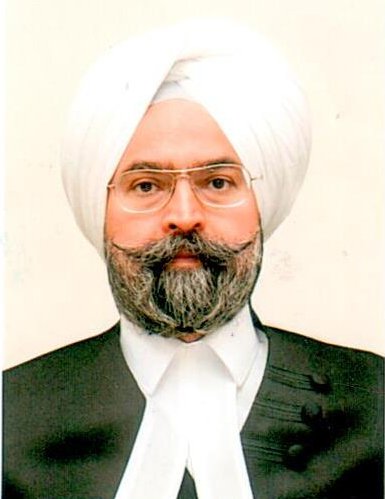
HON’BLE MR. JUSTICE DEEPAK MANCHANDA
LPA-3004-2025 and others connected cases 5
Present: Mr. Kapil Kakkar, Advocate and
Mr. Mohit Jaggi, Advocate for the appellant(s) in LPA-3139-2025,
LPA-3143-2025, LPA-3144-2025, LPA-3145-2025, LPA-3148-
2025, LPA-3169-2025, LPA-3189-2025 and LPA-3190-2025.
Mr. Sharndeep Singh, Advocate for
Mr. Devender Kumar, Advocate for the appellant(s)
in LPA-3238-2025.
Mr. Neeraj Goel, Advocate for the appellant(s) in LPA-3016-2025,
LPA-3024-2025, LPA-3025-2025, LPA-3032-2025, LPA-3037-
2025, LPA-3004-2025, LPA-3009-2025 and LPA-3070-2025.
Mr. Aftab Singh Khara, Sr. DAG, Punjab.
Ms. Anu Chatrath, Sr. Advocate with
Mr. Ratik Chatrath Kapur, Advocate for the respondent/PSPCL in
LPA Nos.3004, 3009, 3016, 3024, 3025, 3032 & 3037 of
2025.
Mr. Rahul Sharma, Sr. Advocate with
Mr. Karundeep Singh, Advocate for the respondents in
LPA-3016-2025, LPA-3024-2025, LPA-3025-2025, LPA-3032-
2025, LPA-3037-2025, LPA-3004-2025, LPA-3009-2025 and
LPA-3070-2025
Mr. Maninder Singh Garcha, Sr. Advocate with
Ms. Priyanka Malik, Advocate and
Ms. Mehak Kanwar, Advocate
for respondents No.1 to 3 in LPA-3258-2025 and
for respondents No.1 to 3 in LPA-3259-2025,
for respondents No.1 to 4 in LPA-3271-2025,
for respondents No.1 to 5 in LPA-3273-2025,
for respondents No.1 to 3, 5 to 7 & 9 in LPA-3275-2025,
for respondents in the appeals in LPA-3236-2025, LPA-3240-
2025, LPA-3244-2025, LPA-3245-2025 and LPA-3238-2025.
Mr. Raina S. Thakur, Advocate for respondents/PSPCL
in LPA Nos.3143, 3144, 3169, 3139 & 3145 of 2025.
Mr. Bhanu Pratap Singh, Advocate
for respondents No.1 to 3 in LPA-3214-2025.
Mr. Manan Bhardwaj, Advocate for the respondents
in LPA-3148-2025.
***
LPA-3004-2025 and others connected cases 6
DEEPAK MANCHANDA, J.
1. By this common order, the aforementioned 27 Letters Patent
Appeals shall stand disposed of. As all the 27 intra-court appeals involve
similar questions of law; therefore, the facts of LPA No. 3004-2025 are being
considered for the adjudication of all these appeals.
2. Through this intra-court appeal, the appellant(s) have challenged
the impugned judgment dated 22.09.2025 passed by the learned Single Judge,
whereby the writ petition preferred by the appellant(s), seeking regularization
of their services in view of the Punjab Government Policy dated 04.03.1999,
was dismissed.
3. The brief facts emerging from the pleadings of the present appeal
are that the appellant(s) were engaged between 1997 and 2014 as part-time
workers by the respondent-Corporation for various essential services. The
Punjab Government had framed a policy dated 04.03.1999 for the
regularization of part-time workers who had completed ten years or more of
continuous service, subject to fulfilment of certain conditions such as 80%
attendance, medical fitness, and suitability for Class-IV posts. The respondent-
Corporation adopted the said policy and subsequently ratified it through Office
Order dated 07.05.2014 and Board Resolution dated 10.06.2014, whereby a
cut-off date of 10.04.2006 was introduced, restricting regularization only to
those employees who had completed ten years of service by that date.
Since the
appellant(s) completed ten years of service after 10.04.2006, they were excluded
from consideration. Aggrieved thereby, they filed CWP-14588-2024, which came
to be dismissed by the learned Single Judge vide judgment dated 22.09.2025.
Hence, the present intra-court appeal has been preferred challenging the said
judgment.
LPA-3004-2025 and others connected cases 7
4.
Learned counsel for the appellant(s) contends that the learned
Single Judge has wrongly treated the cut-off date of 10.04.2006 as a universal
limitation, whereas the observations of the Division Bench of this Court in
LPA-95-2019 were context-specific and applicable only to that particular batch
of cases.He further submits that the learned Single Judge failed to appreciate
that no general exclusion for future cases was ever intended, and has
erroneously relied upon the judgment of the Supreme Court in Union of India
vs. Ilmo Devi, 2021 (4) SCT 312, which pertains to casual workers without any
governing policy framework, while the appellant(s) are covered under a
statutory policy adopted by the respondent-Corporation in 2014.It is also
argued that the appellant(s) are not daily wagers, but part-time employees
governed by the Government policy, and that the respondent-Corporation has
already regularized 352 similarly situated workers, having identical service
conditions, yet the same benefit was arbitrarily denied to the appellant(s)
without any rational justification. Learned Counsel contends that the cut-off
date was neither a part of the policy nor had any nexus with the object of
regularization, and therefore, its application is wholly unwarranted. He
accordingly prays for setting aside the impugned judgment and for issuance of
a direction to the respondent-Corporation to consider all eligible appellant(s)
for regularization under the 1999 Policy, without applying the cut-off date of
10.04.2006.
5. Per contra, learned Senior Counsel for the respondent-Corporation
submits that the judgment in LPA-95-2019 has attained finality as the SLP filed
against the said judgement vide (SLP (C) No. 10147-2023) was dismissed on
11.08.2023. She maintains that the Corporation has fully complied with the
LPA-3004-2025 and others connected cases 8
said decision by considering only those part-time workers ,who had completed
ten years of service as on 10.04.2006. She argues that the 1999 Policy limited
regularisation to 25% of Class-IV vacancies, and any extension beyond this
ceiling would violate the policy. According to her, employees like the present
appellants, who completed ten years post-2006, were rightly excluded.
6. Heard.
7. The impugned judgment reveals that the learned Single Judge
dismissed the writ petitions relying upon the decisions in Union of India v.
Ilmo Devi, 2021 (4) SCT 312, LPA-95-2019 (Punjab State Power
Corporation Ltd. v. Surinder Singh), and the Policy dated 04.03.1999. The
Single Judge held that part-time workers not working against sanctioned posts
and performing duties for only a few hours a day are not entitled to
regularisation. The Division Bench in LPA-95-2019 had expressly directed that
only those part-time workers who had completed ten years of service with at
least 80% attendance as on 10.04.2006 be considered for regularisation. The
extract from the impugned judgment correctly summarises these principles and
same are reproduced hereinbelow:–
“10. The question of whether part-time workers can be regularized is no
longer res integra. In the Ilmo Devi’s case (supra) a Two-Judge Bench of the
Hon’ble Supreme Court speaking through Justice M.R. Shah has held as
follows with regards to the regularization of part-time Sweepers who were
working for less than five hours a day:
“8.6 In the case of Daya Lal & Ors. (supra), in paragraph 12, it is observed
and held as under:–
‘12. We may at the outset refer to the following well-settled
principles relating to regularisation and parity in pay, relevant in
the context of these appeals:
(i) The High Courts, in exercising power under Article 226 of the
Constitution, will not issue directions for regularisation, absorption
or permanent continuance, unless the employees claiming
regularisation had been appointed in pursuance of a regular
recruitment in accordance with relevant rules in an open
competitive process, against sanctioned vacant posts. The equality
clause contained in Articles 14 and 16 should be scrupulously
followed and Courts should not issue a direction for regularisation
LPA-3004-2025 and others connected cases 9
of services of an employee which would be violative of the
constitutional scheme. While something that is irregular for want of
compliance with one of the elements in the process of selection
which does not go to the root of the process, can be regularised,
back-door entries, appointments contrary to the constitutional
scheme and/or appointment of ineligible candidates cannot be
regularised.
(ii) Mere continuation of service by a temporary or ad hoc or daily-
wage employee, under cover of some interim orders of the court,
would not confer upon him any right to be absorbed into service, as
such service would be “litigious employment”. Even temporary, ad
hoc or daily-wage service for a long number of years, let alone
service for one or two years, will not entitle such employee to claim
regularisation, if he is not working against a sanctioned post.
Sympathy and sentiment cannot be grounds for passing any order
of regularisation in the absence of a legal right.
(iii) Even where a scheme is formulated for regularisation with a
cut-off date (that is a scheme providing that persons who had put in
a specified number of years of service and continuing in
employment as on the cut-off date), it is not permissible for others
who were appointed subsequent to the cut-off date to claim or
contend that the scheme should be applied to them by extending the
cut-off date or seek a direction for framing of fresh schemes
providing for successive cut-off dates.
(iv) Part-time employees are not entitled to seek regularisation as
they are not working against any sanctioned posts. There cannot be
a direction for absorption, regularisation or permanent
continuance of part-time temporary employees.
(v) Part-time temporary employees in government-run institutions
cannot claim parity in salary with regular employees of the
Government on the principle of “equal pay for equal work”. Nor
can employees in private employment, even if serving full time, seek
parity in salary with government employees. The right to claim a
particular salary against the State must arise under a contract or
under a statute.
[See State of Karnataka v. Umadevi (3), (2006) 4 SCC 1; M.
Raja v. CEERI Educational Society, (2006) 12 SCC 636; S.C.
Chandra v. State of Jharkhand, (2007) 8 SCC 279;
Kurukshetra Central Coop. Bank Ltd. v. Mehar Chand, (2007)
15 SCC 680 and Official Liquidator v. Dayanand, (2008) 10
SCC 1].’
8.7 Thus, as per the law laid down by this Court in the
aforesaid decisions, part-time employees are not entitled to
seek regularization as they are not working against any
sanctioned post and there cannot be any permanent
continuance of part-time temporary employees. As held, part-
time temporary employees in a Government-run institution
cannot claim parity in salary with regular employees of the
Government on the principle of “equal pay for equal work”.”
(Emphasis added)
XXXXXX
14. In the present case, the respondent/Corporation had challenged the
decision in CWP No. 2828 of 2016 before a Division Bench of this Court.
The Court, while dismissing the appeal vide judgment dated 23.12.2022 in
LPA No. 95 of 2019 (Annexure P-5), held as follows:
LPA-3004-2025 and others connected cases 10
“... The act and conduct of the Corporation and also the
manner in which they kept the part-time employees hanging,
subject to the decision of the contempt, also does not behove a
model employer. The resolution dated 23.07.2015 would go on
to show that the moment the contempt petition was disposed of
in view of the non-speaking order passed, the appellants chose
to rescind the earlier decision and deny all the benefits of
consideration for regularization by abolishing the vacant posts
of Malis and Sweepers, though as per the judgment in
Umadevi's case (supra), they were to take necessary steps to
regularize them. In such circumstances, it is apparent that
employees who had completed 10 years on 10.04.2006 were to
be considered for the purpose of regularization, which the
Corporation has not done while relying upon Clause 2(a)(iv),
which already stood quashed. The decision to adopt the policy
on 07.05.2014, as argued by the counsel, cannot be held to be
prospective, as the appellant was under an obligation to
comply with the decision of the Apex Court. Once the policy of
the State dated 04.03.1999 was adopted, the employees who
had completed 10 years on 10.04.2006 were given a fresh
lease of life in view of the directions of the Apex Court as there
was to be a one-time measure and the same could not be
pushed 8 years later to the year 2014. Resultantly, the right of
the writ petitioners arose to seek a mandamus upon the
strength of the policy adopted by the Corporation and the law
laid down by the Constitutional Bench.
*** *** ****
... Once the policy itself was there that the part-time
employees were also to be regularized and was already in
vogue on 04.03.1999, prior to the judgment in Umadevi's case
(supra) also, it was the bounden duty of the Corporation to
enforce it in view of the judgment of the Constitution Bench.
By delaying the said decision for a period of 8 years, in spite
of the fact that directions were being issued time and again
against them, would only go on to show the defiant nature of
the Corporation against the settled principles, which cannot
be appreciated in any manner. Thus, once Powercom itself
accepted its liability, it is for it to comply with the directions
issued by the learned Single Judge. Accordingly, the present
appeals are dismissed with the following directions:–
(i) That the Powercom shall firstly consider all employees,
including those of the erstwhile PSEB, for regularization who
were working with it for a period of 10 years as on 10.04.2006
in view of the judgment in Umadevi's case (supra), without
any bar whether they were employed through employment
exchange or through open advertisement in the press, as they
can be considered as irregular appointments on account of the
length of the service.
(ii) Secondly, on account of the adoption of the policy on
07.05.2014, the employees are entitled for a writ of mandamus
for similar consideration as per the policy dated 04.03.1999
and, therefore, the employees who had completed 10 years
and had the requisite 80% attendance on 10.04.2006 would
necessarily be considered, and the stand that it would only be
prospective from the date of adoption on 07.05.2014 is
rejected.
LPA-3004-2025 and others connected cases 11
(iii) Resultantly, the notice dated 02.02.2018, whereby the
decision was taken to outsource the part-time employees
without adjusting them and regularizing their services in
pursuance of the directions of the Apex Court in Umadevi's
case (supra), is also held to be bad and illegal.” (Emphasis
added)
15. Thus, this Court is of the opinion that the respondent/Corporation has
sufficiently complied with the decision of the Division Bench of this Court in
LPA No. 95 of 2019 by regularizing 352 part-time employees. The Division
Bench's judgment is based on the decision in Umadevi's case (supra) and
the Court had clearly stated that those employees who had completed 10
years and had the requisite 80% attendance on 10.04.2006 were to be
considered for regularization by the respondent/Corporation under the
policy dated 04.03.1999 (Annexure P-1). This Court finds merit in the
argument of the learned counsel for the respondents that the object of the
policy has been duly achieved and the respondent/Corporation cannot be
faulted for rejecting the claim of petitioners who had not completed 10 years
of service on 10.04.2006. If the petitioners are directed to be regularized, it
would exceed the 25% ceiling created in the 1999 Policy and result in a
violation of the said policy.
xxx xxx xxx
CONCLUSION
21. In view of the foregoing discussions, the questions framed above are
answered in the following terms:
(i) Part-time workers not working against any sanctioned
posts for a few hours in a day are not entitled to seek
regularization of their service in view of the law settled by the
Hon'ble Supreme Court.
(ii) The petitioner(s) cannot be granted regularization in light
of the judgment of the Division Bench in LPA No. 95 of 2019
since the respondent/Corporation has sufficiently complied
with the decision and considered the claims of those
employees who had completed 10 years of service and had the
requisite 80% attendance on 10.04.2006.
(iii) This Court cannot issue a writ of mandamus compelling
the respondent/Corporation to create or sanction posts.”
8. A bare perusal of the impugned judgment shows that the learned
Single Judge dismissed the petition filed by the appellant(s) on the ground that
part-time workers, who are not working against any sanctioned posts and who
render services only for a few hours a day, are not entitled to seek
regularization of their services. The Court relied upon the settled law laid down
by the Hon’ble Supreme Court in Ilmo Devi’s case (supra), wherein it has
been specifically held that temporary, ad hoc, or daily-wage service for one or
LPA-3004-2025 and others connected cases 12
two years does not entitle an employee to claim regularization if he is not
engaged against a sanctioned post. The Hon’ble Supreme Court further
clarified that sympathy or sentiment cannot form the basis for directing
regularization in the absence of a legal right. In the present case as well, no
such legal right accrues in favour of the appellant(s), and the learned counsel
for the appellant(s) could not demonstrate the existence of any enforceable
legal right entitling them to regularization.
9. In Ilmo Devi’s case (supra), the Supreme Court further clarified
that employees appointed after the cut-off date cannot demand extension of the
scheme or the framing of successive schemes to accommodate them. This
squarely answers the appellants’ contention.
10. We concur with the learned Single Judge as the appellants did not
complete ten years of service on 10.04.2006, the cut-off date upheld in LPA-
95-2019, and therefore do not fall within the eligible category. They are also
not working against sanctioned posts. During proceedings no legal right has
been demonstrated that would entitle them to seek regularisation contrary to
settled law.
11. Further, it has also been clarified by the learned Single Judge that
in compliance of the judgment passed in LPA-95-2019, the only 352 part-time
employees who had completed ten years of service and had the requisite 80%
attendance as on 10.04.2006 were regularized and the same has not been
challenged by the appellant(s).
12. Moreover, the argument raised by the learned Senior counsel is
also acceptable to the extent that if the appellant(s) are directed to be
regularized, it would exceed the 25% ceiling created in the 1999 Policy and the
LPA-3004-2025 and others connected cases 13
same would be in violation thereof. The learned Single Judge has rightly
observed that the object of the policy was duly achieved and the act of the
respondent-Corporation in rejecting the claim of the appellant(s), who had not
completed ten years of service as on 10.04.2006, seems to be justified and does
not warrant any interference. The learned Single Judge also noted that the writ
Court cannot issue a writ of mandamus compelling the respondent-Corporation
to create or sanction posts, and has rightly observed the same by relying upon
the judgment passed in BALCO Employees' Union (Regd.) vs. Union of
India, (2002) 2 SCC 333.
13. Furthermore, this Court had already addressed a similar issue in
LPA-2855-2025 titled as Ashok Kumar Vs. The Chairman Public State Power
Corporation Ltd. And others, decided on 29.10.2025. While considering the
same arguments raised therein by other similarly situated appellant(s), the said
appeal was dismissed, which has not been disputed by the learned counsel for
the appellant(s).The relevant extract of the same is reproduced hereunder:-
“4. The appellant is stated to have been working as a part-time Sweeper on
contract basis with the respondents since 01.12.1995. The Board of
Directors had issued instructions on 07.02.2024 whereby a decision was
taken to regularise all the part-time workers in the light of the judgment
passed by this Court in LPA No. 95 of 2019 on 23.12.2022. The appellant
had approached this Court by preferring Civil Writ Petition No. 13134 of
2025, which was disposed of on 23.05.2025 with a direction to respondent
No. 3 to treat the petition as a representation and decide the same in
accordance with law by passing a speaking order. The respondents, vide
order dated 03.07.2025, rejected the claim of the appellant for regularisation
on the ground that although he had completed 10 years of service, his
attendance was less than 80% and, as per the relevant instructions, the
services of only those employees were to be regularised who had completed
10 years of service and had 80% attendance. The relevant extract of the
instructions dated 04.03.1999 regarding regularization of Class-IV part-time
employees working in various Government departments is reproduced
hereunder:–
‘2. After thorough consideration, Government have decided to
formulate a policy for the regularization of the services of part-time
workers as follows:–
LPA-3004-2025 and others connected cases 14
(A) The part-time workers who have worked for 10 years or more will
be considered for regular appointment in the concerned Department
and in the concerned District against 25% Class IV vacancies which
will become available hereafter, subject to the following:–
(i) that during the tenure of their employment on part-time basis for
10 years or more, their presence on duty should have been minimum
80%;
(ii) that they fulfil the qualifications for the new job as prescribed
under the rules at the time of their consideration for regularization;
(iii) that they will be entitled to relaxation in upper age limit up to the
number of years they have served as part-time workers;
(iv) that they had been appointed initially on part-time basis through
Employment Exchange or through open advertisement in the Press;
and
(v) that they are otherwise found suitable for the job.’
We are in agreement with the judgment of the Single Bench that the
case of the appellant was not covered under the aforesaid instructions
for regularisation inasmuch as he did not have 80% attendance and
the respondents had therefore rightly declined regularisation of his
services.
Consequently, the Letters Patent Appeal, being devoid of any merit,
stands dismissed.”
14. As a result, the findings recorded against the appellant(s) by the
learned Single Judge have become final. In an LPA, the limited scope is to
examine perversity and errors in the impugned judgment passed by the learned
Single Judge. After reviewing the same, it is clear that the aforementioned
decision squarely covers this matter and this Court has no scope for
interference.
15. It has also been noted that some of the appellant(s) to substantiate
their pleas in other LPAs filed by them have placed reliance upon the
judgments passed by the Hon’ble Supreme Court in SLP Civil No.5580 of
2024 titled as Jaggo Vs. Union of India and others and Dharam Singh and
others vs. State of U.P. and another, 2025 AIR Supreme Court 3897. We have
examined the contents of the said judgments and find that same do not apply to
the facts of these cases.
LPA-3004-2025 and others connected cases 15
16. Given the above discussion, we are of the view that the learned
Single Judge rightly dismissed the petitions filed by the appellant(s) and there
is no perversity or error.
17. Consequently, all twenty seven Letters Patent Appeals stand
dismissed.
18. All pending miscellaneous application(s) shall also stand disposed
of.
(DEEPAK MANCHANDA) (ANUPINDER SINGH GREWAL )
JUDGE JUDGE
11.11.2025
sapna
Whether speaking/reasoned : Yes/No
Whether Reportable : Yes/No

 Login with google
Legal Notes
Add a Note....