
As per case facts, a young girl died in a truck accident while traveling as a gratuitous passenger. Her family claimed compensation, leading to an award by the Motor Accident ...
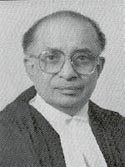

No Acts & Articles mentioned in this case
http://JUDIS.NIC.IN SUPREME COURT OF INDIA Page 1 of 4
PETITIONER:
NEW INDIA ASSURANCE COMPAFIY
Vs.
RESPONDENT:
SHRI SATPAL SINGH AND ORS.
DATE OF JUDGMENT: 02/12/1999
BENCH:
K.T.Thomas, M.B.Shah
JUDGMENT:
THOMAS, J.
Leave granted.
A 10 year old girl met with her death in a truck
accident. Her name was Dupinder Kaur. The accident
occurred while she was travelling in the truck on 11.3.1990.
She died on the spot. Her father, brother and sister made a
joint claim for compensation under the Motor Vehicles Act,
1988 (for short the 'new Act). The Motor Accident Claims
Tribunal before which the claim was made passed an award in
a sum of Rs.25,000/~ to the claimants. The owner of the
truck was found liable to
pay the compensation amount. M/s. New India
Assurance Company, the insurer had been directed to make the
amount good with interest, as the vehicle was then covered
by an insurance policy issued by that company.
The claimants as well as the Insurance Company
challenged the said award. The farmer was dissatisfied with
the quantum of compensation awarded. The Insurance Company
was aggrieved as the liability was imposed on them. The
Insurance Company put forward a contention that the deceased
Dupinder Kaur was a gratuitous passenger in the truck and
hence no liability can be fastened with the insurer, but
that contention was repelled.
A Division Bench of the High Court dismissed the
appeal filed by the Insurance Company but allowed the other
appeal by doubling the compensation amount. Hence this
appeal by special leave at the instance of the Insurance
Company. After hearing learned counsel for the appellant we
felt that it is not necessary to send notice to the
respondents to contest the appeal as there is no scope for
absolving the Insurance Company from liability.
Learned counsel for the appellant ' banked on the
decision of a three Judge Bench this Court in Mallawwa and
ors. Vs. Oriental Insurance Co. Ltd and ors. [1999 (1)
SCC 403} to disclaim liability on the premise that the
victim of the accident was gratuitous passenger in the
vehicle covered by the insurance policy. But the said
decision was rendered under Section 95 of the Motor Vehicles
Act, 1939 (which can be referred to as 'the old Act' ). The
aforesaid provision contained a rider in clause (ii) of the
http://JUDIS.NIC.IN SUPREME COURT OF INDIA Page 2 of 4
proviso to sub-section (1) which is abgent in the
corresponding provision in the New Act. To pinpoint the
said distinction we extract Section 95(1) of the old Act as
under:
"95. Requirements of policies and limits of
liability.- (1) In order to comply with the requirements of
this Chapter, a policy of insurance may be a policy which-
(a) is issued by a person who is an authorised insurer
or by a co-operative society allowed under section 108 to
transact the business of an insurer, and
(b) insures the person or classes of persons specified
in the policy to the extent specified in sub-section (2)-
(i) against any liability which may be incurred by him
in respect of the death
of or bodily injury to any person or damage to any
property of a third party caused by 3 or arising out of the
use of the vehicle in a public place;
(ii) against the death of or bodily injury to any.
passenger of a public service vehicle caused by or arising
out of the use of the vehicle in a public place;
Provided that a policy shall not be required-
(i) to cover liability in respect of the death,
arising out of and in the course of his employment, of the
employees of a person insured by the policy or in respect of
bodily injury sustained by such an. employee arising out of
and in the course of his employment other than a liability
arising under the Workmen's Compensation Act, 1923, in
respect of the death of, or bodily injury to, any such
employee-
(a) engaged in driving the vehicle, or
(b) it is a public service vehicle, engaged as a
conductor of the vehicle or in examining tickets on the
vehicle, or
(c) if it is a goods vehicle, being carried in the
vehicle; or
(ii) except where the vehicle is a vehicle in which
passengers are carried for hire or reward or by reason of or
in pursuance of contract of employment, to cover liability
in respect of the death of or bodily injury to persons being
carried in or upon or entering or
mounting or alighting from the vehicle at the time of
the occurrence of the event out of which a claim arises, or
(iii) to cover any contractual liability."
As per ".the proviso when read .with its clause (ii)
It is clear that the policy of insurance shall not be
required to cover liability in respect of the death of or
bodily injury to persons who wore gratuitous passengers of
that vehicle. This Court, has' held in Pushpabai Parshottam
Udeshi and others vs. M/s. Ranjit Ginning & Pressing Co.
pvt. Ltd. and anr. [AIR 1977 sc 1735 » 1977 (2) SCC 745)
http://JUDIS.NIC.IN SUPREME COURT OF INDIA Page 3 of 4
as under:
"Sections 95(a) and 95(b)(l) of the Motor Vehicles Act
adopted the provisions of the .English Road Traffic Act,
1960, and excluded the liability or the insurance company
regarding the risk to the passengers. Section 95 provides
that a policy of insurance must be a policy which insures
the persons against any liability which may be incurred by
him in respect of death or bodily injury bo any person or
damage to any property of -a third party caused by or
arising out of the use of the vehicle in a public place.
The plea that the words 'third party",are wide enough to
cover all persons except the person and the insurer is
negatived as the insurance cover is not available
to the passengers made clear by the proviso to
sub-section which provides that a policy shall not be
required. ............ Therefore it is not required that a
policy of insurance should cover risk to the passengers who
are nob carried for hire or reward. As under Section 95 the
risk to a passenger in a vehicle
who is not carried out hire of reward
is not required to be insured the plea of the counsel
for the insurance-. company will have to be accepted and
the insurance company held not liable under the requirements
of the Motor Vehicles Act."
in fact the said ratio has been approved by the three
Judge Banch in Mallava vs. Oriental Insurance Co. Ltd.
(supra). At .the same time learned Judges pointed out that
the old Act is now repealed by the new Acr and Section 147
of the new Act correspondinq to Section 95 of the old Act
has been siubstantially altered and hence the above
interpretation ,of Section 95 of the old Act will govern the
cases which have arisen under the old Act.
Proviso to Section 147 (1) of the. new Act 'shows
that it is a recast by provision by placng the erstwhile
clause (iii) as the present clause (ii) In- other words,
clause (ii) of the proviso in Section 95(1) of the old Act
is totally non-existent in the proviso to Section 147 (1) of
the new Act.
Under Section 147 of the new Act, the policy must be a
policy which insures the person or classes of persons
specified in the policy to the extent specified in sub-
section (2) -
(i) against any liability which may be incurred by him
in respect of the death of or bodily {injury to any person,
including owner of the goods or his authorised
representative carried in the vehicle) or damage to any
property of a third party - caused by or arising out of the
use of the vehicle in a public place:
(ii) against the death of or bodily injury to any
passenger of a public, service vehicle caused by or arising
out of the use of the vehicle in a public place.
The proviso to the said sub-section is not relevant
here a it pertains to death or bodily injury to the employee
mentioned therein. Sub-section (2) provides that a policy
of insurance shall cover any liability incurred in respect
http://JUDIS.NIC.IN SUPREME COURT OF INDIA Page 4 of 4
of any accident, up to the following limits, namely:-
(i). save as provided in clause (b) the amount of
liability incurred;
(ii) in respect of damage to any proporty of a third
party, a limit: of rupees six thousand:
Provided that any policy of insurance issued with any
limited liability and in force, immediately before the
commencement of this Act, shall continue to be
effective for a period of four months after such
commencement or till the date of expiry of such policy
whichever is earlier.
Hence, under sub-section (2), there is no upper
limitation for the insurer regarding the amount of
compensation awarded in respect, of death or bodily injury
of a victim ot the accident, It is therefore, apparent that
the limit contained in the old Act has been removed and the
policy should insure the liability incurred and cover injury
to any person including owner of the goods or his authorised
representative carried in the vehicle. The Legislature has
also taken care even the policies which were in force on the
date of commencement of the Act by specifically providing
that any policy of insurance containing any limit regarding
insurer's liability shall continue to be effective for a
period of four months from commencement of the Act or till
the date of expiry of such policy, whichever is earlier.
This means, after the said period of four months a new
insurance policy consistent with the new Act is required to
be obtained.
The resuit is that under the new Act an insurance
policy covering third party risk is not required to exclude
gratuitous passengers in a vehicle, no matter chat the
vehicle is of any type or class. Hence the decisions
rendered under the old Act vis-a-vis gratuitous passengers
are of no avail while considering the liability of the
insurance company in respect of any accident which occurred
or would occur after the new Act came into force.
The Division Bench of the High Court has rightly
repelled the contention of the appellant - insurance company
on the aforesaid score. We therefore, dismiss these
appeals.

 Login with google
Legal Notes
Add a Note....