
This regular second appeal is directed against the judgment and decree of the learned Addl. District Judge (II), Una, H.P. dated 28.5.2014,passed in Civil Appeal RBT No. 154/13/2012.
No Acts & Articles mentioned in this case
High Court of H.P.IN THE HIGH COURT OF HIMACHAL PRADESH, SHIMLA .
RSA No. 327 of 2014.
Reserved on: 16.9.2015.
Decided on: 23.9.2015.
Niaz Deen & ors. ……Appellants.
Versus
Bir Deen & another …….Respondents.
Coram
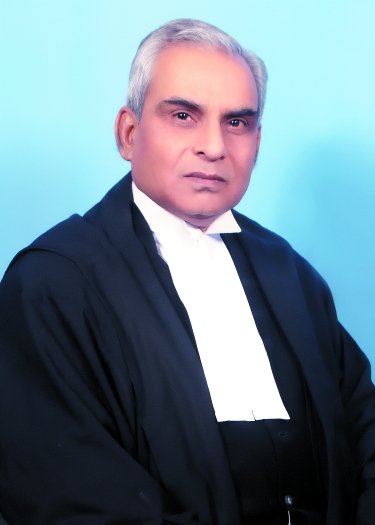
The Hon’ble Mr. Justice Rajiv Sharma, Judge.
Whether approved for reporting? Yes.
For the appellant(s): Mr. Ajay Sharma, Advocate.
For the respondents: Mr. Sanjeev Kuthiala, Advocate.
----------------------------------------------------------------------------------------------
Justice Rajiv Sharma, J.
This regular second appeal is directed against the judgment and
decree of the learned Addl. District Judge (II), Una, H.P. dated 28.5.2014,
passed in Civil Appeal RBT No. 154/13/2012.
2. “Key facts” necessary for the adjudication of this regular second
appeal are that respondent No. 1-plaintiff (hereinafter referred to as the
plaintiff), namely, Bir Deen has instituted suit for declaration with
consequential relief of permanent prohibitory injunction and in the
alternative for joint possession against the appellants-defendants as well as
Smt. Reshmu-defendant No. 4. Sh. Nabia was owner of the land detailed in
the plaint. The parties are Muslim and governed by Suni Law in respect of
their succession and inheritance. Sh. Nabia died on 14.4.1994. After his
death, his entire estate was succeeded by the parties under Hanafi/Sunni law
of inheritance. The mother of the parties also died during the life time of
Nabia. Nabia was illiterate village rustic person. Defendant No. 1 Niaz Deen
in connivance with marginal witnesses, got fabricated a false Will dated
::: Downloaded on - 02/11/2022 17:23:32 :::CIS
High Court of H.P. 2
11.1.1990. Nabia never executed any Will dated 11.1.1990. He died
intestate. In Mohammedan law, Nabia was not competent to execute any Will
more than his 1/3 share after the payment of funeral expenses, debts and
legacies. The mutation bearing No . 2575 was also got sanctioned on
29.12.2001.
3. The suit was contested by th e defendants by filing separate
written statements. According to defendant No. 1, he was owner-in-
possession of the suit land after the death of Nabia by virtue of Will dated
11.1.1990. Sh. Nabia through his Will dated 11.1.1990 has bequeathed his
entire moveable and immoveable property in favour of his sons excluding the
abadi and the land which was his self acquired property to defendant No. 1.
The plaintiff as well as other successors-in-interest were well aware of the last
Will dated 11.1.1990 and mutation No. 2575, duly sanctioned in favour of the
parties in their presence. Defendant No. 4 has filed separate written
statement. She has admitted the averments made in the plaint.
4. The learned trial Court framed the issues on 1.1.2010. The suit
was partly decreed and plaintiff and defendant No. 4, namely, Reshmu were
declared joint owners-in-possession of the suit land to the extent of 2/9 and
1/9 shares each, respectively. Defendant No. 1 Niaz Deen was declared joint
owner-in-possession to the extent of remaining shares on the basis of Will
Ext. DW-1/A and mutation No. 2575 Ext. P-5. The plaintiff was also held
entitled for the relief of permanent prohibitory injunction and defendant No. 1
was restrained from forcibly ousting the plaintiff, cutting and removing trees,
raising construction over the suit land without the consent and permission of
::: Downloaded on - 02/11/2022 17:23:32 :::CIS
High Court of H.P. 3
the plaintiff and to alienate and encumber upon more than his share as per
Will Ext. DW-1/A in the suit land. Defendants, namely, Niaz Deen, Chuhra
and Smt. Lachhami, filed an appeal before the learned Addl. District Judge
(II), Una, H.P. against the judgment and decree dated 15.5.2012. The learned
Addl. District Judge (II), Una dismissed the appeal on 28.5.2014. Hence,
this regular second appeal.
5. Mr. Ajay Sharma, Advocate, on the basis of the substantial
questions of law framed, has vehemently argued that both the Courts below
have misread and mis-appreciated the evidence placed on record. He has
supported Will Ext. DW-1/A. He then contended that the plaintiff has not
raised any objection at the time of attestation of mutation No. 2575 dated
29.12.2001. He lastly contended that the suit was barred by limitation. On
the other hand, Mr. Sanjeev Kuthiala, Advocate, has supported the
judgments and decrees passed by both the Courts below.
6. I have heard learned counsel for the parties and have also gone
through the judgments and records of the case carefully.
7. Plaintiff has appeared as PW-1. He has led his evidence by filing
affidavit Ext. PW-1. It is stated in the affidavit that the parties are
Mohammedan and are governed by Hanafi/Sunni Law in respect of
succession and inheritance. The estate of Nabia was inherited/succeeded by
the parties under Hanafi Law of inheritance as the parties are Sunni
Muslims. Nabia was illiterate, simpleton and rustic villager. The defendant
No. 1 has got fabricated Will dated 11.1.1990. Nabia never executed any Will
::: Downloaded on - 02/11/2022 17:23:32 :::CIS
High Court of H.P. 4
during his lifetime and he died intestate. The Will was false and fabricated.
The mutation No. 2575 was attested on 29.12.2001.
8. DW-1 Dharam Dass has produced register No. 3 and Jild No. 10
dated 22.9.1989 to 19.1.1990 in which Will Ext. DW-1/A dated 11.1.1990
was entered at Sr. No. 87. According to him, the copy of Will Ext. PW-1/A
was true and correct as per the original.
9. DW-2 Naresh Thakur in his examination-in-chief has deposed
that he was working as Deed Writer since 1982. He had drafted the deed at
the instance of Nabia. He had put his thumb impression on the same after
admitting the contents of the same to be true and correct. The Will was
registered at Sr. No. 25 dated 11.1.1990 in his register.
10. DW-3 Kashmir Chand deposed th at Nabia had executed Will in
favour of Niaz Deen, Bir Deen, Chuhra, his sons. It was scribed by DW-2
Naresh Thakur in his presence. It was drafted at the instance of Nabia.
Naresh Thakur after scribing the Will read over and explained the contents to
Nabia and Nabia after admitting the contents to be true and correct put his
thumb impression over the same. He signed the same and thereafter they
went to Tehsil Office/Sub Registrar. Sub Registrar also read over and
explained the contents to Nabia and Nabia put his thumb impression before
the Sub Registrar and then they also signed the Will before the Sub Registrar.
The other witness was Basondi. He has died.
11. Defendant No. 1 Niaz Deen has appeared as DW-4. He has
denied the suggestion that he himself brought his father Nasib to Amb to
execute Will. He also denied the suggestion that the three sons of Nasib were
::: Downloaded on - 02/11/2022 17:23:32 :::CIS
High Court of H.P. 5
looking after the land during the life time of Nasib. Further, he has agreed to
the suggestion that Nasib had equal love and affection for all his sons.
12. DW-5 Aziz Mohammad deposed that the suit land is about 9
kanals. He has been seeing defendant No. 1 Niaz Deen in possession of the
same. He was not aware of the entire land of any of the three brothers. He
also feigned ignorance to the suggestion that suit land was 9 kanals.
13. Nabia has died on 14.4.1994. The Will Ext. DW-1/A is dated
11.1.1990. Nabia has bequeathed the suit land in favour of defendant No. 1
and the remaining land other than the suit land in favour of his sons to the
extent of equal shares. The defendants No. 2,3 and 5, namely, Chuhra,
Karmi and Lachhami have expressed thei r consent to Will Ext. DW-1/A by
filing written statements. Neither plaintiff nor defendant No. 4, namely
Reshmu have consented to the Will.
14. The Will was scribed by DW-2 Naresh Thakur. He scribed the
Will and after drafting the same, he read over and explained the contents of
the same to Nabia. Nabia has put his thumb impression over the same after
fully understanding the contents of the Will. The entry was made in the
Entry Registry at Sr. No. 25 on 11.1.1990. DW-1 Dharam Dass has brought
the record of Will Ext. DW-1/A. According to him, Will Ext. DW-1/A was true
and correct as per the original. He has pasted the same over register No. 3
and Jild No. 10. DW-3 Kashmir Chand was marginal witness. According to
him, the Will was scribed at the instance of Nabia by Naresh Thakur. The
contents of the Will were read over and explained to him and Nabia.
Thereafter, Nabia put his thumb impression over the same after fully
::: Downloaded on - 02/11/2022 17:23:32 :::CIS
High Court of H.P. 6
understanding the contents of the same to be true and correct. He also
signed as a marginal witness. Thereafter, they went to Tehsil Office/Sub
Registrar. Sub Registrar read over and explained the contents of the Will to
Nabia. Nabia put his thumb impression over it and they also signed the same
before the Sub Registrar.
15. According to the principles of Mahomedan Law by Mulla (20
th
Edition), para 116 defines that a Will (Wasiyyat) may be made either verbally
or in writing.
16. The Will Ext. DW-1/A stands duly proved by DW-1 Dharam
Dass, DW-2 Naresh Thakur and DW-3 Kashmir Chand. Paras 117 and 118
of the Principles of Mahomedan Law, by Sir Dineshaw Fardunji Mulla, (20
th
Edition) read as under:
“117. Bequests to heirs: A bequest to an heir is not valid unless
the other heirs also consent to the bequest after the death of the
testator. Any single heir may consent so as to bind his own
share.
A bequest to an heir, either in whole or in part, is invalid,
unless consented to by other heir or heirs and whosoever
consents, the bequest is valid to that extent only and binds his or
her share. Neither inaction nor silence can be the basis of
implied consent.
Explanation:- In determining whether a person is or is not an
heir, regard is to be had, not to the time of the execution of the
will, but to the time of the testator’s death.
118. Limit of testamentary power: A Mahomedan cannot by will
dispose of more than a third of the surplus of his estate after
payment of funeral expenses and debts. Bequests in excess of
::: Downloaded on - 02/11/2022 17:23:32 :::CIS
High Court of H.P. 7
the legal third cannot take effect, unless the heirs consent
thereto after the death of the testator.”
17. The Will Ext. DW-1/A is dated 11.1.1990. Neither the plaintiff
nor defendant No. 4 Reshmu have expressed their consent to the bequest
after the death of the testator. Though plaintiff was present at the time of
attestation of the mutation No. 2575 Ext. P-5, but his presence does not
make the Will valid in view of his implied consent. In the mutation, it is
nowhere recorded that he has given his consent to defendants No. 2,3 and 5
on the basis of Will Ext. DW-1/A. Similarly, no express consent of defendant
No. 4, namely, Reshmu was recorded. The defendants No. 2,3 and 5 have not
objected to the Will on the ground that they have not given the express
consent to validate the Will Ext. DW-1/A, thus, they have given express
consent regarding the validation of the Will after the death of the testator.
18. In the case of A.E. Salayjee vrs. Fatima Bi Bi, reported in AIR
1922 PC 391, their lordships have held that the Mahomedan Law does not
allow a testator to leave a legacy to any of his heirs unless the other heirs
agree, but any single heir may so agree so as to bind his own share, and the
burden of proving the consent of a particular heir is upon the legatee. It has
been held as follows:
“…….. The Mahomedan law does not allow a testator to leave a legacy to
any of his heirs unless the other heirs agree, but any single heir may so
agree as to bind his own share, and, therefore, when it appeared in the
course of the suit that the other heirs had agreed, the only contest was as
regards the plaintiff and the three minors. As regards the three minors
there could be no question of their consent and the dispute therefore
turned on the question whether the plaintiff had consented or not. Now
::: Downloaded on - 02/11/2022 17:23:32 :::CIS
High Court of H.P. 8
the burden of proving that consent was on the appellant, the defendant
in the suit……..”
19. The Division Bench of the Lahore High Court in the case of
Muharram Ali and another vrs. Barkat Ali and others, reported in AIR
1930 Lahore 695, has held that a Will in favour of heirs not assented to by
them after testator’s death is invalid.
20. In the case of Bayabai vrs. Bayabai and another, reported in
AIR (29) 1942 Bombay 328 (2), the learned Single Judge has held that
under Sunni Mahomedan law, there is a two-fold restriction on the
testamentary capacity of a testator. He could not dispose more than one-
third of his property, and even with regard to that one third he cannot
bequeath it to his heirs. It has been held as follows:
“……The question then is whether the will made by the deceased
was in accordance with Mahomedan law, as I have already held
that after the passing of the Cutchi Memons Act of 1938, the will
of every Cutchi Memon has to be construed and looked at from
the point of view of Mahomedan law. Under Sunni Mahomedan
law, by which the parties are governed, there is a two-fold
restriction on the testamentary capacity of a testator. he cannot
dispose more than one third of his property, and even with regard
to that one third he cannot bequeath it to his heirs. In this case
the deceased has purported to dispose of the whole of his estate,
and all the effective bequests made by him are in favour of his
heirs. These bequests could have been validated by the consent
of the heirs, after the death of the testator…………”
21. The learned Single Judge of the Bombay High Court in the case
of Yasin Imambhai Shaikh (deceased by L.R.’s) vrs. Hajarabi and others,
reported in AIR 1986 Bombay 357, has held that it is for the person who
claims under a will to establish that other heirs had consented to bequest.
::: Downloaded on - 02/11/2022 17:23:32 :::CIS
High Court of H.P. 9
Bequest in excess of 1/3 of estate cannot take effect unless such bequest is
consented to by heirs after death of testator. It has been held as follows:
“[5] I am unable to accept this contention since Yasin Imambhai
Shaikh, the original plaintiff, was claiming under a Mahomedan
Will and the Will is said to be in writing, it was in the very nature
of things for the original plaintiff to establish that the other heirs
had consented to the bequest. The original plaintiff could not
have succeeded in the suit without establishing this fundamental
position. Despite this it appears that Yasin Imambhai Shaikh the
original plaintiff, did not chose to lead any evidence at the trial on
this point, and the said Yasin Imambhai Shaikh hence failed in
the suit. The application to adduce the evidence has only been
made belatedly at the appellate stage, and if in these
circumstances, the Appellate Court has rejected the application,
it would be proper. Not only this, it is also an admitted position
that some of the respondents have been examined in support of
their defence. Significantly no questions have been put to the
respondents as regards the said revenue proceedings or as to
their statements said to have been made in the said proceedings,
which could easily have been done. In other words, their
testimony to the effect that there was absence of consent has
gone unchallenged. If this is so, then the lower Appellate Court
was right in rejecting the application, for it would have meant
introducing fresh evidence and reopening of the entire case. In
view of this the contention now canvassed must be negatived.
[6] But be that as it may, Mr. Vaze has contended that
Mahomedan Law provides that a Mahomedan cannot by Will
dispose of more than 1/3 of the surplus of his estate after
payment of funeral expenses and debts. That a bequest in excess
of 1/3 cannot take effect, unless the heirs consent thereto after
the death of testator. In this case admittedly the Will disposes of
more than 1/3 of the estate after the payment of funeral
expenses and debts, and there is no evidence that the heirs have
consented to such a bequest. In view of this also the appellants
claim under the Will must fail, whatever may be their other rights
as heirs to the property of the deceased which they may agitate in
an appropriate forum. Mr. Vaze's contention is substantial.”
22. The Division Bench of the Karnataka high Court in the case of
Narunnisa vrs. Shek Abdul Hamid, reported in AIR 1987 Karnataka
222, has held that a bequest to an heir, either in whole or in part, is invalid,
::: Downloaded on - 02/11/2022 17:23:32 :::CIS
High Court of H.P. 10
unless consented to by other heir or heirs and whosoever consents, the
bequest is valid to that extent only and binds his or her share. Neither
inaction nor silence can be the basis of implied consent. Where there was
nothing in the evidence either of the person who identified the executor at the
time of the execution of the will whereunder the executor allegedly
bequeathed certain property to one heir to the exclusion of others or in the
evidence of the attestor of the will, or in the evidence of the beneficiary under
the will to infer knowledge of execution of will on the part of her opposing the
will on ground of absence of her consent, her consent to the will could not be
inferred and she would be entitled to her share in the property. It has been
held as follows:
“12. The well established position, in our opinion, is that a bequest to an
heir, either in whole or in part, is invalid, unless consented to by other
heir or heirs and whosoever consents, the bequest is valid to that extent
only and binds his or her share. That it is so is clear from the following
enunciation in Mahaboobi v. Kempaiah (Second Appeal No. 99/150-51) :
AIR 1955 Mys NUC 705;
"A Muhammadan cannot by will dispose of more than a third of
the surplus of his estate after payment of funeral expenses and
debts. But a bequest of more than the legal third can be validated
by the consent of the heirs; and similarly a bequest to an heir may
be rendered valid by the consent of the other heirs. The limits of
testamentary power exist solely or the benefit of the heirs and
they may if they like forego the benefit by giving their consent."
17. The evidence regarding Willis found in the depositions of D.Ws. 1, 2
and 3.D.W. 1 is W. S. Rodriques, who has identified Shaikh Abdul Ghani
at the time of execution of Will. He has admitted that he does not know
how, many daughters Abdul Ghani had, and he had not seen them. D.W.
2 the attestor of the Will is brother's son of Shaik Abdul Ghani. There is
nothing in his evidence to infer the knowledge, much less the consent, of
other heirs. D.W. 3 is the first defendant. While he states that plaintiff,
2nd defendant, 3rd defendant knew about the execution of Will, nothing
is said about 5th defendant. Admittedly, on the date of execution, none
of the daughters or other sons were present. In this state of evidence to
::: Downloaded on - 02/11/2022 17:23:32 :::CIS
High Court of H.P. 11
infer implied consent on the part of fifth defendant would be erroneous
and this finding cannot be sustained. Therefore, RFA 37/76 has to be
allowed. Consequently, 5th defendant will be entitled to her share; first
defendant's share, as decreed has to be modified, deducting the share of
the fifth defendant in Item I of 'A' schedule properties.”
23. The Division Bench of the Bombay High Court in the case of
Damodar Kashinath Rasane vrs. Smt. Shahajadibi and others, reported
in AIR 1989 Bombay 1, has held that a Muslim cannot bequeath more than
one third of his property whether in favour of a stranger or his heir when
there are heirs or other heirs left by him, as the case may be.
24. The learned Single Judge of the Madras High Court in the case of
Noorunissa alias Pichamma vrs. Rahaman Bi and others, reported in
2001 (3) MLJ 141, has considered Chapter XXIII of Mohammadan Law of
Wills Second Edition 1965, by T.R. Gopalakrishnan under the head “Limits of
testamentary power in Mohammadan Law” as under:
“ It has been commented that the power of Mohammadan to
dispose of by Will is circumscribed in two ways and the first limit
is to the extent. A Mohammadan can validly bequeath only one
third of his net assets, when there are heirs. This rule is based
on a tradition of the prophet and the Courts in India have
enforced the rule from early times. The object of this rule is to
protect the rights of the heirs and where there is no heirs and
when all the heirs agree and give their consent the one third limit
may be exceeded. While the rule is that a muslim can bequeath
only one third of his assets, a bequest in excess of one third is
rendered valid by the consent of the heirs whose rights are
infringed thereby or where there are no heirs at all.
(ii). Section 189 in Chapter XIII of Mohammedan Law deals
with Bequest to heirs. A bequest to an heir is not valid except to
the extent to which the persons who are the heirs of the testator
at the time of his death, expressly or impliedly consent to the
bequest after his death. It is evident from the abovesaid section
of Mohammedan Law that while it permits the making of a Will to
a limited extent in favour of stranger or strangers, it does not
::: Downloaded on - 02/11/2022 17:23:32 :::CIS
High Court of H.P. 12
allow undue preference being given to a particular heir or heirs
and be quest to such heir or heirs without the consent of other
heirs. It is also evident from the abovesaid provision of law that
bequest to an heir or heirs without the consent of other heirs will
be altogether invalid. It is also evident from Sec. 195 of the
Mohammedan Law that testator may revoke a bequest at any
time either expressly or impliedly.”
25. The learned Single Judge of the Madras High Court, in the case
of Sajathi Bi vrs. Fathima Bi and others, reported in AIR 2002 Madras
484, has held that mere silence by other heirs by not participating in
concerned proceedings and by remaining ex-parte cannot be considered to be
as implied consent. It has been held as follows:
“15. Admittedly, the parties being Muslims are governed by
Mohammedan Law. A person cannot bequeath his entire properties
excluding the right of devolution of properties to his heirs.
Mohammedan Law lays down that a Mohammedan can only bequeath
his property by way of a Will in respect of 1/3 of his estate which is the
surplus after deducting all his debts and funeral expenses. If a bequest is
made to a heir, it is not valid unless the other sharers consent to the
same.
16. A Mohammedan cannot by Will dispose of more than 1/3 of the
surplus of his share after payment of funeral expenses and debts.
Bequests in excess of the share cannot take effect, unless the heirs
consent to that and that too after the death of the testator.
18. Though it is stated in Section 117 of the principles of Mohammedan
Law by Mulla that a bequest to a heir is not valid unless the other heirs
consent to the bequest after the death of the testator and any single heir
may consent so as to bind his own share, mere silent by not participating
in the concerned proceedings and by remaining ex parte cannot be
considered to be even as implied consent as stated in the very same
book.”
26. In the case of Naziruddin vrs. Hajirambee, reported in 2004(1)
KLT 896, the Division Bench of the Kerala High Court has held that a
bequest to an heir either in whole or in part, is invalid unless consented to by
::: Downloaded on - 02/11/2022 17:23:32 :::CIS
High Court of H.P. 13
other heir or heirs and whosoever consents, the bequest is valid to that extent
only and binds his or her share. It has been held as follows:
“14. So far as the first point is concerned, the lower court held that the
Will is not valid, because consent of the remaining heirs was not
obtained. Chapter IX of the Principles of Mohamedan Law by Mulla-19th
Edition, it is stated that every Mohamedan of sound mind and not a
minor may dispose of his property by Will. A Will may be made either by
verbally or by in writing and consent of the heirs is necessary. In Section
117 at page 101, it is stated that a bequest to an heir is not valid unless the
other heirs consent to the bequest after the death of the testator. Any
single heir may consent so as to bind his own share. A bequest to an heir,
either in whole or in part, is invalid, unless consented to by other heir or
heirs and whosoever consents, the bequest is valid to that extent only
and binds his or her share. Neither inaction nor silence can be the basis
of implied consent see Narunnissa v. Sheik Abdul Hamid, AIR 1987
Karnataka 222. In this case, there is no evidence to show that at any
point the heirs gave consent. One of the heirs is minor and consent
cannot be given. But this does not mean that the others cannot give
consent. But there is no express consent given.”
27. The learned Single Judge of th e Allahabad High Court in the case
of Begum Shanti Tufail Ahmad Khan, Testamentary Case No. 28 of
1997, reported in AIR 2006 Allahabad 75, has held that without the
consent of other heirs testatrix could not have made bequest of more than
one third of her properties. It has been held as follows:
“[15] In the present case Begum Shanti Tufail Ahman Khan
bequeathed her entire properties to Jallaludin, who claims to be
the only surviving son in the family. Sri S.K. Misra, learned
counsel for Sri Jallaludin-plaintiff states that there are no heirs
in the family and thus the bequeath in favour of jallaludin for
entire share is valid. He asserts in para 9 that the deceased was
issue less and had left behind the only next kith and kin namely
Sri Rukom Decn Son of Badruddin. The deceased, however, did
not make any such recital in the will in which it is stated that the
testator has no children and is alone. She has not given her
relationship with the propounder, nor has she stated that her
husband did not leave behind him any brother, nephew and
grand children. In fact in the affidavit dated 3.11.2003 the
applicant Jalluddin has admitted in paras 4, 5 and 8 that at
::: Downloaded on - 02/11/2022 17:23:32 :::CIS
High Court of H.P. 14
Village Garhi Nawab Tehsil Panipat belong to deceased Mohd.
Yusuf Khan and sons of Abdul Latif are selling the properties. He
has not denied that these persons are not common ancestor of
Nawab Gulam Mohammad Khan. The Court, as such, finds that
the deceased testatrix has other heirs, who are alive and that
without their consent which has no where been pleaded, the
testatrix could not have made a bequest of more than one third of
her properties and having done so the will is invalid and
inoperative.”
28. In ‘ Outlines of Muhammadan Law’ (Third Edition), by Asaf A.A.
Fyzee, at page 353, “What can be bequeathed?”, it is stated that no Muslim
can bequeath more than one third of the residue of his estate, after the
payment of debts and other charges. When a Muslim dies, his debts and
funeral expenses are to be paid first, thereafter, out of the residue only one
third can be disposed of by will. If the bequests exceed the bequeathable
third, they do not take effect without the consent of heirs. Such consent
must be obtained after the death of the testator in Hanafi Law; whereas in
Ithna ‘Ashari law, it may be obtained either before or after the testator’s
death. It is also stated in para 72 that Muhammadan law does not prescribe
any particular form for the making of wills. The will of a Muslim need not be
in writing; an oral will is perfectly valid; but in the majority of cases wills are,
for obvious reasons, in writing, for ‘he who rests his title on so uncertain a
foundation as the spoken words of a man, since deceased, is bound to allege,
as well as to prove, with the utmost precision, the words on which he relies,
with every circumstance of time and place’. If the will is in writing it need not
be signed; and if signed, it need not be attested. So long as the intention of
the testator is reasonably clear, the testament takes full effect.
::: Downloaded on - 02/11/2022 17:23:32 :::CIS
High Court of H.P. 15
29. In Chapter IX, Principles of Mahomedan Law by Mulla (20
th
Edition), it is stated that under the Mahomedan Law, no writing is required to
make a will valid, and no particular form, even of verbal declaration is
necessary as long as the intention of the testator is sufficiently ascertained.
30. In the case of Aulia Bibi vrs. Ala-ud-Din, reported in The
Indian Law Reports, Vol. XXVIII, 1906 Allahabad Series 715, it has been
held as follows:
“……………Now, according to the Muhammadan Law, a will may
be made either verbally or in writing, and no special form or
solemnity for making or attesting a will is prescribed. It is
sufficient if a will can be proved to have been really and truly the
will of the testator. The learned District Judge has found that
although the will in this case is not proved to have been signed
by the testatrix or any one on her behalf, yet the document does
represent her real will and he has found that she was competent
at the time to make a will. It has been argued before us that this
being the case the finding that the will was not signed is
immaterial. We think that in view of the Muhammadan Law
there is force in this contention. The will was found by the lower
appellate Court to be the genuine last will of the testatrix and
was made at a time when she was competent to make a
will…………….”
31. In the case of Sarabai Amibai vrs. Cassum Haji Jan
Mahomed, reported in AIR 1919 Bombay 80, the learned Single Judge has
held that under the Mahomedan Law, no attestation of will is necessary. It
has been held as follows:
“…….Further, the document in question is not attested. But I
think it is quite clear, and at any rate there is an express
authority of this Court precisely in point that Cutchi Memons are
governed by Mahomedan law as regards the execution of their
wills, and that under Mahomedan law no attestation is
necessary. The case I refer to is Aba Satar Haji Aboobuker, In re
(1) and is a decision of Tyabji, J.”
::: Downloaded on - 02/11/2022 17:23:32 :::CIS
High Court of H.P. 16
32. In the case of Abdul Hameed vrs. Mohammad Yoonus and ors,
reported in AIR 1940 Madras 153, the Division Bench of the Madras High
Court has held that under the Mahomedan law, no writing is required to
make a will valid and no particular form of verbal declaration is necessary as
long as the intention of the testator is sufficiently ascertained. It has been
held as follows:
“The testator being a Cutchi Memon the provisions of the
Mahomedan law with regard to wills apply. That a Cutchi
Memon is governed by the Mahomedan law in this respect was
held in 43 Bom 641, and the contesting respondents have not
disputed the correctness of the decision. It is also accepted, as it
must be, having been accepted by the Judicial Committee, that
by the Mahomedan law no writing is required to make a will valid
and no particular form even of verbal declaration is necessary as
long as the intention of the testator is sufficiently ascertained.
……..”
33. In the case of Ramjilal vrs. Ahmad Ali and another, reported
in AIR (39) 1952 Madhya Bharat 56, it has been held that under the
Muhammaddan Law, however, no formal ities are needed for a will and an
unattested will can be admitted and proved. It has been held as follows:
“………….The finding that the will set up by the plaintiff is proved
has not been challenged in the memo of appeal but the learned
counsel for the appellant contended that there was no attestation
proved. Under the Mohommadan Law, however, no formalities
are needed and an unattested will can be admitted and proved.”
34. In the case of Abdul Mahan Khan vrs. Mirtuza Khan and
others, reported in AIR 1991 Patna 154, the learned Single Judge of the
Patna High Court, as he then was, has held that so far as a deed of will is
concerned, no formality or a particular form is required in law for the purpose
::: Downloaded on - 02/11/2022 17:23:32 :::CIS
High Court of H.P. 17
of creating a valid will. An unequivocal expression by the testator serves the
purpose. It has been held as follows:
“52. Any Mahomedan having a sound mind and not a minor, may make a
valid will to dispose of the property.
53. So far as a deed of will is concerned, no formality or a particular form
is required in law for the purpose of creating a valid will. An unequivocal
expression by the testator serves the purpose.
69. With that end of view, in my opinion, a provision has been made for
obtaining consent/co-sharers after the death of the testator, if a 'will' is
made by a testator to a stranger in excess of 1/3rd of his properties to his
heirs or some of them.
70. Amir Ali, in his Principles of Mahomedan Law clearly laid down that
for the purpose of giving effect to a will whereby a testator has
bequeathed more than 1/3rd interest either to a testator or to a heir,
consent is required in relation thereto of the heirs only after the death of
the testator. Thus even a consent by the heirs of the testator during his
lifetime in such a case does not sub-serve the requirement of law.
71. The reason for making such a rule is obvious; inasmuch as before the
death of the testator, it is not known as to who would be the heirs of the
testator and to what extent. The testator, thus, could not have obtained
consent during his lifetime from such person who had the testator died
at that time would have been his heirs and successors.
72. For these reasons only, in my opinion, a provision has been made to
obtain consent of the heirs after the death of the testator; if by reason of
a will more than 1/3rd of the properties is sought to be bequeathed to an
outsider, and to any extent to a heir.
73. If, some of the heirs give their consent to the said after the death of
the testator only those consenting parties would be bound and the
legatee in excess is payable out of their share.”
35. Though the defendat No. 1 has proved the execution of the Will
but Nabia could not bequeath more than 1/3
rd of his share without the
consent of plaintiff and defendant No. 4. The plaintiff has filed the suit for
declaration with consequential relief of injunction. It was not a suit for
cancellation of any instrument or decree or recession of contract. The suit
::: Downloaded on - 02/11/2022 17:23:32 :::CIS
High Court of H.P. 18
was simplicitor for declaration on the ground that the suit land was owned
and possessed by the parties. It was inherited after the death of their father
by Nabia and Will Ext. DW-1/A dated 11.1.1990 was executed and mutation
No. 2575 of inheritance sanctioned on the basis of Will, was wrong and
illegal. The mutation would not confer any title on the defendants. The
mutation is made only for the fiscal purposes. Thus, it cannot be held that
the suit was barred by limitation. The substantial questions of law are
answered accordingly.
36. Consequently, there is no merit in this appeal and the same is
dismissed, so also the pending application(s), if any.
September 23, 2015, ( Rajiv Sharma ),
(karan) Judge.
::: Downloaded on - 02/11/2022 17:23:32 :::CIS

 Login with google
Legal Notes
Add a Note....