
As per case facts, the appellant, a newly elected Sarpanch, was removed from office by the Deputy Commissioner after a complaint alleged she was underage, had a fake educational certificate, ...
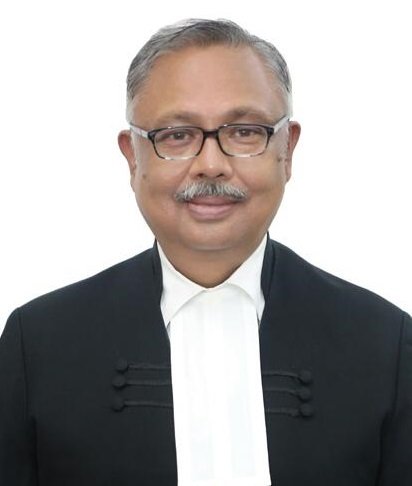

No Acts & Articles mentioned in this case
IN THE HIGH COURT OF PUNJAB AND HARYANA
NISVA @ NISHA KHATOON
STATE OF HARYANA AND OTHERS
CORAM:
Present :
HARSH BUNGER, J.
order dated 05.04.2024 passed by the learned Single Judge in
CWP-25976
has been dismissed.
2.
Panchayat
IN THE HIGH COURT OF PUNJAB AND HARYANA
AT CHANDIGARH
NISVA @ NISHA KHATOON
Versus
STATE OF HARYANA AND OTHERS
CORAM: HON’BLE MR. JUSTICE SUDHIR SINGH
HON’BLE MR. JUSTICE HARSH BUNGER
Mr. Vijay Kumar Jindal, Sr. Advocate
with Mr. Akshay Jindal, Advocate
Mr. Mazlish Khan, Advocate
Mr. Abhishek Shukla, Advocate
and Mr. Surya Pratap Singh, Advocate
for the appellant.
Mr. Vikram Singh, Advocate
Ms. Ramandeep Kaur, Advocate
Mr. Ishnoor Singh, Advocate
and Mr. Vikrant Singh, Advocate
for respondent No.8.
Mr. Samrath Sagar, Addl. A.G., Haryana.
HARSH BUNGER, J.
The present Letters Patent Appeal has been filed against an
order dated 05.04.2024 passed by the learned Single Judge in
25976-2023, whereby the writ petition filed by the appellant herein,
has been dismissed.
Briefly, the appellant was elected as the
Panchayat Chila, Block Tauru, District Nuh, Haryana, in the Panchayat
Page 1 of
IN THE HIGH COURT OF PUNJAB AND HARYANA
AT CHANDIGARH
LPA-1057-2024 (O&M)
Date of Decision: 03.05.2025
…Appellant
Versus
…Respondents
MR. JUSTICE SUDHIR SINGH
HON’BLE MR. JUSTICE HARSH BUNGER
Mr. Vijay Kumar Jindal, Sr. Advocate
with Mr. Akshay Jindal, Advocate
Mr. Mazlish Khan, Advocate
Mr. Abhishek Shukla, Advocate
and Mr. Surya Pratap Singh, Advocate
Mr. Vikram Singh, Advocate
Ms. Ramandeep Kaur, Advocate
Mr. Ishnoor Singh, Advocate
and Mr. Vikrant Singh, Advocate
Sagar, Addl. A.G., Haryana.
nt Appeal has been filed against an
order dated 05.04.2024 passed by the learned Single Judge in
, whereby the writ petition filed by the appellant herein,
Briefly, the appellant was elected as the Sarpanch of Gram
ru, District Nuh, Haryana, in the Panchayat
of 28
2024 (O&M)
.2025
nt Appeal has been filed against an
order dated 05.04.2024 passed by the learned Single Judge in
, whereby the writ petition filed by the appellant herein,
of Gram
ru, District Nuh, Haryana, in the Panchayat
Page 2 of 28
Elections, held in the year, 2022. In the said elections, one Mumtaj daughter
of Sh. Khalid, had also contested; however, she remained un-successful.
2.1 Subsequently, Ms. Mumtaj filed a complaint aga inst the
appellant herein, primarily on three allegations namely :-
(i) that the appellant had not completed the minimum age of
21 years as on the date of nomination and thus, she had filed
the nomination papers on the basis of fake certificates to
manipulate her age;
(ii) that the appellant herein had submitted a fake educational
certificate in support of her minimum qualification of 8th class,
as required for contesting elections;
(iii) that the appellant herein had more than five votes in the
village.
2.2 On the basis of the afore-said allegations, it was claimed that
the appellant is disqualified, in terms of the provisions contained in the
Haryana Panchayati Raj Act, 1994 (for short `the 1994 Act’) and she
deserves to be removed from the post of Sarpanch.
2.3 It transpires that an enquiry into the complaint, submitted
against the appellant, was entrusted to the Sub Divisional Officer (Civil),
Tauru, who submitted his enquiry report dated 20.02.2023 to the Deputy
Commissioner, Nuh; whereupon, a Show Cause Notice dated 09.03.2023
was issued to the appellant.
2.4 The Deputy Commissioner, Nuh, upon consideration of the
matter and finding the allegations made against the appellant being
substantiated during the enquiry, removed her from the post of Sarpanch
vide order dated 03.07.2023 passed under Section 51(3)(b) of the 1994 Act.
2.5 Being aggrieved against the order dated 03.07.2023, the
appellant herein preferred an appeal before the learned Commissioner,
Page 3 of 28
Faridabad Division, Faridabad (in short `the Divisional Commissioner’)
under Section 51(5) of the 1994 Act.
2.6 The learned Divisional Commissioner, vide order dated
08.11.2023 dismissed the appeal preferred by the appellant. Thereafter, the
appellant preferred a writ petition (CWP-25976-2023) before this Court,
which has also been dismissed by the learned Single Judge, vide impugned
order dated 05.04.2024.
2.7 In the afore-mentioned circumstances, the present intra-court
appeal (LPA) has been filed before this Court.
3. Learned senior counsel appearing for the appellant would
submit that the learned Single Judge, has erred in law and fact in passing the
impugned order, without considering that the appellant had placed on record
her birth certificate (Annexure P-21), which reflected her date of birth as
04.12.1998. It is submitted that in order to substantiate the afore-said birth
certificate, a report from the Office of Sub-Divisional Officer, Tauru dated
14.02.2023 (Annexure P-22) was also placed on record, reflecting that a girl
child namely, Nisha Khatoon was born to Issar and Ruksana on 04.12.1998.
3.1 It is contended that the afore-said documents clearly proves the
date of birth of the appellant as 04.12.1998, however, the same has been
ignored by the learned Single Judge.
3.2 It is next submitted by learned senior counsel for the appellant
that respondent No.8-Mumtaj had also instituted an election petition against
the appellant and therefore, once an election petition regarding the same
issue was pending adjudication, the administrative authorities should have
stayed their hands from going into the allegations made in the complaint
submitted by respondent No.8-Mumtaj; therefore, the action taken against
Page 4 of 28
the appellant under Section 51 of the 1994 Act, is bad in law and is liable to
be set aside. In this regard, learned senior counsel for the appellant places
reliance upon the judgment rendered by Hon’ble the Supreme Court in the
case titled as State of Himachal Pradesh vs Surinder Singh Banolta,
2007(1) RCR (Civil) 254.
3.3 Learned senior counsel for the appellant would further contend
that as regards the minimum educational qualification of the appellant is
concerned, the appellant had submitted a certificate from Saraswati Vandana
High School, certifying that the appellant was studying in 8
th
class in the
year 2012-13 and the School Leaving Certificate of the appellant was duly
counter-signed by the Block Education Officer. It is, therefore, submitted
that there is no disqualification attached as regards the appellant is
concerned and the appellant has been wrongly removed from the post of
Sarpanch under Section 51 of the 1994 Act, which is un-sustainable in the
eyes of law.
3.4 Learned senior counsel for the appellant has also submitted that
even the enquiry conducted against the appellant is bad in law as no fair and
proper opportunity was afforded to the appellant to cross-examine the
witnesses and the documents produced during the course of the enquiry.
Learned senior counsel, while placing reliance upon the judgment rendered
by Division Bench of this Court in case Suman vs State of Haryana,
2024(3) RCR(Civil) 287, contends that the enquiry envisaged under Section
51(3) of the 1994 Act, is required to be in the nature of a regular enquiry
and not merely an in-house enquiry. Accordingly, prayer has been made that
the appeal may be allowed by setting aside the impugned order.
4. Per contra, learned State counsel as well as learned counsel
Page 5 of 28
appearing for respondent No.8 have opposed the submissions made by
learned senior counsel for the appellant. While referring to the enquiry
report, it is submitted that due opportunity of hearing was afforded to the
appellant during the course of the enquiry and even the procedure adopted
during the enquiry, clearly fulfills the requirement of an enquiry envisaged
under Section 51(3) of the 1994 Act and the same cannot be said to be an
in-house enquiry. It is further submitted that the appellant herein had failed
to substantiate her claim as regards her date of birth and educational
qualification; therefore, the appellant was rightly ordered to be removed
from the post of Sarpanch. It is further submitted that there is no illegality or
perversity in the impugned order, accordingly, prayer has been made for
dismissal of the present appeal.
5. Heard.
6. From the submissions raised on behalf of the respective parties,
the following issues would arise for consideration before this Court:-
(i) Whether the appellant has been able to prove her date of
birth as 01.01.1998 as filled in the nomination form?
(ii) Whether the appellant has not been afforded fair and
proper opportunity to cross examine the witnesses?
(iii) Whether the election of the appellant could have been
questioned only by way of filing an election petition and not
under Section 51 of the 1994 Act?
7. Before dealing with the afore-said issues, it would be apposite
to refer to Sections 51, 173, 175(v) and 176 of the 1994 Act, which would be
germane for the decision of the aforesaid issues as well as the appeal, which
read as under :-
“51. Suspension and removal of a Sarpanch,
(1) The Director or the Deputy Commissioner concerned may,
suspend any Sarpanch, or Panch, as the case may be,-
Page 6 of 28
(a)where a case against him in respect of any criminal offence
is under investigation, enquiry or trial, if in the opinion of the
Director, or Deputy Commissioners concerned the charge made
or proceeding taken against him, is likely to embarrass him in
the discharge of his duties or involves moral turpitude or defect
of character;
(b)during the course of an enquiry for any of the reasons for
which he can be removed, after giving him adequate
opportunity to explain.
(2) Any Sarpanch or Panch, as the case may be, suspended
under sub-section (1), shall not take part in any act or
proceeding of the Gram Panchayat during the period of his
suspension and shall hand over the records, money or any other
property of the Gram Panchayat in his possession or under his
control –
(i) if he is a Sarpanch to a Panch commanding majority
in the Gram Panchayat;
(ii) if he is Panch to Sarpanch;
Provided that the suspension period of a Panch, or a Sarpanch,
as the case may be, shall not exceed one year from the date of
handing over the charge in pursuance of the suspension order
except in criminal cases involving moral turpitude.
(3)The Director or the Deputy Commissioner concerned may,
after such enquiry as he may deem fit and after giving an
opportunity of being heard to a Sarpanch or a Panch, as the
case may be, ask him to show cause against the action proposed
to be taken against him, and by order remove him from his
office –
(a) if after his election he is convicted by a criminal court
for an offence involving moral turpitude and punishable
with imprisonment for a period exceeding six months;
(b) if he was disqualified to be a member of the Gram
Panchayat at the time of his election;
Page 7 of 28
(c) if he incurs any of the disqualifications mentioned in
Section 175 after his election as member of the Gram
Panchayat;
(d) if he is absent from five consecutive meetings of the
Gram Panchayat without prior permission or leave of
Gram Panchayat; and
(e) if he has been guilty of misconduct in the discharge of
his duties and his continuance in the office is undesirable
in the public interest.
(3A) The Director or the Deputy Commissioner, as the case
may be, shall assess the amount due, if any, from the person
removed under sub-section (3) on account of any loss, waste or
mis-application of Gram Fund or property as consequence of
his negligence or misconduct and the Deputy Commissioner
shall recover the amount of loss within a period of three months
from the date of order and if the amount is not recovered within
the said period, the same shall be recovered as arrears of land
revenue.
(4) A person who has been removed under sub-section (3) may
be disqualified for re-election for such period as may be
mentioned in the order but not exceeding the period of six
years.
(5) Any person who aggrieved by an order passed under
sub-sections (1), (3) and (4), may within a period of thirty days
from the communication of the order, prefer an appeal to the
Divisional Commissioner.
(6) Any Sarpanch or Panch, as the case may be, removed under
sub-section (3), shall hand over the records, money or any
other property of the Gram Panchayat in his possession or
under his control-
(i) if he is Sarpanch to a Panch commanding majority in
the Gram Panchayat;
(i-a) if he is Sarpanch belonging to reserve category, to a
Panch of that reserve category commanding majority,
and if no Panch in that category is available, to a Panch
Page 8 of 28
of general category commanding majority in the Gram
Panchayat; and
(ii) if he is a Panch to Sarpanch”
“Section 173 (Persons qualified to vote and be elected).--
(1) Every person whose name is in the list of voters shall, unless
disqualified under this Act or any other law for the time being
inforce, be qualified to vote at the election of a Member for the
electoral division to which such list pertains.
(2) Every person who has attained the age of twenty-one years
and whose name is in the list of voters shall, unless disqualified
under this Act or under any other law for the time being
inforce, be qualified to be elected from any electoral division.
(3) No person whose name is not entered in the list of voters for
the villages, shall be qualified to be elected from any electoral
division thereof.
(4) Subject to any disqualification of a person the list of voters
shall be conclusive proof for the purpose of determining under
this section whether any person is or is not qualified to vote, or
to be elected at any election, as the case may be.
“Section 175 (Disqualifications):-
No person shall be a Sarpanch or a Panch of a Gram
Panchayat or a member of a Panchayat Samiti or Zila Parishad
or continue as such who-
(a) to (u) xxx xxx xxx
(v) has not passed matriculation examination or its equivalent
examination from any recognized institution/board:
Provided that in case of a woman candidate or a
candidate belonging to Scheduled Caste, the minimum
qualification shall be middle pass:
Provided further that in case of a woman candidate
belonging to Scheduled Caste contesting election for the post of
Panch, the minimum qualification shall be 5th pass; or
(w) xxx xxx xxx”
Page 9 of 28
“Section 176 (Determination of validity of election enquiry by
Judge and procedure. –
If the validity of any election of a member of a Gram
Panchayat, Panchayat Samiti or Zila Parishad or
3
[---] Sarpanch of Gram Panchayat, Chairman or Vice-
Chairman, President or Vice-President of Panchayat Samiti or
Zila Parishad respectively is brought in question by any person
contesting the election or by any person qualified to vote at the
election to which such question relates, such person may at any
time within thirty days after the date of the declaration of
results of the election, present an election petition to the civil
court having ordinary jurisdiction in the area within which the
election has been or should have been held, for the
determination of such question.
(2) A petitioner shall not join as respondent to his election
petition except the following persons :—
(a) where the petitioner in addition to challenging the
validity of the election of all or any of the returned
candidates claims a further relief he himself or any other
candidate has been duly elected, all the contesting
candidates other than the petitioner and where no such
further relief is claimed, all the returned candidates;
(b) any other candidate against whom allegations of any
corrupt practices are made in the election petition.
3) All election petitions received under sub-section (1) in which
the validity of the election of members to represent the same
electoral division is in question, shall be heard by the same civil
court.
(4) (a) If on the holding such inquiry the civil court finds that a
candidate has, for the purpose of election committed a corrupt
practice within the meaning of sub-section (5), he shall set
aside the election and declare the candidate disqualified for the
purpose of election and fresh election may be held.
1
[(aa) If on holding such enquiry the Civil Court finds that-
Page 10 of 28
(i) on the date of his election a returned candidate was not
qualified to be elected;
(ii) any nomination has been improperly rejected; or
(iii) the result of the election, in so far it concerns a returned
candidate, has been materially affected by improper
acceptance of any nomination or by any corrupt practice
committed in the interest of the returned candidate by an
agent other than his election agent or by the improper
reception, refusal or rejection of any vote or the
reception of any vote which is void or by any non-
compliance with or violation of the provisions of the
Constitution of India or of this Act, or any rules or
orders made under this Act, election of such returned
candidate shall be set aside and fresh election may be
held.]
(b) If, in any case to which
2
[clause (a) or clause (aa)] does not
apply, the validity of an election is in dispute between two or
more candidates, the court shall after a scrutiny and
computation of the votes recorded in favour of each candidate,
declare the candidate who is found to have the largest number
of valid votes in his favour, to have been duty elected: Provided
that after such computation, if any, equality of votes is found to
exist between any candidate and the addition of one vote will
entitle any of the candidate to be declared elected, one
additional vote shall be added to the total number of valid
votes found to have been received in the favour of such
candidate or candidates, as the case may be, elected by lot
drawn in the presence of the judge in such manner as he may
determine.
(5) A person shall be deemed to have committed a corrupt
practice-
(a) who with a view to induce a voter to give or to refrain
from giving a vote in favour of any candidate, offers or
gives any money or valuable consideration, or holds out
Page 11 of 28
any promise of individual profit, or holds out any threat
of injury to any person; or
(b) who, with a view to induce any person to stand or not
to stand or to withdraw or not to withdraw from being a
candidate at an election, offers or gives any money or
valuable consideration or holds out any promise or
individual profit or holds out any threat of injury to any
person; or
(c) who hires or procures whether on payment or
otherwise, any vehicle or vessel for the conveyance of
any voter (other than the person himself, the members of
his family or his agent) to and from any polling station.”
8. In terms of Section 51(3)(b) of the 1994 Act, a Sarpanch or a
Panch can be removed from his office, if he was disqualified to be a
Member of the Gram Panchayat at the time of his election.
8.1 As per sub-section 2 of Section 173 of the 1994 Act, every
person, who has attained the age of 21 years and whose name is in the list of
voters, shall unless disqualified under the 1994 Act or under any other law
for the time being in force, be qualified to be elected from any Electoral
Division.
9. Further, in terms of Section 51(3)(c) of the 1994 Act, a
Sarpanch or a Panch can also be removed from his office, if he incurs any of
the disqualifications mentioned in Section 175 after his election as member
of the Gram Panchayat.
9.1 Section 175 of the 1994 Act, provides for disqualifications for a
Sarpanch or a Member Panchayat and Clause (v) of Section 175 of the 1994
Act, provides that no person shall be a Sarpanch or a Panch of a Gram
Panchayat or a member of a Panchayat Samiti or Zila Parishad or continue
as such, who has not passed matriculation examination or its equivalent
Page 12 of 28
examination from any recognized institution/Board. In terms of first proviso
to Sub-Section (v) of Section 175 of the 1994 Act, it is provided that in case
of a woman candidate or a candidate belonging to Scheduled Caste, the
minimum qualification shall be middle pass.
10. Sub-section 3 of Section 51 of the 1994 Act, provides that
before ordering removal of any Sarpanch or a Panch, the Director or the
Deputy Commissioner concerned may, after such enquiry as he may deem
fit and after giving an opportunity of being heard to the Sarpanch or a Panch
(as the case may be), ask him to show cause against the action proposed to
be taken against him. In other words, sub-section 3 of Section 51 of the 1994
Act, envisages the following actions before the Sarpanch or the Panch is
removed from his office namely,
(i) an enquiry as may be deemed fit by the Director or the
Deputy Commissioner concerned;
(ii) an opportunity of hearing to the Sarpanch or the Panch, as
the case may be;
(iii) an opportunity to the said Sarpanch or Panch to show
cause against the action proposed to be taken against him.
11. At the outset, we deem it appropriate to deal with the plea of
the appellant that the enquiry envisaged under Section 51(3) of the 1994 Act,
is required to be in the nature of a regular enquiry regarding which, he has
placed reliance upon the judgment of Division Bench of this Court in
Suman vs State of Haryana, 2024(3) RCR(Civil) 287.
11.1 We have gone through the above-referred judgment in the case
of Suman (supra); however, we do not agree with the contention so raised
on behalf of the appellant. A careful perusal of the above-referred judgment
in Suman’s case (supra), would show that the Division Bench of this Court
held that the word “enquiry” as mentioned in Section 51(3) of the 1994 Act,
Page 13 of 28
requires to be an enquiry of quasi judicial in nature inasmuch as that the
candidate, who has already been elected, must be given a fair and proper
opportunity to cross-examine the witnesses and the documents produced.
Therefore, a regular enquiry as may be envisaged under the Service Rules, is
not contemplated under Section 51(3) of the 1994 Act. In our considered
view, the enquiry in the nature of quasi-judicial would require association of
the Sarpanch or the Panch (as the case may be) with the enquiry so as to
enable such Sarpanch or the Panch, to put forth his claim and also afford
him an opportunity to ask for cross-examination of witnesses or documents.
In case, the Sarpanch or the Panch has been associated with the enquiry and
sufficient opportunity was afforded to him to put forth his claim and/or to
ask for cross-examination of witnesses or documents; in our considered
view, that would suffice the requirements of a quasi judicial enquiry as
envisaged under Section 51(3) of the 1994 Act.
12. In the backdrop of the afore-said legal position, the stage is set
to deal with the above-referred issues.
13. As regards Issue no.(i), it is observed that the appellant herein
submitted her nomination form dated 19.10.2022 for election to the post of
Sarpanch of Gram Panchayat Chila; wherein, her name is mentioned as
Nisva wife of Altmas and she stated her education as 8
th
class pass from
Sarasvati Vandana High School, Rupnagar, Rohtak, in the year 2013 and in
Annexure `A’, she mentioned her age as 24 years (DOB 01.01.1998).
13.1 After the appellant was elected as the Sarpanch in the year
2022, a complaint was submitted by respondent No.8 as noticed
here-in-above, wherein, an enquiry was marked to the Sub-Divisional
Officer (Civil), Tauru. The said enquiry officer summoned the appellant;
Page 14 of 28
however, the appellant herself stayed away from the proceedings and it was
the husband of the appellant namely, Altmas and his brother, who
represented the appellant in these proceedings.
13.2 During the course of the enquiry, various reports/information
were sought from different quarters/offices so as to verify the age and
educational qualification of the appellant and to further examine the
allegation of multiple votes in the name of the appellant. Evidently, in the
enquiry proceedings, husband of the appellant namely, Altmas presented
various documents in the shape of voters’ list, application submitted to the
BLO etc. and also presented a copy of the statement of the appellant before
the Enquiry Officer.
13.3 The Enquiry Officer conducted a detailed enqu iry and
submitted his enquiry report dated 20.02.2023 (Annexure P-4), the relevant
extract of which reads as under :-
“
During enquiry it was found that in this matter, from the
beginning, two different identities are continued in parallel
namely Nisva and Nisha Khatoon respectively. Keeping in view
this fact, for ensuring clarity during enquiry, the basis for name
and other particulars were considered as Nisva wife of Md.
Altmash Date of Birth 01.01.1998 which were mentioned in the
application form during the nomination of elections for
Sarpanch and during enquiry it was found that:-
1. In SLC of Govt. Girls School Patuka which was issued
few years ago, the date of admission is mentioned as
24.07.2010 at S.No. 863 and name of student is mentioned as
Nisva daughter of Issar, Mother Rukseena, and date of birth is
mentioned as 07.04.2002. The SLC for this was issued on
08.07.2011 and was again issued on 07.04.2002. That this is a
Government Institution which cannot be ignored / overlooked.
Page 15 of 28
2. Saraswati Vandana High School Rohtak has not
provided some important record of student Nisva such as
examination test results, attendance Register and SLC issued by
office and the record pertaining to fee submitted by the parent
from time to time has also not been provided which seems
suspicious.
3.
Principal of Saraswati Vandana High School Rohtak
has issued letter dated 08.02.2022 which was written by him to
Block Education officer Rohtak and the same was received in
this office wherein it has been clearly mentioned by the
Principal that regarding date of birth for Nisva daughter of
Issar, her father Issar has submitted affidavit before School
wherein hehas mentioned date of birth of his daughter as
01.01.1998. From this statement, it is clear that School has
considered the said affidavit as basis and mentioned the date of
birth. The School has not obtained date of birth certificate or
any other strong documentary evidence regarding date of birth.
Therefore, this date of birth cannot be considered as authentic.
Student's father has provided affidavit which was examined and
at Point No. 5 he has mentioned that Student Nisva has not
been student of any recognized Institution prior to this and at
Point No. 06 she has mentioned that has no birth related record
anywhere. The above said affidavit in itself being proved as
false because the birth record of the student was present in
School of Village Patuka.
4. In the School record of Saraswati Vandana High
school Rohtak, the record has overwriting at the place of Sex
and Religion which raises suspicion.
5. No record of the student has been presented from
class 5
th
to 7
th
by Sarpanch. From this fact, it is relevant to
mention that she has obtained primary education in Village
Patuka from Govt. School and thereafter, obtained admission in
Saraswati Vandana High School Rohtak by mentioning wrong
date of birth and by submitting false affidavit (by mentioned
Page 16 of 28
that she has not obtained education anywhere and date of birth
record is not present).
6. Sarpanch Nisva's old ration card which are in name of
father Issar son of Surajmal bearing Ration Card No. 811357
wherein in the details of family members, Nisva's name is
mentioned at S.No. 5 which has overwriting.
7. From dual identity Nisva and Nisha Khatoon, it
appears that one person has two different identities which are
being continued
8. In the nomination of Sarpanch Nisva, for Ward No. 3
S.N. 1 has voter card ID no. 1QF1604925 and age is 19 years
and as per statement of applicant, the same has been got
prepared by her on the basis of educational certificate of
National Open School Enrolment No. MO5300172539, Course
Secondary, Candidate Name Nishva DOB 07-04-2002, Mother
Name-Ruksina, Father Name-Issar and on the basis of aadhaar
card wherein her date of birth is mentioned as 07.04.2002 and
on the basis of these documents, the said voter card has been
issued. Signatures of present Sarpanch Nisva are matching with
the signatures present on the copy of above certificate and the
photograph is also matching with her photograph and
signatures available on nomination form. From this it appears
that Sarpanch Nisva has obtained certificate of Open School
education as per date of birth 07.04.2002 in accordance with
the education record mentioned in Village Patuka at S.No.863.
The same is evidence in itself. The same cannot be ignored."
xxx xxx xxx
“If as per nomination, the name of Nisva is considered
correct then her date of birth is mentioned as 07.04.2002 in GC
Model High School Tauru and Govt. Girls High School Patuka.
As per record of GC Model High School Tauru she studied
from Class 1 to Class 3 and thereafter, she studied in Govt.
Girls High School Patuka in Class 5 and her name was struck
off while studying there. This record is of Government School
which cannot be ignored.”
Page 17 of 28
xxx xxx xxx
“Upon examining all proofs / documentary evidences available
on case file, I have arrived at the conclusion that newly elected
Sarpanch during her nomination application has mentioned her
particulars as Nisva wife of Md. Altmas, Age 24 years,
Education Class 8th, Saraswati Vandana High School, Roop
Nagar, Rohtak in year 2013 and she has mentioned her date of
birth as 01.01.1998 which has been found incorrect during
enquiry. Therefore, it shall be appropriate to take action
against newly elected Sarpanch Nisva Gram Panchayat Cheela
under Haryana Panchayati Raj Act,1994 and in accordance
with the latest guidelines / directions receivedfrom State
Election Commission. Report is submitted for your kind perusal
and further necessary action.”
13.4 After the afore-said enquiry, a Show Cause Notice dated
09.03.2023 (Annexure P-5) under Section 51(3)(b) of the 1994 Act, was
served upon the appellant to which she submitted her detailed reply dated
22.03.2023 (Annexure P-6).
13.5 Thereafter, the Deputy Commissioner, Nuh, upon consideration
of the matter, vide its order dated 03.07.2023 (Annexure P-7) came to the
conclusion that as per the voters’ list, the age of the appellant was 19 years;
accordingly, the appellant was held to be ineligible for contesting elections
of Sarpanch and hence, removed from the post of Sarpanch under Section
51(3)(b) of the 1994 Act.
14. Being dissatisfied, the appellant preferred an appeal before
the learned Commissioner, Faridabad, who vide its order dated 08.11.2023
(Annexure P-10), dismissed the appeal by observing as under :-
“After hearing the arguments of the advocates of both the
parties and perusing the records of the following
court/authority, it was found that as per the records of the first
class Government Primary School, Patuka School, the date of
Page 18 of 28
birth of the applicant is 31.01.1997 and the fourth class passed
from G.C. Modern High School, the date of birth is mentioned
as 07.04.2002 and again in Government Primary School,
Patuka the applicant has registered the date of birth as
07.04.2022 in Class V. The appellant have passed class 10
th
from National Open School in the year 2019. In which also the
date of birth is mentioned as 07.04.2002.
Apart from this, the appellant has stated that she has passed 8
th
class from Vandana High School, Roop Nagar District, Rohtak
in the year 2013 and she has attached the certificate with the
nomination form, in which the date of birth is mentioned as
01.01.1998. On the other hand, she has regularly studied her
Alima studies from Jamia Noorul Islamia Niswan Jamiya
Nagar Mahapat Mau Lucknow (Uttar Pradesh) from 2011 to
2015, which has been confirmed by Noorul Islam Madrasa
during investigation.
As far as the five votes of the appellant are concerned, the
description of her five votes is in the order under appeal, out of
five votes, four votes have been deleted from the voter list,
which were deleted after the election for the post of Sarpanch.
With the above five votes, the appellant has cast the vote of
Ward No.3 in the nomination form, the serial number is marked
one and the said vote has been made on the basis of 10
th
class
pass certificate in which his date of birth is 07.04.2002.
After the above discussion, the date of birth of the applicant as
per the 10
th
pass certificate is 07.04.2002, which is an
important document regarding age determination. According to
which, her age at the time of election is 20 years, which is not
as per the age fixed by the government for contesting elections
for the post of Sarpanch. As far as the appellant is concerned,
she passed her 8
th
class from Saraswati Vandana High School,
Roopnagar Rohtak in the year 2013, while on the other hand,
she has done regular studies of Alima from the above
mentioned Jamia Noorul Islamia Madrasa from the year 2011
to 2015. It is not possible for a person to pursue regular
Page 19 of 28
education in two different schools/madarsas at the same time.
In such a situation, it would be justified to consider her Class
VIII pass certificate as fake and it appears that this has been
done only to mention the age of the appellant as 01.01.1998.
The allegation of making five votes against the appellant is also
confirmed. During the hearing, the advocate for the appellant
did not present any such fact/evidence which would show that
the order under appeal has been passed arbitrarily without
facts. Therefore, action has been taken against the appellants
as per rules under 51(3)(b) Panchayati Raj Act 1994 on the
basis of evidence. Therefore, the appeal of the applicant is
dismissed while upholding the order under appeal. A copy of
this order should be sent to the Deputy Commissioner,
Nuh/lower authority.”
15. Thereafter, the appellant preferred a writ petition bearing
CWP No.25976-2023, which was also dismissed by the learned Single
Judge, vide impugned order dated 05.04.2024 by holding that the appellant
failed to prove her age and qualification as mentioned in the nomination
papers and even the multiple votes were found to have been made by the
appellant, which were subsequently deleted after filing of the nomination
papers.
16. Before this Court, the appellant has claimed two different dates
of birth. In this regard, reference can be made to para Nos.4 and 5 of the
instant appeal (LPA), which reads as under :-
“4. That as regards the date of birth of the appellant, it
is humbly submitted that Ld. Single Judge has returned the
finding on the basis of conjectures and surmises and the official
record from the office of Registrar Death and Birth-cum-
Deputy Civil Surgeon, Nuh, has been completely ignored. The
appellant has placed on record her birth certificate dated
10.03.2023 (Annexure P-21), reflecting her date of birth as
04.12.1998. She had also placed on record a report from the
Page 20 of 28
office of Sub Divisional Officer, Tauru, dated 14.02.2023
(Annexure P-22), reflecting that a girl child namely Nisha
Khatoon was born to Issar and Ruksana on 04.12.1998. It was
also proved on by way of Report (Annexure P-22) that from
02.12.2002 till 07.12.2022 no child was born to Issar and
Ruksana. This unimpeachable record has been given a
complete goby and minor discrepancies has been given undue
weightage by the Ld. Single Judge.
5. That in the reply to the show cause notice, the
appellant categorically submitted that the date of birth of the
appellant is also mentioned as 01.01.1998 in the copy of the
Register of the Chowkidar. Pariwaar Pehchaan Patra, also
reflects the date of birth of the appellant as 01.01.1998. Record
of all the children, fathered by father of the appellant Issar
Khan was also brought to the notice of the Enquiry Officer and
also this Hon’ble Court. Still this Hon’ble Court has not lead
much credence to the evidence available on record and the
finding regarding the date of birth has been recorded on the
basis of conjectures and surmises.”
17. A perusal of the paper-book would leave no manner of doubt
that there is sufficient evidence available on record in the shape of `School
Leaving Certificate’ (SLC) of Government Girls School, Patuka; voter ID
Card No.IQF1604925, which has been prepared on the basis of educational
certificate of National Open School in the name of appellant with enrollment
No.MO5300172539 and also the Aadhar Card of the appellant wherein her
date of birth is mentioned as 07.04.2002. The Enquiry Officer as well as the
Deputy Commissioner and also the learned Commissioner, have considered
the above-referred documents as conclusive as regards the age of the
appellant is concerned. It is, therefore, apparent that at the time of submitting
nomination papers on 19.10.2022, the age of the appellant was 20 years and
in terms of Section 173 of the 1994 Act, the appellant being below 21 years,
Page 21 of 28
was clearly ineligible to contest the elections. Accordingly, Issue no.(i) is
decided against the appellant.
18. Now, coming to Issue no.(ii), it is observed from the enquiry
report that the appellant was duly summoned by the Enquiry Officer;
however, she did not appear in the proceedings rather she was represented
through her husband-Altmas and also through the brother of her husband;
who participated in the enquiry proceedings and also submitted documents
in support of their claim along with a copy of the statement of the appellant.
During enquiry, various persons were summoned/examined and sufficient
opportunities were available to the appellant and/or her representative
Sh. Altmas, to have asked for cross-examining the complainant or any other
witness; however, at no point, any such request for cross-examination was
made on behalf of the appellant. Therefore, once the appellant herself failed
to avail the opportunities to ask for cross-examination of the complainant or
other witnesses, then after the conclusion of the proceedings, she cannot turn
around and say that no fair and proper opportunity was afforded to her.
Accordingly, Issue no.(ii) is decided against the appellant.
19. Now coming to Issue no.(iii) as to whether the election of the
appellant could have been questioned only by way of filing an election
petition under Section 176 and not under Section 51 of the 1994 Act; suffice
it to say that a careful perusal of the provisions contained in Sections 51 and
176 of the 1994 Act, would indicate that both the said provisions operate in
different fields and there is nothing contained therein to indicate that the said
provisions exclude each other. Section 176 of the 1994 Act, operates when
an election petition is brought before the Court of Competent Jurisdiction
whereas, Section 51 of the 1994 Act, enables the Director or the Deputy
Page 22 of 28
Commissioner concerned, to pass an order of removal on the basis of the
grounds specified in sub-section (3) of Section 51 of the 1994 Act.
19.1 In the judgment rendered by the Hon’ble Supreme Court of
India in the case of State of Himachal Pradesh vs Surinder Singh Banolta,
2007(1) RCR(Civil) 254, which has been relied upon by the appellant; it has
been clearly delineated that the provisions of Sections 122 and 163 read with
Sections 174 and 175 of the Himachal Pradesh Panchayati Raj Act, 1994;
operate in different situations. Here, it would be apposite to refer to Section
122 and Section 163 of the Himachal Pradesh Panchayati Raj Act, 1994,
which reads as under :-
"122(1) : A person shall be disqualified for being chosen as,
and for being, an office bearer, of a Panchayat -
(a) if he is so disqualified by or under any law for the time
being in force for the purposes of the election to the State
Legislature :
Provided that no person shall be disqualified on the ground that
he is less than 25 years, if he has attained the age of 21 years;
(b) * * *
(c) if he has encroached upon any land belonging to, or taken
on lease or requisitioned by or on behalf of, the State
Government, a Municipality, a Panchayat or a Co-operative
Society unless a period of six years has elapsed since the date
on which he is ejected therefrom or he ceases to be the
encroacher; or
***
(2) The question whether a person is or has become subject to
any of the disqualifications under sub-section (1), shall after
giving an opportunity to the person concerned of being heard,
be decided -
(i) if such question arises during the process of an election, by
an officer as may be authorised in this behalf by the State
Page 23 of 28
Government, in consultation with the State Election
Commission; and
(ii) if such question arises after the election process is over, by
the Deputy Commissioner."
Sections 163 of the Act reads as under :
"163(1) Any elector of a Panchayat may, on furnishing, the
prescribed security in the prescribed manner, present within
thirty days of the publication of the result, on one or more of the
grounds specified in sub-Section (1) of Section 175, to the
authorised officer an election petition in writing against the
election of any person under this Act.
(2) The election petition shall be deemed to have been
presented to the authorised officer - (a) when it is delivered to
him -
(i) by the person making the petition; or
(ii) by a person authorised in writing in this behalf by the
person making petition; or
(b) when it is sent by registered post and is delivered to the
authorised officer or any other person empowered to receive
it."
19.2 The above referred provisions contained in Sections 122 and
163 of the Himachal Pradesh Panchayati Raj Act, 1994, are somewhat
similar to the provisions of Sections 51 and 176 of the 1994 Act.
19.3 Considering the afore-said provisions contained in Sections 122
and 163 of the Himachal Pradesh Panchayati Raj Act, 1994; the Hon’ble
Supreme Court in Surinder Singh Banolta’s case (supra), has observed as
under :-
“5. Chapter IX deals with the officers and staff of panchayats.
Clause (f) of Section 159 defines "election" to mean an election
to fill an office under the provisions of the Act. Section 162 of
the Act, in tune with the provisions of Article 243O of the
Constitution of India provides that no election under the Act
Page 24 of 28
will be called in question except by an election petition
presented in accordance with the provisions of Chapter XI.
6. Sections 163 of the Act reads as under :
"163(1) Any elector of a Panchayat may, on furnishing, the
prescribed security in the prescribed manner, present within
thirty days of the publication of the result, on one or more of the
grounds specified in sub-Section (1) of Section 175, to the
authorised officer an election petition in writing against the
election of any person under this Act.
(2) The election petition shall be deemed to have been
presented to the authorised officer -
(a) when it is delivered to him –
(i) by the person making the petition; or
(ii) by a person authorised in writing in this behalf by the
person making petition; or
(b) when it is sent by registered post and is delivered to the
authorised officer or any other person empowered to receive
it."
7. Section 174 of the Act provides for jurisdiction of the court to
pass order in the manner laid down therein after inquiring into
the election petition by the authorised officer.
8. Section 175 of the Act provides for the grounds upon which
an election petition can be dismissed or an election can be set
aside.
9. Respondent herein was elected as a member of Zilla
Parishad. The result of election was declared on 5.01.2001. An
application was filed by Respondent No. 2 Daulat Ram before
the Deputy Commissioner, Shimla District alleging that as he,
having been declared an encroacher within the meaning of the
provisions of Sections 4 and 7 of the Himachal Pradesh Public
Premises (Rent Recovery and Land Eviction) Act, 1971 was
disqualified to hold the elected post and, thus, should not be
allowed to continue therein. The Deputy Commissioner took
cognizance of the said complaint and by reason of an order
dated 4.06.2002 declared Respondent No. 1 as disqualified for
Page 25 of 28
being chosen as a member of the Zilla Parishad and
consequently his election was set aside.
10. It is not in dispute that a proceeding under the Himachal
Pradesh Land Revenue Act was initiated against Respondent
No. 1. He was held to be unauthorized occupant of a land
measuring 13 biswas in terms of the provisions of the Himachal
Pradesh Public Premises (Rent Recovery and Land Eviction)
Act by the Collector, Sub-Division, Theog. The said order was
confirmed by the Financial Commissioner of the Shimla
Division by an order dated 6.08.1998. We will proceed on the
basis that the said order has attained finality although there
appears to be some dispute in relation thereto.
11. Respondent No. 1 was declared to be an encroacher in the
year 1998. He was directed to be ejected from the land in
question. The notification for election of Zilla Parishad by the
State Election Commission under the Act was issued on
16.11.2000. As noticed hereinbefore, Respondent No. 1 was
declared elected on 5.01.2001. In terms of the provisions of
Article 243O read with Section 163 of the Act, an election
petition, therefore, was maintainable for setting aside his
election.
12. Disqualification as provided for under Article 243F has
been laid down in Section 122 of the Act. Section 175 of the Act
provides for disqualification as one of the grounds upon which
an election petition could be filed. Interpreting the
aforementioned provisions, a Division Bench of the Himachal
Pradesh High Court opined that the order dated 27.06.2002
passed by the Deputy Commissioner is not sustainable in law.
13. Mr. J.S. Attri, learned AAG appearing on behalf of the
appellants would submit that although the provisions of Section
163 are ordinarily required to be taken recourse to but having
regard to the fact that in terms of Sub-section (2) of Section 122
of the Act, the question as regards declaring a candidate as
disqualified may arise not only before an election is held but
also after the election process is over; and thus, whereas in the
Page 26 of 28
former case, it will be the Authorised Officer concerned who
can determine the question of disqualification but in a case
where processes are initiated after the election, the Deputy
Commissioner alone would be the prescribed authority.
14. Section 163 of the Act provides for filing of an election
petition on one or more grounds specified in sub-section (1) of
Section 175 thereof. Clause (a) of sub-section (1) of Section 175
of the Act inter alia lays down a ground for setting aside of an
election if on the date of the election the elected person was not
qualified or disqualified to be elected under the Act.
15. It is no doubt true that Section 122 contemplates both the
situations, viz., where a person shall be disqualified for being
chosen as also for being an office bearer of panchayat inter
alia if he has encroached upon any land belonging to any
authority mentioned therein. In view of the language of the said
provision, we are of the view that whereas an issue falling
under clause (1) of sub-section (2) of Section 122 of the Act
must be determined before the Authorised Officer, any order of
encroachment passed after the election process is over would
be determined by the Deputy Commissioner.
16. The provisions of the Act, as noticed hereinbefore, have
been enacted pursuant to or in furtherance of the constitutional
mandate contained in Part IX of the Constitution of India. The
provisions of the Act, therefore, are required to be construed
strictly in terms thereof. Clause (b) of Article 243O of the
Constitution of India mandates that no election shall be set
aside save and except by an order passed by the Authorised
Officer. In our considered opinion, Section 122 of the Act must
be read in the light thereof. Section 162 of the Act expressly
provides for the exclusive jurisdiction of the Authorised Officer
to determine the existence or otherwise of any ground
enumerated in Section 175 of the Act.
17. Once, thus, a person is declared to be an encroacher prior
to the date on which he has been declared as elector and if the
said order has attained finality, the question as to whether he
Page 27 of 28
stood disqualified in terms of the provisions of Section 122 of
the Act, in our opinion, must be raised by way of an election
petition alone. If the submission of Mr. Attri is to be accepted,
the same may result in an anomalous position.
18. If a candidate or a voter had the knowledge that the elected
candidate was disqualified in terms of Section 122 of the Act, he
may file an application. The order of eviction may come to the
notice of some other person after the election process is over. A
situation, thus, may arise where two different proceedings may
lie before two different authorities at the instance of two
different persons. Two parallel proceedings, it is well settled,
cannot be allowed to continue at the same time. A construction
of a statute which may lead to such a situation, therefore, must
be avoided. It will also lead to an absurdity if two different
Tribunals are allowed to come to contradictory decisions.
19. Furthermore, it is a well-known principle of law that where
literal interpretation shall give rise to an anomaly or absurdity,
the same should be avoided. [See Ashok Lanka v. Rishi Dixit,
(2005)5 SCC 598 and M.P. Gopalakrishnan Nair v. State of
Kerala,(2005)11 SCC 45]
20. It is also a well-settled principle of law that in a case where
a statute is found to be obscure the same must be interpreted
having regard to the constitutional scheme. In a case of this
nature, the doctrine of purposive construction should be
applied. [See Bombay Dyeing & Mfg. Co. Ltd.(3) v. Bombay
Environmental Action Group & Ors., (2006)3 SCC 434, Nathi
Devi v. Radha Devi Gupta, 2005(1) RCR (Civil) 631 (SC) :
2005(1) RCR (Rent) 218 (SC) : (2005)2 SCC 271, Lalit Mohan
Pandey v. Pooran Singh & Ors., (2004)6 SCC 626, Indian
Handicrafts Emporium & Ors. v. Union of India & Ors.,
(2003)7 SCC 589 and Balram Kumawat v. Union of India &
Ors., (2003)7 SCC 628]
21. It is also well-settled that the entire statute must be read as
a whole. The relevant provisions of the Constitution as also
those in the statute must, thus, be read harmoniously. [See
Page 28 of 28
Bombay Dyeing (supra) and Secretary, Department of Excise &
Commercial Taxes and Others v. Sun Bright Marketing (P)
Ltd., Chhattisgarh and Another, [(2004)3 SCC 185]. So read,
we are of the opinion that the Division Bench of the High Court
was correct in its view. The matter might have been different if
Respondent No. 1 was declared to be an encroacher after the
election process was over and, thus, becoming disqualified to
continue to be an office bearer of Panchayat or Zilla Parishad.
22. For the reasons aforementioned, no fault can be found in
the impugned judgment. It is, therefore, affirmed. The appeals
are dismissed with costs. Counsel’s fee assessed at Rs.10,000/-.
Appeal dismissed.”
20. Keeping in view the above discussion, it can safely be held that
the election of the appellant could have been questioned either by filing an
election petition under Section 176 of the 1994 Act or by submitting a
complaint to the concerned authority under Section 51 of the 1994 Act;
therefore, Issue no.(iii) is decided accordingly.
21. Considering the totality of circumstances, we find no reason to
interfere in the order passed by the learned Single Judge and the same is,
accordingly, affirmed. Resultantly, the instant appeal fails and the same is,
hereby, dismissed.
(SUDHIR SINGH) (HARSH BUNGER)
JUDGE JUDGE
May 03, 2025
gurpreet
Whether speaking/reasoned: Yes/No
Whether reportable: Yes/No

 Login with google
Legal Notes
Add a Note....