
This case originated in the High Court of Punjab and Haryana. Punjab Communications Ltd. filed appeals in the Supreme Court of India, which also heard a connected transfer petition related ...
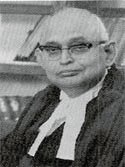
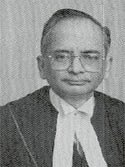
No Acts & Articles mentioned in this case
http://JUDIS.NIC.IN SUPREME COURT OF INDIA Page 1 of 21
PETITIONER:
PUNJAB COMMUNICATIONS LTD.
Vs.
RESPONDENT:
UNION OF INDIA & OTHERS
DATE OF JUDGMENT: 04/05/1999
BENCH:
S.B.MAJMUDAR, & M. JAGANNADHA RAO.,
JUDGMENT:
M.JAGANNADHA RAO,J.
Leave granted.
These two appeals have been filed by the Punjab
Communications Ltd (hereinafter called the `PCL'), a
public-sector undertaking of the State of Punjab against the
judgment dated 27.2.1998 of the High Court of Punjab &
Haryana in CWP No.124 of 1998 and against the order in the
review application dated 19.3.1998 in RA 138 of 1998. The
Transfer Petition (C) No.680 of 1998 is filed by Sri
D.P.Srivastava for transfer of a public interest writ
petition No.4112 M/B of 1997 from the Allahabad High Court
to this Court as some points are common to the appeals and
the writ petition.
Though the main judgment in the writ petition has been
rendered by the High Court on 27.2.1998, the events which
have taken place during the pendency of these appeals have
changed the complexion of the case and, according to the
respondent-Union of India, the writ petition has practically
become infructuous and no relief can be granted. We shall
narrate the facts which have given rise to the writ petition
and shall also refer to the subsequent events.
In September 1993, the Asian Development Bank
(hereinafter called the `ADB') agreed to grant a
soft loan of US $ 113 m to the Union of India (1st
respondent) for funding a project meant to provide
digital wireless telecom facility to 36,000
identified villages in Eastern U.P. The Department
of Tele-communications (hereinafter called `DOT')
floated a tender on 9.10.1996 inviting offers open
to Indian and foreign companies. There were 14
offers including one from the appellant. The
Technical Evaluation Committee (hereinafter called
the `TEC') examined the offers and wherever there
were deviations in the offers that were made, the
TEC sought clarifications on 3.6.1997 from the
bidders to be given by 10.6.1997. The appellant
replied and resubmitted the "proveness"
certificates which were included in the original
bid pagers at pages 226 to 228. This was a
certificate dated 28.2.1997 issued by the Chinese
Post and Telecommunication Department where the
http://JUDIS.NIC.IN SUPREME COURT OF INDIA Page 2 of 21
technology submitted by the appellant was stated to
have been implemented. After scrutiny, the TEC
short-listed the appellant (PCL) and BEL on
7.7.1997. It is the appellant's case that on
account of some pressure brought on respondents 5
(Member (P) Telecom Commission) DOT and Respondent
6 (Advisor (T) Telecom Commission) DOT, the matter
was referred by the 5th respondent to a High Level
Committee, with a view to obtain an opinion
disqualifying the appellant so that the Department
could go in for an outmoded `analog' system (rather
than the current `digital' system) to be provided
by some multinational company which was wanting to
dump its outmoded `analog' system in the India. It
is the appellant's case that this was done with a
view to enable the issue of a fresh notification
calling for fresh tenders pertaining to `analog'
system. It appears that on 23.9.1997, the
abovesaid High Level Committee submitted its report
stating that there were two `deviations' in the
tenders submitted by the appellant as noticed by
the Technical Evaluation Committee in respect of
the required specifications. The Committee
required the department to negotiate orally with
the appellant. It is the appellant's contention
that at an extremely short notice of 2 days, a mock
negotiation was held on 29.10.1997, and some oral
questions were asked. It is said that the
appellant had answered all these questions put by
the respondents by means of the appellant's
documents already on record but these were not
accepted. According to the appellant no agreed
minutes were recorded. On 19.11.1997, a note
signed by the 6th respondent, the convenor of the
High Level Committee, was prepared stating that the
further Technical Evaluation of the project was
likely to go beyond 27.11.1997 due to complexities
of bids offered by manufacturers and also in view
of the want of authentication of the "proveness"
of the system proposed by the appellant. It then
stated that a decision had been taken not to go
ahead with the ADB loan. The note stated as
follows:
"Department should not go in for ADB loan
as it would result in heavy commitment
charges and Department must go ahead for
implementation of rural telecom project
through its own resources"
According to the appellant, these minutes dated
19.11.1997 were back-dated inasmuch as, even as
late as 20.11.1997, the Chairman TC's office diary
recorded a note that the Chairman (TC) wanted para
2 to be modified to say that the Department did not
have any technically responsive bid and that none
of the offered systems were proven and therefore
Department might not go ahead with the loan and the
draft might be modified in consulation with
ADV(T)/DDG(LPT) & resubmitted. According to the
appellant, the convenor of the High Level Committee
created these imaginary deficiencies in the
appellant's bid and prepared backdated minutes and
http://JUDIS.NIC.IN SUPREME COURT OF INDIA Page 3 of 21
showed that all the High Level Committee members
had signed the minutes on 17.11.1997 itself. These
backdated minutes, it is alleged, were prepared as
a ground for rejection of the tender, in spite of
the fact that 5 years were spent on drafting the
specifications and in the evaluation of bids.
According to the appellant, the Sr.DDG-TX who is
said to have signed these "concocted backdated"
minutes had, in reality, not even seen these
minutes, let alone signing them. The appellant
stated that the said officer disowned signing such
minutes dated 17.11.1997. The appellant made a
representation on 23.11.1997 to the 2nd respondent
and on 16.12.1997, the impugned order was passed,
cancelling the tenders.
The appellant then filed writ petition on
6.1.1998 in the High Court of Punjab & Haryana.
The High Court dismissed the writ petition on
27.2.1998. A review application was filed but that
was also dismissed on 19.3.1998. Thereafter, the
appellant moved this Court in June, 1998.
This Court issued notice on 8.6.1998 in the
application for leave returnable by 22.6.1998 and
stated that till then the Union of India should not
return the bid papers to the appellant.
We shall now refer to the subsequent events
that have taken place after the filing of the SLP
in this Court.
On 2.9.1998, when the matter came before the
Court, a copy of the communication of the Ministry
of Finance dated 1.9.1998 received by the DOT was
placed before the Court. That letter showed that
pursuant to a letter of the DOT dated 29.4.1998,
the ADB had come to know about the inability of the
DOT to avail of the ADB loan. This Court requested
the Additional Solicitor General of India to take
appropriate instructions from the concerned
department and directed that an intimation be sent
to the ADB to keep the letter of cancellation of
loan in abeyance, awaiting further orders from this
Court.
On 22.9.1998, the Additional Solicitor
General of India informed this Court that the Union
of India had communicated to the ADB about the
pendency of the case. Thereafter, this Court
permitted the parties to the case, if they thought
it fit, to inform the ADB about the order which
this Court passed on that day i.e. 22.9.1998.
Thereafter, several affidavits came to be
filed by the Union of India as directed by the
Court. The affidavit dated 4.1.1999 stated that
the DOT had conveyed, through the Department of
Economic Affairs, to the ADB on 17.9.1998 for
keeping the letter of cancellation of ADB loan in
abeyance. It was also stated that the ADB, in its
letter dated 29.10.1998, had informed the
Department of Economic Affairs that it had decided
that it was not "practical" to keep the loan offer
open and that, in fact, formal steps had been taken
http://JUDIS.NIC.IN SUPREME COURT OF INDIA Page 4 of 21
to cancel the loan-offer on 6.11.1998. The DOT
also stated that the ADB had approved the
withdrawal of the loan on 6.11.1998.
This Court was informed on 5.1.1999 that, in
the meantime, the Government of India was thinking
of calling for fresh tenders for installation of
telephones under a new scheme for rural areas
spread over different States and this Court
directed a further affidavit to be filed in this
behalf.
A fresh affidavit dated 15.1.1999 was filed
on behalf of the Union of India to the effect that
the ADB loan had a validity period of one year
which had automatically lapsed on 27.11.1997, that
there was a time constraint in regard to the ADB
loan and that remainders were received from the
Department of Economic Affairs to avail the loan
latest by 27.11.1997, that the DOT had informed the
Finance Department that it was not availing the
loan and that it had decided
"to fund the Rural Telecom Project
through its own resources"
It was stated that this decision was taken to avoid
heavy commitment charges of ADB loan if the
evaluation/decision on the previous tender went
beyond 27.11.1997. Thereafter, the previous
tenders were cancelled on 16.12.1997, stating that:
"no bidder qualified the
technical/commercial evaluation"
It was also stated that the Department of Economic
Affairs had, by their letter dated 26.11.1998,
already confirmed that the ADB had approved
withdrawal of the loan on 6.11.1998 as already
informed to this Court.
In regard to the new scheme for rural
telephones, it was stated in the affidavit of the
respondent that under the scheme of Village Public
Telephones (VPT), during 1997-98 42,855 VPTs were
provided, that for 1998-99, the target was 45,000
VPTs and out of that 10,150 were already provided
by December, 1998 through other schemes in
progress. It was stated that the Department had
already covered 6,100 villages out of 36,000
village in Eastern Uttar Pradesh which were to be
covered under the previous tender and that another
5,500 VPTs would be provided by March, 1999. It
was further clarified as follows:
"All the villages in UP(E) would be
provided Telecom facilities during the
9th Plan period along with the rest of
the Country. Presently, out of 75,000
villages of UP(E), 32,000 villages have
already been provided Telecom
facilities."
http://JUDIS.NIC.IN SUPREME COURT OF INDIA Page 5 of 21
It was stated that during 1997-98, the Department
had opened 990 new rural exchanges and had provided
7.16 lakhs new telephone connections in rural areas
and had incurred an expenditure of Rs.1060 crores
for rural telephones. So far as 1998-99 was
concerned, the Department had allocated 1,485
crores for rural networks to be opened in 1,385
new rural exchanges and `to provide 8.4 lakhs
telephone connections. The Department had already
installed 295 rural exchanges and provided 2 lakhs
telephones between April, 1998 and December, 1998.
For 1999-2000, it was planned to allocate Rs.2000
crores for rural network and to provide 12.5 lakhs
telephone connections. It was also stated that,
presently, there were 18,500 indigenously developed
C-DOT exchanges which were working in rural area
having total capacity of 40 lakh lines, landlines,
digital MARR etc.
So far as remote/inaccessible areas were
concerned, it was stated in the affidavit of the
respondent that a choice of technology was made by
including wireless in local loop (WLL) based on
area of application as stated in the affidavit
dated 5.11.1998. The Department had already
floated a tender for 20,000 lines for Digital
Wireless Local loop Systems for rural areas - for
the entire country, including UP. A copy of the
Bid document was filed. It was alleged that the
appellant, among other manufacturers, had also
actively participated in the finalisation of the
Technical Specifications of the new tenders. These
specifications were slightly different from the
earlier ADB tender and were based on latest
`Generic Requirement' (GR) prepared by the Telecom
Engineering Centre (TEC) of the Department, after
extensive consultation with the manufacturers. The
bid document for this tender was on sale w.e.f.
8.1.1999 and 7 companies had already purchased the
same and the tenders were scheduled to be opened
on 4.2.1999. It was stated for the respondents
across the Bar that the appellant had also
responded to the new advertisement. Again C-DOT
TDMA PMP Technology, field-trial orders were placed
on M/s ITI for 25 Systems having capacity for
providing 4,000 Village Panchayat Telephones
(VPTs). These telephones were expected to be
installed by February, 1999 in 17 Telecom Circles
spread throughout the Country and these systems
were more cost-effective than WLL system and were
based on indigenous technology developed by M/s C-
DOT. Against satellite based technology, notice
inviting tenders had been issued on 30.12.1998 for
1,000 terminals and the tender was scheduled to be
opened on 9.4.1999.
Two tabular statements were filed by the
Union of India during the process of hearing of the
cases. One showed, District-wise, the number of
villages identified for the earlier ADB tender and
the villages provided with VPT out of the said
villages. It was shown that out of 32,350 villages
in UP Telecom Circle in UP Districts, 8524 villages
http://JUDIS.NIC.IN SUPREME COURT OF INDIA Page 6 of 21
out of the villages identified for ADB tender,
(i.e. in Eastern UP) were already provided with
telephones. A separate tabular statement was filed
showing the progress of telephone installation in
the rural sector right from 1992. As on
31.12.1998, the position is stated to be as
follows:
"Assam & Nagaland - 72.3%; AP -78.5%; AS
- 48.2%; Bihar -24.2%; Gujarat - 76.8%;
Haryana - 99.4%; Himachal Pradesh -40.4%;
J&K-41.75%; Karnataka-81%; Kerala - 100%;
Madhya Pradesh - 55.1%; Maharashtra -
69.5%; NE - 26.7%; Orissa - 41.7%; Punjab
- 94.1%; Rajasthan - 56.3%; Tamil Nadu -
98.4%; UP(Eastern) - 43.9%; UP(Western) -
34.4%; Delhi - 100%; Calcutta - 90%. In
all, 6,07,491 villages, the average is
51.8%".
It will be noticed that the percentage of
telephones in Bihar, Himachal Pradesh, J&K, North
East and Orissa is less than the percentage in
Eastern UP.
These are the subsequent events that have
taken place during the pendency of these matters in
this Court. It will be noticed that these events
have substantially changed the very basis of the
original writ petition filed in the High Court of
Punjab & Haryana. The ADB loan on which the tender
was based now stands withdrawn; the tenders for
installing 38,000 telephones in Eastern UP stand
withdrawn and invitations for new Tenders spread
over several rural areas in various States have now
been made. In fact, the new tenders have also been
submitted. It is stated for the respondents that
the appellant is also participating in these new
tenders. We have, therefore, to decide this appeal
in the light of the above subsequent developments.
Learned Senior counsel Sri D.D.Thakur and Sri
R.F.Nariman for the appellant and Senior counsel
Sri Rajeev Dhawan for the petitioner in the
Transfer Petition have submitted that in spite of
these developments, the question whether the
various officers conspired and played fraud in
seeing to it that the ADB loan lapsed or stood
withdrawn, has still to be gone into. They contend
that when the writ petition was filed on 6.1.1998,
the position was that with a view to allow multi-
national companies to dump outmoded analog
technology into India, the officers were wanting to
float fresh tenders in which such analog technology
could be made the basis of the tenders, either
wholly or partly, that the said attempt was
successfully thwarted by the appellant filing the
writ petition in the High Court of Punjab and
Haryana and that with a view to spite the
appellant, the officers had all conspired and
played fraud in having the ADB loan withdrawn and
the ADB tender cancelled. This, according to the
appellant, amounted to a fraud on the appellant and
http://JUDIS.NIC.IN SUPREME COURT OF INDIA Page 7 of 21
also on the people of Eastern UP and has to be
investigated. The excuse put forward by the
officers of DOT that ADB loan would be expensive
was absurd inasmuch as there was a 5 year
moratorium on interest and the interest rate was
something like 4% and there were other very
favourable terms. It was argued that there was no
point in having such a beneficial loan withdrawn
and spending funds of the Government of India. The
learned Senior counsel for appellant and for
petitioner in the Transfer Petition contended that
the scheme meant for a very backward area like
Eastern UP could not be allowed to be frustrated in
this manner.
Alternatively, it was contended by the
learned senior counsel for the appellant that the
appellant had a legitimate expectation of a
substantive nature, that, even if the Government
wanted to put its own funds, the original tender
notification would be processed for the benefit of
Eastern UP. The respondents cannot change the
policy to benefit the rural areas in the whole
country and abandon the original tender
notification for Eastern UP.
Dr.Rajeev Dhawan for the petitioner in the
Transfer Petition contended that fraud in private-
law field was different from fraud in the public-
law field. This Court should, therefore, decide
whether these officials got the High Level
Committee appointed only with a view to harm the
appellant and whether the Committee was stage-
managed by a few officers who had other motives.
Learned counsel Sri Dhawan also contended that this
was a case of legitimate expectation for the
appellant in the civil appeal as also to the 36,000
villages in Eastern UP. The learned Senior counsel
for the State of Punjab Sri P.C.Jain also supported
the case of the appellant on the ground that the
appellant was its public sector undertaking.
On the other hand, it was contended
vehemently for the Union of India by Sri
C.S.Vaidyanathan, the learned Additional Solicitor
General of India, that there was absolutely no
truth in the contention of the appellant that there
was a conspiracy or fraud to shelve the ADB loan,
or to bring in outmoded technology into India
through certain favoured multinationals. According
to him, there were two main defects in the tender
submitted by the appellant, one was a technical one
and the other was the absence of proof of
`proveness'. Even though, final opportunity was
given, the appellant having agreed to produce fresh
certificate from China, (apart from the certificate
initially filed) to prove `proveness' of the system
in that country - the appellant failed to do so.
The High Level Committee's proceedings, in fact,
showed that it wanted to accept the appellant's
tender and it gave an opportunity to the appellant
to make good the defects but the attitude of the
appellant was not helpful and it was the inaction
of the appellant that was the cause for the delay
that led to a situation where the time limit set by
http://JUDIS.NIC.IN SUPREME COURT OF INDIA Page 8 of 21
the ADB came very close and was expiring. As there
was no chance of the appellant curing the defects
within the few days that were left, the ADB loan
had to be withdrawn. Photocopies of the entire
departmental proceedings were placed before the
Court to show that everything was done bonafide and
the allegations of the appellant were wild and
unsubstantiated. It was argued that there was no
forgery or ante-dating of any minutes. Two files in
the respective departments were moving
simultaneously and there was absolutely no truth in
the allegations of ante-dating the minutes. Now
that the ADB loan stood withdrawn and the ADB
tender had also fallen through, the writ petition
had become totally infructuous. The Government of
India decided to go on with its own funds and now a
new policy decision was taken to benefit rural
areas in the whole country and not merely the
36,000 villages in Eastern UP. This was because
there were other rural areas in other States which
were more backward then Eastern UP. In those
places, the percentage of telephones was far less
than in Eastern UP. In fact, fresh tenders have
been called for to benefit the backward rural areas
in the whole country and the new tenders are no
longer confined exclusively to Eastern UP. A
Tabular statement relating to the national figures
regarding telephones is placed before the Court to
show that there are even more backward rural areas
in some States where the percentage of telephone
was less than in Eastern UP. The Government has,
now plans to cover all backward rural areas in the
country in the next few years and monies have also
been allocated. All these details have been given
in the additional affidavits and statements filed
in the Court. There is no question of dumping
outdated technology into India. The new tenders and
the future schemes are based on the latest
`digital' technology and not on the outmoded
`analogy' technology. The new government policies
are wider and cannot be challenged in this writ
petition which had become infructuous. There is no
proof of fraud either in private law or public law
established. There can be no legitimate
expectation in regard to the ADB loan contract and
in any event the new policy is based on overriding
considerations of public interest and cannot be
questioned. The appeals are liable to be
dismissed. It is also argued that there is no need
to transfer the writ petition filed by Mr. OP
Srivastava from the Allahabad High Court to this
Court. That has also, it is stated, become
infructuous.
On these submissions, the following questions
arise for consideration:
(1) Whether, after the ADB loan for the contract
for providing telephones for Eastern UP was
withdrawn, it is necessary to give any finding on
the question of alleged fraud or to grant any
directions regarding the bids offered for the ADB
contract?
(2) Whether, if initially the Government decided
http://JUDIS.NIC.IN SUPREME COURT OF INDIA Page 9 of 21
to fund the proposed contract for Eastern UP from
its own resources, it was permissible for the
Government to change its policy into one for
providing telephones for rural areas in the entire
country and whether the `legitimate expectation' of
the appellant in regard to the earlier notification
required, this Court to direct that the
notification for Eastern UP should be continued?
Point 1
The disputes between the parties, before the
ADB loan was withdrawn, were (i) whether there was
a conspiracy or fraud or other manouvre on the part
of the DOT-officials to shelve the ADB loan to
spite the appellant and bring in outmoded `analog'
technology through favoured multinationals and (ii)
whether the appellant (a) complied with the
technical specifications and (b) produced adequate
proof of the `proveness' of the system offered by
the appellant i.e. as to its successful
implementation in China.
A review of the facts and the subsequent
events would show that the issues which were live
when the writ petition of the appellant was pending
in the High Court have now lost all their
relevance. The entire tender was based on the ADB
loan. If the ADB loan itself has now stood
withdrawn, there is now no possibility of the ADB
loan project for Eastern UP being started or
completed. It will well nigh be impossible to
issue any directions to the Union of India to seek
a renewal of the lapsed loan nor to issue any
directions to continue the project for Eastern UP
on the basis of ADB loan.
Even so, learned Senior counsel for the
appellant and the petitioner in the Transfer
petition have argued the case on merits as if the
ADB loan were still alive. We have been taken
through several volumes of correspondence between
the various departments, and the minutes of various
officers and of the High Level Committee to prove
arbitrariness in the non-acceptance of the
appellant's bid on two counts. We have heard
these submissions very patiently but the point is
whether this Court is to give findings on issues
which have become non-issues now after the
withdrawal of the ADB loan. We have given our
anxious consideration to the various contentions
raised on behalf of the appellant and the
petitioner in the Transfer Petition and we are of
the view that a detailed decision on the said
questions is not called for. A question of fraud
was also raised. But once the ADB loan is
withdrawn the question has also become a non-issue.
The position is that in respect of the ADB loan
project, no fresh tenders based on `analog' system
have been invited nor has any multinational company
been awarded any contract based on outmoded analog
system. The said question of fraud is no longer
relevant. On all these issues we should not be
understood as having expressed any opinion.
Further, there cannot be a cause of action on the
http://JUDIS.NIC.IN SUPREME COURT OF INDIA Page 10 of 21
basis of an "attempt at fraud" which did not
materialise. It is true as stated in De Smith
Administrative Law (para 13.010)(5th Ed.) that it
is fundamental to the legitimacy of public
decision-making that official decisions should not
be infected with motives such as fraud (or
dishonesty) malice or personal self interest. Duty
to act in good faith is inherent in the process.
Learned senior counsel for the petitioner in the
Transfer Petition, Sri Rajeev Dhavan referred to
Shrisht Dhawan vs. Shaw Brothers [1992 (1)SCC 534]
where the distinction between fraud in public law
and private law has been adverted to. But all
these legal principles are not relevant if, the so
called or alleged attempt at fraud did not
fructify. We accordingly do not think it
worthwhile to go into the question of `fraud'
either. We may once again clarify that we should
not be understood as having decided anything on the
merits of these questions. Point 1 is decided
accordingly.
Point 2 It was argued that even if the ADB
loan was withdrawn, when the State decided to go
ahead with its own funds, it should have gone ahead
with the same notification calling for tenders for
Eastern UP sans ADB loan. The change in the
policy to benefits other backward areas in the
courts was unwarranted. Reliance was placed on the
principles of promissory estoppel and legitimate
expectation. It was contended that the project
for Eastern UP should still go ahead and it was
not open to the Union of India to deprive the
appellant company of its reasonable and legitimate
expectation regarding the acceptance of the bid
offered for the Eastern UP project; It was not
open to the State to deprive the expectation of
villagers in 36000 villages in Eastern UP and to
change over to a new policy of providing telephones
to rural areas in all the States. Such is the
contention of the appellant. We do not propose to
deal with question of promissory estoppel because
the parties were still at the stage of the tenders,
at the relevant time. We shall, therefore, confine
ourselves to the point relating to legitimate
expectation of the appellant and the effect of the
change of policy.
The principle of `legitimate expectation' is
still at a stage of evolution as pointed out in De
Smith Administrative Law (5th Ed.) (para 8.038).
The principle is at the root of the rule of law and
requires regularity, predictability and certainity
in governments' dealings with the public.
Adverting to the basis of legitimate expectation
its procedural and substantive aspects, Lord Steyn
in Piersova vs. Secretary of State [1997 (3) All
E.R. 577 (at 606) (HL)] goes back to Dicey's
description of the rule of law in his "Introduction
to the study of the Law of the Constitution" (1oth
Ed., 1959 p.203) (*) as containing principles of
enduring value in the work of a great Jurist.
Dicey said that the constitutional rights have
roots in the common law. He said: .lm15
http://JUDIS.NIC.IN SUPREME COURT OF INDIA Page 11 of 21
"The `rule of law', lastly, may be used as a
formula for expressing the fact that with us,
the law of constitution, the rules which in
foreign countries naturally form part of a
constitutional code, are not the source but
the consequence of the rights of individuals,
as defined and enforced by the Courts; that,
in short, the principles of private law have
with us been by the action of the Courts and
Parliament so extended as to determine the
position of the Crown and its servants, thus
the constitution is the result of the ordinary
law of the land".
..........L.....T.......T.......T.......T.......T.......T..J
This, says Lord Steyn, is the pivot of Dicey's
discussion of rights to personal freedom and to
freedom of association and of public meeting and
that it is
________________________________________________________
* See also `The Rule of Law as the Rule of Reason:
Consent and Constitutionalism in (1999) 115 L.Q.R.
221 at 234 that `Fairness is both procedural and
substantive': Due Process and Fair Procedure by
D.J. Galligam (1996); and at p.242 quoting Dicey
(1959) at p.203-204 clear that Dicey regards the
rule of law as having both procedural and
substantive effects. "The rule of law enforces
minimum standards of fairness, both substantive
and procedural". On the facts in Pierson, the
majority held that the Secretary of State could
not have maintained a higher tariff of sentence
than recommended by the judiciary when admittedly
no aggravating circumstances existed. The State
could not also increase the tariff with
retrospective effect.
The basic principles in this branch relating to
`legitimate expectation' were enunciated by Lord
Diplock in Council of Civil Service Unions vs.
Minister of the Civil Service 1985 AC 374 (408-
409). It was observed in that case that for a
legitimate expectation to arise, the decisions of
the administrative authority must affect the
person by depriving him of some benefit or
advantage which either (i) he had in the past been
permitted by the decision-maker to enjoy and which
he can legitimately expect to be permitted to
continue to do until there has been communicated
to him some rational grounds for withdrawing it on
which he has been given an opportunity to comment;
or (ii) he has received assurance from the
decision-maker that they will not be withdrawn
without giving him first an opportunity of
advancing reasons for contending that they should
not be withdrawn. The procedural part of it
relates to a representation that a hearing or
other appropriate procedure will be afforded
before the decision is made. The substantive part
of the principle is that if a representation is
made that a benefit of a substantive nature will
be granted or if the person is already in receipt
of the benefit that it will be continued and not
http://JUDIS.NIC.IN SUPREME COURT OF INDIA Page 12 of 21
be substantially varied, then the same could be
enforced. In the above case, Lord Fraser accepted
that the civil servants had a legitimate
expectation that they would be consulted before
their trade union membership was withdrawn because
prior consultation in the past was the standard
practice whenever conditions of service were
significantly altered. Lord Diplock went a little
further, when he said that they had a legitimate
expectation that they would continue to enjoy the
benefits of the trade union membership. The
interest in regard to which a legitimate
expectation could be had must be one which was
protectable. An expectation could be based on an
express promise or representation or by
established past action or settled conduct. The
representation must be clear and unambigious. It
could be a representation to the individual or
generally to a class of persons.
The principle of substantive legitimate
expectation, that is, expectation of a favourable
decision of one kind or another, has been accepted
as part of the English Law in several cases. (De
Smith, Administrative Law, 5th Ed) (para 13.030);
(See also Wade, Administrative Laws, 7th Ed.) (pp
418-419). According to Wade, the doctrine of
substantive legitimate expectation has been
"rejected" by the High Court of Australia in
Attorney General for N.S.W vs. Quinn (1990) 93
ALR 1 (But see Teon's case referred to later) and
that the principle was also rejected in Canada in
Reference Re Canada Assistance Plan (1991) 83 DLR
(4th) 297 = 1991 (2)SCR 525 but favoured in
Ireland : Cannon vs. Minister for the Marine
1991 (1) I.R. 82 The European Court goes further
and permits the Court to apply proportionality and
go into the balancing of legitimate expectation
and the Public interest.
Even so, it has been held under English law that
the decision maker's freedom to change the policy
in public interest, cannot be fettered by the
application of the principle of substantive
legitimate expectation. Observations in earlier
cases project a more inflexible rule than is in
vogue presently. In Re Findlay (1985 AC 318) the
House of Lords rejected the plea that the altered
policy relating to parole for certain categories
of prisoners required prior consultation with the
prisoner. Lord Scarman observed:
"But what was their legitimate expectation. Given
the substance and purpose of the legislative
provisions governing parole, the most that a
convicted prisoner can legitimately expect is that
his case be examined individually in the light of
whatever policy the Secretary of State sees fit to
adopt provided always that the adopted policy is a
lawful exercise of the discretion conferred upon
him by the statute. Any other view would entail
the conclusion that the unfettered discretion
conferred by statute upon the minister can in some
cases be restricted so as to hamper, or even to
http://JUDIS.NIC.IN SUPREME COURT OF INDIA Page 13 of 21
prevent changes of policy."
To a like effect are the observations of Lord
Diplock in Hughes vs. Department of Health and
Social Security 1985 AC 778 (788):
"Administrative policies may change with changing
circumstances, including changes in the political
complexion of governments. The liberty to make
such changes is something that is inherent in our
constitutional form of government."
(See in this connection Mr.Dotan's article "why
Administrators should be bound by their policies"
(Vol.17) 1997 Oxford Journal of Legal Studies,
p.23). But today the rigidity of the above
decisions appears to have been somewhat relaxed to
the extent of application of Wednesbury rule
whenever there is a change in policy and we shall
be referring to these aspects presently.
Before we do so, we shall refer to some of the
important decisions of this Court to find out the
extent to which the principle of substantive
legitimate expectation is accepted in our country.
In Navjyoti Co- op. Group Housing Society vs.
Union of India [1992 (4) SCC 477, the principle of
procedural fairness was applied. In that case the
seniority as per the existing list of co-operative
housing societies for allotment of land was
altered by a subsequent decision. The previous
policy was that the seniority amongst housing
societies in regard to allotment of land was to be
based on the date of registration of the society
with the Registrar. But on 20.1.1990, the policy
was changed by reckoning seniority as based upon
the date of approval of the final list by the
Registrar. This altered the existing seniority of
the societies for allotment of land. This Court
held that the Societies were entitled to a
`legitimate expectation' that the past consistent
practice in the matter of allotment, will be
followed even if there was no right in private law
for such allotment. The authority was not
entitled to defeat the legitimate expectation of
the societies as per the previous seniority list
without some overriding reason of public policy to
justify change in the criterion. No such
overriding public interest was shown. According
to the principle of `legitimate expectation', if
the authority proposed to defeat a person's
legitimate expectation, it should afford him an
opportunity to make a representation in the
matter. Reference was made to Halsbury's Laws of
England (p.51, Vol.1(1) (4th Ed. re-issue) and to
the case in Council of Civil Service Unions 1985
AC 374, already referred to. It was held that the
doctrine imposed, in essence, a duty to act fairly
by taking into consideration all relevant factors,
relating to such legitimate expectation. Within
the contours of fair dealing, the reasonable
opportunity to make representation against change
of policy, came in. The next case in which the
principle of `legitimate expectation' was
considered is the case in Food Corporation of
http://JUDIS.NIC.IN SUPREME COURT OF INDIA Page 14 of 21
India vs. M/s Kamdhenu Cattle Feed Industries
[1993 (1) SCC 71]. There the Food Corporation of
India invited tenders for sale of stocks of
damaged food grains and the respondent's bid was
the highest. All tenderers were invited for
negotiation but the respondent did not raise his
bid during negotiation while others did. The
respondent filed a writ petition claiming that it
had a legitimate expectation of acceptance of its
bid, which was the highest. The High Court
allowed the writ petition. Reversing the
judgment, this Court referred to Council of Civil
Service Union Case 1985 AC 374 and to Preston In
re 1985 AC 835. It was held that though the
respondent's bid was the highest, still it had no
right to have it accepted. No doubt, its tender
could not be arbitrarily rejected but if the
corporation reasonably felt that the amount
offered by the respondent was inadequate as per
the factors operating in the commercial field, the
non- acceptance of bid could not be faulted. The
procedure of negotiation itself involved the
giving due weight to the legitimate expectation of
the highest bidder and this was sufficient.
This Court considered the question
elaborately in in Union of India vs. Hindustan
Development Corporation [1993 (3) SCC 499]. There
tenders were called for supply of cast-steel bogies
to the railways. The three big manufacturers
quoted less than the smaller manufacturers. The
Railways then adopted a dual pricing policy giving
counter offers at a lower rate to the bigger
manufacturers who allegedly formed a cartel and a
higher offer to others so as to enable a healthy
competition. This was challenged by the three big
manufacturers complaining that they were also
entitled to a higher rate and a large number of
bogies. This Court held that the change into a
dual pricing policy was not vitiated and was based
on `rational and reasonable' grounds. In that
context, this Court referred to Halsbury's Laws of
England (4th Ed.)(Vol.1(I) 151). This Court
referred to Schmidt vs. Secretary of State for Home
Affairs [1969 (2) Ch 149] which required an
opportunity to be given to an alien if the leave
given to him to stay in UK was being revoked before
expiry of the time and to Attorney General of Hong
Kong vs. Ng Yuen Shiu [1983 (2) AC 629] which
required the Government of Hong Kong to honour its
undertaking to treat each deportation case on its
merits; this Court also referred to Council of
Civil Service Unions vs. Minister for the Civil
Service 1985 AC 835 which related to alteration of
conditions relating to membership of trade unions
and the need to consult the unions in case of
change of policy as was the practice in the past,
and to Food Corporation of India case 1993 (1) SCC
71 and Nayjyoti Co-op. Group Housing Society's case
1992 (4) SCC 477. This Court then observed that
legitimate expectation was not the same thing as
anticipation. It was also different from a mere
wish or desire or hope. Nor was it a claim or
demand based on a right. A mere disappointment
would not give rise to legal consequences. This
http://JUDIS.NIC.IN SUPREME COURT OF INDIA Page 15 of 21
Court held(p.540) as follows:
"The legitimacy of an expectation can be
inferred only if it is founded on the
sanction of law or custom or an
established procedure followed in regular
and natural sequence. Such expectation
should be justifiably legitimate and
protectable."
After quoting Wade, Administrative Law (6th
Ed.)(p.424, 522), this Court referred to the
judgment of the Australian High Court in Attorney
General for New South Wales vs. Quin [(1990) 64
Aust. LJR 327] in which the principle itself,
according to Wade, did not find acceptance. In
that case a Stipendiary Magistrate incharge of a
Court of Petty Sessions under the old court system
was refused appointment to the system of local
courts which replaced the previous system of Petty
Sessions Courts. In 1987 the Attorney General who
was hitherto recommending former magistrates on
the ground of `fitness' for appointment to the new
local courts, deviated from that policy and
decided to go by assessment of merit of the
competing applicants. The Court of Appeal had
directed that the case of Mr. Quin must be
considered separately and not in competition with
other applicants, but it was reversed by the
majority of the High Court of Australia(Mason, CJ,
Brennan & Dawson,JJ) (Deane and Toohey, JJ
dissenting). Mason, CJ held that the Court could
not fetter the executive discretion to adopt a
different policy which was better calculated to
serve the administration of justice and make it
more effective. The grant of substantive relief
in such a case would effectively prevent the
executive from giving effect to the new policy
which it wished to pursue in relation to the
appointment of magistrates. Brennan,J. observed
very clearly that the notion of legitimate
expectation (falling short of a legal right) was
too nebulous to form a basis for invalidating the
exercise of power. He said that such a principle
would "set the courts adrift on a featureless sea
of pragmatism." Dawson,J. held that the
contention ofthe respondent exceeded the bounds of
procedural fairness and intruded upon the freedom
of the executive.(*) This Court in Hindustan
Development Corporation's case 1993 (3) SCC 499
then proceeded to refer to R vs. Secretary of
State for the Home Department ex parte Ruddock
(1987) 2 All E.R. 518 and Findlay vs. Secretary
of State for the Home Department (1984 3 All E.R.
801 and to Breen vs. Amalgamated Engineering
Union, (1971) 1 All E.R. 1148. This Court
accepted (see p.546) that the principle of
legitimate expectation gave the applicant
sufficient locus standi to seek judicial review
and that the doctrine was confined mostly to a
right to fair hearing before a decision which
resulted in negativing a promise or withdrawing an
undertaking, was taken. It did not involve any
crystallised right. The protection of such
http://JUDIS.NIC.IN SUPREME COURT OF INDIA Page 16 of 21
legitimate expectation did not require the
fulfilment of the expectation where an overriding
public interest required otherwise. However, the
burden lay on the decision maker to show such an
overriding public .ls1
________________________________________________________
* In a later decision from Australic in Minister
for Immigration and Ethnic Affairs vs. Teoh
[(1995) 69 ALJR 423] the High Court held that the
U.N.Covenant on the rights of the Child, which was
not incorporated into Australian Law, may
nevertheless give rise to a legitimate expectation
that the decision maker would comply with it,
atleast to the extent of giving an affected person
a hearing. This decision has been treated as
controversial and critised (See Taggart) (1996)
112 L.Q.R. 50. The decision no doubt held that
such an expectation did not, however, compel
action consistent with the Treaty provisions.
McHugh,J. dissented. [See Unincorporated
Treaties in Australian Law] (1996 PL 190 and Lord
Lester's article in 1996 PL 187). interest. A
case of substantive legitimate expectation would
arise when a body by representation or by past
practice aroused expectation which it would be
within its powers to fulfil. The Court could
interfere only if the decision taken by the
authority was arbitrary, unreasonable or not taken
in public interest. If it is established that a
legitimate expectation has been improperly denied
on the application of the above principles, the
question of giving opportunity can arise if
failure of justice is shown. The Court must
follow (p.548) an objective method by which the
decision making authority is given the full range
of choice which the legislature is presumed to
have intended. (In this connection we shall
advert to a similar view of Laws, J. and also to
the contrary view of Sedley, J). If the decision
is reached fairly and objectively, it cannot be
interfered with on the ground of procedural
fairness. An example was given that if a renewal
was given to an existing licence holder, a new
applicant cannot claim an opportunity based on
natural justice. On facts, it was held that
legitimate expectation was denied on the basis of
reasonable considerations. The next case in which
the question was considered is Madras City Wine
Merchants' Association vs. State of Tamil Nadu
[1994 (5) SCC 509]. In that case the rules
relating to renewal of liquor licences were
statutorily altered by repealing existing rules.
It was held that the repeal being the result of a
change in the policy by legislation the principle
of non-arbitrariness was not invocable. In that
context, this Court referred to a large number of
authorities on the question. This Court in M.P.
Oil Extraction vs. State of M.P. [1997 (7) SCC
592] considered the question again. In that case,
it was held that the State's policy to extend
renewal of an agreement to selected industries
which came to be located in Madhya Pradesh on
invitation of State, - as against other local
industries - was not arbitrary and the said
selected industries had a legitimate expectation
http://JUDIS.NIC.IN SUPREME COURT OF INDIA Page 17 of 21
of renewal under renewal claims which should be
given effect to according to past practice unless
there was any special reason not to adhere to the
practice. It was clearly held that the principle
of substantive legitimate expectation was accepted
by this Court earlier. Reference was made to Food
Corporation's case 1993 (1) SCC 71; Navjyoti
Co-op. Group Housing Society's case 1992 (4) SCC
477 and to Hindustan Development Corporation's
case 1993 (3) SCC 499. Lastly we come to the
three judge judgment in National Buildings
Construction Corporation vs. S.Raghunathan &
Others [1998 (7) SCC 66]. This was a service
matter. The respondents were appointed in CPWD
and they went on deputation to the NBCC in Iraq
and they opted to draw, while on deputation, their
grade pay in CPWD plus deputation allowance.
Besides that, the NBCC granted them Foreign
Allowance at 125% of the basic pay. Meanwhile
their Basic Pay in CPWD was revised w.e.f.
1.1.1986 on the recommendation of the 4th Pay
Commission. They contended that the abovesaid
increase of 125% should be given by NBCC on their
revised scales. This was not accepted by NBCC by
orders dated 15.10.1990. The contention of the
respondents based on legitimate expectation was
rejected in view of the peculiar conditions under
which NBCC was working in Iraq. It was observed
that the doctrine of `legitimate expectation' had
both substantive and procedural aspects. This
Court laid down a clear principle that claims on
legitimate expectation required reliance on
representation and resultant detriment in the same
way as claims based on promissory estoppel(*).
The .ls1
---------------------------------------------------
-----* This also appears to be the view of Simon
Brown, LJ in a tax case in Regina vs.
Commissioners of Inland Revenue ex parte Unilever
Plc (1996) 68 Tax Cases 205 at 231 referring to
Regina vs. Inland Revenue Commissioners ex parte
MFK Underwriting Agents Ltd. & Others 1990 (1)
WLR 1545; Regina vs. Jockey Club ex parte RAM
Racecourses Ltd. 1993 (2) All ER 225 and Regina
vs. Independent Television Commission ex parte
TSW Broadcasting Ltd. 1994 (2) LRC 414. Wade,
Administrative Law, (7th Ed. P.419) also appears
to think that detrimental reliance on previous
policy is necessary.
See, however, DeSmith (5th Ed.) Administrative Law
(para 8.060) where he says that in important
cases, a legitimate expectation has been founded
in the absence of detrimental reliance and that
there are good reasons for doing so. R vs.
Secretary of State for Home Department exp. Asif
Mahmood Khan 1984 (1) WLR 1337; Attorney General
of Hong Kong vs. Ng Yuen Shiu 1983 (2) AC 629; R
vs. Secretary of State for the Home Department ex
parte Ruddock 1987 (1) WLR 1982. .ls2 principle
was developed in the context of `reasonableness'
and in the context of `natural justice'. This
Court referred to R vs. IRC exp Preston 1985 AC
835, Food Corporation's case 1993 (1) SCC 71,
Hindustan Development Corporation's case 1993 (3)
http://JUDIS.NIC.IN SUPREME COURT OF INDIA Page 18 of 21
SCC 499, the Australian Case in Quin (1990) 64
Aust. LJR 327 and M.P.Oil Extraction's case 1997
(7) SCC 592, the Council of Civil Service Union's
case 1985 AC 374 and Navjyoti's case 1992 (4) SCC
477. The above survey of cases shows that the
doctrine of legitimate expectation in the
substantive sense has been accepted as part of our
law and that the decision maker can normally be
compelled to give effect to his representation in
regard to the expectation based on previous
practice or past conduct unless some overriding
public interest comes in the way. The judgment in
Raghunathan's case requires that reliance must
have been placed on the said representation and
the representee must have thereby suffered
detriment. The more important aspect, in our
opinion, is whether the decision maker can sustain
the change in policy by resort to Wednesbury
principles of rationality or whether the Court can
go into the question whether decision maker has
properly balanced the legitimate expectation as
against the need for a change? In the latter case
the Court would obviously be able to go into the
proportionality of the change in the policy. This
aspect has come up for consideration recently in
the English Courts. The debate was started by
Laws,J. in R vs. Secretary of State for
Transport, ex parte Richmond upon Thames London BC
1994 (1) WLR 74 where the learned Judge laid down
that the Wednesbury reasonableness test alone
applied for finding out if the change from one
policy to another was justified. That was a case
in which, in relation to airports a new system of
night flying restrictions were imposed. The new
policy related to the fixation of the maximum
number of take-off and landing movements variable
according to the type of aircraft involved and the
noise the aircraft generated during the night
time. The Wednesbury test was held applicable.
Laws,J. stated:
"The Court is not the Judge of the merits of the
decision maker's policy .... the public authority
in question is the Judge of the issue whether
`overriding public interest' justifies such a
change in policy ... But that is no more than
saying that a change in policy, like any
discretionary decision by a public authority, must
not transgress Wednesbury principles."
But this view of Laws,J. was dissented by Sedley,
J. in R vs. Ministry of Agriculture Fisheries &
Food, ex parte Hamble Coffshore Fisheries Ltd.
1995 (2) All E.R. 714. The learned Judge
observed that if the outcome is challenged by way
of judicial review, he `did not consider that the
courts' criterion was restricted to consider the
rationality of the policy maker's conclusions. He
held that while policy was for the policy maker
alone, the fairness of his or her decision
remained the courts' concern. He said that to say
so did not amount to placing the Judge in the seat
of the minister.
http://JUDIS.NIC.IN SUPREME COURT OF INDIA Page 19 of 21
The judgment of Sedley, J. has since been
overruled in R vs. Secretary of State for the
Home Department and another, ex parte Hargreaves
and others 1997 (1) WLR 906(A). In that case, the
facts were that the eligibility for `home leave'
of prisoners was initially one third of the term
of sentence as per in earlier decision of the
government of 1994 (accepting Lord Woolf's Report,
1990) and Hargreaves would attain that eligibility
by 12-4-95 to put in his application. But the
Home Secretary felt that the scheme was being
abused and therefore he modified the eligibility
to one half of the period of sentence by notice
dated 20.4.95. This postponed Hargreaves'
eligibility to 12.4.96. Though the applicant had
"become eligible" by 20.4.95, the Courts rejected
his plea of legitimate expectation because
eligibility merely enabled consideration of the
application for home leave. The case was similar
to Findlay 1985 AC 318 which related to change in
parole policy and which was held valid. It was
held that the change in home leave policy did not
violate the earlier policy. In the Court of
Appeal, Hirst, LJ said described the principle
laid down by Sedley,J. as based on `heresy' and
stated:
"On matters of substance (as contrasted to
procedure) Wednesbury provides the correct test.
It follows that ... his (Sedley,J.'s) ratio in so
far as he propounds a balancing exercise to be
undertaken by the Court should, in my opinion, be
overruled."
The result is that change in policy can defeat a
substantive legitimate expectation if it can be
justified on Wednesbury reasonableness. We have
noticed that in Hindustan Development Corporation
case [1993 (3) SCC 449] also it was laid down that
the decision maker has the choice in the balancing
of the pros and cons relevant to the change in
policy. It is, therefore, clear that the choice
of the policy is for the decision-maker and not
for the Court, The legitimate substantive
expectation merely permits the Court to find out
if the change in policy which is the cause for
defeating the legitimate expectation is irrational
or perverse or one which no reasonable person
could have made.
The Court of Appeal considered the question again
in a tax case in R vs. Commissioner of Inland
Revenue, ex parte Unilever Plc (1990) (Vol.68) Tax
Cases 205 = 1996 STC 681. A particular loss
relief was being granted at a second stage on more
than 30 occasions during 20 years though the
relief was not claimed within the stipulated
period of two years. In respect of 1988, the
relief claimed beyond time was for the first time
refused. It was contended that there was a
substantive legitimate expectation that the
revenue would continue to follow the previous
practice in regard to claims for loss relief. It
was held that the Court was still confined to
http://JUDIS.NIC.IN SUPREME COURT OF INDIA Page 20 of 21
Wednesbury principles but that on facts it a case
of `exceptional' circumstances and it would be
unfairness amounting to abuse of power to refuse
to follow past practice. Lord Woolf MR agreed
that no doubt the Revenue was the best Judge of
what was fair. But on facts, the learned Judge
treated the case as exceptional. Simon Brown, LJ
also agreed with this view. He in addition
emphasised the detrimental test as did this Court
in Raghunathan's case (p.231). Noting that
substantive legitimate expectation was rooted in
the theory of `legal certainty', he observed as
follows (p. 233):
"Of course legal certainty is a highly desirable
objective in public administration as
elsewhere.......the central Wednesbury principle
is that an administrative decision is unlawful if
"...so outrageous in its defiance of logic of or
accepted moral standards that no sensible person
who had applied his mind to the question to be
decided could have arrived at it". The
flexibility necessarily inherent in that guiding
principle should not be sacrificed on the altar of
legal certainty."
L.........I.....T.......T.......T.......T.......T.......T..J
On facts, the case was treated as one containing
exceptional circumstances which, even going by the
Wednesbury principle, required relief to be granted. Thus
both in ex p.Hargreaves (in which the challenge failed) and
ex p. Unilever (in which the challenge succeeded), the
protection for substaitive legitimate expectation was based
on Wednesbury unreasonableness. In sum, this means that the
judgment whether public interest overrides the substaitive
legitimate expectation of individuals will be for the
decision-maker who has made the change in the policy and the
Courts will intervene in that decision only if they are
satisfied that the decision is irrational or perverse [See
1997 Public Law, 375 "Wednesbury Protection of Substantive
legitimate expectation by Christopher Forsyth]. The
observations of this Court in Hindustan Development
Corporation's case 1993 (3) SCC 499; in M.P. Oil
Extraction's case 1997 (7) SCC 592 and in S.Raghunathan's
case 1998 (7) SCC 66) are more or less to a similar effect,
though no specific reference was made to the Wednesbury
rule.
After Hargreaves, Wednesbury principle is now
consistently followed in England. We shall refer to two
recent cases. Lapse of time resulted in a changed policy in
R vs. Cardiff County Council, Exp. Scars Group Properties
Ltd. [1998 Public Law 518]. The position there was that a
company was granted planning permission in 1993 and the
relevant highway authority had indicated that it had no
objection to entering into a highway improvement agreement
under Section 278 of the Highways Act, 1990. The proposed
highway scheme was approved in 1995. But in 1996, there was
a reorganisation of local Government in Wales, and the
successor authority withheld its authority for the approved
scheme until an updated traffic impact analysis had been
submitted and was considered. It was held by Carnworth,J
that where a formal decision had been made in relation to a
subject matter affecting private rights, that decision would
be considered binding unless and until there had been some
http://JUDIS.NIC.IN SUPREME COURT OF INDIA Page 21 of 21
change which undermined the foundation of the original
decision; the question whether there could be such a change
was for the authority, subject to Wednesbury
unreasonableness test. In that case, the highway authority
had not rejected the agreement outright but had requested a
new traffic analysis, which was prima facie reasonable
because of lapse of time. In yet another case in McPhee vs.
North Lanarkshine Council [1998 SLT 1317] (See 1999 Public
Law 152- 153), the petitioner was a traveller who consented
to vacate a site after receiving a letter from the Director
of Housing telling her that she would be offered a pitch at
the site after the refurbishment work had been carried out.
The Council subsequently refused to grant her a pitch. She
sought a `declarator' that she was `entitled to be offered
accommodation by way of a petition on the site and that on
the same terms and conditions as any other family seeking
accommodation from the respondents". It was held by Lady
Congreve,J. that an authority providing an assurance as to
a substantive right may depart from it but will fall to be
scrutinised by reference to Wednesbury reasonableness.
Since it could not be said that no reasonable authority
could do anything other than grant her application, the
remedy of declarator was inappropriate.
In view of the above legal position, can it be
said on the facts of this case that the substantive
legitimate expectations of the appellant have been
contravened?
It will be noticed that at one stage when the ADB
loan lapsed, the Government took a decision to go ahead with
the project on its own funds. But later it thought that the
scheme regarding telephones in rural areas must cover not
only the villages in Eastern UP but also in other backward
rural areas in other States. The statistics given in the
counter-affidavits of the Union of India to which we have
already referred, show that there are other States in the
country where the percentage of telephones is far less than
what it is in eastern UP. The said facts are the reason for
the change in the policy of the government and for giving up
the notification calling for bids for Eastern UP. Such a
change in policy cannot, in our opinion, be said to be
irrational or perverse according to Wednesbury principles.
In the circumstances, on the basis of the clear principles
laid down in exp. Hargreaves and exp. Unilever, the
Wednesbury principle of irrationality or perversity is not
attracted and the revised policy cannot be said to be in
such gross violation of any substantive legitimate
expectation of the appellant which warrants interference in
judicial review proceedings. Point 2 is held against the
appellant.
The appeal and Transfer Petition are dismissed but
in the circumstances, without costs.
The landmark Supreme Court case of Punjab Communications Ltd. vs. Union of India & Others stands as a pivotal judgment in Indian administrative law, intricately balancing the doctrine of legitimate expectation with the government's authority to enact policy changes in the public interest. This case, available for comprehensive review on CaseOn, explores the delicate intersection of tender processes, allegations of corporate foul play, and the overarching principles of judicial review. It offers critical insights into the limitations an entity faces when challenging a government policy shift, even when its expectations were based on a prior course of action.
The case originated from a project to provide digital wireless telecom facilities to 36,000 villages in Eastern Uttar Pradesh, funded by a soft loan from the Asian Development Bank (ADB). The journey from a promising tender to a Supreme Court battle was fraught with complexities.
In 1996, the Department of Telecommunications (DOT) invited tenders for this massive rural connectivity project. Punjab Communications Ltd. (PCL), a public-sector undertaking, was among the 14 bidders and was subsequently shortlisted by the Technical Evaluation Committee. PCL believed it was in a strong position to secure the contract, having submitted the necessary technical specifications and 'proveness' certificates for its technology.
PCL alleged that the process was derailed by officials who intended to favor a multinational company offering an outmoded 'analog' system. According to PCL, a High Level Committee was set up specifically to disqualify its bid. The tender was eventually cancelled in December 1997 on the grounds that “no bidder qualified,” a move PCL contended was part of a larger, fraudulent scheme. After the Punjab & Haryana High Court dismissed its writ petition, PCL approached the Supreme Court.
While the appeal was pending, the entire landscape of the case shifted. The Union of India decided to withdraw from the ADB loan and cancelled the original tender. It then announced a new, much broader policy: to fund a nationwide rural telecom project using its own resources. The government justified this by presenting data showing that several other states had far lower tele-density than Eastern U.P. and thus required more urgent attention. This policy change rendered the original tender, which was specific to Eastern U.P. and tied to the ADB loan, obsolete.
The Supreme Court was tasked with resolving two primary legal questions:
The Court's judgment provides a masterclass in applying the principles of administrative law to a real-world scenario involving high-stakes government contracts.
The Court first examined the Doctrine of Legitimate Expectation. This principle holds that a person may reasonably expect to be treated in a certain way by an authority based on its past practices or explicit promises, even without a formal legal right. However, this expectation is not absolute. It can be superseded by an overriding public interest.
To determine if the policy change was justified, the Court invoked the Wednesbury Principle of Unreasonableness. This standard of judicial review dictates that a court can only interfere with an administrative decision if it is so irrational or perverse that no sensible person could have ever arrived at it.
On the first issue of fraud, the Supreme Court held that the question had become infructuous. Since the original tender was cancelled and no contract was awarded to any party (especially not one using the alleged 'analog' technology), the purported fraudulent scheme never materialized. Probing the allegations would have been a purely academic exercise with no practical outcome.
On the second, more critical issue, the Court sided with the government. It found that the policy change was not arbitrary but was based on a rational and compelling public interest. The government's data demonstrated that focusing exclusively on Eastern U.P. would neglect other, more underdeveloped regions across India. The new, nationwide policy was a legitimate executive decision aimed at achieving a wider public good.
For legal professionals short on time, understanding the nuances of the Court's application of the Wednesbury principle is crucial. CaseOn.in's exclusive 2-minute audio briefs on this Punjab Communications Ltd. vs. Union of India ruling provide a quick, insightful analysis, perfect for staying updated on the go.
Applying the Wednesbury test, the Court concluded that the decision to expand the project's scope was not irrational or perverse. It was a valid policy shift, and such a shift could lawfully defeat a substantive legitimate expectation.
The Supreme Court dismissed PCL's appeal. It held that while PCL may have had a legitimate expectation based on the initial tender, this expectation could not fetter the government's power to change its policy in the larger public interest. The new policy was deemed a rational, non-arbitrary decision, and therefore, it was not open to judicial interference.
The Supreme Court determined that events subsequent to the filing of the writ petition, namely the cancellation of the ADB loan and the formulation of a new national telecom policy, had rendered the petitioner's original grievances infructuous. The Court declined to examine the historical allegations of fraud, as the feared outcome never occurred. It held that a change in government policy, if based on rational considerations of public interest and not found to be Wednesbury unreasonable, can lawfully override a party's substantive legitimate expectation. The government's decision to prioritize more backward areas nationwide was accepted as a valid exercise of its executive authority.
Disclaimer: The information provided in this article is for informational purposes only and does not constitute legal advice. It is essential to consult with a qualified legal professional for advice on any specific legal issue or matter.

Legal Notes
Add a Note....