
In 1999, Radhey Shyam Yadav, Lal Chandra Kharwar, and Ravindra Nath Yadav were appointed as Assistant Teachers at Junior High School, Bahorikpur, Uttar Pradesh, with their appointments sanctioned by the ...
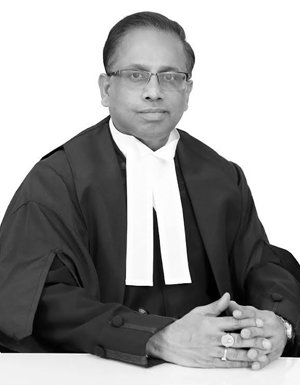

No Acts & Articles mentioned in this case
2024 INSC 7 REPORTABLE
IN THE SUPREME COURT OF INDIA
CIVIL APPELLATE JURISDICTION
CIVIL APPEAL NOS.20-21 OF 2024
(@ SPECIAL LEAVE PETITION (CIVIL) NOS. 3877-
3878 OF 2022)
RADHEY SHYAM YADAV & ANR. ETC. ...APPELLANT(S)
VS.
STATE OF U.P. & ORS. ...RESPONDENT(S)
J U D G M E N T
K.V. Viswanathan, J.
1.Leave granted.
2.Radhey Shyam Yadav, Lal Chandra Kharwar and
Ravindra Nath Yadav are the three appellants. On
25.06.1999, they were appointed as Assistant Teachers at the
Junior High School, Bahorikpur, Maharajganj, District
Jaunpur, U.P. (hereinafter referred to as ‘the School’). From
October, 2005, abruptly their salaries were stopped. They
1
moved the High Court for redressal. Both the learned Single
Judge and the Division Bench declined them relief.
Aggrieved, they are before us in these Appeals.
Brief facts:-
3.From the record, it appears that the School started as a
recognized unaided school in 1983-1984 with one post of
Head Master, four posts of Assistant Teacher, three posts of
Peon and one post of Clerk. On 07.10.1996, two posts of
Assistant Teacher were increased, raising the sanctioned
strength of Assistant Teacher to six.
4.On 26.12.1997, the Director of Education (Basic)
sanctioned certain additional posts of Assistant Teacher in the
aforesaid School. While the department claims that by the
order of 26.12.1997, only two posts of Assistant Teacher
were sanctioned, the Manager/Principal of the School
claiming that three posts were sanctioned, went ahead and
sought permission from the District Basic Education Officer
for issuing advertisement. This was done by their letter of
2
28.01.1998. The letter of 26.12.1997 has been placed before
us by the State in the form of an additional affidavit which
indicates that only two posts were sanctioned. The State does
not dispute that by the above letter two posts of Assistant
Teacher were sanctioned. In 1998, the School became an
aided School.
5.Thereafter, responding to the letter of the School, the
District Basic Education Officer by his letter of 20.11.1998
accorded permission to issue advertisement for appointment
of three posts of Assistant Teachers. On 25.11.1998, an
advertisement was issued. The School, thereafter, on
08.12.1998, wrote a letter to the District Basic Education
Officer to nominate a Member for the selection of the
teachers. In response, the District Basic Education Officer
nominated the Assistant District Basic Education Officer,
Bahorikpur as a Member of the Selection Committee. The
Selection Committee duly met and considered the twelve
applications received by it. Seven out of the twelve
3
applicants, including the three appellants herein, participated
in the interview. By its letter of 27.12.1998, the Selection
Committee informed the District Basic Education Officer
that the appellants, on basis of their ability, have been
selected and their case was being submitted for approval. The
order in which the Selection Committee has sent subject-
wise names were as follows:
i. Lal Chandra Kharwar – Science and Math
ii. Radhey Shyam Yadav – English
iii. Ravindra Nath Yadav – Agric & Gen.Topic
It is not disputed that by an order of 09.06.1999, the District
Basic Education Officer granted approval for the
appointment of the appellants. As stated earlier, they were
appointed on 25.06.1999 and were working continuously.
6.The undisputed case is that from October, 2005, their
salaries were stopped from being disbursed, forcing them to
file Writ Petitions in the High Court, namely, Civil Misc.
Writ Petition No. 10286 of 2007 and Civil Misc. Writ
4
Petition No. 18641 of 2008. The three appellants, in all, filed
two writ petitions. In the writ petitions, the prayer was for a
writ of mandamus commanding the respondents to pay the
arrears of salary from July, 1999 to January, 2002 and
continue to pay salary from October, 2005. It was their case
that from the date of appointment till January 2002, their
salary had not been released.
7.The District Basic Education Officer filed counter
affidavits to the writ petitions. It was his case that, by order
dated 26.12.1997, only two additional posts of Assistant
Teacher were created by the Joint Director of Education. It
was averred that manipulation was made by the management
in collusion with the appellants to show that three posts of
Assistant Teacher were sanctioned.
8.Apart from this bare allegation, absolutely no material
was placed on record to show how the appellants had
colluded or were blameworthy for any manipulation.
5
9.Subsequent to the counter affidavit filed by the State,
on 30.07.2013, a compliance affidavit was filed. It is averred
therein that a detailed enquiry was conducted in the matter
wherein it had transpired that manipulation was got done at
the level of the School in question by overwriting the
sanctioned posts of teachers of the School as “three” in place
of “two”.
10.The Learned Single Judge, by order dated 10.09.2013,
held that if based on the forged order, proceedings were
initiated for the selection of Assistant Teacher, then the entire
selection needs to be cancelled. It was also held that since
forgery was committed by the persons involved in the
selection of Assistant Teachers and since the selection
process was not fair, being based on a forged letter, the
candidates who were selected in the selection process are not
entitled to be appointed and retained on the post of Assistant
Teacher, and holding so, the writ petitions were dismissed.
The appellants filed writ appeals. By the impugned order, the
6
appeals were dismissed reiterating the findings of the learned
Singe Judge.
Contentions:
11.We have heard Mr. Surender Kumar Gupta, learned
counsel for the appellants and Ms. Sansriti Pathak, learned
counsel for the respondent-State.
12.Learned counsel for the appellants, after placing a
comprehensive overview of the facts, vehemently contended
that there was no fault on the part of the appellants and for
any wrong computation of vacancy, the appellants ought not
to be prejudiced. He further contended that the State
admittedly does not dispute that two vacancies were, in fact,
created and that if at all there was any manipulation, it was at
the level of the School. In the absence of any blameworthy
conduct attributed to the appellants, they ought not to be
prejudiced after serving the School for very long. According
to the appellants, they were continuously teaching till
7
30.03.2016 by entering their names in a separate register.
However, according to the State, from October, 2005 their
salaries have been stopped. In support of their claim, learned
counsel for the appellants relied upon the judgments of this
Court in Vikas Pratap Singh and Ors. Vs. State of
Chhattisgarh and Ors., (2013) 14 SCC 494 and the recent
judgment in Civil Appeal Nos. 6233-34 of 2023 dated
20.11.2023 titled Vivek Kaisth and Anr. Vs. The State of
Himachal Pradesh and Ors., 2023:INSC:1007 = 2023 SCC
OnLine SC 1485.
13.Ms. Sansriti Pathak, learned counsel for the State
vehemently defended the impugned judgment. She contended
that where there was fraud, the whole selection process shall
be vitiated. She relied on Sachin Kumar and Ors. Vs. Delhi
Subordinate Service Selection Board (DSSSB) and Ors.
2021:INSC:147 = 2021 (4) SCC 631 in support of her
proposition. Learned counsel submitted that there was no
8
case warranting interference under Article 136 of the
Constitution of India.
Discussion and Findings:
14.We have given our thoughtful consideration to the
matter and considered the submissions of the rival parties and
perused the records. The correspondence between the School
and the Directorate of Education culminated in the order of
26.12.1997. There is a dispute about the number of posts that
were sanctioned. According to the State, two posts were, in
fact, sanctioned and it was the School that manipulated it, to
make it three. We will proceed on the basis that the version of
the State is correct. The nominee of the State participated in
the selection process. Twelve candidates had applied and
ultimately three appellants were empanelled for selection.
Due approval was given for the appointment and admittedly
they discharged their duties on their post from 25.06.1999 till
September, 2005. Even according to the State, admittedly, till
date there is no order terminating their services. What
9
impelled the appellants to go to the High Court was the
stoppage of their salary.
15.There is not an iota of material to demonstrate how the
appellants, who were applicants from the open market, were
guilty of colluding in the manipulation.
16.We are also reinforced on this, by the findings in the
inquiry report initiated pursuant to the directions of the High
Court in the writ petitions. In the Inquiry Report, the
conclusion was that, it was the erstwhile District Basic
Education Officer, Jaunpur and his office, in collusion with
the Manager of the School, who had taken steps for
appointment/approval. It was mentioned that there was
involvement of Shri Ram Dular Yadav, Principal, Shri Triloki
Nath Singh, Manager of the school, the erstwhile District
Basic Education Officer, Jaunpur and also the officials of the
District Basic Education Officer, Jaunpur. It was further
found that the Manager of the School has fraudulently
changed the number of posts from two to three in the order
10
dated 26.12.1997 and it was mentioned that Shri Triloki Nath
Singh, the Manager was guilty and accordingly, District
Basic Education Officer, Jaunpur has lodged an F.I.R. against
Shri Triloki Nath Singh on 08.07.2013.
17.What is important to notice is, nothing has been
mentioned as to how the appellants, who were applicants
from the open market, were in any way responsible. There is
no reference to any material whatsoever that had been
unearthed either in the departmental inquiry launched or in
the criminal investigation. On a pointed query to the counsel
for the State as to whether the appellants were arrayed as
accused in that criminal case, she candidly replied that they
were not. On being further asked as to whether any action
has been taken against the School, she replied that no action
has been taken. The School continues to function with
grants-in-aid. She submitted that the only action taken was to
file an F.I.R. against the Manager of the School, which F.I.R.
has since resulted in a charge-sheet.
11
18.In the inquiry report, the following crucial findings
occur. They are extracted hereinbelow:
"(3) Two additional posts of Assistant Teachers were
created vide the Directorate's letter No.Samanya(l)
Basic/2117-20/96-97 dated 26.12.1997 (certified copy
enclosed) as a result the number of sanctioned posts of
Asst. Teachers in the school in question became 06 (six).
Earlier this letter was typed for being sent to the Zonal
Assistant Education Director (Basic), Azamgarh which
was later on erased and 'Varanasi' was written with pen.
In this letter, in column No.2, the number of sanctioned
post is mentioned as 02 and against column No.5 the
number of Assistant Teachers is clearly mentioned as 8.
This file bears the signatures of Ex-Desk Assistant Shri
Rajnarain Trivedi and Deputy Education Director
(Science) Shri Harish Chandra Tiwari, who has since
retired on the note side of the file there is the order of
creation of two posts dated 11.8.1997 of late Shri Vinay
Kumar Pandey, Deputy Education Director (Basic).
(4) In the aforesaid post creation order of the Directorate
dated 26.12.1997, the Manager of the institute, showing
03 (three) posts of Assistant Teachers fraudulently and
obtained approval for appointment of 03 Assistant
Teachers S/Shri Lal Chand Kharwar, Radhey Shyam
Yadav and Ravinder Nath from District, Jaunpur vide
letter No B-2/1313-14/99-2000 dated 9.6.98.
(5) The District, Jaunpur sought permission from the
Directorate for payment of salary of the aforesaid three
teachers vide letter No.3909 dated 28.8.2001. With this
letter the Directorate's letter dated 16.12.1997, which was
sent by the Manager duly certified by the District,
12
Jaunpur was enclosed in which fraudulently 03(three) in
place of 02 (two) in column No.3, 09 (nine) in place of 08
(eight) and total 12 (twelve) in place of 11 (eleven)
against column No.5 were shown.
(6) After the verification of the said fraudulent letter dated
26.12.1997 sent by the District, Jaunpur, vide the
registered letter No.Arth(4)/1812/2004-05 dated
27.10.2004 and Letter No.Arth(4)/2310-13/2004-05 dated
19.11.2004, the District, Jaunpur was directed that in the
post creation order in question the Manager of the
institute had fraudulently mentioned three posts while in
the post creation order dated 28.12.1997 only two posts of
Assistant Teachers have been sanctioned. The Directorate
directed the District, Jaunpur to call for the explanation of
the Manager and the Principal of the institute responsible
for the same, and to furnish the information about the
then District, Jaunpur who had verified the posts and the
name, designation and the place of posting of the then
Desk Assistant (photo copy enclosed). On the aforesaid
two letters of the Directorate no action was taken by the
then District, Jaunpur which prima facie shows that the
erstwhile District, Jaunpur and his office in collusion with
the Manager of the school, had taken steps for
appointment/approval in the school in which the
involvement of Shri Ram Dular Yadav, Principal, Shri
Triloki Nath Singh, Manager of the institute, the erstwhile
District, Jaunpur and the officials of the office of District,
Jaunpur, is clearly visible.
xxx xxx
(c) The erstwhile District, Jaunpur/erstwhile Finance and
Accounts Officer, Basic Education Office, Jaunpur and
the Desk Assistant are prima facie guilty in granting
permission for advertisement selection, approval and
taking steps for disbursement of salary on the basis of the
13
forged letter of creation of posts dated 26.12.1997 of the
Manager of the institute and in this respect the Education
Director (Basic) should submit proposal to the
Government to initiate disciplinary action against them.
In addition take action against the concerned Desk
Assistants at his level."
There was absolutely nothing found against the three
appellants. However, the following recommendations were
made:-
"(d) The appointments of S/Shri Lala Chand Kharwar,
Radhey Shyam Yadav and Ravindra Nath Yadav, made
pursuant to the said forged letter dated 26.12.1997 are
illegal. They have been paid for the period February, 2002
to October, 2005, the salary is illegal. The same be
counted and action for proportionate recovery be taken
against the guilty erstwhile District/erstwhile Finance and
Accounts Officer, Basic Education and the concerned
Desk Officer by the Director of Education (Basic) as per
the settled procedure and steps taken to terminate the
services of illegally appointed Assistant Teachers S/Shri
Lala Chand Kharwar, Radhey Shyam Yadav and Ravindra
Nath Yadav."
19.In the inquiry, the appellants were not given any
opportunity. Even in the inquiry held behind the back of the
appellants, there were no findings of collusion or
blameworthiness against them for the alleged manipulation.
14
Even as on date, the appointment order dated 25.06.1999 and
the approval order of 09.06.1999 have not been revoked.
With no finding of guilt against the appellants and with no
material against them, their salaries had been stopped and
they have been prevented to sign on the regular attendance
register, admittedly from October, 2005. The contention of
the appellants is that they continued with their teaching work
up till 30.03.2016 entering their names on a separate
attendance register.
20.We may also note the fact that in the F.I.R. lodged by
the State on 17.07.2015 also, there is no allegation against the
appellants or any other applicants and only two persons were
named in that F.I.R. They were Vinod Kumar Chaturvedi,
Senior Assistant and Rajendra Prasad Yadav, Senior Assistant.
Both were employees in the office of the District Basic
Education Officer. The allegation was that the documents
related to approval of appointments/teacher listings from the
15
concerned schools were missing and that the said two officers
were responsible for maintaining the records.
21.In this background, the question that really falls for
consideration is, was the State justified in abruptly and
without anything more, stopping the salary? We are
constrained to answer the question in negative.
22.Assuming the case of the State to be true and taking it
at its highest, the factual position would come to this, namely,
that while the State sanctioned two vacancies, the school
went ahead and recruited three. The State has no proof of
commission of any malpractice by the appellants. The State
approved their appointments, and the approval order till date
has not been cancelled. The appointments have not been
terminated. No action has been taken against the school and
the school continues to receive the aid.
23.Chief Engineer, M.S.E.B. and Another vs. Suresh
Raghunath Bhokare, (2005) 10 SCC 465 is a case which, on
facts, has a striking resemblance to the case at hand. The
16
respondent therein had been recommended by the department
and was selected as line-helper in the appellant-Board. On
the ground that the recommendation was allegedly made
fraudulently, the respondent was dismissed from service. The
complaint preferred by the respondent had been dismissed by
the Labour Court. The Industrial Court reversing the findings
of the Labour Court, quashed the termination of the
respondent therein and directed reinstatement. Writ Petition
filed by the appellant therein was dismissed by the High
Court. This Court, while observing that in the absence of any
overt act being attributed to the respondent, held that it could
not be inferred that the respondent had a role in sending
fraudulent list, solely on the basis of the presumption that he
got the job. Para 5 of the judgment which is crucial for the
decision of the present case is extracted herein below:-
“5. The entire basis of the dismissal of the appellant
depends upon the factum of the alleged
misrepresentation attributed to the respondent. The
Industrial Court in its impugned order has noticed the
fact that the respondent was appointed in April 1994
17
pursuant to the selection procedure followed by the
competent authority and that he was selected by the
panel of Selection Committee consisting of 6 members
which included the very same Social Welfare Officer
who had sent the proposal including the name of the
respondent for appointment. It also noticed the fact that
the selection in question was made after an oral
interview and the required test as also the medical
examination. The Industrial Court also noticed the fact
that the appointment of the respondent was
confirmed after one-year period and thereafter the
respondent has been working without any complaint.
The said Industrial Court also noticed the fact that the
termination of the respondent was based on a show-
cause notice issued on 5-7-1999 which was replied to
by the respondent on 17-7-1999 and the termination
was made in a summary procedure permissible under
Rule 90(b) of the Service Regulations. The Industrial
Court after perusing the pleadings and the notice issued
to the respondent came to the conclusion that the
alleged misrepresentation which is now said to be a
fraud was not specifically pleaded or proved. In the
show-cause notice, no basis was laid to show what is
the nature of fraud that was being attributed to the
appellant. No particulars of the alleged fraud were
given and the said pleadings did not even contain any
allegation as to how the appellant was responsible for
sending the so-called fraudulent proposal or what role
he had to play in such proposal being sent. It also
noticed from the evidence of Mr Waghmare, Social
Welfare Officer who sent the proposal before the
Labour Court that he did not utter a single word as to
whether the said supplementary list was ever called for
by the department concerned or not. Thus applying the
basic principle of rule of evidence which requires a
party alleging fraud to give particulars of the fraud and
having found no such particulars, the Industrial Court
came to the conclusion that the respondent could not be
held guilty of fraud. The said finding of the Industrial
Court has been accepted by the High Court. Mr.
18
Bhasme though contended that the fraud in question
was played in collusion with the Social Welfare Officer
and 2 other employees of the Board and action against
the said 2 employees of the Board has been taken, but
by that itself we are unable to accept the argument of
Mr. Bhasme that there is material to support the
contention of the Board that the appellant had also
contributed to making the misrepresentation at the time
of applying for the job with the Board. In the absence
of any such particulars being mentioned in the show-
cause notice or at the trial, attributing some overt act to
the respondent, we do not think the Board can infer
that the respondent had a role to play in sending a
fraudulent list solely on the basis of the presumption
that since the respondent got a job by the said proposal,
the said list is a fraudulent one. It was the duty of the
Board to have specifically produced the material to
prove that the respondent himself had the knowledge of
such a fraud and he knowingly or in collusion with
other officials indulged in this fraud. Since there is no
such material on record, on the facts of the instant case,
the Industrial Court and the High Court have come to
the right conclusion that the alleged fraud has not been
established by the appellants, hence, this is not a fit
case in which interference is called for. This appeal,
therefore, fails and the same is dismissed.”
(emphasis supplied)
24.In Vikas Pratap Singh (supra), this Court, while
protecting the selection of the appellants, had the following
to say:-
"27. Admittedly, in the instant case the error committed
by the respondent board in the matter of evaluation of the
answer scripts could not be attributed to the appellants as
they have neither been found to have committed any
19
fraud or misrepresentation in being appointed qua the first
merit list nor has the preparation of the erroneous model
answer key or the specious result contributed to them.
Had the contrary been the case, it would have justified
their ouster upon re-evaluation and deprived them of any
sympathy from this Court irrespective of their length of
service."
25.Vikas Pratap Singh (supra) was followed in Anmol
Kumar Tiwari and Others vs. State of Jharkhand and
Others, 2021:INSC:101 = (2021) 5 SCC 424. This Court, in
para 11, held as follows:-
“11. Two issues arise for our consideration. The first
relates to the correctness of the direction given by the
High Court to reinstate the writ petitioners. The High
Court directed reinstatement of the writ petitioners after
taking into account the fact that they were beneficiaries of
the select list that was prepared in an irregular manner.
However, the High Court found that the writ petitioners
were not responsible for the irregularities committed by
the authorities in preparation of the select list. Moreover,
the writ petitioners were appointed after completion of
training and worked for some time. The High Court was
of the opinion that the writ petitioners ought to be
considered for reinstatement without affecting the rights
of other candidates who were already selected. A similar
situation arose in Vikas Pratap Singh case [Vikas Pratap
Singh v. State of Chhattisgarh, (2013) 14 SCC 494 :
(2013) 3 SCC (L&S) 100], where this Court considered
that the appellants therein were appointed due to an error
committed by the respondents in the matter of valuation
of answer scripts. As there was no allegation of fraud or
misrepresentation committed by the appellants therein,
the termination of their services was set aside as it would
20
adversely affect their careers. That the appellants therein
had successfully undergone training and were serving the
State for more than 3 years was another reason that was
given by this Court for setting aside the orders passed by
the High Court. As the writ petitioners are similarly
situated to the appellants in Vikas Pratap Singh
case [Vikas Pratap Singh v. State of Chhattisgarh, (2013)
14 SCC 494 : (2013) 3 SCC (L&S) 100], we are in
agreement with the High Court that the writ petitioners
are entitled to the relief granted. Moreover, though on
pain of contempt, the writ petitioners have been reinstated
and are working at present.”
(emphasis supplied)
26.To the same effect is the ratio of the judgment of this
Court in Dr. M.S. Mudhol and Another vs. S.D. Halegkar
and Others, (1993) 3 SCC 591 wherein, in para 6, it was
observed as under:-
“6. Since we find that it was the default on the part of the
2nd respondent, Director of Education in illegally
approving the appointment of the first respondent in 1981
although he did not have the requisite academic
qualifications as a result of which the 1st respondent has
continued to hold the said post for the last 12 years now,
it would be inadvisable to disturb him from the said post
at this late stage particularly when he was not at fault
when his selection was made. There is nothing on record
to show that he had at that time projected his
qualifications other than what he possessed. If, therefore,
in spite of placing all his cards before the selection
committee, the selection committee for some reason or
the other had thought it fit to choose him for the post and
the 2nd respondent had chosen to acquiesce in the
appointment, it would be inequitous to make him suffer
21
for the same now. Illegality, if any, was committed by the
selection committee and the 2nd respondent. They are
alone to be blamed for the same.”
27.In Rajesh Kumar and Others vs. State of Bihar and
Others, (2013) 4 SCC 690, this Court finding the appellants
to be innocent parties ruled that even if in the re-evaluation
the appellants do not make the grade, still the appellants
appointments ought to be protected. Para 21 & 22.3 are
extracted herein below:-
“21. There is considerable merit in the submission of Mr
Rao. It goes without saying that the appellants were
innocent parties who have not, in any manner, contributed
to the preparation of the erroneous key or the distorted
result. There is no mention of any fraud or malpractice
against the appellants who have served the State for
nearly seven years now. In the circumstances, while inter
se merit position may be relevant for the appellants, the
ouster of the latter need not be an inevitable and
inexorable consequence of such a re-evaluation. The re-
evaluation process may additionally benefit those who
have lost the hope of an appointment on the basis of a
wrong key applied for evaluating the answer scripts. Such
of those candidates as may be ultimately found to be
entitled to issue of appointment letters on the basis of
their merit shall benefit by such re-evaluation and shall
pick up their appointments on that basis according to their
inter se position on the merit list.
22.3. In case the writ petitioners, Respondents 6 to 18
also figure in the merit list after re-evaluation of the
answer scripts, their appointments shall relate back to the
22
date when the appellants were first appointed with
continuity of service to them for purpose of seniority but
without any back wages or other incidental benefits.”
28. In K. Ameer Khan and Anr. Vs. A. Gangadharan and
Ors., (2001) 9 SCC 84, a case involving the wrong
computation of vacancies, while protecting the promotion of
the appellants, this Court had the following to say:-
"2. .....The appellants have been selected quite some time
back and the first appellant has been promoted to a higher
grade. The appellants were not responsible for the wrong
computation of vacancies done by the second respondent.
After the empanelment and appointment of the appellants,
it is brought to our notice that there have been fresh
promotions to the post of Assistant Controller of Stores at
least on two occasions in June 1995 and May 1997. In a
new selection, five Scheduled Caste candidates and four
Scheduled Tribe candidates have been selected. The
appellants could not participate in the same as they had
already been promoted to the higher grade. Now, when
the appellants have been working in the higher grade
from 1994 onwards, it would not be equitable to disturb
their promotions…….”
29.More recently, this Court in Vivek Kaisth (supra),
following the judgment of the Constitution Bench in
Sivanandan C.T. and Others vs. High Court of Kerala and
Ors., (2023) SCC OnLine SC 994 protected the
23
appointments of the appellants even after finding that their
appointments were in excess of the advertised vacancies.
This Court held as under:-
"32. … …. Today, when we are delivering this judgment
the two appellants have already served as Judicial
Officers for nearly 10 years. Meanwhile, they have also
been promoted to the next higher post of Civil Judge
(Senior Division). In this process of their selection and
appointment (which has obviously benefitted them),
nothing has been brought to our notice which may
suggest any favouritism, nepotism or so-called blame as
to the conduct of these two appellants, in securing these
appointments. The High Court in fact notes this factor.
While placing the blame on the State Commission it
records that “………. there is nothing on record
suggestive of the fact that any mala fides were behind the
selection of respondents Nos.4 and 6……….”
“34. The appellants were not entitled for any equitable
relief in view of the High Court as they were the
beneficiaries of an illegality committed by the
Selection/appointing authority. But then it failed to take
this question further, which in our opinion, it ought to
have done. What the High Court never answered was as
to how much of this blame of “illegal” selection and
appointment would rest on the High Court (on its
administrative side). Undoubtedly, with all intentions of
timely filling of the vacancies, the High Court still cannot
escape the blame…..”
“36. What is also important for our consideration at this
stage is that the appellants in the present case have been
working as Judicial Officers now for nearly 10 years.
They are now Civil Judge (Senior Division). These
judicial officers now have a rich experience of 10 years of
judicial service behind them. Therefore, unseating the
24
present appellants from their posts would not be in public
interest. Ordinarily, these factors as we have referred
above, would not matter, once the very appointment is
held to be wrong. But we also cannot fail to consider that
the appellants were appointed from the list of candidates
who had successfully passed the written examination and
viva voce and they were in the merit list. Secondly, it is
nobody’s case that the appellants have been appointed by
way of favouritism, nepotism or due to any act which can
even remotely be called as “blameworthy”. Finally, they
have now been working as judges for ten years. There is
hence a special equity which leans in favour of the
appellants. In a recent Constitution Bench decision of this
Court in Sivanandan C.T. and Ors. v. High Court of
Kerala and Ors. (2023) SCC OnLine SC 994 though the
finding arrived at by this Court was that the Rules of the
game were changed by the High Court of Kerala by
prescribing minimum marks for the viva voce, which
were not existing in the Rules and therefore in essence the
appointment itself was in violation of the Rules, yet
considering that those persons who had secured
appointments under this selection have now been working
for more than 6 years it was held that it would not be in
public interest to unseat them.”
(emphasis supplied)
30.The situation of the appellants in the present case is no
different from the individuals whose appointments were
protected in the cases cited hereinabove. They had no
blameworthy conduct. They were bona fide applicants from
the open market. The alleged mischief, even according to the
State, was at the end of the School and its Manager. It will be
25
a travesty of justice if relief is denied to the appellants.
Enormous prejudice would also occur to them.
31.Ms. Sansriti Pathak, learned counsel, who ably
defended the case for the State, made a valiant attempt to
draw support from the judgment in Sachin Kumar (supra).
In that case, what was in issue was the validity of the
cancellation of the selection process for recruitment to the
231 vacancies in the post of Grade 2 (DASS) (Head Clerk).
This Court, while reversing the judgment of the Tribunal and
the High Court held that in that case there was a basic denial
of access to Tier I examination. The Court further held that
the nature of the allegations was found substantiated upon the
careful examination by the first Committee whose report
showed that the credibility of the process itself had been
eroded. In that case, the total vacancies for which recruitment
was to be made was 231 and 61,179 candidates were found to
be eligible. The first Committee which enquired found that
there were serious irregularities including cheating and
26
impersonation in the course of both Tier 1 Screening
examination and Tier 2 Main examination. The Secretary
(Vigilance) had also pointed out in his opinion there was a
huge difference between the number of applications received,
namely, 62056 and the number of candidates who had
appeared in the Tier 1 examination i.e. 8224, indicating
thereby that proper information regarding the exam was not
given to the candidates. The second Committee had observed
that no irregularity was found in the documents of the 281
candidates. The Tribunal holding that 281 candidates were
free from blame, set aside the order cancelling selection
process, clarifying that the appointments to be offered would
be subject to the ACB investigation. The High Court had
held that the scope of the order of the Tribunal should be
confined to the six applicants who have moved the Tribunal.
The High Court had also held that it was possible to
determine that at least in respect of 281candidates there was
no evidence of use of unfair means and that it was a case
27
where separation of the tainted from the untainted was
possible.
32.Reversing the judgment of the Tribunal and the High
Court, this Court held that the irregularities were not confined
to acts of malpractice or unfair means on the part of specific
group of persons and that the report of the Committee found
deficiencies of a systemic nature which cast serious doubts on
the legitimacy of the entire process of recruitment. This Court
held that in such a situation where a decision is taken by the
government to cancel the entire process, the decision cannot
be held to be irrational or arbitrary.
33.This judgment in Sachin Kumar (supra) is clearly
distinguishable from the case at hand. First of all, Sachin
Kumar (supra) involved the cancellation of the selection
process before any appointments were made. No rights were
crystallized to any of the candidates. The issue was about the
validity of the cancellation of the selection process. Sachin
Kumar (supra) falls in that genre of cases concerning validity
28
of cancellation of the selection process due to largescale
irregularities. The Case at hand is proximate to the facts and
ratio in Suresh Raghunath Bhokare (supra) and cases of
that ilk set out hereinabove.
34.We feel that the appellants were not at fault and the
State could not have abruptly stopped their salaries.
Accordingly, we set aside the judgments of the High Court
dated 15.09.2021 in Special Appeal Nos. 1435/2013 and
1445/2013 and direct that the State shall pay the salaries of
the appellants for the period from 25.06.1999 till January,
2002 in full. We also direct that insofar as the period from
October, 2005 till today is concerned, the State shall pay the
appellants 50% of the backwages. Since the appointment
order and the approval order are still in force, we declare that
the appellants have always been and are deemed to be in
service. Apart from 50% backwages, as ordered above, we
direct that all consequential benefits, including seniority,
notional promotion, if any, and fitment of salary and other
29
service benefits due, be granted to the appellants. We direct
the State to comply with these directions within four weeks
from today. We also direct that the appellants be allowed to
commence work within the said period of four weeks.
35.We notice from the record that the Committee of
Management, Junior High School, Bahorikpur was arrayed as
fifth respondent in the writ petition before the High Court.
They are also arrayed as fifth respondent before us in these
appeals. Before us, even though notice has been served on
the Committee of Management, Junior High School,
Bahorikpur, nobody has entered appearance. It appears that
even before the learned Single Judge and the Division Bench,
the Committee of Management did not appear. We grant
liberty to the State to issue a show-cause notice to the
Committee of Management (R-5), after setting out clearly the
charge pertaining to the alleged manipulation of the sanction
order and altering of the figure from two to three. After
receiving reply, if any, and after holding an inquiry with an
30
opportunity of personal hearing, the State will be at liberty to
pass an appropriate order. In the event of the Committee of
Management being exonerated, no further question will arise.
In the event of them being found guilty of the charge, in view
of any finding that may be arrived that the manipulation prior
to the recruitment was done at the level of the employees of
the school (whether by themselves or in collusion with the
officials), we grant liberty to the State to recover from the
Committee of Management one-third of the arrears, as
ordered to be paid, hereinabove. This direction will serve the
ends of justice in the matter.
36.The appeals are allowed in the above terms. No order as
to costs.
…....…………………J.
(J.K. Maheshwari)
…..…………………J.
(K.V. Viswanathan)
New Delhi;
January 03, 2024.
31

 Login with google
Legal Notes
Add a Note....