
It is an civil appeal from the judgement and decree of the high court of judicature at allahbad, lucknow bench arising out of the judgement and decree of the court ...
No Acts & Articles mentioned in this case
http://JUDIS.NIC.IN SUPREME COURT OF INDIA Page 1 of 7
PETITIONER:
RAJ BAJRANG BAHADUR SINGH
Vs.
RESPONDENT:
THAKURAIN BAKHTRAJ KUER.
DATE OF JUDGMENT:
07/11/1952
BENCH:
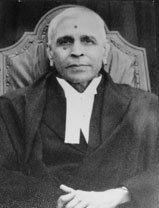
MUKHERJEA, B.K.
BENCH:
MUKHERJEA, B.K.
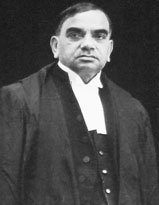
AIYAR, N. CHANDRASEKHARA
BHAGWATI, NATWARLAL H.
CITATION:
1953 AIR 7 1953 SCR 232
CITATOR INFO :
RF 1963 SC 890 (17)
R 1976 SC 794 (8)
ACT:
Oudh Estates Act (I of 1869) s. 14- Will of Taluqdar-Bequest
as absolute owner" without right to transfer-Validity-
Succession to legatee whether governed by Act or ordinary
law-Creation of successive estates - Validity-Rule against
perpetuities-Construction -"Malik Kamil", "Naslan bad
naslan".
HEADNOTE:
The Oudh Estates Act (Act I of 1869) does not interdict the
creation of future estates and limitations provided they do
not transgress the rule of perpetuities and where a
disposition by a will made by a taluqdar does not make the
legatee an absolute owner but gives him only an interest for
life which is followed by subsequent interests created in
favour of other persons the rule of succession laid down in
s. 14 of the Act will not apply on the death of the donee
and the property bequeathed to him will pass according to
the will to the next person entitled to it under the will,
233
The words malik kamil (absolute owner) and naslan bad naslan
(generation after generation) are descriptive of a heritable
and alienable estate in the donee and they connote full
proprietary rights unless there is something in the context
or in the surrounding circumstances which indicate that
absolute rights were not intended to be conferred. In all
such cases the true intention of the testator has to be
gathered not by attaching importance to isolated expressions
but by reading the will as a whole with all its provisions
and ignoring none of them as redundant or contradictory.
In cases where the intention of the testator is to grant
an absolute estate, an attempt to reduce the powers of the
owner by imposing restraint on alienation would be repelled
on the ground of repugnancy; but where the restrictions are
the primary things which the testator desires and they are
consistent with the whole tenor of the will, it is a
material circumstance to be relied on for displacing the
presumption of absolute ownership implied in the use of the
http://JUDIS.NIC.IN SUPREME COURT OF INDIA Page 2 of 7
word malik.
Though under the rule laid down in Tagore v. Tagore (18
W.R., 369) no interest could be created in favour of unborn
persons, yet when a gift is made to a class or series of
persons, some of whom are in existence at the time of the
testator's death and some are not, it does not fail in its
entirety ; it will be valid with regard to the persons who
are in existence at the time of the testator's death and
invalid as to the rest.
A will made by a taluqdar of Oudh recited that with a view
that after his death his younger son D and his heirs and
successors, -generation after generation, may not feel any
trouble or create any quarrel, D shall after the testator's
death remain in possession of -certain villages as absolute
owner, with the reservation that he will have no right to
transfer, that if D may not be living at the time of his
death D's son or whoever may be his male heir or widow may
remain in possession and that although D and his heirs are
not given the power of transfer they will exercise all other
rights of absolute ownership: Held, that the will did not
confer an absolute estate on D and on D's death the
succession was not governed by s. 14 of the Oudh Estates Act
and D's widow was entitled to succeed in preference to D's
elder brother.
JUDGMENT:
CIVIL APPELLATE JURISDICTION: Civil Appeal No. 147 of 1951.
Appeal from the Judgment and Decree dated September 4, 1946,
of the late Chief Court of Oudh- (now the High Court of
Judicature at Allahabad, Lucknow Bench) (Misra and Wallford
JJ.) in First Civil Appeal No. 139 of 1941, arising out of
the Judgment,and Decree dated October 23, 1941, of the Court
of the Civil Judge, Bahraich, in Regular Suit No. I of 1941.
234
Onkar Nath Srivastava for the appellant.
Bishan Singh for the respondent.
1952. November 7. The Judgment of the Court was delivered
by
MUKHERJEA J.-This appeal is on behalf of the plaintiff and
is directed against a judgment and decree of the Chief Court
of Avadh dated September 4, 1946, affirming, on appeal,
those of the Civil Judge, Bahraich, passed in Regular Suit
No. 1 of 1941.
To appreciate the controversy between the parties to this
appeal it would be necessary to state a few facts. One Raja
Bisheshwar Bux Singh, the father of the plaintiff and of the
defendant's husband, was a taluqdar of Oudh, and the estate
known as Gangwat Estate, to which he succeeded in 1925 on
the death of the widow of the last holder, is one to which
the Oudh Estates Act (I of,1869) applies. Raja Bisheshwar
died on 16th October, 1930, leaving behind him two sons, the
elder of whom, Bajrang Bahadur, is the plaintiff in the
present litigation, while the younger, whose name was Dhuj
Singh, has died since then, being survived by his widow
Bakhtraj Kuer. who is the defendant in the suit. Shortly
before his death Raja Bisheshwar executed a will dated 11th
September, 1929, by which five properties, described in
lists A and B attached to the plaint, were bequeathed to
Dhuj Singh, the younger son, by way of making provisions for
the maintenance of the said son and his heirs. On the death
of Raja Bisheshwar,the estatement to the plaintiff as his
eldest son under the provisions of the Oudh Estates Act and
Dhuj Singh got only he five properties mentioned above under
http://JUDIS.NIC.IN SUPREME COURT OF INDIA Page 3 of 7
the terms of his father's will. Dhuj Singh had no issue of
his own and on his death in 1940 disputes arose in respect
of these properties between the plaintiff on the one land
and Dhuj Singh's widow on the other. The plaintiff
succeeded at first in having his name mutated as owner of
these properties in the revenue records in place of his
deceased brother, but the appellate
235
revenue authority ultimately set aside this order and
directed mutation to be made in the name of the defendant.
The plaintiff thereupon commenced the suit out of which this
appeal arises, praying for declaration of his title to the
five properties mentioned above on the allegation that they
vested in him on the death of Dhuj Singh and that the
defendant could not) in law, assert any right to, the same.
It may be stated here that four out of these five properties
have been described in list A to the plaint and there is no
dispute that they are taluqdari properties. The fifth item
is set out in list B and admittedly this property is not
taluqdari in its character. Besides lists A and B there is
a third list, viz., Catached to the plaint, which mentions
two other properties as being in possession of the defendant
and in the plaint a claim was made on behalf of the
plaintiff in respect to these properties as well, although
they were not covered by the will of Bisheshwar. This
claim, however, was abandoned in course of the trial and we
are not concerned with it in the present appeal.
The plaintiff really rested his case on a two-fold ground.
It was averred in the first place that Dhuj Singh hadonly a
life interest in the properties bequeathed to him by
Bisheshwar and on the termination of his life interest, the
property vested in the plaintiff as the heir of the late
Raja. In the alternative the case put forward was that even
if Dhuj Singh had an absolute interest created in his favour
under the terms of his father's will, the plaintiff was
entitled to succeed to the taluqdari properties at any rate,
under the provision of section 14(b) read with section 22
(5) of the Oudh Estates Act.
The defendant in her written statement resisted the
plaintiff's claim primarily on the ground that Bisheshwar
Bux Singh, as the full owner of the properties, was
competent to dispose of them in any way he liked and under
his will it was the defendant and not the plaintiff in whom
the properties vested after the death of Dhuj Singh. The
contention, in . substance, was that the will created a life
estate for Dhuj
236
Singh followed by a devise in favour of the widow as his
personal heir.
The decision of the point in dispute between the parties
thus hinges on the proper construction of the will left by
Bisheshwar. The trial court after an elaborate
consideration of the different portions of the will, viewed
in the light of surrounding circumstances, came to the
conclusion that Dhuj Singh got a life interest in the
devised properties but there were similar life estates
created in favour of his personal heirs in succession, the
ultimate remainder being given to the holder of the estate
when the line of personal heirs would become extinct. The
defendant, therefore, was held entitled to the suit
properties so long as she was alive and in that view the
plaintiff's suit was dismissed. Against this decision, the
plaintiff took an appeal to the Chief Court of Avadh and the
Chief Court affirmed the decision of the trial judge and
dismissed the appeal. The plaintiff has now come, up to
http://JUDIS.NIC.IN SUPREME COURT OF INDIA Page 4 of 7
this court on the strength of a certificate granted by the
High Court of Allahabad with which the Chief Court of Avadh
was amalgamated sometime after the disposal of this case.
The learned counsel appearing for the appellant first of
all drew our attention to the provisions contained in
certain sections of the Oudh Estates Act and it was urged by
him on the basis of these provisions that as Dhuj Singh, who
got the suit properties under the will of his father, the
late. Taluqdar, came within the category of persons
enumerated in clause (1) of section 13-A, Oudh Estates Act,
he could, under section 14 of the Act, hold the properties
subject to the same conditions and the same rules of
succession as were applicable to the, taluqdari himself. In
these circumstances, it is said that the provisions of
section 22 (5) of the Act would be attracted to the facts of
this case and the plaintiff, as the brother of Dhuj Siugh,
would be entitled to succeed to the properties of the latter
in preference to his widow.
The argument formulated in this way does not I appear to
us to be helpful to the appellant. Section. 11
237
of the Oudh Estates Act confers very wide powers of
disposition upon a taluqdar and he is competent under the
section "to transfer the whole or any portion of his estate,
or of his right and interest therein, during his lifetime,
by sale, exchange, mortgage, lease or gift, and to bequeath
by his will to any person the whole or any portion of such
estate, and interest." Sections 13 and 13-A make certain
special provisions in cases of transfers by way of gift and
bequest in favour of certain specified persons and lay down
the formalities which are to be complied with in such cases.
Section 14 then provides that "if any taluqdar or grantee,
or his heir or legatee, shall heretofore have transferred or
bequeathed, or if any taluqdar:or grantee, or his heir or
legatee shall hereafter transfer or bequeath the whole or
any portion of his estate-
(a) ...........
(b) to any of the persons mentioned in clauses (1) and
(2) of section. 13-A, the transferee or legatee and his
heirs and legatees shall have same rights and powers in
regard to the property to which he or they may have become
entitled under or by virtue of such transfer or bequest, and
shall hold the same subject to the same conditions and to
the same rules of succession as the transferor or testator."
It is true that Dhuj Singh being a younger son of the
testator came within the purview of clause (1) of section
13-A of the Oudh Estates Act and if he became full owner of
the properties under the will of his father, succession to
such properties after his death would certainly be regulated
by the special rules of succession laid down in the Oudh
Estates Act, and not by the ordinary law of inheritance.
But section 14 would have no application if the disposition
by the will did not make Dhuj Singh an absolute owner of the
properties and he was given only an interest for life which
was followed by subsequent interests created in favour of
31
238
It cannot also be contended that a taluqdar governed by
the Oudh Estates Act cannot convey anything less than his
absolute proprietary right in a property by transfer inter
vivos or by will, or that 'it is not competent for him to
create any limited interest or future estate. Apart from
the plenary provision contained in section 11, section 12 of
the Act which makes the rule against perpetuity applicable
to transfers made by a taluqdar, furnishes a clear
http://JUDIS.NIC.IN SUPREME COURT OF INDIA Page 5 of 7
indication that the Act does not interdict the creation of
future; estates and limitations provided they do not trans-
gress the perpetuity rule.
The questions, therefore, which require consideration in
this case are really two in number. The first is whether
Dhuj Singh got an absolute estate or an estate for life in
the properties given to, him by the will of Raja
Bisheshwar? If he got an absolute estate, the contention of
the appellant should undoubtedly prevail with regard to the
taluqdari properties specified in list A of the plaint. If,
on the other hand,, the interest was one which was to inure
only for the period of his life, the further question would
arise as to whether any subsequent interest was validly
created by the will in favour of the widow on the strength
of which she can resist the plaintiff's claim. If the life
estate was created in favour of Dhuj Singh alone, obviously
the plaintiff as the heir of the grantor would be entitled
to come in as reversioner after his death .
The answers to both the questions would have to be given
on a proper construction of the will left by Raja
Bisheshwar. The will has been rightly described by the
trial judge as a most inartistic document with no pretension
to any precision of language, and apparently it was drawn up
by a man who was not acquainted with legal phraseology. The
Civil Judge himself made a translation of the document,
dividing its contents into several paragraphs and this was
found useful and convenient by the learned Judges of the
Chief Court. The material portions of the will, as
translated by the -trial judge, may be set out as follows:-
239
"As I have become sufficiently old and no reliance can be
placed on life, by God's grace I have got two sons namely,
Bajrang Bahadur Singh, the elder, and Dhuj Singh the
younger. After my death the elder son would according to
rule, become the Raja, the younger one is simply entitled to
maintenance.
1. Consequently with a view that after my death the
younger son and his heirs and successors, generation after
generation, may not feel any trouble and that there may
not be any quarrel between them.
2. I have decided after a full consideration that I should
execute a will in favour of Dhuj Singh with respect to the
villages detailed below.
3. So that after my death Dhuj Singh may remain in
possession of those villages as an absolute owner with the
reservation that he will have no right of transfer.
4. If God forbid, Dhuj Singh may not be living a the time
of my death, his son or whoever may be his male heir or
widow may remain in possession of the said villages on
payment of the Government revenue as an absolute owner.
5. The liability for the land revenue of the said villages
will be with Dhuj Singh and his heirs and successors; the
estate will have no concern with it.
6. Although Dhuj Singh and his heirs are not given: the
power of transfer, they will exercise all other rights of
absolute ownership that is to say, the result is that the
proprietor of the estate or my other heirs and successors
will not eject Dhuj Singh or his heirs or successors in any
way.
7. Of course if Dhuj Singh or his heirs become ever
heirless then the said villages will not escheat to the
Government but will revert and form part of the estate.
8. Hence with the soundness of my mind without any force
or pressure and after having fully under-, stood and also
having thought it proper I execute this will in favour of
http://JUDIS.NIC.IN SUPREME COURT OF INDIA Page 6 of 7
Dhuj Singh, my own ;on, with the above-mentioned terms."
240
The learned counsel for the appellant naturally lays
stress upon the words "absolute owner " (Malik kamil) and
"'generation after generation?' (naslan bad naslan) used in
reference to the interest which Dhuj Singh was to, take
under the will. These words, it cannot be, disputed, are
descriptive of a heritable and alienable estate in the
donee, and they connote full proprietary rights unless there
is something in the context or in the surrounding
circumstances which indicate that absolute rights were not
intended to, be conferred. In all such cases the true
intention of the testor has to be gathered not by attaching
importance to isolated expressions but by reading the will
as a whole with all its provisions and ignoring none of them
as redundant or contradictory.
"The object of the testator in executing the will clearly
set out in the preamble to the document and in spite of the
somewhat clumsy drafting that object to have been kept in
view by the testator throughout, in making the provisions.
The language and tenor of the document leave no doubt in OUT
minds that the dominant intention of the testator was to
make provision not for Dhuj Singh alone but for the benefit
of his heirs and successors, " generation after generation "
as the expression -has been used. The expression " heirs"
in this context obviously means and refers to the personal
heirs of Dhuj Singh determined according to the, general law
of inheritance and not the successors to the estate under
the special provisions of the Oudh Estates Act, for
paragraph 6 of the will mentioned above is expressly
intended to protect the personal heirs of Dhuj Singh from
eviction from the properties in question by the future
holders of the estate.
Thus the beneficiaries under the will are Dhuj Singh
himself and his-heirs in succession and to each such heir or
set of heirs the rights of malik are given but without any
power of alienation. On the total, extinction of this line
of heirs the properties affected by-the will are to revert
to the estate. As it was the intention of the testator that
the properties should
241
remain intact till the line of Dhuj Singh was exhausted and
each successor was to enjoy and hold the properties without
any power of alienation, obviously what the testator wanted
was to create a series of life estates one after another,
the ultimate reversion being given to the parent estate when
there was a complete failure of heirs. To what extent such
intention could be, given effect to by law is another matter
and that we shall consider presently. But it can be said
without hesitation that it was not the intention of the
testator to confer anything but a life estate upon Dhuj
Singh in respect of the properties covered by the will. The
clause in the will imposing total restraint -on alienation
is also a pointer in the same direction. In cases where the
intention of the testator is to grant an absolute estate, an
attempt to reduce the powers of the owner by imposing
restraint on alienation would certainly be repelled on the
ground 'of repugnancy; but where the restrictions are the
primary things which the testator desires and they are
consistent with the whole tenor of the Will, it is a
material circumstance to be relied upon for displacing the
presumption of absolute ownership implied in the use of the
word "malik". We hold, therefore, that the courts below
were right in holding that Dhuj Singh had only a life
interest in the properties under the terms of his father's
http://JUDIS.NIC.IN SUPREME COURT OF INDIA Page 7 of 7
will.
Of course this by itself gives no comfort to the defendant;
she has to establish, in order that she may be able to
resist the plaintiff's claim, that the will created an
independent interest in her favour following the death of
Dhuj Singh. As we have said already, the testator did
intend to create successive life estates in favour of the
successive heirs of Dhuj Singh. This, it is contended by
the Appellant is not permissible in law and he relies on the
case of Tagore v. Tagore(1). It is quite true that no
interest could be created in favour of an unborn person but
when the gift is made to a class or series of persons, some
of
(1) 18 Weekly Report 359.
242
whom are in existence and some are not, it does not fail in
its entirety; it is valid with regard to the persons who are
in existence at the time of the testator's death and is
invalid as to the rest. The Widow, who is the next heir of
Dhuj Singh, was in existence when the testator died and the
life interest created in her favour should certainly take-
effect. She thus acquired under the will an interest in the
suit properties after the death of her husband, commensurate
with the period of her own natural life and the plaintiff
consequently has no present right to, possession. The
result, therefore, is that the appeal fails and is dismissed
with costs.
Appeal dismissed.
Agent for the appellant Rajinder Narain.
Agent for the respondent: S. S. Shukla.
243
In the landmark 1952 Supreme Court ruling of Raj Bajrang Bahadur Singh vs. Thakurain Bakhtraj Kuer, the court delved into the complexities of the Oudh Estates Act, 1869, and the nuanced art of the interpretation of a will. This pivotal judgment, a cornerstone in property law and available on CaseOn, clarifies how a testator's overarching intention can define the nature of a bequest, even when using seemingly conclusive terms like "absolute owner." The case meticulously dissects a will to determine whether it conferred an absolute, heritable estate or a mere life estate, setting a crucial precedent for future inheritance disputes.
The case originated from a will executed by Raja Bisheshwar Bux Singh, a Taluqdar governed by the Oudh Estates Act, 1869. In his will dated September 11, 1929, he bequeathed five properties to his younger son, Dhuj Singh, to provide for his maintenance. The will contained seemingly contradictory clauses. On one hand, it stated that Dhuj Singh would possess the properties as an "absolute owner" (*malik kamil*) and that the right would pass to his heirs "generation after generation" (*naslan bad naslan*). On the other hand, it placed an explicit and absolute restriction, stating that Dhuj Singh and his heirs would have "no right of transfer."
Upon Dhuj Singh's death in 1940 without any children, a dispute arose between his elder brother, Raj Bajrang Bahadur Singh (the plaintiff), and his widow, Thakurain Bakhtraj Kuer (the defendant). The plaintiff claimed the properties, arguing that if Dhuj Singh was an absolute owner, succession should be governed by the Oudh Estates Act, making him the rightful heir. Alternatively, if Dhuj Singh only had a life interest, the property should revert to him as the heir of the original testator, Raja Bisheshwar.
The Supreme Court was tasked with resolving the core conflict arising from the will's ambiguous language. The primary issues were:
The court considered several provisions of the Act, which grants wide powers of disposition to Taluqdars. Section 11 allows a Taluqdar to transfer or bequeath his estate. However, Section 14 stipulates that if a property is bequeathed to a person who would have succeeded under the Act's special succession rules (like a younger son), then that property would continue to be governed by the same rules. This provision, however, only applies if the legatee becomes the full and absolute owner.
The fundamental rule applied by the court is that the testator's intention must be ascertained by reading the will as a whole. Isolated expressions cannot be given precedence over the clear, dominant intention conveyed by the entire document. Furthermore, while a condition restricting alienation attached to an absolute grant is typically held to be void for repugnancy, this principle does not apply if the restriction itself is a primary indicator that the grant was never intended to be absolute in the first place.
The Supreme Court, affirming the decisions of the lower courts, conducted a holistic analysis of the will to uncover the true intention of Raja Bisheshwar.
The Court held that while words like *malik kamil* (absolute owner) are strong indicators of a heritable and alienable estate, they are not conclusive. Their meaning can be displaced by the surrounding context and other provisions within the will. In this case, the testator's dominant intention was not to make Dhuj Singh an absolute owner but to provide for him and his personal line of heirs, generation after generation.
For legal professionals short on time, understanding the intricate distinction between repugnant conditions and primary intentions in this ruling is simplified with CaseOn.in's 2-minute audio briefs, offering a quick yet comprehensive analysis of the court's reasoning.
Crucially, the court concluded that the total restraint on alienation was not a mere secondary clause but a primary and fundamental part of the testator's scheme. The testator's main desire was to create a succession of limited interests, ensuring the property remained intact and passed down through Dhuj Singh's personal heirs. Therefore, the restriction was not a repugnant condition on an absolute grant; rather, it was the very thing that defined the grant as a limited one—a life estate.
The Court then addressed the validity of the bequest to Dhuj Singh's widow. Citing the rule in *Tagore v. Tagore*, it acknowledged that while bequests to unborn persons are invalid, a gift made to a class or series of persons is valid for those who are in existence at the time of the testator's death. Since the defendant, Dhuj Singh's widow, was alive when the testator died, the life estate created in her favour was perfectly valid and would take effect after the termination of her husband's life estate.
The Supreme Court dismissed the appeal, concluding that Dhuj Singh had only acquired a life interest in the properties. The subsequent life estate in favour of his widow, Thakurain Bakhtraj Kuer, was valid. Consequently, the plaintiff, Raj Bajrang Bahadur Singh, had no present right to possession of the properties. The defendant was entitled to hold the properties for the duration of her natural life as per the testator's will.
In essence, the Supreme Court in *Raj Bajrang Bahadur Singh vs. Thakurain Bakhtraj Kuer* established that a testator's clear and consistently expressed intention to create a limited estate with restrictions on transfer will override the presumption of absolute ownership that words like 'malik kamil' might otherwise create. The court prioritized the substance of the testator's wishes over the literal, isolated meaning of legal terms.
The information provided in this article is for informational purposes only and does not constitute legal advice. Readers are advised to consult with a qualified legal professional for advice on any specific legal issue or matter.

 Login with google
Legal Notes
Add a Note....