
No Acts & Articles mentioned in this case
1
A.F.R.
Reserved on 08.08.2019
Delivered on 11.09.2019
Court No. - 42
Case :- CRIMINAL APPEAL No. - 826 of 1991
Appellant :- Rajveer Singh And Others
Respondent :- State
Counsel for Appellant :- Ravindra Singh,Dinesh Kumar Bhaskar,
Pawan Singh
Counsel for Respondent :- A.G.A.
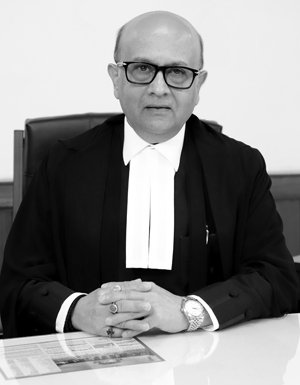
Hon'ble Manoj Misra,J.
Hon'ble Virendra Kumar Srivastava,J.
(Delivered by Hon’ble Virendra Kumar Srivastava,J.)
1.The instant appeal has been filed under Section 374 of Code
of Criminal Procedure, 1973 (hereinafter referred to as “Code”)
against the judgment and order dated 23.4.1991 passed by Special
Judge, Moradabad in Session Trial No. 586 of 1988 (State vs.
Rajveer Singh and others), P.S. Naugawa Sadat, District
Moradabad, U.P., whereby, appellants Rajveer Singh and Jagat
Veer Singh have been convicted and sentenced to imprisonment
for life, whereas, appellants Suresh, Viresh and Teeka Ram have
been convicted and sentenced to undergo 7 years rigorous
imprisonment for offence under Section 307 read with Section
149 and all the appellants have further been convicted for offence
under Section 148 IPC and sentenced to undergo rigorous
imprisonment for a term of 2 years. All the sentences have been
directed to run concurrently.
2.The brief facts of the prosecution case are that appellants
Rajveer Singh, Jagat Veer Singh, Suresh, Viresh and Teeka Ram;
Crl. Appeal No. 826 of 1991
2
PW-1, Hari Raj Singh; PW-4, Dinesh Kumar and PW-5, Dushyant
are residents of Village Jamuna Khas, P.S. Naugawa Sadat,
District Moradabad. Appellants, namely, Rajveer Singh and Jagat
Veer Singh, are real brothers. Appellants Suresh and Viresh are
also real brothers. PW-2, Shoorveer Singh is brother-in-law of
PW-1, Hari Raj Singh.
3.It is the prosecution case that while, on 29.1.1984, PW-1,
Hari Raj Singh was irrigating his field by a diesel pump set of
PW-4, Dinesh Kumar, at about 10:00 p.m., PW-2, Shoorveer
Singh came there and told that appellants Rajveer, Jagat Veer,
Suresh and Viresh armed with guns, whereas, appellant Teeka
Ram armed with sword, were coming from the Haveli of appellant
Suresh towards him ( Hari Raj Singh). PW-1, Hari Raj Singh told
him not to worry as appellants Viresh and Suresh were also with
them. As a result, both of them sat under the bullock cart with
lantern, emmitting light, hanging at its back. At about 11:00 p.m.,
all the appellants reached the place of occurrence, where PW-1,
Hari Raj Singh, PW-2, Shoorveer Singh and PW-4, Dinesh were
sitting. Seeing them, PW-1, Hari Raj Singh came out from under
the bullock cart. Whereafter, appellant Jagat Veer fired at PW-2,
Shoorveer Singh which hit his hands; PW-1, Hari Raj Singh
caught appellant Jagat Veer Singh by his arms and bit his
shoulder. Upon which, appellant Rajveer Singh exhorted appellant
Teeka Ram to attack him with sword. As appellant Teeka Ram
was about to attack Hari Raj Singh (PW-1), he released appellant
Jagat Veer Singh and as soon as PW-1, Hari Raj released him,
appellant Rajveer fired at PW-1, Hari Raj Singh which hit his left
hand, whereby, he fell down. After the firing, appellants came
near PW-2, Shoorveer, to verify whether PW-2, Shoorveer was
alive or not. Upon information from Suresh that he was about to
Crl. Appeal No. 826 of 1991
3
die, upon sensing that on alarm raised by PW-1, Hari Raj Singh
and PW-2, Shoorveer Singh, persons present at a crusher nearby
were coming, the appellants ran away. In the night, PW-1, Hari
Raj Singh sent PW-5, Dushyant along with one Subhash and
Ravindra to P.S. Naugawa Sadat to lodge First Information
Report (hereinafter referred to as “F.I.R.”), but the same was not
lodged as Station Officer of P.S. Naugawa Shadat advised them to
arrange for treatment of injured first instead of bothering to lodge
an F.I.R. Next day, in the morning, PW-1, Hari Raj and PW-2,
Shoorveer Singh were taken to Combined Health Centre (CHC),
Amroha by tractor of PW-5, Dushyant.
4.PW-3, Dr. A.K. Mehrotra, Medical Officer, Combined
Health Centre, Amroha, examined the injuries of PW-1, Hari Raj
Singh and PW-2, Shoorveer Singh on 30.1.1984. The injuries
noticed were as follows:
(a) Injuries on PW-1, Hari Raj Singh.
(i) fire arm wound of entry, size 3.2 cm x 3.2 cm
through and through on inner side of left upper
arm, 4 cm above from the left elbow joint,
margins everted, bleeding present after cleaning of
wound.
(ii) fire arm exit wound, size 15.0 cm x 13.0 cm
through and through on the injury no. 1; interior
portion of left upper arm, left elbow joint and
upper portion of left forearm, margins everted,
bleeding present after cleaning the wound.
(iii) lacerated wound size 3 cm x 3 cm x muscle
deep on the inner portion of left upper arm 2 cm
below the injury no. 1, bleeding present, after
cleaning of wound.
(b) Injuries on PW-2, Shoorveer Singh.
(i) fire arm wound of entry, size 3 cm x 3 cm
through and through on the back of right elbow
Crl. Appeal No. 826 of 1991
4
joint, inner side and margin everted, bleeding was
present after cleaning. Blackening is present.
(ii) fire arm wound exit size 4.5 cm x 4.0 cm
through and through to the injury no. 1 right in the
arm, inner side. Margin everted 8 cm below the
right elbow joint. Bleeding after cleaning the
wound was present. Injuries was surrounded by
swelling size 20.0 cm x 15.0 cm on the right upper
arm and right forearm.
5.After medical examination, on the dictation of PW-1,Hari
Raj Singh,written report Ex ka1 was prepared by Satyaveer Singh.
After putting his thumb impression on it, PW-1, Hari Raj Singh ,
sent Satyaveer Singh to P.S. Naugawa Sadat to lodge the same.
Whereafter, FIR (Ex.ka.4) was lodged at 12:30 on 30.1.1984.
6.Investigation was taken over by Hukum Singh Yadav,
Inspector, P.S. Naugawa, (hereinafter referred to as ‘I.O.’) who
inspected the place of occurrence and took sample of blood
stained and plain earth, blood stained bed sheet, empty cartridges
from the place of occurrence and prepared recovery memo
(Ex.Ka.14 and Ex.Ka.16); he also inspected the lantern, took it
into his custody and prepared its recovery memo (Ex.Ka.17).
During investigation, two persons, namely, Ram Singh and Om
Pal Singh, were arrested and, it appears, from their possession,
country made pistols were recovered which were sent for forensic
science laboratory, Lucknow, along with empty cartridges found at
the place of occurrence. On the application of Hari Raj Singh
(PW-1), as he was not satisfied with investigation, investigation
was transferred to CBCID, Lucknow and entrusted to PW-8, Sri
Krishna Srivastava, Inspector in CBCID, Lucknow who inspected
the place of occurrence, prepared site plan (Ex.Ka.9) and recorded
the statement of witnesses. Meanwhile, PW-8, Sri Krishna
Srivastava was transferred and investigation was handed over to
Crl. Appeal No. 826 of 1991
5
another investigating officer. Thereafter, charge-sheet Ex.Ka.10
and Ex.Ka.11 u/s 147,148, 149 and 307 IPC, was filed against the
appellants upon which cognizance was taken by the concerned
Magistrate and since the offences were exclusively triable by a
Court of Session, after providing copies of necessary documents,
as required u/s 207 of the Code, to the appellants, committed the
case for trial to Court of Session, Moradabad.
7.Charges u/s 307 and 148 IPC were framed against
appellants Jagatveer Singh and Rajveer Singh whereas u/s 148 and
307 read with 149 IPC were framed against appellants Suresh,
Viresh and Teeka Ram, which were read over to the appellants.
The appellants denied the charges and claimed for trial.
8.The prosecution examined eight witnesses, out of whom
PW-1, Hari Raj Singh, PW-2, Shoorveer Singh and PW-4, Dinesh
Kumar are witnesses of fact and rest are formal witnesses. PW-3,
Dr. A.K. Mehrotra had examined the injuries of PW-1 Hari Raj
Singh and PW-2, Shoorveer Singh; PW-5, Dushyant is a formal
witness, who was sent after the occurrence to inform the police
and on whose tractor the injured were sent next day to the
hospital.
9.PW-6, Const. Ibrahim Khan is a witness who has registered
the chick F.I.R. and made entry of the occurrence in General
Diary. PW-7, Hareram Singh is recordkeeper Safadarjang
Hospital, New Delhi and PW-8, Sri Krishna Srivastava is
investigating officer of the case.
10.After closure of prosecution evidence, appellants were
examined under Section 313 of the Code. They denied the
prosecution version and stated that they are innocent and have
falsely been implicated. They had further stated that during
Crl. Appeal No. 826 of 1991
6
investigation, Ram Singh and Om Pal Singh were arrested by the
Investigating Officer who had confessed their guilt.
11.Appellants were afforded opportunity to lead evidence in
their defence. DW-1 Basdev Prasad Sharma, Head Const. Sadar
Malkhana, Moradabad was produced by the appellants in their
defence.
12.After hearing counsel for the parties, Trial Court found
accused-appellants guilty of the charge under Sections 307 read
with Section 149 and Section 148 I.P.C. and, accordingly,
convicted and sentenced them as above. Aggrieved by the
impugned judgment and order, appellants have preferred this
appeal.
13.At the very outset, it is pertinent to note that during the
pendency of this appeal, appellants nos. 1, 2, 3 and 5 namely
Rajveer Singh, Jagat Veer Singh, Suresh and Teeka Ram had died
and appeal in regard to them had been abated vide order dated
1.7.2019. Therfore, the appeal of only Viresh survives.
14.We have heard Sri Pawan Singh Pundir, learned counsel for
the appellant (Viresh) and learned A.G.A. for the State.
15.Learned counsel for the appellant Viresh has submitted that
he is innocent and has been falsely implicated. He was not a
member of any unlawful assembly; from the evidence on record, it
has not been proved as to whether he had a common object or had
knowledge regarding any such object; no evidence has been
produced by the prosecution in this regard. Learned counsel has
further submitted that F.I.R. was lodged after a delay of more than
13 hours of the occurrence without any satisfactory and plausible
explanation. Medical evidence is also not corroborated with ocular
evidence. All the prosecution witnesses are interested witness.
Crl. Appeal No. 826 of 1991
7
Conduct of injured witnesses is neither natural nor trustworthy.
Appellant has no motive either to commit any offence or to be a
member of any unlawful assembly. The impugned judgment and
order passed by the Trial Court is against the settled principle of
law and liable to be set aside. Appellant is entitled for acquittal.
He has placed reliance on Nagesar Vs. State of Chhatisgarh
(2014) CrLJ 2948.
16.Per-contra, learned A.G.A. , vehemently opposing the
submission advanced by the learned counsel for the appellant, has
submitted that alleged offence has been caused in the prosecution
of a common object of member of unlawful assembly. Presence of
appellant Viresh at the place of occurrence with deadly weapon
has been proved by the prosecution beyond reasonable doubt.
Learned A.G.A. further submitted that though the remaining
appellants, who played active role in causing grievous injuries as
also attempt to take the life of injured witnesses, have died, but
appellant (Viresh) cannot be given any benefit on that score as he
was part of the unlawful assembly. He has further submitted that
the statement of injured witnesses supported with medical
evidence cannot be disbelieved only on the ground of delay in
F.I.R. because delay has been explained and is not fatal to the
prosecution case.
17.We have considered rival submission of the learned counsel
for the parties and have gone through the entire record.
18.PW-1, Hari Raj Singh has stated that accused-appellants,
Rajveer Singh, Jagat Veer Singh, Suresh, Viresh and Teeka Ram
are residents of his village and he knew them very well; appellants
Raj Veer Singh and Jagat Veer Singh are real brothers; Suresh and
Viresh are also real brothers who were his real nephews. He stated
that at the time of occurrence, he had hired an engine of Dinesh
Crl. Appeal No. 826 of 1991
8
(PW-4) to irrigate his field and when he was irrigating his field,
Dinesh (PW-4) and his servant Khem Singh was present at his
field. He stated that on the fateful day, irrigation started at 2:00
p.m. At about 8:00 p.m., his brother-in-law Shoorveer Singh (PW-
2) and Balbeer Singh, (father of PW-4) brought their dinner at the
tube well. After dinner, Balbeer Singh and Shoorveer Singh (PW-
2) returned back. He stated that at about 10:00 p.m., Shoorveer
Singh (PW-2) came and told him that appellants Rajveer Singh,
Jagatveer Singh, Suresh, Viresh armed with gun and Teekaram
armed with sword had emerged from the house of appellant
Suresh and were coming towards him. On hearing that he told
Shoorveer Singh (PW-2) that as his nephews were there with
appellant Rajveer Singh, he does not apprehend any danger and
therefore he sat under the bullock cart with Shoorveer Singh (PW-
2) and Dinesh (PW-4). At that point in time a lantern was hanging
from the rear side of bullock cart and was emmitting light. At
about 11:00 p.m., all the five appellants appeared there. Seeing
them, he (PW-1) came out from under the bullock cart.
Whereafter, appellant Jagat Veer Singh fired from his gun at PW-
2, Shoorveer Singh thereby causing injury to him (PW-2). PW-1
stated that he caught hold appellant Jagatveer Singh and bit his
shoulder. Consequently, appellant Jagat Veer Singh cried. Seeing
that appellant Rajveer Singh asked appellant Teeka Ram to attack
PW-1 with sword. As appellant Teeka Ram raised his sword
towards him, he (PW-1) released appellant Jagat Veer Singh and
let him move away. Thereafter, appellant Rajveer Singh fired at
him (PW-1) from his gun which hit PW-1 on his left arm. As a
result, he fell down. Thereafter, appellants went to PW-2,
Shoorveer Singh. Appellant Jagat Veer Singh asked appellant
Suresh to verify whether Shoorveer Singh was alive. Whereupon ,
Crl. Appeal No. 826 of 1991
9
he replied that although PW-2 was still breathing but was almost
dead. Whereafter, appellants ran away from the place of
occurrence towards west.
He further stated that, hearing the sound of fire, persons
present at the crusher in village Dakhawada raised alarm but
nobody came there. As a result, he called Dinesh (PW-4) to take
him out of the water. Some how, he got up and sent Dinesh to the
crusher with instruction to call persons present there to carry him
from there. He narrated in detail as to how he and PW-2,
Shoorveer Singh reached their house and from there he sent
Ravindra @ Munne, Subhash and PW-5, Dushyant to lodge F.I.R.
but at the police station, Station Officer Hari Raj Singh Tyagi told
them that they should take injured for treatment and refused to
lodge F.I.R. He further stated that they (PW-5, Dushyant and
others) returned and told him about refusal to register the F.I.R.
Thereafter, he and Shoorveer (PW-2) went to Amroha Hospital by
tractor of Dushyant (PW-5) where they were medically examined.
He dictated the F.I.R. (Ex.Ka.1) to Satyaveer Singh, who read it
over to him and after putting his thumb impression on it; he sent
Satyaveer, with medical report, to police station to lodge the
F.I.R.. According to him, they were referred to District Hospital,
Moradabad for treatment and thereafter to Safadarjung Hospital,
New Delhi. During treatment, his left hand and right hand of PW-
2, Shoorveer Singh were amputated. It was further stated by PW-1
that there is a pond in the village for Sigharha of which there was
dispute between appellant Rajveer Singh and one Vikram Singh.
In respect of which, PW-1 stood as surety for Vikram Singh and
that once appellant Rajveer Singh had prevented him from
irrigating from the canal. Stating that Hari Raj Singh Tyagi (I.O.)
was favouring the appellants as he was married in the family
Crl. Appeal No. 826 of 1991
10
where sister of appellant Rajveer Singh was married, he had given
an application for transfer of investigation, whereupon,
investigation was transferred to CID, he has stated that at the time
of incident, lantern (Material Ex.Ka.1) emitting light at the place
of occurrence was taken by the I.O. and returned to him.
19.In cross-examination, he stated that he had moved from his
house for Amroha at 8:00 a.m. and had reached there at 11:00
a.m., whereafter he was medically examined there. He specifically
stated in cross-examination that after medical examination, he got
the report written and sent to Police Station . He also stated that in
the night of occurrence, he had sent Ravindra @ Munne, Subhash
and Dushyant (PW-5) to police station with direction to inform the
police that he and Shoorveer had received fire arm injuries. He
stated that he could not assign any reason as to why he did not
send any written report to police station then.
20.PW-2, Shoorveer Singh, stating that he knows all the
appellants Rajveer Singh, Jagat Veer Singh, Suresh, Viresh and
Teeka Ram; and that PW-1, Hari Raj Singh is his brother-in-law
and appellants Suresh and Viresh are cousin of PW-1, Hari Raj
Singh, narrated the same story, as stated by PW-1, Hari Raj Singh.
In cross-examination, he has stated that after the occurrence,
Ravindra, Dushyant (PW-5) and Subhash were sent by motorcycle
to P.S. Naugawa Sadat. He stated that report which was prepared
at Amroha was prepared in his presence and he was aware that no
report had been lodged at P.S. Naugawa Sadat in the night. He has
specifically stated that he had said to his brother-in-law (PW-1),
Hari Raj Singh to mention the fact in report that three persons
were sent to Naugawa Sadat for lodging the report, but it was not
lodged.
Crl. Appeal No. 826 of 1991
11
21.PW-3, Dr. A.K. Mehrotra is a medical officer who has
inspected the injuries of PW-1, Hari Raj Singh and PW-2,
Shoorveer Singh and prepared injury report (Ex.Ka.2 and
Ex.Ka.3) (details of injuries of these witnesses have already been
mentioned in preceding paras of this judgment). He has stated that
the injuries of both the witnesses may be caused on 29.1.1984 at
about 11:00 p.m. According to him, injury no. 1 and 2 of P.W.1,
Hari Raj Singh and all the injuries of PW-2, Shoorveer Singh were
caused by fire arm, whereas, injury no. 3 of PW-1 could have been
caused by a blunt object.
22.PW-4, Dinesh Kumar has stated that he was present with
PW-1, Hari Raj Singh and PW-2, Shoorveer Singh at the time of
occurrence. Stating that at the time of occurrence he was sitting
under the bullock cart and saw the whole occurrence from that
place he narrated the whole incident as narrated by PW-1, Hari
Raj Singh. He further stated that during investigation, police of
P.S. Naugawa Sadat had forcibly taken his signature on plain
paper and thereafter appellants kidnapped him and took his
photographs forcibly and got his affidavit in their favour.
According to him, a report had been lodged by his brother in this
regard. In cross-examination he stated that he could not tell as to
after how many days his affidavit was prepared and photographs
taken. During cross-examination, he admitted his photo and
signature on affidavit (Ex.Kha.1) and (Ex.Kha.2) but stated that
the paper pertaining to affidavit was a plain paper on which he had
put his signatures.
23.PW-5, Dushyant has stated that, in 1982, Mohd. Ali,
Baburam Jatav and 2-3 other persons of his village had contested
election of Village Pradhan. He supported Baburam, whereas,
appellants supported Mohd. Ali. Mohd. Ali won the election. In
Crl. Appeal No. 826 of 1991
12
1983, Village Pradhan Mohd. Ali had auctioned a village pond in
favour of the appellants against which he had filed a suit before
court. According to him, due to above mentioned incident,
appellants were inimical towards him and a proceeding under
Section 107/117 of the Code was initiated against him, wherein,
Hari Raj Singh had submitted a surety bond for him; due to which,
appellants Rajveer and others were also inimical to PW-1, Hari
Raj Singh and had obstructed him from irrigating his field from
that canal. On how he got information of occurrance, he stated
that the said occurrence was narrated to him by PW-1, Hari Raj
Singh and on his request, he, Ravindra and Subhash had gone to
P.S. Naugawa Sadat at 3:30 a.m. where Station Officer Hari Raj
Singh Tyagi and Head Constable (Diwan) had advised him to
carry the injured to Hospital for treatment and report could be
lodged at any time. According to him, he returned thereafter to his
village and told PW-1, Hari Raj Singh that report could not be
lodged. He has stated that Satyaveer had written the report at
Hospital on the dictation of PW-1, Hari Raj Singh who put his
thumb impression on it. In cross-examination, he admitted that he
had not requested police to lodge F.I.R. According to him, at
Naugawa Sadat, there was a post office and also facility of
telephone but he had made no attempt to inform any police officer
telephonically or through radiogram.
24.PW-6, Const. 587 Ibrahim Khan has stated that on
30.1.1984, he was posted at P.S. Naugawa Sadat as Head Moharrir
and had lodged the Chick F.I.R. (Ex.Ka.4) on the basis of written
report and entered the same in General Diary (Ex.Ka.5).
25.PW-7, Hareram Singh, Medical Record Technician at
Safdarganj Hospital, New Delhi, has proved the bed head ticket
Crl. Appeal No. 826 of 1991
13
and other medical treatment documents (Ex.Ka.6 and Ex.Ka.7) of
PW-2, Shoorveer Singh and PW-1, Hari Ram Singh.
26.PW-8, Sri Krishna Srivastava, Inspector in C.I.D., Lucknow
has stated that on 4.6.1985, he was posted as Inspector CID,
Lucknow and has investigated this case; that he recorded the
statement of witnesses; and inspected the place of occurrence and
prepared (Ex.Ka.9) site plan. According to him, investigation was
transferred to another Inspector of CBCID and thereafter to D.S.P,
B.C. Saxena who had filed charge-sheet (Ex.Ka.10 and Ex.Ka.11)
against the appellants.
27.DW-1, Basdev Prasad Sharma, Head Const. 55 (Sadar
Malkhana Muarir), Moradabad has been produced by appellants to
prove that during investigation, a country-made pistol of 12 bore
and 2 cartridges in Case Crime No. 49/1984 under Section 25
Arms Act, (State vs. Ram Singh), recovered by Investigating
Officer, was filed in Sadar Malkhana. According to him, said
country-made pistol was sent for examination to Forensic Science
Laboratory, Lucknow along with empty cartridges; and blood
stained bed sheet pertaining to Case Crime No. 12/1984 under
Section 147/148/307/394 I.P.C. (State vs. Jagveer Singh and
others) was filed.
28.F.I.R. when lodged promptly or with justified delay, may
lend credence to the prosecution case. Neither the Indian Evidence
Act, 1872 nor the Code prescribes any time limit for lodging the
F.I.R. But if it has been lodged after considerable delay without
any justifiable cause, it may damage the prosecution case. In
Thulia Kali vs. State of Tamil Nadu AIR 1973 SC 501, where
delay in lodging F.I.R., was of 20 hours without any proper
justification, Court, setting aside conviction of appellant, held:-
Crl. Appeal No. 826 of 1991
14
“12. .........First information report in a criminal case is an
extremely vital and valuable piece of evidence for the
purpose of corroborating the oral evidence adduced at the
trial. The importance of the report can hardly be
overestimated from the standpoint of the accused. The object
of insisting upon prompt lodging of the report to the police
in respect of commission of an offence is to obtain early
information regarding the circumstances in which the crime
was committed, the names of the actual culprits and the part
played by them as well as the names of eye witnesses
present at the scene of occurrence. Delay in lodging the first
information report quite often results in embellishment
which is a creature of afterthought. On account of delay, the
report not only gets bereft of the advantage of spontaneity,
danger creeps in of the introduction of coloured version,
exaggerated account or concocted story as a result of
deliberation and consultation. It is therefore, essential that
the delay in the lodging of the first information report should
be satisfactorily explained.........”
29.Coming to the facts of this case, F.I.R. (Ex.Ka.1) has been
lodged by one Satyaveer Singh, sent by PW-1, Hari Raj Singh.
Satyaveer Singh has not been examined by prosecution.
Prosecution has also not placed any justification as to why injured
witnesses PW-1, Hari Raj Singh or PW-2, Shoorveer Singh has
not gone to police station even on next day when they had visited
the hospital situated at Amroha. According to PW-1, Hari Raj
Singh, the incident occurred on 29.1.1984 at 11:00 p.m. and, after
occurrence, he had sent Subhash, Munnesh and Dushyant (PW-5)
to lodge F.I.R. but the police did not lodge the F.I.R. and
suggested to Dushyant for treatment of the injured. Thereafter,
Dushyant returned and told him (PW-1) about non registration of
the F.I.R. According to him, he along with PW-2, Shoorveer Singh
went on 30.1.1984 by tractor of Dushyant (PW-5) to Amroha
Hospital where they were medically examined and, thereafter,
F.I.R. was prepared on his dictation at hospital and was sent
Crl. Appeal No. 826 of 1991
15
through one Satyaveer Singh to police station. In examination-in-
chief, neither PW-1, Hari Raj Singh nor PW-2, Shoorveer Singh
have stated as to when they proceeded from their village for
Hospital and when they reached the Hospital as also when their
medical was conducted and when they sent Satyaveer Singh to
police station to lodge the F.I.R. The Medico Legal Certificates
(MLC) Ex.Ka.2 and Ex.Ka.3 of Hari Raj Singh (PW-1) and
Shoorveer Singh (PW-2) reveals that they were medically
examined on 30.1.1984 at 11:15 a.m. and 11:30 a.m. From perusal
of Chick F.I.R. (Ex.Ka.4) and G.D. Report (Ex.Ka.5), it transpires
that F.I.R. was lodged on 30.1.1984 at 12:30 O’ clock. Thus,
F.I.R. was lodged with a delay of 13:30 hours, whereas, the
distance between the place of occurrence and police station has
been shown as only nine kilometres in Ex.Ka-4, Chick FIR.
According to prosecution case, grievous fire arm injuries were
caused on the left arm of PW-1, Hari Raj Singh and right arm of
PW-2, Shoorveer Singh. Neither PW-1, Hari Raj Singh nor PW-2,
Shoorveer Singh have stated in their statement as to why they did
not go to the hospital for medical treatment of their injuries till
about noon next day. In same way, PW-1, Hari Raj Singh has also
not stated as to why he had not approached the police station next
day morning of 30.1.1984. In cross-examination, he has stated that
he had proceeded from his house by tractor to Amroha at 8:00
a.m. on 30.1.1984 and reached at Amroha at 11:00 a.m. He further
stated that after medical examination, he got the written report
sent to police station. It means that he had not visited the P.S.
Naugawa Sadat for lodging the F.I.R. It is normal human
behaviour to either approach the police station to lodge the F.I.R.
or to go to the hospital for medical treatment, particularly, when
injury is grievous. In addition to above, PW-1, Hari Raj Singh has
Crl. Appeal No. 826 of 1991
16
also stated in cross examination that he had not sent any written
information in the night with PW-5, Dusyant, Subhas and Munne
rather had told them only to inform the police that fire arm
injuries had been caused to them (PW-1, Hari Raj Singh and PW-
2, Shoorbir Singh). Thus, non sending of written information and
sending person with oral direction to inform the police regarding
receipt of fire arm injuries without disclosing further details of the
incident and lodging FIR next day after a delay of more than 13
hours, and approaching for medical treatment after 13 hours,
creates a serious doubt about the prosecution case.
30.F.I.R. (Ex.Ka.1) states that at the time of occurrence, PW-1,
Hari Raj Singh was irrigating his field where PW-2, Shoorveer
Singh was also present along with Dinesh (PW-4) and all of them
were sitting nearby a diesel engine pump set. At about 11:00 p.m.,
appellants Jagat Veer Singh and Rajveer Singh S/o Ghanshyam
Singh, Suresh and Viresh S/o Om Prakash armed with their gun
and appellant Teeka Ram S/o Babu Ram armed with sword
appeared there, Jagat Veer Singh fired at PW-2, Shoorveer. Hari
Raj Singh caught Jagat Veer Singh by his arms. Thereafter,
appellant Rajveer Singh fired at Hari Raj Singh (PW-1). In the
F.I.R., no active role of appellants Teeka Ram, Suresh and Viresh
is mentioned. It has also not been mentioned that after the
occurrence, on the direction of appellant, Jagat Veer Singh,
appellant Suresh verified whether Shoorveer Singh (PW-2) is
alive but in their statements they have added that Suresh verified
whether Shoorveer Singh was alive. It appears that in order to
justify the injury caused to Hari Raj Singh (PW-1) on his left arm,
story of raising sword by appellant Teeka Ram, releasing of
appellant Jagat Veer Singh by PW-1, Hari Raj Singh, moving of
Jagatveer Singh away from Hari Raj Singh and then firing of shot
Crl. Appeal No. 826 of 1991
17
by appellant Rajveer Singh on the hand of Hari Raj Singh (PW-1)
was developed. Because as per F.I.R., appellant Rajveer Singh
fired at Hari Raj Singh (PW-1) when he had caught hold appellant
Jagat Veer Singh, which appeared improbable as appellant Jagat
Veer Singh could also have sustained gun shot injury. Hence, the
improvement in prosecution story appears to have been made to
make the story appear more probable but this deliberate effort on
the part of the prosecution casts a serious doubt on the prosecution
story.
31. All the appellants have been convicted under Section 307
read with Section 149 and 148 I.P.C. Section 148 I.P.C. deals with
the offence of rioting by any person armed with deadly weapons,
whereas, Section 149 I.P.C. declares every member of unlawful
assembly guilty of an offence committed by any member of an
unlawful assembly in prosecution of common object. Section 141
and Section 146 of I.P.C. defines the unlawful assembly and
offence of rioting respectively. Sections 141, 146, 148 and 149 are
as under:-
Section 141.Unlawful assembly.—An assembly of five or
more persons is designated an “unlawful assembly”, if the
common object of the persons composing that assembly is—
(First) — To overawe by criminal force, or show of criminal
force, the Central or any State Government or Parliament or
the Legislature of any State, or any public servant in the
exercise of the lawful power of such public servant; or
(Second) — To resist the execution of any law, or of any
legal process; or
(Third) — To commit any mischief or criminal trespass, or
other offence; or
Crl. Appeal No. 826 of 1991
18
(Fourth) — By means of criminal force, or show of criminal
force, to any person, to take or obtain possession of any
property, or to deprive any person of the enjoyment of a right
of way, or of the use of water or other incorporeal right of
which he is in possession or enjoyment, or to enforce any
right or supposed right; or
(Fifth) — By means of criminal force, or show of criminal
force, to compel any person to do what he is not legally
bound to do, or to omit to do what he is legally entitled to do.
Explanation.—An assembly which was not unlawful when it
assembled, may subsequently become an unlawful assembly.
Section 146. Rioting.—Whenever force or violence is used
by an unlawful assembly, or by any member thereof, in
prosecution of the common object of such assembly, every
member of such assembly is guilty of the offence of rioting.
Section 148. Rioting, armed with deadly weapons. –
Whoever is guilty of rioting, being armed with a deadly
weapon or with anything which, used as a weapon of
offence, is likely to cause death, shall be punished with
imprisonment of either description for a term which may
extend to three years, or with fine, or with both.
Section149. Every member of unlawful assembly guilty of
offence committed in prosecution of common object.—If an
offence is committed by any member of an unlawful
assembly in prosecution of the common object of that
assembly, or such as the members of that assembly knew to
be likely to be committed in prosecution of that object, every
person who, at the time of the committing of that offence, is
a member of the same assembly, is guilty of that offence.
32.To attract the applicability of Section 149 IPC there must be
an unlawful assembly, accused must be a member of that
assembly having knowledge of the common object of that
assembly and that the offence has been committed by any member
of that unlawful assembly in prosecution of the common object.
Mere presence of any person at the place of occurrence like a
mute spectator or as witness would not create any liability upon
Crl. Appeal No. 826 of 1991
19
him with aid of section 149 IPC unless it is proved or could be
logically inferred from the facts of the case that he was part of that
unlawful assembly and had knowledge that such an act would be
committed or is likely to be committed in prosecution of the
common object of the unlawful assembly.
33.At this very juncture, the law propounded by Hon’ble
Supreme Court in land mark judgment of Baladin and others vs.
State of Uttar Pradesh AIR 1956 SC 181 may be noticed wherein
Hon’ble Apex Court, while dismissing the appeal of the appellant
who had played active role in the occurrence and allowing the
appeal of appellant who had not played any active role, held as
under:-
“28. ........It remains to consider the cases of Thakur Das,
Ishwari Prasad, Mulloo and Jagdish. These four appellants
had not been assigned any particular part in the occurrence
nor any overt act has been attributed to them. Of these,
Thakur Das is a resident of another village in another police
station, though he has cultivation in village Goran. They
might possibly have been spectators who got mixed up in the
crowd. They will, therefore, be given the benefit of the doubt
and acquitted..........”
34. In Rajendra Shantaram Todankar v. State of Maharashtra
and Others 2003 SCC (Cri) 506 Hon’ble Supreme Court while
discussing the true scope and meaning of Section 149 observed
that mere possibility of the commission of the offence would not
necessarily enable the Court to draw an inference that the
likelihood of commission of such offence was within the
knowledge of every member of the unlawful assembly. The
relevant protion of the judgment is extracted below:-
"14. Section 149 of the Indian Penal Code provides that if an
offence is committed by any member of an unlawful
assembly in prosecution of the common object of that
assembly, or such as the members of that assembly knew to
be likely to be committed in prosecution of that object, every
person who at the time of the committing of that offence, is a
Crl. Appeal No. 826 of 1991
20
member of the same assembly is guilty of that offence. The
two clauses of Section 149 vary in degree of certainty. The
first clause contemplates the commission of an offence by
any member of an unlawful assembly which can be held to
have been committed in prosecution of the common object
of the assembly. The second clause embraces within its fold
the commission of an act which may not necessarily be the
common object of the assembly, nevertheless, the members
of the assembly had knowledge of likelihood of the
commission of that offence in prosecution of the common
object. The common object may be commission of one
offence while there may be likelihood of the commission of
yet another offence, the knowledge whereof is capable of
being safely attributable to the members of the unlawful
assembly. In either case, every member of the assembly
would be vicariously liable for the offence actually
committed by any other member of the assembly. A mere
possibility of the commission of the offence would not
necessarily enable the court to draw an inference that the
likelihood of commission of such offence was within the
knowledge of every member of the unlawful assembly. It is
difficult indeed, though not impossible, to collect direct
evidence of such knowledge. An inference may be drawn
from circumstances such as the background of the incident,
the motive, the nature of the assembly, the nature of the arms
carried by the members of the assembly, their common
object and the behaviour of the members soon before, at or
after the actual commission of the crime. Unless the
applicability of Section 149 either clause is attracted and the
court is convinced, on facts and in law, both, of liability
capable of being fastened vicariously by reference to either
clause of Section 149 IPC, merely because a criminal act
was committed by a member of the assembly every other
member thereof would not necessarily become liable for
such criminal act. The inference as to likelihood of the
commission of the given criminal act must be capable of
being held to be within the knowledge of another member of
the assembly who is sought to be held vicariously liable for
the said criminal act...." (Emphasis supplied)
35.Hon’ble Supreme Court in Dani Singh vs. State of Bihar
(2004) 13 SCC 203 while discussing the meaning of word
common object in paras 11, 12 and 13 has held as under:-
“11.............The word 'object' means the purpose or design
and, in order to make it 'common', it must be shared by all.
In other words, the object should be common to the persons,
Crl. Appeal No. 826 of 1991
21
who compose the assembly, that is to say, they should all be
aware of it and concur in it. A common object may be
formed by express agreement after mutual consultation, but
that is by no means necessary. It may be formed at any stage
by all or a few members of the assembly and the other
members may just join and adopt it. Once formed, it need
not continue to be the same. It may be modified or altered or
abandoned at any stage. The expression 'in prosecution of
common object' as appearing in Section 149 have to be
strictly construed as equivalent to 'in order to attain the
common object'. It must be immediately connected with the
common object by virtue of the nature of the object. There
must be community of object and the object may exist only
up to a particular stage, and not thereafter. Members of an
unlawful assembly may have community of object up to
certain point beyond which they may differ in their objects
and the knowledge, possessed by each member of what is
likely to be committed in prosecution of their common
object may vary not only according to the information at his
command, but also according to the extent to which he
shares the community of object, and as a consequence of this
the effect of Section 149, IPC may be different on different
members of the same assembly.
12.'Common object' is different from a 'common
intention' as it does not require a prior concert and a
common meeting of minds before the attack. It is enough if
each has the same object in view and their number is five or
more and that they act as an assembly to achieve that object.
The 'common object' of an assembly is to be ascertained
from the acts and language of the members composing it,
and from a consideration of all the surrounding
circumstances. It may be gathered from the course of
conduct adopted by the members of the assembly. What the
common object of the unlawful assembly is at a particular
stage of the incident is essentially a question of fact to be
determined, keeping in view the nature of the assembly, the
arms carried by the members, and the behaviour of the
members at or near the scene of the incident. It is not
necessary under law that in all cases of unlawful assembly,
with an unlawful common object, the same must be
translated into action or be successful. Under the
Explanation to Section 141, an assembly which was not
Crl. Appeal No. 826 of 1991
22
unlawful when it was assembled, may subsequently become
unlawful. It is not necessary that the intention or the purpose,
which is necessary to render an assembly an unlawful one
comes into existence at the outset. The time of forming an
unlawful intent is not material. An assembly which, at its
commencement or even for some time thereafter, is lawful,
may subsequently become unlawful. In other words it can
develop during the course of incident at the spot eo instanti.
13.Section 149, IPC consists of two parts. The first part
of the section means that the offence to be committed in
prosecution of the common object must be one which is
committed with a view to accomplish the common object. In
order that the offence may fall within the first part, the
offence must be connected immediately with the common
object of the unlawful assembly of which the accused was
member. Even if the offence committed is not in direct
prosecution of the common object of the assembly, it may
yet fall under Section 141, if it can be held that the offence
was such as the members knew was likely to be committed
and this is what is required in the second part of the section.
The purpose for which the members of the assembly set out
or desired to achieve is the object. If the object desired by all
the members is the same, the knowledge that is the object
which is being pursued is shared by all the members and
they are in general agreement as to how it is to be achieved
and that is now the common object of the assembly. An
object is entertained in the human mind, and it being merely
a mental attitude, no direct evidence can be available and,
like intention, has generally to be gathered from the act
which the person commits and the result therefrom. Though
no hard and fast rule can be laid down under the
circumstances from which the common object can be culled
out, it may reasonably be collected from the nature of the
assembly, arms it carries and behaviour at or before or after
the scene of incident..........”
36.Hon’ble Supreme Court in Kuldip Yadav vs. State of Bihar
(2011) 5 SCC 324, while discussing the principle of constructive
liability as laid down by Section 149 I.P.C. has held as under:-
“............It is not the intention of the legislature in enacting
Section 149 to render every member of unlawful assembly
Crl. Appeal No. 826 of 1991
23
liable to punishment for every offence committed by one or
more of its members. In order to attract Section 149, it must
be shown that the incriminating act was done to accomplish
the common object of unlawful assembly and it must be
within the knowledge of other members as one likely to be
committed in prosecution of the common object. If the
members of the assembly knew or were aware of the
likelihood of a particular offence being committed in
prosecution of the common object, they would be liable for
the same under Section 149 IPC............”
37.In Nagesar vs. State of Chhatisgarh (2014) Cr.LJ. 2948
Hon’ble Supreme Court while discussing the scope of Section 149
IPC has held as under:-
“ It is settled law that mere presence or association with
other members alone does not per se be sufficient to hold
everyone of them criminally liable for the offences
committed by the others unless there was sufficient evidence
on record to show that one such also intended to or knew the
likelihood of commission of such an offending act. ( K.M
Ravi and others Vs. State of Karnataka (2009) 16 SCC 337).
As already seen in this case there is no legally acceptable
material to prove that the appellants acted as members of
unlawful assembly to connect them with the murder of the
deceased Korma Rao. At any rate in the absence of reliable
evidence to prove that the appellants were either present on
the spot or that they had committed any overt act that could
show that they share the common object of the unlawful
assembly it is not possible to support their conviction and
benefit of doubt has to be given to them.”
38.Coming to the facts of this case, no active role of surviving
appellant (Viresh) in the occurrence has been alleged by any of the
witnesses produced by the prosecution. From perusal of statement
of PW-1, Hari Raj Singh, PW-2, Shoorveer Singh and PW-4,
Dinesh Kumar, only allegation made against him (Viresh) is that
he came with other accused persons at the place of occurrence.
Appellant Viresh is nephew of injured Hari Raj Singh. On
information given by PW-2, Shoorveer Singh, to PW-1, Hari Raj
Crl. Appeal No. 826 of 1991
24
Singh, that appellants Rajveer Singh, Jagat Veer Singh, Suresh,
Viresh and Teeka Ram were coming towards him (PW-1), PW-1
responded by saying that there is nothing to worry as his own
nephews (appellants- Suresh and Viresh) are with them. This
shows that appellant Viresh was neither inimical to PW-1, Hari
Raj Singh nor had any object / motive or intention to cause any
injury to his own uncle (PW-1, Hari Raj Singh). It appears that
due to that reason, he did not act as a culprit at the place of
occurrence, inasmuch as he neither came near the injured person
nor exhibited any conduct on the basis of which it could be
inferred that he had shared the common object of the other
appellants. In such a situation, it could be possible that he might
have come at the place of occurrence only as spectator without
being aware of common object of any of the accused-appellants.
39.From perusal of injury reports Ex.Ka.2 and Ex.Ka.3 of both
the injured persons PW-1, Hari Raj Singh and PW-2, Shoorveer
Singh it transpires that injury has not been caused on vital part of
these witnesses. Though caused by fire arms the injuries are on
inner portion of arms of both injured persons. PW-3, Dr. A.K.
Mehrotra, in cross-examination has stated that injury no. 1 of PW-
1, Hari Raj Singh was present on inner side of his upper arm and
was not possible if, at the time of fire, he had caught hold any
other person in his arms. PW-1, Hari Raj Singh, has, in
examination-in-chief, stated that when appellant Jagatveer Singh
fired at PW-2, Shoorveer Singh, from his gun, he had caught hold
appellant Jagatveer Singh and had bit him on his shoulder;
whereupon he raised alarm. As a result, appellant Jagatveer Singh
asked appellant Teeka Ram to attack him (PW-1) with sword and
as appellant Teeka Ram raised his sword towards him (PW-1), he
released appellant Jagatveer Singh and when he (Jagatveer Singh)
Crl. Appeal No. 826 of 1991
25
moved away, appellant Rajveer Singh fired at PW-1. PW-2,
Shoorveer Singh has also narrated in same way. Both these
witnesses in cross-examination have stated that they had told the
said fact in their statement to the Investigating Officer and if the
said fact has not been noted in their statement by any Investigating
Officer, they could assign no reason for that. PW-8, Sri Krishna
Srivastava (Investigating Officer) has stated that neither PW-1,
Hariraj Singh nor PW-2, Shoorveer or PW-4, Dinesh in their
statement have disclosed to any of the Investigating Officer about
the above mentioned fact. Thus, there is a serious contradiction
between the evidence of Investigating Officer and both the injured
witnesses (PW-1, Hari Raj Singh and PW-2, Shoorveer Singh) on
the point that when injury to PW-1, Hari Raj Singh was caused, he
had caught hold Jagatveer Singh.
40.Thus in view of the above discussion, we are of the
considered opinion that the inordinate delay in lodging the F.I.R.
as well as delay in medical examination; material contradiction
between the statement of injured eye witnesses made during
investigation and statement made during trial; reasonable doubt
regarding sharing of common object by appellant Viresh as a
member of unlawful assembly or having knowledge of any such
common object, have created serious doubts in the prosecution
case as against the sole surviving appellant which entitles the
surviving appellant (Viresh) the benefit of doubt. He is therefore
entitled to be acquitted of all the charges levelled against him. The
judgment and order passed by the Special Judge, Moradabad in
Session Trial No. 586 of 1988 is hereby set aside. Consequently,
the appeal is allowed. The appellant, if on bail need not surrender.
Crl. Appeal No. 826 of 1991
26
41.Let a copy of this judgment be sent to Trial court for
information and immediate compliance. Compliance report
whereof be submitted within one month.
42.Lower court’s record be also sent back along with a copy of
this judgment.
Order Date:- 11.09.2019
Saurabh
Crl. Appeal No. 826 of 1991

 Login with google
Legal Notes
Add a Note....