
●In the present case, the writ petition was filed by the petitioners claiming that since the two states Bihar and Orissa were not in a position to complete the requirement ...
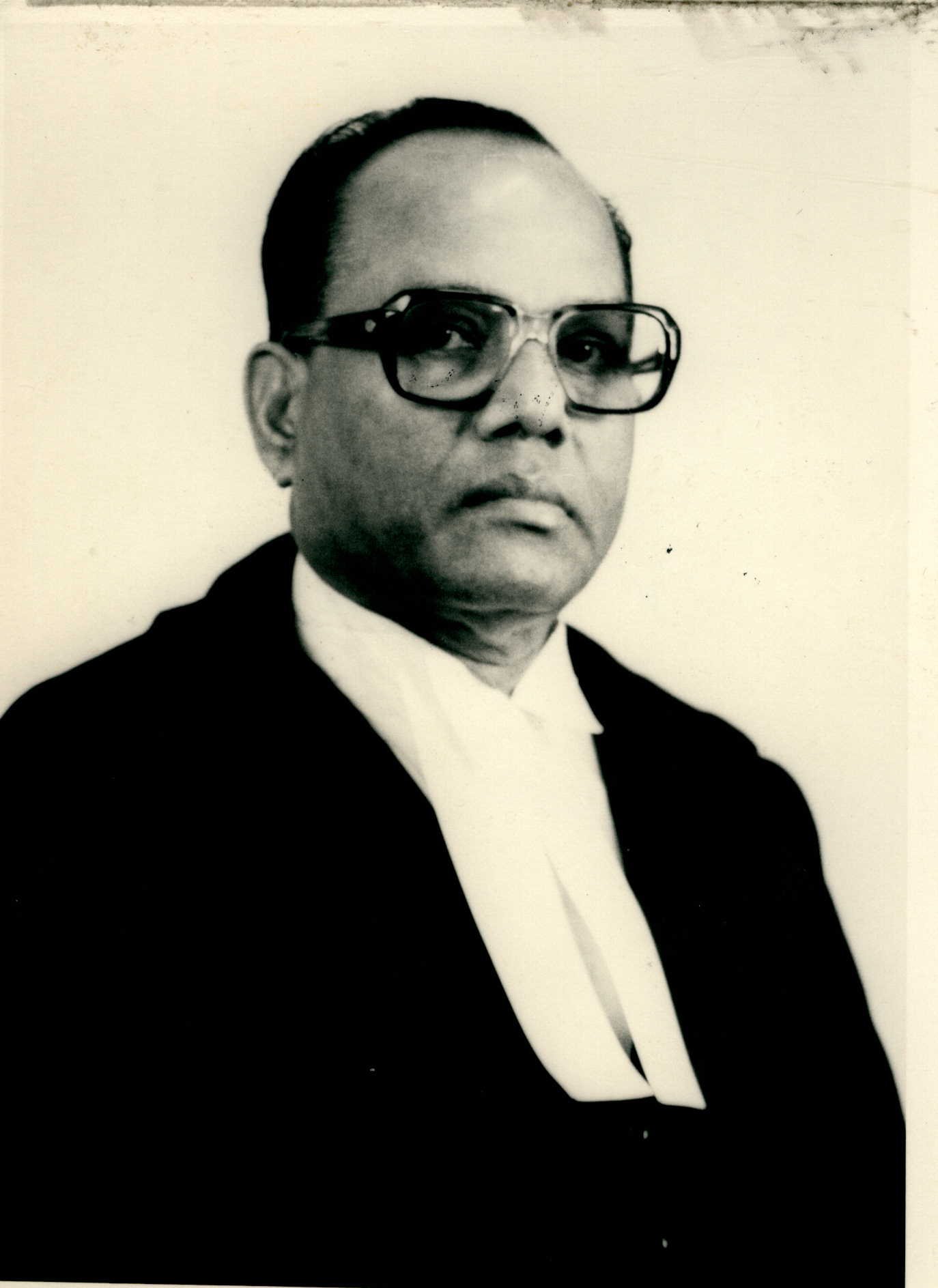
No Acts & Articles mentioned in this case
RAMDEO BHANDARI AND ORS. ETC. ETC.
v.
ELECTION COMMISSION OF INDIA AND ORS. ETC. ETC.
JANUARY 17, 1995
[AM. AHMADI, CJ, S.P. BHARUCHA AND
K. JAYACHANDRA REDDY, JJ.)
A
B
Constitution of India-Article 32-Powe?of Election Commission to
withhold elections for failure to issue identity cards-Elections to Legislative
Assembly of Bihar and Orissa-States not allowed elections for their failure C
to supply identity cards to 'all' eligible electors-Writ Petitions-State of Bihar
allowed to go to polls-Since State of Orissa had supplied photo identity cards
to 86% of voters-Election Commission not to enforce its instructions-Elec
tion.
The five year term of the Legislative Assemblies of two States, D
namely, the State of Bihar and Orissa were to expire on March 15, 1995.
To satisfy the mandate of Article 168 of the Constitution, elections in the
two states had to be completed before March 15, 1995. However, a Press
note was issued
by the Election Commission stating
tbat no poll would be
taken in
that State unless 'all' eligible electors were supplied electoral E
identity cards and a certificate to that
effect was furnished by the con·
cerned State Government.
Writ Petitions were filed by the petitioners apprehending that since
the
two States were not in a position to complete the requlrement
of
supplying photo identity cards to 'all' eligible electors before the last date F
fIXed for the same, elections might not take place in the said two States
thereby denying to the elecrtors thereof their constitutional right to elect
a
new assembly for their respective States.
As far as the State of
Orissa was concerned, the Election Commis·
sion stated that since the State of Orissa had virtually, complied with the G
direction, in that, it had supplied photo identity cards to almost 86% of
voters, the Commission will not enforce its instruction contained in the
Press Note. For the state of Bihar,
it was submitted that it was a wilful
defaulter since
it made no serious
effort to comply with the direction of
the Election Commission for the supply of identity cards. However,
it was H
321
322 SUPREME COURT REPORTS [1995) 1 S.C.R.
A alleged on behalf of the State that the Election Commission had no power
or authority to hold up or to threaten to hold up the election process if
the identity cards were not issued.
Dbpa.ing of the matter, this Court
B HELD : I. The State of Bihar had lagged far behind in implementing
the orders of the Election Comission. However, the Election Commission
is mindful
of the consequences that may follow should the two States not
be allowed to go to the polls for their failure to supply identity cards to
'all' eligible electors. The Commission assured that since elections to the
C legislative assembly of Bihar had been notified, the Election Commission
will not withhold the elections for want
of identity cards. The Election
Commission, however, desired
that the
State should undertake to complete
the entire exercise before September 30, 1995. No such undertaking having
been sought from the State of Orissa, the counsel for the State of Bihar
was asked
on receiving instructions in that behalf from his client to report
D within
four weeks. [325-G, 326-F, 327-C]
2. The Election Commission shall not withhold the elections to the
legislative assemblies of Bihar
and Orissa on the ground that the said
Governments had failed to complete the process of issuance of photo
Identity cards
by the deadline prescribed by it. There will be an interim
E stay in the said terms. The Election Commission will, however, be free to
take such other steps as
it considers necessary and are permissible to
ensure a fair
and free poll. [327-B]
ORIGINAL
JURISDICTION : Writ Petition (C) No. 2 of 1995 etc.
F etc.
(Under Article 32 of the Constitution of India.)
M. Chandrasekharan, Additional Solicitor General, Soli J. Sorabjee,
D.D. Thakur, G. Ramaswamy, F.S. Nariman, K.N. Bhatt, Raju
G Ramachandran, Gopal K. Jain, Mukul Mudgal, Rajeev Sharma, S. Murlid
har, Ms. Shomona Khanna, Niranjan Reddy, Raj Kumar Mehta, R.S.
Lambat, AK. Panda, Ravi P. Wadhwani, Ms. Leela Gupta, Gooptu, H.K.
Puri, AS. Bhasme, Kumar Rajesh Singh, B.B. Singh, A Subba Rao,
P.Parmeswaran and Navin Prakash for the appearing parties.
H In-person, (NP) In T.C. (C) No. 13/94.
1
..
R.D. BHANDARI r. ELECTION COMMN. 323
The following Order of the Court was delivered :
Article ln8 of the Constitution provides that every State shall ha1·e a
Legislature and Article
172(1) provides that every Legislative Assembly of
every
State, unless sooner dissolved, shall continue for five years from the
date appointed f~r its first meeting and no longer and the expiration of the
said period of
five years shall operate as a dissolution of the Assembly . Under this Article the five year term of the Legislative Assemblies of two
States, namely, the States of B1har and Orissa will expire on March 15,
1995. It is obvious that on the expiration of the said term of five years on
March
15, 1995, the assemblies of
the said two States will stand dissolved.
A
B
To satisfy the mandate of Article 168 it is necessary that elections should C
be held in the aforesaid two States in a manner that the election results
are declared before March
15, 1995. The latest
Press Note issued by the
Election Commission on December
8, 1994 states that the elections in the
States of Bihar and
Orissa would be completed before March 10, 1995.
Ordinarily no objection can be raised by either of the States to the schedule D
of elections fixed with a view to completing the same before March 15,
1995.
However, in paragraph 06 of the said Press Note it is ordained :
"A poll in any of these States will not be taken without the supply E
of electoral identity cards to all eligible electors. The State Govern
ment
will be called upon to furnish a certificate that photo identity
cards have been supplied to all eligible
electors."
On a plain reading of the said paragraph it is clear that unless 'all' eligible
electors are supplied electoral identity cards and a certificate to that effect
is not furnished by the concerned
State Government, no poll will be taken
in that State.
It is, therefore, apprehended by the petitioners of writ
petitions Nos. 2 and 6 of
1995 which concern the States of Bihar and
Ori"a
F
that since the said lwo States are not in a position to complete the
requirement of supplying photo identity cards to 'all' eligible electors
G
before the last date fixed for the same, elections may not be taken in the
said two
States thereby denying to the electors thereof their constitutional
right to elect a new a;sembly for their respective States. The petitioners
contend that that would tantamount to the eligible electors of the Stale
being denied their constitutional and democratic rigbt to elect a new H
324 SUPREME COURT REPORTS [1995) 1 S.C.R.
A assembly. This apprehension arises in the background of the following
events.
On August 2S, 1993, the Election Commission in purported exercise
of powers unJcr Rule
28 of the Registration of Elector Rules, 1960 read
B with Section
130(2) of the Representation of People Act, 1950, issued a
directive for the supply of photo identity cards to electors in the assembly
as well as parliamentary constituencies in each State, with a view to prevent
impersonation of electors and facilitating their identification at the polls.
It was also maJe clear in no uncertain terms that no polling at elections
for which the Election Commission
is responsible shall take place after
C January 1, 1995 unless 'all' eligible electors have been supplied with identity
cards. What features the identity cards shall bear
was also indicated with
a caution that 'there
will be no departure from these features in
any manner
whatsoever'. This
was followed by High Level Meetings at which certain
State Governments, including the representatives of the said two
States of
D Bihar and Orissa, pointed out certain difficultic·, in the impleme11<ation of
the said directive. The Chief Electi% Uflicers of the States \· cc held
responsible for maintaining the schedule for completion of the identity
cards to the electors before deadline fixed hv the Ekction Commis:-:on. On
May 1.1, 1994, the Election Commission wrote to the Chief Secretary and
Chief Election Officer, Bihar that there was virtually no progress made
E towards issuance of identity cards and added 'the commission hereby
forewarns you that the responsibility for any constitutional stalemate that
may arise because of your failure to comply with the instructions of the
Commission .........
will rest squarely with you and the State Government.'
This
was followed by a letter dated November 6, 1994 drawing the attention
F of the State of Bihar that the progress was very unsatisfactory and warned
that should any constitutional crisis arise on account of elections not being
held for want of identity cards, the responsibility
will rest squarely on the
State Government. Then by the letter of December 29, 1994, the Election
Commission stated thal the notification calling the elections would be
issued only after the receipt of the certificate from officers of the State
G Government that all eligible voters had been supplied with photo identity
cards.
By the order of November
30, 1994, the Election Commission stated
that in no case
will any request for extension of deadline be
entertain~d.
This gave rise to the apprehension that the elections to the legislative
assemblies of the States of Bihar and Orissa will not be held before March
H 15, 1995, for their failure to comply with the directive of giant of identity
R.D. BHANDARI v. ELECTION COMMN. 325
cards.
When the M-it petitions filed under Article 32 of the Constitution
came
up for
admission before us yesterday we heard counsel for the
petitioners, Shri Fali
S. Nariman for the State of
Orissa in Writ Petition
.A
Na. 6 of 1995 and Shri Soli J. Sorabjee in Writ Petition No.2 of 1995 and
Shri Bhat for the State of Bihar as well as counsel for the petitioner in Writ B
Petitions Nos. 4 and 37 of 1995 and Shri G. Ramaswamy, counsel for the
Election Commission at some length.
We
also heard them on the question
of grant of interim relief. During the course of the hearing Shri Soli J.
Sorabjee briefly indicated in writing the points arising for consideration.
Shri G. Ramaswamy, learned senior counsel for the Election Commission C
stated that since the State of Orissa had virtually complied with the
direction, in that,
it had supplied photo identity cards to almost 86% of
voters, the Election Commission
will not enforce its instruction contained
in paragrph
06 extracted earlier. In other words Shri Ramaswamy con
tended that in the State of Orissa elections will not be held up for want of
supply of identity cards to 'all' electors eligible to vote and for want of an
D
undertaking/certificate in that behalf from the
State Government. That
should settle the matter insofar
as
Orissa is concerned. As far as the State
of Bihar is concerned, Shri Rarnaswwny submitted that it was a willful
defaulter since
it made no serious effort to comply with its direction for
the supply of identity cards.
On the other hand Shri Bhat contended that E
the Chief Election Commissioner had failed to appreciate the economic as
well as the social conditions in Bihar and without taking into account the
ground realities had tried to press, nay, coerce the State into submission.
At that stage Shri Guptoo, the learned Advocate General for West Bengal,
who was in court, stated that as far as his State Government is concerned,
the Chief Election Commissioner had gone to the length of saying that
failure to implement his order would tantamount to a break down of the
constitutional machinery
in the state and threatened to inform the
Presi
dent of India accordingly. While there may be force in the submission that
F
the language used in the correspondence by the Election Commission is
unduly harsh and abrasive, ordinarily not U>ed in correspondence between G
high-level functionaries, the fact remains that the State of Bihar had lagged
far behind in implementing the orders of the Election Commission. Coun-
sel for the State of Bihar stated that his government was firmly of the
opinion that the Election Commission had no power or authority to hold
up or to threaten to hold up the election process if the identity cards were
H
326 SUPREME COURT REPORTS [1995] 1 S.C.R.
A not issued. This would be a larger question to be answered at the final
hearing.
Shri Ramaswamy
in the light of discussion made a statement at the
Bar and followed it up
by placing it in writing, which runs thus :
B
"The Commission has no intention of creating any constitutional
crisi~. Since 18 months' time has been given for completion of the
exercise, the deadline of
1.1.1995 fixed 18 months ago was insisted
upon.
c
D
E
Since elections to the legislative assembly of the
State of Bihar
have been notified, the Election Commission will not withhold the
elections on the ground that identity cards have not been supplied
to
all voters
provided the Government of Bihar gives an undertak
ing to this court that it will complete the exercise of issuing identity
cards before 30.9.1995.
The is without prejndice to the contentions of the parties to the
writ petitions.
Sd/-
(S.K. Mendiratta)
Secretary Election Commission
of India"
From the above statement it becomes clear that whatever the Elec
tion Coll'.mission may have said in the earlier correspondence and no
matter how forcefully it may have insisted, the Election Commission is
F mindful of the consequences that may follow should the two
States not be
allowed to go the polls for their failure to supply identity cards to 'all'
eligible electors.
It has also assured us that since elections to the legislative
assembly of Bihar have been notified, the Election Commission
will not
withhold the elections for want of identity cards. The Election Commission
G has, however, desired that the
State of Bihar should undertake to complete
the entire exercise before September 30, 1995. Such an undertaking would
ofconrse be without prejudice to the contentions of the parties. Shri Bhat
on the other hand contended that it
is the contention of the State Govern
ment that the Election Cotr.mission has no power or authority to withhold
elections for failure to issue identity cards and it cannot refuse to permit
H
an elector to cast his vote for want of such a card and, therefore, there is
R.D. BHANDARI v. ELECTION COMMN. 327
no question of the State of Bihar giving any such undertaking and in any A
case he cannot do so without the express authority of his client. We
appreciate his difficulty.
Taking
all the above facts and circumstances into consideration we
direct rule nisi to issue in all the four writ petitions and direct counsel to
complete the paper
books within four weeks. Printing dispensed with. B
We further direct that the Election Commission shall not withhold
the elections to the legislative assemblies of Bihar and Orissa on the ground
that the said Government had failed to complete the process of issuance
of photo identity cards by the deadline prescribed by it There will be an
interim
stay in the said terms. The Election Commission will, however, be C
free to take such other steps as it considers necessary and are permissible
to ensure a fair and free poll.
As regards the grant of undertaking, no such undertaking having
been sought from the State of Orissa, the learned counsel for the State of D
Bihar may obtain instructions in that behalf from his clients and report
wihin four weeks.
Let the
writ petitions come up with Transferred Cases Nos. 13, 14,
16 and 18 of 1994 and Civil Appeal No. 6106 of 1994 (Shri T.N. Seshan v.
State of West Bengal). E
Liberty to mention for early hearing.
Since the averments in the Writ Petitions filed subsequent to Writ
Petition No. 2 of 1995 are more or less identical we have mainly referred
to the averments in the first petition.
A.G. Matters disposed of.

 Login with google
Legal Notes
Add a Note....