
As per case facts, the appellant, in possession of a service station under a dealership agreement, filed a suit challenging a demolition notice issued by the Municipal Corporation for alleged ...

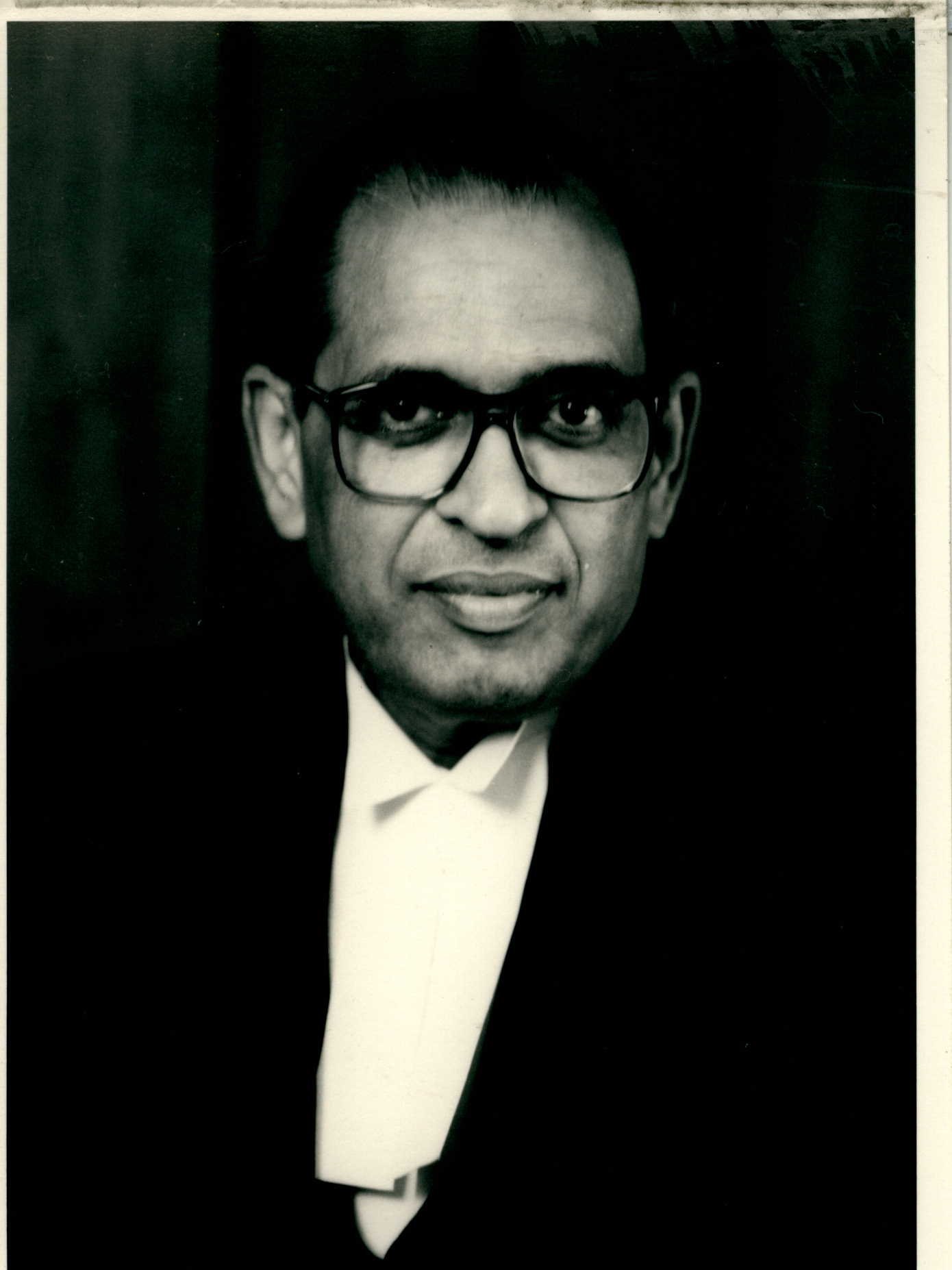
No Acts & Articles mentioned in this case
http://JUDIS.NIC.IN SUPREME COURT OF INDIA Page 1 of 9
PETITIONER:
RAMESH HIRANAND KUNDANMAL
Vs.
RESPONDENT:
MUNICIPAL CORPORATION OF GREATER BOMBAY AND ORS.
DATE OF JUDGMENT04/03/1992
BENCH:
FATHIMA BEEVI, M. (J)
BENCH:
FATHIMA BEEVI, M. (J)
AGRAWAL, S.C. (J)
CITATION:
1992 SCR (2) 1 1992 SCC (2) 524
JT 1992 (2) 116 1992 SCALE (1)530
ACT:
Civil Procedure Code, 1908 :
Order I, Rule 10-Impleadment of party by Court to a suit
as necessary party-Necessary to proper party-Who is-
Distinction between necessary and proper party-Suit filed by
a plaintiff, in possession of service station under an
agreement, with lessee thereof challenging validity of
notice issued by Municipal Corporation, for demolition of
structures raised by plaintiff as unauthorised-Lessee
seeking impleadment as additional defendant as necessary
party- Whether Court could direct plaintiff to add lessee as
defendant in suit-Whether Court has discretion to direct a
plaintiff, though dominus litis, to implead a person as a
necessary party.
Words and Phrases : Necessary or proper party-Meaning
of.
HEADNOTE:
Under a Dealership Agreement, the appellant was in
possession of a service station erected on the land held by
the second respondent- the Hindustan petroleum Corporation
limited, as lessee. The service station consisted of a
petrol pump in the ground floor and a structure with an open
terrace for parking of vehicles. The first respondent,
Municipal Corporation issued notice under section 351 of the
Municipal Corporation Act to the appellant for demolition of
two chattels on the terrace on the ground that these were
unauthorised constructions.
The appellant instituted a suit before the City Civil
Court, challenging the validity of the notice and for
injunction restraining the Municipal Corporation from
demolishing the structures. The Court granted an interim
injunction.
Thereafter, on an application filed by the second
respondent for being impleaded as additional defendant in
the suit on the ground that it had materials to show that
the constructions were unauthorised, and it was a necessary
party to the litigation, the court directed the appellant to
2
add the second respondent as defendant and amend the plaint
suitably rejecting the appellant's contention that the
second respondent was neither a necessary nor a proper party
http://JUDIS.NIC.IN SUPREME COURT OF INDIA Page 2 of 9
to be impleaded in the suit. The appellant's writ petition
challenging the aforesaid order was dismissed by the High
Court.
In the appeal, by special leave, before this Court, on
behalf of the appellant-plaintiff it was contended that the
appellant-plaintiff was dominus litis and, therefore, could
not be forced to join the second respondent Corporation as
defendant, that second respondent was neither a necessary no
a proper party to the suit and had no interest in the
subject-matter of the litigation and its presence was not
required to adjudicate upon the issue involved in the suit
or for the purpose of deciding the real matter and on the
contrary, its addition would enlarge the issue in the suit,
and that the Court could not direct addition of parties
against the wishes of the plaintiff, who could not be
compelled to proceed against a person against whom he did
not claim any relief.
On behalf of the respondent it was contended that the
second respondent had a right to be heard in the suit
inasmuch as the respondent was the lessee, who was not
answerable for the illegal actions of the appellant.
Allowing the appeal, this Court,
HELD : 1.1 Plaintiff is no doubt dominus litis and is
not bound to sue every possible adverse claimant in the
same suit. He may choose to implead only those persons as
defendants against whom he wishes to proceed. However,the
Court may at any stage of the suit direct addition of
parties. A party can be joined as defendant even though the
plaintiff does not think that he has any cause of action
against him. The question of impleadment of a party has to
be decided on the touch stone of Order 1 Rule 10 of the Code
of Civil Procedure,1908, which provides that only a
necessary or a proper party may be added. In the light of
the clear language of the Rule, it cannot be said that a
person cannot be added as defendant even in a case where his
presence is necessary to enable the Court to decide the
matter effectively. [6E-F, 7A-D]
1.2 A necessary party is one without whom no order can
be made effectively. A proper party is one in whose absence
an effective order can be made but whose presence is
necessary for a complete and final decision
3
on the question involved in the proceeding. The addition of
parties is generally not a question of initial jurisdiction
of the Court but of a judicial discretion which has to be
exercised in view of all the facts and circumstances of a
particular case. [7A-B]
1.3 The Court is empowered to join a person whose
presence is necessary for the prescribed purpose and cannot
under the Rule direct the addition of a person whose
presence is not necessary for that purpose. If the
intervener has a cause of action against the plaintiff
relating to the subject-matter of the existing action, the
Court has power to join the intervener so as to give effect
to the primary object of the order, which is to avoid
multiplicity of actions. [7E-F]
1.4 A clear distinction has been drawn between suits
relating to property and those in which the subject-matter
of litigation is a declaration as regards status or legal
character. In the former category, the rule of present
interest as distinguished from the Commercial interest is
required to be shown before a person may be added as a
party. [9E]
1.5 It cannot be said that the main object of the rule
is to prevent multiplicity of actions though it may
http://JUDIS.NIC.IN SUPREME COURT OF INDIA Page 3 of 9
incidentally have that effect. But that appears to be a
desirable consequence of the rule rather than its main
objective. The person to be joined must be one whose
presence is necessary as a party. What makes a person a
necessary party is not merely that he has relevant evidence
to give on some of the questions involved that would only
make him a necessary witness-and not merely that he has an
interest in the correct solution of some question involved
and has thought of relevant arguments to advance. The only
reason which makes it necessary to make a person a party to
an action is that he should be bound by the result of the
action and the question to be settled therefore, must be a
question in the action which cannot be effectully and
completely settled unless he is a party. The line has been
drawn on a wider construction of the rule between the direct
interest or the legal interest and commercial interest. It
is, therefore, necessary that person must be directly or
legally interested in the action in the answer, i.e., he can
say that the litigation may lead to a result which will
affect him legally, that is, by curtailing his legal rights.
it is difficult to say that the rule contemplates joining as
a defendant a person whose only object is to prosecute his
own cause of action. [9F-H, 10A-B]
4
Razia Begum v. Anwar Begum, [1959] SCR 1111, relied on.
Amon v. Raphael Tuck & Sons Ltd., (1956) 1 All E.R.
273 and Dollfus Mieg et Compagnie S.A. v. Bank of England,
(1950) 2 All E.R. 611, referred to.
2.1 In the instant case, the courts below have assumed
that the subject-matter of the litigation is the structure
erected by the respondent or, in other words, the service
station which has been allowed to be operated upon by the
appellant-plaintiff under the terms of the dealership
agreement. The notice does not relate to that structure but
is in relation to the two chattels stated to have been
erected by the appellant unauthorisedly. The second
respondent has no interest in these chattels,and the
demolition of the same in pursuance to the notice is not a
matter which affects the legal rights of the respondent.
[11G-H, 12A]
National Textile Workers' Union, etc. v. P.R.
Ramakrishnan and Ors., [1983] 1 SCR 922, distinguished.
2.2 It is true that being lessee of the premises,
second respondent Corporation has an answer for the action
proposed by the first respondent-Municipal Corporation
against the appellant but for the purpose of granting the
relief sought for by the appellant by examining the
justification of the notice issued by the Municipal
Corporation, it is not necessary for the Court to consider
that answer. Hence the presence of the respondent cannot be
considered as necessary for the purpose of enabling the
Court to effectually and completely adjudicate upon and
settle all the question involved in the suit. The
appellant is proceeded against by the first respondent-
Corporation for the alleged action in violation of the
municipal laws. The grievance of the second respondent
against the appellant,if any, could only be for violation of
the agreement and that is based on a different cause of
action. The consolidation of these two in the same suit in
neither contemplated nor permissible. [10F-H, 11A]
2.3 The courts below failed to note that the second
respondent has no direct interest in the subject-matter of
the litigation and the addition of the respondent would
result in causing serious prejudice to the appellant and the
substitution or the addition of a new cause of action would
http://JUDIS.NIC.IN SUPREME COURT OF INDIA Page 4 of 9
only widen the issue which is required to be adjudicated and
settled. By the joining of the party would embarrass the
appellant-plaintiff and issues
5
not germane to the suit would be required to be raised. The
mere fact that a fresh litigation can be avoided is no
ground to invoke the power under the Rule in such cases.
[12B-C]
National Textile Worker's Union, etc.v.P.R.
Ramakrishnan and Ors., [1983] 1 SCR 922, distinguished.
2.4 Therefore, the courts below were wrong in
concluding that the second respondent was a necessary or a
proper party to be added as a defendant in the suit
instituted by the appellant.
JUDGMENT:
CIVIL APPELLATE JURISDICTION : Civil Appeal No. 3570 of
1991.
From the Order dated 13.10.1989 of the Bombay High
Court in Writ Petition No. 4229 of 1989.
K. Parasaran, Joquium Reis and Kailash Vasdev for the
Appellants.
D.N. Mishra (for J.B.D. & CO.) and M.S. Ganesh for the
Respondents.
The Judgement of the Court was delivered by
FATHIMA BEEVI, J. We have to consider in this appeal
the question whether the second respondent is a necessary or
proper party to be joined as defendant under Order 1 Rule 10
of the Code of Civil Procedure, in the suit instituted by
the appellant against the first respondent.
Under the dealership Agreement of 1974, the appellant
is in possession of the service station erected on the land
held by the second respondent herein, the Hindustan
Petroleum Corporation Limited as lessee. The service
station consists of a petrol pump in the ground floor and a
structure with an open terrace for parking of vehicles. The
first respondent, the Municipal Corporation of Greater
Bombay issued notice dated 5.8.1988 under section 351 of the
Municipal Corporation Act to the appellant for demolition of
two chattles on the terrace on the ground that these were
unauthorised constructions. The appellant instituted the
suit No. 6181 of 1988 before the City Civil Court, Bombay,
challenging the validity of the notice and for injunction
restraining the Municipal Corporation from demolishing the
structures, Interim injunction was granted by the court.
6
On 9.9.1988, the second respondent applied for being
impleaded as additional defendant in the suit on the ground
that they have materials to show that the constructions are
unauthorised, and they are necessary parties to the
litigation. The Court by order dated 22.8.1989 directed the
appellant to add the second respondent as defendant and
amend the plaint suitably rejecting the contentions of the
appellant that the second respondent was neither a necessary
nor a proper party to be impleaded in the suit. The
appellant filed writ petition No. 4229 of 1989 under Article
227 of the Constitution of India in the High Court of Bombay
challenging the correctness of the order. The High Court by
the impugned judgment dismissed the writ petition. This
appeal by special leave is directed against the judgement of
the High Court dated 13.10.1989.
Three grounds have been urged by the learned counsel
for the appellant against the sustainability of the order.
http://JUDIS.NIC.IN SUPREME COURT OF INDIA Page 5 of 9
The plaintiff was dominus litis and, therefore, cannot be
forced to join the second respondent as defendant. The
second respondent is neither a necessary nor a proper party
to the suit. The addition of the respondent would enlarge
the issue in the suit. Reliance was placed on the decision
of this Court in Razia Begum v. Anwar Begum, [1959] SCR
1111.
It was argued that the Court cannot direct addition of
parties against the wishes of the plaintiff who cannot be
compelled to proceed against a person against whom he does
not claim any relief. Plaintiff is no doubt dominus litis
and is not bound to sue every possible adverse claimant in
the same suit. He may choose to implead only those persons
as defendants against whom he wishes to proceed though under
Order I Rule 3, to avoid multiplicity of suit and needless
expenses, all persons against whom the right to relief is
alleged to exist may be joined as defendants. However, the
Court may at any stage of the suit direct addition of
parties. A party can be joined as defendent even though the
plaintiff does not think that he has any cause of action
against him. Rule 10 specifically provides that it is open
to the Court to add at any stage of the suit a necessary
party or a person whose presence before the Court may be
necessary in order to enable the Court to effectually and
completely adjudicate upon and settle all the questions
involved in the suit.
Sub-rule(2) of Rule 10 gives a wide discretion to the
Court to meet every case of defect of parties and is not
affected by the inaction of the
7
plaintiff to bring the necessary parties on record. The
question of impleadment of a party has to be decided on the
touch stone of Order I Rule 10 which provides that only a
necessary or a proper party may be added. A necessary party
is one without whom no order can be made effectively. A
proper party is one in whose absence an effective order can
be made but whose presence is necessary for a complete and
final decision on the question involved in the proceeding.
The addition of parties is generally not a question of
initial jurisdiction of the Court but of a judicial
discretion which has to be exercised in view of all the
facts and circumstances of a particular case.
The respondents do not seriously dispute the position
that the second respondent is not a necessary party to the
suit in the sense that without their presence an effective
order cannot be passed. However, they support the view that
respondent No. 2 is a proper party whose presence is
necessary for a complete adjudication on the controversy. In
the light of the clear language of the Rule, it is not open
to the appellant to contend that a person cannot be added as
defendant even in a case where his presence is necessary to
enable the Court to decide the matter effectively.
The case really turns on the true construction of the
Rule in particular the meaning of the words "whose presence
before the Court may be necessary in order to enable the
Court effectually and completely to adjudicate upon and
settle all the questions involved in the suit." The Court is
empowered to join a person whose presence is necessary for
the prescribed purpose and cannot under the Rule direct the
addition of a person whose presence is not necessary for
that purpose. If the intervener has a cause of action
against the plaintiff relating to the subject-matter of the
existing action, the Court has power to join intervener so
as to give effect to the primary object of the order which
is to avoid multiplicity of actions.
http://JUDIS.NIC.IN SUPREME COURT OF INDIA Page 6 of 9
In the present case, the subject-matter of the dispute
between the appellant and the first respondent is the
demolition of the unauthorised construction in pursuance to
the notice under section 351 of the Bombay Municipal Act.
The second respondent, the lessee, in possession of the
service station asserts that the appellant has made an
unauthorised construction and the second respondent is in
possession of material evidence to that effect. No notice
has been issued to the second respondent by the
8
Municipal Corporation and no case of any collusion between
the appellant and the Municipal Corporation is alleged. On
the other hand, it is the case of the appellant that the
second respondent is instrumental in the initiation of the
proceedings by the Municipal Corporation against the
appellant and the present application is for collateral
purposes. In the light of such averments, it has to be
considered whether the second respondent is a necessary or
proper party in the present action.
The power of the Court to add parties under Order I
Rule 10, C.P.C, came up for consideration before this Court
in Razia Begum (supra). In that case it was pointed out that
the Courts in India have not treated the matter of addition
of parties as raising any question of the initial
jurisdiction of the Court and that it is firmly established
as a result of judicial decisions that in order that a
person may be added as a party to a suit, he should have a
direct interest in the subject-matter of the litigation
whether it be the questions relating to movable or immovable
property.
In that case the appellant instituted a case against
the third respondent inter alia for a declaration that she
was his lawfully married wife. The third respondent filed
his written statement admitting the claim but on the same
date respondents 1 and 2 made an application under Order I
Rule 10(2) of C.P.C., for being impleaded in the suit as
defendants on the grounds that they were respectively the
wife and son of the third respondent and that they were
interested in denying the appellant's status as wife and the
status of children as the legitimate children of the third
respondent; that the suit was the result of the collusion
between the appellant and the third respondent and that if
the appellant was declared to be lawfully wedded to the
third respondent, the rights and interests of respondents I
and 2 in the estate of the third respondent would be
affected. The application was contested by both the
appellant and the third respondent. The trial court allowed
the application and the order was confirmed by the High
Court in its revisional jurisdicyion . The question in the
appeal before this Court was whether the lower court did not
exceed their powers in directing the addition of respondents
1 and 2 as parties defendants in the action.
Sinha, J. speaking for the majority said that a
declaratory judgment in respect of a disputed status will be
binding not only upon parties actually before the Court but
also upon persons claiming through them respectively. The
Court laid down the law that in a suit relating to property
in order
9
that a person may be added as a party, he should have a
direct interest as distinguished from a commercial interest
in the subject-matter of the litigation. Where the subject-
matter of a litigation is a declaration as regards status or
a legal character, the rule of presence of direct interest
may be relaxed in a suitable case where the Court is of the
http://JUDIS.NIC.IN SUPREME COURT OF INDIA Page 7 of 9
opinion that by adding that party it would be in a better
position effectually and completely to adjudicate upon the
controversy. In cases covered by the statutory provisions of
sections 42 and 43 of the Specific Relief Act, the Court is
not bound to grant the declaration prayed for on a mere
admission of the claim by the defendant. If the Court has
reasons to insist upon a clear proof apart from the
admission, the result of a declaratory decree on the
question of status such as the controversy in that suit
affects not only the parties actually before the Court but
generation to come and in view of that consideration, the
rule of present interest as evolved by case law relating to
disputes about property does not apply with full force.
Applying the proposition enunciated to the facts of the
case, the Court came to the conclusion that the courts below
did not exceed their power in directing the addition of
respondents 1 and 2 as parties defendants in the action nor
it could be said that the exercise of the discretion was not
bound.
A clear distinction has been drawn between suits
relating to property and those in which the subject-matter
of litigation is a declaration as regards status or legal
character. In the former category, the rule of present
interest as distinguished from the commercial interest is
required to be shown before a person may be added as a
party.
It cannot be said that the main object of the rule is
to prevent multiplicity of actions though it may
incidentally have that effect. But that appears to be a
desirable consequence of the rule rather than its main
objectives. The person to be joined must be one whose
presence is necessary as a party. What makes a person a
necessary party is not merely that he has relevant evidence
to give on some of the questions involved; that would only
make him a necessary witness. It is not merely that he has
an interest in the correct solution of some questions
involved and has thought or relevant arguments to advance.
The only reason which makes it necessary to make a person a
party to an action is that he should be bound by the result
of the action and the question to be settled, therefore,
must be a question in the action which cannot be
effectually and completely settled unless he is a party. The
line has been drawn on wider construction of
10
the rule between the direct interest or the legal interest
and commercial interest. It is, therefore, necessary that
the person must be directly or legally interested in the
action in the answer, i.e., he can say that the litigation
may lead to a result which will affect him legally that is
by curtailing his legal rights. It is difficult to say that
the rule contemplates joining as a defendant a person whose
only object is to prosecute his own cause of action. Similar
provision was considered in Amon v. Raphael Tuck & Sons
Ltd., (1956) 1 All E.R. 273, wherein after quoting the
observations of Wynn-Parry, J. in Dollfus Mieg et Compagnie
S.A v. Bank of England,(1950) 2 All E.R.611, that the true
test lies not so much in an analysis of what are the
constituents of the applicants' rights, but rather in what
would be the result on the subject-matter of the action if
those rights could be established, Devlin, J. has stated:-
"The test is `May the order for which the plaintiff
is asking directly affect the intervener in the
enjoyment of his legal rights."
It has been strenuously contended before us that the
second respondent has no interest in the subject-matter
http://JUDIS.NIC.IN SUPREME COURT OF INDIA Page 8 of 9
of the litigation and the presence of the respondent is
not required to adjudicate upon the issue involved in
the suit or for the purpose of deciding the real matter
involved. It is pointed out that the subject-matter in
the suit is the notice issued by the Municipal
Corporation to the appellant and the issue is whether it
is justified or not. The Hindustan Petroleum Corporation
Limited is interested in supporting the Municipal
Corporation and sustaining the action taken against the
appellant. But that does not amount to any legal
interest in the subject-matter in the sense that the
order, if any, either in favour of the appellant or
against the appellant would be binding on this
respondent. It is true that being lessee of the
premises, the Hindustan Petroleum corporation Limited
has an answer for the action proposed by the Municipal
Corporation against the appellant, but for the purpose
of granting the relief sought for by the appellant by
examining the justification of the notice issued by the
Municipal Corporation, it is not necessary for the Court
to consider that answer. If that be so, the presence of
the respondent cannot be considered as necessary for the
purpose of enabling the Court to effectually and
completely adjudicate upon and settle all the questions
involved in the suit. The appellant is preeceded against
by the municipal Corporation for the alleged action in
violation of the municipal laws. The grievance of the
11
respondent against the appellant, if any, could only be
for violation of the agreement and that is based on a
different cause of action. The consolidation of these
two in the same suit is neither contemplated nor
permissible.
The learned counsel for the respondent on a reference
to the broad principles laid down in National Textiles
v. P.R.Ramakrishnan, [1983] 1 SCR 922, maintained that
the second respondent has a right to be heard in the
suit filed by the appellant against the Municipal
Corporation inasmuch as the respondent is the lessee who
is not answerable for the illegal action of the
appellant. It was held in that case that the workers of
a company are entitled to appear at the hearing of the
winding up petition whether to support or oppose it. The
court considered wider public interest involved and said
that in winding up of a company or changing its
management, the Court must take into consideration not
only the interest of the shareholders, creditors but
also amongst other things the interest of the workers
and that the workers must have an opportunity of being
heard for projecting and safeguarding their interest
before a winding up order is made by the Court. That
principal has no application in a civil litigation
where licensee questions the action of the legal
authority and the lessee would not be affected in
whatever way the decision is rendered.
The City Civil Judge in para 32 of the order said that
the Hindustan Petroleum Corporation Limited are the
lessees of the plot as also the premises, the plaintiff
is merely their dealer; they have a right, title and
interest in the suit premises and the applicants are
proper and necessary parties as they have interest in
the subject-matter of the litigation and their presence
will be necessary and proper to effectively adjudicate
upon and determine the cause of action in the suit. The
High Court also in confirming the order said that the
http://JUDIS.NIC.IN SUPREME COURT OF INDIA Page 9 of 9
notice which is challenged is in respect of structure
which belongs to the second respondent and the
respondent's presence is necessary for effective
adjudication.
The courts below have assumed that the subject-matter
of the litigation is the structure erected by the
respondent or in other words the service station which
has been allowed to be operated upon by the plaintiff
under the terms of dealership agreement. The notice does
not relate to that structure but is in relation to the
two chattels stated to have been erected by the present
appellant unauthorisedly. According to the appellant
these chattels/structures are moveables on wheels and
plates where servicing
12
page
and/or repairs are done and used for storing implements
of the mechanics. The second respondent has no interest
in these chattels and the demolition of the same in
pursuance to the notice is not a matter which affects
the legal rights of the respondent. The courts below,
therefore, failed to note that the second respondent has
no direct interest in the subject-matter of the
litigation and the addition of the respondent would
result in causing serious prejudice to the appellant and
the substitution or the addition of a new cause of
action would only widen the issue which is required to
be adjudicated and settled. By the joining of the party
would embarrass the plaintiff and issues not germane to
the suit would be required to be raised. The mere fact
that a fresh litigation can be avoided is no ground to
invoke the power under the Rule in such cases.
We are, therefore, of the view that the courts below
were wrong in concluding that the second respondent is a
necessary or a proper party to be added as a defendant
in the present suit instituted by the appellant.
We according allow the appeal and set aside the
impugned judgment. No order as to costs.
N.V.P. Appeal allowed.
13

 Login with google
Legal Notes
Add a Note....