
1
2026:CGHC:262
NAFR
HIGH COURT OF CHHATTISGARH AT BILASPUR
Judgment Reserved on : 05/12/2025
Judgment Pronounced on : 05/01/2026
FA No. 33 of 1993
1 - (Deleted) Madhav Saw (Died) Through Lrs. As Per Honble Court Order
Dated 11-07-2024
1.1 - Rampyari Tamrakar Wd/o. Late Shri Madhow Sao Tamrakar Aged About
65 Years R/o. Village - Pandariya Gandai, Tehsil - Khairagarh, District -
Rajanandgaon (C.G.)
1.2 - Anil Tamrakar S/o. Madhow Sao Tamrakar Aged About 48 Years R/o.
Village - Pandariya Gandai, Tehsil - Khairagarh, District - Rajanandgaon
(C.G.)
1.3 - Sunil Tamrakar (Died) Through Lrs Nill
1.3.1 - (A) Divya Tamrakar W/o. Sunil Tamrakar Aged About 40 Years R/o.
Village - Pandariya Gandai, Tehsil - Khairagarh, District - Rajanandgaon
(C.G.)
1.3.2 - (B) Kumari Bhumika D/o. Sunil Tamrakar Aged About 16 Years R/o.
Village - Pandariya Gandai, Tehsil - Khairagarh, District - Rajanandgaon
(C.G.) - Through Her Natural Guardian Appellant 3 (A) (Mother)
1.3.3 - (C) Suryansh Tamrakar S/o. Sunil Tamrakar Aged About 12 Years R/o.
Village - Pandariya Gandai, Tehsil - Khairagarh, District - Rajanandgaon
(C.G.) - Through His Natural Guardian Appellant 3 (A) (Mother)
1.3.4 - (D) Dudhransh S/o. Sunil Tamrakar Aged About 10 Years R/o. Village -
Pandariya Gandai, Tehsil - Khairagarh, District - Rajanandgaon (C.G.) -
Through His Natural Guardian Appellant 3 (A) (Mother)
1.4 - Vinod Tamrakar S/o. Madhow Tamrakar Aged About 42 Years R/o.
Village - Pandariya Gandai, Tehsil - Khairagarh, District - Rajanandgaon
(C.G.)
1.5 - Jitesh Tamrakar S/o. Madhow Tamrakar Aged About 38 Years R/o.
Village - Pandariya Gandai, Tehsil - Khairagarh, District - Rajanandgaon
(C.G.)
2
1.6 - Shailesh Tamrakar S/o. Madhow Tamrakar Aged About 36 Years R/o.
Village - Pandariya Gandai, Tehsil - Khairagarh, District - Rajanandgaon
(C.G.)
1.7 - Praveen Tamrakar S/o. Madhow Tamrakar Aged About 34 Years R/o.
Village - Pandariya Gandai, Tehsil - Khairagarh, District - Rajanandgaon
(C.G.)
1.8 - Rampal Tamrakar (Died) Through Lrs. (As Per Honble Court Order
Dated 12-12-2024)
1.8.1 - (A) Rashmi Tamrakar Wd/o Late Shri Rampal Tamrakar Aged About 54
Years R/o Ward No. 6 Gandai, Post Office Gandai, Pandariya, District
Khairagarh Chhuikhadan Gandai, Chhattisgarh.
1.8.2 - (B) Kumari Disha Tamrakar D/o Late Shri Rampal Tamrakar Aged
About 17 Years R/o Ward No. 6 Gandai, Post Office Gandai, Pandariya,
District Khairagarh Chhuikhadan Gandai, Chhattisgarh.
1.8.3 - (C) Abhyav Tamrakar S/o Late Shri Rampal Tamrakar Aged About 13
Years R/o Ward No. 6 Gandai, Post Office Gandai, Pandariya, District
Khairagarh Chhuikhadan Gandai, Chhattisgarh.
1.9 - Shyampal Tamrakar S/o. Madhow Tamrakar Aged About 30 Years R/o.
Village - Pandariya Gandai, Tehsil - Khairagarh, District - Rajanandgaon
(C.G.)
... Appellants
Versus
1 - (Deleted) Rambha Devi As Per Honble Court Order Dated 11-07-2024
2 - Padmraj S/o Umed Sao Aged About 27 Years R/o Village Gandai, Tahsil
Khairagarh, District Rajnandgaon (C.G.)
3 - Dharmraj S/o Umed Sao Aged About 25 Years R/o Village Gandai, Tahsil
Khairagarh, District Rajnandgaon (C.G.)
4 - Dhanraj S/o Umed Sao Aged About 21 Years R/o Village Gandai, Tahsil
Khairagarh, District Rajnandgaon (C.G.)
5 - Pukraj S/o Umed Sao Aged About 18 Years R/o Village Gandai, Tahsil
Khairagarh, District Rajnandgaon (C.G.)
6 - Annraj S/o Umed Sao Aged About 21 Years R/o Village Gandai, Tahsil
Khairagarh, District Rajnandgaon (C.G.)
7 - Ram Dulari Bai D/o Umed Sao Aged About 25 Years R/o Village Gandai,
Tahsil Khairagarh, District Rajnandgaon (C.G.)
8 - Kumud Bai D/o Umed Sao Aged About 23 Years R/o Village Gandai,
Tahsil Khairagarh, District Rajnandgaon (C.G.)
9 - Ketki Bai W/o Dr. Swasth Lal Tamrakar Aged About 30 Years Tamarapara,
Durg (C.G.)
10 - Beni Bai (Died) Through Lrs As Per Honble Court Order Dated 11-07-
2024
3
10.1 - (A) Prabhat Kumar Tamrakar S/o. Kamta Prasad Tamrakar Aged About
30 Years R/o. Near Jain Mandir, Durg (C.G.)
10.2 - (B) Alok Tamrakar S/o. Kamta Prasad Tamrakar Aged About 26 Years
R/o. Near Jain Mandir, Durg (C.G.)
10.3 - (C) Arvind Tamrakar S/o. Kamta Prasad Tamrakar Aged About 24 Years
R/o. Near Jain Mandir, Durg (C.G.)
11 - Santoo Sao (Died) Through Lrs As Per Honble Court Order Dated 19-08-
2025.
11.1 - Smt. Lata Devi Tamrakar W/o Late Shri Santo Sao Aged About 70
Years Village- Tamer, Nawagaon, Post- Salhewara, Tehsil- Salhewara, District
Khairagarh Chhuikhadan Gandai, C.G.
11.2 - Rajkumar Tamrakar S/o Late Shri Santu Sao Aged About 45 Years
Village- Tamer, Nawagaon, Post- Tamer, Nawagaon, Post- Salhewara, Tehsil-
Salhewara, District Khairagarh Chhuikhadan Gandai, C.G.
11.3 - Smt. Pushpadevi (Died) Through L.R. Priya Mandavi D/o Jairam
Mandavi Aged About 21 Years R/o Ward No. 06, Gandai, District Khairagarh
Chhuikhadan Gandai, C.G.
11.4 - Jitesh Tamrakar S/o Late Shri Santu Sao Aged About 38 Years Village-
Tamer, Nawagaon, Post- Salhewara, Tehsil- Salhewara, District Khairagarh
Chhuikhadan Gandai, C.G.
11.5 - Yugal Kishor Tamrakar S/o Late Shri Santu Sao Aged About 35 Years
R/o Ward No. 06, Gandai, Post And Tehsil Gandai, District Khairagarh
Chhuikhadan Gandai, C.G.
11.6 - Laxmi Bai W/o Anil Tamrakar Aged About 32 Years R/o Lal Bahadur
Nagar, Ward No. 06, Tehsil- Lal Bhadur Nagar, Block- Dongargarh, District
Rajnandgaon, C.G.
12 - Ganesh Sao (Died) Through Lrs As Per Honble Court Order Dated 19-
08-2025.
12.1 - Smt. Usha Devi W/o Radhe Tamrakar Aged About 67 Years Village
Tamerpara, Durg, C.G.
12.2 - Ashwani Tamrakar S/o Ganesh Sao Tamrakar Aged About 65 Years
Gandai, (K.C.G.)
12.3 - Smt. Indu Tamrakar W/o Shri Tekchandra Tamrakar Aged About 60
Years Village- Tamerpara, Durg, Besides Sharda Talkies, Durg, C.G.
12.4 - Smt. Kiran Tamrakar W/o Shri Chandradeep Tamrakar Aged About 58
Years Village- Tamerpara, Durg, C.G.
... Respondents
For Appellants/Defendant No. 3: Mr. Hemant Kumar Agrawal and
Ms. Vaishali Jeswani, Advocates
For Respondents No. 2 to 9 and
10 (a) to (c)
: Mr. Priyank Rathi, Advocate
4
Hon’ble Shri Justice Rakesh Mohan Pandey
C A V Judgment
1.This appeal under Section 96 of the Code of Civil Procedure has been
preferred by the legal representatives of defendant No. 3 against the
judgment and decree passed by the Additional Judge, Khairagarh to
the Court of District Judge, Rajnandgaon in Civil Suit No. 7-A/87 dated
09.01.1993, whereby the learned trial Court decreed the suit filed by
the plaintiffs and it was held that the sale deed dated 21.02.1976
executed by defendant No. 1 in favour of defendants No. 2 and 3 is not
binding on the plaintiffs and further declared the plaintiffs owner of the
suit property mentioned in Schedule-A. The learned trial Court ordered
the original defendant No. 3, Madhav Sao to hand over the possession
of the suit property to the plaintiffs.
2.The plaintiffs pleaded that the suit property bearing Survey No. 3/1
admeasuring 32 decimal situated in Village Kopebhatha was
purchased by Ummed Sao from Lal Dogendra Shah for the sale
consideration of Rs. 1,500/- through a registered sale deed dated
16.11.1957. The plaintiffs constructed a house in the year 1965-66 and
left some area open. In the year 1967-68, the father and mother of
defendant No.1 were murdered, and defendant No. 1 was sent to jail
for charges of murder of his parents. In the year 1969, defendant No. 1
was released from jail and approached the original plaintiff-Ummed
Sao and requested shelter. The original plaintiff-Ummed Sao, provided
him shelter, and he started residing in some portion of the suit house
with the permission of the original plaintiff. Pancham Sao, the father of
5
defendant No. 1, was the uncle of the original plaintiff-Ummed Sao,
and he used to live in the plaintiff’s house whenever he visited Gandai
or Pandariya. Pancham Sao died on 19.02.1968, and during his
lifetime, he never challenged the sale deed dated 16.11.1957.
Defendant No. 1 entered into an agreement on 07.05.1975 with the
plaintiff and assured that he would vacate the part of the suit house in
the month of May 1975. He also admitted the fact that he has no right
or title over the suit property, and he was residing there with the
permission of the original plaintiff. Defendant No. 1 failed to provide the
vacant possession to the plaintiff on 08.05.1975 and granted shelter to
one Chandrikaprasad Pandey. The original plaintiff published the notice
in Dainik Savera Newspaper on 13.02.1976 and Dainik Deshbandhu
Newspaper on 21.02.1976, Raipur Edition, urging the general public
not to purchase the subject suit property. On 21.02.1976, the original
defendant No. 1 executed a sale deed in favour of defendant No. 2-
Ganesh Sao and defendant No. 3 Madhow Sao for a sale
consideration of Rs.40,000/-. In the year 1976, defendant No. 1 was
residing in Village Navagaon. A proceeding under Section 145 of
Cr.P.C. was drawn, and it was registered as Misc. Case No. 179/76.
The Sub-Divisional Magistrate passed an order on 13.10.1978 and
held that defendant No. 1 Santoo Sao was residing in the suit property
and defendants No. 2 and 3 are in possession. The plaintiffs preferred
a revision against the order dated 13.10.1978, and it was dismissed
vide order dated 22.11.1979 by the learned Additional Sessions Judge.
Chandrika Prasad Pandey vacated the suit house in the first week of
May 1980, but handed over the keys to defendant No. 2 Ganesh Sao.
The original plaintiff Ummend Sao filed a suit seeking a declaration of
6
title, possession, permanent injunction and further declaration that the
sale deed dated 21.02.1976 executed by defendant No.1 in favour of
defendants No. 2 and 3 is not binding upon the plaintiffs and they have
no right over the suit property.
3.Defendant No. 1 filed a written statement and denied the plaint
averments. He pleaded that his father, Pancham Sao, had trust in the
original plaintiff, Ummed Sao and had business relations too. It is
pleaded that the suit property was purchased by his father, Pancham
Sao, and the consideration was paid by him, but Ummed Sao, in a
deceitful manner, got the sale deed registered in his name.
4.Defendant No. 3 filed a written statement and denied the plaint
averments. He stated that he was in possession of the suit property. It
is further stated that the financial condition of Ummed Sao was not
sound, and he was not in a position to arrange Rs.1,500/- in the year
1957 to purchase the suit land. It is pleaded that Pancham Sao was an
able person, and Ummed Sao was working under Pancham Sao. It is
also pleaded that the sale consideration of Rs.1,500/- was given by
Pancham Sao to Ummed Sao to purchase the suit property, but
Ummed Sao got the sale deed registered in his name. It is also stated
that mere entry in the revenue records would not confer any right.
Defendant No. 3 further pleaded that in the year 1965, the house was
constructed over the suit property by Pancham Sao and the open land
area was permitted to be used by the original plaintiff, Ummed Sao. It
is also pleaded that Pancham Sao stayed in the suit house as an
owner till his death, and he has no right or title over the suit property. It
is pleaded that the document dated 07.05.1975 is a forged document.
7
It is also pleaded that the suit property was sold by defendant No.1 by
executing a registered sale deed dated 21.02.1976 for a sale
consideration of Rs.40,000/- in favour of defendants No. 2 and 3. He
further pleaded that the advance amount of Rs.5,000/- was received by
Pancham Sao during his lifetime. It is also pleaded that the cause of
action arose on 21.02.1976, whereas the suit was filed on 08.05.1980
after 12 years, thus, the same is barred by limitation.
5.The learned trial Court framed issues as under:-
1.A)Whether the suit property was purchased by the
original plaintiff- Ummed Sao from the money provided
by the father of defendant No. 1 and it remained in his
ownership ?
B)Whether the original plaintiff- Ummed Sao
fraudulently got registered the sale deed in his favour
taking advantage of close relationship between Ummed
Sao and the father of defendant No. 1?
C)Whether the plaintiff- Ummed Sao is not the real
owner of the suit property ?
2.Whether defendant No.1 was residing in the suit house
with the prior permission of the original plaintiff since
1969 ?
3.A)Whether the plaintiff took the signature of
defendant No.1 on a blank stamp paper on 07.05.1975 ?
B)Whether the plaintiff wrote contents of the
agreement dated 07.05.1975 by deceiving the defendant
No.1 and without his knowledge ?
4.Whether the sale deed dated 21.02.1976 granted valid
title of the suit property to the defendants No. 2 and 3 ?
5.Whether the suit is barred by limitation ?
6.Costs and expenses ?
Additional issues:-
1.Whether the sale deed dated 21.02.1976 was
executed in favour of the defendants No. 2 and 3 without
sale consideration ?
8
2.Whether the defendant No. 2 malafidely sold his part
of undivided suit house to the defendant No. 3 through the
registered sale deed dated 09.05.1980 without acquiring
any title thereto? If so, what is the effect ?
6.The original plaintiff exhibited the registered sale deed dated
16.11.1957 (Exhibit P/1) executed by Lal Dongendra Shah in favour of
the original plaintiff, Ummed Sao. The plaintiff exhibited the original
sale deed before the learned trial Court. Exhibit P/3 is the registered
sale deed dated 21.02.1976 executed by Santoo Sao in favour of
Ganesh Ram and Madhow Prasad. Exhibit P/5 is a transfer deed dated
09.07.1980, whereby Ganesh Sao transferred his share in favour of
Madhow Prasad for a sale consideration of Rs.11,000/-. Exhibit P/6 to
Exhibit P/10 are postal receipts and a copy of legal notices. Exhibit
P/11 is the order dated 22.11.1979 passed by the Additional Sessions
Judge, Rajnandgaon, against the order dated 13.10.1978 passed by
the Sub-Divisional Magistrate, Khairagarh. Exhibit P/13 and Exhibit
P/14 are revenue records wherein the name of Ummed Sao is entered
against the suit property. Exhibit P/15 and Exhibit P/16 are Newspaper
clips. Exhibit P/17 and Exhibit P/18 are orders of diversion. Exhibit
P/23 is a copy of Rin-Pustika (Land account). Exhibit P/25 to Exhibit
P/34 are revenue records, wherein the name of Ummed Sao is
mentioned as the owner and title holder of the suit property. Exhibit
P/36 is the assessment order of the original plaintiff, Ummed Sao, for
the years 1957-58 issued by the Income-Tax Department and
according to this document, the total income of the original plaintiff in
the said financial year was Rs.4,100/-. Vide Exhibit P/37, Exhibit P/38,
Exhibit P/39 and Exhibit P/40, the original plaintiff purchased some
more plots from Dhurwa, Rukhmin Bai. Bagela and Piyar.
9
7.Dharamraj S/o Ummed Sao was examined as PW-1. Ramji Lal
Deshmukh was examined as PW-2. Mahesh Sao was examined as
PW-3. Whereas, defendant No. 3 (Madhow Prasad) was examined as
DW-1, Itwari Ram as DW-2, Shanker Prasad Choubey as DW-3,
Laxman Singh as DW-4, Swadesh Pandey as DW-5, Sonu Ram as
DW-6 and Tirath Prasad as DW-7. The defendants did not exhibit any
documents. Ummed Sao died in the year 1981 after filing the suit.
Defendant No. 1 though, filed his written statement, but was proceeded
ex parte.
8.The learned trial Court found Ex. P/1, sale deed dated 16.11.1957,
genuine and authentic on the ground that the original plaintiff produced
it from lawful possession, and it is 30-year-old document. The learned
trial Court further held that neither the plaintiff pleaded that the sale
consideration was provided by Pancham Sao to purchase the suit
property nor did defendant No. 1 lead evidence to prove this fact. The
learned trial Court held that the sale deed Ex. P/1 cannot be held as a
benami transaction. The learned trial Court also held that as the
defendants disputed the due execution of the sale deed, Ex. P/1, the
primary burden to prove that it was a forged document was on the
defendant. It is held that Lal Dogendra Shah, the owner of the suit
property, was alive at that time, but the defendants failed to examine
him to prove that the sale consideration was provided by Pancham
Sao. Defendant No. 3 in para- 9 of his written statement admitted the
fact that he had received a legal notice issued by Ummed Sao, wherein
it was stated that the he is the title holder of the suit property and thus,
the learned trial Court has held that defendants No. 2 and 3 had the
knowledge with regard to the ownership of Ummed Sao of the suit
10
property. The learned trial Court further held that defendants No. 2 and
3 were not the bona fide purchasers. The learned trial Court held that
the original plaintiff-Ummed Sao, was the brother of Pancham Sao, and
this fact has been admitted by defendant No. 3 in his evidence. He
admitted the fact that the financial status of Ummed Sao was sound.
The learned trial Court further placed reliance on Ex. P/36, assessment
of income of Ummed Sao for the year 1957-58. The learned trial Court
further placed reliance on the sale deed executed in favour of the
original plaintiff, Ummed Sao, vide Ex. P/37 for the sale consideration
of Rs.100/-, Ex. P/38, sale deed worth Rs.2,000/-, and Ex. P/40, sale
deed worth Rs.100/-. The learned trial Court also held that after the
murder of the parents of defendant No. 1, Santoo Sao sought shelter in
the house of Ummed Sao. It is also held that the suit house was
constructed under the supervision of Ummed Sao, and Pancham Sao
was never in possession of the suit house.
9.The revenue documents would show that the suit property was entered
in the name of Ummed Sao. The order of diversion was also passed in
favour of Ummed Sao. The learned trial Court recorded a finding that
the sale deed, Ex. P/1 is not the outcome of fraud; rather, it was a sale
deed executed by Lal Dogendra Shah in favour of Ummed Sao. The
learned trial Court held that the agreement dated 07.05.1975, Ex. P/59
was executed by Santoo Sao himself, and it was drafted by PW-2
Ramji Lal Deshmukh. It is further held that defendant No. 1 never
acquired title or right over the suit property and therefore, he had no
right to execute a sale deed in favour of defendants No. 2 and 3. The
learned trial Court further held that the cause of action arose on
21.02.1976 when the sale deed was executed by defendant No. 1 in
11
favour of defendants No. 2 and 3, and thus, the suit was filed within a
period of 12 years from the said date.
10.Mr. Hemant Kumar Agrawal, learned counsel appearing for the
appellants/defendant No. 3, would submit that DW-1 Madhow Prasad,
in his evidence, categorically stated that the financial condition of
Ummed Sao was not sound and Ummed Sao deceitfully got the sale
deed registered in his favour. Mr. Agrawal would further submit that
PW-3 Mahesh Sao, in para-5, has admitted the fact that the financial
condition of Pancham Sao was sound as he was a moneylender.
Madhow Prasad has stated that Ummed Sao never remained in
possession of the suit property, and likewise, DW-2 Itwari Ram has
stated similarly. Mr. Agrawal would also submit that DW-3 Shanker
Prasad Choubey has stated that the suit house was constructed by
Pancham Sao in the year 1957-58, and Chandrikaprasad Pandey was
a tenant. The witnesses- DW-4 Laxman Singh, DW-5 Swadesh
Pandey, DW-6 Sonu Ram and DW-7 Tirath Prasad have supported the
case of defendant No. 3. Mr. Agrawal would further contend that PW-1
Dharamraj has admitted the fact that the suit house was in possession
of Pancham Sao, and open land is in their possession. He would
contend that the mere entries in the revenue records would not confer
any right in favour of Ummed Sao. He would also contend that the
registration of the sale deed in favour of Ummed Sao would not confer
title in his favour. He would state that the suit was not filed within 12
years from the date of the execution of the sale deed dated
16.11.1957. Thus, the suit was barred by limitation. Mr. Agrawal would
further state that the sale deed was executed by defendant No. 1 in
favour of defendants No. 2 and 3 on 21.02.1976, and for the
12
cancellation of the sale deed, the limitation period according to Article
59 of the Limitation Act is 03 years, which expired on 20.02.1979,
whereas the suit was filed on 08.05.1980. Thus, the suit was barred by
limitation. Mr. Agrawal has placed reliance on the judgment passed by
the Hon’ble Supreme Court in the matter of Mallavva and Another Vs.
Kalsammanavara Kalamma (Since Dead) by Legal Heirs and
Others, reported in 2024 SCC OnLine SC 3846, wherein it is held that
as the suit was filed for cancellation of the sale deed and recovery of
possession, which would suggest that the plaintiff has already lost his
title, and therefore, the period of limitation would be three years and
not twelve years. He would pray to set aside the judgment and decree
passed by the learned trial Court.
11.Mr. Priyank Rathi, learned counsel appearing for respondents No. 2 to
9 and 10 (a) to (c) would contend that the defendants neither pleaded
nor proved the ingredients of adverse possession. He would contend
that defendant No. 1 failed to plead and prove the date of hostile
possession and the period of its continuation. He would further submit
that defendant No. 1 failed to file counter claim seeking relief of
ownership on the principle of adverse possession. In this regard, Mr.
Priyank Rathi has placed reliance on the judgment passed by the
Hon’ble Supreme Court in the matter of Kishundeo Rout & Ors. Vs.
Govind Rao & Ors., Neutral Citation: 2025 INSC 956.
12.Mr. Rathi would further argue that the defendants in their written
statement have pleaded independent title on the ground that the suit
property was purchased by Pancham Sao; at the same time, defendant
No. 1 has taken the plea of adverse possession. He would also argue
that the claim of independent title and adverse possession at the same
13
time amounts to contradictory pleas. In this regard, Mr. Rathi has
placed reliance on the judgment passed by the Hon’ble Supreme Court
in the matter of Government of Kerala and Another Vs. Joseph and
Others, reported in (2023) 17 SCC 400.
13.With regard to the period of limitation, Mr. Rathi would submit that the
original plaintiff filed the suit for declaration of title and recovery of
possession based on title. He would contend that the computation of
the limitation period is to be reckoned in accordance with Article 65 of
the Limitation Act. He would also contend that the substantial relief
sought by the plaintiffs is of possession based on title. In this regard,
he has placed reliance on the judgment passed by the Hon’ble
Supreme Court in the matter of Mallavva (supra).
14.Mr. Rathi would state that the suit property was purchased by the
original plaintiff, Ummed Sao, from Lal Dogendra Shah through a
registered sale deed dated 16.11.1957 for a sale consideration of
Rs.1,500/-. The application moved by the original plaintiff for diversion
was allowed by the competent authority and the suit house was
constructed by the original plaintiff, Ummed Sao. He would contend
that defendant No.1 was provided shelter by the original plaintiff and
defendant No. 1 never acquired title over the suit property; therefore,
he had no authority of law to execute a sale deed in favour of
defendants No. 2 and 3. He would also contend that the defendants
could not adduce a single documentary evidence to establish the fact
that defendant No. 1 had never acquired the right over the suit
property. He has placed reliance on the judgment passed by the
Hon’ble Supreme Court in the matter of Kizhakke Vattakandiyil
Madhavan (Dead) Thr. LRs. Vs. Thiyyurkunnath Meethal Janaki
14
and Ors, 2024 SCC OnLine 517, wherein it is held that the execution
of the sale deed without ownership does not entitle the transferee or
his successor to claim any right based on such deed. Mr. Rathi would
submit that the appeal deserves to be dismissed.
15.I have heard learned counsel for the parties and perused the records of
learned Court below with utmost circumspection.
16.The Questions for Determination would be:-
(i)Whether the learned trial Court rightly decreed the suit ?
(ii)Whether the defendant No. 1 had the authority of law to
execute the sale deed in favour of defendants No. 2 and 3 ?
17.The admitted facts are that the late Ummed Sao purchased the suit
property bearing Survey No. 3/1 ad-measuring 32 decimal through a
registered sale dated 16.11.1957 from one Lal Dogendra Shah. The
parents of defendant No.1 were murdered in the year 1967-68, and
defendant No. 1 was arrested in the aforesaid crime. He was acquitted
in the year 1969. A house is constructed over half of the suit property of
open land. Open land is in possession of the plaintiffs. The plaintiffs are
the legal heirs of late Ummed Sao. Defendant No. 1 alienated the suit
property through a registered sale deed dated 21.02.1976 to
defendants No. 2 and 3. Subsequently, defendant No. 2 executed a
relinquishment deed in favour of defendant No. 3.
18.The plaintiffs filed the civil suit claiming therein the relief of declaration
of title, possession and permanent injunction. They sought a
declaration that the sale deed executed by defendant No. 1 in favour of
defendants No. 2 and 3, dated 21.02.1976, is not binding upon them.
15
19.Defendants No. 1 and 3 filed a written statement and denied the plaint
averments.
20.The owner of the suit property was Lal Dogendra Shah, and this fact
has not been disputed by the defendants. He executed a sale deed in
favour of late Ummed Sao on 16.11.1957 vide Ex. P/1. Defendants No.
1 and 2 took a plea that the suit property was purchased by late
Ummed Sao in favour of Pancham Sao. Pancham Sao is the father of
the defendant No.1.
21.Perusal of Ex. P/1, the sale deed dated 16.11.1957 would show that
the sale deed was executed by Shri Lal Dogendra Shah in favour of
Ummed Sao for a sale consideration of Rs.1,500/- and possession was
also handed over. The sale deed was drafted by PW-2 Ramji Lal
Deshmukh. The recital of the sale deed would show that there was a
transaction between Lal Dogendra Shah and Ummed Sao, and there is
no whisper that the suit property was purchased by Ummed Sao on
behalf of Pancham Sao. PW-2 has proved the contents of Ex. P/1. In
cross-examination, he stated that the financial condition of Ummed
Sao was sound. Further, the original sale deed was produced by the
plaintiffs before the learned trial Court.
22.Taking into consideration the recital of the sale deed and evidence of
Ramji Lal (PW-2), in my opinion, the sale deed was not an outcome of
fraud.
23.With regard to the benami transaction, as argued by Mr. Hemant
Kumar Agrawal, the sale deed was executed by Lal Dogendra Shah in
favour of Ummed Sao, and it was a valid contract. The defendants
could not establish that there was any benami transaction between the
parties, and a mere assertion that the suit property was purchased by
16
late Ummed Sao for late Pancham Sao is not admissible in the
absence of clinching evidence.
24.A plea of fraudulent transaction was taken by defendants No. 1 and 3;
therefore, the burden was on the defendants to prove this fact.
Defendant No. 1 did not appear in the witness-box, and defendant No.
3, Madhow Prasad, failed to prove this fact. According to the provisions
of Section 102 of the Indian Evidence Act, 1872, the burden of proof in
a suit or proceeding lies on that person who would fail if no evidence at
all were given on either side. In the year 1992, Lal Dogendra Shah was
alive, but the defendants failed to examine that witness to prove the
factum of fraud or the fact that the suit property was purchased by
Ummed Sao on behalf of the late Pancham Sao.
25.DW-1 Madhow Prasad has not deposed with regard to the execution of
the sale deed. He pleaded that in the year 1957, the financial condition
of Ummed Sao was not sound to make payment of the sale
consideration to Lal Dogendra Shah. The income tax return of Ummed
Sao, placed on record as Ex. P/36, would show that late Ummed Sao
was financially sound, and he was an income tax payee. He purchased
various immovable properties vide Exhibit P/37 to Exhibit P/40. Thus,
the submissions made Mr. Hemant Kumar Agrawal with regard to the
financial condition of late Ummed Sao cannot be accepted.
26.Perusal of the revenue documents Exhibit P/25 to Exhibit P/34 would
reveal that the suit property was recorded in the name of Ummed Sao.
Defendant No. 1 could not adduce documentary evidence to establish
the fact that the suit property was ever recorded in his name. The
witnesses examined by the plaintiffs have proved the fact that the
17
possession of defendant No.1 was permissive in nature and therefore,
defendant No.1 had no authority of law to execute the sale deed in
favour of defendants No. 2 and 3. Further, the alienation of the property
by defendant No. 2 in favour of defendant No. 3 by executing a
relinquishment deed is also bad-in-law.
27.In the matter of Kizhakke Vattakandiyil Madhavan (supra), the
Hon’ble Supreme Court, in para- 18, held as under:-
“18.The High Court as also the Trial Court have
held that since the deeds were proved, implying
that Cheruthey had the right to execute the lease
deed on 14
th
July 1910 so far the deed of release
is concerned, the same might entitle her to be the
beneficiary as a lessee thereof. But it would be
trite to repeat that even if subsistence of a deed is
proved in evidence, the title of the executing
person (in this case Chiruthey) does not
automatically stand confirmed. If a document
seeking to convey immovable property ex-facie
reveals that the conveyer does not have the title
over the same, specific declaration that the
document is invalid would not be necessary. The
Court can examine the title in the event any party
to the proceeding sets up this defence. Chiruthey
could not convey any property over which she did
not have any right or title. Her right, if any, would
stem from the second deed of lease (Exhibit A-1).
We are conscious of the fact that no claim was
made before any forum for invalidating the deed
dated 14
th
July 1910 (Exhibit A-20). But in
absence of proper title over the subject property,
that lease deed even if she was its sole lessor
would not have had been legally valid or
enforceable. If right, title or interest in certain
property is sought conveyed by a person by an
instrument who herself does not possess any
such form of entitlement on the subject being
conveyed, even with a subsisting deed of
conveyance on such property, the grantee on her
successors-in-interest will not have legal right to
enforce the right the latter may have derived from
such an instrument. We, however, have not
disturbed the transaction arising from Exhibit A-20
as the two legal heirs of Madhavan were also the
lessors therein and to that extent, the document
marked as Exhibit A-20 would not have collapsed
for want of conveyable title, right or interest. What
18
she got back by way of the document marked as
Exhibit A-1 was limited right as that of a lessee
and not as a successor of her first husband
Madhavan (since deceased). Moreover, this lease
(Exhibit A-1) was also for a period of twelve years
and the re-lease deed made in the year 1925
which is Exhibit A-2 could not operate as by that
time, the entitlement of Kuttiperavan over the
subject property also stood lapsed as the
document marked as Exhibit A-1 also had a
duration of twelve years. No evidence has been
shown before us as to how Kuttiperavan, in the
capacity of a lessee could exercise his right after
the term of lease granted to him was over. ”
28.With regard to the issue of limitation, the sale deed was executed by
defendant No.1 in favour of defendants No. 2 and 3 on 21.02.1976,
whereas the suit for declaration of title and possession was filed on
08.05.1980.
29.Mr. Hemant Agrawal has placed reliance on the judgment passed in the
matter of Mallavva (supra), wherein the Hon’ble Supreme Court in
para- 38 held as under:-
“38.The dictum as laid in Rajpal Singh Vs.
Saroj (deceased) through Legal
Representatives and Another, (2022) 15 SCC
260 cannot be made applicable to the facts and
circumstances of the case on hand. The reason is
simple. Ordinarily when, a suit is filed for
cancellation of Sale Deed and recovery of
possession, the same would suggest that the title
of the plaintiff has already been lost. By seeking to
get the Sale Deed set aside on the grounds as
may have been urged in the plaint, the plaintiff
could be said to be trying to regain his title over
the suit property and recover the possession. In
such circumstances, the period of limitation would
be three years and not twelve years.”
30.In the matter of Rajpal Singh (Supra), the judgment was delivered by
a bench of two Hon’ble Judges of the Supreme Court, whereas
Sopanrao vs. Syed Mehmood, 2019 (7) SCC 76, was rendered by a
19
bench of three Hon’ble Judges of the Supreme Court. In Sopanrao
(supra), it is held that since the suit was not filed only for a declaration
but the plaintiff also sought possession of the suit land, and the period
of the limitation for instituting a suit for possession based on title would
be twelve years. Consequently, the suit would be within the limitation
period. It is further clarified that merely because one of the reliefs
sought is declaratory in nature does not imply the forfeiture of the
twelve-year limitation period. The relevant para- 9 is reproduced as
under:-
“9. It was next contended by the learned counsel
that the suit was not filed within limitation. This
objection is totally untenable. Admittedly, the
possession of the land was handed over to the
Trust only in the year 1978. The suit was filed in
the year 1987. The appellants contend that the
limitation for the suit is three years as the suit is
one for declaration. We are of the view that this
contention has to be rejected. We have culled out
the main prayers made in the suit hereinabove
which clearly indicate that it is a suit not only for
declaration but the plaintiffs also prayed for
possession of the suit land. The limitation for filing
a suit for possession on the basis of title is 12
years and, therefore, the suit is within limitation.
Merely because one of the reliefs sought is of
declaration that will not mean that the outer
limitation of 12 years is lost. Reliance placed by
the learned counsel for the appellants on the
judgment of this Court in L.C. Hanumanthappa v.
H.B. Shivakumar is wholly misplaced. That
judgment has no applicability since that case was
admittedly only a suit for declaration and not a
suit for both declaration and possession. In a suit
filed for possession based on title the plaintiff is
bound to prove his title and pray for a declaration
that he is the owner of the suit land because his
suit on the basis of title cannot succeed unless he
is held to have some title over the land. However,
the main relief is of possession and, therefore, the
suit will be governed by Article 65 of the Limitation
Act, 1963. This Article deals with a suit for
possession of immovable property or any interest
therein based on title and the limitation is 12
years from the date when possession of the land
20
becomes adverse to the plaintiff. In the instant
case, even if the case of the defendants is taken
at the highest, the possession of the defendants
became adverse to the plaintiffs only on
19.08.1978 when possession was handed over to
the defendants. Therefore, there is no merit in this
contention of the appellants.”
31.Taking into consideration the law laid down by the Hon’ble Supreme
Court in the matter of Sopanrao (supra), as the suit was filed by the
plaintiff for declaration of title along with possession, the suit was well
within limitation as it was filed before the expiry of 12 years from the
date of execution of the sale deed.
32.With regard to the plea of adverse possession, in the written statement,
there is no foundation for the plea of adverse possession. Defendant
No. 1 could not plead and prove the fact that on what date he came
into possession, what was the nature of his possession, whether the
factum of his possession was known to the legal claimants and how
long his possession continued. The Hon’ble Supreme Court in the
matter of Kishundeo Rout (supra), in paras- 19, 20 and 30 held as
under:-
“19.It is a settled position of law that the
foundation for the plea of adverse possession
must be laid in the pleadings and then an issue
must be framed and tried. A plea not properly
raised in the pleadings or in issues at the stage
of trial would not be permitted to be raised for the
first time at the stage of First Appeal Under
Section 96 of the Code of Civil Procedure (CPC).
20.The plea of adverse possession is not
always a legal plea. Indeed, it is always based on
facts which must be asserted and proved. A
person who claims adverse possession must
show on what date he came into possession,
what was the nature of his possession, whether
the factum of his possession was known to the
legal claimants and how long his possession
continued. He must also show whether his
possession was open and undisturbed. These are
21
all questions of fact and unless they are asserted
and proved, a plea of adverse possession cannot
be inferred from them. Therefore, in normal cases
an appellate Court will not allow the plea of
adverse possession to be raised before it. There
is no doubt some cases in which the plea will be
allowed because in some form the allegation
upon which it can be raised was made at the time
and the facts necessary to prove the plea were
brought before the court and proved. Such a case
is the one of which the decision is reported in
Municipal Board, Etawah v. Mt. Ram Sri and Anr.
reported in MANU/UP/0113/1931 : A.I.R. 1931 All.
670. In that case the Plaintiffs based their suit on
title extending over a period of thirty years. “The
Plaintiffs” case was that Plaintiff 1 was the owner
of the land and she had on that plot four small
shops fetching a rent of about Rs.80 a month.
Plaintiff 2 is her lessee. The shops were burnt
down in June, 1926 and the land was laid vacant.
The Plaintiffs made an application to the
Municipal Board for permission to build again on
the land, but this permission was refused on 27
th
August, 1926, on the ground that the Municipal
Board was the owner of the land and not the
Plaintiffs.” The learned Judges of the Allahabad
High Court held that a plea of adverse possession
extending over a period of thirty years could be
read into this claim and therefore although it was
not specifically raised in the plaint yet it could be
raised at a later stage. In other words, what they
held was that the plea of adverse possession was
included in the plea of title. In coming to this
conclusion the learned Judges no doubt took
notice of the fact that the Plaintiffs had clearly
stated that actual physical possession of the
property in dispute was with them.
30.The above discussion leads us to the only
conclusion, and that is, that, unless the plea of
adverse possession has been specifically raised
in the pleadings, put in issue, and then cogent
and convincing evidence led on a multitude of
points, and an opportunity to refute the case
made out by the Plaintiff, availed of by the
Defendant, the plea of adverse possession
cannot be allowed to be flung as a surprise, on an
unsuspecting Defendant, for the first time in
appeal.”
22
33.Taking into consideration the pleadings made in the written statement,
evidence led by the defendants and the law laid down by the Hon’ble
Supreme Court, in my opinion, the defendants could not establish their
right over the property by way of adverse possession.
34.Further, defendant No. 1 has claimed his title based on title over the
suit property on the ground that it was purchased by Pancham Sao and
at the same time, he has taken the plea of adverse possession. It is a
well-settled position of law that the claim of independent title or
adverse possession at the same time amounts to contradictory pleas.
35.The Hon’ble Supreme Court in the matter of Joseph (supra), in paras-
40, 40.1 and 40.2 held as under:-
“40.Claim of independent title and adverse
possession at the same time amounts to
contradictory pleas.
40.1Annasaheb Bapusaheb Patil v. Balwant,
(1995) 2 SCC 543 (three-Judge Bench)
elaborated this principle as: (SCC p. 554, para
15)
“15. Where possession can be
referred to a lawful title, it will not be
considered to be adverse. The reason being
that a person whose possession can be
referred to a lawful title will not be permitted
to show that his possession was hostile to
another ‘s title. One who holds possession on
behalf of another, does not by mere denial of
that other’s title make his possession adverse
so as to give himself the benefit of the statute
of limitation. Therefore, a person who enters
into possession having a lawful title, cannot
divest another of that title by pretending that
he had no title at all.”
40.2This principle was upheld in Mohan Lal v.
Mirza Abdul Gaffar, (1996) 1 SCC 639 (two-Judge
Bench): (SCC pp. 640-41, para 4)
“4.As regards the first plea, it is
inconsistent with the second plea. Having
come into possession under the agreement,
23
he must disclaim his right thereunder and
plead and prove assertion of his independent
hostile adverse possession to the knowledge
of the transferor or his successor in title or
interest and that the latter had acquiesced to
his illegal possession during the entire period
of 12 years i.e. up to completing the period of
his title by prescription nec vi, nec clam, nec
precario. Since the appellant’s claim is
founded on Section 53-A, it goes without
saying that the admits by implication that he
came into possession of the land lawfully
under the agreement and continued to
remain in possession till date of the suit.
Thereby the plea of adverse possession in
not available to the appellant.”
The Court in Uttam Chand v. Nathu Ram, (2020)
11 SCC 263 has reiterated this principle of
adverse possession.”
36.Taking into consideration the above-discussed facts and the law laid
down by the Hon’ble Supreme Court, in my opinion, the learned trial
Court rightly decreed the suit. A perusal of evidence and documents
would show that defendant No. 1 had no authority of law to execute the
sale deed in favour of defendants No. 2 and 3. The Questions for
Determination are answered accordingly.
37.As a result, this appeal fails and is hereby dismissed.
38.No order(s) as to Cost(s).
Sd/-
(Rakesh Mohan Pandey)
Judge
vatti

 Login with google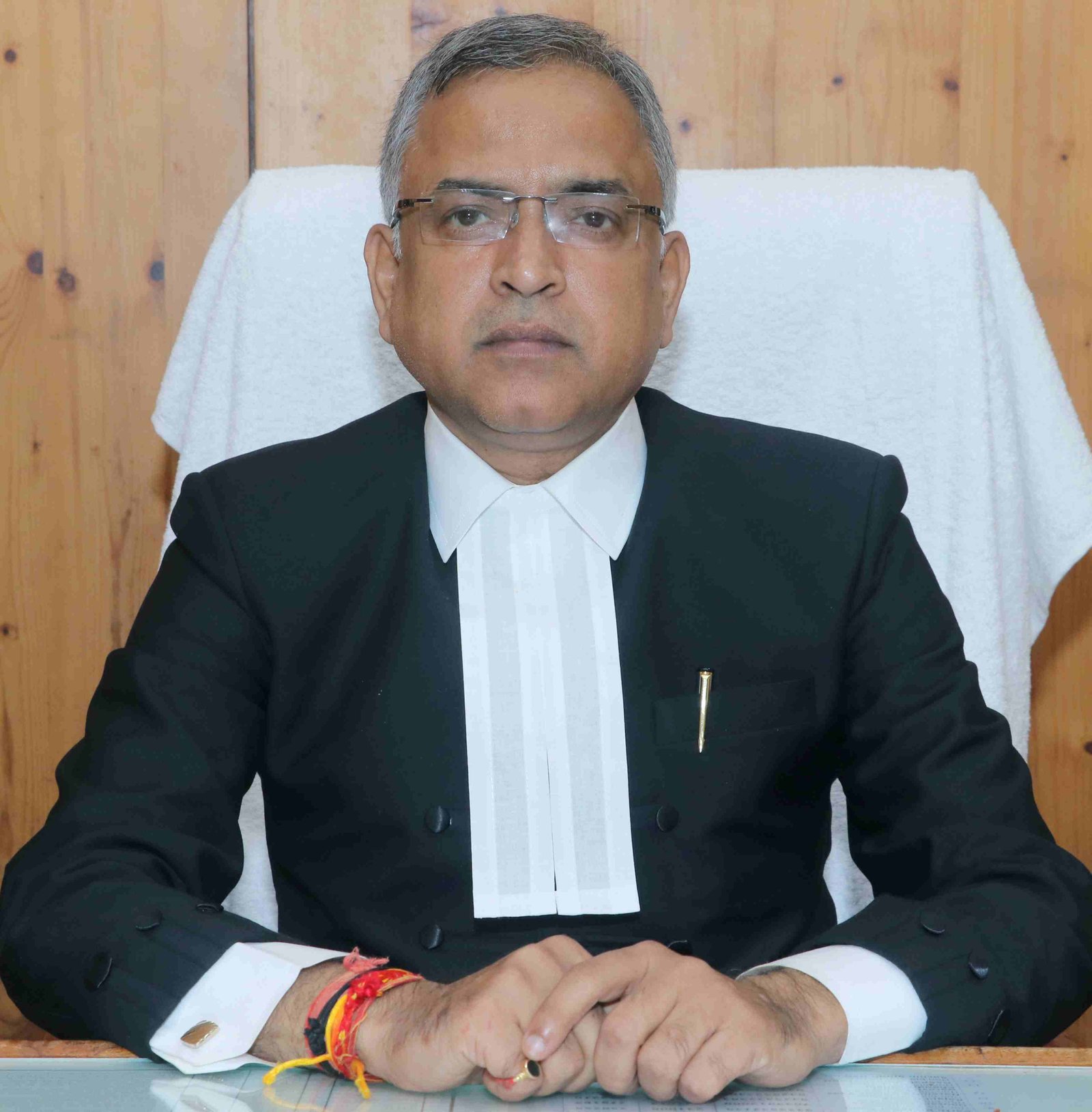
Legal Notes
Add a Note....