
The petitioners filed writ petitions contesting the examination administered by the U.P. Secondary Education Services Selection Board in the Allahabad High Court.

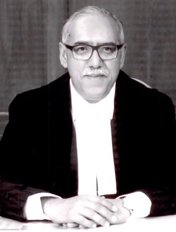
No Acts & Articles mentioned in this case
C.A. Nos.367 of 2017 etc. Page 1 of 21
REPORTABLE
IN THE SUPREME COURT OF INDIA
CIVIL APPELLATE JURISDICTION
CIVIL APPEAL NO. 367 OF 2017
Ran Vijay Singh & Ors. …Appellants
Versus
State of U.P. & Ors. …Respondents
WITH
CIVIL APPEAL NOS. 355, 354, 356-357, 358 AND 366 OF 2017
J U D G M E N T
Madan B. Lokur, J
1. What a mess! This is perhaps the only way to describe the events
that have transpired in the examination conducted by the U.P. Secondary
Education Services Selection Board. We have reached the present stage
of judgment after eight long years of uncertainty for, and three
evaluations of the answer sheets of, more than 36,000 candidates who
took the examination for recruitment as Trained Graduate Teachers way
back in January 2009. Hopefully today, their travails, as those of the U.P.
Secondary Education Services Selection Board, will come to a
satisfactory end.
C.A. Nos.367 of 2017 etc. Page 2 of 21
2. On 15
th
January, 2009 the U.P. Secondary Education Services
Selection Board (for short the “Board”) published an advertisement
inviting applications for recruitment to the post of Trained Graduate
Teachers in Social Science. The recruitment was to be in accordance with
the provisions of the U.P. Secondary Education Services Selection Board
Act, 1982 and the Rules framed thereunder.
3. More than 36,000 candidates took the written examination held
pursuant to the advertisement and the result of the written examination
was declared by the Board on 18
th
June, 2010. It may be mentioned that
the written examination was based on multiple choice answers which
were to be scanned on OMR sheets.
4. The candidates who qualified in the written examination were
called for an interview held between 16
th
and 26
th
July, 2010. Eventually,
the combined result (written examination and interview) was declared on
14
th
September, 2010. According to the appellants, they were successful
in the written examination as well as in the interview and were amongst
those who were in the select list for recruitment.
5. Some candidates who were not successful in the written
examination or in the interview filed writ petitions in the Allahabad High
Court between 2010 and 2011. All these writ petitions were dismissed by
a learned Single Judge. The reasons for dismissal of these writ petitions
C.A. Nos.367 of 2017 etc. Page 3 of 21
were that there was no provision for re-evaluation of the answer sheets in
the Uttar Pradesh Secondary Education Services Selection Board Act,
1982 or the Rules framed thereunder. Reliance was also placed by the
learned Single Judge for dismissing writ petitions on the decision of this
Court in Himachal Pradesh Public Service Commission v. Mukesh
Thakur
1
in which this Court considered a large number of its earlier
decisions and held: “Thus, the law on the subject emerges to the effect
that in the absence of any provision under the statute or statutory
rules/regulations, the Court should not generally direct revaluation.”
6. Another batch of writ petitions (having 77 writ petitioners) came to
be listed before another learned Single Judge of the High Court. The
subject and issues were the same and the learned Single Judge admitted
these writ petitions for final hearing notwithstanding the dismissal of
several similar petitions. The challenge made by the writ petitioners was
to seven questions/answers in the written examination which, according
to them, had incorrect key answers. The learned Single Judge personally
examined those seven questions and concluded that:
(a) The correct answer of question no. 24 in History paper
would be option (1).
(b) For question no. 25, History paper, option (2) is correct.
(c) Option (2) is the correct answer of question no. 36 of
History paper.
1
(2010) 6 SCC 759
C.A. Nos.367 of 2017 etc. Page 4 of 21
(d) Option (2) is correct answer in respect to question no. 37
of History paper.
(e) Question no. 40 of History paper is wrongly framed.
(f) In question no. 43, there may be two correct answers, i.e.
options (1) and (3).
(g) In question no.32 of Civics Paper, option (3) would be the
correct answer.
The learned Single Judge then proceeded to observe:
“It cannot be doubted that being a selection body for appointment
of Teachers in Secondary Schools, the Selection Board was under
a pious as well as statutory obligation to hold selection very
carefully, meticulously and in the most honest and correct
manner. The job of Selection Board could not have been
completed by mere holding a selection without caring whether
examination is being conducted correctly and properly, whether
all the questions have been framed in a proper manner, whether
the answer(s), if it is multiple choice examination, have been
given with due care and caution so as to leave no scope of error
or mistake therein etc. In fact if such a mistake is committed, it
causes a multi-edged injury to an otherwise studious, intelligent
and well conversant student who understand the subject, well
knows the relevant details and correct answers but suffers due to
sheer negligence of the examining body. The obligation of
examining body cannot be allowed to whittle out in any manner
for any reason whatsoever. For the fault of examining body, a
candidate cannot be made to suffer.”
7. On this basis, the learned Single Judge passed a judgment and
order dated 8
th
February, 2012 directing re-examination of the answer
sheets of these 77 writ petitioners. It was further directed that in case
these writ petitioners are selected then those at the bottom of the select
list would automatically have to be pushed out.
8. In must be recorded that the learned Single Judge did refer to and
cite several decisions of this Court on the subject or re-evaluation but
C.A. Nos.367 of 2017 etc. Page 5 of 21
unfortunately did not appreciate the law laid down. The learned Single
Judge relied on Manish Ujwal v. Maharishi Dayanand Saraswati
University
2
but failed to appreciate that the six disputed answers under
consideration in that case were demonstrably wrong and this was not in
dispute and even the learned counsel appearing for the University did not
question this fact. The decision is clearly distinguishable on facts.
9. Be that as it may, the issue that remained in Manish Ujwal was of
the appropriate orders to be passed. While considering this, the following
cautionary measures were suggested:
“….it is necessary to note that the University and those who
prepare the key answers have to be very careful and abundant
caution is necessary in these matters for more than one reason.
We mention few of those; first and paramount reason being the
welfare of the student as a wrong key answer can result in the
merit being made a casualty. One can well understand the
predicament of a young student at the threshold of his or her
career if despite giving correct answer, the student suffers as a
result of wrong and demonstrably erroneous key answers; the
second reason is that the courts are slow in interfering in
educational matters which, in turn, casts a higher responsibility
on the University while preparing the key answers; and thirdly, in
cases of doubt, the benefit goes in favour of the University and
not in favour of the students.”
10. Feeling aggrieved by the decision of the learned Single Judge, the
Board preferred Special Appeal No. 442 of 2012 before the Division
Bench of the High Court. Some candidates also preferred Special Appeals
directed against the judgment and order dated 8
th
February, 2012. The
2
(2005) 13 SCC 744
C.A. Nos.367 of 2017 etc. Page 6 of 21
Special Appeal filed by the Board was dismissed by a Division Bench of
the High Court on 13
th
March, 2012. In some other Special Appeal filed
by a candidate, it was stated by the Board on 11
th
April, 2012 that the
answer sheets of all the candidates would be re-evaluated in the light of
the judgment of the learned Single Judge.
11. Following up on this, the judgment and order passed by the learned
Single Judge was implemented on 10
th
September, 2012 and the re-
evaluated results of the written examination of all candidates were
declared. As a result of the re-evaluation, it appears that some candidates,
who were declared successful in the combined result declared on 14
th
September, 2010 were now declared unsuccessful. The appellants before
us were not affected by the re-evaluation of the written examination and
continued in the select list.
12. Thereafter, a set of petitions was filed including some before this
Court and eventually it came to pass that those aggrieved by the order
passed by the Division Bench on 13
th
March, 2012 could file review
petitions.
13. On 12
th
May, 2014 the Board published the final select list of
candidates who had qualified in the written examination as well as in the
interview. In this final select list, the appellants did not find a place and,
therefore, they challenged the order of the learned Single Judge dated 8
th
C.A. Nos.367 of 2017 etc. Page 7 of 21
February, 2012. According to the appellants the learned Single Judge had
incorrectly re-evaluated the seven disputed questions and had arrived at
incorrect answers to these questions.
14. The Division Bench heard all the review petitions as well as the
appeals and passed an order dated 28
th
April, 2015 referring the seven
disputed questions/answers for consideration by a one-man Expert
Committee. On or about 18
th
May, 2015 the Expert Committee gave its
Report to which the appellants filed objections. Eventually, by the
judgment and order dated 2
nd
November, 2015 the Division Bench
directed a fresh evaluation of the answer sheets on the basis of the Report
of the Expert Committee. This decision of the Division Bench is under
challenge before us.
15. During the pendency of the appeals in this Court, the third re-
evaluation was completed by the Board. The result of the third re-
evaluation has been kept in a sealed cover. The sealed cover was initially
filed before us but later returned to learned counsel for the Board.
16. We are pained that an examination for recruitment of Trained
Graduate Teachers advertised in January, 2009 has still not attained
finality even after the passage of more than eight years. The system of
holding public examinations needs to be carefully scrutinised and
reviewed so that selected candidates are not drawn into litigation which
C.A. Nos.367 of 2017 etc. Page 8 of 21
could go on for several years. Be that as it may, we have still to tackle
the issues before us.
17. It was submitted by learned counsel for the appellants that the Uttar
Pradesh Secondary Education Services Selection Board Act, 1982 and the
Rules framed thereunder do not provide for any re-evaluation of the
answer sheets and, therefore, the learned Single Judge ought not to have
undertaken that exercise at all. Reference was made to the following
passage from Mukesh Thakur which considered several decisions on the
subject and held:
“In view of the above, it was not permissible for the High Court
to examine the question papers and answer sheets itself,
particularly, when the Commission had assessed the inter se merit
of the candidates. If there was a discrepancy in framing the
question or evaluation of the answer, it could be for all the
candidates appearing for the examination and not for Respondent
1 only. It is a matter of chance that the High Court was
examining the answer sheets relating to Law. Had it been other
subjects like Physics, Chemistry and Mathematics, we are unable
to understand as to whether such a course could have been
adopted by the High Court. Therefore, we are of the considered
opinion that such a course was not permissible to the High
Court.”
18. A complete hands-off or no-interference approach was neither
suggested in Mukesh Thakur nor has it been suggested in any other
decision of this Court – the case law developed over the years admits of
interference in the results of an examination but in rare and exceptional
situations and to a very limited extent.
C.A. Nos.367 of 2017 etc. Page 9 of 21
19. In Kanpur University v. Samir Gupta
3
this Court took the view
that “…. the key answer should be assumed to be correct unless it is
proved to be wrong and that it should not be held to be wrong by an
inferential process of reasoning or by a process of rationalisation. It must
be clearly demonstrated to be wrong, that is to say, it must be such as no
reasonable body of men well-versed in the particular subject would
regard as correct.” In other words, the onus is on the candidate to clearly
demonstrate that the key answer is incorrect and that too without any
inferential process or reasoning. The burden on the candidate is therefore
rather heavy and the constitutional courts must be extremely cautious in
entertaining a plea challenging the correctness of a key answer. To
prevent such challenges, this Court recommended a few steps to be taken
by the examination authorities and among them are: (i) Establishing a
system of moderation; (ii) Avoid any ambiguity in the questions,
including those that might be caused by translation; and (iii) Prompt
decision be taken to exclude the suspect question and no marks be
assigned to it.
20. Maharashtra State Board of Secondary and Higher Secondary
Education v. Paritosh Bhupeshkumar Sheth
4
is perhaps the leading case
on the subject and concerned itself with Regulation 104 of the
3
(1983) 4 SCC 309
4
(1984) 4 SCC 27
C.A. Nos.367 of 2017 etc. Page 10 of 21
Maharashtra Secondary and Higher Secondary Education Boards
Regulations, 1977 which reads:
“104. Verification of marks obtained by a candidate in a
subject.—(1) Any candidate who has appeared at the Higher
Secondary Certificate examination may apply to the Divisional
Secretary for verification of marks in any particular subject. The
verification will be restricted to checking whether all the answers
have been examined and that there has been no mistake in the
totalling of marks for each question in that subject and
transferring marks correctly on the first cover page of the answer
book and whether the supplements attached to the answer book
mentioned by the candidate are intact. No revaluation of the
answer book or supplements shall be done.
(2) Such an application must be made by the candidate through
the head of the junior college which presented him for the
examination, within two weeks of the declaration of the
examination results and must be accompanied by a fee of Rs 10
for each subject.
(3) No candidate shall claim, or be entitled to revaluation of his
answers or disclosure or inspection of the answer books or other
documents as these are treated by the Divisional Board as most
confidential.”
21. The question before this Court was: Whether, under law, a
candidate has a right to demand an inspection, verification and
revaluation of answer books and whether the statutory regulations framed
by the Maharashtra State Board of Secondary and Higher Secondary
Education governing the subject insofar as they categorically state that
there shall be no such right can be said to be ultra vires, unreasonable and
void.
22. This Court noted that the Bombay High Court, while dealing with a
batch of 39 writ petitions, divided them into two groups: (i) Cases where
C.A. Nos.367 of 2017 etc. Page 11 of 21
a right of inspection of the answer sheets was claimed; (ii) Cases where a
right of inspection and re-evaluation of answer sheets was claimed. With
regard to the first group, the High Court held the above Regulation 104(3)
as unreasonable and void and directed the concerned Board to allow
inspection of the answer sheets. With regard to the second group of cases,
it was held that the above Regulation 104(1) was void, illegal and
manifestly unreasonable and therefore directed that the facility of re-
evaluation should be allowed to those examinees who had applied for it.
23. In appeal against the decision of the High Court, it was held by this
Court that the principles of natural justice are not applicable in such
cases. It was held that: “The principles of natural justice cannot be
extended beyond reasonable and rational limits and cannot be carried to
such absurd lengths as to make it necessary that candidates who have
taken a public examination should be allowed to participate in the process
of evaluation of their performances or to verify the correctness of the
evaluation made by the examiners by themselves conducting an
inspection of the answer books and determining whether there has been a
proper and fair valuation of the answers by the examiners.”
24. On the validity of the Regulations, this Court held that they were
not illegal or unreasonable or ultra vires the rule making power conferred
by statute. It was then said:
C.A. Nos.367 of 2017 etc. Page 12 of 21
“The Court cannot sit in judgment over the wisdom of the policy
evolved by the Legislature and the subordinate regulation-making
body. It may be a wise policy which will fully effectuate the
purpose of the enactment or it may be lacking in effectiveness
and hence calling for revision and improvement. But any
drawbacks in the policy incorporated in a rule or regulation will
not render it ultra vires and the Court cannot strike it down on the
ground that, in its opinion, it is not a wise or prudent policy, but
is even a foolish one, and that it will not really serve to effectuate
the purposes of the Act. The Legislature and its delegate are the
sole repositories of the power to decide what policy should be
pursued in relation to matters covered by the Act and there is no
scope for interference by the Court unless the particular provision
impugned before it can be said to suffer from any legal infirmity,
in the sense of its being wholly beyond the scope of the
regulation-making power or its being inconsistent with any of the
provisions of the parent enactment or in violation of any of the
limitations imposed by the Constitution. None of these vitiating
factors are shown to exist in the present case…..”.
It was also noted by this Court that:
“..the High Court has ignored the cardinal principle that it is not
within the legitimate domain of the Court to determine whether
the purpose of a statute can be served better by adopting any
policy different from what has been laid down by the Legislature
or its delegate and to strike down as unreasonable a bye-law
(assuming for the purpose of discussion that the impugned
regulation is a bye-law) merely on the ground that the policy
enunciated therein does not meet with the approval of the Court
in regard to its efficaciousness for implementation of the object
and purposes of the Act.”
25. Upholding the validity of Regulation 104, this Court then
proceeded on the basis of the plain and simple language of the Regulation
to hold that “The right of verification conferred by clause (1) is subject to
the limitation contained in the same clause that no revaluation of the
answer books or supplements shall be done and the further restriction
C.A. Nos.367 of 2017 etc. Page 13 of 21
imposed by clause (3), prohibiting disclosure or inspection of the answer
books.”
This Court then concluded the discussion by observing:
“As has been repeatedly pointed out by this Court, the Court
should be extremely reluctant to substitute its own views as to
what is wise, prudent and proper in relation to academic matters
in preference to those formulated by professional men possessing
technical expertise and rich experience of actual day-to-day
working of educational institutions and the departments
controlling them. It will be wholly wrong for the Court to make a
pedantic and purely idealistic approach to the problems of this
nature, isolated from the actual realities and grass root problems
involved in the working of the system and unmindful of the
consequences which would emanate if a purely idealistic view as
opposed to a pragmatic one were to be propounded. It is equally
important that the Court should also, as far as possible, avoid any
decision or interpretation of a statutory provision, rule or bye-law
which would bring about the result of rendering the system
unworkable in practice. It is unfortunate that this principle has
not been adequately kept in mind by the High Court while
deciding the instant case.”
26. In Pramod Kumar Srivastava v. Chairman, Bihar Public Service
Commission
5
the question under consideration was whether the High
Court was right in directing re-evaluation of the answer book of a
candidate in the absence of any provision entitling the candidate to ask
for re-evaluation. This Court noted that there was no provision in the
concerned Rules for re-evaluation but only a provision for scrutiny of the
answer book “wherein the answer-books are seen for the purpose of
checking whether all the answers given by a candidate have been
examined and whether there has been any mistake in the totalling of
5
(2004) 6 SCC 714
C.A. Nos.367 of 2017 etc. Page 14 of 21
marks of each question and noting them correctly on the first cover page
of the answer-book.” This Court reiterated the conclusion in Paritosh
Bhupeshkumar Sheth that “in the absence of a specific provision
conferring a right upon an examinee to have his answer-books re-
evaluated, no such direction can be issued.”
27. The principle laid down by this Court in Paritosh Bhupeshkumar
Sheth was affirmed in Secy., W.B. Council of Higher Secondary
Education v. Ayan Das
6
and it was reiterated that there must be finality
attached to the result of a public examination and in the absence of a
statutory provision re-evaluation of answer scripts cannot be permitted
and that it could be done only in exceptional cases and as a rarity.
Reference was also made to Pramod Kumar Srivastava v. Chairman,
Bihar Public Service Commission , Board of Secondary
Education v. Pravas Ranjan Panda
7
and President, Board of Secondary
Education v. D. Suvankar
8
.
28. The facts in Central Board of Secondary Education v. Khushboo
Shrivastava
9
are rather interesting. The respondent was a candidate in the
All India Pre-Medical/Pre-Dental Entrance Examination, 2007 conducted
by the Central Board of Secondary Education (for short “the CBSE”).
Soon after the results of the examination were declared, she applied for
6
(2007) 8 SCC 242
7
(2004) 13 SCC 383
8
(2007) 1 SCC 603
9
(2014) 14 SCC 523
C.A. Nos.367 of 2017 etc. Page 15 of 21
re-evaluation of her answer sheets. The CBSE declined her request since
there was no provision for this. She then filed a writ petition in the Patna
High Court and the learned Single Judge called for her answer sheets and
on a perusal thereof and on comparing her answers with the model or key
answers concluded that she deserved an additional two marks. The view
of the learned Single Judge was upheld by the Division Bench of the
High Court.
29. In appeal, this Court set aside the decision of the High Court and
reiterating the view already expressed by this Court from time to time and
allowing the appeal of the CBSE it was held:
“We find that a three-Judge Bench of this Court in Pramod
Kumar Srivastava v. Bihar Public Service Commission has
clearly held relying on Maharashtra State Board of Secondary
and Higher Secondary Education v. Paritosh Bhupeshkumar
Sheth that in the absence of any provision for the re-evaluation of
answer books in the relevant rules, no candidate in an
examination has any right to claim or ask for re-evaluation of his
marks. The decision in Pramod Kumar Srivastava v. Bihar
Public Service Commission was followed by another three-Judge
Bench of this Court in Board of Secondary Education v. Pravas
Ranjan Panda in which the direction of the High Court for re-
evaluation of answer books of all the examinees securing 90% or
above marks was held to be unsustainable in law because the
regulations of the Board of Secondary Education, Orissa, which
conducted the examination, did not make any provision for re-
evaluation of answer books in the rules.
In the present case, the bye-laws of the All India Pre-
Medical/Pre-Dental Entrance Examination, 2007 conducted by
the CBSE did not provide for re-examination or re-evaluation of
answer sheets. Hence, the appellants could not have allowed such
re-examination or re-evaluation on the representation of
Respondent 1 and accordingly rejected the representation of
C.A. Nos.367 of 2017 etc. Page 16 of 21
Respondent 1 for re-examination/re-evaluation of her answer
sheets......
In our considered opinion, neither the learned Single Judge nor
the Division Bench of the High Court could have substituted
his/its own views for that of the examiners and awarded two
additional marks to Respondent 1 for the two answers in exercise
of powers of judicial review under Article 226 of the Constitution
as these are purely academic matters. .....”
30. The law on the subject is therefore, quite clear and we only propose
to highlight a few significant conclusions. They are: (i) If a statute, Rule
or Regulation governing an examination permits the re-evaluation of an
answer sheet or scrutiny of an answer sheet as a matter of right, then the
authority conducting the examination may permit it; (ii) If a statute, Rule
or Regulation governing an examination does not permit re-evaluation or
scrutiny of an answer sheet (as distinct from prohibiting it) then the Court
may permit re-evaluation or scrutiny only if it is demonstrated very
clearly, without any “inferential process of reasoning or by a process of
rationalisation” and only in rare or exceptional cases that a material error
has been committed; (iii) The Court should not at all re-evaluate or
scrutinize the answer sheets of a candidate – it has no expertise in the
matter and academic matters are best left to academics; (iv) The Court
should presume the correctness of the key answers and proceed on that
assumption; and (v) In the event of a doubt, the benefit should go to the
examination authority rather than to the candidate.
C.A. Nos.367 of 2017 etc. Page 17 of 21
31. On our part we may add that sympathy or compassion does not
play any role in the matter of directing or not directing re-evaluation of an
answer sheet. If an error is committed by the examination authority, the
complete body of candidates suffers. The entire examination process does
not deserve to be derailed only because some candidates are disappointed
or dissatisfied or perceive some injustice having been caused to them by
an erroneous question or an erroneous answer. All candidates suffer
equally, though some might suffer more but that cannot be helped since
mathematical precision is not always possible. This Court has shown one
way out of an impasse – exclude the suspect or offending question.
32. It is rather unfortunate that despite several decisions of this Court,
some of which have been discussed above, there is interference by the
Courts in the result of examinations. This places the examination
authorities in an unenviable position where they are under scrutiny and not
the candidates. Additionally, a massive and sometimes prolonged
examination exercise concludes with an air of uncertainty. While there is
no doubt that candidates put in a tremendous effort in preparing for an
examination, it must not be forgotten that even the examination authorities
put in equally great efforts to successfully conduct an examination. The
enormity of the task might reveal some lapse at a later stage, but the Court
must consider the internal checks and balances put in place by the
examination authorities before interfering with the efforts put in by the
C.A. Nos.367 of 2017 etc. Page 18 of 21
candidates who have successfully participated in the examination and the
examination authorities. The present appeals are a classic example of the
consequence of such interference where there is no finality to the result of
the examinations even after a lapse of eight years. Apart from the
examination authorities even the candidates are left wondering about the
certainty or otherwise of the result of the examination – whether they have
passed or not; whether their result will be approved or disapproved by the
Court; whether they will get admission in a college or University or not;
and whether they will get recruited or not. This unsatisfactory situation
does not work to anybody’s advantage and such a state of uncertainty
results in confusion being worse confounded. The overall and larger
impact of all this is that public interest suffers.
33. The facts of the case before us indicate that in the first instance the
learned Single Judge took it upon himself to actually ascertain the
correctness of the key answers to seven questions. This was completely
beyond his jurisdiction and as decided by this Court on several occasions,
the exercise carried out was impermissible. Fortunately, the Division
Bench did not repeat the error but in a sense, endorsed the view of the
learned Single Judge, by not considering the decisions of this Court but
sending four key answers for consideration by a one-man Expert
Committee.
C.A. Nos.367 of 2017 etc. Page 19 of 21
34. Having come to the conclusion that the High Court (the learned
Single Judge as well as the Division Bench) ought to have been far more
circumspect in interfering and deciding on the correctness of the key
answers, the situation today is that there is a third evaluation of the answer
sheets and a third set of results is now ready for declaration. Given this
scenario, the options before us are to nullify the entire re-evaluation
process and depend on the result declared on 14
th
September, 2010 or to go
by the third set of results. Cancelling the examination is not an option.
Whichever option is chosen, there will be some candidates who are likely
to suffer and lose their jobs while some might be entitled to consideration
for employment.
35. Having weighed the options before us, we are of opinion that the
middle path is perhaps the best path to be taken under the circumstances of
the case. The middle path is to declare the third set of results since the
Board has undertaken a massive exercise under the directions of the High
Court and yet protect those candidates may now be declared unsuccessful
but are working as Trained Graduate Teachers a result of the first or the
second declaration of results. It is also possible that consequent upon the
third declaration of results some new candidates might get selected and
should that happen, they will need to be accommodated since they were
erroneously not selected on earlier occasions.
C.A. Nos.367 of 2017 etc. Page 20 of 21
36. Learned counsel for the appellants contended before us that in case
her clients are not selected after the third declaration of results, they will be
seriously prejudiced having worked as Trained Graduate Teachers for
several years. However, with the middle path that we have chosen their
services will be protected and, therefore, there is no cause for any
grievance by any of the appellants. Similarly, those who have not been
selected but unfortunately left out they will be accommodated.
37. As a result of our discussion and taking into consideration all the
possibilities that might arise, we issue the following directions:
(1) The results prepared by the Board consequent upon the
decision dated 2
nd
November, 2015 of the High Court
should be declared by the Board within two weeks from
today.
(2) Candidates appointed and working as Trained Graduate
Teachers pursuant to the declaration of results on the earlier
occasions, if found unsuccessful on the third declaration of
results, should not be removed from service but should be
allowed to continue.
(3) Candidates now selected for appointment as Trained
Graduate Teachers (after the third declaration of results)
should be appointed by the State by creating supernumerary
posts. However, these newly appointed Trained Graduate
Teachers will not be entitled to any consequential benefits.
38. Before concluding, we must express our deep anguish with the turn
of events whereby the learned Single Judge entertained a batch of writ
C.A. Nos.367 of 2017 etc. Page 21 of 21
petitions, out of which these appeals have arisen, even though several
similar writ petitions had earlier been dismissed by other learned Single
Judge(s). Respect for the view taken by a coordinate Bench is an essential
element of judicial discipline. A judge might have a difference of opinion
with another judge, but that does not give him or her any right to ignore
the contrary view. In the event of a difference of opinion, the procedure
sanctified by time must be adhered to so that there is demonstrated
respect for the rule of law.
39. With the above directions, the appeals and miscellaneous
applications are disposed of.
...……………………J
(Madan B. Lokur)
.…………………....J
(Deepak Gupta)
New Delhi;
December 11, 2017

 Login with google
Legal Notes
Add a Note....