
As per case facts, the Applicant challenged an eviction decree affirmed by the Appellate Court on grounds of unlawful subletting. The Applicant contended that the Appellate Court failed to decide ...
No Acts & Articles mentioned in this case
Megha 4_cra_136_2026_fc.odt
IN THE HIGH COURT OF JUDICATURE AT BOMBAY
CIVIL APPELLATE JURISDICTION
CIVIL REVISION APPLICATION NO.136 OF 2026
Ratnadeep Shankar Narkar ...Applicant
V/s.
M/s. Ish Homes Private Limited and
Ors. ...Respondents
________________
Mr. Pradeep Thorat i/b. Mr. Tanvir Shaikh for the Applicant.
Mr. Vishal Kanade i/b. Mr. Javed Akhtar Khan for the Respondents.
________________
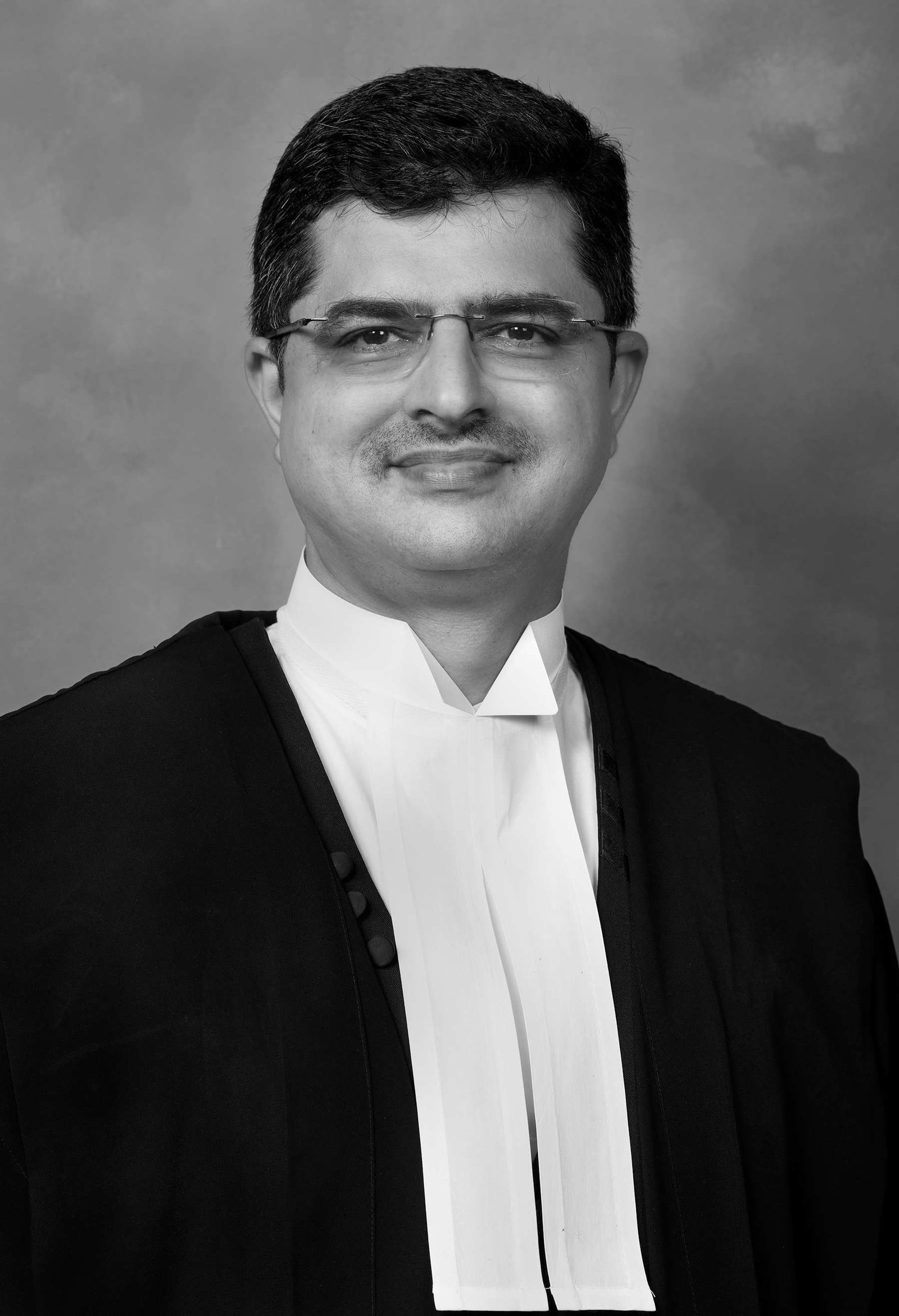
CORAM: SANDEEP V. MARNE, J.
Reserved on: 20 APRIL 2026.
Pronounced on: 4 MAY 2026.
Judgment:
1) The Applicant has filed the present Revision Application
challenging the judgment and decree dated 22 January 2026 passed by
the Appellate Bench of the Small Causes Court dismissing Appeal No.302
of 2019 and confirming the decree of the Trial Court dated 6 July 2019
passed in R.A.E. & R. Suit No.643/1132 of 2008. The Trial Court had
decreed the Suit filed by Respondent No.1-Plaintiff on the grounds of
unlawful subletting and default in payment of rent. The Trial Court has
directed Applicant/Defendant No.2 to handover possession of the suit
properties to the Plaintiff with further direction for payment of arrears
of rent as well as enquiry into mesne profits.
Page No. 1 of 25
4 May 2026 2026:BHC-AS:21060
Megha 4_cra_136_2026_fc.odt
2)Room No. R/4, House No.411/Back, Ground floor, Kadri Mansion,
Veer Savarkar Marg, Prabhadevi, Mumbai- 400 025 is the ‘suit premises’.
Building-Kadri Mansion was owned by the earlier owners, who had
apparently inducted late Mr. Ballaram Hullaji as monthly tenant in
respect of the suit premises. Respondent No.1 /Plaintiff acquired
ownership in respect of the land and the building Kadri Mansion vide
four Deeds of Conveyance dated 30 September 2006 and 10 October
2006. After acquiring ownership in respect of the building, the Plaintiff
found Defendant No.2-Mr. Ratnadeep Shankar Narkar to be in possession
of the suit premises in which late Mr. Ballaram Hullaji was the tenant.
Plaintiff alleged that Defendant No.2 was inducted as unlawful sublettee
in respect of the suit premises. An allegation of default in payment of
rent was also raised. The Plaintiff also demanded arrears of rent vide
Notice dated 24 February 2007. After failure on behalf of the Defendants
to pay the rent, Plaintiff instituted R.A.E. & R. Suit No.643/1132 of 2008
in the Court of Small Causes impleading ‘heirs and legal representatives’
of late Ballaram Hullaji as Defendant No.1 and Mr. Ratnadeep Shankar
Narkar as Defendant No.2(Applicant). Later, the Plaint was amended by
impleading the legal heirs of Defendant No.1. However, it appears that
heirs of Defendant No.1 did not appear in the Suit nor filed written
statement. The Applicant filed written statement resisting the Suit
stating inter alia that Defendant No.1 had assigned and transferred
tenancy rights in the suit property in November-1995 with the consent of
erstwhile owners. However, on account of disputes between the owner
and on account of appointment of Court Receiver, transfer of the tenancy
rights could not be documented. That the rent in respect of the suit
property was always paid by Defendant No.2. That even after receipt of
Page No. 2 of 25
4 May 2026
Megha 4_cra_136_2026_fc.odt
notice dated 24 February 2007, the alleged arrears of rent were paid by
Defendant No.2.
3)Based on the pleadings, the Trial Court framed issues relating to
unalwful subletting, default in payment of rent and cause of wastage to
the suit premises. The parties led evidence in support of their respective
claims. The Plaintiff examined its directors and relied on several
documents. Defendant No.2 examined himself and also relied on several
documents. After considering the pleadings, documentary and oral
evidence, the Trial Court proceeded to decree the Suit by accepting the
grounds of unlawful subletting and default in payment of rent.
4)The Applicant/Defendant No.2 filed Appeal No.302 of 2019 before
the Appellate Bench of the Small Causes Court. In his Appeal, the
Applicant/ Defendant No.2 filed Applications at Exhibits-22, 23 and 71
for producing additional evidence and documents under Order XLI Rule
27 of the Code of Civil Procedure, 1908 (the Code). The Applicant also
filed Application at Exhibit-72 seeking permission for filing additional
compilation of documents of the Trial Court. He also filed Application at
Exhibit-67 for framing issue on the point of limitation. The Appeal was
heard by the Appellate Bench and during the course of hearing of the
Appeal, it appears that Application at Exhibit-71 for production of
additional evidence was rejected vide order dated 22 January 2026.
Similarly, the Application at Exhibit-72 for filing of additional
compilation of the documents before the Trial Court was also rejected by
separate order dated 22 January 2026. The Application at Exhibit-67 for
framing additional issue of limitation was partly allowed by order dated
22 January 2026 and additional issue relating to limitation was framed.
Page No. 3 of 25
4 May 2026
Megha 4_cra_136_2026_fc.odt
On 22 January 2026 the Appellate Court proceeded to dismiss the Appeal
No.302 of 2019 preferred by the Applicant by answering the issue of
limitation in affirmative, in favour of the Plaintiff and against the
Applicant. The Appellate Court also rejected the ground of default in
payment of rent. The Appellate Court however, accepted the ground of
unlawful subletting and accordingly upheld the decree of eviction passed
by the Trial Court. Aggrieved by the decree passed by the Appellate
Court, the Applicant has filed the present Revision Application.
5)Mr. Thorat, the learned counsel appearing for the Applicant
submits that the Appellate Court has erred in not deciding Applications
at Exhibits-22 and 23 for production of additional evidence under Order
XLI Rule 27 of the Code. That the Applicant had filed three Applications
for production of additional evidence being Exhibits-22, 23 and 71.
However, only one Application at Exhibit-71 is considered and rejected
by the Appellate Court and that there is no decision on Applications at
Exhibits-22 and 23. That therefore, the entire Appeal deserves to be
remanded for fresh decision on account of non-consideration of
Applications at Exhibits-22 and 23. He relies on judgment of the Apex
Court in Jatinder Singh and Another V/s. Mehar Singh and Others
1
and
Malayalam Plantations Limited V/s. State of Kerala and Another
2
.
6)Mr. Thorat further submits that the Appellate Court has erred in
not granting opportunity to the Applicant to lead evidence on additional
issue of limitation. That the additional issue relating to limitation was
framed while deciding the Appeal and the said issue is answered in the
affirmative without even granting any opportunity to the Applicant to
1(2009) 17 SCC 465
2(2010) 13 SCC 487
Page No. 4 of 25
4 May 2026
Megha 4_cra_136_2026_fc.odt
lead evidence in respect of the additional issue. He relies on provisions of
Order XLI Rule 25 of the Code in support of his contention that it was
incumbent for the Appellate Court to refer the matter to the Trial Court
for taking additional evidence. That, therefore, the decree of the
Appellate Court is in violation of provisions of Order XLI Rule 25 of the
Code.
7)Mr. Thorat further submits that the Trial and the Appellate Courts
have erroneously accepted the ground of unlawful subletting ignoring
the position that the Suit was barred by limitation. He submits that the
Applicant is inducted in the suit premises in November-1995 and that
therefore the Suit filed alleging unlawful subletting on 27 May 2008 was
clearly barred by limitation. He submits that in Bakul Nandlal Gandhi
V/s. Mrs. Smita Pradip Bhatia
3
, this Court has held that Suit for eviction
under Article 66 of the Limitation Act, 1963 needs to be filed within a
period of 12 years from the act of unlawful subletting. He also relies on
judgment of this Court in Taherbhai T. Poonawala & Ors. V/s. Hamid H.
Patel (deceased by LRs) and Ors.
4
and of Supreme Court in Shakuntala S.
Tiwari V/s. Hemchand M. Singhania
5
, Ganpat Ram Sharma and Others
V/s. Gayatri Devi
6
. He therefore submits that Plaintiff’s Suit ought to
have been dismissed by the Appellate Court after framing the issue of
limitation.
8)Mr. Thorat further submits that the Applicant /Defendant No.2 was
erroneously branded as unlawful sub-tenant ignoring the position that
his name figures in the list of tenants appended to Deeds of Conveyance
3Civil Revision Application No.232 of 2017 decided on 27 January 2026
4AIR 2007 Bombay 80
51987 (2) Bom.C.R. 480
6(1987) 3 SCC 576
Page No. 5 of 25
4 May 2026
Megha 4_cra_136_2026_fc.odt
executed in favour of the Plaintiff. That tenancy rights have been
transferred by Defendant No.1 with the consent of the earlier landlords.
That on account of pendency of disputes between the earlier owners and
the building was custodia legis, the owners were not able to record
transfer of tenancy. That therefore there is no element of subletting in
the present case.
9)Lastly, Mr. Thorat submits that the Suit was instituted against
Defendant No.1, who was a dead person in the year 1986. That the Suit
filed against a dead person is not maintainable and ought to have been
dismissed. On the above broad submissions, Mr. Thorat prays for setting
aside the impugned decree of eviction.
10)Mr. Kanade, the learned counsel appearing for Respondent
No.1/Plaintiff opposes the Revision Application submitting that
concurrent findings of fact are recorded in respect of ground of unlawful
subletting by the Trial and the Appellate Courts. That the Applicant
flooded the Appellate Court with as many as five applications and chose
to argue only three out of those 5 applications. That two Applications for
production of additional evidence were not argued before the Appellate
Court. That the Application at Exhibit-71 for production of additional
evidence has been decided by the Appellate Court. That if the Applicant
tucks in numerous applications and does not the press the same at the
time of hearing of the appeal, decree passed in the appeal cannot be
sought to be faulted. That even otherwise, Applications at Exhibits 22
and 23 were completely misplaced and were filed only for delaying the
proceedings. On the issue of limitation with regard to ground of unlawful
subletting, he submits that the Appellate Court has rightly relied upon
Page No. 6 of 25
4 May 2026
Megha 4_cra_136_2026_fc.odt
judgment of this Court in Shree Durga Trading Co. V/s. Ateeq Anwar
Agboatwal and anr.
7
He distinguishes the judgment relied upon by Mr.
Thorat in Bakul Nandlal Gandhi (supra) submitting that the judgment is
rendered without noticing the ratio of the judgment in Shree Durga
Trading Co.. He submits that that rest of the judgments relied upon by
Applicant are already considered by this Court in Shree Durga Trading
Co.
11)Mr. Kanade further submits that the list appended to the
Conveyance Deeds contains names not only of ‘tenants’ but also of
‘occupants’. That this issue is no more res integra and covered by
decisions of this Court in Ambavi Raghu Patel and Anr. V/s. M/s. Isha
Homes Pvt. Ltd. and Anr.
8
and Pradeep Dattatray Gandhi V/s. M/s. Ish
Homes Private Ltd. and Anr.
9
12)So far as the ground for Suit being filed against a dead person is
concerned, Mr. Kanade submits that legal heirs were brought on record
and Suit did not continue against a dead person. He would accordingly
pray for dismissal of the Application.
13)Rival contentions raised on behalf of the parties, now fall for my
consideration.
14)The Suit was filed for eviction of the head tenant (Defendant No. 1)
and the inductee (Defendant No. 2) essentially raising three grounds of
(i) unlawful subletting, (ii) default in payment of rent and (iii) causing
7SCC OnLine Bom 3065
8Civil Revision Application No.65 of 2023, decided on 9 September 2024.
9Civil Revision Application No.79 of 2023, decided on 9 September 2024
Page No. 7 of 25
4 May 2026
Megha 4_cra_136_2026_fc.odt
wastage to the suit premises. The Trial Court accepted the grounds of
unlawful subletting and default in payment of rent and rejected the third
ground of causing wastage to the suit premises. The Appellate Court has
rejected the ground of default in payment of rent and has upheld the
decree on the solitary ground of unlawful subletting. Thus, qua the
ground of unlawful subletting, there are concurrent findings recorded by
the Trial and the Appellate Courts.
15)Applicant’s main attack on the decree before me is the failure on
the part of the Appellate Court to decide the Applications at Exhibits 22
and 23 for production of additional evidence. As observed above, the
Applicant went on flooding the Appellate Court with numerous
applications. It filed as many as five Applications in the Appellate Court,
four out of which were for production of additional evidence/material.
Three Applications were filed for production of additional evidence, and
the fourth application was also filed for production of additional material
in the form of documents of the Trial Court. The fifth Application was
filed for framing of additional issues. Three out of those five Applications
have been decided by the Appellate Court. The Application for
production of additional evidence at Exhibit-71 has been rejected while
hearing the Appeal on 22 January 2026. Application at Exhibit-72 for
production of three documents is also rejected while hearing the Appeal
on 22 January 2026. However, the application (Exhibit-67) for framing
additional issue relating to limitation has been partly allowed by order
dated 22 January 2026 and the Appellate Court proceeded to frame
additional issue relating to limitation.
Page No. 8 of 25
4 May 2026
Megha 4_cra_136_2026_fc.odt
16)Applicant complains that his two applications at Exhibits 22 and
23 have not been decided by the Appellate Court and that therefore the
Appeal must be remanded to the Appellate Court for fresh decision.
17)This Court does not appreciate the conduct of the Applicant in
swamping the Appellate Court with as many as five applications, four out
of which were filed for the same purpose of production of additional
material /evidence. If any vital piece of evidence was needed to be
produced before the Appellate Court under Order XLI Rule 27 of the
Code, the entirety of such evidence ought to have been produced by
filing a single application. However instead of doing so, the Applicant
deliberately filed four applications for same purpose and is now
complaining that since there is no decision on two out of those four
applications, the Appeal must be remanded for fresh decision. I have
little doubt in my mind that filing of four separate applications before
the Appellate Court by the Applicant was aimed at delaying decision of
the Appeal and also for creating a possible ground for seeking remand of
the Appeal. The conclusion is reached after considering the manner in
which the four applications were filed, which is discussed in the
paragraph to follow.
18)I now proceed to examine the purpose for which the four
Applications were filed by the Applicant:
(i)The first Application dated 23 December 2021 at Exhibit 22 was
filed under Order XLI of Rule 27(1) of the code, by which the
Applicant desired to produce certified copy of the cross-
Page No. 9 of 25
4 May 2026
Megha 4_cra_136_2026_fc.odt
examination of witness in R.A.E. & R. Suit No.637 of 2007
conducted on 27 June 2019. Thus, evidence led by the Plaintiff
in an altogether different Suit was sought to be relied upon by
the Applicant directly at the appellate stage. Upon being
queried, Mr. Thorat submits that the application was filed to
rely upon admissions given by the Plaintiff’s witness to the
effect that the list appended to Deeds of Conveyance contained
names of ‘tenants’.
(ii) In quick succession and after passage of just 13 days, the
Applicant filed second application on 6 January 2022 at Exhibit-
23 under Order XLI, sub-rule 1(aa) and (b) of Rule 27 of the
Code for production of affidavit dated 9 November 1995
allegedly relating to assignment of tenancy in Applicant’s
name, copies of alleged rent receipts issued by the Court
Receiver, copies of electricity bill, copy of ration card, copies of
telephone bills and copy of emails relating to alleged
negotiations for settlement of Suit with the Plaintiff and ID
card issued by Election Commission of India.
(iii) On 27 November 2025, the Applicant filed third application at
Exhibit-71 for production of additional evidence seeking to
produce death certificate of Defendant No.1 and receipts
showing transfer of electricity meter.
(iv) The Applicant also filed fourth Application at Exhibit-72 for
production of copy of application for amendment of Plaint filed
by the Plaintiff, report of the Court Receiver dated 5 August
1991 and copy of order passed by the Appellate Bench
upholding the Trial Court’s order rejecting amendment.
Page No. 10 of 25
4 May 2026
Megha 4_cra_136_2026_fc.odt
This is how the Applicant went on a spree and filed as many as 4
applications for the same purpose of production of additional
evidence/material.
19) The Appellate Bench has dealt with and has rejected Applications
at Exhibits-71 and 72, which were apparently filed close to the date of
hearing of the Appeal. It is the contention of Respondent No.1-Plaintiff
that the Applicant never pressed the Applications at Exhibits-22 and 23
at the time of hearing of the Appeal and the said Applications remained
unnoticed by not only the Court but also by the parties. The Applicant
disputes this position and contends that in the written submissions,
attention of the Appellate Court was invited to Applications at Exhibits
22 and 23 also.
20) In my view, criticism on the Appellate Court by the Applicant for
not deciding Applications at Exhibits- 22 and 23 is wholly unjustified.
The Applicant must blame himself for non-decision of Applications at
Exhibits 22 and 23. As observed above, all the four applications were filed
for the same purpose of production of additional documents and
evidence. Production of additional evidence before the Appellate Court
is a special and exceptional opportunity recognized under Order XLI Rule
27 of the Code and the same cannot be resorted to routinely or as a
matter of right. The Appellate Court is expected to decide the Appeal by
marshaling and reappreciating the evidence on record before the Trial
Court. Ordinarily, it is not expected to judge findings of the Trial Court
by relying on new material. Order XLI Rule 27 of the Code essentially
opens with a caveat that the parties to an appeal shall not be entitled to
produce additional evidence in the Appellate Court. However certain
Page No. 11 of 25
4 May 2026
Megha 4_cra_136_2026_fc.odt
exceptional circumstances are recognised under which it is permissible
for the Appellate Court to take into consideration additional evidence
not produced before the Trial Court. Order XLI Rule 27 provides thus:
27. Production of additional evidence in Appellate Court.—
(1) The parties to an appeal shall not be entitled to produce additional
evidence, whether oral or documentary, in the Appellate Court. But if —
(a) the Court from whose decree the appeal is preferred has refused to
admit evidence which ought to have been admitted, or
(aa) the party seeking to produce additional evidence, establishes that
notwithstanding the exercise of due diligence, such evidence was not
within his knowledge or could not, after the exercise of due diligence,
be produced by him at the time when the decree appealed against was
passed, or
(b) the Appellate Court requires any document to be produced or any
witness to be examined to enable it to pronounce judgment, or for any
other substantial cause, the Appellate Court may allow such evidence
or document to be produced, or witness to be examined.
(2) Wherever additional evidence is allowed to be produced by an Appellate
Court, the Court shall record the reason for its admission.
21)Thus, only in a case where one out of the three eventualities exist,
the Appellate Court can permit leading of additional evidence. The three
exceptional circumstances are where (i) the Trial Court has refused to
admit evidence which ought to have been admitted, (ii) additional
evidence was not in the knowledge of the parties and (iii) where the
Appellate Court requires any document to be produced or witness to be
examined for pronouncement of judgment or for any other substantial
cause. Such exceptional opportunity cannot be permitted to be exercised
causally by filing four applications. There has to be some seriousness
when additional evidence is sought to be produced directly before the
Appellate Court. When the Appellant believes that a vital piece of
Page No. 12 of 25
4 May 2026
Megha 4_cra_136_2026_fc.odt
evidence has remained to be produced before the Trial Court and that the
same must be shown to the Appellate Court, he/she must gather all the
material (additional evidence), which existed when Trial Court decided
the suit and file the same at one go. The liberty to file application under
order XLI Rule 27 cannot be misused by filing multiple applications as
different intervals by seeking to produce more and more material as the
Applicant grows wiser with passage of each day.
22) In the present case, the Applicant has clearly misused the liberty
available under Order XLI Rule 27 of the Code by filing four applications
for the same purpose and now complains that the Appeal must be
reheard because two out of those four applications, which remained
tucked in the records of the Appellate Court, remained unnoticed and
undecided.
23) While deciding Applications at Exhibits 71 and 72, the Appellate
Court has recorded a finding that ingredients of Order XLI Rule 27(1) (a)
(aa) or (b) are not satisfied in the present case. If Applications at
Exhibits-22 and 23 were to be pressed by the Applicant before the
Appellate Court, I am sure similar findings would have been recorded by
the Appellate Court. All the extra material that was sought to be
produced by the Applicant directly before the Appellate Court was within
his knowledge and most of the documents were in his custody. It is not
the case that those documents were not in his knowledge or custody. The
Applicant flooded the records of the Appellate Court with numerous
applications and the two applications at Exhibits-22 and 23, slipped in
the records, went unnoticed by the Appellate Court. The Plaintiff
complains that the Applicant deliberately did not press Applications at
Page No. 13 of 25
4 May 2026
Megha 4_cra_136_2026_fc.odt
Exhibits-22 and 23 for the purpose of creating a ground before this Court
for seeking remand on proceedings by the Appellate Court.
24) The Applicant cannot be permitted to take benefit of his own
wrong for the purpose of seeking remand of the proceedings. The
Applicant abused the process of law by filing as many as four
Applications for leading of additional evidence. This Court cannot come
to the assistance of such a litigant by becoming party to his dishonest
plan of dragging the eviction proceedings. The Suit was filed in the year
2008 and by now period of 18 long years has elapsed. Remanding the
proceedings at this stage before the Appellate Court for completing the
formality of deciding Applications at Exhibits-22 and 23 would only
delay eviction of the Applicant from the suit premises. Pendency of
proceedings has already enabled the Applicant to use the premises for 18
long years. Unlawful subletting to the Applicant is writ large on the face
of the record, which is discussed in the latter part of the judgment.
25) Reliance by Mr. Thorat on judgment of this Apex Court in
Malayalam Plantations Limited (supra) is inapposite. In case before the
Apex Court, the State Government had filed application in its Appeal for
production of additional documents to demonstrate that the said
documents would have rejected the entire claim of Malayalam
Plantations Limited. While emphasizing the duty of the Appellate Court
to decide Application under Order XLI Rule 27 of the Code, in paragraph
17 of the judgment, the Apex Court has also highlighted the position that
additional evidence cannot be for filling up the lacunae in evidence and
the production of additional evidence must be in the interest of justice.
The Apex Court held in paragraphs 15 to 17 as under:-
Page No. 14 of 25
4 May 2026
Megha 4_cra_136_2026_fc.odt
15) In view of the above provision, in our opinion, when an
application for reception of additional evidence under Order 41 Rule
27 of CPC was filed by the parties, it was the duty of the High Court to
deal with the same on merits. The above principle has been reiterated
by this Court in Jatinder Singh & Anr. Vs. Mehar Singh & Ors. AIR
2009 SC 354 and Shyam Gopal Bindal and Others vs. Land Acquisition
Officer and Another, (2010) 2 SCC 316.
16) If any petition is filed under Order 41 Rule 27 in an appeal, it is
incumbent on the part of the appellate Court to consider at the time
of hearing the appeal on merits so as to find out whether the
documents or evidence sought to be adduced have any
relevance/bearing in the issues involved. It is trite to observe that
under Order 41, Rule 27, additional evidence could be adduced in one
of the three situations, namely, (a) whether the trial Court has
illegally refused the evidence although it ought to have been
permitted; (b) whether the evidence sought to be adduced by the
party was not available to it despite the exercise of due diligence; (c)
whether additional evidence was necessary in order to enable the
Appellate Court to pronounce the judgment or any other substantial
cause of similar nature.
17) It is equally well-settled that additional evidence cannot be
permitted to be adduced so as to fill in the lacunae or to patch up the
weak points in the case. Adducing additional evidence is in the
interest of justice. Evidence relating to subsequent happening or
events which are relevant for disposal of the appeal, however, it is not
open to any party, at the stage of appeal, to make fresh allegations
and call upon the other side to admit or deny the same. Any such
attempt is contrary to the requirements of Order 41 Rule 27 of CPC.
Additional evidence cannot be permitted at the Appellate stage in
order to enable other party to remove certain lacunae present in that
case.
26) In the present case, the question is whether Applications at
Exhibits-22 and 23 were filed by the Applicant in furtherance of interest
of justice. Answer to the question is obviously in the negative. By filing
as many as four Applications for adducing additional evidence the
Applicant has indulged in gross abuse of process of law and was in fact
creating a hindrance in the interest of justice. Therefore the judgment in
Malayalam Plantations Limited (supra) does not assist the case of the
Applicant.
Page No. 15 of 25
4 May 2026
Megha 4_cra_136_2026_fc.odt
27) In Jatinder Singh (supra), which judgment is considered by the
Apex Court in Malayalam Plantations Limited (supra), the High Court
had failed to take notice of application under Order XLI Rule 27 of the
Code while deciding the second appeal. The case did not involve filing of
multiple applications for leading additional evidence. The judgment
therefore can be distinguished on facts and does not assist the case of
the Applicant. In my view, therefore, it is not necessary to remand the
appeal for fresh decision only on account of appellate court’s failure to
decide Applications at Exhibits 22 and 23, which were not only baseless
but were filed in gross abuse of process of law.
28) Mr. Thorat has sought to criticize the Appellate Court by
contending that the provisions of Order XLI Rule 25 of the Code are
violated by answering the additional issue of limitation on the same day
of framing the same. As observed above, the Application at Exhibit-67 is
allowed by the Appellate Court on 22 January 2026 framing additional
issue relating to limitation and on the same day, the final judgment in
the Appeal is rendered answering the issue of limitation in the
affirmative. Mr. Thorat has relied upon Order XLI Rule 25 of the Code,
which provides thus:
25. Where Appellate Court may frame issues and refer them for trial to
Court whose decree appealed from.—
Where the Court from whose decree the appeal is preferred has omitted
to frame or try any issue, or to determine any question of fact, which
appears to the Appellate Court essential to the right decision of the suit
upon the merits, the Appellate Court may, if necessary, frame issues,
and refer the same for trial to the Court from whose decree the appeal is
preferred, and in such case shall direct such Court to take the additional
evidence required;
Page No. 16 of 25
4 May 2026
Megha 4_cra_136_2026_fc.odt
and such Court shall proceed to try such issues and shall return the
evidence to the Appellate Court together with its findings thereon and
the reasons therefor within such time as may be fixed by the Appellate
Court or extended by it from time to time.
29) In my view, provisions of Order XLI Rule 25 of the Code cannot be
read to mean that in every case where the Appellate Court frames
additional issue, it is mandatory to refer the same for trial to the Trial
Court. In every case, the issue of limitation need not be a question of
fact. It can also be a pure question of law. In a given case, there can
already be sufficient evidence to decide the additional issue framed. In
the present case, decision of issue of limitation did not require leading of
evidence. Transfer of tenancy by Defendant No. 1 to Defendant No. 2 in
November-1995 is an admitted fact which is not disputed by the
Applicant/Defendant No. 2. Therefore, the issue of limitation qua the
ground of subletting is a pure question of law. As discussed in the latter
part of the judgment, this Court has already held that the act of
subletting gives rise to a continuous cause of action and accordingly, the
issue of limitation has been answered by the Trial Court by taking into
consideration the law on the subject. Therefore, for deciding the issue of
limitation, leading of additional evidence was not necessary. In fact,
under Order XLI Rule 24 of the Code, if the Appellate Court arrives at a
conclusion that evidence on record is sufficient to enable it to pronounce
the judgment it can resettle the issues and finally determine the Suit.
Therefore, in every case, it is not necessary to make an order of remand
to the Trial Court for inviting findings of the Trial Court on additional
issue framed by the Appellate Court. The objection in this regard, as
sought to be raised by the Applicant, therefore deserves rejection.
Page No. 17 of 25
4 May 2026
Megha 4_cra_136_2026_fc.odt
30) Coming to the aspect of limitation in respect of ground of
unlawful subletting, it is contended by the Applicant that his induction
in the suit premises took place in November-1995 and therefore the Suit
instituted on 27 August 2008 was barred by limitation under Article 66 of
the Limitation Act, 1963, under which any suit for recovery of possession
was required to be filed within a period of 12 years of forfeiture of
tenancy. Reliance is placed by the Applicant on judgment of the Apex
Court in Ganpat Ram Sharma and Shakuntala S. Tiwari (supra). Both the
judgments were relied upon before this Court in Taherbhai T. Poonawala
(supra). This Court has distinguished the judgment in the case of
Taherbhai T. Poonawala (supra) in Shree Durga Trading Co. (supra) by
holding in paragraphs 17 and 18 as under:
17) It appears that the learned Single Judge of this Court in Shri.
Taherbhai T. Poonawala has differed with the view taken by the
Gujarat High Court that in case of illegal subletting there would be
continuous cause of action and has held that suit must be brought
within 12 years of act of subletting under Article 66 of the Limitation
Act. However, it appears that provisions of Section 22 of the
Limitation Act were not brought to the notice of this Court. Also, the
case involved peculiar facts where the Appellate Court therein had
rendered a finding that though tenant had entered into the said
tenancy agreement, he never stayed in the suit premises, right from
inception. This Court has relied on two judgments of the Apex Court.
The issue before the Apex Court in its judgment in Ganpat Ram
Sharma and others Versus. Smt. Gayatri Devi was about application
of Article 67 or Article 113 in respect of the suit for recovery of
possession from the tenant. Similarly, was the case in the judgment
of the Apex Court in Smt. Shakuntala S. Tiwari Versus. Hem Chand
Singhania. Thus, in both the judgments of the Apex Court relied
upon by the learned Single Judge in Shri. Taherbhai T. Poonawala,
the issue was not about the act of subletting giving rise to
continuous cause of action. In my view therefore, the judgment in
Shri. Taherbhai T. Poonawala, rendered in peculiar facts of that case
where the tenant had not occupied the premises even for a single
day, cannot be read in support of an absolute proposition of law that
in every case, the injury arising out of act of subletting would be
complete on the day when the subletting first occurs and that such
Page No. 18 of 25
4 May 2026
Megha 4_cra_136_2026_fc.odt
an act would not constitute continuous cause of action under
Section 22 of the Limitation Act.
18) In my view, the act of unauthorised subletting by a tenant
constitutes a continuing breach of contract and therefore period of
limitation would begin to run so long as the act of subletting
continues. It is another case where the act of subletting comes to an
end and Plaintiff fails to file the suit for recovery of possession
within 12 years of reversal of act of subletting. In the present case, it
is conclusively proved that Defendant No.1 had allowed Defendant
No. 2 to conduct business in the suit premises till the year 2000.
Therefore, the suit filed in the year 2001 cannot be treated to be
barred by limitation.
31) In Shree Durga Trading Co. (supra) this Court noted provisions of
Section 22 of the Limitation Act and after taking into consideration the
judgment of the Supreme Court in Balakirshna Savalram Pujari
Waghmare V/s. Shree Dnyaneshwar Maharaj Sansthan,
10
this Court held
in paragraphs 11 to 13 of the judgment as under:
11) Though Dr. Thorat has submitted that Article 67 would be attracted
in the present case and not Article 66, in my view, it is not necessary to
enter into that debate. What needs to be considered is whether the
cause of action for recovery of possession on account of act of
subletting is continuous in nature. The concept of continuous wrong is
traceable to Section 22 of the Limitation Act, reading as under:
22. Continuing breaches and torts.- In case of a continuing
breach of contract or in the case of a continuing tort, a fresh
period of limitation begins to run at every moment of the time
during which the breach or the tort, as the case may be,
continues.
12) While considering a pari materia provision, i.e., Section 23 of the
Limitation Act, 1908, the Supreme Court in Balakirshna Savalram Pujari
Waghmare Versus. Shree Dnyaneshwar Maharaj Sansthan, reported in
AIR 1959 SC 798, laid down the law that the very essence of a
continuing wrong is that it is an act which creates a continuing source
of injury and renders the doer of the act responsible and liable for the
continuance of the said injury; however, if wrongful act causes an injury
which is complete, there is no continuing wrong even though the
damage resulting from the act may continue. The Court held thus:
10AIR 1959 SC 798
Page No. 19 of 25
4 May 2026
Megha 4_cra_136_2026_fc.odt
31. It is then contended by Mr Rege that the suits cannot be held
to be barred under Article 120 because Section 23 of the
Limitation Act applies; and since, in the words of the said
section, the conduct of the trustees amounted to a continuing
wrong, a fresh period of limitation began to run at every moment
of time during which the said wrong continued. Does the conduct
of the trustees amount to a continuing wrong under Section 23?
That is the question which this contention raises for our decision.
In other words, did the cause of action arise de die in diem as
claimed by the appellants? In dealing with this argument it is
necessary to bear in mind that Section 23 refers not to a
continuing right but to a continuing wrong. It is the very essence
of a continuing wrong that it is an act which creates a continuing
source of injury and renders the doer of the act responsible and
liable for the continuance of the said injury. If the wrongful act
causes an injury which is complete, there is no continuing wrong
even though the damage resulting from the act may continue. If,
however, a wrongful act is of such a character that the injury
caused by it itself continues, then the act constitutes a
continuing wrong. In this connection it is necessary to draw a
distinction between the injury caused by the wrongful act and
what may be described as the effect of the said injury. It is only in
regard to acts which can be properly characterised as continuing
wrongs that Section 23 can be invoked. Thus considered it is
difficult to hold that the trustees' act in denying altogether the
alleged rights of the Guravs as hereditary worshippers and in
claiming and obtaining possession from them by their suit in
1922 was a continuing wrong. The decree obtained by the
trustees in the said litigation had injured effectively and
completely the appellants' rights though the damage caused by
the said decree subsequently continued. Can it be said that, after
the appellants were evicted from the temple in execution of the
said decree, the continuance of their dispossession was due to a
recurring act of tort committed by the trustees from moment to
moment? As soon as the decree was passed and the appellants
were dispossessed in execution proceedings, their rights had
been completely injured, and though their dispossession
continued, it cannot be said that the trustees were committing
wrongful acts or acts of tort from moment to moment so as to
give the appellants a cause of action de die in diem. We think
there can be no doubt that where the wrongful act complained of
amounts to ouster, the resulting injury to the right is complete at
the date of the ouster and so there would be no scope for the
application of 23 in such a case. That is the view which the High
Court has taken and we see no reason to differ from it.
(emphasis added)
Page No. 20 of 25
4 May 2026
Megha 4_cra_136_2026_fc.odt
13) Applying the above ratio to the facts of the present case, the wrong
committed by Defendant No. 1 in subletting the premises continued
and thereby the injury caused to Plaintiffs also continued. This is not a
case where the wrongful act of Defendant No. 1 in subletting the
premises resulted in injury which was complete and only damages
resulting out of such injury continued. Therefore, in a case involving
subletting, a continuous cause of action would arise so long as the act
of subletting continues.
32) Thus, this Court has already taken a view in Shree Durga Trading
Co. (supra) that an act of subletting constitutes a continuous cause of
action for the landlord to file a Suit for recovery of possession of the
tenanted premises and that the period of limitation would begin to run
so long as the act of subletting continues.
33) Mr. Thorat has relied upon judgment of this Court in Bakul
Nandlal Gandhi (supra). It appears that attention of this Court was not
invited to judgment in Shree Durga Trading Co. (supra) while deciding
Bakul Nandlal Gandhi. Also, in Bakul Nandlal Gandhi this Court has
essentially upheld the claim of lawful protected sub-tenancy and has
taken into consideration the ground of limitation only as an additional
facet. The occupant therein is held to be a lawful sub-tenant, whose sub-
tenancy was found to be protected. This is clear from the following
findings recorded in paragraphs 24 to 26 of the judgment:
24. Even if it is assumed that sub tenancy of the Kiran Impex Traders
through partner-Nandlal Gandhi is not protected, then also cause of
action, if any, arose in the year 1956 more particularly on 26th June
1956, when partnership Agreement was executed between Jethalal Jajal
and Nandlal M. Gandhi constituting partnership-Kiran Impex Traders
and thereafter on 14th December 1956 when said Jethalal Jalal retired
from the partnership firm. The position on record clearly shows that the
earlier landlords i.e. Joshis took into consideration the execution of
Partnership Deed on 26th June 1956, and thereafter issued rent receipt
in the manner as “Jethalal V. Jalal-Kiran Impex Traders”. Thus, the
Page No. 21 of 25
4 May 2026
Megha 4_cra_136_2026_fc.odt
erstwhile tenant agreed for the sub-tenancy. Thereafter the Deed of
Dissolution was executed on 14th December 1956, by which the said
Jethalal Jajal retired from suit premises and the tenancy was taken over
by Nandlal Gandhi. These factual aspects are well established. Thus, it
is clear that the cause of action, if any, arose on 26th June 1956/14th
December 1956. It is required to note that the original landlords never
took any action against the Defendant No.1-Nandlal Gandhi. The action
was taken by the new landlord-Chandrashi Chaturbhoy in the year 2001
i.e. after a period of 45 years.
25. As per Article 66 of the Limitation Act, to recover possession of
immovable property, based on forfeiture or breach of condition, the
period begins when the forfeiture is incurred or there is breach of
condition and limitation is 12 years. Thus, even assuming that the sub-
tenancy is not protected, then also as cause of action arose on 14th
December 1956 and therefore the Suit which has been filed by the new
landlord on 10th September 2001, who has purchased the property on
7th November 1998 is hopelessly barred by limitation. This reasoning is
additional reasoning assuming that the sub-tenancy is not protected by
1959 Notification or by 1987 Amendment to the Bombay Rent Act.
26. In any case, as already set out herein above, the factual position on
record clearly shows that sub-tenancy of Kiran Impex Traders, through
Nandlal Gandhi is protected sub-tenancy.
(emphasis added)
34) Thus, in Bakul Nandlal Gandhi (supra) this Court was convinced
that the person sought to be branded as sublettee was actually a
protected sub-tenant on account of induction taking place in the year
1956, i.e. before the datum line of 1 February 1973 prescribed under
Section 15A of the The Bombay Rents, Hotel and Lodging House Rates
Control Act, 1947. The judgment is thus, rendered in the peculiar facts of
that case. Apart from not noticing the ratio of the judgment in Shri
Durga Trading Co. (supra) attention of this Court was also not invited to
provisions of Section 22 of the Limitation Act. In my view, therefore, the
judgment of this Court in Bakul Nandlal Gandhi rendered in the peculiar
facts of that case, is clearly distinguishable and cannot be cited in
support of an abstract proposition that non filing of Suit for eviction
Page No. 22 of 25
4 May 2026
Megha 4_cra_136_2026_fc.odt
within 12 years of induction of sublettee would virtually convert a
sublettee into an authorised occupant of the tenanted premises.
35) Also, the judgment in Shri Durga Trading Co. is followed in the
recent decision of this Court in Sujata Shekhar Shetty and Ors. V/s Vivek
Madhavlal Pittie
11
. Therefore, the plea of limitation sought to be raised
by the Applicant deserves rejection.
36) So far as the objection of non-maintainability of the Suit on
account of the same being filed against a dead person is concerned, it is
seen that the Plaint was amended and legal heirs of Defendant No.1 were
brought on record. Therefore, it cannot be said that the Suit was filed
against a dead person. As on the date when the Suit was decided, the
same was not against any dead person. The objection in this regard
therefore deserves rejection.
37) The last ground of the Applicant being a tenant on account of
reflection of his name in the list appended to the Deeds of Conveyance is
again totally misplaced. Perusal of the clause 13 of the Deed of
Conveyance dated 15 July 2006 indicates that the same refers to both
‘tenants’ as well as ‘occupants’. Clause 13 of the Deed of Conveyance
reads thus:
13. The said property is fully occupied by the tenants and occupants as
per list attached hereto and marked ‘C’
This aspect is again no more res integra and in Ambavi Raghu Patel and
Pradeep Dattatray Gandhi (supra) this Court has concluded in similar
Suits relating to the premises in the same building that mere reflection
11 CRA 631 decided 27 March 2026
Page No. 23 of 25
4 May 2026
Megha 4_cra_136_2026_fc.odt
of names of the occupants in the lists appended to the Conveyance
Deeds does not elevate the occupants to the status of tenants. This Court
has held in paragraphs 7 and 8 of the judgment in Ambavi Raghu Patel as
under:
7) Mr. Damle strenuously relies upon the Conveyance Deed executed in
favour of the Plaintiff in the year 2006 to demonstrate that in the list of
tenants, name of M/s. Jai Jalaram Stationary was specifically reflected.
He would submit that the Plaintiff thus accepted the position that M/s.
Jai Jalaram Stationary, in capacity as partnership firm, is the real tenant
in respect of the suit premises. However, it is an admitted position that
the rent receipt in respect of the suit premises continues in the name of
the first Defendant and not in the name of M/s. Jai Jalaram Stationary.
8) Mr. Kamat has also clarified the situation by relying on Clause 13 of
the recitals in which it is stated that the list of names in Annexure – C
to the Conveyance Deed is not only in respect of tenants but also
covered occupants. It thus appears that the name of M/s. Jai Jalaram
Stationary in Annexure – C to the conveyance is in capacity as occupant
and not tenant.
Thus, the Applicant cannot be held to be a tenant merely on the strength
of reflection of his name in the list appended to the Deed of Conveyance.
38) Considering the overall conspectus of the case, I am of the view
that no case is made out for interference in the concurrent findings
recorded by the Trial and Appellate Courts on the issue of unlawful
subletting. Civil Revision Application is devoid of merits. It is accordingly
dismissed without any order as to costs.
[SANDEEP V. MARNE, J.]
21)After the judgment is pronounced, Mr. Thorat prays for stay of
the judgment for a period of six weeks. The request is opposed by the
Page No. 24 of 25
4 May 2026
Megha 4_cra_136_2026_fc.odt
learned counsel appearing for the Respondents. Considering the fact
that there is no interim order operating in favour of the Applicant,
there is no question of stay of the judgment. The request is
accordingly rejected.
[SANDEEP V. MARNE, J.]
Page No. 25 of 25
4 May 2026

Legal Notes
Add a Note....