
As per the case facts, the High Court reversed a trial court's acquittal and convicted the appellant. The appellant then appealed to the Supreme Court. There were discrepancies in witness ...
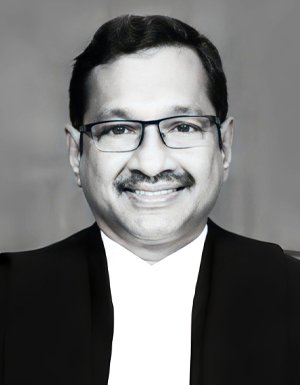

No Acts & Articles mentioned in this case
ITEM NO.1503 COURT NO.5 SECTION II-C
(FOR JUDGMENT)
S U P R E M E C O U R T O F I N D I A
RECORD OF PROCEEDINGS
Criminal Appeal No(s). 410-411/2015
RAVI SHARMA Appellant(s)
VERSUS
STATE(GOVERNMENT OF N.C.T. OF DELHI) & ANR. Respondent(s)
([HEARD BY: HON. ABHAY S. OKA AND HON. M.M. SUNDRESH, JJ.]
IA No. 3780/2015 - GRANT OF BAIL
IA No. 3782/2015 - SUSPENSION OF SENTENCE
Date : 11-07-2022 These appeals were called on for pronouncement of
judgment today.
For Appellant(s)
Mr. Mohit D. Ram, AOR
For Respondent(s)
Mr. B. V. Balaram Das, AOR
Mr. Ashiesh Kumar, AOR
The Court pronounced the following
J U D G M E N T
Hon'ble Mr. Justice M.M. Sundresh pronounced the judgment for
the Bench comprising Hon'ble Mr. Justice Abhay S. Oka and His
Lordship.
The Bench allowed the appeals in terms of the signed
reportable judgment observing inter alia as under:
“20.On the aforesaid analysis, the order of conviction
rendered by the High Court of Delhi stands set aside,
by restoring the acquittal by the trial Court.
The appeals stand allowed.”
Pending applications stand disposed of.
(ASHA SUNDRIYAL) (POONAM VAID)
ASTT. REGISTRAR-cum-PS COURT MASTER (NSH)
[Signed reportable judgment is placed on the file]
REPORTABLE
IN THE SUPREME COURT OF INDIA
CRIMINAL APPELLATE JURISDICTION
CRIMINAL APPEAL NOS. 410-411 OF 2015
Ravi Sharma … Appellant
Versus
State (Government of NCT of Delhi) and Anr. … Respondents
J U D G M E N T
M. M. SUNDRESH, J.
1.An order of acquittal passed on a scrutiny of evidence before it by the
District and Sessions Judge, North-East District, Karkardooma Court, Delhi
in S.C. No.6/12 got overturned by the impugned judgment of the Division
Bench of the High Court of Delhi based upon the existence of motive along
with the recovery made under Section 27 of the Indian Evidence Act (for
short ‘the Act’).
1
FACTS IN BRIEF:
2.On 30.05.2011, the first information report was recorded on finding a dead
body. PW2, brother of the deceased, identified the body. Statements of both
PW1, father of the deceased and PW2 have been recorded, which did not
indicate any specific suspect. The Investigating Officer conducted the
inquest and prepared the map. On the next day, doubts were raised by PWs 1
and 2 pointing the finger of suspicion on the accused who happens to be a
friend of the deceased. Upon securing the accused, recovery of the material
in the form of firearm was made. Both the observation Mahazar along with
the sketch and the recovery Mahazar under Section 27 of the Act were
signed by the police officers with the exception that the latter one was signed
by PW2 as well.
3.The trial Court disbelieved the evidence of PWs 1 and 2; PW2 with
reference to the motive, and PW1 on the ground that it did not support the
case of the prosecution. It raised a serious suspicion over the recovery made
under Section 27 of the Act. From the place of occurrence, recoveries were
made by way of a wooden piece of the butt of a gun along with the
cartridges. Of this, four cartridges were found in the pocket of the deceased.
2
4.Having found that the motive has not been proved and the recovery being
doubtful despite the presence of scores of independent witnesses on both
occasions, the Court in the first instance deemed it appropriate to extend the
benefit of doubt in favour of the appellant.
5.The Division Bench of the Delhi High Court, despite concurring with the
views expressed by the trial Court qua the last seen theory, nonetheless
accepted the evidence of PW2 with respect to the motive coupled with the
recoveries made. Though the trial Court eschewed the evidence of the
Ballistic Expert, which remained inconclusive with respect to the bullet
which caused the death, relatable to the gun belonging to the appellant, the
High Court felt that it could be relied upon. Incidentally, it was held that the
wooden piece of the butt did belong to the appellant. Therefore, the
circumstances forming a chain were sufficient enough to point out guilt
towards him and accordingly the High Court rendered a conviction.
6.Learned counsel, Mr. Krishan Kumar, appearing for the appellant submitted
that the well-merited judgment of the trial Court ought not to have been
reversed by the High Court by replacing its own views. Having accepted the
views of the trial Court as a plausible one, the conviction ought not to have
been rendered. There was no link in the circumstantial chain as held by the
3
High Court. Motive has not been established in the manner known to law. In
a case of circumstantial evidence, motive assumes more importance. The
opinion of the Ballistic Expert was rightly taken note of by the trial Court
and in fact used in favour of the appellant, being inconclusive. The manner
in which recoveries were made at the first instance during the inspection of
the place of occurrence and thereafter at the instance of the appellant were
rightly doubted by the trial court. The suspicion created by the trial Court
has not been dispelled. As there is no perversity in the decision of the trial
Court, the reversal at the hands of the High Court is unwarranted.
7.Ms. Aishwarya Bhati learned Additional Solicitor General appearing for the
respondents submitted that the power of the High Court in deciding the
appeal is rather wide. The High Court may reappreciate the evidence which
in fact it did. There is no perversity in the cogent reasons rendered by the
High Court. PW2 has deposed about the motive due to enmity between the
deceased and the appellant. This along with the recoveries made would form
sufficient grounds to convict the appellant.
8.Before venturing into the merits of the case, we would like to reiterate the
scope of Section 378 of the Code of Criminal Procedure (for short ‘Cr.P.C.’)
while deciding an appeal by the High Court, as the position of law is rather
4
settled. We would like to quote the relevant portion of a recent judgment of
this Court in Jafarudheen and Others v. State of Kerala (2022 SCC Online
SC 495) as follows:
25. While dealing with an appeal against acquittal by invoking Section 378
of the Cr.PC, the Appellate Court has to consider whether the Trial Court's
view can be termed as a possible one, particularly when evidence on record
has been analyzed. The reason is that an order of acquittal adds up to the
presumption of innocence in favour of the accused. Thus, the Appellate
Court has to be relatively slow in reversing the order of the Trial Court
rendering acquittal. Therefore, the presumption in favour of the accused
does not get weakened but only strengthened. Such a double presumption
that enures in favour of the accused has to be disturbed only by thorough
scrutiny on the accepted legal parameters.
9.This Court in the aforesaid judgment has noted the following decision while
laying down the law:
Precedents:
Mohan alias Srinivas alias Seena alias Tailor Seena v. State of Karnataka,
[2021 SCC OnLine SC 1233] as hereunder:
“20. Section 378 CrPC enables the State to prefer an appeal against an order
of acquittal. Section 384 CrPC speaks of the powers that can be exercised by
the Appellate Court. When the trial court renders its decision by acquitting
the accused, presumption of innocence gathers strength before the Appellate
Court. As a consequence, the onus on the prosecution becomes more
burdensome as there is a double presumption of innocence. Certainly, the
Court of first instance has its own advantages in delivering its verdict, which
is to see the witnesses in person while they depose. The Appellate Court is
expected to involve itself in a deeper, studied scrutiny of not only the
evidence before it, but is duty bound to satisfy itself whether the decision of
the trial court is both possible and plausible view. When two views are
possible, the one taken by the trial court in a case of acquittal is to be
followed on the touchstone of liberty along with the advantage of having
seen the witnesses. Article 21 of the Constitution of India also aids the
accused after acquittal in a certain way, though not absolute. Suffice it is to
state that the Appellate Court shall remind itself of the role required to play,
while dealing with a case of an acquittal.
5
21. Every case has its own journey towards the truth and it is the Court's
role undertake. Truth has to be found on the basis of evidence available
before it. There is no room for subjectivity, nor the nature of offence affects
its performance. We have a hierarchy of courts in dealing with cases. An
Appellate Court shall not expect the trial court to act in a particular way
depending upon the sensitivity of the case. Rather it should be appreciated if
a trial court decides a case on its own merit despite its sensitivity.
22. At times, courts do have their constraints. We find, different decisions
being made by different courts, namely, trial court on the one hand and the
Appellate Courts on the other. If such decisions are made due to institutional
constraints, they do not augur well. The district judiciary is expected to be
the foundational court, and therefore, should have the freedom of mind to
decide a case on its own merit or else it might become a stereotyped one
rendering conviction on a moral platform. Indictment and condemnation
over a decision rendered, on considering all the materials placed before it,
should be avoided. The Appellate Court is expected to maintain a degree of
caution before making any remark.
23. This court, time and again has laid down the law on the scope of inquiry
by an Appellate court while dealing with an appeal against acquittal under
Section 378 CrPC. We do not wish to multiply the aforesaid principle except
placing reliance on a recent decision of this court in Anwar Ali v. State of
Himanchal Pradesh, (2020) 10 SCC 166:
14.2. When can the findings of fact recorded by a court be held to be
perverse has been dealt with and considered in paragraph 20 of the
aforesaid decision, which reads as under: [Babu v. State of Kerala,
[(2010) 9 SCC 189]:
“20. The findings of fact recorded by a court can be held to be
perverse if the findings have been arrived at by ignoring or
excluding relevant material or by taking into consideration
irrelevant/inadmissible material. The finding may also be said to
be perverse if it is “against the weight of evidence”, or if the
finding so outrageously defies logic as to suffer from the vice of
irrationality. (Vide Rajinder Kumar Kindra v. Delhi Admn.
[(1984) 4 SCC 635], Excise & Taxation Officer-cum-Assessing
Authority v. Gopi Nath & Sons [1992 Supp (2) SCC 312],
Triveni Rubber & Plastics v. CCE [1994 Supp (3) SCC 665],
Gaya Din v. Hanuman Prasad [(2001) 1 SCC 501], Aruvelu v.
State, [(2009) 10 SCC 206] and Gamini Bala Koteswara Rao v.
State of A.P. [(2009) 10 SCC 636]).”
6
It is further observed, after following the decision of this Court
in Kuldeep Singh v. Commr. of Police [(1999) 2 SCC 10], that if
a decision is arrived at on the basis of no evidence or thoroughly
unreliable evidence and no reasonable person would act upon it,
the order would be perverse. But if there is some evidence on
record which is acceptable and which could be relied upon, the
conclusions would not be treated as perverse, and the findings
would not be interfered with.
14.3. In the recent decision of Vijay Mohan Singh v. State of
Karnataka, [(2019) 5 SCC 436], this Court again had an occasion to
consider the scope of Section 378 CrPC and the interference by the
High Court [State of Karnataka v. Vijay Mohan Singh, 2013 SCC
OnLine Kar 10732] in an appeal against acquittal. This Court
considered a catena of decisions of this Court right from 1952
onwards. In para 31, it is observed and held as under:
“31. An identical question came to be considered before this
Court in Umedbhai Jadavbhai v. State of Gujarat, [(1978) 1 SCC
228]. In the case before this Court, the High Court interfered
with the order of acquittal passed by the learned trial court on
reappreciation of the entire evidence on record. However, the
High Court, while reversing the acquittal, did not consider the
reasons given by the learned trial court while acquitting the
accused. Confirming the judgment of the High Court, this Court
observed and held in para 10 as under:
‘10. Once the appeal was rightly entertained against the
order of acquittal, the High Court was entitled to
reappreciate the entire evidence independently and come
to its own conclusion. Ordinarily, the High Court would
give due importance to the opinion of the Sessions Judge
if the same were arrived at after proper appreciation of the
evidence. This rule will not be applicable in the present
case where the Sessions Judge has made an absolutely
wrong assumption of a very material and clinching aspect
in the peculiar circumstances of the case.’
31.1. In Sambasivan v. State of Kerala, [(1998) 5 SCC 412], the
High Court reversed the order of acquittal passed by the learned
trial court and held the accused guilty on reappreciation of the
entire evidence on record, however, the High Court did not
record its conclusion on the question whether the approach of
the trial court in dealing with the evidence was patently illegal
or the conclusions arrived at by it were wholly untenable.
Confirming the order passed by the High Court convicting the
7
accused on reversal of the acquittal passed by the learned trial
court, after being satisfied that the order of acquittal passed by
the learned trial court was perverse and suffered from
infirmities, this Court declined to interfere with the order of
conviction passed by the High Court. While confirming the
order of conviction passed by the High Court, this Court
observed in para 8 as under:
‘8. We have perused the judgment under appeal to
ascertain whether the High Court has conformed to the
aforementioned principles. We find that the High Court
has not strictly proceeded in the manner laid down by this
Court in Doshi case [Ramesh Babulal Doshi v. State of
Gujarat, (1996) 9 SCC 225] viz. first recording its
conclusion on the question whether the approach of the
trial court in dealing with the evidence was patently illegal
or the conclusions arrived at by it were wholly untenable,
which alone will justify interference in an order of
acquittal though the High Court has rendered a well-
considered judgment duly meeting all the contentions
raised before it. But then will this non-compliance per se
justify setting aside the judgment under appeal? We think,
not. In our view, in such a case, the approach of the court
which is considering the validity of the judgment of an
appellate court which has reversed the order of acquittal
passed by the trial court, should be to satisfy itself if the
approach of the trial court in dealing with the evidence
was patently illegal or conclusions arrived at by it are
demonstrably unsustainable and whether the judgment of
the appellate court is free from those infirmities; if so to
hold that the trial court judgment warranted interference.
In such a case, there is obviously no reason why the
appellate court's judgment should be disturbed. But if on
the other hand the court comes to the conclusion that the
judgment of the trial court does not suffer from any
infirmity, it cannot but be held that the interference by the
appellate court in the order of acquittal was not justified;
then in such a case the judgment of the appellate court has
to be set aside as of the two reasonable views, the one in
support of the acquittal alone has to stand. Having regard
to the above discussion, we shall proceed to examine the
judgment of the trial court in this case.’
31.2. In K. Ramakrishnan Unnithan v. State of Kerala, [(1999) 3
SCC 309], after observing that though there is some substance in
the grievance of the learned counsel appearing on behalf of the
8
accused that the High Court has not adverted to all the reasons
given by the trial Judge for according an order of acquittal, this
Court refused to set aside the order of conviction passed by the
High Court after having found that the approach of the Sessions
Judge in recording the order of acquittal was not proper and the
conclusion arrived at by the learned Sessions Judge on several
aspects was unsustainable. This Court further observed that as
the Sessions Judge was not justified in discarding the
relevant/material evidence while acquitting the accused, the
High Court, therefore, was fully entitled to reappreciate the
evidence and record its own conclusion. This Court scrutinised
the evidence of the eyewitnesses and opined that reasons
adduced by the trial court for discarding the testimony of the
eyewitnesses were not at all sound. This Court also observed
that as the evaluation of the evidence made by the trial court was
manifestly erroneous and therefore it was the duty of the High
Court to interfere with an order of acquittal passed by the
learned Sessions Judge.
31.3. In Atley v. State of U.P., [AIR 1955 SC 807], in para 5,
this Court observed and held as under:
‘5. It has been argued by the learned counsel for the
appellant that the judgment of the trial court being one of
acquittal, the High Court should not have set it aside on
mere appreciation of the evidence led on behalf of the
prosecution unless it came to the conclusion that the
judgment of the trial Judge was perverse. In our opinion, it
is not correct to say that unless the appellate court in an
appeal under Section 417 CrPC came to the conclusion
that the judgment of acquittal under appeal was perverse it
could not set aside that order.
It has been laid down by this Court that it is open to the
High Court on an appeal against an order of acquittal to
review the entire evidence and to come to its own
conclusion, of course, keeping in view the well-
established rule that the presumption of innocence of the
accused is not weakened but strengthened by the judgment
of acquittal passed by the trial court which had the
advantage of observing the demeanour of witnesses whose
evidence have been recorded in its presence.
It is also well settled that the court of appeal has as wide
powers of appreciation of evidence in an appeal against an
order of acquittal as in the case of an appeal against an
order of conviction, subject to the riders that the
9
presumption of innocence with which the accused person
starts in the trial court continues even up to the appellate
stage and that the appellate court should attach due weight
to the opinion of the trial court which recorded the order
of acquittal.
If the appellate court reviews the evidence, keeping those
principles in mind, and comes to a contrary conclusion,
the judgment cannot be said to have been vitiated. (See in
this connection the very cases cited at the Bar, namely,
Surajpal Singh v. State [1951 SCC 1207]; Wilayat Khan v.
State of U.P. [1951 SCC 898]. In our opinion, there is no
substance in the contention raised on behalf of the
appellant that the High Court was not justified in
reviewing the entire evidence and coming to its own
conclusions.’
31.4. In K. Gopal Reddy v. State of A.P., [(1979) 1 SCC 355],
this Court has observed that where the trial court allows itself to
be beset with fanciful doubts, rejects creditworthy evidence for
slender reasons and takes a view of the evidence which is but
barely possible, it is the obvious duty of the High Court to
interfere in the interest of justice, lest the administration of
justice be brought to ridicule.”
N. Vijayakumar v. State of T.N., [(2021) 3 SCC 687] as hereunder:—
“20. Mainly it is contended by Shri Nagamuthu, learned Senior Counsel
appearing for the appellant that the view taken by the trial court is a
“possible view”, having regard to the evidence on record. It is submitted that
the trial court has recorded cogent and valid reasons in support of its
findings for acquittal. Under Section 378 CrPC, no differentiation is made
between an appeal against acquittal and the appeal against conviction. By
considering the long line of earlier cases this Court in the judgment in
Chandrappa v. State of Karnataka, [(2007) 4 SCC 415] has laid down the
general principles regarding the powers of the appellate Court while dealing
with an appeal against an order of acquittal. Para 42 of the judgment which
is relevant reads as under: (SCC p. 432)
“42. From the above decisions, in our considered view, the following
general principles regarding powers of the appellate court while
dealing with an appeal against an order of acquittal emerge:
(1) An appellate court has full power to review, reappreciate and
reconsider the evidence upon which the order of acquittal is
founded.
10
(2) The Code of Criminal Procedure, 1973 puts no limitation,
restriction or condition on exercise of such power and an
appellate court on the evidence before it may reach its own
conclusion, both on questions of fact and of law.
(3) Various expressions, such as, “substantial and compelling
reasons”, “good and sufficient grounds”, “very strong
circumstances”, “distorted conclusions”, “glaring mistakes”, etc.
are not intended to curtail extensive powers of an appellate court
in an appeal against acquittal. Such phraseologies are more in
the nature of “flourishes of language” to emphasise the
reluctance of an appellate court to interfere with acquittal than to
curtail the power of the court to review the evidence and to
come to its own conclusion.
(4) An appellate court, however, must bear in mind that in case
of acquittal, there is double presumption in favour of the
accused. Firstly, the presumption of innocence is available to
him under the fundamental principle of criminal jurisprudence
that every person shall be presumed to be innocent unless he is
proved guilty by a competent court of law. Secondly, the
accused having secured his acquittal, the presumption of his
innocence is further reinforced, reaffirmed and strengthened by
the trial court.
(5) If two reasonable conclusions are possible on the basis of the
evidence on record, the appellate court should not disturb the
finding of acquittal recorded by the trial court.”
21. Further in the judgment in Murugesan v. State, [(2012) 10 SCC 383]
relied on by the learned Senior Counsel for the appellant, this Court has
considered the powers of the High Court in an appeal against acquittal
recorded by the trial court. In the said judgment, it is categorically held by
this Court that only in cases where conclusion recorded by the trial court is
not a possible view, then only the High Court can interfere and reverse the
acquittal to that of conviction. In the said judgment, distinction from that of
“possible view” to “erroneous view” or “wrong view” is explained. In clear
terms, this Court has held that if the view taken by the trial court is a
“possible view”, the High Court not to reverse the acquittal to that of the
conviction.
xxx xxx xxx
23. Further, in Hakeem Khan v. State of M.P., [(2017) 5 SCC 719] this
Court has considered the powers of the appellate court for interference in
cases where acquittal is recorded by the trial court. In the said judgment it is
held that if the “possible view” of the trial court is not agreeable for the
High Court, even then such “possible view” recorded by the trial court
cannot be interdicted. It is further held that so long as the view of the trial
11
court can be reasonably formed, regardless of whether the High Court
agrees with the same or not, verdict of the trial court cannot be interdicted
and the High Court cannot supplant over the view of the trial court. Para 9
of the judgment reads as under; (SCC pp.722-23)
“9. Having heard the learned counsel for the parties, we are of the
view that the trial court's judgment is more than just a possible view
for arriving at the conclusion of acquittal, and that it would not be safe
to convict seventeen persons accused of the crime of murder i.e. under
Section 302 read with Section 149 of the Penal Code. The most
important reason of the trial court, as has been stated above, was that,
given the time of 6.30 p.m. to 7.00 p.m. of a winter evening, it would
be dark, and, therefore, identification of seventeen persons would be
extremely difficult. This reason, coupled with the fact that the only
independent witness turned hostile, and two other eyewitnesses who
were independent were not examined, would certainly create a large
hole in the prosecution story. Apart from this, the very fact that there
were injuries on three of the accused party, two of them being deep
injuries in the skull, would lead to the conclusion that nothing was
premeditated and there was, in all probability, a scuffle that led to
injuries on both sides. While the learned counsel for the respondent
may be right in stating that the trial court went overboard in stating
that the complainant party was the aggressor, but the trial court's
ultimate conclusion leading to an acquittal is certainly a possible view
on the facts of this case. This is coupled with the fact that the presence
of the kingpin Sarpanch is itself doubtful in view of the fact that he
attended the Court at some distance and arrived by bus after the
incident took place.”
24. By applying the abovesaid principles and the evidence on record in the
case on hand, we are of the considered view that having regard to material
contradictions which we have already noticed above and also as referred to
in the trial court judgment, it can be said that acquittal is a “possible view”.
By applying the ratio as laid down by this Court in the judgments which are
stated supra, even assuming another view is possible, same is no ground to
interfere with the judgment of acquittal and to convict the appellant for the
offence alleged. From the evidence, it is clear that when the Inspecting
Officer and other witnesses who are examined on behalf of the prosecution,
went to the office of the appellant-accused, the appellant was not there in the
office and office was open and people were moving out and in from the
office of the appellant. It is also clear from the evidence of PWs 3, 5 and 11
that the currency and cellphone were taken out from the drawer of the table
by the appellant at their instance. There is also no reason, when the tainted
notes and the cellphone were given to the appellant at 5.45 p.m. no
recordings were made and the appellant was not tested by PW 11 till 7.00
p.m.”
12
10.Applying the said principles and after going through the judgment rendered
by the trial Court as well as the High Court, we do feel that it is a case where
the High Court has not acted within the legal parameters.
11.In this connection, we would like to note the following paragraphs of the
High Court, wherein it did concur with the views of the trial Court with
respect to the last seen theory:
“12. It is from this cross-examination the learned Trial Court concludes that
the last seen evidence as deposed by Jawahar Singh is an after-thought and
in fact in retrospect when the family of the deceased had strong suspicion
that Ravi was the accused, statement dated May 30, 2011 was introduced by
the Police claiming him to be the last seen witness. A perusal of the cross
examination of Ashok can reasonably lead to the inference as has been
drawn by the learned Trial Court.
13. Inspector Vijay Sirotiya PW-14 the investigating officer in his cross
examination has stated that the father and brother of the deceased had
arrived at the spot around 7.30/7.45 AM, however at that point of time they
did not disclose the name of any person whom they could suspect as the
perpetrator of the murder as they were crying and were in a bad condition.
He stated that statement of Ashok and Jawahar Singh were recorded on the
same day i.e. May 30, 2011 somewhere in the afternoon after the body had
been subjected to post-mortem. In cross-examination he stated that the name
of the suspect had come in the statement without any further address of the
suspect and thus his house could not be visited at that point of time, though
the witnesses mentioned some Gali number as well as the house number but
since it was a Katcha colony it was difficult to locate the said address,
unless the address was specifically ascertained with the help of witness or
other sources.
14. In view of this cross-examination of Ashok Kumar and Vijay Sirotiya
we cannot hold that the finding of the learned Trial Court on the point that
the last seen evidence is not reliable is perverse. Though both views are
possible, however the view taken by the learned Trial Judge is also a
plausible view.
13
12.Thus, when the last seen theory is found to be not true, there has to be much
more concrete and clinching evidence to implicate the appellant. PW1 is the
father of the deceased who not only deposed that there was no animosity
between the deceased and the appellant, but also that he did not know about
the past transaction.
13.Having accepted the views of the trial Court holding that the last seen theory
has not been proved, a conviction cannot be rendered on the basis of
evidence, which was rejected qua motive, through the mouth of PW2. The
trial Court gave its reasons for rejecting the evidence of PW2. It had the
advantage of seeing and assessing the demeanor of this witness, which the
High Court did not have. PW2 has stated that there was a money transaction
which led to a dispute between the accused and the deceased and that he had
assured the appellant that it would be repaid. This also occurred few days
before the date of occurrence. When we deal with a case of circumstantial
evidence, as aforesaid, motive assumes significance. Though, the motive
may pale into insignificance in a case involving eyewitnesses, it may not be
so when an accused is implicated based upon the circumstantial evidence.
This position of law has been dealt with by this Court in the case of Tarsem
Kumar v. Delhi Administration (1994) Supp 3 SCC 367 in the following
terms:
14
“8. Normally, there is a motive behind every criminal act and that is why
investigating agency as well as the court while examining the complicity of
an accused try to ascertain as to what was the motive on the part of the
accused to commit the crime in question. It has been repeatedly pointed out
by this Court that where the case of the prosecution has been proved beyond
all reasonable doubts on basis of the materials produced before the court, the
motive loses its importance. But in a case which is based on circumstantial
evidence, motive for committing the crime on the part of the accused
assumes greater importance. Of course, if each of the circumstances proved
on behalf of the prosecution is accepted by the court for purpose of
recording a finding that it was the accused who committed the crime in
question, even in absence of proof of a motive for commission of such a
crime, the accused can be convicted. But the investigating agency as well as
the court should ascertain as far as possible as to what was the immediate
impelling motive on the part of the accused which led him to commit the
crime in question. …….”
14.We do find that there is no sufficient link to come to the irresistible
conclusion pointing the guilt only to the appellant. We do not wish to
multiply the settled position of law regarding the circumstantial evidence,
except to quote the following decision in Padala Veera Reddy v. State of
A.P., 1989 Supp (2) SCC 706:
“10. Before adverting to the arguments advanced by the learned Counsel,
we shall at the threshold point out that in the present case there is no direct
evidence to connect the accused with the offence in question and the
prosecution rests its case solely on circumstantial evidence. This Court in a
series of decisions has consistently held that when a case rests upon
circumstantial evidence such evidence must satisfy the following tests:
“(1) the circumstances from which an inference of guilt is sought to be
drawn, must be cogently and firmly established;
(2) those circumstances should be of a definite tendency unerringly
pointing towards guilt of the accused;
(3) the circumstances, taken cumulatively, should form a chain so
complete that there is no escape from the conclusion that within all
human probability the crime was committed by the accused and none
else; and
15
(4) the circumstantial evidence in order to sustain conviction must be
complete and incapable of explanation of any other hypothesis than that
of the guilt of the accused and such evidence should not only be
consistent with the guilt of the accused but should be inconsistent with
his innocence. (See Gambhir v. State of Maharashtra [(1982) 2 SCC
351].”
15.However, once again, we would like to reiterate the settled position of law
that a mere suspicion, however, strong it may be, cannot be a substitute for
acceptable evidence, as held in Chandrakant Ganpat Sovitkar v. State of
Maharashtra, (1975) 3 SCC 16.
“16. ……It is well settled that no one can be convicted on the basis of
mere suspicion, however strong it may be. It also cannot be disputed
that when we take into account the conduct of an accused, his conduct
must be looked at in its entirety. …..”
16.Much reliance has been made on the recoveries made. When the observation
Mahazar was prepared along with the sketch and the inquest conducted,
admittedly, scores of persons were present. No independent witness was
made to sign and the evidence on behalf of the prosecution that they did not
volunteer to do so, cannot be accepted. A witness may not come forward to
adduce evidence at times when asked to act as an eyewitness. However,
when a large number of persons were available near the dead body, it is
incomprehensible as to how all of them refused to sign the documents
prepared by the police.
16
17.Similarly, the trial Court rightly doubted the recovery under Section 27 of
the Act. There was no need to take PW2 and thereafter make him to sign.
There are a lot of contradictions in the evidence rendered. PW2 has stated
that many persons were available at the time of the recovery, but no
statement has been obtained from any of them. PW11, the Head Constable
says that the Investigating Officer PW14, did not ask any neighbor to join
the investigation. PW8, who is the Sub-Inspector of Police has deposed that
none was forthcoming. A similar statement was also made by the
Investigating Officer. There is a discrepancy on the mode of traveling to the
place from where the recovery under Section 27 of the Act was made, along
with the witnesses, namely PWs 2, 8, 11 and 14. While PW2 has stated that
the police team used a jeep and motorbike. The other witness has stated that
it was either motorbike or by foot, while one witness says that it was a
Gypsy. We do find contradictions with respect to the place of arrest followed
by the disclosure statement.
18.The report of the Ballistic Expert is obviously a scientific evidence in the
nature of an opinion. It is required to use this evidence along with the other
substantive piece of evidence available. The report is inconclusive with
respect to the firearm belonging to the appellant being used for committing
the offence.
17
19.All the aforesaid aspects have been considered threadbare by the trial Court.
We do not find any perversity in it and the law presumes double presumption
in favour of the accused after a due adjudication by the trial Court. We do
believe that the High Court could have been slower in reversing the order of
acquittal rendered by the Court of First Instance.
20.On the aforesaid analysis, the order of conviction rendered by the High
Court of Delhi stands set aside, by restoring the acquittal by the trial Court.
The appeals stand allowed.
…….………………………J.
(ABHAY S. OKA)
.……………………………J.
(M.M. SUNDRESH)
New Delhi,
July 11, 2022
18

 Login with google
Legal Notes
Add a Note....