
As per case facts, Appellant Rehana Khan engaged Respondent Rizwan Siddiquee as her counsel. She alleged sexual assault by a police official and shared confidential details with the respondent. She ...
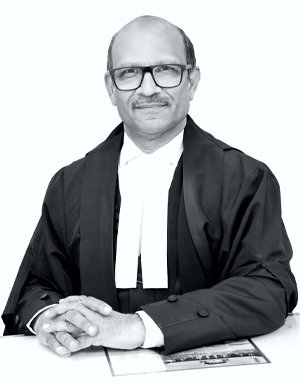
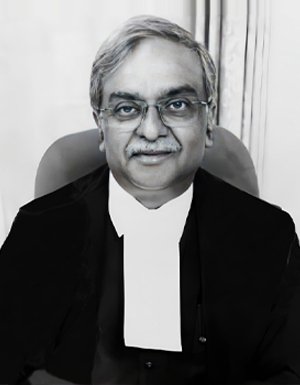
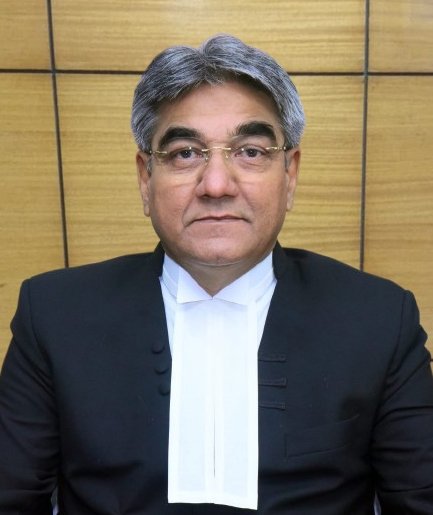
No Acts & Articles mentioned in this case
2026 INSC 907 Civil Appeal No. 12256 of 2025 a/w connected matters 1
REPORTABLE
IN THE SUPREME COURT OF INDIA
CIVIL APPELLATE/ORIGINAL JURISDICTION
CIVIL APPEAL NO. 12256 OF 2025
REHANA KHAN ...APPELLANT(S)
VS.
RIZWAN SIDDHIQUEE ...RESPONDENT(S)
WITH
TRANSFERRED CASE (CIVIL) NO. 30 OF 2026
AND
CIVIL APPEAL NO.7959 OF 2026 @
DIARY NO. 7049 OF 2026
J U D G M E N T
VIKRAM NATH, J.
1. It is sometimes said that in a trial the parties already
know the truth, and that it is the judge who is on trial.
The observation is a sobering one, and the present case
illustrates why. Before us are two litigants, each of
whom has approached this Court in the confident
expectation of vindication, and neither of whom has
been candid with it. Every fact of consequence has had
to be prised out of a record in which suppression,
embellishment and afterthought are the common
currency of both sides. The machinery of justice is not
a facility placed at the disposal of parties to settle
scores, to salvage reputations they have themselves
Civil Appeal No. 12256 of 2025 a/w connected matters 2
imperilled, or to extract advantage from a controversy
of their own making. We say at the outset, and give our
reasons in what follows, that neither the appellant nor
the respondent leaves this Court with credit.
2. These matters arise out of the judgment and order
dated 11th August 2025 passed by the Disciplinary
Committee of the Bar Council of India in B.C.I. Tr. Case
No. 177 of 2018.
3. They are cross proceedings. For convenience, we refer
to Ms. Rehana Khan, who is the appellant in Civil
Appeal No. 12256 of 2025 and the respondent in T.C.(C)
No. 30 of 2026 and in Civil Appeal No. 7959 of 2026, as
the appellant; and to Mr. Rizwan Siddique, advocate, as
the respondent.
4. The appellant, who was the complainant before the
Disciplinary Committee, has preferred Civil Appeal No.
12256 of 2025 seeking enhancement of the
punishment imposed on the respondent. The
respondent, for his part, first invoked the writ
jurisdiction of the High Court of Judicature at Bombay
under Article 226 of the Constitution, in Writ Petition
No. 11765 of 2025, challenging the same order. By
order dated 27th November 2025, this Court directed
that the records of the writ petition be transmitted to
this Court and that the matters be heard together. The
writ petition, on such transfer, stands registered as
T.C.(C) No. 30 of 2026. The respondent has additionally
Civil Appeal No. 12256 of 2025 a/w connected matters 3
preferred Civil Appeal No. 7959 of 2026 against the
same order.
5. By order dated 27th November 2025, this Court also
allowed I.A. No. 247450 of 2025 and impleaded the
Secretary, Bar Council of Maharashtra and Goa, as a
party.
6. The facts giving rise to the present appeals are:
6.1. The respondent is an advocate enrolled on the roll of
the Bar Council of Maharashtra and Goa. It is
common ground that the appellant engaged the
respondent as her counsel and that the engagement
subsisted for some part of the years 2013 and 2014.
6.2. The appellant's case is that in 2013, following an
altercation with her brother, she visited the Malad
Police Station and there came into contact with a
senior police official then posted as Additional
Commissioner of Police, Northern Regional Division,
Mumbai. She alleges that the official, under the guise
of assisting her, kept in contact with her and
thereafter attempted to sexually assault her. It is on
this account that she says she approached the
respondent, and in the course of that engagement
shared with him confidential details of her personal
life and material in her possession bearing on the
allegations.
6.3. A legal notice was addressed to the said police official
through the respondent's office. According to the
Civil Appeal No. 12256 of 2025 a/w connected matters 4
appellant, the notice dated 15th July 2014, was
issued without her authority. According to the
respondent, the notice was drawn from a draft
supplied by the appellant herself, prepared by an
advocate previously engaged by her, was first
dispatched on 8th July 2014 and was re-sent on 15th
July 2014, in each case on her instructions.
6.4. On 24th July 2014, the appellant lodged a First
Information Report against the police official under
Sections 376(2), 376C, 354 and 354D of the Indian
Penal Code, 1860 . In that FIR, the respondent was
named as a person acting under the influence of the
said official.
6.5. On 28th July 2014, the appellant appeared before the
electronic media with her face covered and spoke
about her case.
6.6. On or about 4th August 2014, the respondent's
statement was recorded by the Women's Atrocities
Prevention Cell, Crime Branch, Byculla, in
connection with the appellant's case. On 5th August
2014, an interview given by the respondent was
broadcast on the television channels 'Aaj Tak' and
'Zee News'. Footage of conversations between the
appellant and the respondent, and material said to
be in the nature of messaging exchanges between
them, also came to be broadcast.
Civil Appeal No. 12256 of 2025 a/w connected matters 5
6.7. On 13th August 2014, the premises of the
respondent's office were searched by the investigating
agency. That search was broadcast on television the
following day.
6.8. On 26th February 2015, the appellant filed a
complaint against the respondent under Section 35
of the Advocates Act, 1961 before the Bar Council of
Maharashtra and Goa, alleging professional
misconduct. It came to be registered as Disciplinary
Case No. 64 of 2015.
6.9. By order dated 4th December 2015, the police official
was discharged by the Trial Court in the proceedings
arising out of the FIR of 24th July 2014. That order
was not carried further by the appellant and has
attained finality.
6.10. The complaint under the Advocates Act, was taken
up by Disciplinary Committee of the Bar Council of
India as B.C.I. Tr. Case No. 177 of 2018.
6.11. Before the Disciplinary Committee, the respondent
denied the allegations in his written statement and
maintained that he had at all times acted within the
scope of his professional duty, and that the notice of
15th July 2014 had been issued with the appellant's
oral consent.
6.12. By the impugned order dated 11th August 2025, the
Disciplinary Committee of the Bar Council of India
held that the unauthorised issuance of the notice
Civil Appeal No. 12256 of 2025 a/w connected matters 6
dated 15th July 2014, the disclosure of confidential
information leading to the complainant's
identification in the media, and the making of
derogatory public remarks concerning her, each
constituted professional misconduct under Section
35 of the Advocates Act, 1961. It directed that the
respondent's name be removed from the roll of
advocates maintained by the Bar Council of
Maharashtra and Goa for a period of two years from
the date of the order, during which he was restrained
from appearing before any co urt, tribunal or
authority in India and from holding himself out as an
advocate. It further imposed a fine of Rs. 3,00,000/-
(Rupees Three Lakhs only) payable to the appellant,
and directed a further sum of Rs. 2,00,000/- (Rupees
Two Lakhs only) to be deposited in the Welfare Fund
of the Bar Council of India.
6.13. Both sides are aggrieved. The appellant says the
punishment is inadequate. The respondent says
there was no misconduct at all.
7. We have heard Ms. Rehana Khan, the appellant, who
appears in person; Mr. Adit S. Pujari, learned counsel
for the respondent; and Mr. P. V. Yogeswaran, learned
counsel for the Bar Council of India.
8. Submissions on behalf of the appellant:
8.1. The appellant submits that the respondent was
entrusted with confidential and sensitive information
Civil Appeal No. 12256 of 2025 a/w connected matters 7
concerning her and, instead of acting in her interest,
acted against it. She says he entered into undisclosed
coordination with the opposing party and ultimately
put confidential material into the public domain.
8.2. She submits that the engagement of the respondent
as her counsel is not in dispute, and that the
relationship of trust which such engagement creates
carries heightened professional and ethical
obligations. Those obligations, she says, were
breached when the respondent gave an interview to
the media concerning her, when personal information
passed to him in confidence found its way to the
press, and when he publicly characterised her
complaint as a false case of rape and accused her of
seeking to sensationalise the matter.
8.3. She contends that the record shows that during the
period of his engagement the respondent remained in
continuous telephonic contact with the opposing
party and met that party in person on 18th July
2014, which demonstrates collusion and bad faith.
8.4. She submits that the respondent has attacked her
character not only in public but before the Bar
Council of India, and in the course of argument
before this Court.
8.5. The harm, she says, is irreversible. The disclosures
have affected her dignity, her privacy, her mental
peace and her standing in society.
Civil Appeal No. 12256 of 2025 a/w connected matters 8
8.6. On that footing she seeks enhancement of the
punishment as a measure of accountability
commensurate with the misconduct found proved.
She prays that the respondent be permanently
removed from the roll of advocates and that he be
directed to pay her compen sation of Rs.
2,00,00,000/- (Rupees Two Crore only) for the
trauma she has suffered.
9. Submissions on behalf of the respondent:
9.1. Learned counsel for the respondent submits that the
appellant engaged his services between 2012 and
2014. In 2014, she approached him for the limited
purpose of dispatching a legal notice complaining of
dereliction of duty on the part of a police officer who,
it was said, was harassing her in connection with an
investigation into an escort service being run in her
name. The draft of that notice, prepared by an
advocate previously engaged by her, was furnished
by the appellant herself. It was dispatched from the
respondent's office on 8th July 2014 and re-sent on
15th July 2014.
9.2. It is submitted that the respondent advised the
appellant in clear terms that her grievance against
the police official did not disclose an offence of rape
or any other sexual offence, and that at highest a case
of non-performance of duty was made out. He denies
that the appellant ever approached him for the
Civil Appeal No. 12256 of 2025 a/w connected matters 9
purpose of lodging an FIR against the official. His
case is that the appellant wished to appear on a
reality television programme and was seeking to
sensationalise the matter in order to generate
publicity and advance her career.
9.3. It is submitted that it was only after this advice was
tendered that the appellant lodged the FIR of 24th
July 2014 alleging rape, in which the respondent was
named as being under the influence of the police
official.
9.4. The consequence, it is submitted, fell upon the
respondent. The FIR and its allegations were widely
reported. He was pursued and harassed by media
personnel after being named, resulting in grave
professional embarrassment. His office premises
were searched on 13th August 2014 and the search
was broadcast the next day.
9.5. As to the events of 4th and 5th August 2014, the
respondent denies that he disclosed the appellant's
identity to the media. He points out that the appellant
had herself appeared before the media on 28th July
2014, albeit with her face covered, and had spoken of
the details of her case. He submits that at no point
did he voluntarily disclose any confidential
information or her identity, and that the video
material broadcast by the news channels was
Civil Appeal No. 12256 of 2025 a/w connected matters 10
material he had furnished to the police, which he did
not release to any journalist.
9.6. As to the interview carried on 'Aaj Tak', the
respondent submits that the appellant was
represented in that broadcast by one Ms. Chitra
Salunke, advocate, and that his own participation
was for the sole purpose of answering the public
accusations against him. He further submits that by
that date he was no longer the appellant's counsel.
9.7. It is further submitted that the impugned order came
to be passed ex parte by the Disciplinary Committee
without service of notice of the final hearing at the
respondent's correct and updated address. Such
non-service is said to strike at the root of the
principles of fair hearing and to vitiate the entire
disciplinary proceedings.
9.8. On these submissions, it is urged that the impugned
order proceeds upon a complaint in which the
appellant has deliberately suppressed material facts,
that no professional misconduct is made out, and
that the order of the Disciplinary Committee ought to
be set aside.
10. Submissions on behalf of the Bar Council of India:
10.1. Learned counsel for the Bar Council of India supports
the impugned order and submits that the findings
recorded by the Disciplinary Committee are borne out
by the material on record and that the punishment
Civil Appeal No. 12256 of 2025 a/w connected matters 11
imposed is proportionate to the misconduct
established.
11. We have given our thoughtful consideration to the
arguments advanced and the material on record.
12. The record in these matters makes for compelling
reading. Litigation of this kind holds a certain
fascination, and we do not pretend otherwise. But a
court is not an auditorium, and the drama of a case is
no measure of its merit. Stripped of its theatre, what
these proceedings disclose is a controversy which two
litigants have between them manufactured, prolonged
and brought to the highest court in the country, each
in the hope that we would be sufficiently diverted by the
spectacle to overlook their own part in creating it. We
have not been.
13. Two questions arise. The first, raised by the
respondent, is whether the findings of professional
misconduct are sustainable at all. The second, raised
by the appellant, is whether the punishment imposed
is so inadequate as to call for enhancement.
14. The respondent has urged that he was denied a
reasonable opportunity of being heard by the
Disciplinary Committee, the impugned order having
been passed ex parte and without service of notice of
the final hearing at his correct and updated address.
We have examined the record with care, and the ground
does not survive scrutiny. The respondent entered
Civil Appeal No. 12256 of 2025 a/w connected matters 12
appearance and he filed a written statement refuting
the allegations. He was represented by counsel, and he
participated in the recording of evidence. It is clear that
he knew, from the institution of the disciplinary case,
down to the passing of the impugned order in August
2025, that proceedings were pending against him and
what those proceedings alleged. A party who has been
present throughout cannot be heard to say that he was
absent, especially one who is himself an advocate. The
ground is flimsy and is, in our view, an afterthought,
taken because no better one was available
15. That brings us to the substance. Whatever be the
disputes about the notice of 15th July 2014, and there
is much on the record which is unclear about how that
notice came to be issued and on whose instructions,
one fact stands out and is not in dispute. On 5th
August 2014 the respondent went on television. He
gave an interview which was broadcast on 'Aaj Tak' and
'Zee News'. In that interview he spoke of his
relationship with the appellant, of what she had told
him and of what had passed between them.
Conversations between the two, recorded and
thereafter released, were played alongside. Material
said to consist of their messaging exchanges was also
broadcast.
16. The complaint before the Disciplinary Committee
expressly mentions the press interview and the
Civil Appeal No. 12256 of 2025 a/w connected matters 13
respondent's written statement does not deny that he
gave it. His answer is one of justification. In these
circumstances, the Disciplinary Committee was bound,
to proceed on the footing that the interview was given.
17. The justification offered is that the appellant had by
then named the respondent in the FIR of 24th July
2014, that he was no longer her counsel, that he was
being pursued by the media, and that he spoke only to
answer the accusations made against him. Thi s
justification does not suffice. An advocate’s duty is not
conditional upon the client's continued good behaviour
towards the advocate. An advocate cannot use
information received in confidence against his client,
and the fact that she has since become his adversary
makes no difference.
18. An advocate who considers himself falsely accused is
not without remedies. He may place his version before
the investigating agency, as indeed the respondent did
on 4th August 2014 or he may sue in defamation. What
he may not do is take his grievance to a television
channel and there disclose privileged communications,
play recorded conversations with his former client, and
describe her complaint as a false case of rape while
accusing her of seeking publicity.
19. The finding of professional misconduct on this count is
therefore unassailable, and it is sufficient to sustain the
punishment imposed. We find no ground to interfere
Civil Appeal No. 12256 of 2025 a/w connected matters 14
with the impugned order. T.C.(C) No. 30 of 2026 and
Civil Appeal No. 7959 of 2026 are dismissed.
20. As regards the appellant's prayers, there is a further
difficulty. She asks this Court to enhance a
punishment in her favour, and one who asks for that
must come to us with clean hands. She has not. The
material on record, including exchanges she has herself
relied upon, shows that while the engagement
subsisted she and the respondent were in discussion
about the means by which the police official might be
trapped, which is not the conduct of a client simply
seeking legal advice. Nor is her account of what followed
complete. She appeared before the electronic media on
28th July 2014 of her own volition and spoke of her
case, though her grievance before us is that her case
was made public. Further, the police official was
discharged on 4th December 2015, and that order has
never been challenged by her. Having been less than
candid about each of these matters, she cannot ask us
to enlarge a relief granted to her. Her prayer for
enhancement is refused and Civil Appeal No. 12256 of
2025 is dismissed.
21. We are left with the observation with which we began.
Each of these parties has come to us complaining of a
wrong, and each has been the author of a good part of
it. Between them they have occupied the time of the Bar
Council of India, a High Court and this Court for eleven
Civil Appeal No. 12256 of 2025 a/w connected matters 15
years. That time belonged to other litigants, waiting for
reliefs they genuinely need. We record our strong
disapproval of the conduct of both.
22. In view of the above observations, the impugned order
dated 11th August 2025 is upheld. Civil Appeal No.
12256 of 2025, Civil Appeal No. 7959 of 2026 and
T.C.(C) No. 30 of 2026 are all dismissed.
23. In view of the conduct of each party, we find it fit to
impose costs. The appellant and the respondent shall
each pay costs of Rs. 5,00,000/- (Rupees Five Lakhs
only) to be deposited with the Supreme Court Legal
Services Committee within four weeks from today ,
failing which it shall be recovered in accordance to law.
24. Pending applications, if any, stand disposed of.
…………………………….. J.
[VIKRAM NATH ]
…………………………….. J.
[SANDEEP MEHTA ]
…………………………….. J.
[VIJAY BISHNOI]
NEW DELHI;
AUGUST 21, 2026

 Login with google
Legal Notes
Add a Note....