
As per case facts, Rushabh Outdoors and Vandana Borse challenged subsection (2) of section 479 of the Mumbai Municipal Corporation Act, 1888, seeking its declaration as unconstitutional. They were aggrieved ...
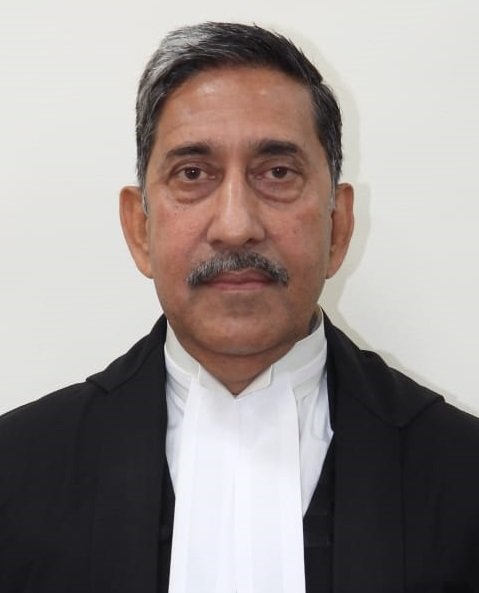
No Acts & Articles mentioned in this case
WP-227-2027.doc
IN THE HIGH COURT OF JUDICATURE AT BOMBAY
ORDINARY ORIGINAL CIVIL JURISDICTION
WRIT PETITION NO.227 OF 2017
1. Rushabh Outdoors, Thane ]
2. Vandana Borse, ]
Proprietor of M/s. Synnovation, Mumbai] .. Petitioners
Versus
1. The State of Maharashtra, ]
2. Municipal Corporation of Greater Mumbai ] .. Resp ondents
Mr. Navroz Seervai, Senior Advocate with Mr. Aseem Naphade,
Mr. Akash Rebello, Mr. Jatin Sheth, Ms. Chaitra Rao and Ms.
Meera Parmar, Advocates for the Petitioners.
Dr. Birendra Saraf, Advocate General with Mr. Milind V. More,
Additional Government Pleader and Mr. Jay Sanklecha, “B” Panel
Counsel for Respondent No.1-State of Maharashtra.
Mr. Suresh B. Pakale, Senior Advocate with Ms. K. H. Mastakar
i/by Ms. Komal Punjabi, Advocates for Respondent No.2-MCGM.
CORAM : SHREE CHANDRASHEKHAR, CJ. &
GAUTAM A. ANKHAD, J.
Reserved on : 16
th
December 2025.
Pronounced on : 06
th
April 2026
JUDGMENT
Per, Shree Chandrashekhar, C.J. :
M/s. Rushabh Outdoors which is a partnership firm an d
represented through its partners, namely, Navnit Ha ria and
Zaverben Liladhar Haria is joined by the proprietress of M/s.
Synnovation, namely, Vandana Borse in laying a challenge to sub-
section (2) of section 479 of the Mumbai Municipal Corporation
Act, 1888
1
. The petitioners are seeking a declaration that sub-
section (2) of section 479 of the MMC Act is unconstitutional and
liable to be struck down. They are aggrieved by Resolution No.999
passed by the Municipal Corporation of Greater Mumb ai in its
meeting held on 11
th
December 2009 by which a revision in the
schedule of fees for the advertisement license issu ed under
1MMC Act
1
Panchal
WP-227-2027.doc
sections 328 and 328A of the MMC Act was approved a nd
increased by 80 percent of the prevailing rate for one year and
then it is to be increased by 10 percent per annum every following
year. The petitioners have challenged the power of the
Commissioner to fix the rates of license fees and it is in that
context that they are raising a question to the con stitutional
validity of sub-section (2) of section 479 of the MMC Act.
2. The petitioners state that they obtain a license from the
Municipal Corporation under sections 328/328A of the MMC Act
on payment of license fees for carrying on the business of outdoor
publicity. The Municipal Corporation proposed a revision in the
license fees for the permissions granted under sections 328 and
328A and the said proposal contained in the letter dated 4
th
November 2009 was considered by the Law Committee an d it was
decided to take approval of the Municipal Corporati on. The
reasons for seeking a revision in the license fees are said to be the
rising expenditure for the establishment of the Mun icipal
Corporation, an increase in the wholesale price index and service
costs, decline in the revenue of the Municipal Corporation from
the license fees etc. However, the information received by them
through the RTI is that the Municipal Corporation has reserves
and surplus of Rs.47244.56 crores (excluding inter budget
contributions) and its consolidated income far exce eds its
expenditure. The petitioners have provided the deta ils of the
license fees collected by the Municipal Corporation for the period
between 2007 to 2016 and endeavored to demonstrate that the
total income of the Municipal Corporation from the advertising
licenses constitutes about 69 percent of the total collection of the
License Department. The petitioners blame the Commissioner for
not applying his mind before proposing increase in the license
2
Panchal
WP-227-2027.doc
fees. They say that the Municipal Corporation also did not apply
its mind and approved the proposal for increase in the license fees
in a mechanical manner inasmuch as there was no dis cussion in
the meeting of the Municipal Corporation held on 11
th
December
2009. They contend that the effect of 10 percent increase in
perpetuity in the license fees is excessive, arbitr ary and
unreasonable and violates their fundamental rights under Articles
14 and 19 of the Constitution of India.
3. In the affidavit-in-reply, the respondents have narrated the
procedure for granting permission for advertisement and claim
that several high-ranking officers of different dep artments
including the officers in the rank of Assistant Commissioner are
involved in the entire process at different stages and it is not true
that the License Department alone is involved in the whole
process. The Municipal Corporation has taken a prel iminary
objection to maintainability of the writ petition on the ground of
delay and laches on the part of the petitioners to challenge the
impugned resolution dated 11
th
December 2009. It has set up an
objection on the ground of constructive res judicata as a similar
challenge made to the impugned resolution was dismissed in “Yog
Advertising and Marketing Services
2
". It is pleaded that the
impugned resolution has been in operation for more than eight
years and the petitioners availed advertising rights under the said
resolution on payment of license fees in previous years. Before
“Yog Advertising and Marketing Services”, there was an increase in
the license fees in the year 1996 and that was the subject matter
of challenge in Writ Petition No.735 of 1997. There was again a
revision in license fees in the year 2003 to the extent of about
2Yog Advertising and Marketing Services & Anr. v. Municipal Corporation of Greater
Mumbai & Anr. 2016 SCC OnLine Bom. 62
3
Panchal
WP-227-2027.doc
100% in the schedule of fees and that continued for about five
years. Thereafter, a new guidelines for exhibiting sign boards and
hoardings became operational on 10
th
January 2008 and the High
Court passed an order in Writ Petition No.1132 of 2002 directing
the Municipal Corporation to implement the new guidelines which
entailed a complete study of the existing hoardings and about 225
hoardings were removed and 485 licenses were revoked. Since the
last increase in the schedule of fees, there has been substantial
increase in the expenditure of various departments of the
Municipal Corporation. Similarly, there has been increase in the
wholesale price index and costs of services which necessitated
increase in the license fees and an annual increase by 10%. The
Municipal Corporation has emphatically denied that there was no
rationale for increase in the license fees and states as under: -
“14. I deny that the rationale given by the Corporation for the
increase in the fee is incorrect. The decline in the revenues ought to
be considered as compared to the expenditure of the va rious
departments of the Corporation, the increase in the wholesale price
index, the growing expenditure and the various services rendered.
The comparison of the expenditure only towards the ope rative
functioning of the license department from the reven ue of the
hoardings is misconceived and erroneous. Considering the increase
in the license fees by 100% after a gap of 6 years and an annual
increase of 10% can be no stretch of imagination and logical
reasoning be considered to be unreasonable and unjustified. The cost
of administering the municipal services has also increased year to
year. In the year 2003-04, the cost of administering municipal
services was 5366.26 Cr. In 2007-08, it was 10585 Cr. It recites
that the cost of living has been rapidly increasing. The value of
Rupee has also gone down substantially. Whilst the Peti tioners
earned substantial revenue from the hoardings that the Corporation
believes substantially increased over the years, the hoarding owners
are grudging a reasonable justified increase in the license fee
charged by the Corporation. I deny that there is any
unreasonableness in the Resolution dated 11
th
December 2009 or
that the same, in any manner, is excessive or harsh.”
4. Mr. Navroz Seervai, the learned senior counsel fo r the
petitioners submitted that sub-section (2) to section 479 confers
an unguided, uncanalized and arbitrary powers on th e
4
Panchal
WP-227-2027.doc
Commissioner for levying license fees on sky-signs and
advertisements, and the delegation of such arbitrary powers on
the Municipal Commissioner shall be an infraction of Article 14 of
the Constitution. There is no policy laid down by the Legislature
and no standard has been set down for guidance of t he
Commissioner to fix the rates of license fees and the manifest
arbitrariness in conferring such unguided powers on the
Commissioner cannot be covered up on the ground of a dormant
or latent legislative policy. The Legislature must set limits of the
power delegated by law through a clear guidance for those on
whom the power to execute law has been conferred [per, “Kishan
Prakash Sharma”
3
]. The learned senior counsel referred to “Devi
Das Gopal Krishnan"
4
and further submitted that the Legislature
cannot efface itself in the matter of fixation of rates without giving
any guidance. Rather, the Legislature must provide guidance for
fixation of the rates of taxes when power to fix such rates is left to
a body or authority and such guidance must flow from the statute
[per, “Liberty Cinema”
5
]. It is no safeguard in the matter of fixation
of the rate of license fees that the Municipal Corp oration
supervises the acts of the Commissioner. The impugned resolution
does not provide any indication as to how the Munic ipal
Corporation approved the proposal for increase in the license fees
and the impugned resolution was passed mechanically without
any application of mind.
5.Per contra, Dr. Birendra Saraf, the learned Advocate General
submitted that Article 243-X is an enabling provision and it does
not mandatorily require the Legislature of a State to enact a law
authorizing the Municipality to levy, collect and appropriate taxes,
3 Kishan Prakash Sharma & Ors. v. Union of India & Ors.:(2001) 5 SCC 212
4 Devi Das Gopal Krishnan v. State of Punjab:1967 SCC OnLine SC 108
5 Corporation of Calcatta & Anr. v. Liberty Cinema:1964 SCC OnLine SC 65
5
Panchal
WP-227-2027.doc
duties, tolls or fees. There are certain provisions in Part IX-A of the
Constitution of India such as Article 243-Q, Article 243-R, Article
243-S, Article 243-T, Article 243-U, Article 243-V, Article 243-ZA,
Article 243-ZD and Article 243-ZF which are mandato ry
provisions. Whereas, Article 243-W and Article 243-X wherein the
expression “the State Legislature may” has been use d are the
enabling provisions. It is the ordinary rule of interpretation that
the word “may” is used to grant a discretion and not to impose a
mandatory direction and no special circumstance has been shown
by the petitioners to infer a mandatory direction in clause (a) of
Article 243-X to the State Legislature to enact a law providing the
procedure and limits to levy, collect and appropriate taxes, duties,
tolls and fees [per, “Sahodara Devi”
6
]. Clause (a) of Article 243-X
does not in any manner suggest that the Legislature of a State is
under any obligation to lay down a procedure or to provide limits
in the statute which authorizes the Municipality to collect license
fees. The learned Advocate General further contended that the use
of expression “as may be prescribed” leaves a discretion with the
State Legislature to specify the procedure or limits for levying or
collecting fees [per,“Orient Paper Mills”
7
]. Supporting him,
Mr.Suresh B. Pakale, the learned senior counsel for the Municipal
Corporation submitted that the license fees levied and collected by
the Municipal Corporation can be in return for the services
rendered by it, to defray the costs of administration and to
increase the general funds of the Municipal Corporation.
6. At the outset, we may indicate that the objection raised by
the respondents on the ground of delay and laches in raising the
question of constitutional validity of sub section (2) to section 479
6 Sahodara Devi (Smt) & Ors. v. Govt. of India & Anr.:(1972) 3 SCC 156
7 Orissa State (Prevention & Control of Pollution) Board v. Orient Paper Mills & Anr.:
(2003)10 SCC 421
6
Panchal
WP-227-2027.doc
of the MMC Act was rejected at the initial stage of hearing of this
writ petition. A co-ordinate Bench of this Court r ejected the
technical objection based on the principles of constructive res
judicata by referring to the decision in “Amalgamated Coalfields
Ltd.
8
, wherein the Hon’ble Supreme Court held that the
constructive res judicata being special and artificial form of res
judicata is generally not applied to writ proceedings under Article
32 or Article 226 of the Constitution. This Court further held that
the writ petition may not be rejected on the ground of delay and
laches wherever an infraction of the fundamental right is alleged
qua a challenge to an enactment or its provision. The co-ordinate
Bench referred to “Basheshar Nath
9
, Olga Tellis
10
and “Re : Kerala
Education Bill”
11
and held that there can be no waiver of
fundamental rights and a citizen cannot be said to have lost his
fundamental rights on the ground that it was not exercised for a
long time or not at all. Furthermore, the writ petition cannot be
dismissed on the ground that the aggrieved party had been paying
the tax without objection for years. The real test to determine
whether a writ petition may not be entertained on the ground of
delay is whether any parallel right was created in the meantime
and the lapse of time is not attributable to any la ches or
negligence on the part of aggrieved party.
7. The question posed is whether section 479 of the MMC Act,
which provides as under, suffers from excessive delegation:
“479. Licences and written permissions to specify condit ion
etc., on which they are granted.—
(1) Whenever it is provided in this Act that a licence or a written
8 Amalgamated Coalfields Ltd. & Anr. v Janpada Sabha, Chhindwara & Ors.:1962
SCC OnLine SC 72
9 Basheshar Nath v. Commissioner of Income Tax, Delhi & Rajasthan & Anr.: 1958
SCC OnLine SC 7
10 Olga Tellis & Ors. v. Bombay Municipal Corporation & Ors.:1985 (3) SCC 545
11 Re : The Kerala education Bill :1957 AIR 1958 SC 956
7
Panchal
WP-227-2027.doc
permission may be given for any purpose, such licence or written
permission shall specify the period for which, and the restrictions
and conditions subject to which, the same is granted, and shall be
given under the signature of the Commissioner or of a municipal
officer empowered under section 68 to grant the same.
(2) Fees to be chargeable.— For every such licence or written
permission a fee may be charged at such rate as shall from time to
time be fixed by the 1 [Commissioner], with the sanction of the
Corporation.
(3) Licences and written permissions may be revoked, etc.—
Subject to the provisions of 2 [clauses (d) and (dd)] of section 403,
any licence or written permission granted under this Act may at any
time be suspended or revoked by the Commissioner, if any of its
restrictions or conditions is infringed or evaded by the person to
whom the same has been granted, or if the said person is convicted
of an infringment of any of the provisions of this Act or of any
regulation or by-law made hereunder in any matter to which such
licence or permission relates.
(4) When licence or written permission is revoked, etc.,
grantee to be deemed to be without a licence or written
permission.— When any such licence or written permission is
suspended or revoked or when the period for which the same was
granted has expired the person to whom the same was g ranted
shall for all purposes of this Act, be deemed to be without a licence
or written permission until the Commissioner’s order for suspending
or revoking the licence or written permission is cancelled by him or
until the licence or written permission is renewed, as the case may
be.
(5) Grantees to be bound to produce licence or written
permission.— Every person to whom any such licence or written
permission has been granted shall at all reasonable times while
such written permission or licence remains in force, if so required by
the Commissioner produce such licence or written permission.”
8. In the context of the challenge to sub-section (2) to section
479 of the MMC Act, it is necessary to examine the ambit and
scope of Article 243-X which is reproduced as under :-
"243X. Power to impose taxes by, and Funds of, the
Municipalities.—
The Legislature of a State may, by law,—
(a) authorise a Municipality to levy, collect and appropriate such
taxes, duties, tolls and fees in accordance with such procedure and
subject to such limits;
(b) assign to a Municipality such taxes, duties, tolls and fees
levied and collected by the State Government for such purposes and
8
Panchal
WP-227-2027.doc
subject to such conditions and limits;
(c) provide for making such grants-in-aid to the Municipalities
from the Consolidated Fund of the State; and
(d) provide for constitution of such Funds for crediting all moneys
received, respectively, by or on behalf of the Municipalities and also
for the withdrawal of such moneys therefrom,
as may be specified in the law."
9. The Legislature of a State has wide powers to mak e laws. It
has multiple duties under the Constitution but the Legislature in
a welfare State cannot presumably conceive and contemplate all
the details while formulating a particular legislative policy. It may
enact a law to delegate its subsidiary or ancillary powers for
carrying out the policy laid down in the statute. Therefore, the
Legislature can reserve in itself the final control over subordinate
legislation and delegate the ancillary powers of working out the
details for executing the legislative policy. This is also no longer in
the realm of doubt that the power to fix the rates of taxes and fees
may be legitimately left to the executive. In “Harishankar Bagla”
12
,
the Hon’ble Supreme Court held that the Legislature must declare
the policy of the law and the legal principles which are to control
any given case and must provide a standard to guide the officials
or the body in power to execute the law. The Hon’ble Supreme
Court further held that the statements in the preamble to the Act
may provide sufficient indication as to the legisla tive
policy.“Vasantlal Maganbhai Sanjanwala”
13
also clearly recognized
the necessity and need to delegate subsidiary or ancillary powers
to the delegates for carrying out the legislative policy laid down by
the Legislature in the statute. The Hon’ble Supreme Court held
that the inquiry whether the impugned delegation in volves a
delegation of essential legislative power should take into account
12Harishankar Bagla & Anr. v. State of Madhya Pradesh: (1954) 1 SCC 978
13 Vasantlal Maganbhai Sanjanwala v. The State of Bombay & Ors.:1960 SCC OnLine
SC 27
9
Panchal
WP-227-2027.doc
the statement in the preamble to the statute. The Court held that
the statements made in the preamble itself would be sufficient to
satisfy the requirements of the relevant tests if the statements
made therein afford satisfactory basis for holding that the
legislative policy and the principles have been enunciated in the
preamble with sufficient accuracy and clarity. In such cases, the
discretion can be left with the executive to determine the quantum
of license fees and it shall not violate the provisions under Article
243-X or for that matter any constitutional provision including
Part-III of the Constitution.
10. The Constitution (73
rd
Amendment) Act and Constitution
(74
th
Amendment) Act infused a new life to the local self-bodies like
the Panchayats and Municipalities which are constituted as the
institutions of self-government. The object behind vesting certain
powers and authority in the municipalities is to enable them to
function as the institutions of self-government. Article 243-W
envisages that the law made by the Legislature of a State may
contain provisions for devolution of powers and responsibilities
upon the Municipalities. The State Legislatures have enacted laws
and made provisions for devolution of powers upon t he
Panchayats and the Municipalities for the social and economic
development of the rural and urban areas. The functions of the
Municipalities are, therefore, necessary to be borne in mind while
interpreting the laws enacted by a State. The Mumbai Municipal
Corporation Act, 1888 was enacted to replace the Bo mbay
Municipal Act, 1872 which was amended in the year 1 878 to
regulate the municipal administration of the City of Bombay. The
statement of objects and reasons appended to the Bill to enact the
Bombay Municipal Corporation Act, 1888 records that the MMC
Act consolidates the existing Municipal laws. The object was to
10
Panchal
WP-227-2027.doc
recast, to amend and to expand the provisions of th e Bombay
Municipal Acts, 1872 and 1878. At that time, there were nine
minor enactments and other local statutes which dealt with the
matters affecting the Municipal governance in the city. Except
retaining certain parts of such enactments with nec essary
modifications, expansions and improvements, all tho se
enactments were repealed. It is further indicated that the long
experience of the working of the existing laws and other
enactments in force elsewhere were taken into consideration to
supply sufficient powers to the Commissioner for carrying out and
enforcing such measures under the MMC Act as are necessary for
achieving the object. The past experience also supp orted the
wisdom of centering all authority and responsibility for executive
action in the Municipal Corporation.
11. The Municipal bodies need flexibility to raise funds as per
their budgetary needs and that may provide enough guidance and
the delegation of taxing power cannot be held exces sive or
unconstitutional. In “George Walkem Shannon”
14
, the Privy
Council rendered its opinion that the fees should be charged in
order either to defray the costs of administering t he local
regulation or to increase the general funds of the province or for
both purposes. If a levy is imposed with a view to provide a
specific service and to recover expenses for mainta ining the
services then that would be in the nature of a fees and not a tax.
15
In case of fees, the Government may do some positive work for the
benefit of the persons but the fee is not always a return for the
work done or services rendered. In “Liberty Cinema” it was held
14George Walkem Shannon & Ors. v. Lower Mainland Dairy Products Board & Anr:
1938 SCC OnLine PC 52
15H. H. Sudhundra Thirtha Swamiar & Ors. v. Commissioner for Hindu Religious &
Charitable Endowments, Mysore & Anr.:1962 SCC OnLine SC 188
11
Panchal
WP-227-2027.doc
that the word “fee” is sometimes used loosely and it is not always
that fees can be charged only for the services. In that case, the
Corporation of Calcutta was not required to provide any specific
services to the cinema houses and levy of the fees was in reality a
tax. It was held that as long as a local body has a budget and
needs to raise funds, delegation of taxing power shall be valid
even without providing a maximum limit. The Hon’ble Supreme
Court further indicated that the fees for license and the fees for
services rendered are two different kinds of levy contemplated in
the Constitution. The fees for license cannot be equated with fees
for services rendered and this is apparent on a bare reading of
Articles 110(2) and 199(2) of the Constitution of India. This is an
admitted position that the license fees charged by the
Commissioner for granting advertisement permissions is a fee and
not in the nature of a tax imposed in the guise of fees. Therefore,
the general principles for examining the validity of the delegation
of power to impose a tax or to fix the rates of taxes cannot be
applied in this case.
12. Mr. Navroz Seervai, the learned senior counsel f or the
petitioners contended that the law enacted by the S tate
Legislature authorizing a Municipality to collect appropriate
taxes, duties, tolls and fees must lay down a proce dure for
collection and appropriation of such taxes etc. and must also
provide such limits on the quantum of license fees that can be
fixed over a given period of time. He contended that the word
“procedure” for determination of the license fees and the word
“limits” for fixing the quantum of the license fees must be given
its full effect as no word or words in a statutory provision can be
treated as superfluous [per, “Mithilesh Singh”
16
]. In our opinion,
16 Mithilesh Singh v. Union of India & Ors.:(2003) 3 SCC 309
12
Panchal
WP-227-2027.doc
it is however not correct to say that the Legislature of a State
when decides to enact a law authorizing a Municipality to levy,
collect and appropriate the license fees then it must specify a
procedure and the limits to the license fees. There is no
requirement in law to provide minimum or maximum ra te of
license fees and the power conferred on the Commissioner is not
unguided or arbitrary. A delegation of power to fix the rate of
license fees is not open to challenge on the ground that no
procedure or limits has been provided. In “The Western India
Theatres Ltd.
17
”, the Hon’ble Supreme Court held that the
authorization to the Municipality to impose taxes f or the
purposes of Act shall furnish sufficient guidance for imposition of
tax. In “Delhi Race Club Limited”
18
, the Hon’ble Supreme Court
held that if there is some legislative policy for fixation of the rate
of fees that by itself shall provide sufficient guidance to the
delegate. The test whether any guidance, check, con trol or
safeguard has been provided in the statute shall apply only to the
cases of delegation of the fixation of rate of tax and not of the
fees. It is also well settled that what should be the form of
guidance that the legislative policy should lay down can be
gathered from the preamble, object and reasons and the
provisions of the statute.
13. The majority judgment in “Vasantlal Maganbhai
Sanjanwala” which upheld section 6(2) of the Bombay Tenancy &
Agricultural Lands Act, 1948 held that there was a l egislative
policy laid down by the Act in its preamble and relevant sections
and that provided sufficient guidance to the government to fix a
lower rate of maximum rents payable by the tenant i n any
17 The Western India Theatres Ltd. v. Municipal Corporation of the City of Poona:1959
SCC OnLine SC 28
18 Delhi Race Club Limited v. Union of India & Ors.: (2012) 8 SCC 680.
13
Panchal
WP-227-2027.doc
particular area. The decision in “Krishna Mohan (P) Ltd."
19
deals
with an entirely different fact situation and the power to fix the
rate of license fees did not arise in that case. Similarly, the
decision in “Kishan Prakash Sharma" was rendered in the context
of the delegation of powers to frame general scheme for re-
organization of the insurance business. Pertinently, this decision
provides a valuable guideline and lays down the tes t for the
validity of the delegated legislation. This decision held that if the
preamble of the statute, the background facts leadi ng to
enactment of the statute, history of the legislation, complexity of
the problems etc. provide guidelines then a particular legislation
must be upheld. The provisions relating to imposition of tax are
definitely guided by different considerations and the decision in
“Devi Das Gopal Krishnan", which dealt with the amendment to
section 5 of the Punjab General Sales Tax Act, 1948 do not avail
any help to the petitioners. In “Kandivali Co-Operative Industrial
Estate”
20
, there was a 10% increase every year in the Trade Refuse
Charges (TRC) which was held arbitrary and without any
guidelines and the Corporation was directed not to recover the
TRC at the hiked rate from the year 2009 without gi ving
reasonable opportunity of hearing to the licensee or the persons
liable to pay such increased TRC. The case projecte d by the
aggrieved parties was that they did not generate any TRC and they
were not liable to levy of the TRC upon them. The H on’ble
Supreme Court held that the Legislature can delegate its power to
the statutory authority to levy tax or fees and fix the rates and the
delegation of such power to the local body without providing a
maximum rate of tax or fees does not by itself may render the
19Krishna Mohan (P) Ltd. v. Municipal Corporation of Delhi & Ors.: (2003) 7 SCC 151.
20 Kandivali Co-Operative Industrial Estate & Anr. v. Municipal Corporation of Greater
Mumbai & Ors.: (2015) 11 SCC 161
14
Panchal
WP-227-2027.doc
delegation excessive or invalid.
14. Mr. Navroz Seervai, the learned senior counsel n ext
contended that the law made by the Legislature of a State vesting
such powers and authority in the Municipalities as may be
necessary to enable them to function as the institutions of self-
government shall be subject to other provisions of the
Constitution. In “Shanti G. Patel & Ors.”
21
, the Hon’ble Supreme
Court held that Article 243-W of the Constitution of India is an
enabling provision under which the State Legislature may endow
by law the Municipality with such powers and authority, as may
be necessary, to function as an institution of self government. In
“Shanti G. Patel” the Constitutional validity of section 37(1-AA) of
the Maharashtra Regional and Town Planning Act, 196 6 was
called into question on the ground that the Municipal Corporation
was alone competent to make subordinate legislation as regards
the town planning. The Hon’ble Supreme Court held that the State
Legislature is not obliged to provide for a law empowering the
Municipality with powers and authority to levy tax, toll fees etc.
under Article 243-W of the Constitution of India. We are of the
definite opinion that expression “subject to the provisions of this
Constitution” puts a bar on the power of Legislature of a State to
make law endowing the Municipalities such powers and authority
which should not impinge upon the powers of other institutions or
authority as to the matters enumerated under Article 243-W of the
Constitution. The heading “Powers, authority and responsibilities
of Municipalities, etc.” of Article 243-W of the Constitution of India
makes it very explicit and provides as under:-
“Article 243-W. Powers, authority and responsibilities of
Municipalities, etc.-
21Shanti G. Patel & Ors. v. State of Maharashtra & Ors.: (2006) 2 SCC 505,
15
Panchal
WP-227-2027.doc
Subject to the provisions of this Constitution, the Legislature of a
State may, by law, endow-
(a) the Municipalities with such powers and authority as
may be necessary to enable them to function as institutions of
self-government and such law may contain provisions for the
devolution of powers and responsibilities upon Municipalities,
subject to such conditions as may be specified therein, with
respect to-
(i) The preparation of plans for economic development
and and social justice;
(ii) The performance of functions and the implementation
of schemes as may be entrusted to them including those in
relation to the matters listed in the Twelfth Schedule;
(b) the Committees with such powers and authority as
may be necessary to enable them to carry out the
responsibilities conferred upon them including those in
relation to the matters listed in the Twelfth Schedule.”
15. Except to the extent that the law made by the Legislature of
a State must be in consonance with the constitutional mandate
under Articles 14, 19 and 21 of the Constitution, we do not find
any force in the aforesaid submission. The power to make a law to
authorize a municipality to levy, collect and appropriate taxes,
duties, tolls and fees under Article 243-X is subje ct to the
limitations as afore-mentioned and nothing more. Th e
Constitution (74
th
Amendment) Act does not contemplate that the
existing laws would become non-operative and a vacuum would be
created in the matter of enforcement of the existing laws. Article
243-X cannot be read in isolation and sub-section (2) to section
479 is not ultra vires to Article 243-X. The MMC Act has been in
existence much prior to 74
th
amendment and any attack on the
constitutionality of any provision thereof must be considered with
special caution. Sub-section (2) to section 479 of the MMC Act is
not inconsistent or repugnant with Article 243-X or any part of the
Constitution and Article 243-ZF has no application to the MMC
Act. The MMC Act is a pre-Constitution enactment an d no
provision thereof is inconsistent with Part-III of the Constitution of
16
Panchal
WP-227-2027.doc
India. The power conferred under sub-section (2) on the
Commissioner to fix the license fees is not at all an unguided
power and there are sufficient guidelines and safeguards for fixing
of the license fees. We do not agree with Mr. Navroz Seervai, the
learned senior counsel that no policy or principle has been
enunciated by the Legislature and no guidance is provided to the
Commissioner to fix the license fees.
16. There are two facets of an impost of the license fees. License
fees can be regulatory or the fees for services. The license fees can
be regulatory when the activities for which a license is given
require to be regulated or controlled and an element of quid pro
quo for the levy of such fees is not required [vide,“Secunderabad
Hyderabad Hotel Owners’ Association & Ors.”
22
]. The Municipal
Corporation has to perform multiple task and provide a variety of
services. But the fees in every services provided by the Municipal
Corporation cannot be determined with mathematical exactitude.
In “Avinder Singh
23
, the Hon’ble Supreme Court held that the
Legislature can impose multiple taxes under different entries in
the Constitution. For example; a bottle of liquor can be subjected
to excise duty as well as a tax and also municipal tax. In “Pandit
Banarsi Das Bhanot”
24
, the Hon’ble Supreme Court held that the
delegation of power to the executive to identify the persons on
whom tax is to be levied or to decide the rates of tax to be charged
on different class of goods or other ancillary subjects shall be a
valid delegation so long as the Legislature retains or has the power
of withdrawing or altering the power to tax. In “Sreenivasa General
22Secunderabad Hyderabad Hotel Owners’ Association & Ors. v. Hyderabad
Municipal Corporation, Hyderabad & Anr.: (1999) 2 SCC 274.
23 Avinder Singh v. State of Punjab & Anr.: (1979) 1 SCC 137
24 Pandit Banarsi Das Bhanot & Ors. v. State of Madhya Pradesh & Ors. 1958 SCC
OnLine SC 25
17
Panchal
WP-227-2027.doc
Traders”
25
, the Hon’ble Supreme Court held that the co-
relationship between the levy and the services rendered (sic or)
expected is one of general character and not of mat hematical
exactitude and all that is necessary is that there should be a
‘reasonable relationship’ between the levy of the fees and the
services rendered. The Hon’ble Supreme Court held as under :-
“7. It is not always possible to work out with mathematical precision
the amount of fee required for the services to be rendered each year
and to collect only just that amount which is sufficient for meeting
the expenditure in that year. In some years, the income of a market
committee by way of market fee and licence fee may ex ceed the
expenditure and in another year when the development works are in
progress for providing modern infrastructure faciliti es, the
expenditure may be far in excess of the income. It is wrong to take
only one particular year or a few years into consideration to decide
whether the fee is commensurate with the services rendered. An
overall picture has to be taken in dealing with the question whether
there is quid pro quo i.e. there is correlation between the increase in
the rate of fee from 50 paise to rupee one and the se rvices
rendered.”
17. In “Yog Advertising and Marketing Services” the Division
Bench of this Court held that there is a direct co-relation between
the license fees and the services rendered and the proposed 10%
annual increase in the license fees was justified. The surplus
funds or the quantum of collection of license fees has no
co-relation with the license fees for the advertisement promotions.
It is not necessary that the services rendered out of the fees
collected should be directly in proportion to the amount of fees
collected or the services rendered in lieu of the fees collected
should confine to the persons from whom the fees ha s been
collected [vide, “Kesoram Industries Ltd.”
26
]. In paragraph no.146
of the reported judgment the Hon’ble Supreme Court held as
25Sreenivasa General Traders & Ors. v. State of Andhra Pradesh & Ors.: (1983) 4 SCC
353.
26State of W.B. v. Kesoram Industries Ltd. & Ors.: (2004) 10 SCC 201.
18
Panchal
WP-227-2027.doc
under :-
“146. ……... It is not necessary that the services rendered from out
of the fee collected should be directly in proportion with the amount
of fee collected. It is equally not necessary that the services
rendered by the fee collected should remain confined to the persons
from whom the fee has been collected. Availability of indirect benefit
and a general nexus between the persons bearing the burden of
levy of fee and the services rendered out of the fee collected is
enough to uphold the validity of the fee charged. The levy of the
impugned cess can equally be upheld by reference to Entry 66 read
with Entry 5 of List II.”
18. The process of regulation and licensing of the h oardings,
sky-signs and advertisements is not simple. It involves the officers
at ward level and co-ordination between different departments.
The municipal authorities including the Commissione r are
charged with the duty to carry out the provisions of the MMC Act.
The duties and powers of the municipal authorities are set out in
different provisions of the MMC Act. The power to fix the license
fees is exercised by the Commissioner while grantin g written
permission to erect, fix or retain any sky-sign, advertisement etc.
19. Section 328 of the MMC Act regulates the sky-sig ns to the
extent that a written permission of the Municipal Corporation is
necessary to erect, fix or retain any sky-sign and such written
permission shall not exceed two years from the date of permission
or renewal so granted. It further provides that the Commissioner
shall cause a scrutiny of the sky-sign which is in the form of a
poster depicting any scene from a cinematographic film, stage play
or other stage performance and he shall grant permission only if
he is satisfied that the erection or fixing of such poster is not likely
to offend against decency or morality. Similarly, the regulation and
control of the advertisements vest with the Commissioner under
section 328A of the MMC Act who may grant written permission to
19
Panchal
WP-227-2027.doc
erect, exhibit, fix or retain any advertisement upon any land,
building wall, hoarding or structure. There are policy guidelines
on the grant of permission for the display of sky-s igns and
advertisements. The last edition of such policy guidelines was
issued on 10
th
January 2008. It is stated that there was a need for
further regulation because of the complaints by the residents
about (a) screening of light and ventilation by the residents due to
discriminate erection of hoardings (b) dispute among the housing
society members (c) dispute raised by the landlords of the building
who claimed that they were not aware of the permiss ion to the
Agency (d) clandestine cutting of trees for the better visibility of
the advertisement (e) hoardings causing obstruction to the
visibility of other advertisements and other issues connected
therewith. The area falling within the limits of Mu nicipal
Corporation has been divided into three zones and e ach zone
consists of different wards. The standard sizes of the hoardings for
each zone have been provided. It is further provided that tenders
shall be invited whenever required by the Corporation for tri-vision
backlit boards having certain size for the footpath with minimum
width size of 15 feet on selected roads. This is also provided that
the advertiser shall have to pay additional charges/premium as
decided by the Commissioner for the backlit advertisement boards
on BEST bus queue shelters.
20. There is a new guidelines under which several measures are
indicated. A provision has been made for prohibitin g the
advertisement on moving vehicles, transfer of sign-boards on
municipal lands and not to permit sign-boards on first search
basis. There are several items under the license fees schedule
which were excluded from the revised fees schedule. The various
regulations relating to the advertisements, hoarding boards, sky-
20
Panchal
WP-227-2027.doc
signs etc. shall be part of the procedure for levying fees by the
Commissioner. The policy guidelines provide the per missible
colours of advertisement, bottom clearance of the hoarding board,
maximum height of the hoarding board, minimum dista nce
between two hoarding boards, alignment of hoardings, clubbing of
hoardings, projection of hoardings etc. In our opin ion, the
parameters laid down thereunder shall provide suffi cient
guidelines to the Commissioner to adopt a procedure for levying
the fees. There is a format of the application form under appendix
“A” which requires definite information such as med ium of
advertisements applied for; illuminated and non-illuminated form
of advertisement; temporary and non-temporary; application made
by a charitable Trust-Institutions for display of free banner
academic/religious/public awareness/health political and other
purposes, name of ward offices, dimensions in lengt h, width,
height etc. and site location. Pertinently, Annexure-II appended to
the guidelines provides the schedule of fees for advertisement
permits issued under section 328 and 328A of the MM C Act for
the advertisements under the business and non-busin ess
categories. We further find that Annexure-II provides the scale of
fees and the rates of fees under different category. For the sake of
clarity, we may reproduce a part of Annexure-II as under:
ANNEXURE-II
Group ‘A’ Advertisement other than Business Premises
Sr.
No.
Description Scale of licence
fees
Rates of fees in Rs.
(p.m.)
Rates of
fees in
Rs.
(p.m.)
A
Category
for Zone
H1 & H2
B
Categor
y for
Zone H3
Propose
d
1. a) Illuminated
Advertisement on
i) For a space
upto 1 sq. mt.
300 230 --
21
Panchal
WP-227-2027.doc
hoardings or
board/wall
paintings or
balloon or in the
form of sky sign
and illuminated
hoardings or
boards on vehicle
ii) For every
additional 1
sq.mt. or part
thereof
230 160 --
b) Illuminated
advertisement by
means of
computerized
coloured/multi
coloured graphic
tricycle moving
electronic display
system.
i) For a space
upto 1 sq.mt.
ii) For additional
1 sq.mt. or
part thereof.
450
320
350
240
--
--
c) For display of
pictorial
advertisement
-- -- -- 1/6 of
admissi
ble
illumina
ted
advertis
ement
fees
d) Non-illuminated
Advertisement on
hoardings or
board/wall
paintings or
balloon or in the
form sky sign
and non-
illuminated
hoardings or
boards on
vehicle.
i) For a space
upto 1 sq.mt.
ii) For every
additional 1
sq.mt. or less
120
70
90
54
--
--
--
--
e) Advertisement
fixed or
suspended in
streets and or
footpath (such as
cloth banners
etc.) (Non-
illuminated)
i) For a space
upto 1 sq.mt.
ii) For every
additional 1
sq.mt. or less
--
--
--
--
90
54
2. Advertisement on
Auto Rickshaws &
Taxies
- As per
C.R.No.
42 dtd.
21/06/
02 the
has
been
22
Panchal
WP-227-2027.doc
revised
i) For illuminated
advertisement
boards.
i) For a space
upto 1 sq.mt.
-- -- 350
ii) For
additional 1
sq.mt.
-- -- 350
ii) For non-
illuminated
advertisement
boards
i) For a space
upto 1 sq.mt.
-- -- 170
ii) For
additional 1
sq. mt.
-- -- 170
3. Temporary
advertisement
permit issued for
commercial purpose.
-- -- -- 150% of
monthly
normal
fees
4. Ground Rent as per
guideline No.17B for
First Finder
Scheme.
(Hoardings on
Municipal
properties)
-- Rs.500/-
per sq.ft.
P.A.
Rs.250/
- per
sq.ft.
P.A.
As per
C.R.
No.1370
dtd.
30/07/
2001
the fees
has
been
revised
5. As per guideline
17C Ground Rent
for hoardings on
Municipal footpath.
(Only projection)
--
A) 1) Projected
advertisement
boards upto 3 fts.
(running foot) on
Municipal footpath.
-- -- -- 15000
P.A.
2) More than 3 fts.
& upto 5 fts.
-- -- -- 25000
P.A.
3) More than 5 fts.
& upto 7.5 fts.
-- -- -- 40000
P.A.
B) 1) For the portion 1
ft. width & 20 fts.
Length projected
parallel on
Municipal footpath.
-- -- -- 20000
P.A.
2) For the portion 1
ft. width & length
more than 20 fts.
Upto 40 fts.
-- -- -- 40000
P.A.
3) For the portion 1
ft. & 2.5 fts. width
& upto 20 fts.
Length
-- -- -- 30000
P.A.
23
Panchal
WP-227-2027.doc
4) For the portion 1
ft. & 2.5 fts. width
& length more than
20 fts. Upto 40 fts.
-- -- -- 60000
P.A.
……………………………………………………………………………………………………..
……………………………………………………………………………………………………..
Group ‘B’ advertisement on Business Premises
1. Non-illuminated
advertisement forming
sky signs.
i) For a space upto 1
sq.mt.
70 55
ii) For every additional
sq.mt. or part
thereof.
50 35
2. For illuminated name
boards sky signs, Glow
Signs & Neon Sign
illuminated show
cases, show rooms etc.
i) For a space upto 1
sq.mt.
180 140
ii) For every additional
sq.mt. or part thereof
150 120
3. Transfer of permits
a) To legal heirs 500
b) To other than
legal heirs
2000
21. There is a reference of the previous resolution of the
Municipal Corporation dated 10
th
September 2004 with reference
to which the revised rate schedule was determined f or certain
categories. There is a foundation laid for increase in license fees
by 80 percent for one year and then an increase by 10 percent for
the further years. It is stated in the proposal moved by the
Commissioner that there was increase in the cost of
establishment, service charges and cost of other services provided
by the Municipal Corporation in the last several years after the
last rate schedule was approved on 13
th
January 2003. However,
in view of the decision in “Yog Advertising and Marketing Services”,
we need not further elaborate upon the submissions made by Mr.
Navroz Seervai, the learned senior counsel that the increase in
licence fees @ 10% p.a. is excessive or arbitrary. Sub section (2) of
Section 479 of the MMC Act is valid and does not suffer from vice
of excessive delegation and is intra-vires to the Constitution of
India.
24
Panchal
WP-227-2027.doc
22. Mr. Navroz Seervai, the learned senior counsel s ubmitted
that a provision requiring the sanction of the Muni cipal
Corporation on the rates fixed by the Commissioner is not an
effective measure or safeguard for fixation of the license fees as
the Municipal Corporation itself shall be deemed to have been
exercising its executive power and not the legislative power. The
Municipal Corporation is conceived under section 5 as the body
corporate having perpetual succession and a common seal. It
consists of 227 Councillors directly elected at ward election and
10 nominated Councillors having special knowledge a nd
experience in municipal administration. The Municip al
Corporation which consists of the persons who themselves shall
be required to pay license fees shall definitely exercise greater
control over the power of the Commissioner to levy license fees.
Dr. Birendra Saraf, the learned Advocate General referred to the
decision in "Birla Cotton, Spinning and Weaving Mills, Delhi”
27
and
contended that this is an important circumstance th at the
Municipal Corporation is an elected body and respon sible and
answerable to the people. In our opinion, it is not correct to say
that the Municipal Corporation cannot exercise an effective control
and supervision over the exercise of powers by the Commissioner
under sub-section (2) to section 479 of the MMC Act. There is an
inherent democratic check on the exercise of powers by the
Commissioner. The Municipal Corporation is a repres entative
body and it takes decision on behalf of the public. The impugned
resolution was examined by the representative body in Municipal
Corporation and its decision symbolizes a good faith.
27Municipal Corporation of Delhi v. Birla Cotton, Spinning and Weaving Mills, Delhi &
Anr.: 1968 SCC OnLine SC 13.
25
Panchal
WP-227-2027.doc
23. In view of the aforesaid discussion, Writ Petition No.227 of
2017 is dismissed.
[ GAUTAM A. ANKHAD, J. ] [ CHIEF JUSTICE ]
26
Panchal
PRAVIN
DASHARATH
PANDIT
Digitally signed
by PRAVIN
DASHARATH
PANDIT
Date:
2026.04.06
23:55:37 +0530

 Login with google
Legal Notes
Add a Note....