
As per case facts, a contractor undertook a bridge construction project, exceeding the agreed-upon hard rock cutting quantity. The contractor sought higher remuneration for this additional work, leading to a ...
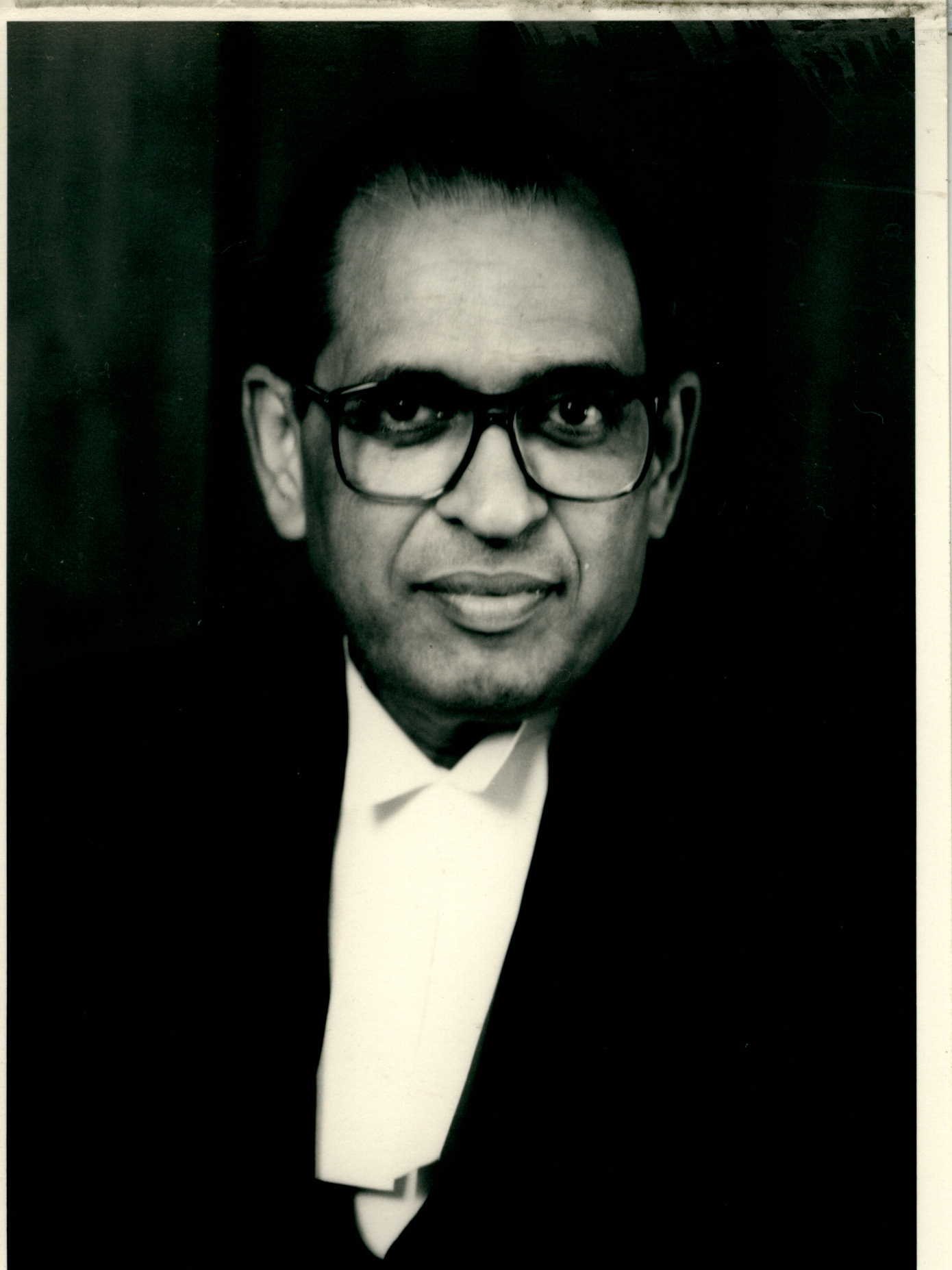
No Acts & Articles mentioned in this case
http://JUDIS.NIC.IN SUPREME COURT OF INDIA Page 1 of 11
PETITIONER:
S. HARCHARAN SINOH
Vs.
RESPONDENT:
UNION OF INDIA
DATE OF JUDGMENT28/08/1990
BENCH:
AGRAWAL, S.C. (J)
BENCH:
AGRAWAL, S.C. (J)
MISRA RANGNATH
PUNCHHI, M.M.
CITATION:
1991 AIR 945 1990 SCR Supl. (1) 76
1990 SCC (4) 647 JT 1990 (3) 692
1990 SCALE (2)413
ACT:
Arbitration Act, 1940: Sections 14, 17, 30 and
33--Contract for specified work--Claim for entire additional
work at increased rate-Arbitrator awarding increased rate
for part of the additional work-Whether Arbitrator exceeded
his jurisdiction--Award--Whether vitiated.
HEADNOTE:
The appellant was awarded a contract for constructing
approaches to certain Bridge structure. As per the agree-
ment, he was required to do hard rock cutting to the extent
of 7,54,530 cft. and the rate fixed was Rs.129 per thousand
cft. plus 2%. Actually the appellant was required to perform
hard rock cutting to the extent of 18,18,704 cft. For the
additional work, the appellant claimed payment at the rate
of Rs.200 per thousand cft. He also claimed certain other
sums under other heads. Dispute in respect of 4 heads was
referred to arbitration. The arbitrator in his award disal-
lowed two claims and allowed the other two claims, one of
which was in respect of the additional work of hard rock
cutting, and awarded a sum of Rs.52,800 under this head. The
arbitrator filed the award in the High Court. After consid-
ering the objections filed by the respondent a Single Judge
of the High Court ordered that the award be made a rule of
the Court. The respondent filed an appeal against the said
order and the Division Bench set aside, ex-parte, the claim
for higher remuneration at the rate of Rs.200 per thousand
cft. Aggrieved, the appellant has preferred an appeal, by'
special leave.
The other appeal, also by special leave, is against the
High Court's rejection of the prayer for setting aside the
ex-parte judgment.
Allowing the former appeal and disposing of the latter one,
HELD: 1. As regards the award of an arbitrator under the
Act, the law is well settled that the arbitrator's adjudica-
tion is generally considered binding between the parties for
he is a tribunal selected by the parties and the power of
the court to set aside the award is restricted to cases set
out In section 30 of the Act. It is, however, not open to
the
http://JUDIS.NIC.IN SUPREME COURT OF INDIA Page 2 of 11
77
Court to speculate, where no reasons are given by the arbi-
trator, as to what impelled the arbitrator to arrive at his
conclusion. But the jurisdiction of the arbitrator is limit-
ed by the reference and if the arbitrator has assumed juris-
diction not possessed by him, the award to the extent to
which it is beyond the arbitrator's jurisdiction would be
invalid and liable to be set aside. An arbitrator or umpire
is under no obligation to give reasons in support of the
decision reached by him unless under the arbitration agree-
ment or the deed of submission he is required to give such
reasons. If the arbitrator or umpire chooses to give reasons
in support of his decision it is open to the Court to set
aside the award if it finds that an error of law has been
committed by him on the face of the record. An award can
neither be permitted nor set aside merely on the ground that
it does not contain reasons in support of the conclusion or
decisions reached in it except where the arbitration agree-
ment or the deed of submission requires him to give reasons.
[82H; 83A-E]
Jivarajbhai Ujamshi Sheth and Others v. Chintamanrao
Balaji and Others, [1964] 5 SCR 480; Raipur Development
Authority and Others v. M/s Chokhamal Contractor and Others,
[1989] 2 SCC 721, relied on.
2.1 In the instant case the arbitration agreement or the
deed of submission did not require the arbitrator to give
reasons and, therefore, the award cannot be questioned on
the ground of an error on the face of the award. The Divi-
sion Bench of the High Court set aside the award in respect
of the claim relating to payment for additional work of hard
rock cutting on the ground that in making the award the
arbitrator exceeded his jurisdiction by allowing a rate to
the contractor in excess of the agreed rate for the job of
hard rock cutting against the terms and conditions in clause
12 of the agreement. [83F-G]
2.2 Under clause 12 of the agreement, the Engineer-in-
charge was empowered to make any additions to the original
specifications that may appear to him to be necessary or
advisable during the progress of the work and the contractor
was bound to carry out the work in accordance with any
instructions given to him in writing signed by the
Engineer-in-charge. [85B-C]
2.3 It has to be inferred from the terms of the contract
whether this power to order extras, although apparently
unlimited, is in fact limited to ordering extras upto a
certain value and in such a case, extras ordered in excess
of that amount may be outside the terms of the contract.
78
Parkinson (Sir Lindsay) & Co. Ltd. v. Commissioners of
His Majesty's Works and Public Buildings, [1949] 2 K.B. 632,
referred to.
Hudson's Building and Engineering Contracts, 8th Edn.
pp. 294, 296, referred to.
3. In some awards given by the arbitrators in the Cen-
tral Public Works Department of the Government of India the
variation of the tendered quantities under the variation
clause in the contract has been restricted to 10% beyond
which the contractor was entitled to claim as extras and
awards have been accepted and implemented by the Government.
It appears that the standard form of contract of the Central
Public Works Department has been amended and now it specifi-
cally permits for a limit of variation called "deviation
limit" upto a maximum of 20% and upto such limit the con-
tractor has to carry out the work stipulated in the contract
and for the work in excess of that limit at the rates to be
http://JUDIS.NIC.IN SUPREME COURT OF INDIA Page 3 of 11
determined in accordance with clause 12-A under which the
Engineer-in-Charge can revise the rates having regard to the
prevailing market rates. [88D-F]
Gajaria's Law relating to Building and Engineering
Contracts in India, 3rd Edn., pages 410-412, referred to.
4. In the instant case, the Executive Engineer, the
Superintending Engineer and the Additional Chief Engineer
have expressed the view that the additional work under the
terms of the contract may be confined to 20% and the appel-
lant may be paid at the rates prescribed in the contract for
20% of the additional work and for the extra quantity of
additional work he may be paid remuneration at the increased
rate taking into account the increased costs in execution of
the said work on account of the peculiar nature of the work
while considering the claim of the appellant the arbitrator
was required to consider the terms of the contract and to
construe the same. It was, therefore, permissible for the
arbitrator to consider whether clause 12 of the contract
enables the Engineer-in-charge to require the appellant to
execute additional work without any limit, or a reasonable
limit should be placed on the quantity of the additional
work, which the appellant may be required to execute at the
rate stipulated for the main work under the contract. For
that purpose the arbitrator could take into consideration
the practice prevalent in the Central Public Works Depart-
ment in this regard as well as the correspondence between
the appellant and the authorities recommending payment of
remuneration at the increased rate for the additional work
in excess of 20% of the quantity stipulated in the contract.
79
The appellant was claiming increased rate of Rs.200 per 1000
cft. for the entire quantity of additional work. The arbi-
trator did not accept the said claim of the appellant in
full and has partly allowed the said claim by awarding
Rs.52,800 which means that the arbitrator has awarded the
increased rate only for a part of the additional work of
hard rock cutting which the appellant was required to exe-
cute. The arbitrator was entitled to do so on the construc-
tion placed by him on clause 12 of the contract and, there-
fore, it cannot be said that in awarding the sum of
Rs.52,800 for the additional work the arbitrator has exceed-
ed his jurisdiction and the award is vitiated by an error of
jurisdiction. [88G-H; 89A-E]
5. The judgment of the Division Bench of the High Court
setting aside the award of the arbitrator with regard to the
claim relating to payment for additional work of hard rock
cutting is set aside and the order passed by the Single
Judge upholding the award of the arbitrator in this regard
is restored. [89F]
6. Since the judgment of the Division Bench of the High
Court is set aside the appeal against the order rejecting
the prayer for setting aside the ex-parte judgment, does not
survive. [90B]
JUDGMENT:
CIVIL APPELLATE JURISDICTION: Civil Appeals Nos. 322 &
323 of 1976.
From the Judgment and Order dated 27.3.1973 and 23.5.75
of the Delhi High Court in F.A.O. (O.S.) No. 35 of 1969 and
C.M. No. 1300 of 1974 in F.A.O. (O.S.) 35 of 1969.
P.P. Juneja for the Appellant.
B.B. Barua, Ms. A. Subhashini (N.P.) and Ms. Indira
Sawhney ( N.P. ) for the Respondent.
http://JUDIS.NIC.IN SUPREME COURT OF INDIA Page 4 of 11
The Judgment of the Court was delivered by
S.C. AGRAWAL, J. Civil Appeal No. 322 of 1976
This appeal by special leave has been filed against the
judgment dated March 27, 1973 of the High Court of Delhi in
F.A.O. (O.S.) No. 35 of 1968.
The appellant, S. Harcharan Singh, was awarded a contract
for
80
constructing approaches to the Bridge Structure B-2 on the
North Sikkim Road in 1959-60. Under the agreement the appel-
lant was required to do hard rock cutting to the extent of
7.54,530 cft. The rate fixed for the said work in the con-
tract was Rs.129 per thousand cft. plus 2%. The appellant
was required to perform hard rock cutting to the extent of
18, 18,704 cft. The appellant claimed payment at the rate of
Rs.200 per thousand cft. for the additional work of hard
rock cutting. He also claimed certain other sums under other
heads. The dispute in respect of four heads was referred to
arbitration in accordance with the clause 25 of the agree-
ment. The arbitrator gave his award dated February 5, 1965
wherein he disallowed the claim of the appellant in respect
of two items but made an award in favour of the appellant in
respect of two items of claim. In this appeal we are only
concerned with the claim of the appellant in respect of the
additional work of hard rock cutting which the appellant was
required to execute. The arbitrator awarded a sum of
Rs.52,800 against the said item. The award was filed in the
High Court by the arbitrator alongwith his letter dated June
6, 1968. Objections were filed by the respondent under
Sections 30 and 33 of the Arbitration Act, 1940 (hereinafter
referred to as 'the Act'). The said objections were consid-
ered by the learned single Judge of the Delhi High Court and
by order dated April 23, 1969. the said objections of the
respondent were rejected and it was ordered that the award
be made a rule of the Court. The respondent filed an appeal
against the said order and decree passed by the learned
single Judge. The appeal was partly allowed by the Division
Bench of the High Court by judgment dated March 27, 1973,
whereby the award as regards the claim for higher remunera-
tion at the rate of Rs.200 per thousand cft. for the addi-
tional work of hard rock cutting was set aside. The award in
respect of other item of the claim relating to expenditure
incurred by the appellant in reconstructing the retaining
walls after damage, was maintained. Aggrieved by the said
decision of the Division Bench of the High Court the appel-
lant has filed this appeal after obtaining special leave.
As indicated earlier, this appeal is confined to the
claim of the appellant for payment for the additional work
of hard rock cutting which the appellant was required to
execute. The appellant has claimed a higher rate of Rs.200
per thousand cft. for this additional work. Under the agree-
ment the appellant was required to execute hard rock cutting
to the extent of 7,54,530 cft. but actually he was required
to execute such cutting to the extent of 18.15 lacs cft. The
extent of the additional work was about 10.60 lacs cft.,
i.e. about 140%. While undertaking the execution of the
additional work of hard rock
81
cutting the appellant in his letter dates August 24, 1960
addressed to the Executive Engineer, Central Division No.
II, Gangtok, had requested for revision of the rate for hard
rock cutting and stated that the minimum working rates for
this item are 52% above the tendered rates. The ExecUtive
Engineer by his letter dated September 2, 1960, requested
the appellant to submit an analysis of rate for hard rock
http://JUDIS.NIC.IN SUPREME COURT OF INDIA Page 5 of 11
cutting. The appellant submitted his analysis of rates on
September 14, 1960 wherein after analysing the rates of
materials and labour the workable rate worked out to Rs.200
per thousand cft. The Executive Engineer also got an analy-
sis of rates done on the basis of the data collected on
actual observation and he arrived at a figure of Rs.237 per
thousand cft. By his letter dated November 9, 1961 addressed
to the Superintending Engineer, Calcutta Central Circle No.
III, CPWD, Calcutta, the Executive Engineer recommended the
extra rate of Rs.200 per thousand cft. for work in excess of
20% of the stipulated quantity. The Superintending Engineer,
in his letter dated February 23, 1962 addressed to the
Additional Chief Engineer III, Central P.W.D., New Delhi,
made a similar recommendation and the Additional Chief
Engineer made a similar recommendation in his letter dated
July 16, 1962 addressed to the Secretary to the Government
of India, Ministry of Works and Housing. It appears that the
Government did not agree to pay at a rate in excess of the
rate of Rs.129 per thousand cft. plus 2% stipulated under
the agreement. The dispute was, therefore, referred to
arbitration.
The arbitrator in his award has considered this item of
claim as under:
Claim Dispute Award
"The contractor claims The arbitrator The claim of the
that for Item No 3 of is to deter- contractor is
the agreement he should mine whether partly justified.
be paid at the rate of under the He should be paid
Rs.200 per 1000 cft. terms and con- an amount of
for the quantities ditions of the Rs.52,800 (Rupees
beyond what is stipu- contract, the fifty two thousand
lated in the agreement. claim is jus- and Eight hundred
tified and if only) in addition
so, to what ex to the payment to
tent. be made to him at
relevant agreement
rate for the total
quantity of work
executed by him
under this item."
82
Before the learned single Judge it was submitted on
behalf of the respondent that the award is a speaking award
and from the award it is apparent that the arbitrator has
fixed rates for additional work done by the contractor which
the arbitrator has no jurisdiction to do by reason of clause
12 of the agreement between the parties which provides that
additions to the contract work shall be carried out by the
contractor on the same conditions in all respects on which
he agreed to do the main work and at the same rates as
specified in the tender for the mainwork. The learned single
Judge rejected the said contention and held that the arbi-
trator was determining only the value of the additional work
at the rate of Rs.200 which had been agreed by the
Engineer-in-charge and the Superintending Engineer of the
Circle as contemplated by clause 12 and the scope of the
inquiry before the arbitrator was only the quantity of work
which was additional to the quantities specified in the
agreement. The learned Judges of the Division Bench of the
High Court have disagreed with the said view and have ob-
served that it is clear from the statement of claim as
incorporated in the award, and the affidavit of the contrac-
tor that there was no dispute with regard to the quantity of
work and the only dispute was with regard to the rate and
that the arbitrator had allowed a sum of Rs.52,800 to the
http://JUDIS.NIC.IN SUPREME COURT OF INDIA Page 6 of 11
contractor in respect of the total quantity of work executed
by him under item No. 3 in addition to the agreed rate and
that there was no escape from the conclusion that the arbi-
trator had awarded the above 'amount by applying a rate
higher than the agreed rate. The learned Judges of the
Division Bench were of the view that under clause 12 of the
agreement the provision with regard to the fixing of the
rate by the Engineer-incharge and the Superintending Engi-
neer of the Circle comes into play only when the additional
item of work does not form part of the main work and the
rates for such work are not specified in the schedule of
rates. The learned Judges of the Division Bench have held
that since the additional hard rock cutting job done by the
appellant was part of the main work and the agreement pro-
vided the rate for the said item, there was no occasion for
the Engineer-in-charge or the Suprer intending Engineer to
fix the rate for the extra quantity of hard rock cutting and
that the action of the arbitrator in allowing the rate to
the contractor in excess of the agreed rate for the job of
hard rock cutting was against clause 12 of the agreement and
thereby the arbitrator had exceeded his jurisdiction.
As regards the award of an arbitrator under the Act. the
law is well settled that the arbitrator's adjudication is
generally considered binding between the parties for he is a
tribunal selected by the parties and the power of the court
to set aside the award is restricted to cases
83
set out in section 30 of the Act, viz. (a) if the arbitrator
has misconducted himself or the proceedings; or (b) when the
award has been made after the issue of an order by the Court
superseding the arbitration or after arbitration proceedings
have become invalid under Section 35; or (c) when the award
has been improperly procured or is otherwise invalid. Under
clause (c) of Section 30 the Court can set aside an award
which suffers from an error on the face of the award. It is.
however. not open to the Court to speculate, where no rea-
sons are given by the arbitrator. as to what impelled the
arbitrator to arrive at his conclusion. But the jurisdiction
of the arbitrator is limited by the reference and if the
arbitrator has assumed jurisdiction not possessed by him,
the award to the extent to which it is beyond the arbitra-
tor's jurisdiction would be invalid and liable to be set
aside (See: Jivarajbhai Ujarnshi Sheth and Others v. Chin-
tatnanrao Balaji and Others, [1964] 5 SCR 480). This posi-
tion at law has been reiterated by the Constitution Bench of
this Court in its recent decision in Raipur Development
Authority and Others v. M/s Chokharnal Contractors and
Others, [1989] 2 S.C.C. 721. It has been held that an arbi-
trator or umpire is under no obligation to give reasons in
support of the decision reached by him unless under the
arbitration agreement or the deed of submission he is re-
quired to give such reasons and if the arbitrator or umpire
chooses to give reasons in support of his decision it is
open to the Court to set aside the award if it finds that an
error of law has been committed by the arbitrator or umpire
on the face of the record on going through such reasons and
that an award can neither be remitted nor set aside merely
on the ground that it does not contain reasons in support of
the conclusion or decisions reached in it except where the
arbitration agreement or the deed of submission requires him
to give reasons.
In the instant case the arbitration agreement or the
deed of submissions did not require the arbitrator to give
reasons and, therefore, the award cannot be questioned on
the ground of an error on the face of the award. The learned
http://JUDIS.NIC.IN SUPREME COURT OF INDIA Page 7 of 11
Judges of the Division Bench of the High Court have set
aside the award in relation to claim No. 1 relating payment
for additional work of hard rock cutting on the ground that
in making the award the arbitrator exceeded his jurisdiction
by allowing a rate to the contractor in excess of the agreed
rate for the job of hard rock cutting against the terms and
conditions contained in clause 12 of the agreement.
The question which needs to be considered here is as to
whether in awarding the sum of Rs.52,800 to the appellant
for the additional
84
work of hard rock cutting executed by him the arbitrator has
disregarded clause 12 of the agreement. The said clause
reads as under:
"The Engineer-in-charge shall have power to make any altera-
tions in, commissions from, additions to or substituting
for, the original specifications, drawings, designs and
instructions, that may appear to him to be necessary or
advisable during the progress of the work, and the contrac-
tor shall be bound to carry out the work in accordance with
any instructions which may be given to him in writing signed
by the Engineer-in-charge, and such alterations, omissions,
additions or substitutions shall not invalidate the con-
tract: and any altered, additional or substituted work which
the contractor may be directed to do in the manner above
specified as part of the work shall be carried out by the
contractor on the same conditions in all respects on which
he agreed to do the main work and at the same rates as are
specified in the tender for the main work. The time for the
completion of the work shall be extended in the proportion
that the additional or substituted work bears to the Origi-
nal work, and the certificate of the Engineer-in-charge
shall be conclusive as to such proportion. And if the al-
tered, additional or substituted work included any class of
work for which no rate is specified in this contract, then
such class of work shall be carried out at the rates entered
in the schedule of rates of the C.P.W.D. Schedule of Rates
53-54 on which the estimated cost shown on page 1 of tender
is based provided that when the tender for the original work
is a percentage above the schedule rates the altered, addi-
tional or substituted work required as aforesaid shall be
chargeable at the said schedule rate plus the same percent-
age deduction addition and if such class of work is not
entered in the said schedule of rates, then the contractor
shall within seven days of the date of the receipt of the
order to carry out the work inform the Engineer-incharge of
the rat. e which it is his intention to charge for such
class of work, and if the Engineer-in-charge does not agree
to this rate he shall by notice in writing be' at liberty to
cancel his order to carry out such class of work and arrange
to carry it out in such manner as he may consider advisable
provided always that if the contractor "shall commence work
or incur any expenditure in regard thereto before the rates
shall have been determined as lastly hereinbefore
85
mentioned, then and in such case he shall only be entitled
to be paid in respect of the work carried out or expenditure
incurred by him prior to the date of the determination of
the rate as aforesaid according to such rate or rates as
shall be fixed by the Engineer-in-charge. In the event of a
dispute the decision of the Superintending Engineer of the
Circle shall be final."
Under this clause the Engineer-in-charge was empowered
to make any additions to the original specifications that
may appear to him to be necessary or advisable during the
http://JUDIS.NIC.IN SUPREME COURT OF INDIA Page 8 of 11
progress of the work and the contractor was bound to carry
out the work in accordance with any instructions given to
him in writing signed by the Engineer-in-charge. As regards
payment for the additional work which the contractor was
directed to do it was provided that:
(i) The contractor shall be paid at the same rates as are
specified in the tender for the main work;
(ii) If the additional work included any class of work for
which no rate was specified in the contract then the con-
tractor shall be paid at the rates entered into the schedule
of rates of the C.P.W.D. Schedule of Rates 53-54 on which
the estimated cost shown on page 1 of tender is based and if
the tender for the original work is a percentage above the
schedule rates the additional work shall be chargeable at
the said schedule rates plus the same percentage
deductions/addition; and
(iii) If such class of work is not entered in the said
Schedule of Rates then the contractor should inform the
Engineer-in-charge within seven days of the receipt of the
order the rate he wants to charge for such class of work and
the Engineer-in-charge, if he does not agree to the said
rate, may cancel the order for such additional work and if
the contractor has commenced the work or incurred expendi-
ture in regard thereto before the determination of the rates
the contractor shall be paid in respect of work carried out
or expenditure incurred by him prior to the determination of
the rates according to such rates or rates as shall be fixed
by the Engineer-in-charge and in the event of a dispute the
decision of the Superintending Engineer of the Circle would
be final.
The case of the appellant is that clause 12 envisages alter-
ations or
86
additions within reasonable limits and an addition to the
extent of 140% in respect of one particular item alone is
not covered by this clause and that in awarding Rs.52,800 as
extra payment for the additional work the arbitrator has not
acted in disregard of clause 12 and he cannot be said to
have exceeded his jurisdiction.
A clause making provision for additions and variations
is generally found in building and construction contracts.
In Hudson's Building and Engineering Contracts 8th Edn. it
has been observed:
"It may be that it can be inferred from the terms of the
contract that the power to order extras, although apparently
unlimited, is in fact limited to ordering extras up to a
certain value and, in such a case, extras ordered in excess
of that amount, although work of a kind contemplated by the
contract, may yet be quite outside the terms of the con-
tract." (p. 294)
"If the extra work ordered is outside the contract the terms
of the contract have no application." (p. 296)
In this context it would be relevant to take note of the
decision of the Court of Appeal in England in Parkinson (Sir
Lindsay) & Co. Ltd. v. Commissioners of His Majesty's Works
and Public Buildings, [1949] 2 K.B. 632. In that case the
contractors had agreed with His Majesty's Commissioners of
Works and Public Buildings to erect an ordnance factory
according to the general conditions and specifications and
bills of quantities and drawings annexed for the contract
sum of Pound 3,500,000 and under the general conditions of
contract the Commissioners had power, at their absolute
discretion, to modify the extent and character of the work
or to order alterations of or additions to the works and it
was the duty of the contractor to comply with the archi-
http://JUDIS.NIC.IN SUPREME COURT OF INDIA Page 9 of 11
tect's instructions in this respect. In the contract it was
also provided that it is probable that further work to the
value of approximately, Pound 500,000 would be ordered on a
measured basis under the terms of the contract. The contract
was amended by a deed of variation and it was provided that
exceptional methods should be used to hasten the work and
that a system of uneconomic working should be introduced to
bring about the completion of the factory by the date fixed
by the contract. The Commissioners ordered work to be exe-
cuted greatly in excess of the amount contemplated although
not different in character from that covered by the varied
contract, so that the works could not be completed until a
year beyond the time anticipated and the actual cost of the
87
contracts was L6,683,056 which amount had been paid to them
-
alongwith L300,000 the maximum profit under the deed of
-
variation. During the progress of the work the contractors
had. complained to the Commissioners that they were being
called on to execute more work than was contemplated by the
varied contract and claimed that they were entitled to extra
remuneration for the work in excess of that contemplated but
they proceeded with the work at the request of the Commis-
sioners leaving the issue to be subsequently decided by
arbitration. The arbitrator found that the estimated cost of
the work under the varied contract was L500,000 and awarded
-
L90,298 as proportionate or reasonable profit or remunera-
-
tion to the contractors for the additional work. The said
award was upheld by the Court of Appeal on the view that a
term must be implied in the varied contract that the Commis-
sioners should not be entitled to require work materially in
excess of the sum of L5,000,000 and that such excess work
-
having been done by the contractors, the Commissioners were
liable to pay the contractors reasonable remuneration there-
fore. On behalf of the Commissioners reliance was placed on
Condition 33 of the original contract which gave the Commis-
sioners an unlimited power of ordering extras even to the
extent of altering the character of the work. The contrac-
tors, on the other hand, placed reliance on the following
observations of Mc Cardie, J. in Naylor, Benzon & Co. v.
Krainische Industrie Gesellschart, [1918] 1 K.B.331:
"It is essential to remember, however, that words, even
though general, must be limited to circumstances within the
contemplation of the parties."
Accepting the contention urged on behalf of the contrac-
tors Asquith L. J. observed:
"If the original contract plus the deed are read without any
implied limitation on their literal meaning, the result, as
indicated above, is that after L300,000 profit has been
-
earned by the contractor, he can be compelled to labour like
the Danaids without reward or limit, or any further "extras"
which the commissioners may elect to exact from him, 'till
the last syllable of recorded time.' Only the most compel-
ling language would induce a court to construe the combined
instruments as placing one party so completely at the mercy
of the other. Where the language of the contract is capable
of a literal and a more restricted meaning, all relevant
circumstances can be taken into account in decid-
88
ing whether the literal or a more limited meaning should be
http://JUDIS.NIC.IN SUPREME COURT OF INDIA Page 10 of 11
ascribed to it". (p. 662)
Similarly Singleton L.J. has observed:
"1 find myself unable to agree with the submission of Mr.
Rewcastle that under the contract as varied by the deed of
variation, the contractors would have been bound to continue
making alterations and additions, if ordered, for years and
years, without any extra payment by way of profit. That
would have led to manifest absurdity and injustice, as
Mathew, J. said in Bush v. Whitehaven Trustees, (1). There
must be a limit." (p. 673)
Here also the question has often arisen whether the
contractor under the variation clause is liable to execute
the extra or additional quantities of the tendered items at
the tendered rates to an unlimited extent. In some awards
given by the arbitrators in the Central Public Works Depart-
ment of the Government of India the variation of the ten-
dered quantities under the variation clause in the contract
has been restricted to 10% beyond which the contractor was
entitled to claim as extras and these awards have been
accepted and implemented by the Government. It appears that
the standard form of contract of the Central Public Works
Department has been amended and now it specifically permits
for a limit of variation called "deviation limit" upto a
maximum of 20% and upto such limit the contractor has to
carry out the work at the rates stipulated in the contract
and for the work in excess of that limit at the rates to be
determined in accordance with clause 12-A under which the
Engineer-in-charge can revise the rates having regard to the
prevailing market rates (See: Gajaria's Law relating to
Building and Engineering Contracts in India, 3rd Edn., pages
410-412).
In the instant case, it appears that the Executive
Engineer, the Superintending Engineer and the Additional
Chief Engineer in their letters dated November 9, 1961,
February 23, 1962 and July 16, 1962 respectively have ex-
pressed the view that the additional work under the terms of
the contract may be confined to 20% and the appellant may be
paid at the rates prescribed in the contract for 20% of the
additional work and for the extra quantity of additional
work he may be paid remuneration at the increased rate
taking into account the increased costs in execution of the
said work on account of the peculiar nature of the work.
While considering the claim of the appellant the
89
arbitrator was required to consider the terms of the con-
tract and to construe the same. It was, therefore, permissi-
ble for the arbitrator to consider whether clause 12 of the
contract enables the Engineer-incharge to require the appel-
lant to execute additional work without any limit or a
reasonable limit should be placed on the quantity of the
additional work, which the appellant may be required to
execute at the rate stipulated for the main work under the
contract. For that purpose the arbitrator could take into
consideration the practice prevalent in the Central Public
Works Department in this regard as well as the correspond-
ence between the appellant and the authorities including the
letters dated November 9, 1961, February 23, 1962 and July
16, 1962 of the Executive Engineer, the Superintending
Engineer and the Additional Chief Engineer recommending
payment of remuneration at the increased rate for the addi-
tional work in excess of 20% of the quantity stipulated in
the contract. The appellant was claiming increased rate of
Rs.200 per 1000 cft. for the entire quantity of additional
work. The arbitrator did not accept the said claim of the
appellant in full and has partly allowed the said claim by
http://JUDIS.NIC.IN SUPREME COURT OF INDIA Page 11 of 11
awarding Rs.52,800 which means that the arbitrator has
awarded the increased rate only for a part of the additional
work of hard rock cutting which the appellant was required
to execute. The arbitrator was entitled to do so on the
construction placed by him on clause 12 of the contract and,
therefore, it cannot be said that in awarding the sum of
Rs.52,800 for the additional work the arbitrator has exceed-
ed his jurisdiction and the award is vitiated by an error of
jurisdiction. In the circumstances, we are unable to agree
with the judgment of the learned Judges of the Division
Bench of the High Court on this part of the claim.
The appeal is, therefore, allowed and the judgment of
the Division Bench of the High Court setting aside the award
of the arbitrator with regard to item No. 1 of the claim
relating to payment for additional work of hard rock cutting
is set aside and the order passed by the learned Single
Judge upholding the award of the arbitrator in this regard
is restored. The appellant will be entitled to his costs.
Civil Appeal No. 323 of 1976
This appeal is directed against the order dated May 23,
1975 of the High Court of Delhi whereby the High Court
rejected C.M. No. 1300 of 1974 filed by the appellant under
Order 41, rule 21 read with Section 151 C.P.C., praying that
the ex-parte judgment dated March 27, 1973 in F.A.O. (O.S.)
No. 35 of 1969 may be set aside and the appeal be re-admit-
ted to its original number and the appeal be heard
90
and decided on merits. The appellant has filed C.A. No. 322
of 1976 against the said judgment of the High Court dated
March 27, 1973 in F.A.O. (O.S.) No. 35 of 1968. The said
appeal has been allowed by the judgment given today. Since
the judgment of the High Court dated March 27, 1973 has been
set aside by this Court in C.A. No. 322 of 1976 this appeal
does not survive and it is disposed of accordingly. No
costs.
G.N. Appeal disposed of.
91

 Login with google
Legal Notes
Add a Note....