
As per case facts, a Senior Sales Officer suffered 100percent permanent disability in a motor vehicle accident while travelling for a company meeting in a hired car. The Motor Accidents ...
Date of reserved for orders :20.07.2026
Date of pronouncement :20.08.2026
Date of uploading : 20.08.2026
APHC010146032010
IN THE HIGH COURT OF ANDHRA PRADESH
AT AMARAVATI
MOTOR ACCIDENT CIVIL MISCELLANEOUS
APPEAL Nos:1125 AND 1149 OF 2010
[3584]
M.A.C.M.A.No.1125 of 2010:
Sadanala Srinivasa Rao ...Appellant
Vs.
Katta Ramana and Others ...Respondent(s)
**********
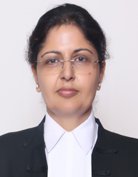
CORAM : THE CHIEF JUSTICE LISA GILL
SRI JUSTICE CHALLA GUNARANJAN
DATE : 20
th
August 2026
Present:
Advocate for Appellant: MR. SANKU DURGA
RAMACHANDRA RAO
Advocate(s) for Respondent(s): MR.J. BHASKARA RAO,
REPRESENTING SRI V S R
ANJANEYALU
RAMA MOHAN RAO KOTHA,
***
COMMON JUDGMENT: (per Hon’ble Sri Justice Challa Gunaranjan)
Both these appeals, instituted under Section 173 of the Motor
Vehicles Act, 1988 (for short, “the Act”), since assail the very same
award, dated 22.12.2008, in O.P.No.473 of 2005 passed by the
Chairman, Motor Vehicle Accidents Claims Tribunal-cum-I Additional
2
HCJ & CGR, J.
M.A.C.M.A. Nos.1125
& 1149 of 2010
District Judge, East Godavari District at Rajahmundry, the same are
heard together and disposed of by this common judgment.
2. For the sake of convenience, the parties hereinafter are referred
to as they were arrayed in the M.V.O.P. before the Tribunal.
3. M.A.C.M.A.No.1125 of 2010 has been preferred by the claimant
and whereas M.A.C.M.A. No.1149 of 2010 by the owner of the offending
vehicle.
4. By impugned award, the Tribunal, while determining the
compensation of Rs.67,03,854/-, exonerated the insurer from liability
and directed the owner and driver of offending vehicle to pay the same.
Thus, appellants-claimants as well as the owner of the offending vehicle
being dissatisfied with the award to the extent of exonerating the insurer
from liability preferred separate appeals.
5. (a) The present case originates from a motor vehicle accident that
occurred on 04.05.2003 at about 04.00 a.m. near Paleru Bridge toll gate
in Prakasam District. The claimant, a Senior Sales Officer at Nestle India
(P) Ltd., along with several colleagues, had engaged a Toyota Qualis
car bearing registration No.AP16 AF 1099 to travel from Vijayawada to
Bengaluru to attend company meeting. It was alleged that the driver,
drove the vehicle at high speed in a rash negligent manner, eventually
losing control, crashed into a stationary lorry parked on the left side of
3
HCJ & CGR, J.
M.A.C.M.A. Nos.1125
& 1149 of 2010
the road margin, as a result of the collision, the claimant sustained
grievous injuries, especially traumatic cervical spinal cord injury, leading
to Quadriplegia (complete paralysis of all four limbs). Following the
collision, a police constable on highway patrol duty arrived at the spot
and sent the injured to the Government General Hospital, Ongole. He
underwent extensive medical treatment for over nine months at various
institutions including Government General Hospital, Ongole, Soumya
Hospital, Vijayawada, Swathantra Hospital, Rajahmundry, and Christian
Medical College, Vellore. Ultimately, the injuries resulted in 100%
permanent functional disability that left the claimant bedridden and
dependent on attendants for the rest of life.
(b) A criminal case in Crime No.14 of 2003 was registered against
the driver of the car at Jarugumalli Police Station for the offence
punishable under Section 338 IPC.
(c) Claimant was aged about 30 years and drawing salary of
₹22,000/- per month, and having regard to the length of remainder of
service, it was claimed that he had greater future prospects in career. In
that background, he made a claim for compensation of ₹1,05,00,000/-.
6. The driver and owner of offending car were arrayed as
respondents 1 and 2 and the insurer of the said vehicle as 3
rd
respondent. 1
st
respondent, driver of the car, died pending the
4
HCJ & CGR, J.
M.A.C.M.A. Nos.1125
& 1149 of 2010
proceedings even before summons could be served on him. However,
no steps were taken to bring the legal heirs of 1
st
respondent on record.
Therefore, the claim qua 1
st
respondent got abated by order, dated
23.08.2006.
7. The owner, 2
nd
respondent, filed written statement denying the
avocation, age, earnings of claimant, and quantum of compensation
claimed. Further, it was pleaded that since the subject vehicle was
insured with 3
rd
respondent and that the policy was in force, besides that
the driver had valid driving licence at the time of accident, any liability
would be to the account of the insurer, therefore, sought for dismissal of
claim against the 2
nd
respondent.
8. The insurer, 3
rd
respondent, filed written statement, inter alia,
pleading that there was violation of terms and conditions of policy
inasmuch as the policy was issued for non-transport purpose and does
not cover the use of vehicle for hire or reward. It was pleaded that the
subject vehicle was hired by the claimant and others, and when they
were proceeding from Vijayawada to Bangalore, the accident had
occurred. That apart, the insurer also denied that the driver of
vehicle was holding valid and effective driving licence; the accident had
occurred because of rash and negligent driving by the driver of the
vehicle as the accident occurred on account of negligent parking of lorry
5
HCJ & CGR, J.
M.A.C.M.A. Nos.1125
& 1149 of 2010
on the road in the midnight without providing sufficient indicators or
signals, besides that, various other pleas were also taken with regard to
the nature of injuries, the expenses incurred, age, and earnings of the
claimant.
9. Based on the aforesaid pleadings, the Tribunal has framed the
following issues:
“1) Whether the accident was occurred due to rash and
negligent act of R.1 driver of Qualis bearing registration No.AP 16 AF
1099?
2) Whether the petitioner is entitled for claims of
compensation?
3) To what relief?”
10. In support of the claim, PW.1 to PW.7 were examined and Exs.A1
to A23 and Exs.X1 to X5 marked. The second respondent did not
adduce any evidence, either oral or documentary. The third respondent
got examined RW.1 and RW.2 and marked Exs.B1 to B9.
11. The Tribunal, upon appreciation of the evidence on record, both
oral and documentary, answered first issue in favour of claimant, holding
that the accident occurred due to rash and negligent act of first
respondent, i.e., driver of the subject vehicle. While answering the
second issue, the Tribunal had marshalled the entire evidence adduced
on behalf of claimant and ultimately awarded compensation under
various heads as follows:
6
HCJ & CGR, J.
M.A.C.M.A. Nos.1125
& 1149 of 2010
1. Towards Pain and Sufferance Rs.10,10,000/-
2. Towards loss of earnings Rs. 87,030/-
3. Towards attendant charges Rs.13,68,000/-
4. Towrds extra nourishment charges Rs.13,68,000/-
5. Towards extra hospital and medical expenses Rs.23,80,000/-
6. Towards permanent disability Rs. 4,90,824/-
Total Rs.67,03,854/-
However, in the process of determining the aspect of liability, the
Tribunal has come to conclusion that the claimant was unable to
substantiate that the subject vehicle was provided by one of his
colleagues' relative for travelling from Vijayawada to Bengaluru, rather,
the evidence on record otherwise clearly demonstrated that they had
hired the vehicle from Jahnavi Travels. The subject vehicle, since
was having policy for private use and not for hire and reward, the
Tribunal held that the same amounted to violation of terms and
conditions of policy, thus, exonerated the insurer from the liability.
Ultimately, respondents 1 and 2 were held jointly and severally liable to
pay the compensation along with interest at the rate of 7.5% per annum,
from the date of petition till the date of deposit.
12. Assailing the same, both the claimant as well as the second
respondent, owner of vehicle, preferred these appeals.
13. Heard Mr.Sanku Durga Ramachandra Rao, learned counsel for
the claimant, and Mr.J.Bhaskara Rao, learned counsel, representing
7
HCJ & CGR, J.
M.A.C.M.A. Nos.1125
& 1149 of 2010
Sri V.S.R. Anjaneyulu, learned senior counsel, and Mr.Rama Mohan
Rao, learned counsel, appearing for respondents.
14. Learned counsel appearing for the claimant primarily contended
that the Tribunal erred in exonerating the insurance company from
discharging the liability. Since the occurrence of accident because of
involvement of the subject vehicle, insured by the 3
rd
respondent, is
clearly established and demonstrated, the Tribunal ought to have
applied the principle of pay and recover, rather than exonerating the
insurer completely. Thus, it is urged that keeping in view the benevolent
object of the Act and other relevant factors arising in the case, the
insurance company be directed to discharge the awarded sum to the
claimant, and then to recover the same from the insured by extending
the principle of pay and recover. Except for the above, learned counsel
appearing for the claimant has not advanced any other argument
regarding the quantum of compensation. In support thereof, reliance
has been placed on the judgment of the Hon’ble Apex Court in Manuara
Khatun v. Rajesh Kumar Singh
1
and Kaminiben v. The Oriental
Insurance Co. Ltd.
2
15. In the appeal preferred by 2
nd
respondent, owner of the subject
vehicle, while challenging the award, learned counsel for the 2
nd
1
(2017) 4 SCC 796
2
2026 ACJ 447 = 2026(2) Apex Court Judgments (SC) 571
8
HCJ & CGR, J.
M.A.C.M.A. Nos.1125
& 1149 of 2010
respondent would contend that the Tribunal's conclusion that the
accident occurred due to rash and negligent driving of subject vehicle
was a presumptuous conclusion reached without proper appreciation of
the material and evidence available on record. It is urged that the
Tribunal committed serious mistake by holding that the insurer was not
liable to indemnify the same, the findings in support of said conclusion,
are without any basis and contrary to the letter and spirit of Ex.B7
insurance policy.
16. (a) Conversely, learned counsel for 3
rd
respondent, insurer,
sought to maintain the Tribunal's decision in exonerating it from liability.
It is urged that the subject vehicle, as was insured under a private car
package policy, meant only for personal use of owner and family, the
same was hired out for commercial gain to transport the claimant and
his colleagues to Bangalore, thus, it clearly amounted to fundamental
breach of the insurance policy terms. Therefore, the Tribunal was
justified in holding that the subject vehicle, since it was used for hire or
reward, fell outside the scope of policy coverage, therefore, no liability
could be fastened on the insurer. It is further contended that when there
is a clear breach of policy conditions, question of even applying the
principle of pay and recover also does not arise.
9
HCJ & CGR, J.
M.A.C.M.A. Nos.1125
& 1149 of 2010
(b) It is also contended that even otherwise, since 1
st
respondent,
driver of the subject vehicle, died, and claim against him stood abated,
the aspect of negligence stands unproved, so question of insurer being
vicariously liable nor indemnifying the compensation would arise. At
any rate, the owner of vehicle, since contested the proceedings and
even filed appeal before this Court, extending the principle of pay
and recover does not arise, hence, the judgment of Hon’ble Apex Court
in Manuara Khatun
1
, sought to be relied on by the claimant, would have
no application to the present case. Alternatively, it is also contended that
under Ex.B7 policy, as premium was paid for 9 persons with a cap of
maximum liability of ₹88,000/-, the insurer cannot be fastened with
liability more than the said sum, even to apply principle of pay and
recover.
17. We have given our anxious consideration to the submissions
made by learned counsels for parties and perused the record.
18. Given the facts and circumstances and contentions raised, the
following questions arise for consideration in these appeals:
1. Whether the award passed by the Tribunal
exonerating the insurer from liability is justified? and
2. Whether claimant is entitled for an order against the
insurer of offending vehicle to pay the awarded sum to
10
HCJ & CGR, J.
M.A.C.M.A. Nos.1125
& 1149 of 2010
the claimant and then recover the same from the
insured by extending the principle of pay and recover?
19. There is no dispute with regard to occurrence of accident and the
involvement of offending vehicle. The claimant sustained various
injuries. On appreciation of evidence, the Tribunal has assessed the
functional disability to be 100%. Resultantly, compensation for
₹67,03,854/- has been awarded. Neither the claimant nor the owner of
offending vehicle, laid challenge to the quantum of compensation. The
owner of offending vehicle sought to wriggle out of the liability by
contending that as the vehicle has been insured under Ex.B7 policy, that
the occurrence of accident and involvement of the vehicle has been
sufficiently demonstrated in view of the evidence of RW.2, none other
than Surveyor-cum-Claim Investigator, as a natural corollary the insurer
ought to be held liable for compensation, but not the insured.
20. In this regard, there is no dispute that the offending vehicle was
insured under Ex.B7 policy. The proposal form submitted for insuring the
vehicle under Ex.B6 and as well as the policy issued later under Ex.B7
was for private use, i.e., private car package policy. Even the evidence
of PW.7, Senior Assistant in R.T.A. Office, examined at the instance of
the claimant also deposed that as per Ex.B5 certificate of registration,
the vehicle was meant to be used for private purpose only and not for
commercial purpose. Therefore, aforesaid evidence on record clearly
11
HCJ & CGR, J.
M.A.C.M.A. Nos.1125
& 1149 of 2010
demonstrates that the subject vehicle is a private vehicle both in terms
of certificate of registration and as well as the insurance policy.
21. Having said that, it is required to be now seen whether the vehicle
was used for private purpose or for hire and reward. It is the case of
claimant that when he, along with colleagues, working in Nestlé India
(P) Ltd., wanted to attend meeting at Bangalore, the offending vehicle
was provided by one of his colleagues' friend, therefore, it was only
meant for private use and cannot be construed as hired, thus, violating
the terms and conditions of Ex.B7 policy. In the Original Petition filed,
the claimant's stand was that he , along with other
colleagues, engaged a Qualis car to go to Bangalore to attend their
company meeting. Later, in the chief-affidavit, the stand pleaded was
that the Qualis vehicle was provided by one of his colleagues' relation.
There is clearly a divergent stand from initial version. The chief-affidavit
conspicuously does not refer to the name of colleague nor the person
related, who provided the offending vehicle. The 2
nd
respondent, owner
of the vehicle, nowhere in the written statement, stated that the
offending vehicle was provided on the request made by one of the
colleagues’ relative of the claimant.
22. Further, surprisingly, owner of the vehicle, who has direct
knowledge and acquaintance with the aforesaid information, was not at
12
HCJ & CGR, J.
M.A.C.M.A. Nos.1125
& 1149 of 2010
all examined. On the other hand, the claimant himself admitted
execution of Ex.B2 letter, in which it was specifically confirmed that the
offending vehicle was hired by contracting Jahnavi Travels for their
onward journey. RW.2, Surveyor-cum-Claim Investigator, examined by
the insurer, deposed that his investigation revealed hiring of
offending vehicle. In the conspectus of all the above, the Tribunal has
come to conclusion that offending vehicle was hired by the claimant and
others and en-route the accident had occurred. Since the offending
vehicle was insured under a private car package policy meant for only
personal use by owner and family, the same, therefore, would not cover
the inmates, who engaged it for hire, as it amounted to fundamental
breach of terms and conditions of policy. The Tribunal, therefore, was
absolutely justified in construing that it was a case of breach of terms
and conditions of policy.
23. Having said that, we would now proceed to examine whether the
Tribunal was further justified in completely exonerating the insurer from
the liability to indemnify the compensation.
24. We would first refer to the judgment of the Hon'ble Apex Court
Manuara Khatun
1
. It was a case where husband of the first claimant
and the other passengers were proceeding in Tata Sumo and on
account of head-on-collision between Tata Sumo and a truck coming in
13
HCJ & CGR, J.
M.A.C.M.A. Nos.1125
& 1149 of 2010
opposite direction, the passengers in Tata Sumo died on spot. The
Tribunal held that as the deceased were travelling in Tata Sumo, a
private car, for hire, they were to be treated as gratuitous passengers,
and thus, the insurer was not liable, hence, it was exonerated from the
liability. The owner of Tata Sumo was held liable. This view of the
Tribunal was affirmed by the High Court. The Hon'ble Apex Court, while
allowing the appeal held as under:
“14. The aforesaid question, in our opinion, remains no more
res integra. As we notice, it was the subject-matter of several
decisions of this Court rendered by three-Judge Bench and two-
Judge Bench in the past viz. National Insurance Co. Ltd. v. Baljit
Kaur [National Insurance Co. Ltd. v. Baljit Kaur, (2004) 2 SCC 1
: 2004 SCC (Cri) 370] , National Insurance Co. Ltd. v. Challa
Upendra Rao [National Insurance Co. Ltd. v. Challa Upendra
Rao, (2004) 8 SCC 517 : 2005 SCC (Cri) 357] , National
Insurance Co. Ltd. v. Kaushalaya Devi [National Insurance Co.
Ltd. v. Kaushalaya Devi, (2008) 8 SCC 246 : (2008) 3 SCC (Cri)
467] , National Insurance Co. v. Roshan Lal [National Insurance
Co. Ltd. v. Roshan Lal, (2017) 4 SCC 803] and National
Insurance Co. Ltd. v. Parvathneni [National Insurance Co.
Ltd. v. Parvathneni, (2009) 8 SCC 785 : (2009) 3 SCC (Civ) 568
: (2009) 3 SCC (Cri) 943] .
15. This question also fell for consideration recently
in National Insurance Co. Ltd. v. Saju P. Paul [National
Insurance Co. Ltd. v. Saju P. Paul, (2013) 2 SCC 41 : (2013) 1
SCC (Civ) 968 : (2013) 1 SCC (Cri) 812 : (2013) 1 SCC (L&S)
399] wherein this Court took note of entire previous case law on
the subject mentioned above and examined the question in the
14
HCJ & CGR, J.
M.A.C.M.A. Nos.1125
& 1149 of 2010
context of Section 147 of the Act. While allowing the appeal filed
by the insurance company by reversing the judgment [Saju P.
Paul v. National Insurance Co., 2011 SCC OnLine Ker 3791 :
2012 ACJ 1852] of the High Court, it was held on facts that since
the victim was travelling in offending vehicle as “gratuitous
passenger” and hence, the insurance company cannot be held
liable to suffer the liability arising out of accident on the strength
of the insurance policy. However, this Court keeping in view the
benevolent object of the Act and other relevant factors arising in
the case, issued the directions against the insurance company
to pay the awarded sum to the claimants and then to recover the
said sum from the insured in the same proceedings by applying
the principle of “pay and recover”.
16. R.M. Lodha, J. (as his Lordship then was and later
became CJI) speaking for the Bench held in paras 20 and 26 as
under : (Saju P. Paul case [National Insurance Co. Ltd. v. Saju
P. Paul, (2013) 2 SCC 41 : (2013) 1 SCC (Civ) 968 : (2013) 1
SCC (Cri) 812 : (2013) 1 SCC (L&S) 399] , SCC pp. 52 & 55)
“20. The next question that arises for consideration is
whether in the peculiar facts of this case a direction could be
issued to the Insurance Company to first satisfy the awarded
amount in favour of the claimant and recover the same from
the owner of the vehicle (Respondent 2 herein).
***
26. The pendency of consideration of the above
questions by a larger Bench does not mean that the course
that was followed in Baljit Kaur [National Insurance Co.
Ltd. v. Baljit Kaur, (2004) 2 SCC 1 : 2004 SCC (Cri) 370]
and Challa Upendra Rao [National Insurance Co.
Ltd. v. Challa Upendra Rao, (2004) 8 SCC 517 : 2005 SCC
(Cri) 357] should not be followed, more so in a peculiar fact
situation of this case. In the present case, the accident
occurred in 1993. At that time, the claimant was 28 years old.
He is now about 48 years. The claimant was a driver on
heavy vehicle and due to the accident he has been rendered
permanently disabled. He has not been able to get
compensation so far due to the stay order passed by this
Court. He cannot be compelled to struggle further for
15
HCJ & CGR, J.
M.A.C.M.A. Nos.1125
& 1149 of 2010
recovery of the amount. The Insurance Company has
already deposited the entire awarded amount pursuant to the
order of this Court passed on 1-8-2011 [National Insurance
Co. Ltd. v. Saju P. Paul [National Insurance Co. Ltd. v. Saju
P. Paul, (2013) 2 SCC 41, 55 (footnote 14)] ] and the said
amount has been invested in a fixed deposit account. Having
regard to these peculiar facts of the case in hand, we are
satisfied that the claimant (Respondent 1) may be allowed to
withdraw the amount deposited by the Insurance Company
before this Court along with accrued interest. The Insurance
Company (the appellant) thereafter may recover the amount
so paid from the owner (Respondent 2 herein). The recovery
of the amount by the Insurance Company from the owner
shall be made by following the procedure as laid down by
this Court in Challa Upendra Rao [National Insurance Co.
Ltd. v. Challa Upendra Rao, (2004) 8 SCC 517 : 2005 SCC
(Cri) 357] .”
17. The facts of the case at hand are somewhat identical to
the facts of the case mentioned supra because here also we find
that the deceased were found travelling as “gratuitous
passengers” in the offending vehicle and it was for this reason,
the insurance companies were exonerated. In Saju P. Paul
case [National Insurance Co. Ltd. v. Saju P. Paul, (2013) 2 SCC
41 : (2013) 1 SCC (Civ) 968 : (2013) 1 SCC (Cri) 812 : (2013) 1
SCC (L&S) 399] also having held that the victim was “gratuitous
passenger”, this Court issued directions against the insurer of
the offending vehicle to first satisfy the awarded sum and then
to recover the same from the insured in the same proceedings.”
25. The view expressed above, later has been followed by the
Hon'ble Apex Court in Kaminiben case
2
.
26. Even the facts of the present case are somewhat more or less
identical to the facts of the case mentioned supra. In the case referred
to above, the deceased was travelling as a gratuitous passenger in the
16
HCJ & CGR, J.
M.A.C.M.A. Nos.1125
& 1149 of 2010
offending vehicle and therefore, the insurance company was
exonerated. In the case on hand, though the claimant was not a
gratuitous passenger, he was found to be travelling by hiring the vehicle.
In either of the cases, be a gratuitous passenger or a passenger
travelling on hire, fundamentally there has been breach of conditions of
policy. In Manuara Khatun
1
, the deceased were found to be travelling
in Tata Sumo by hiring, and hence, they were held to be gratuitous
passengers. By following the same analogy, even in the present case,
though it is found that terms and conditions of policy have been violated,
nevertheless, in the facts and circumstances of the case, the principle
of pay and recover has to be extended.
27. Though learned counsel for the insurer contended that even if the
said principle had to be extended, as the policy limited the liability for
maximum of ₹88,000/-, it cannot be fastened with the further liability
over and above the same.
28. This argument is fallacious for the reason that when the policy
excluded the liability in entirety, still having regard to the facts and
circumstances, the principle of pay and recover is being applied, any
limitation on the liability would be of no consequence. Therefore, for the
reasons mentioned above, we find no good reason to take a different
17
HCJ & CGR, J.
M.A.C.M.A. Nos.1125
& 1149 of 2010
view than one consistently being followed by the Hon'ble Apex Court, as
referred supra.
29. We, therefore, are of the view that the insurer of offending vehicle,
which was found involved in causing accident due to negligence of its
driver, needs to first pay the awarded sum to the claimant and then to
recover the same from the owner of the offending vehicle i.e., 2nd
respondent.
30. Accordingly, M.A.C.M.A. No.1125 of 2010 filed by the claimant
has to succeed, and is, therefore, allowed and M.A.C.M.A. No.1149 of
2010 preferred by the 2
nd
respondent, owner of the vehicle, is
dismissed. The impugned award passed by the Tribunal stands modified
to the extent that the 3
rd
respondent insurer shall pay the awarded sum
to the claimant and thereafter be entitled to recover the amounts so
paid by them from the owner of the offending vehicle i.e., 2
nd
respondent, by filing execution application without resorting to any other
proceedings in this respect. No order as to costs.
As a sequel, miscellaneous petitions pending in these appeals, if
any, shall stand closed.
LISA GILL, CJ CHALLA GUNARANJAN, J.
cs
In a significant ruling concerning Motor Accident Claims, the High Court of Andhra Pradesh at Amaravati, in the combined cases of M.A.C.M.A. Nos. 1125 and 1149 of 2010, has decisively addressed the application of the Pay and Recover Principle, modifying a Tribunal’s decision to fully exonerate an insurer. This authoritative judgment, delivered on August 20, 2026, provides crucial clarity on insurer liability in cases involving policy breaches and is now a critical reference point available on CaseOn.
The case stems from a devastating motor vehicle accident on May 4, 2003, near Paleru Bridge toll gate in Prakasam District. The claimant, a Senior Sales Officer at Nestle India (P) Ltd., was traveling from Vijayawada to Bengaluru with colleagues in a Toyota Qualis car (AP16 AF 1099) to attend a company meeting. The driver's rash and negligent operation led to the vehicle crashing into a stationary lorry, causing the claimant grievous injuries, including traumatic cervical spinal cord injury, which resulted in 100% permanent functional disability (Quadriplegia) and lifelong dependency on attendants.
The claimant sought compensation from the driver (1st respondent), the owner of the vehicle (2nd respondent), and the insurer (3rd respondent). The driver unfortunately passed away during the proceedings, leading to the abatement of the claim against him. The owner contested the claim, arguing that the vehicle was insured and the insurer should be liable. The insurer, however, denied liability, citing a breach of policy conditions.
The Motor Vehicle Accidents Claims Tribunal-cum-I Additional District Judge, East Godavari District at Rajahmundry, found the driver negligent and awarded a compensation of Rs. 67,03,854/- to the claimant. However, the Tribunal exonerated the insurer from liability, concluding that the vehicle, insured for private use under a package policy, was hired from Jahnavi Travels for commercial gain, thus constituting a fundamental breach of the policy's terms and conditions. Consequently, the Tribunal held the owner and driver jointly and severally liable to pay the compensation with interest.
Dissatisfied with the Tribunal's decision to exonerate the insurer, both the claimant and the owner of the vehicle filed separate appeals. The High Court framed two pivotal questions for consideration:
These appeals were instituted under Section 173 of the Motor Vehicles Act, 1988, which governs appeals from awards of Claims Tribunals.
The High Court relied heavily on a series of Supreme Court judgments that have consistently upheld the "pay and recover" principle, particularly in cases where there is a breach of insurance policy conditions but the benevolent object of the Motor Vehicles Act must still be served to protect the victim. Key cases cited included:
For legal professionals analyzing these intricate rulings and their implications on Motor Accident Claims, CaseOn.in offers invaluable 2-minute audio briefs. These concise summaries distill the core arguments and judicial pronouncements from these specific judgments, making it easier to grasp complex legal nuances quickly and efficiently.
The High Court meticulously reviewed the evidence, confirming that the offending vehicle was indeed insured under a private car package policy (Ex.B7) meant solely for private use. The claimant's own initial petition stated the vehicle was "engaged," and subsequent investigation revealed it was hired from "Jahnavi Travels." This confirmed the Tribunal's finding that the vehicle was used for hire or reward, constituting a clear and fundamental breach of the policy's terms and conditions.
While agreeing with the Tribunal that a policy breach had occurred, the High Court diverged on the complete exoneration of the insurer. It emphasized the "benevolent object of the Act" and the consistent stand of the Apex Court in similar circumstances. The Court noted that even in cases involving gratuitous passengers or hired vehicles, where a breach of policy exists, the principle of "pay and recover" should be applied.
The insurer argued that if the "pay and recover" principle were applied, their liability should be capped at Rs. 88,000/-, as per the policy. The High Court rejected this argument, stating that when the principle is applied to overcome a policy exclusion entirely, any internal limitation on liability within that same excluded scope becomes inconsequential. The overriding aim is to ensure the victim receives compensation first, with the insurer then having the right to recover the full amount from the defaulting owner.
Based on its analysis, the High Court held that the insurer, despite the policy breach, must first pay the awarded sum to the claimant. The insurer would then be entitled to recover this amount from the owner of the offending vehicle. Accordingly, the High Court:
This judgment is an essential read for lawyers and law students specializing in Motor Accident Claims and insurance law for several reasons:
All information provided in this analysis is for informational purposes only and does not constitute legal advice. Readers are encouraged to consult with a qualified legal professional for advice pertaining to their specific circumstances.

 Login with google
Legal Notes
Add a Note....