
By way of normal Criminal Appeal, The Appellant has approached the Supreme Court challenging the order of Division Bench of the High Court of Bombay.

No Acts & Articles mentioned in this case
Page 1 REPORTABLE
IN THE SUPREME COURT OF INDIA
CRIMINAL APPEELLATE JURISDICTION
CRIMINAL APPEAL NO.1973 OF 2011
Sandesh Alias Sainath Kailash Abhang ...
Appellant
Versus
State of Maharashtra ... Respondent
J U D G M E N T
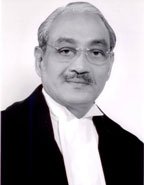
Swatanter Kumar, J.
1.The present appeal is directed against the judgment of
conviction and order of sentence passed by a Division Bench of
the High Court of Judicature at Bombay dated 23
rd
, 24
th
and 25
th
March, 2011 awarding death penalty to the present appellant.
Page 2 2.The learned counsel appearing for the appellant, the sole
accused, at the very outset stated that the appellant does not
wish to challenge the order of conviction but is only contending
that the present case does not fall under the category of ‘rarest
of the rare’ case where penalty of death could be imposed upon
the accused. Thus, the controversy in the present appeal
before this Court falls within a narrow compass.
3.In order to examine the sustainability of the submission
raised on behalf of the appellant, it is necessary for the Court to
refer in brief to the case of the prosecution and the evidence on
record.
4.The complaint was lodged by Sumitra Ramesh Birajdar,
PW1, maternal aunt of Shubhada Jaydeep Patil, PW2, who was
resident of Flat No.D-202, Purple Castle Society,
Chintamaninagar, Bibwewadi, Pune. She stated that deceased
Shalini Uddahaurao Jadhav was her close relative. PW2 and her
husband Jaydeep Patil, PW8, along with the deceased (their
grandmother) were living in the same building in Flat No.301
since 31
st
August, 2007. Jaydeep Patil, PW8 was serving in the
ICICI Bank. The incident took place on 10
th
September, 2007
2
Page 3 when the complainant was at her house. At about 9.45 a.m.,
the deceased had come to her house while she was going to
temple. The deceased was at the house of the complainant till
about 11.30 a.m. when she left saying that she had to arrange
her baggage as she wanted to go to Pandharpur. Both the
complainant and PW2 were at their respective flats. At about
3.30 p.m., PW2 gave a call through the window to the
complainant addressing as ‘mami mami’. Hearing the sound,
the complainant sent her maid servant Chingu to see as to why
PW2 was calling for her. The maid servant went to the gallery
of her flat and told the complainant that she saw that blood was
smeared on the face of PW2. Immediately the complainant
rushed to the flat of PW2, which was on the 3
rd
floor and noticed
that the door was bolted from outside. She opened the door
from outside and PW2 opened the door from inside. PW2 was
seen completely naked and there was blood all over her body.
The complainant helped PW2 to wear the clothes to cover
herself up. Thereafter, the complainant went inside the bed
room, she saw the deceased, mother-in-law of PW2, lying in a
pool of blood. The wrist of her left hand and four fingers of her
right hand were mercilessly amputated. Her neck had also
3
Page 4 been slit. Blood was lying everywhere in the flat. The
complainant, without any loss of time, gave a call to Jaydeep
Patil, PW8, on his mobile and narrated the condition of the
house. She also gave a call to her husband. Within 15 to 20
minutes, PW8 reached the house. He shifted his wife, PW2 in a
car. They proceeded towards Bharati Vidyapeeth Hospital. On
the way, PW2 disclosed to the complainant that at about 2.00
to 2.15 p.m. one young boy came to her flat. The door was
opened by her mother-in-law, the deceased. The young boy
said that he was a mechanic and was sent by sahib (Jaydeep
Patil) to repair the car on which PW2 told him that their car was
not out of order and asked the young boy to go back. When
she tried to contact her husband on mobile phone, the said
young boy snatched away the mobile from her. He closed the
door of the flat from inside. Thereupon the accused started
assaulting both, PW2 and her mother-in-law, the deceased with
a sickle like weapon. They tried to resist his act. At that time,
he inflicted blows on the hands of the deceased by the weapon
after which she fell down. Further, the case of the prosecution
is that the said young man assaulted the deceased a number of
times and while she was on the ground and the accused
4
Page 5 demanded the ornaments on the person of the deceased. He
also snatched the Mangalsutra from PW2 and her gold chain
but did not stop the assault.
5.PW2 was in her 5
th
month of pregnancy and, therefore,
tried her best to avoid any injury on her stomach and, in fact,
suffered all the injuries on her back. The accused further
demanded for jewellery and cash that was lying in the house,
which probably was his main object. PW2 threw the purse
containing gold ornaments in front of him. He collected them
but at this stage when the deceased made some movement on
the floor, he gave her another fatal blow on the neck which
ultimately resulted in her death. When he demanded more
cash and jewellery, PW2 even offered him to search the entire
house and take away what he wanted and requested him to
spare them. Upon this, the accused became more aggressive
and asked PW2 to remove her clothes and committed rape on
her under the threat of further assault. Even thereafter, he
kept inflicting blows on PW2. He then went to the bathroom,
cleaned himself and fled from the flat and bolted the door from
outside. PW2 crawled to the bedroom and from there she
5
Page 6 screamed for her mami (PW1), the complainant. PW2,
according to her statement, moved with great difficulty to
unbolt the door from inside when the complainant and her maid
servant had come.
6.The complainant called up PW8. Police was also informed
and it reached the spot. When PW2 was taken to Bharti
Vidyapeeth Hospital, they advised to refer her to Ruby Hall
Clinic and, thus, PW2 was shifted to that clinic at about 5.30
p.m., where she was operated upon immediately and was in the
ICU upto 18
th
September, 2007 and she was discharged on 28
th
September, 2007.
7.Having received the information from PW1, the
complainant, Police had commenced its investigation. The
Police brought the dog squad as well as photographer, PW11, to
the place of offence. On 11
th
September, 2007, the police even
went to get information from PW2 in the hospital. On the basis
of the description given by her, PW12, Girish Anant Charwad,
had prepared the sketch of the accused which was widely
circulated including publication in the local newspapers. PW16,
Ashok Shelke, the Inspector from the Crime Branch got an
6
Page 7 information that the suspect was residing at upper Indira Nagar
area. When the Police party went there and made inquiries,
the suspect was not traced. The Police traced the native place
of the accused, Awasari Khurd in Ambegaon Taluka and found
that his name was Sandesh Kailas Abhang. In furtherance to
the information received, the accused was arrested from his
house in Awasari Khurd Village and was taken into custody.
8.The inquest panchnama of the body of the deceased,
Shalini Jadhav, was drawn as Exhibit 45 on 10
th
September,
2007. The post mortem report, Exhibit 40, was prepared and
signed by PW7, Dr. Milind Sharad Wable. After the arrest of the
accused, recovery of the articles, viz., the gold ornaments,
mobile phone, clothes of the accused as well as the weapon
used, was effected. The articles recovered were sent for
chemical analysis and report thereof is filed on record. The
Investigating Officer, after recording the statement of
witnesses and collecting other evidence, filed the charge-sheet,
Exhibit 4, before the Court of competent jurisdiction. The
accused was charged with the offences punishable under
Sections 302, 307, 397, 394, 376(e) of the Indian Penal Code,
7
Page 8 1860 (for short, the ‘IPC’), Section 25 of the Arms Act and
Section 135 of the Bombay Police Act.
9.The prosecution examined as many as 18 witnesses. It
may be noticed at this stage that the Trial Court has dealt with
the extra-judicial confession made by the accused to his friend,
Rajendra Baban Sawant, PW13, at great length and found that
his statement Exhibit 59 recorded under Section 164 of the
Code of Criminal Procedure, 1973 (for short, the ‘Code’) fully
corroborated the case of the prosecution. However, there was
no reason for PW13 to make any false statement or for the Trial
Court to disbelieve the same. The Trial Court by a very detailed
judgment held the accused guilty for offences punishable under
Sections 302, 307, 394, 397 and 376(e) IPC. It heard the
accused on the quantum of sentence as well as referred to the
judgment of this Court in the case of Bachan Singh v. State of
Punjab [(1980) 2 SCC 684]. After analysing the principles
enunciated in that case, the Trial Court came to the conclusion
that the case fell in the category of the rarest of rare cases and
awarded the punishment as follows :
8
Page 9 “1)Accused Sandesh alias Sainath Kailas
Abhang is found guilty for the offence
punishable under Sections 302, 307,
376(e), 394, 397 of Indian Penal Code.
2)Accused is convicted for offence
punishable under Section 302 of Indian
Penal Code and he is sentenced to
death. Accused shall be hanged by
neck till he is dead. Death sentence
shall not be executed unless it is
confirmed by the Hon’ble High Court.
3)Accused is convicted for offence
punishable under Section 307 of Indian
Penal Code and he is sentenced to
suffer R.I. for 10 years and to pay a
fine of Rs.5000/- in default to suffer
R.I. for six months.
4)Accused is convicted for offence
punishable under Section 376(e) of
Indian Penal Code and he is sentenced
to suffer imprisonment for life and to
pay a fine of Rs.5000/- in default to
suffer R.I. for six months.
5)Accused is convicted for offence
punishable under Section 394 read
with Section 397 of Indian Penal Code
and he is sentenced to suffer
imprisonment for life and to pay a fine
of Rs.5000/- in default to suffer R.I. for
six months.
6)Accused is acquitted for offence
punishable under Section 135 of
Bombay Police Act and under Section
25 of Arms Act.
7)All the Jail sentences to run
concurrently.
9
Page 10 8)Accused is in jail since 19.09.2007. He
is entitled for set off.
9)The seized gold ornaments and mobile
handset be returned to PW Shubhada
Patil after the period of appeal will be
over.
10)Remaining articles being valueless be
destroyed after the period of appeal
will be over.
11)Record and proceedings be sent
immediately to the Hon’ble High Court
for confirmation of the death
sentence.”
10.The appellant challenged the correctness of the judgment
of conviction and order of sentence before the High Court by
filing a Regular Criminal Appeal being Criminal Appeal No.7 of
2011. Along with this, the Criminal Confirmation Case No.1 of
2010 for confirmation or otherwise of death sentence was listed
before the High Court. The High Court by a detailed judgment
confirmed the death sentence as well as dismissed the appeal
filed by the accused, giving rise to filing of the present appeal.
11.As already noticed, we are only concerned with the
question, whether imposition of death penalty is justified in the
facts of the present case or not. Though in view of the
statement made by the learned counsel appearing for the
10
Page 11 appellant, there is hardly any occasion for us to discuss the
prosecution evidence in any greater detail, still it is necessary
for the Court to examine the intent of the accused, the manner
in which the crime was committed, the impact of such crime
upon the society and finally the possibility of the accused being
reformed.
12.The prosecution evidence, particularly the statements of
PW1, PW2, PW3, PW4, PW7, PW8 and PW13 clearly establish
that the accused had entered the house of the deceased and
PW2 with an intention to commit robbery and was smelling of
alcohol. However, he committed the crime in a very brutal
manner. He did not heed to the request of PW2 to take away
all the ornaments and money that were available in their house
and to spare the life of both of them. According to the
prosecution evidence, he did not accede to that request and
even after taking the gold kept on inflicting injuries upon the
deceased as well as PW2. The worst assault of the accused
was that he asked PW2 to remove her clothes and committed
rape on her while she was five months pregnant. Ultimately, he
gave the last fatal blow with the kukri (the weapon he was
11
Page 12 carrying) on the neck of the deceased resulting in her
immediate death. PW2 displayed wisdom and bravery and
received the injuries on her back. She resisted the attack to
the extent it was possible for her in order to survive and protect
the child in her womb from any harm.
13.The appellant committed a cold blooded murder and his
conduct was that of a brutal person. According to the
statement of PW13, Rajendra Sawant, he had murdered both
the ladies which shows that he came out of the house thinking
that both, the deceased and PW2, had died. To her good
fortune, PW2 survived and was able to establish the case of the
prosecution beyond reasonable doubt. The learned counsel
appearing for the appellant argued that the accused was under
the influence of liquor and was unmindful of the consequences
of his crime. He did not commit the crime with any
premeditation, was arrested nine days after the date of
occurrence, is a young person of 23 years of age are the
mitigating circumstances, and that certainly the present case
does not fall in the category of a rarest of rare case. He also
submitted that the prosecution has led no evidence to show
12
Page 13 that the deceased is incapable of being reformed. In support of
his contention, he has relied upon various judgments of this
Court in the cases of Mohd. Chaman v. State (NCT of Delhi)
[(2001) 2 SCC 28]; Sebastian @ Chevithiyan v. State of Kerala
[(2010) 1 SCC 58]; Rameshbhai Chandubhai Rathod v. State of
Gujarat [(2011) 2 SCC 764]; Rajesh Kumar v. State through
Government of NCT Delhi [(2011) 13 SCC 706]; and Amit v.
State of Uttar Pradesh [(2012) 4 SCC 107].
14.On the contrary, the contention on behalf of the State is
that it was a brutal murder of an innocent lady and is a case
where direct evidence (eye-witness – PW2) has clearly stated
the barbaric manner in which the offence was committed. The
accused showed no respect for human life as he inflicted 21
injuries upon the deceased and 19 injuries upon PW2. He
assaulted two helpless ladies and that too for a small gain. The
counsel for the State placed reliance on the judgment of this
Court in the case of Rajendra Prahladrao Wasnik v. State of
Maharasthra [(2012) 4 SCC 37].
15.First and foremost, we must notice the authoritative
statement by a Constitution Bench of this Court in the case of
13
Page 14 Bachan Singh (supra), where the Court discussed the entire law
in relation to sentencing with a definite reference to the
imposition of death penalty and took a somewhat divergent
view than was taken in the case of Jagmohan Singh v. State of
U.P. [(1973) 1 SCC 20]. Keeping in view the change in
legislative policy and various pronouncements of this Court, the
Constitution Bench made a shift in approach from an entirely
crime based approach to an approach that focused on both, the
crime and the criminal. Some reservations were expressed by
the Bench in regard to the opinion expressed in the case of
Jagmohan (supra). The Courts, within the ambit of Section
354(3) of the Code of Criminal Procedure, were recording
reasons with reference to mitigating and aggravating
circumstances. However, a Bench of this Court in the case of
Sangeet & Anr. v. State of Haryana [2012 (11) SCALE 140] took
a view that such approach needed a fresh look, in view of the
principles stated in the case of Bachan Singh (supra).
16.The paradigm shift in the criminal jurisprudence would not
substantially alter the substance of the approach since
ingredients relating to a criminal as well as the attendant
14
Page 15 circumstances of a crime will have to be considered in all
events. The Court would have to consider each case on its own
merits. It is neither possible nor permissible to define or lay
down any straightjacket formula which can universally be
applied to all cases requiring Court’s determination in relation
to imposition of death penalty. The Court, however, should,
inter alia, consider the following points.
17.First of all, the Court has to keep in mind that the
prosecution has been able to prove its case beyond reasonable
doubt and the accused is guilty of the offence where prescribed
punishment is that of death. Secondly, the Court has to
examine the cumulative effect of the prosecution evidence and
the stand of the accused. This would include discussion on the
manner in which the crime was committed, the intent and
motive of the accused, situation and mental condition of the
accused at the relevant time, attendant circumstances relating
to the commission of offence and the possibility of the accused
being reformed if permitted to join the mainstream society. As
a corollary to this the Court would have to determine whether
15
Page 16 the accused would be a menace or an irreformable anti-social
element to the society.
18.Consideration of these aspects should automatically result
in recording of special reasons where the Court is of the opinion
that penalty of death should be imposed which is in line with
the provisions of Section 354(3) which places a mandate upon
the Court to apply its judicious mind and record ‘special
reasons’ for imposing death penalty. It has been settled by this
Court that with the legislative changes, the principle ‘death is
the rule and life an exception’, where it was so provided under
the Code of Criminal Procedure, has shifted to ‘life is the rule
and death an exception’. It is only when exceptional penalty of
death is sought to be imposed by the Court that the Court is
expected to record special reasons, satisfying the above
criteria.
19.The Trial Court has recorded reasons for awarding the
sentence of death to the accused. These reasons elucidate
how brutally the offence was committed and that the accused
treated the victims with utmost disregard, both physically and
mentally. Rape of a pregnant lady by the accused was totally
16
Page 17 inhuman and unwarranted. The learned counsel for the
appellant has not been able to dispute these reasons or the fact
that they are matters of serious concern.
20.However, the Trial Court as well as the High Court has not
considered, in its correct perspective, the state of mind of the
accused at the relevant time, his capacity to realize the
consequences of the crime he was committing and the lack of
intent on his part to commit the murder. The accused had not
entered the house of PW2 with the intention to kill either of
them. In fact, and indisputably, he entered the house of the
deceased with the mind of committing robbery which he
committed by taking away the gold ornaments, cell phone and
money etc. However, in this process, he not only repeatedly
injured the deceased and PW2, but also committed rape on
PW2.
21.One very vital factor which has not been given any
significance by the Courts in the impugned judgments is that
the accused was smelling of alcohol. According to PW2, he
smelled of alcohol and his eyes were red. Both these factors
show that the accused may have been drunk and he may not
17
Page 18 exactly be aware of the consequences of his acts. This view
finds support from the fact that if the accused had intended to
kill deceased and PW2, it was not expected of him to inflict 21
and 19 injures on their bodies respectively. He could have
simply given an injury on the vital parts of their body and put
them to death. His conduct in inflicting large number of
injuries and even amputating the fingers of the deceased
clearly reflects the conduct of an abnormal person. Absence of
normal behaviour even during the commission of the crime is a
relevant consideration. It is evident from the evidence on
record that the accused was not in a balanced state of mind
and in fact had no control over his mind. He was unable to
decipher the consequences of his crime and the result that is
likely to flow from such commission. In the facts and
circumstances of the case, the Court cannot ignore such an
abnormal behaviour of the accused. As already noticed, it is
not only the crime and its various facets which are the
foundation for formation of special reasons as contemplated
under Section 354(3) of Cr.P.C. for imposing death penalty but
it is also the criminal, his background, the manner in which the
crime was committed and his mental condition at the relevant
18
Page 19 time, the motive of the offence and brutality with which the
crime was committed are also to be examined. The doctrine of
rehabilitation and doctrine of prudence are the other two
guiding principles for proper exercise of judicial discretion.
22.Now, we may refer to some cases that have been relied
upon by the learned counsel appearing for the appellant.
23.In the case of Rameshbhai Chandubhai Rathod (supra),
the Court while dealing with a case of rape and murder of a
child by the watchman, commuted the death sentence to that
of imprisonment for life, directing it to be of full life on the
ground that it did not fall in the category of rarest of rare cases,
because the accused was young person of 27 years and there
was possibility of his rehabilitation. Even in the case of Amit
(supra), this Court after taking into consideration the fact that
there was a possibility of the accused being reformed and he
not being involved in similar crimes earlier, commuted the
death sentence to life imprisonment in a case of kidnapping,
rape, commission of unnatural offence, murder and even
causing disappearance of evidence. Similar approach was also
adopted by this Court in the case of Sebastian (supra).
19
Page 20 24.We have already noticed that it is not possible to lay down
as a principle of law as to in which cases the death penalty
should or should not be imposed. The above judgments are on
their own facts, but one aspect that certainly is stated in these
judgments is the possibility of the accused being reformed, he
being young and having no criminal involvement in similar
crimes are relevant considerations. In the present case the
prosecution had led no evidence to show that the appellant was
a hardened criminal and there was no possibility of his being
reformed. There is also no evidence to show that during the
time when he was in jail, his conduct was unworthy of any
concession. It is a heinous and brutal crime that the accused
has committed, but other relevant considerations outweigh it
for the Court to state that the present case is one that of rarest
of the rarest of rare cases.
25.For the reasons afore-stated, we partially allow the appeal
of the appellant and commute the death sentence to that of
rigorous imprisonment for life. The life imprisonment shall be
for life and the sentences shall run consecutively.
20
Page 21 ……...…………......................J.
(Swatanter Kumar)
……...…………......................J.
(Madan B. Lokur)
New Delhi,
December 13, 2012.
21

 Login with google
Legal Notes
Add a Note....