
As per case facts, several Civil Appeals and Writ Petitions were filed concerning seniority issues for reserved and general candidates in the Rajasthan Police Service and Administrative Service. The Rajasthan ...
No Acts & Articles mentioned in this case
http://JUDIS.NIC.IN SUPREME COURT OF INDIA Page 1 of 5
PETITIONER:
SHRI RAM PRASAD ETC.ETC.
Vs.
RESPONDENT:
SHRI D.K.VIJAY AND ORS.ETC.ETC. ..
DATE OF JUDGMENT: 16/09/1999
BENCH:
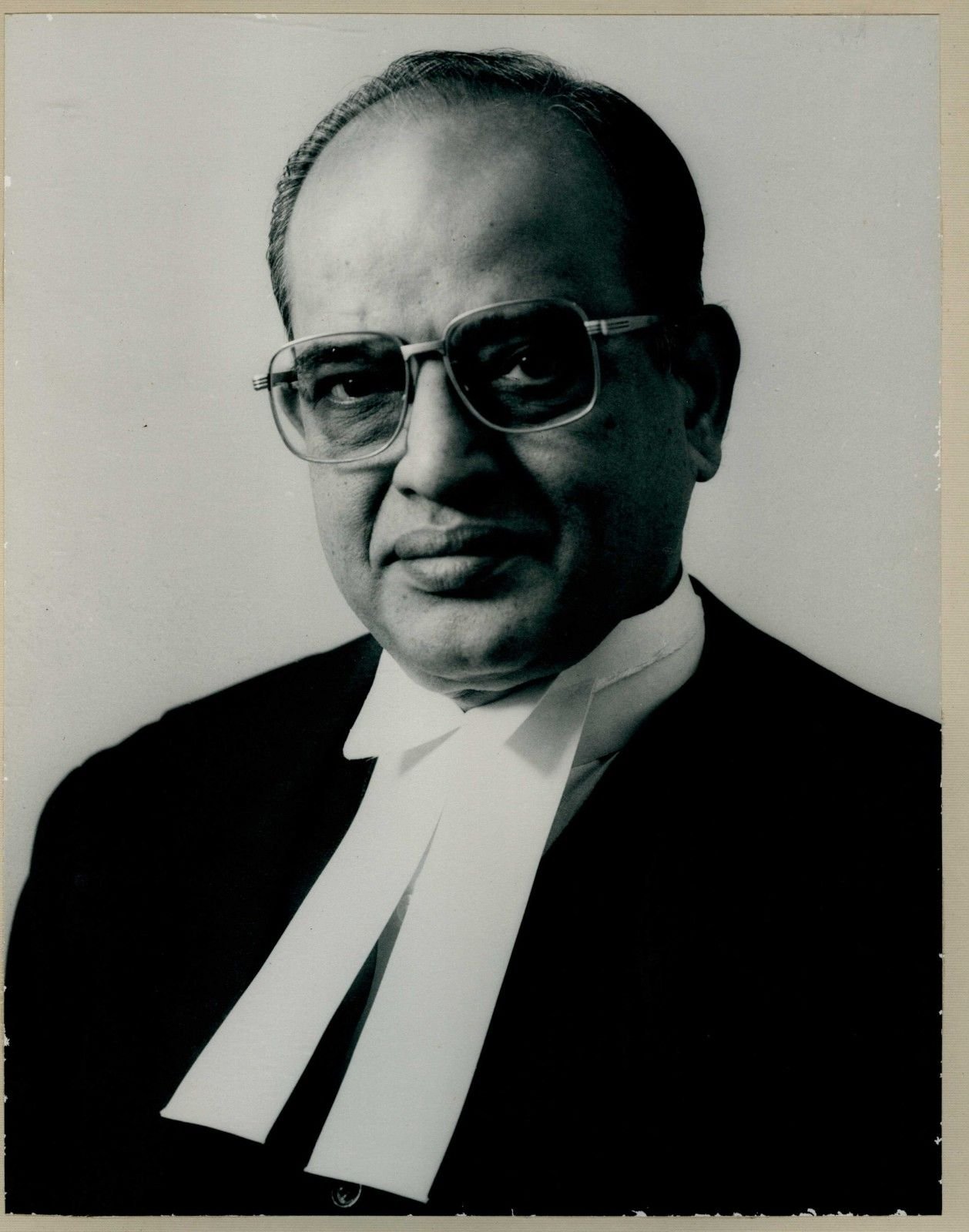
K.Venkataswami, G.B.Pattanaik, M.Jagnnadha Rao, S.P.Kurdukar
JUDGMENT:
M. JAGANNADHA RAO
Leave granted in the special leave petitions. All the
Civil Appeals arise out of the judgment of the Rajasthan
High Court in a batch of writ petitions. There are three
sets of appeals.
The Civil Appeals 2866/98, 2867/98, 2868/98, 3282/98,
4084/98 have been filed by the reserved candidates and arise
out of (DB) CWPs. 2545/96, 2812/96, 3086/96, 2963/96 and
4918/97 respectively. Civil Appeal 3935/98 is filed by the
general candidates and arises out of CWP. 3080/96. The
State of Rajasthan has filed C.A. Nos. 3147-3150/98 and
they arise out of CWPs. 3086, 6208 and 4918/97
respectively. The Civil Appeals arising out of SLPs
9185-88/99 have also been filed by the State of Rajasthan
and arise out of CWPs. 2545/96, 2675/96, 4726/97 (646/97)
and 2963/96. The High Court has disposed of all the writ
petitions by a common judgment dated 2.4.1988. All the
eight writ petitions were filed in the High Court by the
general candidates. The D.B. CWPs. 2812/96, 3086/96,
6208/96 and 4918/97 were filed in the High Court by the
general candidate officers of the Rajasthan Police Service (
for short R.P.S.) seeking modification of the seniority
list. Similarly, the D.B. Civil Writ Petitions Nos.
2543/96, 2675/96, 4726/96 ( 646/97) and 2963/96 were filed
by the general candidate officers of the Rajasthan
Administrative Service ( for short 'R.A.S.') challenging the
mode of implementation of Rules 8 and 33 of the Rajasthan
Administrative Service Rules 1954. Decision of the High
Court:
The High Court took up CWP. 2812/96 in the Police
Service and CWP. 2545/96 in the Administrative Service as
the main case. The writ petitions were partly allowed so
far as the seniority of the reserved candidates at the
promotional level was concerned, by following the judgment
of this Court in Ajit Singh Januja Vs. State of Punjab (
1996 (2) SCC 715) i.e.Ajit Singh No.1 dated 1.3.96.
Promotions in excess of 28% quota were quashed. In regard
to the question whether the placement of Additional
Superintendents of Police ( senior scale) as Additional
Superintendents ( Selection scale) amounted to a promotion
http://JUDIS.NIC.IN SUPREME COURT OF INDIA Page 2 of 5
so as to give the reserved candidates the benefit of
reservation by way of roster points the High Court held in
favour of the reserved candidates that it amounted to a
promotion and that reservation as per the roster points for
promotion to the selection scale has to be given. The High
Court in that context followed the decision of this Court in
State of Rajasthan Vs. Fateh Singh Soni ( 1996(1) SCC 562)
dated 12.12.95. The general candidates are aggrieved in
this behalf and filed C.A. 3935/98.
The High Court has also followed Ajit Singh No.1 dated
1.3.96 and held that the reserved candidates on promotion at
roster points cannot count their seniority from the date of
such promotion and their senior general candidates at the
lower level, on promotion become seniors to them. The
reserved candidates have preferred appeals C.A.2866-2868/98
and 3282/98 and 4084/98 in regard to this part the judgment.
No submissions were made before us on behalf of the reserved
candidates that reservation should be in excess of 28%
quota. Contentions in this Court:
The State of Rajasthan while accepting the principles
laid down in Ajit Singh No.1, has, however, filed
C.A.3147-3150/98 and the appeals arising out of SLPs. 9185-
88/99 to contend that the seniority lists accepted in Fateh
Singh Soni by this Court could not have been altered by the
High Court, under the impugned judgment. The general
candidates contend that Fateh Singh Soni requires
reconsideration. They also contend that, in any event,
Fateh Singh Soni's case was decided on 12.12.95 and at that
time this Court was not dealing with the issue of seniority
of the roster point promotees and hence after judgment in
Ajit Singh No.1 dated 1.3.96, it becomes necessary for the
High Court to modify the seniority lists as accepted in
Fateh Singh Soni's case in implementation of Ajit Singh
No.1. The reserved candidates contend that Ajit Singh No.1
is not correctly decided and Jagdish Lal Vs. State of
Punjab ( 1997(6) SCC 538) is to be followed.
The State of Rajasthan made an additional plea that
between 1.3.96 when Ajit Singh No.1 was decided on 1.4.97,
certain further promotions of the reserved candidates had
taken place and that the prospectivity of Ajit Singh No.1
may be postponed from 1.3.96 to 1.4.97 for the limited
purpose of preventing reversions of the roster- point
promotees who were promoted upto 1.4.97 though in respect of
seniority, Ajit Singh No.1 could be given effect in respect
of reserved candidates promoted at roster points before
1.4.97. The Rules:
It may be noted that the R.P.S. officers are governed
by the Rajasthan Police Service Rules, 1954 and the Indian
Police (Appointments by promotion, Regulations, 1955) issued
in pursuance of Sub-rule (1) of Rule 9 of the Indian Police
Services (Recruitment) Rules, 1954. The relevant Rules are
Rule 8, 9, 28-A and 33 of the 1954 Rules. The above Rules
are pari-materia with the Rajasthan Administrative Service
Rules,1954.
Rule 8 of the R.P.S. Rules, 1954 deals with
'Reservation of vacancies for the Scheduled Castes and
Scheduled Tribes'. Rule 9 deals with the method of
determination of vacancies. Rules 27, 27A, 28 deal with
criteria for selection and procedure for selection by
seniority-cum-merit, eligibility being reckoned as on the
http://JUDIS.NIC.IN SUPREME COURT OF INDIA Page 3 of 5
first day of April of the year of selection. Rule 28-A
refers to the 'Revised criteria, Eligibility and Procedure
for promotion to Junior, Senior and other posts ex-cadred in
the services. Rule 33 deals with 'seniority'. Rajasthan
Rule is consistant with Ajit Singh: Today we have delivered
judgment in IAs 1-3 in Civil Appeal Nos.3792-94/89 (Ajit
Singh No.1) and that is called for convenienc, Ajit Singh
No.2.
It is important to note that in Rajasthan, there is a
general Amendment dated 1.4.97 made to the R.P.S. and
R.A.S. Rules of 1954 which directs that roster-point
promotees shall not be given such seniority. That amendment
reads as follows:
"After the existing last proviso of rule as mentioned
in column 3 against each of the Service Rules, as mentioned
in column 2 of the Schedule appended hereto, the following
new proviso at the next serial number shall be added,
namely:
"That if a candidate belonging to the Scheduled
Caste/Scheduled Tribe is promoted to an immediate higher
post/grade against a reserved vacancy earlier than his
senior general/O.B.C. candidate who is promoted later to
the said immediate higher post/grade, the general/OBC
candidate will regain his seniority over such earlier
promoted candidate of the Scheduled Caste/Scheduled Tribe in
the immediate higher category."
The above circulars are consistent with what has been
laid down in regard to seniority of reserved candidates in
Ajit Singh No.1 and Ajit Singh No.2.
Fateh Singh Soni correctly decided: The contention of
Sri Gopal Subramaniam for the general candidates that
appointment from senior scale to selection scale is not a
promotion and that Fateh Singh Soni requires reconsideration
in view of the judgments in Union of India Vs. S.S. Ranade
(1995(4) SCC 462) and Lalit Mohan Deb Vs. Union of India (
1973(3) SCC 862), cannot be accepted. We are unable to
agree. We find that both these cases have been referred to
and explained in Fateh Singh Soni's case. Therefore, the
reserved candidates are entitled to be promoted to the
selection scale by way of the roster points. But, this has
to be done in the manner mentioned in R.K. Sabbarwal Vs.
State of Punjab ( 1995(2) SCC 745). The appeal of the
general candidates has to fail. Seniority is to be decided
as per Ajit Singh No.1 and Ajit Singh No.2: So far as the
seniority of the roster point promotions is concerned, the
reserved candidates have contended that upon promotion at
the roster points, the promotees can reckon seniority and
that senior general candidates who later got promoted cannot
be treated as seniors at the promotional stage. But in view
what has been decided in our separate judgment in Ajit Singh
No.II today, the above contention cannot be accepted. Thus,
there are no merits in the appeals filed by the reserved
candidates.
On behalf of the State of Rajasthan, learned
Additional Solicitor General, Sri Altaf Ahmad contended that
the seniority settled by Fateh Singh Soni could not have
been disturbed by the High Court. We are unable to agree.
Fateh Singh Soni was decided on 12.12.95 while Ajit Singh
http://JUDIS.NIC.IN SUPREME COURT OF INDIA Page 4 of 5
No.1 was decided on 1.3.96. In Soni's case, the question of
the seniority of roster points promotees vis-a-vis senior
general candidates was not in issue. Here, the seniority
lists prepared in accordance with Fateh Singh Soni have to
be modified in the light of Ajit Singh No.1. The High Court
was, therefore, right in applying Ajit Singh No.1 and giving
direction to implement that judgment. In our view, the
question of seniority of the roster point promotees will be
on the basis of what was decided in Ajit Singh No.1 and
under Points 1 to 3 in Ajit Singh No.2. Prospectivity of
Sabharwal and Ajit Singh No.1 We first make it clear that so
far as the 'prospectivity' of Sabharwal is concerned, the
decision in Point 4 in Ajit Singh No.2 will apply. There is
no change in the cut off date so far as Sabharwal is
concerned. So far as prospectivity of Ajit Singh No.1 is
concerned, our decision in Ajit Singh No.2 will apply in
principle but with a slight modification of the cut off
date.
It was argued for the State of Rajasthan that on the
peculiar factual situation concerning the R.P.S. and R.A.S.
officers, the judgment of this Court in Ajit Singh Januja
Vs. State of Punjab ( 1996(2) SCC 715) (called Ajit Singh
No.1), could not be implemented forthwith and hence a few
more promotions of the reserved candidates took place upto
1.4.97. It was pointed out that as per Ajit Singh No.1
those reserved candidates who were promoted before 1.3.96
were not to be reverted, though their seniority in the
promoted cadre, even if made before 1.3.96 would be governed
by Ajit Singh No.1. It was submitted that this concession
of non- reversion could be extended to those reserved
candidates who were promoted before 1.4.97.
In view of the peculiar facts of these cases, we are
inclined to accede to this contention. The result is that
officers from the reserved category who were promoted at the
roster points before 1.4.97 shall not be reverted but their
seniority in the promoted category shall be governed by the
principles enumerated under Points 1 to 3 in Ajit Singh No.1
and Ajit Singh No.II. The prospectivity of Sabharwal as
explained under Point 4 in Ajit Singh No.II is not
disturbed. So far as prospectivity of Ajit Singh No.1 is
concerned, the principles in Ajit Singh No.II in Point 4
will apply but subject to postponement of 1.3.96 to 1.4.97.
In other words, we agree that there is no need to
revert those reserved category officers, if they were
promoted even beyond 1.3.96 but before 1.4.97. To give an
example - in the case of two rosters from Level 1 to Level 2
and Level 2 to Level 3, if the reserved candidate was
promoted before 1.4.97 to Level 4, such reserved candidate
need not be reverted. If by the date of promotion of the
reserved candidate before 1.4.97 from Level 3,the senior
general candidate at Level 2 has reached Level 3, he has to
be considered as senior at Level 3 to the reserved candidate
because the latter was still at Level 3 on that date. But
if such a general candidate's seniority was ignored and the
reserved candidate was treated as senior at level 3 and
promoted to Level 4, this has to be rectified after 1.3.96
by following Ajit Singh No.1 as explained in Ajit Singh
No.II. In other words, if a reserved candidate was promoted
to Level 4 before 1.4.97, without considering the case of
the senior general candidate who had reached Level 3 before
such promotion, such reserved candidate need not be reverted
http://JUDIS.NIC.IN SUPREME COURT OF INDIA Page 5 of 5
but the said promotion to Level 4 is to be reviewed and
seniority at Level 3 and Level 4 ( as and when the general
candidate is promoted to Level 4) is to be refixed. .pa
Thus, we reject the main contentions of the general
candidates and the reserved candidates but accede to the
request of the State of Rajasthan to the extent indicated
above. All the appeals are, therefore, dismissed subject to
the above concession.
The Supreme Court's judgment in SHRI RAM PRASAD ETC.ETC. Vs. SHRI D.K.VIJAY AND ORS.ETC.ETC., pronounced on September 16, 1999, stands as a pivotal ruling addressing intricate issues surrounding **Reservation Roster Seniority** and **Promotional Seniority Disputes** within public services, particularly in Rajasthan. This significant decision, readily available for in-depth analysis on CaseOn, delves into the complexities of implementing reservation policies and their impact on the seniority of promoted candidates. The case involved various appeals arising from a High Court judgment concerning the Rajasthan Police Service (RPS) and Rajasthan Administrative Service (RAS), seeking clarity on the application of previous Supreme Court pronouncements regarding reservation in promotions.
At the heart of this legal battle was the question of how seniority should be determined for reserved category candidates promoted via roster points, especially when compared to their senior general category counterparts. Specifically, the High Court’s application of judgments like Ajit Singh Januja Vs. State of Punjab (Ajit Singh No.1) and State of Rajasthan Vs. Fateh Singh Soni was under scrutiny. Key aspects included whether promotion to a 'selection scale' should be considered a promotion for reservation purposes and if existing seniority lists required modification based on evolving legal principles.
The case was governed by the Rajasthan Police Service Rules, 1954 (specifically Rules 8, 9, 28-A, and 33) and the Rajasthan Administrative Service Rules, 1954. These rules outline provisions for reservation, vacancy determination, selection criteria, and seniority. The Supreme Court relied heavily on a series of its own landmark judgments:
A crucial piece of the regulatory puzzle was a Rajasthan amendment dated 1.4.97 to the RPS and RAS Rules. This amendment explicitly stated that roster-point promotees should not be granted seniority if they were promoted earlier than their senior general or OBC candidates to an immediate higher post/grade.
The High Court had partially allowed the writ petitions, aligning with Ajit Singh No.1 regarding the seniority of reserved candidates. It also quashed promotions exceeding the 28% quota. Importantly, the High Court, following Fateh Singh Soni, ruled that moving to a 'selection scale' did indeed amount to a promotion, thereby allowing reservation benefits.
The Supreme Court embarked on a nuanced analysis to reconcile the various precedents and factual scenarios:
Acknowledging the unique factual circumstances of these cases, the Supreme Court granted a significant concession. It ruled that officers from the reserved category who were promoted via roster points *before April 1, 1997*, would not be reverted. However, their seniority in the promoted cadre would still be governed by the principles outlined in Points 1 to 3 of Ajit Singh No.1 and Ajit Singh No.2. This means that if a reserved candidate was promoted to, say, Level 4 before 1.4.97, they wouldn't lose their promotion. Yet, if a senior general candidate reached Level 3 before that promotion occurred, the general candidate would be considered senior at Level 3. Consequently, the reserved candidate's promotion to Level 4, and their subsequent seniority, would need to be reviewed and refixed if the seniority of the general candidate was overlooked during the initial promotion. For legal professionals looking for quick summaries and key takeaways on such complex rulings, CaseOn.in offers invaluable 2-minute audio briefs that simplify the analysis of these specific judgments.
The Supreme Court's judgment in SHRI RAM PRASAD ETC.ETC. Vs. SHRI D.K.VIJAY AND ORS.ETC.ETC. provided crucial clarifications on the application of reservation policies and seniority principles in promotions. It affirmed the High Court’s stance on 'selection scale' as a promotion, but critically mandated that seniority for reserved category promotees must align with the dictates of Ajit Singh No.1 and Ajit Singh No.2. While preventing reversions for promotions made before April 1, 1997, it ensured that seniority lists would be appropriately adjusted to reflect the correct legal position, thereby balancing equity with adherence to established judicial precedents.
This ruling is indispensable for lawyers and law students specializing in service law, constitutional law, and administrative law. It provides a detailed understanding of how the Supreme Court interprets and applies complex reservation policies, especially regarding promotional seniority. The judgment illustrates the delicate balance the Court strikes between implementing reservation benefits, upholding the seniority rights of general category employees, and ensuring the smooth functioning of public administration. It serves as a vital guide for interpreting rules and amendments related to reservation rosters and their impact on career progression in public services.
Please note that all information provided in this article is for informational purposes only and does not constitute legal advice. While efforts have been made to ensure accuracy, this summary should not be relied upon as a substitute for professional legal counsel. For specific legal guidance, it is essential to consult with a qualified legal professional.

 Login with google
Legal Notes
Add a Note....