
This appeal was filed by Sharad Kumar in the Supreme Court, challenging the Delhi High Court's decision, which upheld the Government of National Capital Territory of Delhi's refusal to refer ...
No Acts & Articles mentioned in this case
http://JUDIS.NIC.IN SUPREME COURT OF INDIA Page 1 of 14
CASE NO.:
Appeal (civil) 2622 of 2002
PETITIONER:
SHARAD KUMAR
Vs.
RESPONDENT:
GOVT. OF NCT OF DELHI & ORS.
DATE OF JUDGMENT: 11/04/2002
BENCH:
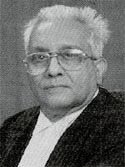
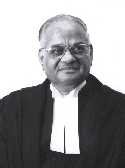
D.P. Mohapatra & Brijesh Kumar
JUDGMENT:
D.P.MOHAPATRA,J.
Leave granted.
This appeal filed by the employee is directed against
the order dated 10.7.2000 of the Delhi High Court
declining to interfere with the order of the Government of
National Capital Territory of Delhi (NCT of Delhi) refusing
to refer the dispute raised by the appellant to the
Industrial Tribunal/Labour Court on the sole ground that
he is not a 'workman' within the meaning of section 2(s) of
the Industrial Disputes Act, 1947 (hereinafter referred to
as 'the Act').
The factual backdrop of the case relevant for
appreciating the questions raised in the case may be
stated thus :
The appellant was holding the post of 'Area Sales
Executive' when his service was terminated vide the order
dated 20.12.1995. The order was communicated to him on
28.12.1995. No show cause notice was served nor any
enquiry was held before the order terminating appellant's
service was passed. However, one month's salary was sent
to him alongwith the termination letter. The appellant
questioned the legality and validity of the order of
termination of service. The matter was taken up for
conciliation. The Conciliation Officer submitted a failure
report to the State Government on 23.10.1996. On receipt
of the conciliation Officer's report the State Government
declined to refer the dispute to the Industrial Tribunal or
the Labour Court for adjudication vide order dated
14.7.1998. The relevant portion of the order reads :
"All the documents filed and
submissions of the parties and the
report of the Conciliation Officer have
been perused and it is found that this
is not a fit case for reference to
Industrial Tribunal or Labour Court of
Delhi for adjudication for the reasons
http://JUDIS.NIC.IN SUPREME COURT OF INDIA Page 2 of 14
given below:
"Admittedly the applicant was
designated as Area Sales Executive and
performing the duties of Area Sales
Executive, as such he is not covered by
the definition of "Workman" as defined
under Section 2(s) of the Industrial
Disputes Act, 1947."
Feeling aggrieved by the said order the appellant filed
the writ petition before the High Court of Delhi which was
dismissed by order dated 10.7.2000. The said order is
under challenge in this appeal.
The relevant portion of the impugned order reads
as follows:
"The only reason why the Respondent
refused to make a reference was that
the petitioner who is working as an
Area Sales Executive is not a workman
within the meaning of Section 2(s) of
the Industrial Disputes Act, 1947.
Learned counsel for the petitioner
submits that whether he is a workman
or not should be decided by the Labour
Court.
A reading of Section 2 (s) of the
Industrial Disputes Act makes it quite
clear that an officer appointed as an
Area Sales Executive cannot be
considered to be a Workman within the
meaning of Section 2(s) of the Act.
Dismissed"
From the order passed by the State Government and
the Order of the High Court it is clear that the sole reason
for declining to refer the dispute relating to
discharge/termination of the appellant's service for
adjudication to the Industrial Tribunal or Labour Court is
that he is not a 'workman' within the meaning of section
2(s) of the Act. To put it differently since the appellant
was holding the post of Area Sales Executive at the time of
termination of service he was not a workman as defined in
section 2(s) of the Act. The order of refusal of reference of
the dispute was passed by the respondent in exercise of
the power under section 10(1) read with section 12(5) of
the Act.
The question that arises for consideration is whether
on the facts and circumstances of the case the State
Government was right in rejecting the appellant's request
for a reference and thereby nipping the proceeding at the
threshold. Is it a just and proper exercise of the
jurisdiction vested under the statute ?
Shri S. Prasad learned counsel appearing for the
appellant strenuously contended that the State
Government committed error in declining to refer the
dispute to the Industrial Tribunal/Labour Court for
adjudication merely going by the designation of the post
http://JUDIS.NIC.IN SUPREME COURT OF INDIA Page 3 of 14
held by the appellant. According to him the appellant was
performing multifarious duties which came within the
purview of definition of the expression workman in section
2(s) of the Act and the nature of his duties did not come
within any of the exceptions provided in the said section.
Sri Prasad also contended that the question whether the
appellant was a workman within the meaning of section
2(s) or not involves inquiry into facts which could not be
finally decided by the State Government while exercising
the power under Section 10(1) of the Act. Sri Prasad
further submitted that the State Government should have
referred the mater to the Industrial Tribunal/Labour Court
for adjudication of the dispute including the question
whether the respondent was a 'workman' within the
meaning of section 2(s) of the Act.
Per contra Shri V.R. Reddy learned senior counsel
appearing for the employer M/s Usha International Ltd.,
contended that in the facts and circumstances of the case
the State Government was right in refusing to refer the
dispute to the Industrial Tribunal/ Labour Court for
adjudication. According to Shri Reddy, on the materials
produced by the appellant himself in the conciliation
proceeding it is clear that he did not come within any of
the categories of employees mentioned in the first part of
section 2(s) of the Act, and therefore, he was not a
'workman' as defined in section 2(s).
Shri B.A. Mohanty, learned senior counsel appearing
for the Government of National Capital Territory of Delhi,
respondent No.1 herein, supported the order of the State
Government refusing to refer the dispute to the Industrial
Tribunal/Labour Court. He contended that under section
10(1) of the Act it was for the appropriate Government to
take a decision whether the dispute raised was an
'industrial dispute' as defined in Section 2(k) of the Act for
which it was necessary to ascertain whether the dispute
was between the employer and workman. According to
Shri Mohanty it was absolutely necessary for the
Government to satisfy itself whether the appellant was a
workman within the meaning of section 2(s) of the Act, and
that was done by the authority in the case. Therefore, the
order did not call for any interference by the High Court
and the writ petition filed by the appellant was rightly
dismissed.
It will be convenient to quote certain relevant
provisions of the Act at the outset :
Section 2(k)- "industrial dispute"
means any dispute or difference
between employers and employers, or
between employers and workmen, or
between workmen and workmen,
which is connected with the
employment or non-employment or the
terms of employment or with the
condition of labour, of any person."
In Section 2(s) 'workman' is defined as follows:
"workman" means any person
(including an apprentice) employed in
any industry to do any manual,
unskilled, skilled, technical,
http://JUDIS.NIC.IN SUPREME COURT OF INDIA Page 4 of 14
operational, clerical or supervisory
work for hire or reward, whether the
terms of employment be express or
implied, and for the purposes of any
proceeding under this Act in relation to
an industrial dispute, includes any
such person who has been dismissed,
discharged or retrenched in connection
with, or as a consequence of, that
dispute, or whose dismissal, discharge
or retrenchment has led to that
dispute, but does not include any such
person
(i) who is subject to the Air Force
Act, 1950 (45 of 1950), or the
Army Act, 1950 (46 of 1950), or
the Navy Act, 1957 (62 of 1957);
or
(ii) who is employed in the police
service or as an officer or other
employee of a prison; or
(iii) who is employed mainly in a
managerial or administrative
capacity; or
(iv) who, being employed in a
supervisory capacity, draws
wages exceeding one thousand
six hundred rupees per mensem
or exercise , either by the nature
of the duties attached to the
office or by reason of the powers
vested in him, functions mainly
of a managerial nature."
Section 10(1) under which the order under
challenge was passed reads as under:
Reference of disputes to Boards,
Courts or Tribunals
10. (1) Where the appropriate
Government is of opinion that any
industrial dispute exists or is
apprehended, it may at any time, by
order in writing-
(a) refer the dispute to a Board for
promoting a settlement thereof;
or
(b) refer any mater appearing to be
connected with or relevant to the
dispute to a Court for inquiry;
or
(c) refer the dispute or any matter
appearing to be connected with,
or relevant to, the dispute, if it
relates to any matter specified in
the Second Schedule, to a
Labour Court for adjudication;or
http://JUDIS.NIC.IN SUPREME COURT OF INDIA Page 5 of 14
(d) refer the dispute or any matter
appearing to be connected with,
or relevant to, the dispute,
whether it relates to any matter
specified in the Second Schedule
or the Third Schedule, to a
Tribunal for adjudication:
The provisos to the Section are not relevant
for the case in hand.
Section 12 of the Act provides the duties of the
Conciliation Officer.
In sub-section 4 thereof it is laid down that if no
such settlement is arrived at, the conciliation officer shall,
as soon as practicable after the close of the investigation,
send to the appropriate Government a full report setting
forth the steps taken by him for ascertaining the facts and
circumstances relating to the dispute and for bringing
about a settlement thereof, together with a full statement
of such facts and circumstances, and the reason on
account of which, in his opinion, a settlement could not be
arrived at.
Sub-section(5) of Section 12 in which power is vested
in the appropriate Government to make a reference reads
as follows:
"If, on a consideration of the report
referred to in sub-section (4), the
appropriate Government is satisfied
that there is a case for reference to a
Board Labour Court, Tribunal or
National Tribunal, it may make such
reference. Where the appropriate
Government does not make such a
reference it shall record and
communicate to the parties concerned
its reasons therefor.
It was not disputed before us that the jurisdiction
vested in the appropriate Government to make a reference
or refuse to do so is administrative in nature and depends
on the opinion formed by it on perusal of the report and
the materials received from the Conciliation Officer. The
question on answer of which the decision in this case
depends is what is the scope and extent of the power to
be exercised by the appropriate government in such a
matter ?
On a fair reading of the provisions in section 2(s) of
the Act it is clear that 'workman' means any person
employed in any industry to do any manual, unskilled,
skilled, technical, operational, clerical or supervisory work
for hire or reward including any such person who has been
dismissed, discharged or retrenched.
The latter part of the section excludes 4 classes of
employees including a person employed mainly in a
managerial or administrative capacity, or a person
employed in a supervisory capacity drawing wages
http://JUDIS.NIC.IN SUPREME COURT OF INDIA Page 6 of 14
exceeding Rs.1600/- per month or exercises functions
mainly of a managerial nature. It has to be taken as an
accepted principle that in order to come within the
meaning of the expression 'workman' in section 2(s) the
person has to be discharging any one of the types of the
works enumerated in the first portion of the section. If the
person does not come within the first portion of the
section then it is not necessary to consider the further
question whether he comes within any of the classes of
workmen excluded under the latter part of the section. The
question whether the person concerned comes within the
first part of the section depends upon the nature of duties
assigned to him and/or discharged by him. The duties of
the employee may be spelt out in the service rules or
regulations or standing order or the appointment order or
in any other material in which the duties assigned to him
may be found. When the employee is assigned a particular
type of duty and has been discharging the same till date of
the dispute then there may not be any difficulty in coming
to a conclusion whether he is a workman within the
meaning of section 2(s). If on the other hand the nature of
duties discharged by the employees is multifarious then
the further question that may arise for consideration is
which of them is his principal duty and which are the
ancillary duties performed by him. In such a case
determination of the question is not easy at the stage when
the State Government is exercising the administrative
jurisdiction vested in it for the limited purpose of satisfying
itself whether the dispute raised is an industrial dispute
within the meaning of section 2(k) of the Act. While
deciding the question, designation of the employee is not of
much importance and certainly not conclusive in the
matter as to whether or not he is a workman under section
2(s) of the Act.
At this stage we may refer to certain decisions in
which the question has been considered by this Court as
well as by the High Court.
In Management of M/s May and Baker (India) Ltd.
vs. Their Workmen AIR 1967 SC 678 a Bench of three
learned Judge of this Court construed the provision of
section 2(s) (as it stood before the Amendment of 1956) in
order to ascertain whether the manual or clerical work
done was merely of an incidental nature and whether the
employee was not a workman as defined under the section.
The Court made the following observations:
"9. The company's case is that
Mukerjee was discharged with effect
from April 1, 1954. At that time the
definition of the word "workman"
under Section 2(s) of the Industrial
Disputes Act did not include employees
like Mukerjee who was a
representative. A "workman" was then
defined as any person employed in any
industry to do any skilled or unskilled
manual or clerical work for hire or
reward. Therefore, doing manual or
clerical work was necessary before a
person could be called a workman.
This definition came for consideration
before industrial tribunals and it was
consistently held that the designation
http://JUDIS.NIC.IN SUPREME COURT OF INDIA Page 7 of 14
of the employee was not of great
moment and what was of importance
was the nature of his duties. If the
nature of the duties is manual or
clerical then the person must be held
to be a workman. On the other hand if
manual or clerical work is only a small
part of the duties of the person
concerned and incidental to his main
work which is not manual or clerical,
then such a person would not be
workman. It has, therefore, to be seen
in each case from the nature of the
duties whether a person employed is a
workman or not, under the definition
of that word as it existed before the
amendment of 1956. The nature of the
duties of Mukerjee is not in dispute in
this case and the only question,
therefore, is whether looking to the
nature of the duties it can be said that
Mukerjee was a workman within the
meaning of Section 2(s) as it stood at
the relevant time. We find from the
nature of the duties assigned to
Mukerjee that his main work was that
of canvassing and any clerical of
manual work that he had to do was
incidental to his main work of
canvassing and could not take more
than a small fraction of the time for
which he had to work. In the
circumstances the tribunal's
conclusion that Mukerjee was a
workman is incorrect. The tribunal
seems to have been led away by the
fact that Mukerjee had no supervisory
duties and had to work under the
directions of his superior officers. That,
however, would not necessarily mean
that Mukerjee's duties were mainly
manual or clerical. From what the
tribunal itself has found it is clear that
Mukerjee's duties were mainly neither
clerical nor manual. Therefore, as
Mukerjee was not a workman his case
would not be covered by the
Industrial Disputes Act and the
Tribunal would have no jurisdiction to
order his reinstatement. We, therefore,
set aside the order of the tribunal
directing reinstatement of Mukerjee
along with other reliefs.
(Emphasis supplied)
A similar question came up for consideration before
a Bench of three learned Judges of this Court in Burmah
Shell Oil Storage and Distribution Company of India Ltd.
vs. The Burma Shell Management Staff Association and
others 1970(3) SCC 378, wherein it was held, inter alia
that if a person is mainly doing supervisory work and
incidentally or for a fraction of the time also does some
clerical work, it would have to be held that he is employed
in a supervisory capacity, and conversely, if the main work
http://JUDIS.NIC.IN SUPREME COURT OF INDIA Page 8 of 14
done is of clerical nature the mere fact that some
supervisory duties are also carried out incidentally or as a
small fraction of the work done by him will not convert his
employment as a clerk into one in supervisory capacity.
This Court considering several classes of employees
including sales engineering representative and district
sales representative, held on the materials placed before
the Industrial Tribunal that both these classes of
employees do not come within the meaning of the
expression 'workman' in section 2(s). It is relevant to note
here that this Court was considering the validity of an
interim award passed by the Industrial Tribunal,
Maharashtra, Bombay in the case.
Taking note of the above mentioned two three Judge
Bench decisions and other cases decided by this Court a
Constitution Bench in the case of H.R. Adyanthaya and
others vs. Sandoz (India) Ltd. and others 1994(5)SCC 737
made the following observations:
"23. However, the decisions in the
later cases, viz., S.K. Verma, Delton
Cable, and Ciba Geigy cases did not
notice the earlier decisions in May &
Baker, WIMCO and Burmah Shell
cases and the very same contention
viz., if a person did not fall within any
of the categories of manual, clerical,
supervisory or technical, he would
qualify to be workman merely because
he is not covered by either of the four
exceptions to the definition, was
canvassed and though negatived in
earlier decisions, was accepted.
Further, in those cases the
Development Officer of the LIC, the
Security Inspector at the gate of the
factory and Stenographer-cum-
Accountant respectively, were held to
be workmen on the facts of those
cases. It is the decision of this Court in
A. Sundarambal case which pointed
out that the law laid down in May and
Baker case was still good and was not
in terms disowned.
24. We thus have three three-Judge
Bench decisions which have taken the
view that a person to be qualified to be
a workman must be doing the work
which falls in any of the four
categories, viz., manual, clerical,
supervisory or technical and two two-
judge Bench decisions which have by
referring to one or the other of the said
three decisions have reiterated the said
law. As against this, we have three
three-Judge Bench decisions which
have without referring to the decisions
in May & Baker, WIMCO and Burmah
Shell cases have taken the other view
which was expressly negatived, viz., if a
person does not fall within the four
exceptions to the said definition he is a
workman within the meaning of the ID
http://JUDIS.NIC.IN SUPREME COURT OF INDIA Page 9 of 14
Act. These decisions are also based on
the facts found in those cases. They
have, therefore, to be confined to those
facts. Hence the position in law as it
obtains today is that a person to be a
workman under the ID Act must be
employed to do the work of any of the
categories, viz., manual, unskilled,
skilled technical, operational, clerical
or supervisory. It is not enough that he
is not covered by either of the four
exceptions to the definition. We
reiterate the said interpretation".
(Emphasis supplied)
In Nirmal Singh vs. State of Punjab and others 1984
(Suppl) SCC 407 this Court construing the provisions of
section 2(s) and 12(5) of the Act for determining the
question whether a Branch Manager of a cooperative bank
is a workman observed as follows:
"3. The grievance made by Shri N.D.
Garg, who appears on behalf of the
appellant, that the Labour
Commissioner ought to have given
reasons in support of his decision, is
justified. All that the Labour
Commissioner has stated in the order
is that the post held by the appellant
did not fall "within the category of
workman". This, really, is the
conclusion to which the Labour
Commissioner came but no reasons
are given to justify that conclusion. We
are of the opinion that the Labour
Commissioner ought to have given
reasons why he came to the conclusion
that the appellant is not a "workman"
within the meaning of the Section 2(s)
of the Industrial Disputes Act, 1947.
This Court while allowing the appeal directed the
respondent No.2 the Labour Commissioner, Chandigarh to
make a reference under Section 12 of the Act.
In the case of Telco Convoy Drivers Mazdoor Sangh
and another vs. State of Bihar and others 1989 (3) SCC
271 this Court construing the provision of s.10(1) held as
follows:
"13. Attractive though the contention
is, we regret, we are unable to accept
the same. It is now well settled that,
while exercising power under Section
10(1) of the Act, the function of the
appropriate government is an
administrative function and not a
judicial or quasi-judicial function, and
that in performing this administrative
function the government cannot delve
into the merits of the dispute and take
upon itself the determination of the lis,
http://JUDIS.NIC.IN SUPREME COURT OF INDIA Page 10 of 14
which would certainly be in excess of
the power conferred on it by Section 10
of the Act. See Ram Avtar Sharma vs.
State of Haryana (1985 (3) SCC 189;
M.P. Irrigation Karamchari Sangh vs.
State of M.P. (1985) 2 SCC 103;
Shambhu Nath Goyal vs. Bank of
Baroda, Jullundur (1978) 2 SCC 353.
14. Applying the principle laid down by
this Court in the above decisions, there
can be no doubt that the government
was not justified in deciding the
dispute. Where, as in the instant case,
the dispute is whether the persons
raising the dispute are workmen or
not, the same cannot be decided by the
Government in exercise of its
administrative function under Section
10(1) of the Act. As has been held in
M.P. Irrigation Karamchari Sangh case,
there may be exceptional cases in
which the State Government may, on a
proper examination of the demand,
come to a conclusion that the demands
are either perverse or frivolous and do
not merit a reference. Further, the
government should be very slow to
attempt an examination of the demand
with a view to declining reference and
courts will always be vigilant whenever
the government attempts to usurp the
powers of the Tribunal for adjudication
of valid disputes, and that to allow the
government to do so would be to
render Section 10 and Section 12 (5) of
the Act nugatory."
(Emphasis supplied)
In M.P. Irrigation Karamchari Sangh vs. State of
M.P. and others 1985 (2) SCC 103 taking note of the
decision in the case of Bombay Union of Journalists v.
State of Bombay AIR 1964 SC 1617, wherein it was held
that appropriate Government is precluded from
considering even prima facie the merits of the dispute
when it decides the question as to whether its power to
make a reference should be exercised under Section 10(1)
read with Section 12(5), or not, this Court held that the
Court had made it clear in the same judgment that it was a
province of the Industrial Tribunal to decide the disputed
questions of facts. This Court made the following
observations:
"5.. Therefore, while conceding a
very limited jurisdiction to the State
Government to examine patent
frivolousness of the demands, it is to
be understood as a rule, that
adjudication of demands made by
workmen should be left to the Tribunal
to decide. Section 10 permits
appropriate Government to determine
http://JUDIS.NIC.IN SUPREME COURT OF INDIA Page 11 of 14
whether dispute 'exists or is
apprehended' and then refer it for
adjudication on merits. The
demarcated functions are (1) reference,
(2) adjudication. When a reference is
rejected on the specious plea that the
Government cannot bear the additional
burden, it constitutes adjudication and
thereby usurpation of the power of a
quasi-judicial Tribunal by an
administrative authority namely the
appropriate Government. In our
opinion, the reasons given by the State
Government to decline reference are
beyond the powers of the Government
under the relevant sections of the
Industrial Disputes Act. What the State
Government has done in this case is
not a prima facie examination of the
merits of the question involved. To say
that granting of dearness allowance
equal to that of the employees of the
Central Government would cost
additional financial burden on the
Government is to make a unilateral
decision without necessary evidence
and without giving an opportunity to
the workmen to rebut this conclusion.
This virtually amounts to a final
adjudication of the demand itself. The
demand can never be characterized as
either perverse or frivolous. The
conclusion so arrived at robs the
employees of an opportunity to place
evidence before the Tribunal and to
substantiate the reasonableness of the
demand."
(Emphasis supplied)
In S.K. Maini Vs. M/s Carona Sahu Company
limited and others (1994) 3 SCC 510 this Court
interpreting section (2)(iv) made the following observations:
"9. After giving our careful
consideration to the facts and
circumstances of the case and the
submissions made by the learned
counsel for the parties, it appears to
us that whether or not an employee is
a workman under Section 2(s) of the
Industrial Disputes Act is required to
be determined with reference to his
principal nature of duties and
functions. Such question is required to
be determined with reference to the
facts and circumstances of the case
and materials on record and it is not
possible to lay down any strait-jacket
formula which can decide the dispute
as to the real nature of duties and
functions being performed by an
employee in all cases. When an
employee is employed to do the types of
work enumerated in the definition of
workman under Section 2(s), there is
http://JUDIS.NIC.IN SUPREME COURT OF INDIA Page 12 of 14
hardly any difficulty in treating him as
a workman under the appropriate
classification but in the complexity of
industrial or commercial organizations
quite a large number of employees are
often required to do more than one
kind of work. In such cases, it
becomes necessary to determine under
which classification the employee will
fall for the purpose of deciding
whether he comes within the definition
of workman or goes out of it. In this
connection, reference may be made to
the decision of this Court in Burmah
Shell Oil Storage and Distribution Co.
of India Ltd. vs. Burmah Shell
Management Staff Assn. In All India
Reserve Bank Employees' Assn. vs.
Reserve Bank of India it has been held
by this Court that the word 'supervise'
and its derivatives are not words of
precise import and must often be
construed in the light of context, for
unless controlled they cover an easily
simple oversight and direction as
manual work coupled with the power
of inspection and superintendence of
the manual work of others. It has been
rightly contended by both the learned
counsel that the designation of an
employee is not of much importance
and what is important is the nature of
duties being performed by the
employee. The determinative factor is
the main duties of the employee
concerned and not some works
incidentally done. In other words, what
is, in substance, the work which
employee does or what in substance he
is employed to do. Viewed from this
angle, if the employee is mainly doing
supervisory work but incidentally or for
a fraction of time also does some
manual or clerical work, the employee
should be held to be doing supervisory
works. Conversely, if the main work is
of manual, clerical or of technical
nature, the mere fact that some
supervisory or other work is also done
by the employee incidentally or only a
small fraction of working time is
devoted to some supervisory works, the
employee will come within the purview
of 'workman' as defined in Section 2(s)
of the Industrial Disputes Act".
(Emphasis supplied)
The Rajasthan High Court in the case of S.L.Soni vs.
Rajasthan Mineral Development Corporation Ltd., Jaipur,
(1986) LAB I.C. 468, S.C. Agrawal, J. (as he then was)
considering the question whether an Assistant Manager
(Accounts) came within the meaning of expression
'workman' under section 2(s) of the Act accepted the
contention raised on behalf of the petitioner therein that
http://JUDIS.NIC.IN SUPREME COURT OF INDIA Page 13 of 14
the question could not be agitated before the High Court
under Article 226 of the Constitution and the appropriate
remedy for the petitioner was to seek a reference under
Section 10 of the Industrial Disputes Act, made the
following observations:
"In my view the aforesaid contention
urged by Shri Rangrajan must be
accepted. In the present case there is
a dispute between the parties as to
whether the petitioner was a workman
under section 2(s) of the Act at the time
of the passing of the impugned order
terminating his services. The said
question involves determination of
facts with regard to the nature of the
duties that were being discharged by
the petitioner while functioning as
Assistant Manager (Accounts). Such a
determination can only be made on the
basis of evidence. The said question
cannot be properly adjudicated in
these proceedings under Article 226 of
the Constitution and the appropriate
remedy that was available for the
petitioner was to raise an industrial
dispute and have it referred for
adjudication under Section 10 of the
Act. The first contention urged by Shri
Singhvi cannot, therefore, be
accepted."
(Emphasis supplied)
Testing the case in hand on the touchstone of the
principles laid down in the decided cases we have no
hesitation to hold that the High Court was clearly in error
in confirming the order of rejection of reference passed by
the State Government merely taking note of the
designation of the post held by the respondent i.e. Area
Sales Executive. As noted earlier determination of this
question depends on the types of duties assigned to or
discharged by the employee and not merely on the
designation of the post held by him. We do not find that
the State Government or even the High Court has made
any attempt to go into the different types of duties
discharged by the respondent with a view to ascertain
whether he came within the meaning of section 2(s) of the
Act. The State Government, as noted earlier, merely
considered the designation of the post held by him which
is extraneous to the matters relevant for the purpose.
From the appointment order dated 21/22 April 1983 in
which are enumerated certain duties which the appellant
may be required to discharge it cannot be held therefrom
that he did not come within the first portion of the section
2(s) of the Act. We are of the view that determination of
the question requires examination of factual matters for
which materials including oral evidence will have to be
considered. In such a matter the State Government could
not arrogate on to itself the power to adjudicate on the
question and hold that the respondent was not a workman
within the meaning of section 2(s) of the Act, thereby
terminating the proceedings prematurely. Such a matter
should be decided by the Industrial Tribunal or Labour
http://JUDIS.NIC.IN SUPREME COURT OF INDIA Page 14 of 14
Court on the basis of the materials to be placed before it by
the parties. Thus the rejection order passed by the State
Government is clearly erroneous and the order passed by
the High Court maintaining the same is unsustainable.
Accordingly, the appeal is allowed. The order dated
10th July, 2000 of the High Court in Civil Writ Petition
No.3561/2000 is set aside. The Government of National
Capital Territory of Delhi, respondent No.1 herein, is
directed to refer the dispute raised by the appellant
including the question whether the appellant is a workman
under the Act, to the Industrial Tribunal/Labour Court for
adjudication. The appellant shall be entitled to receive from
the respondents a sum of Rs.20,000/- (Rupees twenty
thousand only) towards cost and hearing fee of the case.
J.
(D.P.MOHAPATRA)
..J.
(BRIJESH KUMAR)
April 11, 2002

 Login with google
Legal Notes
Add a Note....